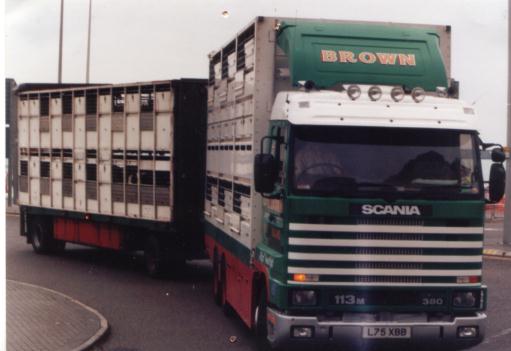
Photo – Mark
I think that any of us in welfare who have been involved with live animal transport over one, two, or (in my case) around 40 years, we all know what a complete and utter farce the Regulation is for the ‘protection of animals during transport’ – Reg 1/2005 – EUR-Lex – 32005R0001 – EN – EUR-Lex (europa.eu) We know it well as part of our work, and yet despite overwhelming evidence and footage over decades showing endless suffering of animals during transport, and the non compliances with the EU legislation, the people in the EU who could change things just ignore and turn the other way.
The footage you see here from our friends at AWF is yet more examples of the EU gone wrong.
It has been time for change for decades; but now the EU Commission hopefully is really in last chance saloon. It happens all over the world, not just in Europe. The sooner we see legislators get off their butts and do something to actually protect animals in transport, is a day that cannot come soon enough. Until the ban the fight goes on; and the evidence continues to pile.
Mark
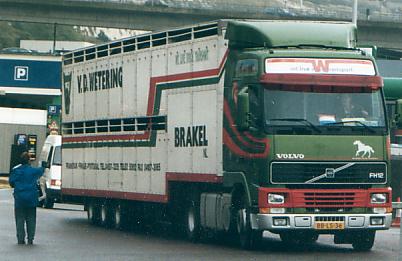
Photo – Mark
The Animal Welfare Foundation, released three reports on June 16 highlighting some of the horrific realities of the live animal transport industry. Coupled with their recent investigations into the sector, it’s clear change must happen – and that only the European Commission can bring on the scale of action needed.
The first report is concerned with which factors – including bedding, loading density, and distance – have the strongest impacts on the welfare of cattle during transport. It analyses 112 consignments of cattle on trucks that were inspected over a period of five years, between 2016 and 2021. Ultimately, their findings indicate that insufficient welfare provisions overwhelmingly impact an animal’s physical and emotional health, and can even shorten their lifespans.
The second report focuses on the long distance transport of lambs between the same time period. The findings are shocking – AWF records that out of the consignments they investigated:
100% had inadequate drinking devices for lambs
90% provided insufficient space for the lambs to move – in at least 44% of the vehicles, the space for each individual animal came only to 0.18m2
65% had issues that were likely to lead to injuries, such as sharp edges and loose dividers
At least 35% of the vehicles had been travelling for longer than permitted by law.
The third and final report follows a similar theme, and reports on the transport of unweaned calves between 2015 – 2021. As with lambs, it was found that the care these poor calves received was far from satisfactory, as in the consignments they investigated:
100% had inadequate drinking devices for unweaned calves
In at least 73%, animals were not fed after nine hours
At least 47% of the vehicles had been travelling for longer than permitted by law.
In both the second and third reports, AWF noted that well over half the animals being transported were showing acute signs of distress, including restlessness, biting and licking the metal bars they were trapped behind, and making loud noises.
Their insightful work makes the connection clearer than ever. The millions of sentient beings that are subjected to long journeys each year are not only being badly taken care of, but they are sensitive to the conditions in which they are transported as well. Measures must be taken to ensure these sentient beings are given adequate space to move, access to clean water, good nutrition and a comfortable environment to make these journeys as stress-free as possible.
Recent investigations by the Animal Welfare Foundation also stress the urgency of new live animal transport rules
Earlier this year, the Animal Welfare Foundation released heartbreaking footage of the journey of some young calves, which they followed from the Czech Republic to a fattening farm in Spain.
Their footage shows that these poor infants were starved for hours, and one calf in particular, which they named Marek, was not even able to get a quick drink of water.
Also this year, AWF’s investigative team intercepted trucks carrying lambs to Italy for Easter – resulting in over 20,000 EUR worth of fines for transport companies which were caught violating the EU’s transport legislation:
All the evidence points to a critical need for the European Commission to take action
AWF’s illuminating work complements a range of scientific evidence published by the likes of EFSA and the European Court of Auditors already that points to the necessity of better animal welfare provisions being made for animals that are transported.
The European Commission must use this wealth of information and data to make dramatic changes to this industry that causes so much suffering to millions of sentient beings each year. In particular, they must:
Ban ‘unfit animals’ from being transported, including unweaned animals and very young babies, like the lambs and calves recorded by AWF, for whom these journeys are even more difficult to bear
Place strict limitations on journey distances
Enforce any new animal welfare legislation written for live transport more effectively, to guarantee these stricter regulations are being followed.
It’s time for the welfare needs of transported animals to be honoured as seriously as they deserve.
We’re putting the spotlight on animal welfare this year through phase two of our No Animal Left Behind campaign! Learn more.
Regards Mark
 World Animals Voice