
EU: What does the EU’s Transport Regulation proposal mean for animals used for scientific purposes?
19 January 2024
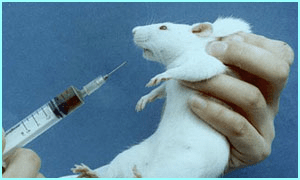
In December 2023, the European Commission published its proposal for a Regulation on the protection of animals during transport. The proposal explicitly recognises that animals transported for scientific purposes are covered by the Regulation. However, the lack of species-specific provisions addressing crucial factors such as fitness for transport and journey times raises deep concerns.
Since the implementation of Council Regulation (EC) No 1/2005, the European Commission has not taken specific actions concerning the welfare of animals transported for scientific purposes. Despite the stress, suffering, and elevated risk of injury that these animals may experience during transport, there has been a notable absence of measures to ensure their welfare.
Data on the transport of animals used for scientific purposes to and within the EU has been scarce, with only minimal information available in EC and Member State reports on statistics.
The Commission’s proposal now explicitly includes the transport of animals used for scientific purposes within the scope of the Transport Regulation. The proposal acknowledges that “while a distinction can be made with regard to the purpose for which these animals are transported, their welfare should be guaranteed”.
However, the Commission continues to leave these animals unprotected, arguing that “due to the strict requirements on the quality of animals needed for research and testing”, and because “scientific procedures may require the use of animals that can potentially be considered unfit for transport according to this Regulation”, “it would be neither coherent nor acceptable to include them completely in the scope of this Regulation”.
In particular, species-specific provisions relating to fitness for transport, watering and feeding intervals, journey times, temperatures and rest periods, and the assessment and recording of conditions of animals on arrival do not apply to the transport of animals used for scientific purposes. These exemptions are particularly alarming in the context of animals transported over long distances.
Regardless of the purpose for which animals are being transported, the needs and welfare concerns of a particular species remain the same. Whether they are categorised as farm animals, companion animals, or animals used for scientific purposes, individuals of the same species with comparable physiological conditions have common requirements in terms of journey times, resting periods, temperatures and access to water and food. The exception is made for vulnerable animals such as genetically altered animals, animals that have undergone surgery, animals that are disease ‘models’, pregnant animals, and lactating and newborn animals which require special provisions.
Proper assessment and recording of the condition of animals on arrival is also missing. These aspects include elements such as the number of animals that died and any health or physical problems, including injuries that occurred during the transport, which are crucial to increase the traceability and transparency of transport operations, and to enable the enforcement of the Regulation.

The proposal also lacks provisions addressing the air transport of animals, including non-human primates. Most non-human primates used for scientific purposes in the EU are born outside of the EU, mainly in Africa and Asia, and imported. These animals suffer long journey times by air and by road in small crates that leave little room for the animals to even turn around. Travel times of up to 58 hours are not uncommon, and in some cases may exceed 70 hours. Directive 2010/63/EU recognises that an increase in transport times may negatively impact on the welfare of animals used for scientific purposes bred outside the EU. Animals transported by air may face different challenges, including extended waiting periods with restricted access to water and food, exposure to high temperatures, stress-inducing loading and unloading, and the risk of incorrect handling by untrained staff.
While we recognise the positive step forward in bringing the transport of animals used for scientific purposes within the scope of the revised Transport Regulation, we are deeply concerned by the limited protection proposed.
Eurogroup for Animals calls for the following amendments:
- All provisions outlined in the Transport Regulation, including fitness for transport, watering and feeding intervals, journey times, temperatures, rest periods, and assessment and recording of conditions on arrival, must apply to the transport of animals used for scientific purposes, providing for certain exemptions where necessary;
- Species-specific provisions must be included in Annexe I;
- The needs of vulnerable animals must be addressed;
- Appropriate provisions for animals transported by air must be included.
Regards Mark




 World Animals Voice