Category: Environmental

India (Peta): Animal / Vegan Related Documentaries for You and Your Family to Check Out.

From our animal friends at Peta India.

When you go vegan, it’s great to share your new, kinder way of living with family and friends. Many people are completely unaware of the impact that their food choices have on animals, the environment, and their own health – but you can help open their eyes. An easy way to do that is by inviting them to watch one of the following documentaries with you.

  • Dominion: Created by Australian director Chris Delforce, this powerful feature-length film shows footage from farms and slaughterhouses across Australia, crushing the myth that what happens to animals used for food, clothing, or entertainment is in any way humane. You can stream this documentary for free online.
  • Earthlings: Many vegans consider Earthlings to be essential viewing for all meat-eaters. The powerful documentary takes an in-depth look at the way we treat other animals, showing viewers why we’ve got to be more compassionate towards other sentient beings.
  • Cowspiracy: This film offers a comprehensive look at the effects of food production on greenhouse-gas emissions, deforestation, water consumption, species extinction, ocean “dead zones”, and pollution – and it’s available to stream on Netflix.
  • What the Health: Promoted as “the health film that health organizations don’t want you to see”, What the Health exposes the consequences of eating meat, eggs, and dairy and makes you wonder, Why isn’t this common knowledge? We hope it will be soon, especially since the documentary is available on Netflix.
  • Forks Over Knives: This documentary examines the profound claim that most, if not all, of the degenerative diseases that afflict us can be controlled, or even reversed, by rejecting animal-based and processed foods.
  • Lucent: This feature-length documentary explores the darker side of Australia’s pig-farming industry through a combination of hand-held and hidden camera footage, highlighting the day-to-day cruelty accepted by the industry as standard practice.
  • Unity: Despite the advent of science, literature, technology, philosophy, religion, and so on, nothing has prevented humankind from killing one another and other animals and despoiling nature. Unity is a film that explores why we can’t seem to get along, even after thousands and thousands of years.
  • Fast Food Nation: This film was inspired by the book of the same name, which examines the fast-food industry. It covers everything from cruelty to animals to the treatment of employees.
  • Gods in Shackles: This one is not food-related – it’s about the shocking cruelty to elephants who are used in processions and temples in Kerala.
  • Blackfish: This one isn’t food-related, either, but it’s an excellent film for raising awareness of the plight of animals among people you’re introducing to the concept of eating vegan. It’s about Tilikum, a now-deceased orca who was held at the US-based captive animal marine park SeaWorld. This powerful documentary resulted in a tremendous backlash against the park, once one of America’s more celebrated attractions.
  • Okja: This Netflix original movie directed by Bong Joon-ho (also known for Snowpiercer and Parasite) and starring Ahn Seo-hyun, Tilda Swinton, Paul Dano, and Jake Gyllenhaal is fiction, but it has helped many people consider the plight of real animals and led them to eat vegan. It follows Mija, a young girl who fights to save her best friend – a massive “super-pig” hybrid named Okja – from the meat company Mirando.
  • The Game Changers: A UFC fighter’s world is turned upside down when he discovers an elite group of world-renowned athletes and scientists who prove that everything he had been taught about protein was a lie. It’s available to stream on Netflix.

Sharing your vegan pledge with family and friends can help you stay on track and be a very rewarding experience. Remember: the more people who take the pledge, the more animals will be protected.

Thanks for all you do for animals,

Sincerely,
PETA India

Australia: Australian Farm to Hold 50,000 Crocodiles for Luxury Hermès Goods Questioned by Animal Welfare Groups.

This is a bit more on the issue of Australian crocodile farming that was originally covered by Venus on 12/11/20 – https://worldanimalsvoice.com/2020/11/12/australia-the-crocodile-mafia-expands/

More from ‘The Guardian’, London/

Australian farm to hold 50,000 crocodiles for luxury Hermès goods questioned by animal welfare groups | Environment | The Guardian

Australian farm to hold 50,000 crocodiles for luxury Hermès goods questioned by animal welfare groups

Farm to supply skins to make handbags and shoes would be one of the biggest in Australia under plan approved by Northern Territory government

The high-end French fashion brand Hermès wants to build one of Australia’s biggest crocodile farms in the Northern Territory that would hold up to 50,000 saltwater crocodiles to be turned into luxury goods such as handbags and shoes.

But the proposal has come under fire from animal welfare groups, who say other fashion brands have moved away from using exotic animal skins on cruelty grounds. Advocates told Guardian Australia they had concerns about the welfare of the crocodiles, and that farming animals for luxury goods was “no longer fashionable.”

The territory, a significant global supplier of crocodile skins, is already home to several crocodile farms owned by major fashion brands.

Northern Territory crocodile industry figure Mick Burns is leading the proposal on a former fruit farm near Darwin purchased earlier this year by the company PRI Farming, of which he is a director.

The NT government has already granted development approval for the project, with documents showing the farm would include an egg incubator laboratory, a hatchery, and growing pens, as well as wastewater treatment plants and a solar farm.

According to documents submitted to the territory’s Environmental Protection Authority, the farm would employ 30 people and build from an initial 4,000 crocodiles to 50,000, which the ABC has reported would make it one of the biggest crocodile farms in Australia.

An EPA statement to the Guardian said the project had been granted environmental approval, and that PRI had also indicated it would apply for a wildlife trade permit.

Dr Jed Goodfellow, a senior policy officer at RSPCA Australia, said the society remained opposed to killing of any animal “where the purpose of their death is primarily to produce a non-essential luxury item like fur or skin”.

Read more on Page 2:

Continue reading “Australia: Australian Farm to Hold 50,000 Crocodiles for Luxury Hermès Goods Questioned by Animal Welfare Groups.”

England: ‘Million Dollar Vegan’ and ‘Viva!’ Will Distribute Vegan Meals Across the City of Bristol; Promoting Healthy Living, Animal Welfare and the Environment.

Volunteers distributing hot vegan meals

Vegan Groups Pledge To Provide 2,000 Plant-Based Meals To Those In Need Amid COVID-19

Million Dollar Vegan and Viva! will distribute the vegan meals to charities and foodbanks across the city of Bristol

Million Dollar Vegan and Viva! have pledged to provide 2,000 vegan meals to those in need during the COVID-19 pandemic.

Campaigners from both groups say their generosity will also help ‘highlight the risks of animal agriculture to public health’. 

Vegan meals

Hot vegan meals will be distributed to charities such as FareShare and Bristol Soup Run Trust, as well as food banks across Bristol, throughout November.Both organizations have been praised by local politicians including Kerry McCarthy, MP for Bristol East.

‘The impacts of climate change’

In a statement sent to PBN, McCarthy said: “Already, we’re seeing the impacts of climate change – forest fires, droughts, floods, storms, and heatwaves. These will only worsen over the coming years. 

“Especially, if companies and governments continue with deforestation linked to the production of food and other commodities. “Thankfully, none of this is inevitable. But, to prevent it, we must make some changes in how we live – and eat – right now. 

“I’m really pleased to see this support for Bristol organisations. [They] have done a brilliant job in responding to food poverty in the city, especially during the recent pandemic.”

‘Veganism is empowering’

Kate Fowler is the Director of Communications at Million Dollar Vegan.

She said: “What we choose to buy and eat has profound consequences. It goes way beyond our taste buds and waistlines.

“It affects our own health, the health of our planet, how long we will have workable antibiotics, when another pandemic will come and whether we will be able to slow down climate change. “

Will Sorflaten, Campaigner at Viva!, added: “Veganism is empowering. It’s the most beneficial change any individual can make on the climate crisis, food hunger, our health.”

Soflaten added that a vegan lifestyle can ‘massively reduce’ the risk of another pandemic.

USA: Big Asshole American Trophy Hunter Takes More Than 5 Shots (In The Head) To Kill His Trophy Elephant – What A Useless Shit !

WARNING – Disturbing Video – what disturbed and warped trophy hunter minds do for ‘fun’.

WAV Comment:  This is a very disturbing video to watch.  Elephants are protected within Kruger National Park but once they cross the ‘invisible border’, they are the target of fucking dead bead, super shit American trophy hunter turds such as the one which you see here – who takes at least 5 shots in the video, which even then does not kill the animal.

Trophy hunting shit; thats what they are. Rich boys with nothing between their ears; a bit like the current President and his sons.

Above – Dim and Dimmer Trumps with a trophy ‘prize’

Below – ‘He Man’ Trump after a kill.

Fortunately the Trumps have been sent a clear message about it all now – and that is ‘Fuck Off’.

Trophy hunters and those who make a living selling hunting trips and accessories like to claim that they kill animals in the name of “conservation” or, patronisingly, to support “natives” – but as this just-breaking PETA  video shows, hunting has nothing to do with respecting wildlife and everything to do with taking sadistic pleasure in killing animals. 

Following a  secret investigation, PETA has revealed South African President Cyril Ramaphosa’s hidden connections to and investments in the trophy hunting industry and obtained video footage of an American trophy hunter who was incapable of making a clean kill, even with coaching from hunting guides, as he felled a young elephant just outside Kruger National Park. 

See the shocking footage for yourself, and then take action to help stop elephants, lions,  hippos, rhinos, Cape buffaloes, and other wonderful, vulnerable animals from being shot in cold blood and dying in agony just to give hunters a sick thrill and a trophy. 

Click here to take action for the elephant:

Tell UPS to Stop Shipping Hunting Trophies | PETA Australia

USA: News from the Center for Biological Diversity – Endangered Earth – November 2020.

News from the Center for Biological Diversity

Endangered Earth – November 2020.

https://www.biologicaldiversity.org/

Trump Pushes Oil Industry for More Arctic Drilling

With his presidency now nearing its end, Trump is rushing through a process to open up the Arctic National Wildlife Refuge’s coastal plain to lease for oil drilling.

The administration has invited oil companies to name the areas they’d like to drill in one of the nation’s most iconic and sacred landscapes. The Center for Biological Diversity joined Indigenous groups this week in condemning the move.

“On his way out the door, Trump is trying to lock in climate chaos and the extinction of polar bears and other endangered Arctic species. This is unconscionable,” said the Center’s Kristen Monsell. “The Arctic National Wildlife Refuge can’t be replaced, so we can’t let this president give it away to Big Oil.”

Learn more and speak up for the Arctic National Wildlife Refuge.

Tell the EPA: Choose Pollinators Over Poisons

We can thank pollinators like bees for 1 out of every 3 bites of food we eat. We owe a lot to them — and now they urgently need our help.

The Environmental Protection Agency is about to approve yet another toxic pesticide. Called tetraniliprole, it’s acknowledged by the agency to be “highly toxic” to bees and aquatic insects. This new approval for its use on many pollinator-attractive plants — including peppers, tomatoes, peaches, cherries and oranges — will likely fall to the next administration.

Roughly 40% of the world’s insects may be facing extinction. The last thing they need is another poison to contend with. Tell the EPA in the Biden administration to keep tetraniliprole off our food and away from our bees.

Legal Roundup: Montana, Wyoming and the Virginias

The Center’s legal work of the last few weeks has focused on protecting interconnected resources: habitat, climate, and clean air and water.

In Montana we filed a legal protest challenging a massive logging project that would clearcut thousands of acres — including old-growth trees — and threaten an imperiled population of grizzly bears and protected Canada lynx habitat.

In Wyoming we challenged a plan to approve the sale of fracking leases on 275,000 acres of public land. Fracking those leases would destroy habitat for greater sage grouse, worsen air quality and cause up to 43 million tons of climate pollution.

And an appeals court has sided with the Center and partners by issuing an immediate stay of Mountain Valley Pipeline’s stream and wetland crossing permits in northwestern West Virginia to southern Virginia: a win for both people and imperiled species.


Center Op-ed: What’s Next for Wolves

Gray wolves face an uncertain future after the Trump administration’s recent move to strip their Endangered Species Act protections.

But as the Center’s Collette Adkins writes in a new Chicago Tribune op-ed, President-elect Biden will now have the chance to break from the path taken by his predecessors. He can direct federal wildlife agencies to embrace a science-backed, full recovery of wolves in the lower 48 states.

And if Biden chooses instead to let the delisting to stand? Well, we’ve been in that fight before. Whatever comes next for wolves, we’ll be on the front lines to protect them.

Saving Humboldt Martens — New Hopes, New Threats

“Martens belong to the weasel family and look a bit like squirrels that have been stretched out and trained for battle: cute, but ferocious.”

That’s one of our favorite sentences from this engaging new article on the plight of Humboldt martens, secretive carnivores usually associated with old-growth forests. One marten population, however, has managed to survive in the sand dunes of Oregon in a tiny strip of shore pines.

Follow along as a conservationist and her marten-tracking dog sniff out these rare, fascinating little mammals. You’ll learn the latest on the species’ plight, including from the Center’s Tierra Curry, who’s helped lead our successful decade-long campaign to win federal protection for Humboldt martens.

Wild & Weird: Testing Facial Recognition for Bears

Silicon Valley developers have teamed up with biologists and conservationists to develop artificial intelligence software that can identify, with some success, the faces of individual bears. The app they developed, BearID, could one day be used to monitor the health of bear populations around the world.


Read more at The New York Times.

England: Keep Ramping for the Amazon. Over 24,000 Messages Sent – Keep It Going !

Please keep it going !

https://worldanimalsvoice.com/2020/11/13/england-ramp-it-up-e-mail-tescos-new-ceo-and-tell-him-to-stop-destroying-the-beautiful-amazon-for-meat-products-in-his-stores/

Greenpeace tell us that he has had over 24,00 messages sent to his inbox.

If he does not get the message now then what hope for him ?

Click on the link above and tell him to stop destroying the Amazon.

USA: Please Ask Joseph R. Biden, President-elect, United States of America to Re-instate Protection for Gray Wolves in the USA.


Although we are based in England and Germany (Europe); we have always given our support in calling for protection of the Gray wolves in the United States.

Click here to see all our past involvement on this:

https://worldanimalsvoice.com/?s=gray+wolves

Fortunately, with new President elect Mr Biden; there is now a chance to once again give Gray wolves the protection they deserve that has been demolished by the Trump administration.  We urge you please to give your support to the petition which is provided in the following link; and get back from the president elect the protection that wolves deserve.

Trump does not give a damn about the environment or animal protection; that is why we are more than happy to see him throw all the toys out of the pram; have numerous tantrums and be resigned to the (ex) presidential history books.  We don’t want people who dismiss science for the environment or global warming; just the same as they dismiss animal welfare and protection legislation.

We are sure that with Mr. Biden, things will be much better.  Please sign and pass on the petition, thank you.

Petition Link:

Wording:

Target: Joseph R. Biden, President-elect, United States of America

Goal: Demand restoration of protected status for gray wolves.

Trump administration officials have officially stripped threatened gray wolf populations throughout most of the United States of their protection under the Endangered Species Act, leaving them vulnerable to greater hunting and predation even as their numbers were recovering from centuries of destructive human activity. Gray wolves are an essential part of many ecosystems across North America, but human settlement, pollution, hunting, and shrinking habitats have destroyed populations throughout much of their historical range.

The revocation of protected status is based on the claim that more than 6,000 wolves now live in wild populations. However, these exist in only limited areas in the northern United States, and wildlife experts say that removing federal protections may severely hinder the gray wolves’ ability to recover outside of these areas. Critics have pointed out the suspicious timing of this decision as the 2020 election winds down. Demand that President-elect Joe Biden pledge to restore protected status to gray wolves to ensure their complete recovery in the regions they once inhabited.

PETITION LETTER:

Dear Mr. President-elect,

The gray wolf was once an essential part of ecosystems across North America, helping to control pest populations and provide balance to numerous delicate food chains. Once near extinction, they have made a partial recovery, but that progress could soon be destroyed by the outgoing Trump administration. It falls to you to provide the protection needed by gray wolves to ensure a complete recovery in the coming months as you take up your duties. I urge you to act quickly to save our threatened wildlife.

Sincerely,

[Your Name Here]

Photo credit: dalliedee

You failed wolves – you lost the vote !

Baby Donald Trump GIF - Baby DonaldTrump Tantrum - Discover & Share GIFs
This image has an empty alt attribute; its file name is Gray_wolf_by_dalliedee-310x207.jpg

EU / China: New report presents key opportunities for the EU and China to partner up in driving animal welfare and prevent future pandemics.

New report presents key opportunities for the EU and China to partner up in driving animal welfare and prevent future pandemics

18 November 2020

Press Release

EU and Chinese experts meet to discuss sustainability, food systems and resilience. Animal welfare could be the key to prevent future pandemics, as explained in a new report.

For immediate release: Brussels 18/11/2020

On November 18th Eurogroup for Animals organised an event entitled What could the EU and China do for animal welfare?, hosted by MEP and member of the EP delegation for relations with the People’s Republic of China Niels Fuglsang (S&D, DK). The first of its kind gathering was the opportunity for European and Chinese experts to discuss sustainability, a key topic for both partners, and its link with animal welfare.

COVID-19 demonstrated the human and economic costs of a zoonose pandemic and, while it emerged from wildlife, it has also reminded the world of the role played by intensive farming in spreading zoonoses. How we produce and consume food has an impact not only on animals but also on public health, the environment, people and climate. Working together on improving animal welfare can play a key role in finding solutions to many of the current global challenges we are facing: climate change, antimicrobial resistance, as well as the spread of pandemics. With all the developments in the EU, such as the Farm to Fork Strategy, which should see the improvement of our animal welfare standards, there has never been a better time for us to discuss this topic with China.

Stated Janusz Wojciechowski, EU Commissioner for Agriculture, in its opening speech.

As analysed in the new Eurogroup for Animals Report What could the European Union and China achieve for animals?improving animal welfare standards can contribute to achieving several Sustainable Development Goals which are at the heart of EU and China’s future growth: 

  • Building more resilience in the food production sector, SDG 2 – Zero Hunger
  • Improving human health by helping to reduce the risk of zoonoses and lessen the use of antibiotics in animal productions, SDG 3 – Healthy Lives
  • Contribute to fighting the climate crisis, SDG 13 – Climate Action
  • Generate concrete economic benefits, SDG 8 – Decent Work and Economic Growth

More positive effects could be achieved with moving towards more sustainable production and consumption systems, specifically reducing the production and consumption of meat and dairy products. 

This could benefit public health, lowering cases of obesity, diabetes and cardiovascular diseases (SDG 3 – Healthy Lives), but also climate and environment, since the dairy and meat sector represents around 14.5% of Greenhouse Gas (GHG) Emissions (SDG 13 – Climate Action) and it is a massive source of water pollution (SDG 6 – Water Quality, SDG 15 – Live on land; SDG 14 – Live under water). 

Animal welfare can play a key role in finding solutions to many of the current global challenges we are facing such as zoonoses and climate change. At the heart of many of these challenges lies an unsustainable food production system that lacks resilience. Improving animal welfare, as well as moving towards more sustainable production and consumption patterns that rely less on meat and dairy products, can help prevent these situations in the future. 

Reineke Hameleers, CEO, Eurogroup for Animals

In the future, [China] will proactively promote animal welfare to meet the needs of sustainable socio-economic development. Firstly, [it] will carry out in-depth science-based animal welfare research with Chinese characteristics, to promote the safe, high-yielding, resource-saving and environment-friendly development of animal production in China. Secondly, [China] will participate proactively in the development of international standards on animal welfare, to coordinate and cooperate for a just and fair international trade in animal and animal products. 

Dr. Xiao Xiao, OIE animal welfare China liaison, Associate Researcher of China Animal Health and Epidemiology Center of Ministry of Agriculture and Rural Affairs

The innovative agricultural and technological practices developed in China and in the EU could serve as a basis to a fruitful cooperation. Eurogroup for Animals recommendations for this cooperation are the following:

  • The European Union could improve its animal welfare standards, relying on the most recent animal welfare science. It could also develop standards for species which are currently left unprotected. China could also build up on the work led by authoritative organisations such as ICCAW and CAS to establish mandatory animal welfare standards.
  • The EU and China could explicitly refer to animal welfare in the coming EU-China 2025 Cooperation Agenda, notably in the section related to cooperation around public health.
  • Animal Welfare could be explicitly mentioned in the EU-China agricultural dialogue, as a dimension of sustainable farming. 
  • The EU and China could establish a joint expert working group on future food policies including sustainable and higher welfare livestock production as well as animal welfare and humane and sustainable protein innovation. 
  • In the future EU-China investment agreement, the Parties could require EU businesses to respect EU-equivalent standards when investing in animal agriculture in China. 
  • The EU and China could aim at establishing a Memorandum of Understanding between DG SANTE and its counterparts in China, the Ministry of Agriculture and Rural Affairs and the National Health and Family Planning Commission, to develop a more structured cooperation on animal welfare, possibly in the context of the fight against antimicrobial resistance.

ENDS

Download the report 

EU: EC study find outs the livestock sector is responsible for 81-86% of the agricultural greenhouse gas emission.

https://www.eurogroupforanimals.org/news/ec-study-find-outs-livestock-sector-responsible-81-86-agricultural-greenhouse-gas-emission

EC study find outs the livestock sector is responsible for 81-86% of the agricultural greenhouse gas emission

October 2020

In mid October 2020, the European Commission published a report examining the environmental, economic and social consequences of EU livestock production and how this sector can contribute to sustainable agriculture.

While recognising the important economic role played by livestock production in the EU economy, the report stresses the significant environmental impacts associated with industrial animal production. Such impacts can affect biodiversity, human health, and the functioning of ecosystems.

In particular, by including in calculations the environmental impacts of the production, processing, and transport of feed, the report concludes that the livestock sector is responsible for 86-88% of the EU’s agricultural GHG emissions. Additionally, more than 80% of nitrogen of agricultural origin present in all EU aquatic environments is linked to livestock farming, and livestock farms are the main sources of ammonia.

On animal welfare, the report recalls the results of the last special Eurobarometer on animal welfare showing that 94% of European citizens attach importance to animal welfare, with 82% agreeing that farm animals should be better protected. Three key areas need to be addressed to respond to citizens expectations, and namely the intensification of farming, transportation of animals and slaughter. 

The report notes that the specialisation and intensification of livestock farming systems has had negative implications for animal welfare, leading to stress and pain due to artificial living conditions in industrial type buildings, damage to animal integrity (e.g., painful husbandry procedures), separation from familiar conspecifics and unnatural levels of mixing. Citizens expect animals to be spared fear and anxiety and to be offered the possibility to experience positive emotions. Such an approach can also have positive knock-on effects on the reduction in the use of antimicrobials in farmed animals, which should be halved by 2030 compared to current levels according to the Farm to Fork strategy. 

Read more at source

Publications Office of the EU

Why a COVID-19 vaccine could further imperil deep-sea sharks.

hammerhead shark – Google Search

BBC - Earth - Why do hammerhead sharks look like that?

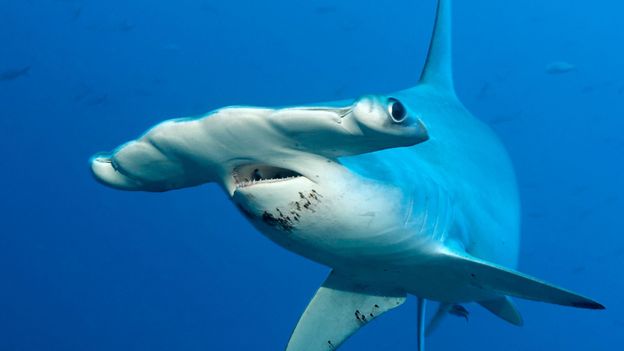
Picture – BBC.

Shark liver oil helps make vaccines more effective, but increased demand for the substance could harm critically endangered species.

Trawling for prey at more than a thousand feet under the surface, the scalloped hammerhead shark relies on a special oil in its liver to survive the crushing pressures of the deep.

Shark liver oil, or squalene, is a fatty substance that provides vital buoyancy for this critically endangered species and many others. But it’s also a lifesaver for humans as a boosting agent in vaccines, called an adjuvant, that improves the immune system and makes vaccines more effective.

As the world’s pharmaceutical companies scramble to create a vaccine for COVID-19at least five of the 202 vaccine candidates rely on squalene sourced from wild-caught sharks.

Read more at source

National Geographic

.