After decades of massive pressure from PETA and other activists, Nordstrom has just announced that it will stop selling fur and exotic skins!
PETA’s campaign urging Nordstrom to go fur-free started back in the 1980s—when we made it a major target for Fur-Free Friday. The company dropped fur from its own line in 2006 but continued to sell fur in clothing from other brands, including Canada Goose’s coyote fur–trimmed jackets. PETA supporters took tens of thousands of actions to urge Nordstrom to ban fur.
The company’s decision to drop exotic skins follows PETA investigations exposing the cruelty involved in every alligator-skin watch and snakeskin purse as well as a trend in which companies like Calvin Klein and Chanel have gone exotic skins–free.
If you’ve ever taken a stance against the cruel fur and exotic-skins industries, you’re a part of this victory—so thank you!
Please take a moment to thank Nordstrom and urge it to go even further—by eliminating wool, leather, and all other animal-derived materials.
People Are Ditching Meat ‘More Rapidly Than Thought’ New Research Finds
‘Our research findings may come as a surprise to many…it identified a new class of casual consumer who are reducing their meat consumption much more rapidly than thought’
People across Europe are reducing their meat consumption ‘much more rapidly than thought’, according to new researchpublished by New Food Magazine.
Dutch firm ingredients firm Griffith Foods has undertaken a Pan Europeansurvey looking into consumer behaviour, polling around 4,000 people in the U.K, Germany, France, and the Netherlands.
The organization says the emerging flexitarian market – of people who actively want to reduce their meat intake and try alternative proteins – is larger than previously thought.
Demand for meat-free food
The survey found that consumers want more ‘adventurous’ vegan and veggie options made available – with different cuisines including Asian and Mediterranean on offer rather than just standard veggie burgers.
When it comes to meat alternatives, flexitarian shoppers are seeking products with a more meat-like texture than many of the options currently available.
‘Much more rapidly than thought’
“Our research findings may come as a surprise to many, especially as it identified a new class of casual consumer who are reducing their meat consumption much more rapidly than thought,” said Wim van Roekel, president, Griffith Foods, Europe & Africa, said. https://699ea66e9c4b36ecceec62001322af8f.safeframe.googlesyndication.com/safeframe/1-0-37/html/container.html “That has major implications for food retail manufacturers and producers, and their response to capture and cater to this newfound mass market.
29/9/20 – Breaking News from the Fur Free Alliance
WAV Comment – we have just had this news in and we want to immediately share it with you.
The transition period is stated as 5 years; but we know with experience from the Netherlands and Poland; we feel eventually it will be a very much shorter time – given Covid and the rest.
Even better; it seems that a ban on wild animals in circuses is also to be included in the legislation.
BIG Congrats to all the crew at the FFA – another victory to rid the world of barbaric fur farming.
FRANCE, 29 SEPTEMBER 2020 – In a historic move, this morning the French minister of Ecological Transition announced to prohibit fur production. The decision follows a recent expose from our French member One Voice of the hideous conditions on France’s last 4 remaining fur farms.
The ban on fur farming will go into force after a 5-year transitional period. Besides the prohibition of fur production, the announced measures also include a ban on wild animals in circuses.
Muriel Arnal, CEO of French animal protection organisation One Voice, says:
“What a hard fight… thanks to all our partners in the Fur Free Alliance for their help in the last moments. We finally have a ban. But it will take place in a very long time compared to the Netherlands. With only 4 remaining farms we expected a much stronger announcement. We will keep on fighting to close down these 4 farms before the deadline set by the ministry of Ecology.”
Last week Fur Free Alliance member organisations around the world urged the French government to take immediate action and shut down France’s last remaining fur farms.
Read our joint letter to French Minister Pomili here.
Recent investigations on French fur farms, recorded in 2017, 2019 and once again in 2020, revealed shocking examples of animal suffering, including mink with physical injuries kept in appalling conditions and displaying stereotypical behaviour. Some of them had injured eyes, missing teeth, missing tails, paralysed and necrotic legs, and skin diseases.
Together with OneVoice we call on the French government to speed up the transitional period and prohibit fur farming at the earliest opportunity.
We hear that so often: “Why don’t you take care of the poor, starving children in the developing world before you worry about the ‘cattle’?”
In short:
Especially the people who do not do anything for others, neither for the animals nor for the people, tend to accuse others of forgetting the people in need because of all their commitment to the animals!
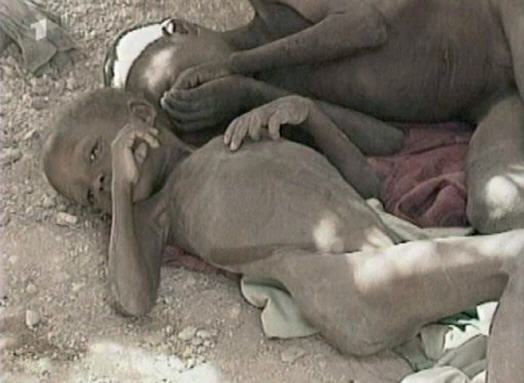
Every 10 seconds a child dies of hunger!
Whoever does not consume meat and other animal products such as milk, eggs … is doing something against world hunger.
Why is that?
Example: To ‘produce’ 1 kg of beef, 16 kg of grain and soy are fed to animals.
Giant amounts of grain and soy are necessary to fatten these animals.
Instead of using it to feed the hungry of this world, we take the food from them to feed tortured animals.
If this grain were directly available for human nutrition, the WORLD HUNGER PROBLEM would be solved!
Up to 7 kilograms of feed and 15,300 liters of water are required to “produce” just 1 kilogram of beef. Including drinking water for the animals and water for cleaning the stables, this results in an unbelievable sum of 15,500 liters of water for just 1 kilogram of beef!
The tragic thing is: 2.1 billion people have no access to clean and available drinking water.
So … eating meat is a crime, for humanity and for animals.
But the carnivores allow it.
Just because the eyes of the starving children cannot be seen on the packaged meat in the supermarket.
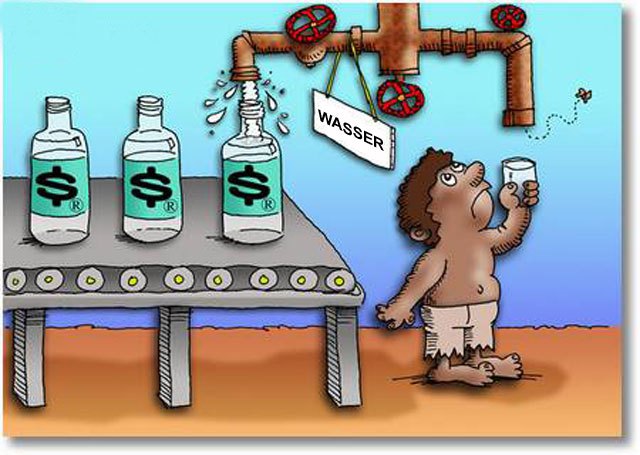
The authorities have allowed one million cubic meters per year!!! Nestlé pumps this amount of water out of the ground in Vittel every year – and slowly but surely dries up the small community in eastern France.
The groundwater level cannot regenerate and drops dramatically by 30 centimeters every year. Once it was 10 meters higher than it is today.
The villagers are running out of drinking water.
At the public fountain they are allowed to fill “a maximum of 6 bottles per day”, and in summer the water is even brought into the village by tanker. Now a 12-kilometer pipeline is planned – for up to 50 million euros in tax money.
Nestlé fills the groundwater in bottles and earns hundreds of millions of euros with it.
The trade-in water is far more than a local problem: A large part of the mineral water is filled in plastic bottles, the production of which devours resources, which of course also applies to returnable bottles.
The bottles are then brought to the customer over long distances.
From Vittel to Sassnitz: 1,141 kilometers, from Vittel to Berchtesgaden: 701 kilometers.
The dimensions are more extreme in Canada, for example.
It is 3,147 kilometers from Nestlé’s Aberfoyle filling station to St. John’s.
Other popular types of water are still transported further.
So water from the Fijis itself can be had in Berlin!!!
But the residents do not give up without a fight: Vittel’s residents have come together as “Collectif Eau 88” to stand up to the large corporation. And you asked the “SumOfUs” community for help in their fight against Nestlé.
The U.S. Department of Agriculture’s misleadingly named Wildlife Services program kills more than a million wild animals every year, typically at the request of Big Ag. Scattering public lands with cruel traps and indiscriminate poisons, the program targets carnivores like coyotes, bears, beavers, otters and foxes. Even rare species like grizzlies and wolves are caught in the crosshairs.
We’ve been working for years to shine a light on the feds’ wildlife-killing and have succeeded in gaining protections for wildlife in several states.
The presentation will feature our Carnivore Conservation Director Collette Adkins and Andrea Zaccardi, a senior attorney in our Northern Rockies office.
In addition to talking about Wildlife Services, we’ll discuss the latest news on grizzly bears and wolves, including the expected loss of wolf protections nationally and the importance of state-level wolf work if that does occur.
The hour-long webinar starts at 4 p.m. PT / 7 p.m. ET.
Two endangered Javan rhino calves spotted in Indonesian park
21 September 2020
Two extremely rare Javan rhinoceros calves have been spotted in an Indonesian national park, boosting hopes for the future of one of the world’s most endangered mammals.
The rhino calves—a female named Helen and male called Luther—were seen with their mothers in footage taken from nearly 100 camera traps installed in Ujung Kulon national park between March and August, authorities said in a statement on Sunday.
On the westernmost tip of Java in Banten province, Ujung Kulon is the last remaining wild habitat for Javan rhinos.
After years of population decline, the arrival of the new calves brings the total number of the rare mammals to 74.
The sanctuary comprises some 5,100 hectares (12,600 acres) of lush rainforest and freshwater streams.
The Indonesian government has been surveying other areas across Java and Sumatra islands to relocate the rhinos from the danger of Mount Krakatau, an active volcano not far from the national park.
“These births bring a big hope for the continuation of the life of the critically endangered special Javan rhino,” said Wiratno, a senior official at the environment ministry.
380 whales have died after becoming stranded off Australian coast
Officials believe that the new group of the whales found stranded are mostly dead, and cannot be rescued.
Around 380 whales have died after becoming stranded in an inlet off the coast of the Australian island of Tasmania, according to officials.
In the remote town of Strahan, rescuers had been scrambling to save the survivors among what was thought to be 270 pilot whales on Monday, from a beach and two sandbanks.
The UN has presented an alarming report on biodiversity. Never in human history has the loss of biodiversity been worse – and the downward spiral continues.
The experts are urgently calling for a change of course in the way we live and do business.
The Fifth Global Report on the State of Biological Diversity leaves no doubt as to the extent of the crisis. Ten years ago almost 200 countries set themselves goals to combat the destruction of habitats and the extinction of species – but the international community has failed and has not achieved any of the goals.
“The extent of biodiversity loss is unprecedented in human history and the pressure is mounting. Life on earth as a whole is at risk, ” says Elizabeth Maruma Mrema, Chair of the UN Convention on Biological Diversity (CBD).
“The states are undermining their livelihoods. Humanity is at a crossroads.”
Preserving biodiversity is critical to addressing climate change and enabling long-term food security and health.
“It’s not about luxury, but about existential issues,” says Anne Larigauderie, Chair of the World Biodiversity Council IPBES. The organization warned in a 2019 report that a million species could become extinct within a few decades.
However, a change of direction is possible.
“Extremely important is to measurably reduce the use of pesticides, effectively preserve forests, and prevent pollution with plastic and heavy metals,” says Anne Larigauderie.
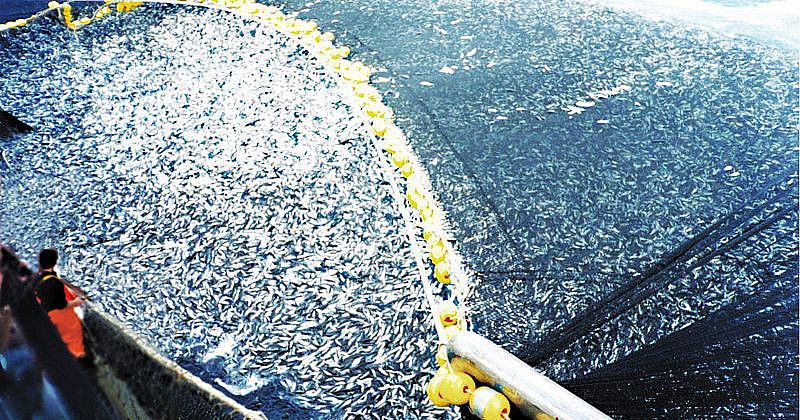
The overfishing of the seas and the destruction of habitats must also come to an end.
The experts are calling on Germany and the EU to remove environmentally harmful subsidies, for example for industrial agriculture.
“It is about many hundreds of billions of dollars that directly serve the destruction of nature plus hundreds of billions of dollars in subsidies for fossil fuels,” says Larigauderie. In contrast, only around 80 billion dollars are available for nature conservation.
The UN also points to the link between environmental degradation and pandemics like Covid-19.
Anne Larigauderiesays: “It is scientifically clear that a large proportion of infectious diseases have spread from animals to humans – and in many cases, this is preceded by forest destruction, road construction and the fragmentation of habitats, especially in the tropics.”
Paraguay, Chaco
The positive developments contained in Global Biodiversity Outlook 5 are far from being enough. The fact that the deforestation rate has decreased by a third and protected area now covers 15 percent instead of 10 percent of the land area is not enough.
A special UN summit on biodiversity will take place in New York on September 30th, which Chancellor Angela Merkel will also attend. There she can prove that Germany is serious (!!) about preserving biodiversity.
And I mean…“Don’t dare to go to New York”, UN Secretary General Antonio Guterres had warned the heads of state and government months ago, “if you do not bring substantial offers for higher climate protection measures”.
It is to be feared that Merkel and her government will have to offer climate protection in homeopathic doses that remind us of the days in Paris four years ago.
The German government has so far stuck to the EU-Mercosur treaty for a policy in favor of the car lobby.
After there was criticism of the right-wing extremist President of Brazil Bolsonaro at the G7 summit in Paris because of the fires in the Amazon, we hoped that the EU-Mercosur free trade pact would be on the brink, and may still be prevented because the national parliaments would still have to approve.
We are all aware of the damage that this shameful treaty will cause to people, nature, and animals.
Nevertheless, and until then we must continue to be poisoned by Bayer/Monsanto’s glyphosate, which is what EU law wants.
Business obviously takes precedence over the health of people and nature.
“A total ban on the active ingredient glyphosate in pesticides clearly violates current EU law,” said Vytenis Andriukaitis, former EU Commissioner for Health and Food Safety, when he was still in office.
It was also he, who advocated the renewed approval of the herbicide glyphosate for another 10 years in the EU until December 15, 2022.
We are firmly caught in the claws of a world dictatorship.
If humans continue emitting greenhouse gases at the current pace, global sea levels could rise more than 15 inches (38 centimeters) by 2100, scientists found in a new study.
Greenhouse gases emitted by human activity, such as carbon dioxide, contribute significantly to climate change and warming temperatures on planet Earth, studies continue to show. As things heat up, ice sheets in Greenland and Antarctica melt. A new study by an international team of more than 60 ice, ocean and atmospheric scientists estimates just how much these melting ice sheets will contribute to global sea levels.
“One of the biggest uncertainties when it comes to how much sea level will rise in the future is how much the ice sheets will contribute,” project leader and ice scientist Sophie Nowicki, now at the University at Buffalo and formerly at NASA’s Goddard Space Flight Center in Maryland, said in a statement. “And how much the ice sheets contribute is really dependent on what the climate will do.”
The results of this study show that, if human greenhouse gas emissions continue at the pace they’re currently at, Greenland and Antarctica’s melting ice sheets will contribute over 15 inches (28 centimeters) to global sea levels. This new study is part of the Ice Sheet Model Intercomparison Project (ISMIP6), which is led by NASA Goddard.
The ISMIP6 team investigated how sea levels will rise between 2015 and 2100, exploring how sea levels will change in a variety of carbon-emission scenarios
They found that, with high emissions (like we see now) extending throughout this time period, Greenland’s melting ice sheet will contribute about 3.5 in (9 cm) to global sea level rise. With lower emissions, they estimate that number to be about 1.3 in (3 cm).
Ice sheet loss in Antarctica is a little more difficult to predict, because, while ice shelves will continue to erode on the western side of the continent, East Antarctica could actually gain mass as temperatures rise because of increasing snowfall. Because of this, the team found a larger range of possible ice sheet loss here.
The team determined that ice-sheet loss in Antarctica could boost sea levels up to 12 in (30 cm), with West Antarctica causing up to 7.1 in (18 cm) of sea level rise by 2100 with the highest predicted emissions.
However, to be clear: These increases in global sea levels are just predictions for the years 2015 to 2100, so they don’t account for the significant ice sheet loss that has already taken place between the pre-industrial era and modern day.
“The Amundsen Sea region in West Antarctica and Wilkes Land in East Antarctica are the two regions most sensitive to warming ocean temperatures and changing currents, and will continue to lose large amounts of ice,” Helene Seroussi, an ice scientist at NASA’s Jet Propulsion Laboratory in Southern California, who led the Antarctic ice sheet modeling in the ISMIP6 project, said in the same statement.
“With these new results, we can focus our efforts in the correct direction and know what needs to be worked on to continue improving the projections,” Seroussi said.
These results are in line with estimates made by the Intergovernmental Panel on Climate Change (IPCC), whose 2019 Special Report on Oceans and the Cryosphere showed that melting ice sheets would contribute to about one-third of the total global sea level rise.
According to the 2019 IPCC report, melting ice sheets in Greenland will contribute 3.1 to 10.6 inches (8 to 27 cm) to global sea level rise between the years 2000 and 2100. For Antarctica, the report estimates that melting ice sheets will add 1.2 to 11 inches (3 to 28 cm).
The results from this new work will help to inform the next IPCC report, the sixth overall, which is set to be released in 2022, according to the same statement.
“The strength of ISMIP6 was to bring together most of the ice sheet modeling groups around the world, and then connect with other communities of ocean and atmospheric modelers as well, to better understand what could happen to the ice sheets,” Heiko Goelzer, a scientist from Utrecht University in the Netherlands who is now at NORCE Norwegian Research Centre in Norway, said in the same statement.
“It took over six years of workshops and teleconferences with scientists from around the world working on ice sheet, atmosphere, and ocean modeling to build a community that was able to ultimately improve our sea level rise projections,” added Nowicki, who led the Greenland ice sheet ISMIP6 project. “The reason it worked is because the polar community is small, and we’re all very keen on getting this problem of future sea level right. We need to know these numbers.”
This work was published Sept. 17 in a special issue of the journal The Cryosphere.













 Paraguay, Chaco


 World Animals Voice