Category: Environmental

Sustainable Food Systems: the intersection of trade and animal welfare.

Sustainable Food Systems: the intersection of trade and animal welfare

21 September 2021

News

Ahead of the 2021 UN Food Systems Summit Eurogroup for Animals and The Good Lobby organised a high level event to discuss the intersection of animal welfare and trade in international policymaking

The COVID-19 crisis has reminded the world of the limits of unconditional trade liberalisation, which tends to favour corporate interests while ignoring the effects of the intensification of animal agriculture on the planet and on the animals. This has contributed to the three key challenges the planet is currently facing: zoonoses, antimicrobial resistance, and the overall climate and biodiversity crisis.

At the moment, international trade and economic policies are fuelling rather than countering the expansion and negative impacts of intensive livestock farming by prioritising profits and free trade above all. For example, the trade deal between the EU and Ukraine has led to a surge in cheap chicken meat imports, and the ones planned with Australia and Mercosur countries are expected to also fuel beef production – mostly on feedlots – according to the EU’s own analysis.

Indeed, there seems to be a disconnection between the conversations on the much needed transformation of our food systems and the international trade agenda

Both panels investigated the best ways to ensure that trade agreements and international trade rules not only avoid negative impacts on animal welfare, but also intrinsically contribute to a global transition towards a more ethical and sustainable way of producing

The first panel focused on how bilateral trade agreements can help to promote higher animal welfare and thus to move towards sustainable food systems. 

“We want to step up cooperation [under EU Trade Agreements] and make a big difference,” said Claire Bury, Deputy Director-General for Food Sustainability at DG SANTE. She also underlined the importance of developing work programmes for the animal welfare cooperation with each partner country, “so we have concrete plans about what to do with the country. It’s not a talking shop, it’s about making a change”, Bury added. 

Recognising animal welfare has never been as high on the agenda, Pascal Durand MEP called for products derived from animal exploitation – as well as biodiversity and human exploitation – not to be allowed on the EU market. 

The EU is not the only place where trade policy is at the centre of important debates. Chris Sherwood, CEO of the RSPCA, portrayed the tensions reflected by the current UK debate on trade policy. “There are real tensions at the heart of the UK government – between ensuring high standards locally, and wanting to have a Global Britain negotiating trade deals all around the world”.

EU trade policy is also monitored by non-EU Civil Society Organisations. “We need to bring [higher animal welfare and sustainability-related] standards within the [EU-Mercosur] agreement to push up Mercosur standards”, said Maureen Santos, Project Officer at FASE.

The second panel’s focus was on multilateral issues and how animal welfare can be addressed at WTO level and throughout the value chain.

“There is an increasing interest for animal welfare within our members”, said Jean-Marie Paugam, deputy Director-General at the World Trade Organisation.  “The debate can be open, and the WTO is open to support a trade policy enhancing animal welfare”, he added. 

“It is possible to build up a progressive interpretation of [WTO] rules. That would be a huge evolution about how article XX [and its exceptions to trade liberalisation] was being read in comparison to what it was when WTO was created”, said Ignacio Garcia Bercero, Director General for Trade at DG TRADE. “If we are going to [restrict trade based on animal welfare], we will need to have solid, strong evidence to show it is grounded in widely perceived ethical concerns, not tainted by economic considerations”, he added. 

Dr Laura Nielsen also mentioned the role that tiered labelling, intertwined with tariff reductions, could play in incentivising businesses all around the world. 

A key part of the solution to ensure that trade contributes to a transition towards more sustainable food systems is thus to better address the impact of trade policy on animal welfare

Asked about his expectations from the UN Food Systems Summit, Pascal Durand concluded that “we must understand that our current production methods are not sustainable for humans nor for animals, and that we must improve the life of all living beings. Once this is understood, policies will follow.” 

Now more than ever, we must seize the opportunity the UN Food Systems Summit presents to leverage the emerging global awareness that the health and wellbeing of humans are inseparable from those of animals and the planet. In doing so, we must break down silos to go beyond the traditional animal welfare and sustainability narratives and rethink trade policy, at both bilateral and multilateral levels.

Reineke Hameleers, CEO, Eurogroup for Animals

Regards Mark

UN; Cop In or Cop Out ? – Moby, Joaquin Phoenix, Billie Eilish and other ‘meat free’ celebs urge world leaders at climate talks to curb animal farming.

WAV Comment:  we have added a few bits here.

So, a climate conference which debates the issues of global warming.  Vegan eating can reduce Carbon emissions by up to 73%; so we are more than angered to find that at this present time, there is not even a plant based option for food being delivered at the conference !  – Read more:

UK: UN COP26 Climate Summit – vegan eating can reduce food-related carbon emissions by 73%. Eating meat and dairy is part of what got us into this mess. So Why No Vegan Food At the Summit ???? – Take Action Below. – World Animals Voice

We know and understand how the mafia does everything to protect its business; but here we are talking about a global conference and the amount of emissions that animal farming is responsible for – because it is the second-biggest source of damaging global emissions.

If you cannot get the UN to get a grip on these facts, and then do something about it, then where are we going ?

In recent months we have witnessed environmental devastation on (literally) a global basis – wildfires, floods, temperature extremes etc; and yet the light does still not appear to be in the ‘on’ position when it comes to conference debates in the name of ‘UN actions’.

Maybe the UN is happy to protect the meat industry at the cost of everything else, who knows ? – but not currently having even plat based food at the conference just sums it all up really.

Maybe it would be better to call the conference ‘COP OUT 21’.; as that may be a more descriptive term.

Regards Mark

Jo Lumley
Stephen Fry


Moby, Joaquin Phoenix and Billie Eilish urge world leaders at climate talks to curb animal farming

Exclusive: Joanna Lumley and Alesha Dixon also among 18 stars warning world will fail to limit disastrous temperature rises without radical changes

A host of stars including Billie Eilish, Moby, Joaquin Phoenix and Stephen Fry are urging the government to get world leaders to debate animal agriculture at the upcoming climate crisis summit because of the environmental damage it causes.

Eighteen celebrities have written to MP Alok Sharma, president of the Cop26 conference, asking him and other delegates to “formally and publicly recognise the role of animal agriculture as one of the largest contributors to climate change”.

Other stars signing the letter are: Ricky Gervais, Joanna Lumley, Deborah Meaden, Harry Potter star Evanna Lynch, singer Leona Lewis, Chris Packham, actors Alicia Silverstone, Alan Cumming and Daisy Ridley, singer-songwriter Alesha Dixon, model Lily Cole, singers Finneas O’Connell and James McVey, and reality TV star Lucy Watson.

They argue that animal farming should be on the Cop26 agenda because it is the second-biggest source of damaging emissions, after burning fossil fuels for electricity and heat.

The UN’s Food and Agriculture Organisation says global livestock accounts for 14.5 per cent of carbon dioxide emissions, but other research has concluded it is nearer to 16.5 per cent.

This is similar to levels produced by all the world’s transportation combined – and the proportion is forecast to rise.

The celebrities – all on plant-based diets – warn that without large-scale change to animal farming systems, the world will fail to keep rising temperatures to 2C, as agreed.

The letter, coordinated by Humane Society International/UK and seen by The Independent, reads: “With animal agriculture being such a major source of greenhouse gas emissions, it is impossible to meet goals set out in the Paris Agreement without making changes to our global food system.

“Even if all other major sources of emissions were reformed, we will still fall short.

“Addressing these urgent areas in the Cop26 meeting would help propel governments around the world to take action and would provide world leaders with another high-impact option to add to their toolbox for tackling climate change.

“We call on the UNFCCC [United Nations Framework Convention on Climate Change] to formally and publicly recognise the role of animal agriculture as one of the largest contributors of climate change and to open a greater space for dialogue.”

They want Mr Sharma to put three proposals to the summit: shifting subsidies away from animal agriculture to more sustainable agriculture; offering incentives to develop alternatives to animal agriculture and changing government procurement priorities in the public sector.

Moby said: “The science is clear and overwhelming that adopting a more plant-based diet is one of the most impactful actions we can take to avert catastrophic climate change.

“So if we want to protect our planet, we must include intensive animal agriculture in climate change mitigation strategies. Cop26 is one of our last vital chances to reform our global food systems.”

At least 88 billion land animals are bred and slaughtered for food globally each yeartaking up nearly 80 per cent of global agricultural land, yet producing less than a fifth of the world’s calories.

Animal agriculture is also a major driver of deforestation, species extinction, land degradation, pollution and exhaustion of water resources because of the vast tracts of land used to grow the crops to feed them on, a system long criticised by experts as highly inefficient.

A series of reports have concluded meat consumption must be reduced to curb CO2 emissions.

World-leading scientists on the IPBES (Intergovernmental Science-Policy Platform on Biodiversity and Ecosystem Services) even floated the idea of a meat tax.

A 2019 study showed that by 2030, the livestock sector is projected to account for almost half of the world’s emissions budget for 1.5C without radical change.

The campaign for Cop26 has been dubbed The Cow in the Room, a play on the phrase “elephant in the room” because HSI claims the conference is ignoring the second-biggest factor in the climate crisis.

Producing meat, milk and eggs also requires huge amounts of water – up to three times as much as producing cereals, one study found.

The Independent has asked the UNFCCC for their response to the letter’s demands.

https://www.independent.co.uk/climate-change/news/moby-joaquin-billie-eilish-climate-animal-farming-co2-b1922455.html

Regards Mark

Agri News 21/9/21.

This is a 3 page post.

Greenhouse gases released by New Zealand’s 6 million-cow dairy industry have hit an all-time high. Agriculture made up more than half of the country’s total industry and household emissions. The increase continued a longer-term rise in emissions from New Zealand agriculture, up 5.5% in the past decade.

Emissions from cows on New Zealand dairy farms reach record levels | New Zealand | The Guardian

Emissions from cows on New Zealand dairy farms reach record levels

This article is more than 1 month old

Calls for further regulation after latest data after latest data from Stats NZ shows greenhouse gas emissions rose another 3% in 2019

Greenhouse gases released by New Zealand’s dairy industry have hit an all-time high, according to the latest data.

Data from Stats NZ, just released for the years 2007-2019, showed dairy emissions rose 3.18% in 2019, to a total of 17,719 kilotonnes of carbon dioxide equivalent that year. That rise helped drive an overall increase across the agricultural sector, which released almost 42,000 kilotonnes that year.

Agriculture made up more than half of the total industry and household emissions measured by Stats NZ, with most of that split between dairy, sheep and beef farming. The increase continued a longer-term rise in emissions from New Zealand agriculture, where emissions were up 5.5% in the past decade.

The emissions created by the digestive systems of New Zealand’s 6.3m cows are among New Zealand’s biggest environmental problems. Agriculture is one of the country’s biggest producers of the greenhouse gases that cause global heating and the climate crisis.

Greenpeace spokesperson Steve Abel said it was “no surprise that when you let corporations and industries regulate themselves, they basically maintain the status quo of their pollution profile”.

“You have to step in and regulate and legislate to lower greenhouse gas emissions,” he said.

New Zealand is one of the world’s worst performers on emission increases. Its emissions rose by 57% between 1990 and 2018 – the second greatest increase of all industrialised countries. Earlier this year, data showed that New Zealand’s emissions had increased by 2% in 2018-19.

The president of Federated Farmers, Andrew Hoggard, said: “Food isn’t a nice-to-have, it’s a must-have, and New Zealand farmers are amongst the best in the world at producing food in a very low footprint.”

“For New Zealand to go off on some virtue signalling crusade to shut down its agricultural sector, just to say ‘Hey, we’ve reduced a heap of emissions’ hasn’t solved anything,” he added.

The sector is hopeful that new scientific developments, such as methane inhibitors, breeding, and using different forms of feed would continue to reduce methane emissions, Hoggard said.

In 2019, New Zealand passed multipartisan climate legislation setting a net zero by 2050 target for CO2 emissions, and set up the Climate Change Commission to map out a pathway there. The government is legally bound to formulate a policy response to the commission’s report, which was released in June – but has not outlined what those policy steps will be. The commission’s report found that some of the work to reduce methane emissions could be done through improved farm practices and breeding animals that produced less gas – but it would also require a drop in the number of total herd numbers by 10%-15%.

Hoggard also said methane emissions were down from 2006 – although data shows methane emissions spiked particularly high that year. Methane emissions since 2008 have been trending mostly up.

Abel said Thursday’s data release should be considered a conservative estimate, because it did not include emissions from transport, coal used to dehydrate milk powder, or the emissions of palm kernel imported for food.

“All of the promises of the dairy industry that it will self regulate and take charge of the problem are clearly not working, and that is borne out by the actual emissions data,” Abel said.

“We need farming, but farming needs to stop being this industrial polluter – it needs to move to making the land healthy, keeping our rivers healthy, keeping our fresh water healthy and not driving extreme weather events through climate change.”

Continued on next page

50 NGOs call on the European Commission to end the promotion of meat and dairy.

50 NGOs call on the European Commission to end the promotion of meat and dairy

19 September 2021

Eurogroup for Animals have signed a letter to the European Commission together with 50 NGOs calling for an end to the promotion of meat and dairy.

The EU promotion policy for agricultural products has previously funded campaigns that have aimed at increasing meat and dairy consumption with slogans such as “Milky is great” and “Pork lovers Europe”. Some campaigns have specifically targeted young people with the aim to reverse a declining trend in meat consumption among European youth.

The European Commission is currently reviewing the promotion policy, with “a view to enhancing its contribution to sustainable production and consumption, and in line with the shift to a more plant-based diet, with less red and processed meat and more fruit and vegetables”, as emphasised in both the Farm to Fork Strategy and Europe’s Beating Cancer Plan. 

The letter points out that in the last four years the European Commission spent 32% of its €776.7 million budget for agrifood promotion on advertising campaigns for meat and dairy.  The European Commission also spent 28% of the promotion budget on the promotion of mixed baskets of products, almost all of which included meat and dairy. This use of public money goes contrary to the established science about the negative impact on the environment and on public health of current diets that are heavy in animal protein. 

The letter calls on the Commission to support the public interest to stop the promotion of meat and dairy and instead shift the promotion policy to promote healthy, sustainable plant-based food.

“Plant-based foods deserve wider promotion to benefit public health, the environment, and farmers. However, a shift towards a more plant-based diet can only be achieved if, in addition, the plant-based sector receives sufficient support to grow and to produce alternatives that can adequately mimic the texture, taste, and price of conventional meat and dairy products.” 

Read the full letter.

Regards Mark

European Commission to ban beef, soy and palm oil imports linked to deforestation.


European Commission to ban beef, soy and palm oil imports linked to deforestation

20 September 2021

The European Commission will propose in the next months a piece of legislation aiming at banning imports of certain products linked to deforestation. Eurogroup for Animals welcomes the initiative, but calls on the Commission to avoid any loopholes that would defeat the purpose of the legislation.

In a bid to minimise the risk of deforestation and forest degradation associated with products placed on the EU market, the European Commission will propose by December 2021 a piece of legislation that would encompass product-specific due diligence requirements, and a prohibition of placing deforestation-related commodities on the EU market. This legislation should complement other EU initiatives aiming at further embedding sustainability into corporate governance, such as the upcoming proposals on Due Diligence and non-financial reporting.

The scope will be limited to products with “the highest global contribution to deforestation” such as palm oil, wood, cocoa, coffee, beef and soy. The legislation would apply to all origins, “without geographical indication”, but it would create a system categorising countries into “low, standard and high risks of deforestation”, with simplified due diligence duties for low risk countries, and enhanced scrutiny for high risk ones.

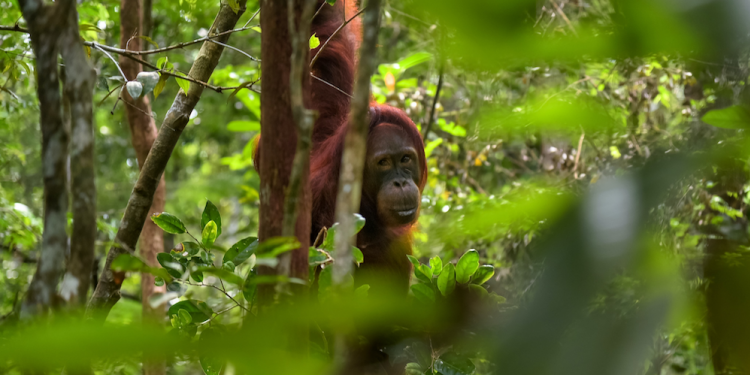
The proposal is interesting for animals in regions of the world where intensive animal agriculture or economic activities fuels deforestation. For instance, by banning imports of palm oil linked to deforestation, the habitats of wild animals such as orangutans and gibbons could be better preserved. Also, the welfare of farmed animals used in intensive productions could be improved, as intensive animal agriculture – which fuels deforestation as requiring crop feed – would be dissuaded. If Mercosur countries are categorised as “high risk countries” – two of the main products responsible for deforestation in Mercosur are beef and soy for animal feed – the legislation could possibly ban or restrict the imports of these products into the EU.

Eurogroup for Animals welcomes this initiative as producers intending to export to the EU would be incentivised to switch to more sustainable food production systems. However, the upcoming legislation must avoid loopholes that would defeat its purpose. For instance, the scope of the legislation needs to be improved as some products that are currently left out contribute to deforestation. Pig and poultry meat are for now excluded, but these animals are most often fed with soy, which largely contributes to deforestation. Avoiding this “distortion” is all the more important as some trade partners of the EU, such as Ukraine, exports significant quantities of poultry meat to the EU under the EU-Ukraine FTA. This means that Ukraine – biggest supplier of poultry meat of the EU – could feed the chicken from which the meat it exports derive with soy linked to deforestation that would be banned in the EU.

The geographical scope of the legislation must include other ecosystems in addition to forests, as the EU’s consumption of beef, soy and palm oil is linked to the destruction of other ecosystems such as grasslands, wetlands, and savannahs. The categorisation system of “low, standard and high risks of deforestation” could open the way for goods which have been produced on illegally deforested land, to be ‘green washed’ through a “low standard” country. 

Considering that agriculture-driven deforestation is permanent (whereas lands that suffer from deforestation caused by fires may regenerate), there is urgency for the EU to uphold its sustainable agenda. The EU must adopt this legislation before the ratification of any FTA with Mercosur. Mercosur is already the largest supplier of beef to the EU,  accounting for 73% of total EU beef imports. If the EU-Mercosur trade deal was implemented as it stands, imports of beef would increase between 30% and 64%. The Ambec report – the impact study commissioned by the French government – concluded that, as it stands, the EU-Mercosur agreement would generate an extra 25% of deforestation in the Amazon in the six years following its entry into force.

Regards Mark


Environmental Articles To Read.


Climate change: UN warning over nations’ climate plans

https://www.bbc.co.uk/news/science-environment-58600723

US and EU pledge 30% cut in methane emissions to limit global heating

https://www.theguardian.com/environment/2021/sep/17/us-and-eu-pledge-30-cut-in-methane-emissions-to-limit-global-heating

Hole in the ozone layer that develops annually is ‘rather larger than usual’ this year – and is currently bigger than Antarctica, scientists say

https://www.dailymail.co.uk/sciencetech/article-10001063/Ozone-layer-Hole-develops-annually-larger-usual-year-scientists-say.html

Regards Mark

Even locals outraged as 1400 dolphins die in Faroese hunt.

Even locals outraged as 1400 dolphins die in Faroese hunt

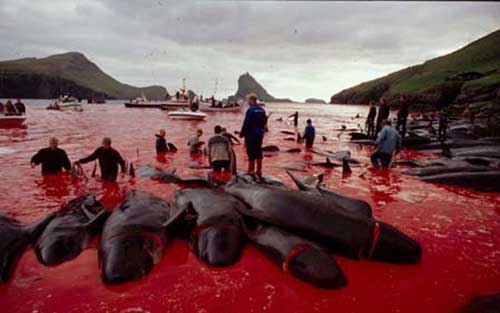
There has been widespread condemnation after over 1400 Atlantic white-sided dolphins were killed in the Faroe Islands last weekend, believed to be the largest number of dolphins ever killed in the country.

Much of the criticism has come from within the country where usually there is a strong defence of the hunts, which are portrayed by locals as a long-standing tradition providing a necessary supplement to their diet.

The dolphins were herded into a bay on the island of Eysturoy on Sunday after being encountered far out to sea. Even though the hunt was sanctioned by local authorities, it appears there was confusion over the number of dolphins being driven to shore with first estimates putting the number at around 200.

As a result, local reports suggest there were not enough people on the beach to kill the dolphins when it became apparent how many there actually were. The process took several hours as dolphins were left in a distressed state while their fellow pod members were killed with knives.

The meat from the hunt is traditionally distributed to local people but with so many dolphins killed, there are concerns that much of it may have to be discarded.

Find out more about whaling in the Faroe Islands

Even locals outraged as 1400 dolphins die in Faroese hunt – Whale and Dolphin Conservation (whales.org)

Regards Mark

UK Wrongdoing: Challenge to badger cull due as Bern Convention Bureau considers alleged breach case.

WAV Comment – No final news yet, but we will report as soon as we know.

Regards Mark

Challenge to badger cull due as Bern Convention Bureau considers alleged breach case

13 September 2021

Press Release

Complaint alleges UK Govt in breach of international wildlife treaty obligations after failing to consider cull impact on badger population

A coalition of animal protection groups will have their complaint against the UK Government, alleging a breach of an international wildlife treaty, considered by the Bern Convention as its Bureau meets this week (15 and 16 September). 

The Bern Convention, to which the UK has been a signatory since 1982, aims to ensure the conservation and protection of Europe’s wildlife, and regulates the exploitation of species listed in Appendix III, which includes badgers.

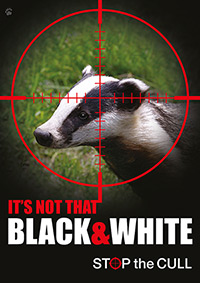
Badger Trust, Born Free Foundation, and Eurogroup for Animals allege that the UK Government’s ongoing badger culling policy places it in clear contravention of its commitments under the Convention. Their complaint challenges whether the UK Government has adequately considered the impact of mass culling of badgers on the badger population and wider biodiversity, and whether there has been any significant disease control benefits to justify the culls. 

The consideration comes just a week after the UK Government announced that badger culling will be ramped up in 2021, with seven new licences issued expanding the cull area and setting maximum kill quotas that could see the highest numbers of badgers killed in a single year since culling began. There are now 61 areas with active cull licences, covering counties from Cornwall to Cumbria, and up to 75,930 badgers could be killed in 2021 – taking the total since the cull began to well over 200,000.

Britain is home to more than 25% of the European badger population. However, with more than 140,000 badgers killed under licence since the cull policy started in 2013, and with culling set to continue until 2025 under recently confirmed UK Government plans, that population is coming under severe pressure. The case was put on “standby” by the Bern Convention in 2020, with a request for further information, the first time a complaint made against the UK Government’s badger culling policy had not been dismissed at the initial stage. 

That the UK government continues to hand out new cull licences not only lays bare claims made by British ministers to be champions for animal welfare, but only serves to showcase a bewildering level of cognitive dissonance. No evidence whatsoever supports the ongoing culls in England, which is why, I suspect, no such evidence demonstrating a disease control benefit has been produced by the British government. We now rely on the other parties to the Convention to hold the UK government to account. England’s badgers — Europe’s badgers — cannot continue to be sacrificed for domestic political expediency.

Reineke Hameleers, CEO of Eurogroup for Animals

Whilst we are grateful that our complaint is at last being reviewed, it has been two years since we initially submitted our complaint in 2019. In that time another over 76,000 badgers have been killed under this failed approach to controlling bovine Tuberculosis – a respiratory disease in cattle that starts and ends with cattle. The latest licences for 2021 alone could take the same amount again, and the cull is set to run to 2025 – so we have years and years of further culling ahead. The impact on the badger population is unknown, and seemingly inconsequential to the UK Government who claim it is coming to an end, but in reality this senseless slaughter continues. We hope for a positive outcome from the Bern Bureau, and a brighter future for Britain’s badgers.

Adam Laidlaw, Executive Director of Badger Trust

The UK Government has hailed its badger culling policy a success. However, after eight years of culling which has seen the destruction of more than 140,000 badgers, representing perhaps a quarter of the UK badger population, evidence for significant disease control benefits among cattle herds in cull areas is lacking, and the Government’s woeful efforts to estimate and monitor targeted badger populations are failing to guarantee their eventual recovery. In spite of this, the Government has issued licences for 2021 which could see a further 75,930 badgers killed. We urge the Bern Convention to take action that will help to bring this inhumane, ineffective, unscientific and unnecessary slaughter of a native, protected wild animal to a permanent end.

Dr Mark Jones, veterinarian and Head of Policy at the Born Free Foundation

ENDS


Notes
A briefing on the complaint can be viewed here.

Final information relating to the complaint was submitted by Badger Trust, Born Free, and Eurogroup for Animals, in July in advance of the meeting this week. 

The original complaint lodged with the Bern Convention in 2019 can be found here.  

Time Out – Enjoy !

Regards Mark

EU: Farm to Fork Strategy own initiative report: vote in committees moving closer to systemic change and higher animal welfare.

Farm to Fork Strategy own initiative report: vote in committees moving closer to systemic change and higher animal welfare

10 September 2021

News

On Friday 10th September the AGRI and ENVI committees adopted with a large majority (94 in favour, 20 against and 10 abstensions) the draft report on a Farm to Fork Strategy for a fair, healthy and environmentally friendly food system.

Thanks to the 48 compromise amendments passed, the Farm to Fork own initiative report is now closer to leading a systemic change and higher EU animal welfare production.

Nevertheless, parts of some compromise amendments would have needed to be altered, such as the one stating that the support of affordable food should not lead to cheap animal products that prompt intensive farming.

The committees also supported theconsumption of algae for a dietary shift, which is welcomed, but at the same time the one of insects. Eurogroup for Animals believes that insect farming should not be promoted as an alternative protein source for animal feed or direct consumption due to serious animal welfare and sustainability concerns. Moreover, insects are not a sustainable solution for the EU’s food system transformation. On the contrary, insect farming is a false solution, given its potential to prompt more intensive farming instead of promoting the much needed systemic change.

Besides the compromise amendments, the AGRI and ENVI committees also adopted favourable amendments concerning trade, animal experiments and PMSG production, specifically: 

On trade, a very clear amendment calling for EU animal welfare standards to be imposed on imported products. With the ongoing review of animal welfare standards and the growing calls by countries like France to see more production standards applied to imports (a concept they call “mirror measures”), there has never been such an opportunity to extend the scope of EU measures, and by doing so, to use the leverage that access to the EU market represent to incentivise foreign producers to improve animal welfare standards. 

On animal experiments, an amendment reminding that structural animal experiments that are not indispensable should have no place in the food chain, as the Animal Experimentation Directive (2010/63/EU) prescribes the replacement and reduction of the use of animals in procedures. 

The amendment also calls on the Commission and Member States to stop the import and domestic production of Pregnant Mare Serum Gonadotropin (PMSG), which is extracted from the blood of pregnant horses that are systematically impregnated and exposed to blood collections, involving health- and welfare issues

The amendment calling on the EC to suspend import of horse meat from “countries where applicable EU requirements relating to traceability and animal welfare are not complied with” was also adopted.

The adoption of amendment 2294 is an important and timely statement from MEPs, proving that the objectives of the Farm to Fork Strategy remain clear and encompass all species. The call underlines the Parliament’s commitment to extend EU animal welfare standards to third countries, similarly to other amendments adopted in this report. Furthermore, it serves as a poignant reminder that the implementation of the Animal Experimentation Directive is far from perfect, a call that reverberates repeatedly from MEPs offices.

Reineke Hameleers, CEO, Eurogroup for Animals

Unfortunately other key amendments for the protection of animals were rejected such as the call for a ban on fur production, and the amendment calling on Member States to ban mink farming.

Besides the serious ethical issues disconsidered in those decisions, they also don’t take into account the recently adopted Report on the EU Biodiversity Strategy, where the EP acknowledged that fur farming can significantly compromise animal welfare and increase the susceptibility to infectious diseases including zoonoses.

The plenary vote on this report is scheduled for the beginning of October.  Eurogroup for Animals and its members urged MEPs to vote for an initiative report that leads to real systemic change and steps up the game for animal protection in Europe. 

Regards Mark

UK: Alok Sharma MP and Climate Summit President Criticised for ‘Excessive’ Air Travel.

Have been researching Alok Sharma MP a bit more this morning (14/9); amazing what you can find:

Regards Mark

Try again Contact Information for Alok Sharma MP:

Contact information for Alok Sharma – MPs and Lords – UK Parliament

MP and climate summit president Alok Sharma criticised for ‘excessive’ air travel and avoiding quarantine

MP and climate summit president Alok Sharma criticised for ‘excessive’ air travel and avoiding quarantine – The Canary

Political leaders have accused Cop26 president Alok Sharma of “hypocrisy” after it emerged he has flown to at least 30 countries this year in the run-up to the climate summit. Sharma also attracted criticism for failing to self-isolate after visits to red-list countries, most recently Bolivia and Brazil, by relying on rules exempting ministers from quarantine.

“Get-out-of-jail free” card

The former secretary of state for business remains in Brazil where he’s meeting with state and business leaders in a bid to get them to commit to net zero carbon emissions by 2050. Liberal Democrat spokesperson Sarah Olney MP accused him of treating flexible rules for Crown servants as a “get-out-of-jail free” card.

As usual with this Government, it’s one rule for them and another for everybody else.

While Alok Sharma flies to red-list countries with abandon, hard-working families can hardly see loved ones or plan holidays as the Government changes travel rules on the hoof.

People are sick of the Government giving themselves get-out-of-jail free passes while the rest of us stick to the rules.

COP President:

COP26 President – GOV.UK (www.gov.uk)

‘One rule for them’: Alok Sharma criticised over flights to 30 countries

This article is more than 1 month old

Cop26 president accused of undermining climate effort after visiting 30 countries in seven months

‘One rule for them’: Alok Sharma criticised over flights to 30 countries | Alok Sharma | The Guardian

Alok Sharma, the government minister responsible for vital UN climate talks, is facing calls to self-isolate when he returns from Brazil, after he was hit with a double barrage of criticism for not quarantining when returning from “red-list” countries and for the environmental impact of his trips around the world.

The president of Cop26, which is being hosted in Glasgow in October and November, has visited 30 countries since February, including Brazil, where he has been this week, Indonesia and Kenya, it was reported.

Despite travelling to six countries on the government’s travel “red list” he was not required to isolate, according to the Daily Mail. The revelations came as the government added countries including Mexico to its red list, scuppering many people’s summer holiday plans.

The Mail also reported that Sharma had an indoor meeting – without masks – with Prince Charles days after returning from Bangladesh (a red list country) before going on a visit to a primary school.

With Sharma currently in Brazil, where the P1 and P2 variants emerged, he is now facing pressure to show he is not above the rules the public are subject to.

The Liberal Democrat health spokesperson, Munira Wilson, said: “It seems incredible that this government never seems to learn the lesson; it simply cannot be one rule for them and one rule for everyone else.

“Whether or not he should be going to red countries on his tour is up for debate – but whether he should be self-isolating when he returns is not.

“The Conservatives have made a terrible mess of international travel since March last year and it has cost many thousands of lives.”

Sharma has also been criticised for not leading by example when attempting to encourage others to reduce emissions. But Downing Street said face-to face talks were essential on occasion as Sharma tried to persuade major emitters to cut emissions and secure ambitious action ahead of the Cop26 summit.

The Welsh first minister, Mark Drakeford, told Sky News: “I’m afraid I do think it really undermines the effort that we know everybody has to make. We’ve all got used to having meetings with people in different parts of the world without needing to travel around the world to do it.

“And when we’re trying to persuade people to make the changes they need to make, we need to make, in our daily lives, transport, in our own homes, in the way that we think about the contribution we can make, we need the people at the very top to be demonstrating that they are doing that too, not thinking that that is for other people to carry that burden.”

David Lammy, the shadow justice secretary, said Sharma’s behaviour demonstrated that “it’s one rule for them and another rule for us” and “feels to not be setting the example”.

The Labour MP told the broadcaster: “Well, the optics are very clear – it’s one rule for them and another rule for us, whether it’s Dominic Cummings, whether it’s Matt Hancock, whether it’s Alok Sharma.

“Of course some international travel is required, but this amount of international travel when you’re climate change minister feels to me bizarre, and feels to not be setting the example.”

The Green party peer Jenny Jones, who has already accused the former business minister of being “excessive” and “hypocritical”, on Friday added that Sharma’s flights to France and Belgium “could hardly be faster than rail if you take into account the ability to work efficiently on the train”.

Most of Sharma’s trips were during the winter and spring months when international travel from the UK was mostly banned.

He visited India, Costa Rica, Qatar and UAE in March, while in April he travelled to South Korea and Japan before going to Bangladesh in June.

Not all of the 30 known trips were return flights to the UK, but travel to and from all the destinations would total 200,000 miles, or the equivalent to eight times around the Earth.

The delayed Cop26 conference will mark the first time since the 2015 Paris climate change conference that countries will set ambitious new targets to cut greenhouse gas emissions.

A No 10 spokesperson said: “As Cop president, Alok Sharma is leading climate negotiations with countries including major emitters to cut emissions and secure ambitious action ahead of the Cop26 summit.

“The majority of this work is done remotely but some travel to key countries for face-to-face talks is essential. He has secured ambitious action as a result of the discussions he has had.”

The spokesperson added: “Ministers conducting essential travel such as this are exempted from quarantine, as set out in the rules.”

Asked if Sharma would quarantine on his return from Brazil, where he is currently, the spokesperson said: “He will continue to comply with the rules as set out.”