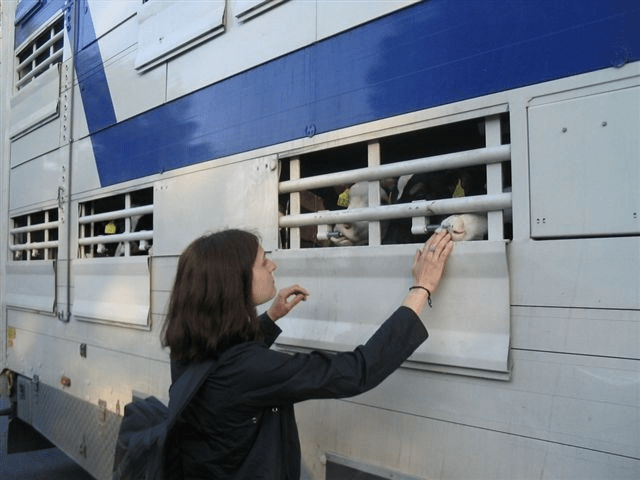
Category: Farm Animals

France: Welfarm – Horse Meat Investigation / Actions.

Hello Mark,

Printed trays imitating a gingham fabric that evokes French tradition and Sunday picnics: this is the packaging frequently used in supermarkets to market horse meat.

But behind the packaging, we are far from the French art of living. Most of the time, the meat marketed comes from the New World, including Argentina, Canada and Uruguay.

Several surveys conducted since 2021 by Animal Welfare Foundation/Tierschutzbund Zürich (AWF/TSB) with the support of Welfarm have shed light on the conditions of horse slaughter in Uruguay.

Beaten, emaciated, injured, sometimes seriously, left without care in the pastures, horses slaughtered in Uruguay are regularly kept in slaughterhouses in deplorable conditions before being killed: lack of water, food, care, access to shade and shelter against bad weather….

Hidden abuses during the audits of European inspectors, whose visits are always announced in advance, found AWF / TSB: animals present in good physical condition, distribution of fodder …

The latest survey of the association proves the ineffectiveness of these audits to detect the real conditions of detention of horses on a daily basis:

Investigation: bogus horse meat audits in Uruguay on Vimeo

These animals are not bred for human consumption: they can be culled draft horses, mares from blood farms, racehorses too old for competition, etc.

In France, a lucrative market for SNVC

Société Normande de Viandes et Courtages (SAS SNVC), based in Toutainville, Eure, markets horse meat from the Clay slaughterhouse, imported by the meat import-export company P. Harinordoquy & fils, based in Bordeaux. However, the Clay slaughterhouse and the two French companies are all owned by French entrepreneur Yon Harinordoquy. The Harinordoquy Group therefore controls the entire sector, from slaughter in Uruguay to the plate of the French consumer.

AWF/TSB’s Uruguay survey was conducted in the country’s three slaughterhouses approved by the European Union: Sarel, El Amanecer and… Clay, the slaughterhouse owned by the Harinordoquy Group. SNCV, which markets horse meat from that slaughterhouse in France, can therefore only be aware of the conditions of detention and slaughter of horses on the Uruguayan site.

Welfarm is calling on the European level to ban imports of horse meat from states that do not respect high standards of animal protection in slaughterhouses.

Several media, such as LibérationLoopsider or Vakita have already taken up this subject today. To allow us to continue to disseminate these surveys in France and to challenge professionals and political decision-makers, you can support us with a tax-free donation.

Thank you for your support,

WELFARM.

Welfarm – Association whose mission is recognized as a public utility, WELFARM works for a better consideration of the well-being of animals, at all stages of their life (breeding, transport, slaughter).

Regards Mark

Vatican City: Animal rights campaigners urge Pope Francis to denounce bullfighting.

Animal rights campaigners urge Pope Francis to denounce bullfighting

Animal rights campaigners urge Pope Francis to denounce bullfighting | Reuters

VATICAN CITY, July 28 (Reuters) – A group of animal rights activists gathered near the Vatican on Friday dressed in red capes and fake horns to urge Pope Francis to denounce what they see as the barbaric practice of bullfighting.

The corrida, in which the animal usually ends up killed by a sword thrust by a matador in shining costume, is seen by supporters as an age-old tradition to be preserved, but condemned by critics as a cruel ritual.

“Catholic Church: Silence is Violence! Denounce bullfighting,” read a banner held up by the activists near the ancient Roman Castel Sant’Angelo fortress on the banks of the River Tiber, in view of St Peter’s Basilica.

Since bullfighting events “are often held in honour of Catholic saints or during holy Christian celebrations, the Catholic Church can and must help end this abuse by publicly condemning bull torture in the name of religion,” animal rights group PETA said in a statement.

“We are asking the pontiff, the pope, as the representative of the Roman Catholic Church, to publicly condemn, to denounce the torture that is done on bulls in the corrida,” Patrizia Re, a spokesperson for PETA Italy, told Reuters.

The Vatican’s press office did not immediately respond to a request for comment. In 1567, Pope Pius V did outlaw bullfighting, calling the practice “alien from Christian piety and charity” and “better suited to demons rather than men”, but his ban eventually lapsed.

Reporting by Antonio Denti Writing by Alvise Armellini Editing by Peter Graff

Bless you my children !

Regards Mark

England: 1/3 of TV Funds For New Advert Raised In Just 4 Days. Can You Give ?

Above – the last advert.

Wow, what a start! We’re just four days into our crowdfunder and we are already at £13,000, meaning we are nearly a third of the way to reaching our target of £40,000.

Thank you to everyone who has donated so far – our advert will have a huge impact in changing people’s minds and we appreciate your support.

If you haven’t yet, will you donate today to help us keep the momentum and reach our next goal of £20,000?

If you can’t donate right now, we completely understand. You can still help by sharing our page with friends, family and colleagues so we can reach as many people as possible.

Also, take a look at a behind the scenes interview with actor, Antonia, who starred in our advert, below.

Thanks again for your support. We wouldn’t be able to do this without you.

Yours for the animals

Juliet Gellatley
Founder & Director

Donate to the tv campaign –

Vegan TV Ad – Takeaway the Meat Crowdfunder | Viva! The Vegan Charity

Regards Mark

EU: The second worst animal welfare problem in Europe? Here’s what’s really happening to dairy cows.

The second worst animal welfare problem in Europe? Here’s what’s really happening to dairy cows

24 July 2023

Are you clued up when it comes to what factory farmed dairy cows in Europe go through? Millions of these animals are spending nearly their whole lives sick, confined and in pain. Here are some of the main problems they face – and how policymakers should address them as they continue to revise the animal welfare legislation.

You’ll be hard-pressed to find a ‘healthy’ dairy cow in a factory farm. Forced to produce massive amounts of milk and subjected to zero-grazing systems, inadequate housing and improper monitoring and treatment, millions of these poor beings spend nearly their whole lives in pain. In fact, their health problems are so severe that they’re considered by the European Union to be the second-worst animal welfare problem in Europe. With that said, the welfare laws for dairy cows have not been addressed for decades. It’s time that changes.

The stats listed below are from the 2021 No Animal Left Behind report.

Across factory farms in the EU, dairy cows commonly suffer from two major challenges:

Lameness, which hinders their movements and increases their susceptibility to mastitis and other metabolic disorders. There hasn’t  been a meaningful  reduction in the prevalence of this illness for the past 20 years, which affects up to 31% of dairy cows in industrial farming systems

Mastitis, which can permanently injure their udders and is caused by physical trauma and infections. It affects between 20% – 30% of cows per herd, and it can be very hard to treat and has a high chance to come back.

Lack of access to pasture is a big reason why these dairy cows are suffering so much

Cows have evolved to thrive on pasture, where they can graze, exercise, socialise, and explore the environment at their will. These natural habits are critical for their welfare, and are something they’re strongly motivated to do. Dairy cows have been known to push against weighted gates to access pasture, even when they’ve been hungry and exhausted – clearly, their desire to be in these spaces is deeply-rooted, regardless of their physical state.

Cows simply need pasture. There’s no long-term replacement for it. However, surveys show that there has been a decline in grazing dairy cows across Europe over the past decade, with evidence concurrently showing that this lack of access to the outdoors has contributed to health issues like mastitis, dystocia, lameness, and teat trampling. 

Dairy cows and calves also spend too much time alone, bored and starving

The indoor environment millions of dairy cows are forced to live in is nowhere near good enough to keep them satisfied, comfortable and sickness-free. Numerous cows are tethered within ‘tie-stall systems’ where they find it incredibly difficult to lie down and relax, and where they are far more likely to get sick (as opposed to cows in ‘loose-housed’ systems, who can roam and look after themselves more effectively).

Cows are commonly lonely on factory farms, too. 60% of Europe’s dairy cows are housed individually for at least the first eight weeks of their lives. This impedes their ability to learn, socialise, and develop good coping mechanisms, as well as restricts their behaviours and ability to move. Adult dairy cows can be tethered throughout their lives, as well. 

The grass is greener on the other side: the European Commission must free Europe’s dairy cows and protect their welfare.

These problems clearly cannot be allowed to continue or worsen. The EU’s dairy cows desperately need changes to be put in place for their welfare as the European Commission continues to revise the animal welfare laws, including provisions to:

Enable them to access good-quality pasture more frequently

House calves socially, so they don’t have to grow up alone

Improve their indoor environment – so when dairy cows do have to be indoors, they have plenty to do to keep themselves healthy and entertained. A simple measure that could be implemented is the use of mechanical brushes, which can reduce boredom, stress and frustration, as well as improve their hygiene and make them happier

Fed sufficient amounts of nutritious food

Tethering of dairy cows should be banned, so no cow has to endure being tied to the same place for months in a row.

Dairy cows deserve to be free, comfortable, healthy, nourished and happy – as does every other living thing. Share this tweet if you agree – dairy cows and all other kept animals need stronger laws for their welfare! 

Regards Mark

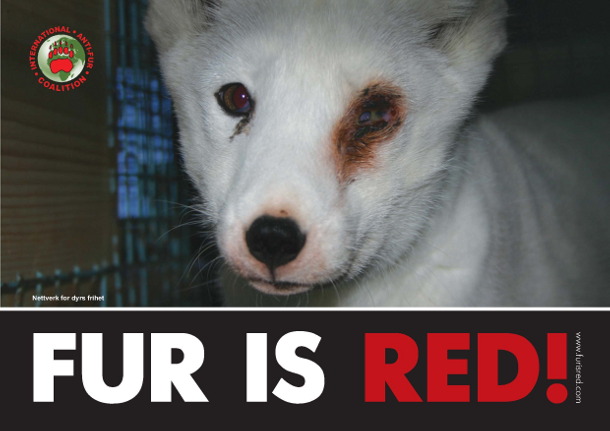
EU: Fur Free Europe officially presented to the European Commission.

20 July 2023

Press Release

It’s now up to the European Commission to provide a formal reply to the 1.5 million citizens who have called for a Fur Free Europe, in the most successful European Citizen Initiative related to animal welfare.

Today the European Citizen Initiative (ECI) organisers formally met with the European Commission (EC) to present the case, and signify the importance of a full harmonised ban on fur farms and on the placement of farmed fur products on the European market.

More than 1.5 million citizens asked for a Fur Free Europe, and 19 Member States have already totally or partially banned fur farming on grounds of animal welfare and public health: a clear sign is being sent to the EC that this practice cannot be justified under any circumstances.

The call was also recently reiterated by a majority of Member States during the last session of the Agriculture and Fisheries Council (AGRIFISH) and has been publicly supported by a number of members of the European Parliament.

By the end of 2023, the EC will publish a proposal aimed at improving the EU’s animal welfare legislation to align it with the latest scientific evidence. The organisers reiterated once more that while it’s possible to improve welfare standards for domesticated animals, science has clearly shown that this is not possible for wild animals on fur farms. Consequently, a ban on fur farming should be included in the proposal.

In addition, fur farms pose significant risk for the spread of zoonotic diseases, putting both humans and animals at risk, a fact which became widely evident during recent COVID-19 outbreaks. Banning the placement of farmed fur products on the EU market will ensure that fur produced under similarly cruel conditions in third countries is not allowed to be sold within the EU.

After the autumn hearing at the European Parliament, The EC will provide a formal reply to the ECI by mid-December.

As the EU is preparing to take a giant leap for animals, and with the set revision for the Kept Animals Regulation, this is a great opportunity to show that such cruel unjustifiable practices have no place in Europe. Citizens have made their voice loudly heard, and for this democratic tool to be successful, we expect a positive response from the EC soon,”

Reineke Hameleers, CEO, Eurogroup for Animals.

Regards Mark

Injecting animal welfare in renewed EU-Latin American trade relationships.

Injecting animal welfare in renewed EU-Latin American trade relationships

18 July 2023

As leaders from the EU and from the Community of Latin American and Caribbean States (CELAC) gather in Brussels for the third EU-CELAC summit, willingness to accelerate the conclusion of controversial trade agreements is on the agenda. What’s at stake for animals?

During the EU-CELAC Summit on 17-18 July, the Executive Vice-President of the European Commission and Ministers of Foreign Affairs of Mercosur countries reiterated their “determination to work towards the conclusion of the Agreement between the EU and MERCOSUR by the end of 2023”. 

Instead of pushing forward an unsustainable and harmful trade policy, the EU should redesign  its trade deals to be compatible with the EU Green Deal and the Farm-to-Fork Strategy.  These deals, as exemplified by the EU-Mercosur FTA, grant further unconditional market access to animal based products, leading to an increase in the trade and further fuelling the intensification of farming both in the EU and abroad. This trend not only implies poor animal welfare conditions, but also raises public health concerns in terms of zoonoses and antimicrobial resistance (AMR). Intensification of animal production also generates high levels of deforestation, impacting the welfare of millions of wild animals.

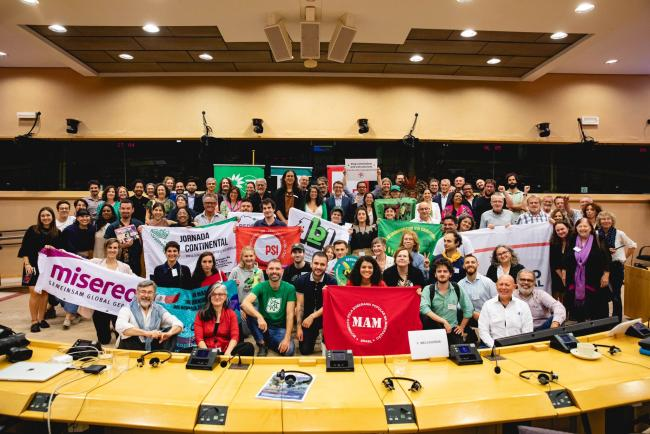
For all these reasons, Eurogroup for Animals, together with 50 civil society organisations from South America and Europe, and with the support of MEPs from the Greens/EFA, the Left and S&D, organised an international conference calling for ‘A new EU-Latin America trade relationship for the 21st Century’

The Left in the EP

During the conference, a wide range of speakers from the EU and South America agreed that the EU-Mercosur deal is toxic for indigenous people, workers, the environment and animals, and that the proposed additional protocol offers nothing more than cosmetic, unenforceable adjustments. Furthermore, the risks of the deal aggravating deforestation cannot be restrained by the recent EU legislation on imported deforestation, given that the legislation ignores many products that contribute to deforestation and other biomes destroyed by intensive agriculture. For example, soy-fed animals such as poultry are not covered by the legislation. 

Other speakers echoed Eurogroup for Animals’ criticism of the EU-Mexico and EU-Chile agreements. These deals have had devastating consequences for local communities, including pollution and destruction of natural habitats, and  their “modernised”  versions are likely to have further negative impacts on animal welfare, human rights, deforestation, the climate crisis and biodiversity. While the agreements do include some animal welfare provisions – including on animal sentience and growth promoters and, in the case of Mexico, a standalone chapter on animal welfare and antimicrobial resistance – the language is weak and will do nothing to offset the negative impacts unconditional trade liberalisation will have on animals, people and the planet.

All eyes are now on the European Commission, the European Parliament and the Council to avoid fast-tracking the EU-Chile and the EU-Mexico FTAs by side-stepping national and regional parliaments and removing Member States’ veto right. This is critical given the range of negative impacts the agreements will have on animal welfare, human rights, the climate crisis and biodiversity. Concerning the EU-Mercosur FTA, Eurogroup for Animals calls for a full renegotiation of the deal, including conditioning all trade preferences granted in the agreement to EU-equivalent animal welfare standards.

Regards Mark

England: Irish Calf Export Investigations – Additional. By Mark – 2010 Investigations and EU Report.

Re https://worldanimalsvoice.com/2023/07/16/ireland-milking-it-utterly-unacceptable-and-unlawful-irelands-mistreatment-of-male-calves/

Back in 2010 I was the EU correspondent for a Kent based anti live animal export group, named KAALE; At that time I worked with Lesley, founder of ‘Eyes on Animals’ (Netherlands) – Eyes on Animals – Watching out for their Welfare, also PMAF (now Welfarm) in France  Welfarm – World Farm Animal Protection – Wikipedia, the free encyclopedia, also Animals Angels (Germany)  Stop Animal Transports! – ANIMALS‘ ANGELS (animals-angels.de) to produce a large report on the transportation of live dairy calves from Ireland into France (via Cherbourg).

You can read more about the report and the investigations at  About Us. | Serbian Animals Voice (SAV)

Scroll down until you come across the images of the calves and the transporters.

The report comprised several investigations into the Irish calf export business.  Here is a link to one of the investigation reports:

Microsoft Word – JH.04.03.2010_REPORT on NON-COMPLIANCE with RESTING TIMES in relation to CONTROL POST at F-HEAUVILLE.doc (wordpress.com)

Hundreds of copies of the report were printed and sent to MEP’s at he EU, with the hope it would make difference.

So for some of us, and you as campaigners, the new investigation footage shown at Ireland: Milking It – “Utterly unacceptable and unlawful”: Ireland’s mistreatment of male calves. – World Animals Voice  comes as no surprise at all.  The investigative work back in 2010 concentrated on a staging (control) post (stop, unload, feed calves) associated with an operator named Pignet. 

By pure coincidence, Lesley has additional Pignet control post abuse footage in the current EoA site – you can read more about it here – Violence against young calves at Pignet control post (eyesonanimals.com)

The fight for animal justice goes on – stop live animal transports !

Regards Mark

Ireland: Milking It – “Utterly unacceptable and unlawful”: Ireland’s mistreatment of male calves.

“Utterly unacceptable and unlawful”: Ireland’s mistreatment of male calves

14 July 2023

EFI

Investigation

A new documentary by Ireland’s RTÉ Investigates programme, ‘Milking It; Dairy’s Dirty Secret’ has exposed animal welfare breaches of male calves in Ireland, both on-farm and during live export to Europe.

Irish milk production has jumped 68% since the EU milk quota system was abolished in 2015. Ireland now produces just short of 9 billion litres of milk every year and 10% of the world’s infant formula. To meet this demand, approximately 1.5 million dairy calves are born in Ireland every year. While female calves are reared to become dairy cows, over half a million male calves born each year are considered a valueless by-product of the sector, as they neither produce milk nor fatten well for beef. Male calves therefore face a difficult fate: either killed at a few days old, or shipped to veal farms in Holland, Spain, Italy, and, more recently, to a growing market in Poland and Romania. 

The RTÉ documentary included investigation footage carried out by L214 and Eyes on Animals, assisted by our member organisation Ethical Farming Ireland, which covered the journey of calves transported from Ireland to France and the Netherlands.

Despite scientific evidence suggesting that these animals should not travel until 12 weeks old due to their undeveloped immune systems and incapacity to correctly use feeding devices, the industry continues to ignore this recommendation, and calves are exported at around 15 days old. Also, The European Food Safety Authority (EFSA) recommends a minimum age of 5 weeks for transport, emphasising the vulnerability of these animals during their early stages of life.

Furthermore, EU regulations clearly state that unweaned calves must be given water and, if necessary, fed after 9 hours of transport, when they should receive a rest period of at least 1 hour before being transported again. However, footage reveals that the calves are subjected to 30-hour journeys without milk or rest: a flagrant violation of EU law, and a general disregard for animal welfare.

Further footage taken by RTÉ told the same story of gruelling journeys for young calves that breach the EU Regulation on the transport of live animals. In addition, workers could be seen repeatedly kicking young calves, hitting them with sticks, and throwing them from trailers. . 

The documentary has caused political outcry, with the Irish Department of Agriculture confirming an investigation into the programme findings. Irish Agriculture Minister Charlie McConalogue called the practices uncovered in the documentary “utterly unacceptable, and in some instances unlawful”.

Irish Taoiseach (Prime Minister) Leo Varadkar described the footage as “repugnant”. Mr Varadkar said there would be “robust and timely” action against people found to have breached regulations in the footage, and that the reputation of the sector relied on compliance with the regulations in place.

The documentary proves once again that the existing animal welfare legislation does not go far enough to protect EU farmed animals at rearing, transport or slaughter. The European Commission has the power to improve the transport regulation this year, with the revision of the EU Animal Welfare legislation. In particular, they must:

Ban ‘unfit animals’ from being transported, including unweaned animals, for whom these journeys are even more difficult to bear

Place strict limitations on journey times

Ensure that the new rules are better enforced

Let’s be clear, there is no way to export calves humanely or in line with legislation because it is not possible to feed calves during transit. That is the simple truth. The dairy industry must find an alternative outlet for their calves, and keep them with the herd until weaned. If you don’t have the facilities to look after them then don’t breed them in the first place.

Caroline Rowley, Founder of Ethical Farming Ireland

Indeed, and as recommended during the documentary, the culling and mistreatment of “valueless” male calves should be avoided, which is currently possible by using sexed semen. The transport of farmed animals should be reduced, refined and replaced by meat and carcasses, semen and embryos as recommended by the FVE, WOAH and EFSA.

Read more at source

RTÉ Investigates

Regard Mark

I have more to say about Irish calf transport investigations which we have undertaken in the past; I will provide details and links in another post very soon.