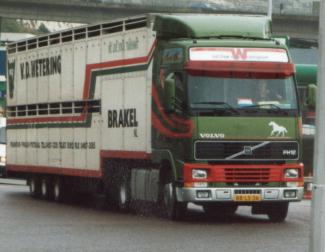
I think that any of us in welfare who have been involved with live animal transport over one, two, or (in my case) around 40 years, we all know what a complete and utter farce the Regulation is for the ‘protection of animals during transport’ – Reg 1/2005 – EUR-Lex – 32005R0001 – EN – EUR-Lex (europa.eu) We know it well as part of our work, and yet despite overwhelming evidence and footage over decades showing endless suffering of animals during transport, and the non compliances with the EU legislation, the people in the EU who could change things just ignore and turn the other way.
The footage you see here from our friends at AWF is yet more examples of the EU gone wrong.
It has been time for change for decades; but now the EU Commission hopefully is really in last chance saloon. It happens all over the world, not just in Europe. The sooner we see legislators get off their butts and do something to actually protect animals in transport, is a day that cannot come soon enough. Until the ban the fight goes on; and the evidence continues to pile.
Mark
Photo – Mark
The Animal Welfare Foundation, released three reports on June 16 highlighting some of the horrific realities of the live animal transport industry. Coupled with their recent investigations into the sector, it’s clear change must happen – and that only the European Commission can bring on the scale of action needed.
The first report is concerned with which factors – including bedding, loading density, and distance – have the strongest impacts on the welfare of cattle during transport. It analyses 112 consignments of cattle on trucks that were inspected over a period of five years, between 2016 and 2021. Ultimately, their findings indicate that insufficient welfare provisions overwhelmingly impact an animal’s physical and emotional health, and can even shorten their lifespans.
The second report focuses on the long distance transport of lambs between the same time period. The findings are shocking – AWF records that out of the consignments they investigated:
100% had inadequate drinking devices for lambs
90% provided insufficient space for the lambs to move – in at least 44% of the vehicles, the space for each individual animal came only to 0.18m2
65% had issues that were likely to lead to injuries, such as sharp edges and loose dividers
At least 35% of the vehicles had been travelling for longer than permitted by law.
The third and final report follows a similar theme, and reports on the transport of unweaned calves between 2015 – 2021. As with lambs, it was found that the care these poor calves received was far from satisfactory, as in the consignments they investigated:
100% had inadequate drinking devices for unweaned calves
In at least 73%, animals were not fed after nine hours
At least 47% of the vehicles had been travelling for longer than permitted by law.
In both the second and third reports, AWF noted that well over half the animals being transported were showing acute signs of distress, including restlessness, biting and licking the metal bars they were trapped behind, and making loud noises.
Their insightful work makes the connection clearer than ever. The millions of sentient beings that are subjected to long journeys each year are not only being badly taken care of, but they are sensitive to the conditions in which they are transported as well. Measures must be taken to ensure these sentient beings are given adequate space to move, access to clean water, good nutrition and a comfortable environment to make these journeys as stress-free as possible.
Recent investigations by the Animal Welfare Foundation also stress the urgency of new live animal transport rules
Earlier this year, the Animal Welfare Foundation released heartbreaking footage of the journey of some young calves, which they followed from the Czech Republic to a fattening farm in Spain.
Their footage shows that these poor infants were starved for hours, and one calf in particular, which they named Marek, was not even able to get a quick drink of water.
Also this year, AWF’s investigative team intercepted trucks carrying lambs to Italy for Easter – resulting in over 20,000 EUR worth of fines for transport companies which were caught violating the EU’s transport legislation:
All the evidence points to a critical need for the European Commission to take action
AWF’s illuminating work complements a range of scientific evidence published by the likes of EFSA and the European Court of Auditors already that points to the necessity of better animal welfare provisions being made for animals that are transported.
The European Commission must use this wealth of information and data to make dramatic changes to this industry that causes so much suffering to millions of sentient beings each year. In particular, they must:
Ban ‘unfit animals’ from being transported, including unweaned animals and very young babies, like the lambs and calves recorded by AWF, for whom these journeys are even more difficult to bear
Place strict limitations on journey distances
Enforce any new animal welfare legislation written for live transport more effectively, to guarantee these stricter regulations are being followed.
It’s time for the welfare needs of transported animals to be honoured as seriously as they deserve.
We’re putting the spotlight on animal welfare this year through phase two of our No Animal Left Behind campaign! Learn more.
Eurogroup for Animals welcomes the recent vote in the European Parliament on the Commission’s proposal to strengthen geographical indications, a quality label for agricultural and wine products. The proposal identified that consumer concerns about animal welfare and sustainability are not adequately protected at present, which is welcome having in mind animal abuses previously denounced in the production of prestigious products like Parmigiano Reggiano or Jamon Serrano.
Last year the European Commission adopted a legislative proposal on revising the geographical indications scheme, aimed, among others, at strengthening the sustainability dimension of said scheme, notably by laying down requirements in light of the growing integration of these issues in GI value chains, validating those producers who have already integrated sustainability actions into their product specifications.
The amendments supported by the Parliament deviate from the Commission’s proposal in advantageous ways, notably by including language on animal welfare that was not originally present. Most notably, it expands the scope of EU rules that GI producers must comply with to include animal welfare and environmental rules, and specifies that compliance should be verified through appropriate controls.
The EU register of GIs currently contains almost 3500 entries, with a sales value of €74.8 billion, and the system is recognised worldwide as representing the excellence of the EU’s agri-food sector. Increased attention to animal welfare is therefore essential to protecting the quality of GI products.
While GIs are commonly viewed as high quality by consumers, many producers do not currently respect even the EU minimum animal welfare standards. Indeed, investigations into GI products have uncovered illegal practices, such as brutal violence on farms breeding pigs for Parma Ham (Essere Animali, 2018 investigation), cows farmed to produce Parmigiano Reggiano unable to graze on pasture (Compassion in World Farming, 2017 investigation), and dead calves and serious hygienic/sanitary neglect on farms producing Grana Padano (Essere Animali, 2021 investigation).
Eurogroup for Animals will follow this process, to ensure the schemes referenced in the legislation are appropriate and to avoid it leading to humane washing.
Eurogroup for Animals welcomes the update to the OECD Guidelines for Multinational Enterprises, which for the first time includes an explicit mention of animal welfare.
On 8 June 2023, the OECD released a “targeted update” of the OECD Guidelines for Multinational Enterprises on Responsible Business Conduct, which for the first time calls on businesses to uphold animal welfare in their policies and practices. The guidelines, which are regarded as a global benchmark for ethical business practices, could have far-reaching positive implications for animals across the 38 member countries of the OECD.
Unlike the 2011 Guidelines, which did not discuss animal welfare, the updated Environment chapter calls on enterprises to respect international animal welfare standards and describes “good welfare” as requiring, among other things, that the animal is healthy, comfortable, and well nourished, provided a stimulating and appropriate environment, ensured humane handling, and subjected only to humane slaughter or killing:
85. Enterprises should respect animal welfare standards that are aligned with the World Organisation for Animal Health (WOAH) Terrestrial Code. An animal experiences good welfare if the animal is healthy, comfortable, well nourished, safe, is not suffering from unpleasant states such as pain, fear and distress, and is able to express behaviours that are important for its physical and mental state. Good animal welfare requires disease prevention and appropriate veterinary care, shelter, management and nutrition, a stimulating and safe environment, humane handling and humane slaughter or killing. In addition, enterprises should adhere to guidance for the transport of live animals developed by relevant international organisations.
While animal welfare has not consistently been considered a Responsible Business Conduct (RBC) issue, the new additions make clear that respecting animal welfare is part of due diligence and necessary to ensure RBC. The text allows civil society to file complaints via National Contact Point (NCP) mechanisms and engage directly with enterprises regarding their failure to ensure, through due diligence, good animal welfare for animals in their value chains. This marks a significant improvement on the previous Guidelines and we are grateful that civil society had the opportunity to provide input during the public consultation phase.
Nonetheless, the language on animal welfare leaves some room for improvement. First, the guidance to align with WOAH standards is disappointing, given that these are often much less ambitious than EU welfare standards. Further, in emphasising the necessity to comply with existing laws and regulations, the guidance overlooks the need to proactively minimise potential harms. Also, there is nothing about the need to strive for a good quality of life for animals, nor to decrease the amount of live animal transport journey time. The OECD is therefore urged to issue improved guidance moving forward.
This update is also highly welcome as it coincides with the preparation of mandatory due diligence legislation in the EU, which draws partly from the OECD Guidelines. The EU legislation will seek to embed sustainability in global value chains by ensuring EU companies identify, prevent or repair environmental and/or human rights adverse impacts. However, the legislative proposal makes no reference to animal welfare at present. Eurogroup for Animals therefore calls on the Council and the European Parliament to remedy this omission in the wake of this update, and to include robust and explicit language on animal welfare during the trilogue stage.
Around 1.5 million farm animals undergo long and gruelling journeys from Europe to other countries each year. Transported via land and sea, these poor sentient beings have few rules in place to ensure their welfare, especially when they are exported to countries outside the EU’s scope. Affecting so many species and in such great numbers, it’s vital the European Commission puts the live animal transport industry under the microscope while revising the animal welfare legislation.
In the best case scenario, the European Commission should aim towards phasing out live animal transport entirely – substituting it for a meat and carcasses trade, so that no animals should be forced to endure difficult journeys that are innately abnormal for them. At the very least, they should enforce much stricter laws within the sector to ensure these animals experience the highest possible welfare standards during transportation. We dig into the issues a little more below.
Some quick facts about live animal transport in the EU
The below was taken from our 2021 white paper, ‘Live Animal Transport: Time to Change the Rules’. Download it here for more insights.
In 2019:
1,618,275,545 ovines, bovines, poultry and pigs were transported alive across the EU and from the EU to non-European countries
Poultry made up 98% of total live animal exports, which made them the most traded farm animal species. The top EU exporters of poultry were Poland, Hungary, the Netherlands and France
57,523 tonnes of fish was reported as exported alive from the EU, with 93% of these destined for other Member States
87,817 horses, asses, mules and hinnies were transported alive across the EU and to the rest of the world.
These are not small numbers. Changes to the laws surrounding live animal transport would affect millions of lives and most kept species, making it arguably one of the most important sectors for the European Commission to address in their ongoing changes to the animal welfare legislation, especially as…
The live animal transport industry is riddled with problems
This sector is not in a good state. Current laws for live animal transport are not strong enough or go far enough to protect all the animals that are transported annually. As of this moment, the industry:
Does not have any strict limitations on journey times: Which means animals can be transported for days – or even weeks – before they get to their destination. Can you imagine being hungry, thirsty, sleepless and stressed for this long?
Permits ‘unfit animals’ to be transported: This includes heavily pregnant and injured animals, as well as babies. These sentient beings feel the burdens of live transport even more heavily than their ‘healthy’ counterparts. Sometimes, even sick animals are subjected to these journeys as well, as they are not inspected properly before being loaded onto transport vessels – which poses a big risk to both the animals they are travelling with and public health
Does not have any control over what happens to exported animals: The European Commission cannot regulate what happens to animals once they are transported beyond the EU’s borders. As a result, millions of animals ‘disappear’ beyond the scope of our welfare laws, and become the victims of potentially horrific treatment
Does not enforce good welfare conditions for transported animals: There are currently few measures in place to monitor the welfare of transported animals, meaning there’s little knowledge of what really goes on in the sector. What’s more, there’s evidence these oversights are being exploited – recent investigations by our members Essere Animali and the Animal Welfare Foundation report animals being neglected, injured and malnourished during journeys this year.
Across the world, live animal transport causes countless tragedies
The past few years have played host to a number of awful incidents related to the live animal transport industry, too.
In 2020, the Gulf Livestock 1 vessel sank off the coast of Japan while travelling to China, taking around 6,000 animals with it.
Similarly two vessels bound for Turkey – the Karim Allah and Elbeik – ended up being stranded at sea for over three months in 2020, resulting in the deaths of hundreds of cattle. We worked with the Animal Welfare Foundation to produce a report on this incident, concluding the welfare of the animals on these ships was seriously compromised from the start.
Travelling via land or sea in boats, lorries and otherwise is in itself an unnatural experience for non-human animals – and in the worst cases, it can be fatal. The European Commission must do everything it can to reduce the stress, discomfort and fear these poor beings feel while being transported alive, as well as to mitigate the potential loss of life that can be incurred through long distance exportations. It’s the least they can do.
Official bodies agree the live animal transport industry cannot be ignored – and some countries are already setting the standard for change
In 2022, the European Food Safety Authority published their recommendations to improve animal welfare during live transport, which included shorter journey times and more space for the animals to move.
Even more recently, in 2023, the European Court of Auditors released a review on the transport of live animals, concluding structural changes to the industry and more notice of welfare provisions were much-needed.
We welcome this support from these official bodies to change live transport for the better – and in fact, a lot of what they recommend echoes the steps we laid out in our 2021 white paper to improve the standards in this sector. When it comes to exports in particular, however, the Commission should go even further – by banning live animal exports to countries outside the EU entirely. Live animal exports by sea have already been banned in New Zealand, and a trial court in Brazil opted to make a similar move earlier this year. A little closer to home, Luxembourg banned the export of live animals to third countries for slaughter purposes in 2022. As the welfare of exported animals outside Member States can’t be guaranteed, and the risks are greater during these longer journeys, a full ban on this type of transport is the only move that makes sense.
The European Commission must not miss this opportunity to reform live animal transport for the better
This is a critical year for kept animals, as the European Commission continues to revise its animal welfare legislation. The only way for them to show they’re taking higher animal welfare standards as seriously as they deserve, however, is to make bold and enforceable changes to the laws related to live animal transport: an industry which influences the fates of so many sentient beings, and therefore wields enormous power over their welfare as a whole. Will you tweet in support of better animal welfare standards for all?
We’re putting the spotlight on animal welfare this year through phase two of our No Animal Left Behind campaign. Find out more about how we’re trying to change history for animals.
Live animal transport: new Essere Animali report presented to the European Parliament
9 June 2023
Essere Animali
Yesterday at the European Parliament Essere Animali presented a new report dedicated to the investigations on live animal transport conducted in the last three years.
The report analyses the law enforcement controls that took place during the investigations conducted in Italy and the shortcomings of the current European Regulation which is currently being revised by the European Commission.
The debate was also an opportunity for MEPs from different parliamentary groups to exchange views on such a complex and important issue in order to truly guarantee compliance with higher welfare standards in the EU.
The key priorities for the Transport Regulation’s review must be the 8-hour limit for all transport and the ban on transport for pregnant and unweaned animals. Another crucial aspect is the ban on extra-EU transports. We believe that these points and animal welfare should be included in the manifestos for the next European elections in 2024 and we will work in this direction.
Niels Fuglsang – MEP
Francisco Guerreiro MEP (Greens, Portugal) emphasised that “The role of the European parties to include these demands in the electoral programmes is crucial”.
Every year, more than one billion animals are transported in Europe both to extra-EU countries and within Europe’s borders. According to the latest report released at the end of 2022 by the Italian Ministry of Health on the activity carried out by the Border Control Posts (PCF) and the Veterinary Offices for Community Compliance (UVAC), in 2021 the following animals were imported into Italy from other EU countries: 1.4 million pigs, 1.3 million cattle, 790 thousand sheep and over 56 million poultry, most of which were 1-day-old chicks.
Essere Animali investigations, started in 2021 and carried out until Easter 2023, focused on two of the main problems affecting Italy: the long-distance transport of lambs and the very high temperatures that affect animals during transport, even on short distances, in the summer.
The latest shocking checks by Essere Animali conducted in Easter this year showed the terrible suffering to which animals are still subjected, with conditions so painful that Italian vets found themselves forced to euthanise some animals inside the trucks.
The lambs transported on long distances often travel in overcrowded conditions, without access to food and water and without protection from dangerous gaps that often cause injuries and end up trapping body parts of these fragile and very young animals.
In recent years, the European Parliament has tried, with the ANIT Committee, to document the limitations of the current legislation, but the final Recommendations called for minor improvements rather than systemic change.
Investigations conducted also in recent weeks show that animal transport is one of the phases of production with the most violations, the least protection for animals and continuous suffering and mistreatment that can no longer be ignored.
We hope, therefore, that the Commission can take into account our report and the scientific evidence also highlighted by the latest EFSA opinions (2022) and propose a revision that can really protect animals during this phase, raising animal welfare standards and at the same time starting a transition to the transport of meat and carcasses.
Chiara Caprio, Head of Public Affairs at Essere Animali
The importance of a comprehensive and ambitious revision of the animal welfare legislation took centre stage at Eurogroup for Animals’ annual conference in Brussels.
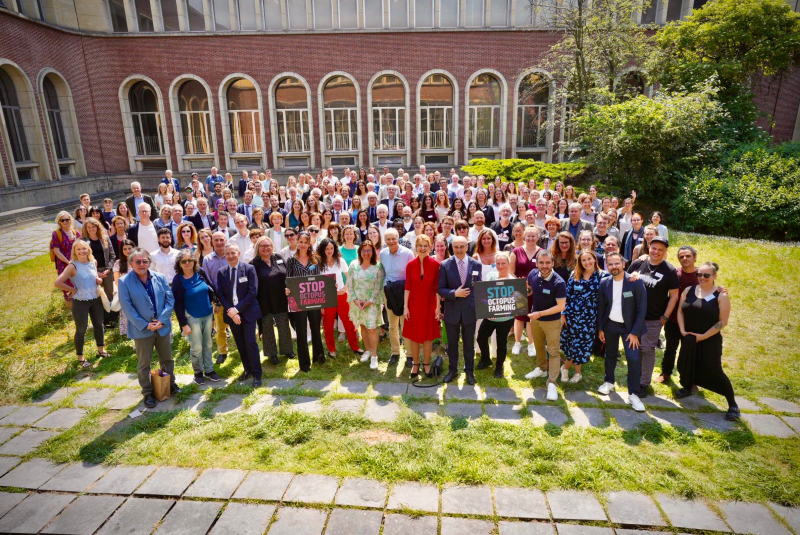
Yesterday, over two hundred guests from all over Europe came together in Brussels and more than one hundred participants followed the online streaming for Eurogroup for Animals’ annual conference, just months before the European Commission (EC) is set to unveil its revised legislation on animal welfare.
This conference comes at a critical moment in time and animal protection organisations, along with MEPs, are calling on the European Commission to uphold its commitment to animal welfare, and to ensure a bold new legislation that allows for the true protection of animals.
Held at the Royal Library of Belgium, the event hosted Eurogroup for Animals’ member organisations from 26 Member States, MEPS, representatives of the European Commission, and other stakeholders.
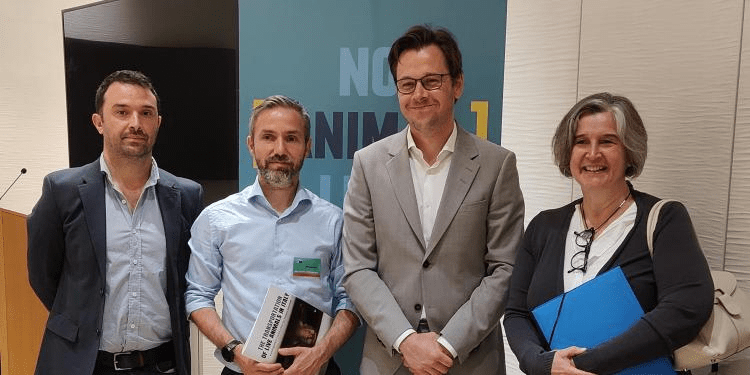
The organisation was honoured to welcome Peter Singer, Professor of bioethics and author of ‘Animal Liberation Now’, The book is a revised version of the classic ‘Animal Liberation’, which was one of the foundations of today’s animal protection movement.
I am delighted to be able to present my new book, ‘Animal Liberation Now’, at the annual conference of Eurogroup for Animals. This book renews and brings fully up to date the ideas I presented in 1975 in Animal Liberation. Since that time, there has been a significant improvement in the conditions in which hundreds of millions of animals live in Europe, especially those in factory farms, and Eurogroup for Animals has been leading the way in its advocacy of these changes. Nevertheless, these reforms still fall far short of what is required for us to treat animals ethically, and without speciesism. What happens in Europe is important not only for animals in Europe, but worldwide, as it sets an example of what’s possible. The EU institutions have the opportunity to be a leader
Peter Singer
Peter Singer at Eurogroup for Animals’ Conference
During the event, Tilly Metz MEP (Greens, LU) insisted that the revision should not be further delayed because of the Regulatory Scrutiny Board that failed to analyse the long-term impact of such policies:“The science is clear, there is enough data, it is incomprehensible that this is delayed any further,” she said.
Niels Fugslang MEP (S&D, DK) expressed the strong desire among MEPs to have an Animal Welfare Commissioner, a significant role that will ensure more accountability and which has been widely supported by citizens.
The importance of securing a budget to protect farmers and support them in transitioning to cage-free systems was put forward by Andrea Gavinelli, Head of the Animal welfare and Antimicrobial Resistance Unit (EC), a remark supported by Joanna Stawowy, Member of the Cabinet of the European Commissioner for Agriculture.
“2023 is a critical year for the animals – after ten years, change is in sight, as the EC is set to revise its animal welfare legislation which is seriously outdated when it comes to science and civil societies’ demands. Over 20 EFSA opinions have not been incorporated in actual legislative provisions. This has resulted in a dire situation for the animals across the board. With 5- soon to be 6- European Citizens Initiatives calling for better animal welfare, the institutions can’t ignore this any longer. We trust the European Commission will uphold its commitments”, commented Reineke Hameleers, CEO, Eurogroup for Animals.
“Factory farming is the biggest cause of food waste in the world, it undermines the very thing we all need – healthy soil. Not addressing the meat and dairy industry will mean that climate, biodiversity and food security talks will fail. Regenerative farming is the only way forward, we simply cannot afford not to change,” added Philip Lymbery, President of Eurogroup for Animals.
Keynote speaker Melanie Challenger, writer, researcher and broadcaster on environmental history, philosophy of science and bioethics added: “This is both an exciting and a testing time for our relations with other animals. Our exploitation of non-human animals has increased at the same time as our moral sensitivity, and those two shifts are out of sync. Exceptional times require exceptional responses. I believe we need to recognise the dignity of other species and find ways to allow them to be heard in the political arena.”
During the event, Eurogroup for Animals presented its awards, which aim to acknowledge the efforts of member organisations and corporates in their fight for animal welfare. Djurens Rätt was awarded the Campaign for Animal Award for their campaign “The World’s Best Animal Welfare”, which featured an animated short movie that reflects the life of broiler chickens, and was streamed across cinemas in Sweden.
The Corporate Campaign Award was presented to IKEA Belgium for offering innovative solutions to the substitution of animal products and the use of animals in their products. GAIA, which submitted the candidature, welcomed the award: “We nominated IKEA Belgium for its commitment and approach. This is highly visible to both staff and customers in their restaurants where plant-based alternatives are given priority and are also offered at lower costs. This is the way forward for other businesses”, commented Ann De Greef, CEO at GAIA.
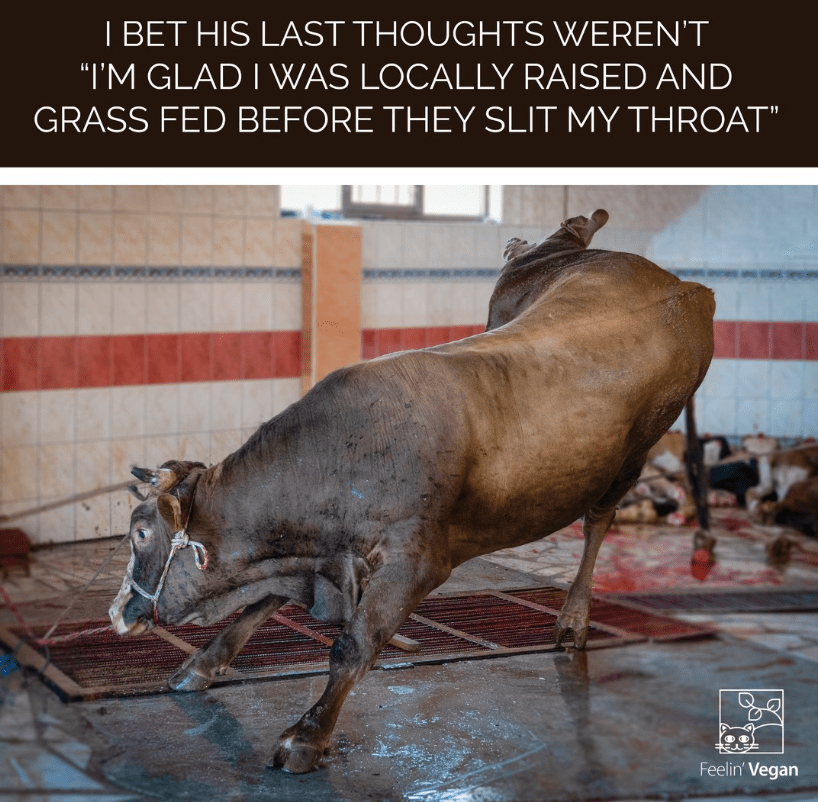
The fact of the matter is, it doesn’t matter how nice a life an animal has, the moment we exploit them for what is rightfully theirs and eventually take them to the slaughterhouse or to the yard to kill them, that is abuse. Animals don’t want bigger cages or larger barns, they don’t care whether or not they’re grass-fed, or organic. All the animals want is to be free, truly free. Not free-range, not free to pasture months of the year. Free to live their lives in their entirety, without fear of human inflicted pain, suffering or exploitation. Earthling Ed
Do remember that small farms are largely defunct due to the global demand for cheap flesh; while there are still small farms in existence, they are the exception, and even though everyone in the multiverse claims to be opposed to factory farms, given their dominance “producing” 99% of animals consumed in the USA and >75% according to one source and >90% according to another, of animals consumed globally, each year, someone’s lying. Case in point: I recently came across a person who vehemently defended his position as being opposed to factory farms … while admitting he eats factory-farmed animals. This is why a welfarist position is meaningless: it requires animal suffering and death, and for many humans is 100% verbal and includes 0% actual concern and action FOR THE ANIMALS. (And the discrepancy in factory-farmed numbers is likely because the numbers of animals violently killed globally each year is so mind-numbingly high, it’s difficult for humans, the “intellectually superior species”, to count.) SL
Take PETA’s Cruelty-Free Shopping Guide along with you next time you head to the store! The handy guide will help you find humane products at a glance. Order a FREE copy HERE
Searching for Cruelty-Free Cosmetics, Personal-Care Products, Vegan Products, or more? Click HERE to search.
Free PDF of Vegan & Cruelty-Free Products/Companies HERE
Food safety is a matter of growing concern for the health of EU citizens: how we produce and consume food has an impact not only on animals but also on public health, environment, people and climate.
Kangaroos
60-75 % of human disease comes from wildlife disease transmitted to humans, in part by the wildlife trade and consumption. After they are shot in remote areas, the carcasses of kangaroos are eviscerated and transported in unrefrigerated open trucks, sometimes all night long, and under very high temperatures. In order to tentatively prevent Salmonella and E.coli contaminations, the carcasses are washed with lactic acid, although this isn’t an allowed practice for fresh game meat in the EU and does not fully eliminate contamination risks. Russia has banned imports of kangaroo meat based on these hygienic issues. Lead poisoning from the bullets is another health concern, also posing a serious environmental risk, as highlighted by recent ECHA reports on the restriction of lead ammunition in the EU. In this context, Eurogroup for Animals calls on an EU ban on imports of kangaroo products, including meat. You can sign our petition to support this call.
Despite the 2013 horse meat scandal, little has been done to prevent such food safety issues. In the EU, horses can be excluded from the food chain when they are administered substances making the consumption of their meat unsafe. However, recent Europol investigations revealed massive frauds with horses excluded from the food chain slaughtered and their meat distributed throughout the EU, highlighting the insufficiencies in the implementation of traceability requirements. We call on the EU to ensure the proper implementation of traceability requirements and to introduce Country of Origin Labelling for horse meat, indicating the country where the animal has been born, reared and slaughtered.
Besides horse meat produced in the EU, EU audits, NGO investigations, also summarised in the Stable to Fork report, and academic papers (see, for example, Weber et al., 2023), reveal severe shortcomings in the traceability and identification of horses slaughtered in third countries whose meat is imported into the EU. Veterinary medical treatments are not properly recorded leading to horses that were administered banned drugs, such as phenylbutazone, to enter the food chain. It is important to note that equine traceability requirements implemented in the EU do not apply to animals whose products are imported.
From stable to fork: EU Horse Meat Imports (updated version)
Highly contagious diseases, either emerging or endemic, in animal populations such as Avian Influenza, African Swine Fever or, more recently, COVID-19 stress the need to build more resilient and sustainable societies.
How we produce and consume food has an impact not only on animals but also on public health,environment, people and climate.
An increased focus on animal welfare can play a key role in finding solutions to many of the current global food safety challenges we are facing. De-intensifying animal production by reducing the numbers of animals coupled with better animal welfare will improve animal health and welfare and contribute to reducing the risk of future pandemics.





 World Animals Voice