Category: Fur and Fur Farming

UK: Campaigned By The AR Movement For Years – Bearskin Hats Worn By Soldiers Now Cost Over £2,000 Each. One Bear Dies For Each Hat – Disgusting; Whist Under The New Labour Government, Pensioners Now Have Their Winter Fuel Allowance CUT – More Disgusting. Heat Or Hat, What Is More Important ?

The bearskin hats worn by soldiers outside Buckingham Palace now cost more than £2,000 each, new figures show.

Animal rights activists trying to get real fur out of the bearskin caps worn by King’s Guards took aim at the cost of the ceremonial garb.

The price of the caps soared 30% in a year to more than £2,000 pounds apiece for the hats made of black bear fur, the Ministry of Defense said in response to a freedom of information request by People for the Ethical Treatment of Animals (PETA).

https://www.msn.com/en-gb/news/uknews/buckingham-palace-guard-s-bearskin-caps-under-fire-as-price-revealed/ar-AA1qsCTQ?ocid=BingNewsVerp

https://www.msn.com/en-gb/news/uknews/kings-guards-bearskin-caps-could-go-due-to-animal-rights-pressure/ar-AA1qrO7b?ocid=BingNewsVerp

Peta anger over soaring cost of bearskin caps worn by King’s Guard outside Buckingham Palace

https://www.msn.com/en-gb/news/uknews/peta-anger-over-soaring-cost-of-bearskin-caps-worn-by-kings-guard-outside-buckingham-palace/ar-AA1qrxQt?ocid=BingNewsVerp

Regards Mark

(EU) Poland: Polish fur farms visited by European Commission auditors.

12 September 2024

“Fact-finding” visits to fur farms in Poland are being conducted this week by auditors of the European Commission, as part of the process in which an EU-wide ban on such farms is being considered.

This visit by the Directorate-General for Health and Food Safety comes as a result of the European Citizens’ Initiative Fur Free Europe, in which 1.5 million European citizens called for a ban on fur farms and the sale of farmed fur products in the EU.

On fur farms, animals such as mink, foxes, chinchillas and racoon dogs are kept in tiny cages, hindered from displaying natural behaviour and killed solely for an unnecessary fashion product: fur. 

Under no circumstances, can the welfare of animals on fur farms be protected and a ban should be the only way forward. As a highly polluting industry, fur farming and processing also pose serious threats to biodiversity and public health. 20 member states have already implemented total bans, partial bans or other legislative measures on fur farming, however the EU is still set to give its final decision on an EU-wide ban.

During the visit, the auditors will be primarily focusing on the public health and zoonotic disease risks posed by such farms, after several fur farms in Europe were affected by Covid-19 and avian influenza in recent years, including Poland. Besides evaluating the implementation of the One Health mechanism on Polish fur farms,  the audits may also include an evaluation of the welfare of farmed animals.

Although the auditors’ visits from the European Commission are announced, I am confident that the evaluation of fur farms in Poland will be negative. The welfare of foxes and minks is shockingly poor and will not go unnoticed by the visitors. As for public health risks, this issue has been ignored by the fur industry and disregarded by the Ministry of Agriculture, so we also expect a negative assessment from the auditors.

Paweł Rawicki, President, Otwarte Klatki

Apart from the undeniable animal welfare issues inherent to fur farms, the fact-finding visits conducted by the European Commission to fur farms in certain Member States are highly relevant. The connection between fur farming and the spread of zoonotic diseases must not be overlooked, especially in the context of preventing future pandemics. Given the non-essential nature of fur products, and in line with the One Health approach — essential for anticipating, preventing, detecting, and controlling diseases that transmit between animals and humans — it is unlikely that proportionate justifications can be found to continue legitimising this industry in the EU.

Bethania Malmberg, Programme Officer Fur Animals, Eurogroup for Animals

With over 300 farms keeping 3.4 million animals, Poland is currently the largest fur producer in the EU. Earlier this year, a bill was presented by a Polish MP for a national ban, yet this is still set to be deliberated in Parliament.

Regards Mark

China: Research Shows This Utterly Cruel / Barbaric Nations Massive Fur Farms Are Responsible For 125 Virus Species, Including 36 That Are New and 39 That Could Cross The Species Barrier And Spill Over To Infect Humans.

Here we go again – World, get prepared for another lockdown.  The Utterly Cruel Chinese Are At It Yet Again. 

Researchers scoured for viruses in the lungs, intestines and other tissues of 461 individual fur animals that were found dead due to disease across China. They identified 125 virus species, including 36 that were novel and 39 at potentially-high risk of crossing the species barrier, including spilling over to infect humans. 

Raccoon dogs and mink, valued for their soft pelts, carried the highest number of potentially dangerous viruses, according to the research, published Wednesday in the journal Nature.

China dominates the trade, accounting for over 80% of global fur production, with pelts from around 27 million animals turned into high-end garments in 2021.

Notably, 19 potentially high-risk viruses were detected in the northeastern province of Shandong, which contains many fur animal farms. The findings revealed potential virus transmission between farmed animals and wild animals, and from humans to farmed animals, indicating that fur farming represents an important transmission hub for viruses that risk causing disease in people.

Lots More Reading About This:

Dozens of new viruses are emerging from Chinese fur farms (msn.com)

China Fur Farms Harbor Deadly Viruses: Study Uncovers MERS-Related Virus and High-Risk Influenza Strains, Sparking Pandemic Fears (ibtimes.sg)

 Pandemic Fears as Dozens of ‘High Risk’ Viruses Found in China’s Fur Farms (msn.com)

Virus Risk: 125 Found in China’s Fur Farms, 39 Pose High Threat to Humans | NewsTrack English 1 (newstracklive.com)

Fears fresh pandemic outbreak could spark in China’s fur farms (msn.com)

Potential Outbreak-Causing Viruses Found in China’s Fur Animals – BNN Bloomberg

Viruses detected in China’s fur farm animals, including seven types of coronaviruses (alarabiya.net)

Regards Mark

Fears fresh pandemic outbreak could spark in China’s fur farms.

Dozens of viruses – some of which have the potential to spill over into humans – have been detected mixing in animals at fur farms in China, sparking news fears of a fresh pandemic outbreak, researchers have said.

Since the Covid-19 pandemic, scientists have been warning that farming mammals such as minks for their fur could make it easier for new viruses to cross over from the wild and spark fresh outbreaks.

Virologist Edward Holmes, who has led research into Covid-19, told AFP he felt that the global fur farming industry ‘is one most likely ways by which a new pandemic will start’.

Continue – https://www.msn.com/en-gb/health/medical/fears-fresh-pandemic-outbreak-could-spark-in-china-s-fur-farms/ar-AA1pZJPe?ocid=msedgdhp&pc=DCTS&cvid=b9c8b1438cef4a7194645ec212a31261&ei=94

Regards Mark

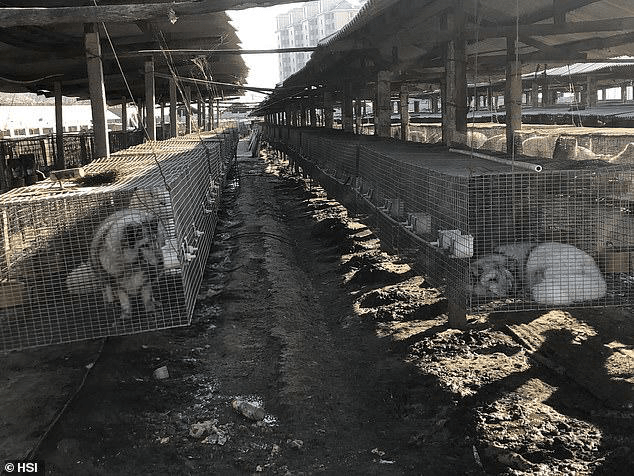
Dozens of viruses – some of which have the potential to spill over into humans – have been detected mixing at fur farms in China. Pictured: foxes and mink on a fur farm in China

Finland: Brilliant News – Fox farming declines by almost 70% in Finland.

2 September 2024

Animalia

Oikeutta eläimille / We Animals Media

In Finland, one of Europe’s major fur producing countries, farms are downsizing and closing at a rapid rate. Over the last 5 years, mink production has declined by 50%, whilst fox farming has collapsed even more sharply at 68%.

New statistics on 2023 from the Finnish Fur Breeders’ Association, analysed by Animalia, have confirmed that the industry is in a steep decline.

In 2023, there was only one mink farm producing more than 10,000 pelts, compared to 11 such farms the previous year. There were six fox farms producing more than 10,000 pelts, compared to 8 in 2022, and 20 in 2019. Most mink are raised on farms producing fewer than 500 pelts annually, indicating that mink farming is a side business. Foxes, on the other hand, are mostly raised on farms with 3,000–10,000 animals.

22% fewer foxes and 4% fewer mink were born on fur farms. Over the last 5 years, mink production has declined by 50%, whilst fox farming has dropped by 68%.

The actual number of furs produced last year is significantly lower than expected from the rate of births, as nearly half a million fur animals were culled and destroyed in the autumn of 2023 due to avian influenza.

The few remaining farms are not financially viable. The average sale price of blue fox pelts was down 13% from the previous year. The production cost of a fox pelt currently exceeds the sales profit, and results in a loss of up to 50 euros per animal for the farmer. The average price of a mink pelt also declined by 2% from the previous year. 

Following the mass culling of mink on Finnish fur farms due a bird flu outbreak in 2023, farmers received over 50 million euros of public funds in compensation, increasing scrutiny over the industry’s economic value.

Employment provided by the industry has halved in five years, undermining the social argument for propping up production. 

In an opinion poll conducted by Animalia and Oikeutta Eläimille in 2023, 83% of Finns believed that fur farming should either be banned or that animals should be given significantly more space and opportunities to engage in species-specific behaviour. 

The new statistics support the argument for a Fur Free Europe, as proposed by the successful European Citizens’ Initiative.

Regards Mark

EU: Citizens remain strongly opposed to seal products on the EU market

1 August 2024

WAP

Press Release

The ban on commercial seal products on the EU market should remain, EU citizens say, as the European Commission conducts an evaluation of the legislation adopted in 2009.

In 1983, the EU prohibited the import of products from seal pups and in 2009 the legislation was complemented with a prohibition on the placing of all seal products from commercial hunting on the market, based on moral concerns on seals being killed with inhumane methods. This legislation, referred to as the EU Seal Regime, includes an exemption for products derived from traditional hunts from indigenous communities.

The regulation was put forward after a long battle, and came through after EU citizens became aware of the cruelty involved in obtaining seal products. The legislation was challenged under the World Trade Organisation (WTO), which confirmed, in a landmark decision, that animal welfare is a justifiable rationale for a trade restriction to protect public morals. 

Since the legislation came into force, millions of seals have been spared a brutal and cruel death. Despite this, the EU is now, unexpectedly, running a fitness check, to assess whether this legislation should hold, with the risk of backtracking it.

A backtracking of this legislation would seriously undermine animal welfare and public morals since commercial hunting is extremely cruel and seals experience excruciating pain and slow deaths. Killing methods remain inhumane, involving the use of clubs and hakapik, and the shooting of seals from a distance resulting in severe injuries. 

EU citizens continue to be against this practice. In a new survey conducted in 13 Member States, 80% of respondents said they support the EU ban on the trade of seal products derived from commercial hunting and 68% said it should not be weakened in any way. 80% also agree that the legislation remains important to protect ethical concerns of EU citizens and animal welfare.

A 2011 survey showed that 72% of citizens in 11 Member States supported the restriction on the trade in seal products, demonstrating growing support. It is therefore clear that EU citizens want this legislation to stay intact.

This survey clearly shows that the EU Seal Regime remains crucial to protect seals and address the concerns of Europeans. As demanded by its citizens, the EU should uphold efforts to protect the welfare of these animals on the continent and beyond, maintaining its leadership and driving positive change.

Léa Badoz, Wildlife Programme Officer, Eurogroup for Animals

In 2009, the EU banned the trade in commercial seal products in response to long-standing and serious public moral concerns about the welfare of seals being inhumanely slaughtered, primarily for their fur. These survey results clearly demonstrate that, since that time, EU citizens’ attitudes towards the cruel commercial sealing industry have not changed. It is vital that the EU Seal Regime is upheld.

Dr Joanna Swabi, Senior Director of Public Affairs, Humane Society International/Europe

This survey demonstrates that EU citizens are deeply concerned about the blatant and unnecessary cruelty inflicted in commercial seal hunts. Seals shouldn’t be treated as commodities for the sake of profit. They are of great significance to the wider ecosystem in which they live, and they deserve our protection. It is crucial that the EU Seal Regime is maintained.

Sanne Kuijpers, campaign manager Wildlife, World Animal Protection Netherlands

The survey shows that EU citizens are still very concerned about animal welfare. They are happy that seal products from commercial hunts are no longer sold on EU markets. The EU should stand up for the values of its citizens. The EU Seal Regime is a milestone that should be celebrated, not evaluated.

Barbara Slee, Senior Programme Manager – International Policy, the International Fund for Animal Welfare

The survey was conducted by Savanta in July 2024 among 13,000 respondents in the following Member States: Belgium, France, Germany, Italy, Lithuania, Netherlands, Poland, Romania, Spain, Sweden, Finland, Denmark and Estonia and was commissioned by Eurogroup for Animals, IFAW, HSI and World Animal Protection Netherlands. Access results here

Regards Mark

Great News ! – Fur industry in Bulgaria loses court case against mink ban.

Fur industry in Bulgaria loses court case against mink ban

12 July 2024

CAAI

The Administrative Court of Sofia City has supported the ban on the import and breeding of American mink in Bulgaria, following an appeal by the only operating mink farm in the country.

Read more about the decision here (in Bulgarian).

The legal process was started in 2022, a few months after the Minister of Environment and Waters issued an order banning the import and breeding of American mink, the species of mink farmed for its fur. This non-native species can negatively impact biodiversity, and even drive some native animal species to extinction: a view supported by more than 100 scientists and experts, who submitted opinions in support of the mink ban over the course of the case.

The mink fur farm which appealed this order has a breeding capacity of about 130,000 American mink. During its years of operation, over 100 mink have escaped – and that’s just on official record. The disruption this has caused has been wide-ranging, with complaints of mink attacks on domestic animals, the impacts of this invasive species on native habitats, and records showing mink having travelled as far as 30km away from where they first escaped.

Mink farming is terrible for animal welfare

Fur farms have also drawn public wrath for the cruel conditions in which the animals are raised and killed. 

Minks are kept in narrow and dirty wire cages and, in order to preserve the integrity of their fur, are killed in gas chambers. That these conditions are unacceptable is a view shared by a huge number of European citizens, with over 1.5 million signatures collected for the “Fur Free Europe” ECI, now pending a response from the European Commission. 

In 2021, during an inspection of the abovementioned mink farm, the Bulgarian Ministry of Agriculture and Food reported a number of biosecurity violations, unsatisfactory hygienic conditions, decomposing animal carcasses, and mink escaping from their cages.

Learn more on our member CAAI’s website here

We welcome the completely fair decision of the court to reject the appeal of the mink breeders. In recent years, scientists have proven that the invasive nature of the American mink is a serious threat to local biodiversity. In addition, the American mink is the species in which significant susceptibility to infection with various zoonoses is noted.

Petya Altimirska, Chair of CAAI (Campaigns and Activism for Animals in the Industry)

Regards Mark

 See also https://worldanimalsvoice.com/2024/07/09/bulgaria-fur-industry-in-bulgaria-loses-court-case-against-mink-ban/

Bulgaria: Fur industry in Bulgaria loses court case against mink ban

News from Mark and the crew at Respect for Animals, Nottingham England.

Fur industry in Bulgaria loses court case against mink ban | Respect for Animals

Latest news:  NEWS | Respect for Animals

Fur industry in Bulgaria loses court case against mink ban

The Sofia City Administrative Court rejected the mink farm’s

The Sofia City Administrative Court rejected the mink farm’s appeal against the order issued by the Ministry of Environment and Water to ban the import and breeding of the “American mink” species in Bulgaria. The court’s decision can be appealed to the Supreme Administrative Court.

The Administrative Court of Sofia City has issued a decision on the case regarding the ban on the import and breeding of American mink in Bulgaria. The court accepted as groundless the appeal of the only operating mink fur farm in Bulgaria. The legal process was started in 2022, a few months after the Minister of Environment and Waters issued an order banning the import and breeding of the “American Mink” species. The reason for the order is the danger this invasive, non-native species poses to biodiversity.

American mink (the species farmed for its fur) can negatively impact native animal species and even drive some to extinction. Behind this opinion stand more than 100 scientists and experts who submitted opinions in support of the ban on the import and breeding of American mink. Their support for the ban was strongly expressed during the course of the case.

The mink fur farm near the village of Mazherito, Stara Zagora, has a breeding capacity of about 130,000 American mink. Over the years of operation of the farm, official recordings have been filed about over 100 escaped animals. The number of unrecorded mink escapes is unknown. Complaints of mink attacks on domestic animals are a common problem that torments the local residents living near the farm. There are images and video shots of mink being run over by cars on the road, as well as of animals walking around the center of the city of Stara Zagora. The invasive mammal was also spotted in the river near the town of Galabovo, 30 km from the farm.

As well as endangering biodiversity, fur farms have drawn public wrath for the cruel conditions in which the animals are raised and killed. Minks are kept in narrow and dirty wire cages and, in order to preserve the integrity of their fur, they are killed in gas chambers. In 2021, during an inspection of the mink farm near the village of Mazherito, the Bulgarian Ministry of Agriculture and Food reported a number of biosecurity violations, unsatisfactory hygienic conditions, decomposing carcasses of dead animals, as well as mink escaped from their cages.

“We welcome the completely fair decision of the court to reject the appeal of the mink breeders. In recent years, scientists have proven that the invasive nature of the “American mink” is a serious threat to local biodiversity. In addition, the American mink is the species in which significant susceptibility to infection with various zoonoses is noted. Last year, an outbreak of COVID-19 occurred among the minks on the farm near Stara Zagora. Recently, bird flu has become increasingly common in mink farms too. Similar outbreaks in other countries have caused fur farms to be closed. This is how cruel and completely unnecessary activity is being stopped,” said Petya Altimirska, chair of CAAI (Campaigns and Activism for Animals in the Industry), which since 2017 has been campaigning for the ban of fur farms in Bulgaria.

The mink breeders have the right to appeal the decision within 14 days of its announcement before the Supreme Administrative Court.

A possible loss in the second instance would practically end the existence of mink farms in Bulgaria.

Attached links

Link to the Sofia City Administrative Court’s decision (in Bulgarian)

UK: Queen Pledges Not To Buy Any More Fur.

Queen Camilla pledges not to buy any more fur in latest Palace move away from animal products – after foie gras banned, holy oil for anointing the King was ‘cruelty-free’ and Coronation roll produced on paper for the first time.

Getty Images

Queen Camilla has pledged not to buy any more fur products in the latest move by Buckingham Palace to not use animal products. 

The Palace sent a letter with ‘the Queen’s warmest wishes’ to the People for Ethical Treatment of Animals (Peta) which vowed Camilla ‘will not procure any new fur garments’.

The animal-rights group toasted the news with a glass of the finest claret and its managing director Ingrid Newkirk said: ‘It’s right and proper for the British monarchy to reflect British values by recognising that fur has no place in our society.’

Continue reading at:

Queen Camilla pledges not to buy any more fur in latest Palace move away from animal products – after foie gras banned, holy oil for anointing the King was ‘cruelty-free’ and Coronation roll produced on paper for the first time | Daily Mail Online

China Cat Torture Actions:

China: Cat Torture – London Protest May 21st 2024. Piccadilly Circus – Chinatown, Then On To Chinese Embassy. – World Animals Voice

China: Cat Torture – X STORM – Wednesday 22nd May 2024. – World Animals Voice

EU: European Elections 6-9 June 2024: 500 Candidates Take The Pledge For Animals.

16 May 2024

Press Release

More than 500 candidate MEPs have pledged to do more to protect animals at EU level should they be elected to the European Parliament in three weeks.

The Vote for Animals campaign, run by Eurogroup for Animals and its members, asks candidates to take a pledge committing to do more for better protection of all animals at EU level.

The pledge addresses live animal transport, non-animal science, welfare of aquatic species, the conservation of wild animals, imports of animal-based products, and welfare of companion animals. It also addresses a future fur farming ban, the importance of sustainable food production and an ask for an EU commissioner for animal welfare.

Candidates spanning the entire political spectrum across 26 Member States have made the commitment. So far, Finland, Italy and France have the largest number of candidates supporting the pledge.

EU citizens have the opportunity to ask their candidates to sign the pledge, by sending a message through a dedicated platform, which is available in all EU languages. So far, over 9,000 citizens have sent a message to their candidates.

An estimated 400 million EU citizens are eligible to vote in the European elections set to take place between 6-9 June. The demand for improved EU legislation on animal welfare has been resoundingly voiced: 91% of Europeans believe that safeguarding the welfare of farmed animals is crucial, while 84% feel that current protection measures are not enough.

Taking the pledge for the animals is a commitment that in the next legislature, should I be elected, I will continue to push for better EU legislation to protect all animals across their lifespan. There is a critical need for action to phase out animals in cages, as per citizens’ demands, and a push for more ambitious legislation for animals during transport. The promised revision of the animal welfare legislation should be a top priority for the next Commission.

Niels Fuglsang, candidate MEP (Socialdemokraterne, Denmark) and Vice-President of the Intergroup for Animal Welfare.

The majority of EU citizens want animals to be better protected in Europe. To achieve this, we need more MEPs who want the EU to do more. Voting for candidates who have signed the Vote For Animals pledge is the best way to advance animal welfare in the EU. If I am re-elected, I pledge to continue to be the voice of animals and their defender in the European Parliament.

Caroline Roose, candidate MEP (Europe Écologie, France) and Vice-President of the Intergroup for Animal Welfare.

It is great to see so many candidates take a pledge for the animals. It is important that the next European Parliament represents citizens’ demands for better protection of all animal species, and MEPs can help to ensure that this topic stays on top of the agenda for the next term.

Reineke Hameleers, CEO, Eurogroup for Animals.

Good stuff !

Regards Mark