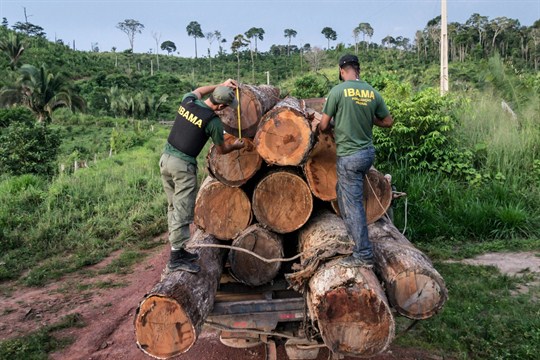
Brazilian meat giant JBS has been dropped from major investor Nordea Asset Management – the largest financial service group in the Nordics.
It is reported the investors control a fund of around £21 billion ($27 billion) – which JBS is now ‘excluded’ from.
‘Quite dramatic’
According to The Guardian, head of responsible investments at Nordea Asset Management Eric Pedersen said: “The exclusion of JBS is quite dramatic for us because it is from all of our funds, not just the ones labelled ESG.”
The firm’s acronym ESG stands for ‘environmental, social and governmental’ – a set of standards used to assess how sustainable a company is.
Illegal deforestation
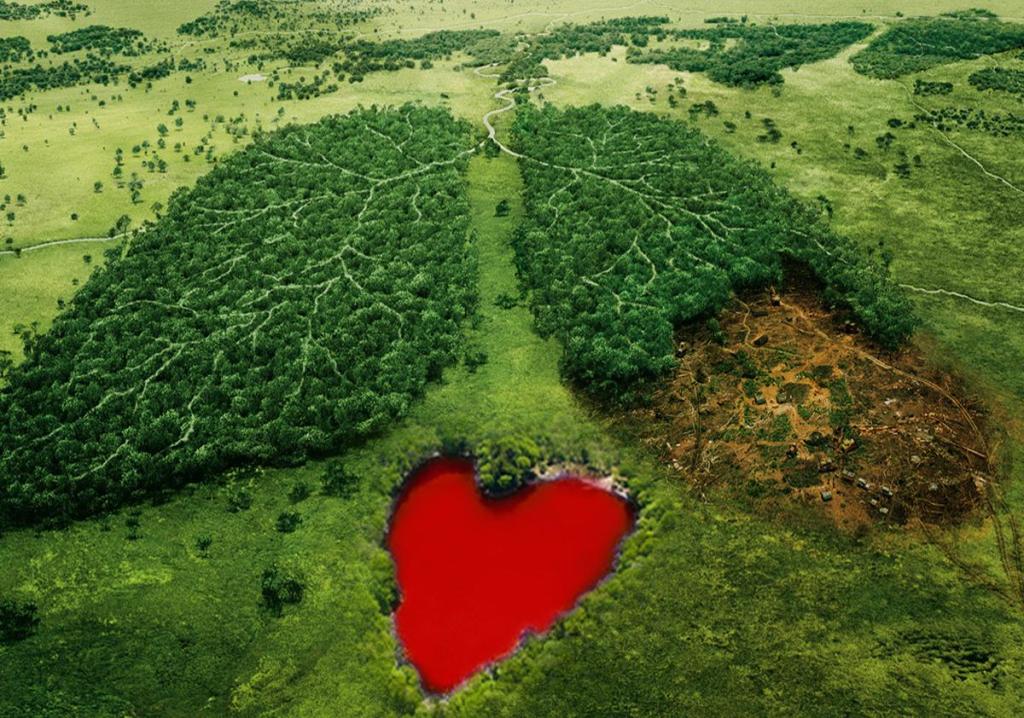
The announcement follows five allegations in 2020 alone that have tied the meat processor to illegal deforestation – with environmental groups including Greenpeace criticizing the company since 2012.
Many celebrities also spoke out about the environmental catastrophe – with Khloe Kardashian encouraging her [then] 97.6 million Instagram followers to go plant-based.
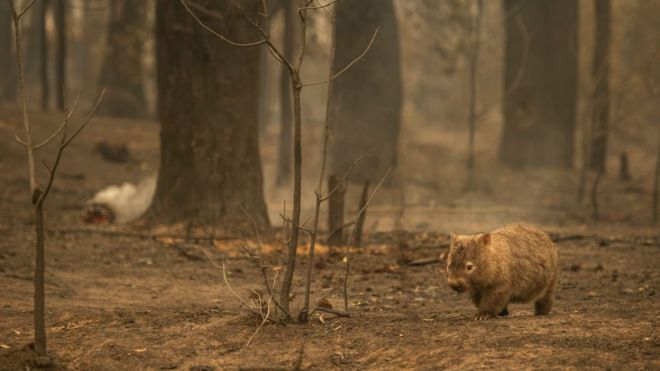
Nearly three billion animals were killed or displaced during Australia’s devastating bushfires of the past year, scientists say.
The findings meant it was one of “worst wildlife disasters in modern history”, said the World Wide Fund for Nature (WWF), which commissioned the report.
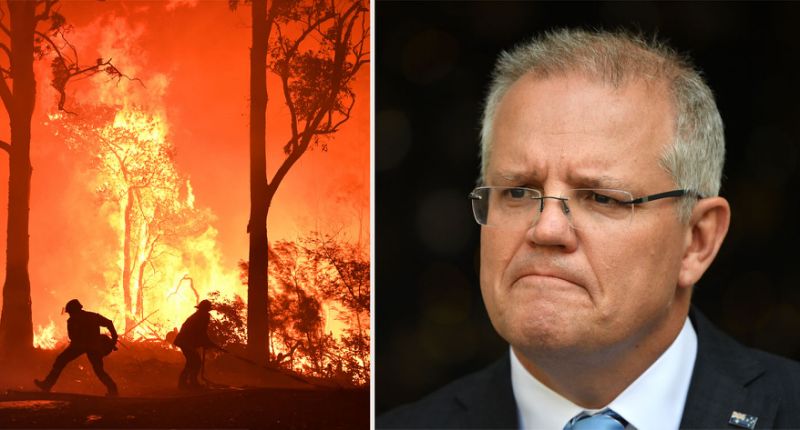
Mega blazes swept across every Australian state last summer, scorching bush and killing at least 33 people.
Mammals, reptiles, birds and frogs died in the flames or from loss of habitat.
During the peak of the crisis in January, scientists had estimated that 1.25 billion animals had been killed in New South Wales and Victoria alone.
But the new estimate takes in a larger area. About 11.46 million hectares – an area comparable to England – was scorched from September to February.
What was the impact?
“When you think about nearly three billion native animals being in the path of the fires, it is absolutely huge – it’s a difficult number to comprehend,” said Prof Chris Dickman, who oversaw the project by 10 scientists from Australian universities
He said they could not yet state an exact death toll, but noted the chances of animals escaping the blazes and surviving were “probably not that great” due to a lack of food and shelter.
The numbers were based on population counts and estimates of animal density before the disaster.
Limitations on data meant that some groups – such as invertebrates, fish and turtles – were not included in the estimates.
The government pledged A$50m (£27m; $35m) to wildlife and habitat recovery, but environmentalists have called on Australia to strengthen its conservation laws.
Australia is holding a royal commission inquiry into the fires, which is due to report findings in October.
It has heard overwhelming evidence from scientists who said the unprecedented frequency and severity of the blazes were a result of climate change.
Experts also said that smoke from the fires was linked to more than 445 deaths.
JUSTICE FOR BIRDS WITH LEGS CRUELLY GLUED TO SIGNPOST
PETITION TARGET: Queensland RSPCA
Suffering and desperate to to fly away, two Kingfisher birds were glued by the legs to a signpost at the Cathu State Forest in Queensland, Australia.
Onlookers encountered the heartbreaking scene, where one bird, sadly, had already died. They cut the other distressed bird free and rushed him to a qualified caretaker.
Witnesses described the act as deliberate.
“The amount of glue and stuff where these birds were stuck, it definitely wasn’t an accident,” Kiya Durbridge, whose friend discovered the birds, told 7News.
Such horrifying cruelty is inexcusable, and these beautiful birds deserve justice. Sign this petition urging the Queensland RSPCA to use all available resources to thoroughly investigate this alarming incident and to identify and arrest the suspect(s) involved.
This is an ongoing investigation. The RSPCA urges anyone with information about this case to contact them.
New South Wales has established an inquiry into a proposed bill – the Prevention of Cruelty to Animals Amendment (Restrictions on Stock Animal Procedures) Bill 2019 – that would stop mulesing by 2022 and, in the meantime, mandate that pain relief be given to sheep who are subjected to it. If passed, this bill would also ensure that sheep and other animals receive pain relief during earmarking, branding, castration, dehorning, and tail-docking.
If passed, this bill would spare lambs – 6 million of whom are mulesed every year in NSW alone – a great deal of suffering.
A chained dog suffered a miserable death at the end of a tether in Montgomery County, Ohio. The Rottweiler could be seen suffering in the intense summer heat by a neighbor who called animal control for help – but the dog died before help arrived.
At the bare minimum, this is gross negligence, if not outright animal cruelty. Please sign this petition, which will be submitted to the Montgomery County, Ohio, officials, along with our letter demanding a full investigation and charges for the dog’s owner.
If it had not been for that good man, the deer would not have survived a single day without its mother. For these things there is the Seprona, with all the barbarities that are committed against animals and they impose a fine on a man who helps animals. This is the last straw!
They denounce the rancher who raised and helped a deer among his herd of goats
The deer lost its mother a few days after birth and was raised with a herd of goats. Now the Seprona has fined the rancher.
Hanged, skinned alive, and decapitated, defenseless animals — including dogs and cats — suffered gruesome torture at the hands of one woman, who recorded the abuse and posted the horrific videos to social media, according to the Department of Justice.
In one Instagram message, the 19-year-old suspect Krystal Cherika Scott talked about slaughtering a pregnant Siamese cat and posted images of the caged cat, along with two kittens, according to CBS2. Another post showed a decapitated dog lying dead in a cage.
Scott is believed to have obtained the animals she allegedly tormented and killed from people looking to give away their unwanted pets for adoption.
Following a thorough investigation — which revealed numerous animal skulls and 15 captive live dogs and cats — the suspect has been charged with two counts of Making and Distributing Animal Crush Videos under the Preventing Animal Cruelty and Torture Act.
The person responsible for these reprehensible acts of cruelty must never be allowed to harm another animal again. Sign this petition urging Assitant United States Attorney Tiffany Preston to prosecute this case to the fullest extent of the law, including a life-long ban on having animals and an intensive psychological evaluation.
Animal rights activists gathered at the Greater Vancouver Zoo Sunday to protest what they say is the poor treatment of animals, in the wake of the death of an emaciated moose.
Oakleaf, an eight-year-old moose, was euthanized at the Aldergrove facility Wednesday after months of declining body condition, according to zoo veterinarian Dr. Bruce Burton.
Burton told Global News staff had tried multiple diet changes since the winter, but that her condition worsened significantly in recent weeks.
The decision to euthanize came one day after a photo of the moose with its ribs clearly visible circulated on Facebook, which Burton said was “coincidental,” adding that he hadn’t seen the photos before the moose was euthanized.
Activists, however, claim the decision to put the moose down was a result of public scrutiny and argue that the zoo is “sourcing animals in questionable ways, and subsequently not delivering proper care or environment to them either,” according to their Facebook page.
“We have tons of questions. We’re demanding answers and we’re demanding a return to them being at least partially accountable as far as announcing deaths that have occurred here,” said organizer David Isbister with No More Dead Captives.
“If it wasn’t for the public finding Oakleaf’s condition no one would have known about it.”
Demonstrators say they’re also concerned with plans to transition the zoo to housing more large African animals, which they say will not fare well in northern climates.
Protesters point to a 2019 report commissioned by the Vancouver Humane Society (VHS) by wildlife protection charity Zoocheck, alleging that many animals at the zoo were “living in barren, undersized cages and enclosures that restrict them from engaging in natural behaviours.”
The zoo maintains that the welfare of its animals is its top priority and that enrichment and conservation remain the institution’s guiding principles.
“Our goal is to provide the best possible conditions for the zoo’s animal collection by continually evaluating and improving all aspects of the animals’ homes, social situations, husbandry, and nutrition,” zoo general manager Serge Lussier told Global News when the report was released.
Burton said the zookeepers are vigilant but that the facility welcomes feedback from the public if they ever believe an animal is in distress.
“They have a vested interest. They love these animals,” he said. “But if we get input from somebody else it does two things — it provides us with information, but it also indicates that the public are concerned about the health and welfare of these animals.”
Burton said a post-mortem on Oakleaf has not provided a definitive reason for her declining condition, but that he believed she would not have been able to recover.
Washington’s stubborn reluctance to create new rules to manage conflicts with livestock flies in the face of common sense and science — and is deeply cruel.
And it leads to more decimated packs and orphaned wolves, who are left to fend for themselves without the skills to survive.
The state isn’t even following its own weak policy guidelines. It’s using a trigger-happy approach and killing wolves instead of enforcing nonlethal procedures that would save both wolves and cattle.
Since 2012 the state has killed 31 wolves. Nearly all were slaughtered for conflicts on public lands, with 26 killed for the same livestock owner. The original Wedge pack was destroyed in 2012. Now a new pack is clinging to survival.
Last week we petitioned Washington Gov. Jay Inslee to order the Washington Fish and Wildlife Commission to draft enforceable rules that limit when the state can kill endangered wolves.
We’re seeking a reversal of the commission’s denial, last month, of a formal petition for wolf-management rules.
The senseless wolf-killing has to end. We’ll keep fighting the state until it adopts a new policy. Endangered wolves need to be protected and allowed to thrive in the wild, safe with their families — not shot down from helicopters or while immobilized in painful traps.
The Wedge and Togo packs are depending on us. We can’t give up on them.
Goats punched, hit, kicked and ‘left lame’ at farm supplying milk to Tesco, Sainsbury, Waitrose and Ocado, video shows
Animals were subjected to a string of brutal attacks at a farm that sells goats’ milk to Tesco, Sainsbury’s, Waitrose and other supermarkets, footage from hidden cameras has revealed.
Goats were seen on video being punched, kicked, hit with a pole and slammed onto their backs at a plant that supplies St Helen’s Farm, in east Yorkshire.
The animals were also filmed crying in pain as they were held by their necks, had their ears tagged or their tails twisted.
Goat milk, yoghurts, cheese and ice cream sold by the St Helen’s Farm brand are the best-known goat milk products in the UK and are stocked by major supermarkets including Tesco, Sainsbury’s, Waitrose and Ocado. Demand has risen amid a switch away from cows’ milk in recent years.
Tesco immediately suspended the brand when shown the footage by The Independent.Waitrose and Booths, which has grocery stores around the north of England, followed suit.
About an hour’s worth of video was passed to the Surge animal rights group, which then showed it to a vet and to lawyers at Advocates for Animals, who it said “highlighted many serious issues”.
People filming using secret cameras told Surge that at one supply farm, they saw goats being:
Kicked and punched
Hit with a pole
Held by the throat
Having their tails twisted
Shoved and roughly handled
Left lame and struggling to stand or walk after the rough handling
Goats were also slammed onto their backs on a conveyor belt before their hooves were roughly trimmed, the video showed.
One was seen being dragged by one leg along the ground while struggling.
Animal suffering was also prolonged when injuries went untreated, the witnesses said after reviewing the footage.
The people behind the footage also reported seeing workers letting goats fall off an operating bed and become stuck between fences. In one case, a worker “played the drums” on a goat’s stomach after a procedure. The footage also shows farm employees dragging dead animals away in front of live ones, and Surge was told that dead and dying animals had been seen around the farm.
St Helen’s, which is a brand rather than a single farm, also buys goats’ milk from other farms in Yorkshire and the midlands. A spokesperson confirmed the footage was taken at one of St Helen’s supply farms, and as soon as the company was alerted by The Independent to the treatment of the animals, it cut off the supplier.
The Animal Welfare Act 2006 states animals, including farm animals, must be protected from pain, injury, suffering and disease.
Ed Winters, the co-founder and director of Surge, said: “St Helen’s is the most prominent and well-known goat company in the UK. They are regarded as being the best of the best when it comes to goat farming. But that means nothing to the animals.
“Goats are sensitive, curious and gentle animals, but the animal-farming industries treat them as commodities they can exploit for profit.
“St Helen’s say on their website the milk is a reward for looking after the goats and that their staff have a genuine interest and love for the animals. But it is obvious that the opposite is true at one of their supplying farms.”
He added: “These animals are thrown around and dragged and when they’re no longer producing enough milk to be considered profitable, they’re killed.”
Surge says about 50,000 mostly male dairy kids are slaughtered each year.
St Helen’s Farm told The Independent it was supplied by farms that were expected to comply with a rigorous code of conduct and that it had several animal-welfare accreditations, adding: “Today we have been made aware of allegations that one farm has infringed animal welfare standards, which we would find totally unacceptable if true.
“We have immediately ceased all milk supply from this farm and launched a full investigation to determine the facts of this matter.”
A Tesco spokesperson said: “We require high animal-welfare standards from all brands sold at Tesco, so these claims are deeply concerning. We have immediately suspended supply whilst we investigate the matter further.”
A Waitrose spokesperson said the chain was suspending St Helen’s after reading this article.
The Independent has also asked the other supermarkets to respond.
A spokesperson for the British Retail Consortium (BRC), representing supermarkets, said: “Our members take their responsibilities to animal welfare very seriously and work closely with trusted suppliers so that high welfare standards are upheld.
“They have strict processes in place and will thoroughly investigate any evidence of non-conformity to ensure that any problems are immediately addressed. The BRC continues to support unannounced audits on farms to ensure compliance with all farm standards, particularly animal welfare.”
Brandenburg suspends live transport to third countries
27 July 2020
News
Until the allegations are clarified, the Oberspreewald-Lausitz, Teltow-Fläming and Prignitz districts will no longer handle cattle transport to third countries. That was coordinated with the Ministry of Consumer Protection.
The media and animal welfare organizations once again highlighted grievances in long animal transports to third countries.
Minister of Consumer Protection Ursula Nonnemacher said: “We will not ignore these grievances. Animal transport can only be carried out if absolutely necessary and if it is carried out in compliance with the requirements of the animal transport law. We must finally end animal suffering. Transport companies must demonstrably ensure animal welfare during transport. Otherwise, animal transport is not possible.”
Brandenburg already tightened the requirement for the handling of long, cross-border animal transports in March of the year. “We will continue to increase the requirements for the plausibility check for handling animal transports using the options available to us, without having any legislative competence in the country,” said Nonnemacher .
In Zimbabwe’s Lower Zambezi Valley, the world’s first all-female, vegan anti-poaching unit, called Akashinga, is thriving.
The community-driven unit — part of the International Anti-Poaching Foundation (IAPF), founded by former sniper Damien Mander — protects the land and its wildlife from trophy hunters and poachers.
Mander and the Akashinga women were recently the subjects of 2020’s Akashinga: The Brave Ones a documentary produced by Academy Award-winning director James Cameron.
The unit is completely plant-based; everyone is fed by the Akashinga Back to Black Roots Vegan Kitchen and Garden, run by Nicola Kagoro, also known as Chef Cola.
Funded by VegFund since 2018, the kitchen served more than 54,000 meals in 2019. This number is set to grow significantly in the coming years—the IAPF intends to expand its unit by 2025 to 1,000 rangers. Currently, it has 171 rangers, staff, and trainees.
Back to Black Roots Vegan Kitchen and Garden prepares nutritious, tasty camp meals and rations for the Akashinga staff, using locally-sourced traditional foods and, due to its location in the bush, no electricity.
As it grows, the kitchen will use more low-impact tools and technology. It plans to have an orchard for fresh fruit and even intends to construct a cabin to grow mushrooms.
‘Back To Black Roots’
One of the kitchen’s main goals is to encourage more traditional African diets, hence its name “Back to Black Roots.”
For centuries prior to European colonization, people across many African countries ate predominantly vegetarian meals. Chef Cola wants to encourage a shift back to this way of eating, to not only benefit the rangers, but local food suppliers too.
She told VegFund: “We use a lot of dried grains mixed with fresh produce, both vegetables, and fruits. The focus in sourcing is on empowering the local community and supporting small entrepreneurs (who might have banana farms or tomato gardens).”
Another goal of the kitchen is to teach about the environmental, ethical, and health benefits of plant-based living.
Chef Cola was educated via Cornell University’s T. Colin Campbell Center for Nutritional Studies. Dr. T. Colin Campbell, author of the 2004 book The China Study is one of the leading physicians in the plant-based movement.
She said: “I took that knowledge and shared it with my team. We all internalized and continue to reference Dr. T. Colin Campbell in our kitchen and garden.”
Take PETA’s Cruelty-Free Shopping Guide along with you next time you head to the store! The handy guide will help you find humane products at a glance. Order a FREE copyHERE
Searching for Cruelty-Free Cosmetics, Personal-Care Products, Vegan Products, or more? Click HERE to search.
Want to do more than go vegan? Help others to do so! Click below for nominal, or no, fees to vegan literature that you can use to convince others that veganism is the only compassionate route to being an animal friend:
I will stay away for a few days, I need a little vacation and a break from my work.
I guess I’ll be with you again next week, but stay true to us! Mark promised me to take care of the blog during this time with a high presence.