Category: General News

Canada’s rules for transporting animals are weak — but they’re also not rigorously enforced.

Canada


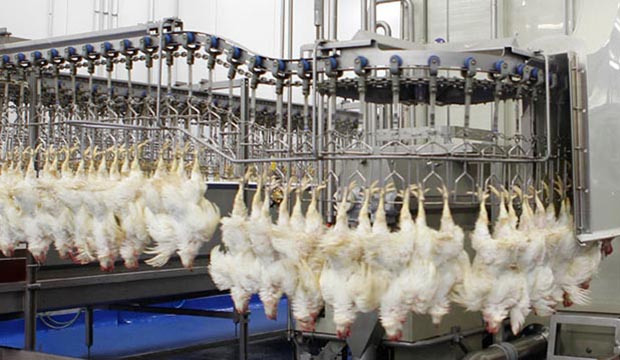
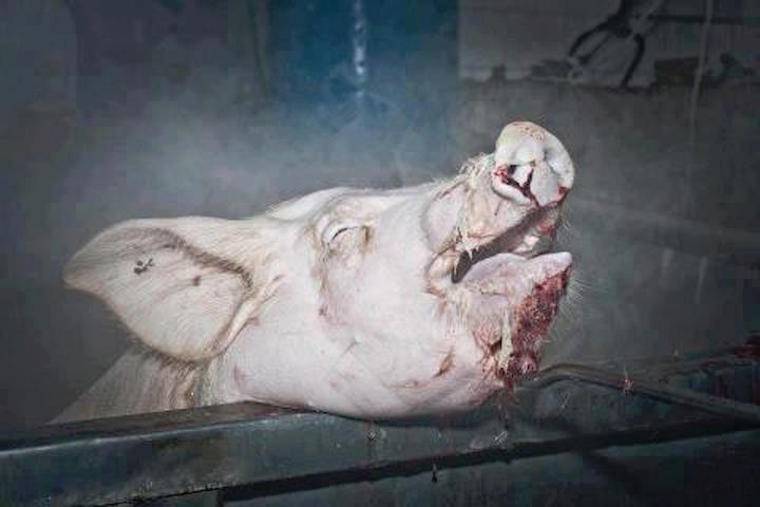
WAV Comment – the pictures in this article are not from the column written by Mr Walkom – they are taken from our own archives.  Not only does Canada murder seals and try to blame them for taking humans fish stocks, but it seems they don’t really have a clue about the welfare of animals in transport either !

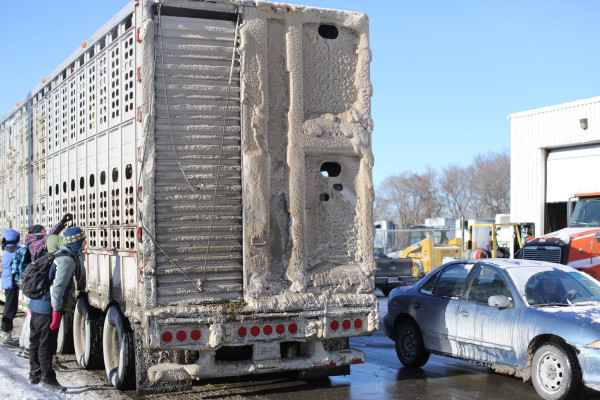
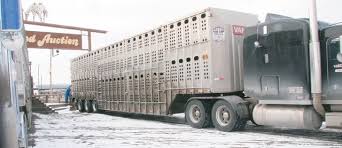
In Canada, the rules for transporting animals are already weak. Pigs can be trucked for up to 36 hours without food or water. For cattle, the number is 52 hours. Animals can be shipped in the freezing cold or broiling sun — as long as they do not suffer “undue exposure” to the elements (whatever that means).18 Sep 2018
can cold truck 2


Canada’s rules for transporting animals are weak — but they’re also not rigorously enforced


By Thomas WalkomNational Affairs Columnist

Tues., Sept. 18, 2018


Source – https://www.thestar.com/opinion/star-columnists/2018/09/18/poor-enforcement-of-animal-transport-rules.html


In Canada, the rules for transporting animals are already weak. Pigs can be trucked for up to 36 hours without food or water. For cattle, the number is 52 hours.

Animals can be shipped in the freezing cold or broiling sun — as long as they do not suffer “undue exposure” to the elements (whatever that means).

But inspection reports released to the Canadian Coalition for Farm Animals has revealed another glaring inadequacy: In much of Canada, including Ontario, the rules are not rigorously enforced.

To be more specific, in 2016 and 2017 the Canadian Food Inspection Agency (CFIA) conducted spot inspections of trucks carrying animals in only five provinces: British Columbia, Alberta, Saskatchewan, New Brunswick and Prince Edward Island.

Exactly why Ontario and other provinces were exempted from these spot checks remains unclear. A CFIA spokesperson said only that the agency’s “highway and border inspections are conducted pending the availability of law enforcement partners and appropriate weather conditions.”

The reports, released to the animal welfare coalition by the CFIA under access-to-information laws and passed on to the Star, show that the federal agency conducted 269 highway inspections over the two-year period, mainly in Saskatchewan.

In virtually all of those inspections, the truckers were ultimately found to be in compliance with CFIA regulations — even when, initially, they weren’t.

In December 2017, for instance, an unheated truck containing 45 cows in -20C weather was stopped by a CFIA inspector in Saskatchewan. The inspector wrote that he initially deemed the transport inadequate but changed his mind after the trucker agreed to put some boards along the sides of the vehicle and after he allowed his cattle to rest for five hours in a warm barn.

In February 2016, another truck transporting 26 horses to a slaughterhouse was stopped for inspection in Saskatchewan. The inspector found that one of the horses appeared too sick to get up — a regulatory no-no.
can cold truck 1

So he had the trucker unload his vehicle until the downed horse could struggle to its feet. The inspector then okayed the transport as compliant with the law and let the truck continue on.

The reports show that the CFIA became most engaged when the animals involved were slated for export. In June 2017, for instance, a truck containing 2,525 Canadian baby piglets was turned back at the U.S. border.

The Americans found the piglets were dirty and overcrowded. Seven had died.

This caused much consternation on the Canadian side. One of the problems, according to CFIA emails, was that for sanitary reasons the piglets could not be returned to the farm they came from. If the U.S. remained adamant, there was nowhere for them to go.

Eventually, however, the Americans relented and let the truck in. By the time it had reached its final destination in Iowa, eight more piglets were dead.

Similarly, in May 2016, 21 cattle were refused entry by the U.S. One calf was lame and one steer missing its ear tag. The trucker was persuaded by CFIA officials to let his cattle have food, water and a vet check. He then reloaded his trailer with all but the suspect calf and steer and made his way back to the border where, this time, he was allowed entry.

Later that month, another inspector found a dead pig in a load of 900 slated for export to the U.S. Nonetheless, he ruled that the other 899 were in compliance with regulations.

In November 2016, a truckload of 30 boars was refused entry into the U.S. The problem: two of the boars were dead. The CFIA reports are silent on what happened to the other 28.

Not all of the reports are negative. Many of the spot inspections — particularly those related to valuable show or breeding animals — indicate that some care was taken by truckers transporting them.

And at least, in those cases, federal agents were making inspections. In Ontario, they weren’t.


Further reading:

https://www.theglobeandmail.com/opinion/canada-must-do-better-to-protect-freezing-animals-in-transport/article37521254/

https://www.ctvnews.ca/canada/canada-s-livestock-transportation-rules-worst-in-the-western-world-advocate-1.2820563


England: What Good People Do For Wildlife – New Artificial Badger Sett Made For Schoolchildren; So They Can Learn About Badgers.

England


https://youtu.be/Fnp6sw5kI4Y

From – Somerset Badger Group

http://www.somersetbadgers.org.uk/ 

An opportunity arose at the school to create an artificial sett for badgers currently living under an old scout hut on the site, which is going to be replaced in the near future.

The school felt it was important to look after their badgers so we stepped in to help them create a new artificial sett so that the children could continue to enjoy sharing their school with the badgers and learn all about them too.


badger artworkbadgers north west hunt sabs

Indonesia: 79 Slow Lorises Seized From Poachers, 10 In Critical Condition.

Indonesia


79 Slow Lorises Seized From Poachers, 10 In Critical Condition

 Posted by Dobi Finley | February 18, 2019


79 Slow Lorises Seized From Poachers, 10 In Critical Condition

All Images: International Animal Rescue


Authorities recently confiscated 79 slow lorises from poachers in West Java Indonesia, and took the animals to the International Animal Rescue primate center for rehabilitation. Ten of the slow lorises were in dire medical condition when rescued, and are currently recovering in intensive care.

These specific animals are known as Javan slow lorises, and they are critically endangered. All of the confiscated animals were poached from the wild to be sold into the illegal pet trade, and are very lucky that police intervened just in time. Tragically, four of the animals were already deceased when they were found.

All of the surviving slow lorises suffered severe stress and dehydration, due to having been confined for a very long time in highly unnatural conditions. The animals who did not require specialized veterinary care were taken to the rescue center for observation. This is to allow them to rest and recover, and to make sure that they are good candidates for re-release. Once the animals build up their strength, they will be released back into the wild, since the goal is always to get healthy animals back into their natural habitat.

International Animal Rescue is still working around the clock caring for the 10 lorises in critical condition. The animals are recovering at the rehabilitation center, where they had to to undergo further medical examinations and treatment. Medical tests confirmed that the lorises were suffering from a number of health problems, including trauma, intestinal worms, infected teeth and gums, diarrhea and wounds to the body.

Those in critical condition will be kept under close observation by the center’s medical team, who will monitor the primates’ physical condition and administer drugs and vitamins to aid their recovery.

One of the lorises, whom caretakers have named Muka, has a horrible facial wound after being shot by a BB gun. The pellet is lodged deep in his face, and another pellet has been discovered in his armpit. The veterinarians are doing all they can to ease little Muka’s suffering, and hopefully he will be able to recover.

Unfortunately, illegal wildlife trafficking is rampant throughout Asia, and is fueled by the exotic pet trade. Organizations such as IAR work with government authorities to rescue as many animals as they can. While little Muka and his friends are still in urgent medical care, several of the other confiscated lorises are already fully recovered from their ordeal.

IAR recently made a special trip to a protected conservation forest to release some of the rescued animals. Hopefully all of the slow lorises can eventually be released when everyone has a clean bill of health. It is so heartwarming to see that some of these adorable lorises are already back home in the forest where they belong!


USA: Petition – Enact Mandatory Jail Time for Animal Cruelty.

USA


Enact Mandatory Jail Time for Animal Cruelty

Posted by Carly Day


petition keyboard

Petition link – https://ladyfreethinker.org/sign-enact-mandatory-jail-time-for-animal-cruelty/?utm_source=Newsletter&utm_medium=Email


PETITION TARGET: Tennessee Governor Bill Lee

All too often, the most heartbreaking acts of animal cruelty go unpunished, or abusers get away with just a small fine.

A new bill in Tennessee would help change that — we must speak out to help this important legislation pass!

The Tennessee P.A.W.S. Act (Protect Animal Welfare and Safety), filed by Tennessee Representative Bruce Griffey, would enforce mandatory minimum prison sentences for repeat animal cruelty offenders.

Aggravated cruelty to animals would continue to be listed as a Class E felony, with a punishment of up to six years imprisonment or a maximum fine of $3,000.

However, if someone commits a second act of cruelty involving five or more animals, the crime would be upgraded to a Class C felony, with a minimum sentence of 180 days in jail. Perpetrators would be required to complete 100 percent of the sentence.

Griffey says the bill is still a work in progress, and also wants a mandatory fine and mandatory minimum restitution paid to shelters to cover the costs of caring for abused animals. We would also like to see mandatory sentences for all cases of severe cruelty, even if just one animal is involved.

If passed by the Tennessee General Assembly, the bill would come into effect on July 1st this year.

Sign the petition urging Tennessee Governor Bill Lee to fully support this bill and ensure it passes, strengthening animal welfare laws in the state and deterring animal abusers from committing violence against the helpless.


England: Thanks ‘Tonka’.


England


This is not related to animals but I feel the need to write – a sad week for me personally.

The ‘Tonka’, or ‘Panavia Tornado’, to give it the proper name; spent 24 years with me.

It’s a sad week as the Royal Air Force are taking it out of service, as newer and more technologically advanced machines are now in service. Regardless, I still love it – one of the best; 200 feet, at night, in all weathers; that was Tornado.

You can see more videos and some of my pictures at https://serbiananimalsvoice.com/about-us/ – just scroll down till you see them.

I show few videos here so that you can make your own judgement on how special ‘Tonka’ was.  ‘Down and Dirty’.

Now; back to animals !!

Regards Mark.


Above and below – ‘Pinky’

pinky

Australia: Moves To End Reliance On Cosmetic Animal Testing.

australia


Aus com ban

Dear Mark,

There’s been a major breakthrough in our #BeCrueltyFree campaign in Australia, with lawmakers passing a measure that will save rabbits, mice and other animals from cruelty for cosmetics. This change to the law means that companies will no longer be able to profit from the use of new animal test data for cosmetic ingredients, putting a stop to this cruel and outdated practice in Australia.

Thanks to your support and compassion, our campaigners were able to work tirelessly for the past seven years to help get this lifesaving legislation passed. They negotiated with the highest levels of the health ministry to secure commitments which will ensure that all cosmetic ingredients are captured by the ban and to secure funding to support the development and adoption of modern non-animal test methods.

These essential commitments will ensure the implementation of a robust ban on cruel cosmetics in Australia!

http://www.hsi.org/news/press_releases/2019/02/cosmetic-animal-test-ban-bill-021419.html 
 

HSI and our partners have played a leading role in many of the nearly 40 national bans enacted to date, and in driving similar measures in active political discussion in Brazil, Canada, Chile, Mexico, South Africa, Sri Lanka, Taiwan, the United States and the ASEAN region of south-east Asia.

This history-making campaign would not be possible without the support of animal lovers like you who work with us toward a world without animal testing. Please take time to celebrate this shared victory!

Thank you so much for all that you do for animals.

Sincerely,

Kitty Block
President
Humane Society International

Website : http://www.hsi.org/ 

USA: Justice for Dog Wrapped in Duct Tape and Dumped in Freezing Ditch.

usa-flagge


Justice for Dog Wrapped in Duct Tape and Dumped in Freezing Ditch

Posted by Katie Valentine

SIGN: Justice for Dog Wrapped in Duct Tape and Dumped in Freezing Ditch


petition keyboard

Petition link – https://ladyfreethinker.org/sign-justice-for-dog-wrapped-in-duct-tape-and-dumped-in-freezing-ditch/?utm_source=Newsletter&utm_medium=Email


PETITION TARGET: Jefferson County, Missouri Prosecuting Attorney Trisha Stefanski

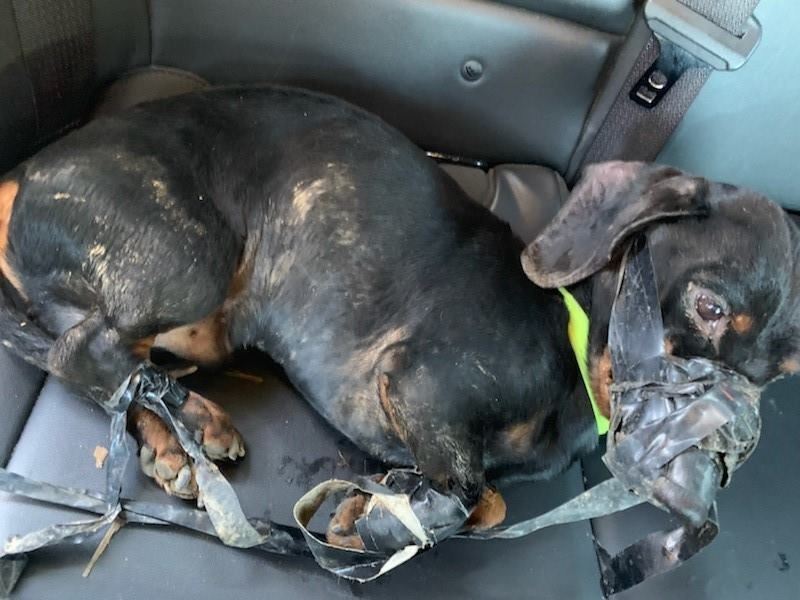
A Barnhart, Missouri man is accused of binding a dachshund’s legs and mouth with duct and electrical tape, then throwing the helpless animal from a vehicle like garbage. The terrified dog suffered in the freezing cold for twelve hours, unable to free himself or cry out for help.

The dog, who’s since been named Jimmy, was malnourished, cold, and appeared to have a concussion when he was finally found by a sheriff’s deputy. Temperatures had dropped into the teens while Jimmy lay helplessly in the ditch.

Police traced fingerprints on the duct tape, and arrested a suspect for felony animal abuse and armed criminal action. He’s being held on $50,000 bail.

Authorities must act to ensure that Jimmy’s abuser never harms another animal again.

Sign this petition urging Jefferson County Prosecuting Attorney Trisha Stefanski to make it clear that such animal cruelty will not be tolerated, and push for a lifelong ban on Jimmy’s attacker from ever going near an animal for the rest of his life.


Image Courtesy of Jefferson County Sheriff’s Office Facebook Page

Please sign and support this petition – Thanks – Mark – WAV.