https://www.earth.com/news/world-animal-day-2024-building-a-legacy-of-compassion/
Regards Mark


27 September 2024
Four Paws


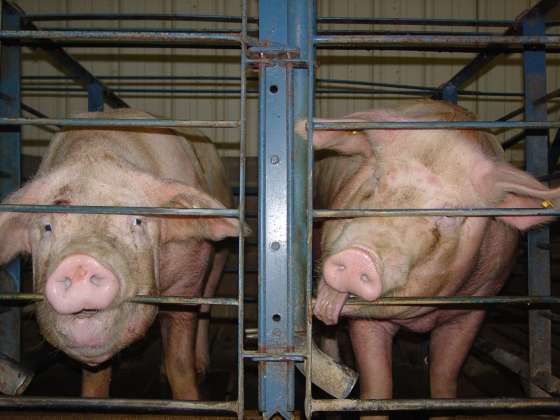
All across Europe, billions of animals endure unimaginable suffering every day, as current EU laws continue to fall short in providing them the protection they desperately need. NGOs Eurogroup for Animals and FOUR PAWS have teamed up to host the photo exhibition Silent Suffering which will expose the pain and distress endured by farmed, companion, wild, and aquatic animals.
The invite-only event will take place on 1 October at the Royal Library of Belgium in Brussels, bringing together MEPs and representatives of animal protection organisations from across Europe.
The photos, put forward by Eurogroup for Animals’ member and partner organisations are spread across nine categories: cage farming, transport, broiler chickens, aquatics, fur farming, animals in science, large carnivores, pets, and trade.
Why this exhibition matters now
As the European Commission prepares to enter a new term, FOUR PAWS and Eurogroup for Animals call for animal welfare to be a priority, and for a revision of the outdated animal welfare legislation to be put forward without further delay.
Regards Mark

To many he is simply known as ‘Bri’.
Sir Brian May, Queen Rock Band lead guitarist, co founder of animal welfare organisation ‘Save Me’, https://savemetrust.co.uk/ and a Doctor of Astrophysics, has resigned as Vice President of the RSPCA after 11 years as he considers the farm assured scheme as promoted by the RSPCA is in fact, anything but.
Almost 4,000 farms are certified RSPCA Assured, which indicates that their meat, fish, eggs and dairy products have been produced to strict standards which exceed the UK’s legal requirements.
Here Brian plays lead guitar – the singer is the brilliant Led Zeppelin frontman Robert Plant – or ‘Planty’; This event took place at Wembley Stadium, LONDON on Easter Monday, 20th April 1992 for a Freddie Mercury (Queen vocalist) tribute concert.
References:
https://www.dailymail.co.uk/news/article-13898023/Brian-queen-resigns-rspca-protest.html
https://www.mirror.co.uk/news/uk-news/rspca-reviews-animal-welfare-scheme-33762348
As animal campaigners, we can all appreciate how very difficult it must be to pack up and walk away from a positions such as this. The RSPCA are a fantastic charity who get NO funding from the government – they live solely through donations and legacies such as funds left by the public in personal Wills.
Regardless of this particular issue, I do, and will continue to give a small monthly donation to the RSPCA – why ? – because I have full respect and support for all the wonderful works they do in other areas; rescuing animals from suffering and harm; campaigning against animal cruelty, undercover work in dog fighting for example. Like Brian, I have very serious concerns about their farm assured labelling; and serious concerns anyway about all animals kept under the ‘farming’ umbrella; but this does not automatically stop me making a monthly donation. For many now, times have gotten that bit harder financially, and all charities are grateful for any support given to them.
So, they still get a little support from me regardless of how I feel specifically about the farm assured labelling. Policy can and is already underway to be changed in this area; animal cruelty does not stop overnight, so for me and the RSPCA, it is because of their other work that I still support.
Sadly, the farm assured scheme has been questioned for many years by us in the AR camp; but I am now pleased to see Bri put his words into actions; and for this I support him 110%. In 2023, Chris Packham, known to many UK viewers for he BBC Watch series – Springwatch, Autumnwatch etc became the President the the RSPCA. Chris is also a massive AW person and is Patron of many fine UK animal organisations, such as World Land, Animal Aid and Compassion In World Farming. I understand that for years Chris has been saying that the RSPCA farm assured scheme must be scrapped; but I suggest that some others in the organisations fight to keep the scheme going.
So back to Brian – Fully respected and understood reason why you decided to leave as VP. Hopefully the RSPCA will review their farm assured policies and as such, will bring back to the British Public the respect they deserve when they see the sticky label on food in their local supermarkets. A label which should mean that their food products are produced to the highest animal welfare standards.
Most Brits care a lot about animal welfare – I know cos I am one of them ! As a consequence they have a right to know that what the food label says in what they as consumers get; a guarantee that the labelling means that their food is produced to the highest standards and that NO cruelty takes place when to comes to animals raised.
We now wait to hear what the RSPCA is going to do.
In he meantime, well done Sir Brian for speaking out; full respect for this and all your badger work.
Regards Mark
Below – one of my resident garden badgers.


17 September 2024
Press Release
The new Commission, announced today, will include a Commissioner dedicated to Animal Welfare, in a move very positively welcomed by animal protection NGOs. This will allow for better prioritisation of the topic, in line with the demands of EU citizens.
Animal welfare will be included in the title of the new Commissioner for Health and Animal Welfare, President Ursula von der Leyen announced today as she revealed the structure and nominees of the new College.
Hungary’s Olivér Várhelyi has been nominated to take this role, subject to his approval in the EP hearing in the next weeks.
It is welcome to see that the competence of Animal Welfare remains under DG SANTE, ensuring a One Health approach that acknowledges the interlink between animal welfare, public health and the environment.
The ask for a Commissioner dedicated to Animal Welfare aligns with the collective voice of 310,000 citizens and over 200 MEPs in the 2019-24 term of the Parliament, and already over 100 MEPs in the new one, in a years-long EU for Animals campaign, led by Eurogroup for Animals’ member GAIA. The new Commissioner will be crucial in ensuring the delivery of the promised revision of the outdated EU animal welfare legislation.
The work of the new Commissioner responsible for Animal Welfare will also greatly interlink with that of other Commissioners – including that of nominee for Agriculture and Food, Christophe Hansen, who is expected to “bring to life the report and recommendations of Strategic Dialogue on the future of EU agriculture”. The report explicitly recommends a revision of animal welfare legislation by 2026 as well as a transition to cage-free systems.
It will also include working closely with the Commissioners responsible for Fisheries, Trade and Environment, among others, to ensure ambitious EU legislation that ensures high animal welfare standards in all relevant areas.
It is great to see that finally, the new Commission is listening to the demands of citizens, who have continuously asked for better EU laws to protect animal welfare. The inclusion of Animal Welfare in the title will ensure that this topic remains a priority in all relevant discussions and we expect the revision of the animal welfare legislation to be the first file to be dealt with.
Reineke Hameleers, CEO, Eurogroup for Animals
Regards Mark
10 September 2024
Feedback from a public consultation on amendments to the live animal transport regulation has just been published. The results reveal that citizens are very concerned about how animals are treated in this sector.
Read the summary results of the public consultation here.
In 2023, the European Commission announced it would update the Transport Regulation as part of its full revision to the animal welfare legislation. Soon after, it published its initial proposal for the update, which it invited European citizens to feed back on through a public consultation.
The response level was very high. The public consultation, which was open for a period of over four months (between 8 December 2023 and 12 April 2024) gathered over 5,000 contributions for analysis.
Within this number, a lot of the key input came from Spain, Germany, France and Italy, highlighting significant public interest for this topic in these Member States.
The results showed citizens overwhelmingly support stricter regulations to protect animal welfare in this industry, including by:
Stakeholders from various fields, including agriculture, public authorities, and NGOs, also provided feedback on different areas of the proposal, such as its current scope and what it says about journey times and temperature controls. These results were mixed, with some differences of opinion arising between the groups. For instance, industry voices and farmers raised concerns about limiting journey times during transport, whereas NGOs posited that journey times should be reduced significantly, for the wellbeing of the animals subjected to them.
The transport proposal needs some changes to truly work for animal welfare
As the responses to the public consultation show, the current transport proposal should be further revised. Our white paper details several measures that can be used by policy-makers to draft the strongest policies possible in this area: addressing both the needs of the animals in this sector, as well as the concerns of European citizens who have voiced support for protecting their welfare.
It’s great to see that, yet again, the public is so engaged in the topic of live animal transport, and that European citizens in particular want to see more being done for animal welfare. This sector is very complex and causes suffering for millions of animals each year, both in the EU and beyond. The current transport proposal needs to be much stronger if it is really going to have an impact on the wellbeing of animals, and a lot of the conflicts of opinion expressed within the consultation could be addressed to a wider transition to a ‘meat and carcasses’ trade, in which no live animals would have to be subjected to these long and difficult journeys anymore.
Inês Grenho Ajuda, Farm Animals Programme Leader, Eurogroup for Animals
https://www.eurogroupforanimals.org/library/live-animal-transport-due-time-change-rules
Regards Mark


Great News.
https://www.romania-insider.com/animal-rights-march-2024-bucharest
Some of our past posts relating to Romanian issues – not current – note dates of articles:
Biggest sheep exporter in Europe !
Regards Mark
31 July 2024
Essere Animali
As heat waves surge throughout Europe, animals are vulnerable to extreme temperatures, especially when they are being transported by road and sea. A new investigation found animals forced to travel at temperatures above 45° without water and left under scorching sun in Italy, whilst another explored the issue of dead animals being tossed off of export vessels into the Mediterranean sea.
A recent investigation by Essere Animali, in which they monitored transport shipments of animals on highways in Italy, revealed some animals are being transported in trucks of internal temperatures reaching up to 48 degrees. Their photos and footage show pigs gasping for air and left without access to water. In one case, animals were left for long periods under the scorching sun with fans turned off in the truck, while drivers took their break.
Unfortunately, this is not an isolated case. The welfare of animals during transport continues to be poorly protected by European laws. According to regulations animals should be safeguarded against “extreme temperatures”, but there are no clear definitions, as well as no enforcement. Furthermore, national travel is exempt from this rule.
Essere Animali, together with Eurogroup for Animals, calls for the long distance transport of live animals to be banned, and that clear references are introduced for temperatures, taking into account humidity and the condition of animals.
Animals washed up on beaches
The demand for exports to third countries has risen sharply. The EU’s Member States export around three million animals by sea to distant countries, posing significant risks to animals with increased mortality rates.
Treated like unwanted waste, deceased animals are disposed of in the Mediterranean. Not only is this completely insensitive, but it increases pollution and also risk of shark attacks at numerous tourist hotspots on Mediterranean beaches.
In over 50 media-documented cases, dead and discarded animals from livestock vessels were washed ashore in France, Spain, Greece, Israel and Portugal among others.
A new film by Animal Welfare Foundation shows the extent of this issue, with a clear call to action: live animal transports to third countries are wrong in every respect and must be stopped.
egards Mark
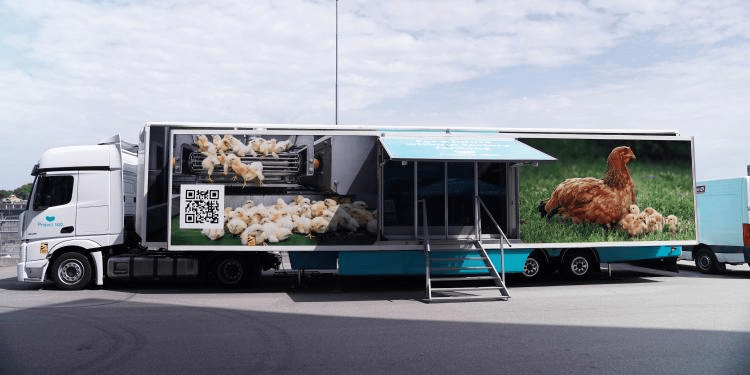
The new animal welfare exhibition truck
Brussels only city to not authorise mobile exhibition on animal welfare
25 July 2024
GAIA
Press Release
Among 20 European cities, Brussels is the only city that has failed to issue a permit for a mobile exhibition that will travel around Europe showcasing issues related to animal welfare, causing concern to animal protection NGOs.
The mobile exhibition For the Animals, by Project 1882, a leading animal advocacy organisation in Sweden, started its Euro Tour in June, going through Helsinki, Tallinn, Riga, Vilnius, Warsaw, Berlin, Bratislava, Prague and Ljubljana. Its journey, through to November, will continue to Budapest, Madrid, Lisbon, Porto, Bologna, Torino, Aarhus, Copenhagen, Malmö, Gutenberg and Stockholm.
Yet, despite efforts by Eurogroup for Animals and GAIA, the city of Brussels has failed to provide a permit for the exhibition. In the long correspondence with several different authorities, the permit was rejected, on claims that the dimensions of the truck are too large, the roads in Brussels are “too fragile”, or because of metro and underground parking lots. This however, is questionable, considering that many other participating cities have similar landscapes and did not raise such concerns.
It is concerning that in Brussels, right in the heart of policy-making in Europe, citizens are unable to participate in this exhibition. With the reasons provided for the lack of permit, we wonder if there is a hidden motive, one that is based on the content of the exhibition, rather than the format? The reality of suffering of animals in Europe should remain visible.
Reineke Hameleers, CEO, Eurogroup for Animals
Today, we had to announce to dozens of major NGOs that Brussels, the Capital of Europe, was not able to host an exhibition that will nonetheless be present in all the major cities on the continent. Brussels, which recently hosted hundreds of tractors, apparently does not have the capacity to accommodate a truck for a one-day event? It’s grotesque and deplorable.
Ann De Greef, CEO, GAIA
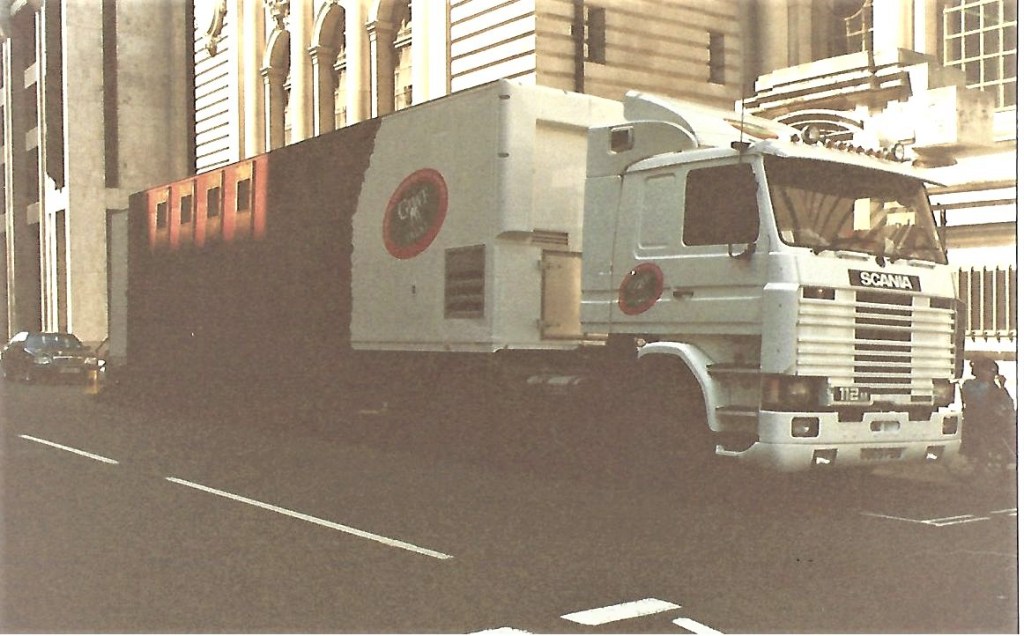
Above – London.
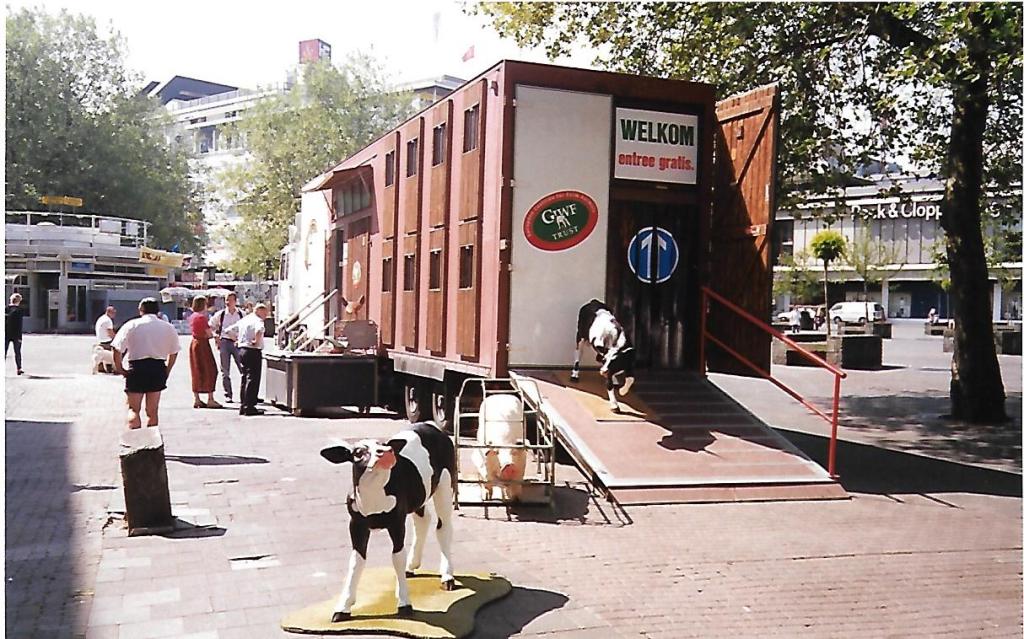
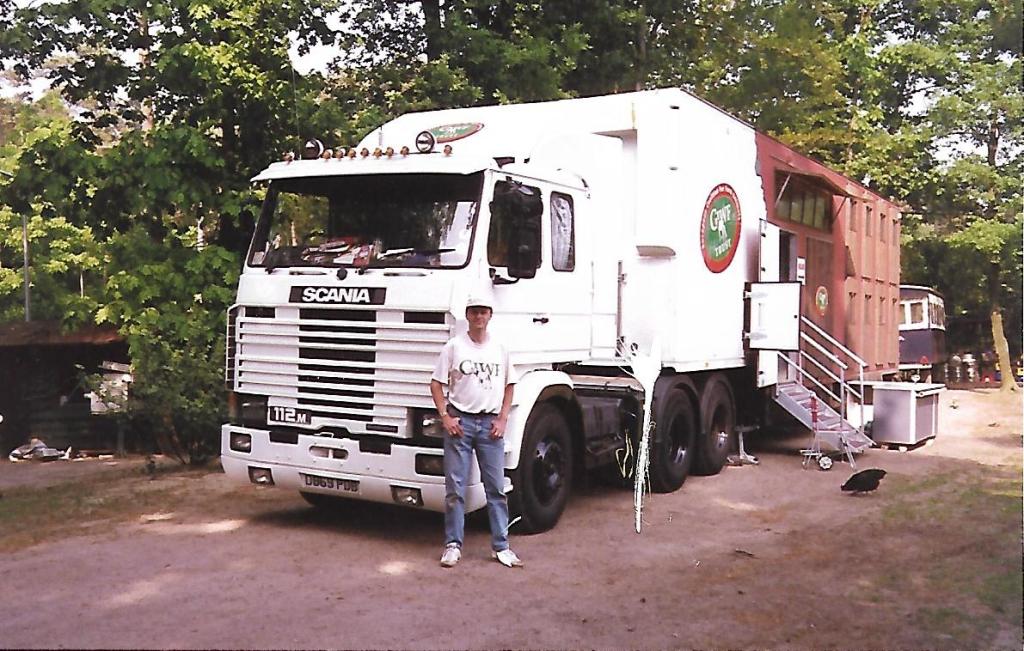
Yours truly somewhere in the Netherlands – note free range chickens – how they should be !
Brussels, oh yeah yup I get it – home of the EU, where decisions like live animal regulations are rules, and where intensive farming regulations for the entire EU member states are made, Then they have never had the bollocks to do what EU man demands; just a few ? flimsy animal abusers from start to finish; their own little powerhouse doing what they want rather than to go with animal welfare friendly common man.

Ever asked yourself why it was only upon leaving the EU that the United Kingdom was able introduce legislation which ended up with an export ban for British animals going into Europe ? – best thig the UK has done for a long time !
I know, its called getting out of the EU !
I travelled with the Ban live export tour truck in Europe decades ago – now out, the UK is free from the EU shackles of that abuse; whilst those still in Europe sadly still see live animal shipments day in day out – why ? cos the gutless Commission lets and animals suffer continually for a few pennies more,
SHAME ON THEM – Let the animals free !
Mark

Every 6 months a different nation takes on the Presidency of the EU. This is a rotational thing, ensuring each member state plays its part. Now Hungary – Hence:
10 July 2024
As Hungary presides over the council for the next six months, Eurogroup for Animals urges the presidency to prioritise the critical needs in animal welfare.
The Belgian presidency significantly advanced on the proposal for the welfare and traceability of cats and dogs, which was approved by Member States in the council. While this achievement is welcome, the Hungarian presidency must now address the remaining urgent issues.
Read our full memorandum to the Hungarian Presidency here.
Animal welfare legislation must be published
Foremost, the presidency must urge the Commission to publish the remaining animal welfare proposals early in the next political term, to address the severely outdated legislation that does not adequately protect animals throughout their lifetime, from farm to slaughter. In particular, the legislation should have a plan of action to transition to cage-free systems, as per the commitment to the End the Cage Age ECI.
Better protection of animals during transport
Eurogroup for Animals urges the Hungarian presidency to further the work on the revision of the Transport Regulation to support a ban on the transport of live animals outside EU borders, in parallel with a transition towards a trade in meat and carcasses, and stricter requirements to protect animals during intra-EU transport, particularly vulnerable animals.
Support coexistence with wildlife
With significant support for coexistence with wolves in rural communities across the EU and sufficient EU guidelines, practices and support initiatives to prevent loss of livestock, the Hungarian presidency is encouraged to to close the discussions on the proposal to downgrade the protection status of wolves and rather promote the uptake of coexistence measures currently underutilised.
Move towards non-animal science
The impact of EU legislation to protect animals used for scientific purposes has so far been limited. In 2020, over 7.9 million animals were used in research, testing, and education in the EU-27 and Norway, and a further 686,628 animals were used for creating and maintaining genetically altered lines. Eurogroup for Animals urges the Hungarian presidency to support efforts to advance negotiations on legislative initiatives to phase out the use of animals in science.
Read our full memorandum to the Hungarian Presidency here.
Hungary presidency: time to step up work in animal welfare | Eurogroup for Animals
Regards Mark

We have a new Labour government in the UK.
Like all politicians after your vote, they promise the world. Once elected, then we see the reality.

Labour’s animal-welfare and environmental policies may be better than the Tories’ – but they contain disappointing gaps, experts say.
** In a YouGov poll last year, a third of voters said animal welfare was one of their top three issues. **
So new environment secretary Steve Reed will come under pressure from lobby groups – and in some cases, from opposing countryside and farming factions.
The party’s manifesto promised to improve animal welfare, with bans on trail hunting and the import of hunting trophies, an end to puppy smuggling and farming, and to “work towards the phasing out of animal testing”.
It pledged a Labour government would “champion British farming whilst protecting the environment”.
Alongside environmental land-management schemes, the manifesto promised steps to eradicate bovine TB to end the “ineffective” badger cull. And there was a pledge to ban snares.
Mr Reed said Labour would introduce “the biggest boost in animal welfare in a generation”.
Many of the policies have been broadly welcomed by commentators – but already others are facing controversy, including:
Badger cull
Before the election, Labour damned the badger cull as “ineffective”, holding up the prospect of ending it.
But Mr Reed confirmed last week the government would allow existing cull licences to continue until 2026, saying an immediate end to the cull would send “sudden shocks into the system”.
Meanwhile, the Badger Trust and Wild Justice, a campaign group jointly run by Chris Packham, have sent a legal warning letter over Natural England’s decision before the election to grant nine new supplementary cull licences and to authorise 17 existing licences – contrary to the advice of Natural England’s own head of science.
Wild Justice said if the response was unsatisfactory it may seek a judicial review.
Dominic Dyer, ex-head of the Badger Trust and a defeated Lib Dem election candidate, said: “Never in the history of wildlife protection has there been such a betrayal of trust. After 13 years of waiting for a Labour government to stop this cruel madness, they are now planning to kill at least 30,000 more badgers.”
Industrial farming
Labour’s manifesto has been criticised for not mentioning factory farm animal welfare.
Alick Simmons, a former government deputy chief vet, writing for Wild Justice, said: “A pledge to address puppy farming while ignoring industrial pig and poultry farming does not strike me as a balanced manifesto.”
Compassion in World Farming (CiWF) has lobbied all parties for a ban on cages, saying around 8 million farmed animals are kept in them each year in the UK. “The previous government said they’d prepared consultations on this issue, and we want to see them published,” it said.
The Liberal Democrats had pledged to ban cages for hens, while Labour did not.
CiWF also called for method-of-production food labelling, following a consultation earlier this year.
The Lib Dems were praised for a promise to crack down on antibiotic misuse for farm animals, and the new government will face calls to do so.
Wildlife and nature recovery
Green Party former co-leader Caroline Lucas said she was shocked by the lack of manifesto detail on restoring the natural world.
“As the bare minimum, where’s the increased budget for arms-length bodies like Natural England and the Environment Agency?” she asked. “Or the funding to enable landowners to return land to nature? Or the pay rise to help farmers shift to nature-friendly farming and tackle our broken agriculture system which is driving biodiversity loss?”
But environmental campaigners welcomed a pledge in the party’s pre-manifesto nature policies stating: “We will help coordinate nature’s recovery with bodies responsible for public land and major landowners.”
Guy Shrubsole said in a blog: “This may sound anodyne, but in fact could be one of the most significant policies – the first inklings of a Public Nature Estate: an idea that Wildlife and Countryside Link [a coalition of 82 organisations] have been calling for.”
Forest ranger Samuel Lindsay added: “Although the talk of habitat expansion is positive, this is a very vague statement. There are no clear targets or areas identified for this to be carried out.”
The manifesto promised to plant millions of trees, create new woodlands and expand wetlands, peat bogs and forests.
Mr Simmons said: “Sure, let’s get rid of snares but what about the numerous unaccountable and untested methods of killing wildlife such as Larsen traps, mole traps, Fenn traps and poisons that are on free sale for use by anyone?”
Trail hunting
Opponents and monitors say hunts break the law by fox hunting while claiming to be trail hunting – that is, following a scent without chasing wild animals.
The claims were lent weight by a hunt chief advising others to create a “smokescreen” by laying several trails. His words, during a leaked private Zoom meeting, were interpreted as an admission that foxhunting took place.
Mr Reed said in February that a Labour government would ban trail hunting in its first term, and the manifesto included a promise to ban trail hunting – but it did not promise to close loopholes in the Hunting Act 2004, which bans hunting wild animals with dogs.
A former head of the League Against Cruel Sports, Andy Knott, has cast doubt on achieving a ban through the Hunting Act.
“People have seen the images of packs of hounds getting into private back gardens, killing cats, ripping flocks apart. There’s not a majority in any part of the country that wants to see that continue,” Mr Reed told The Times before the election.
But Oliver Hughes, of governing body the British Hound Sports Association, told Horse & Hound that about 12,000 days of trail hunting took place in England and Wales each year, “with the vast majority taking place without any problems”.
Sewage scandal
Ms Lucas said: “Although Labour’s manifesto commits to tackling the sewage scandal, it fails to get to the heart of the matter – the unmitigated disaster that is our privatised water system. Water is a public good, so the Green Party would bring it back into public ownership.”
Mr Shrubsole criticised the plans for not mentioning agricultural river pollution.
“Farming’s significant contribution to the state of our rivers seems to be a taboo subject for nearly all parties competing in this election – with the notable exception of the Green Party,” he said.
Trade deals
Mr Dyer said a government priority should be suspending the UK’s £970m trade deal with the Faroe Islands to force the authorities to end the mass slaughter of whales and dolphins.
Ciwf said animal welfare should be protected in trade deals by refusing imports of food produced in ways that are illegal in the UK. Labour has said it will do this.
British farmers complained that deals for cheap food imports under the Conservatives undermined their standards.
A spokesperson for the Department for Environment, Food and Rural Affairs said: “The government set out its plans in the manifesto to introduce the most ambitious boost in animal-welfare rights in a generation.
“This includes banning trail hunting and the importing of hunting trophies, while also ending the badger cull, puppy smuggling and farming, and the use of snare traps.”
Regards Mark
 World Animals Voice