Coronavirus risk grows as animals move through wildlife trade.

Woman slaughtering rats at a market in Dong Thap, Vietnam (left), and vendor selling live rats in cages (right). Photo credit: WCS/Viet Nam (Huong, et al, 2020)
  • Woman slaughtering rats at a market in Dong Thap, Vietnam (left), and vendor selling live rats in cages (right). Photo credit: WCS/Viet Nam (Huong, et al, 2020)

Coronavirus risk grows as animals move through wildlife trade

Click on this link to see all the photos:

Coronavirus risk grows as animals move through wildlife trade (mongabay.com)

  • Animals consumed by people in Vietnam are increasingly likely to carry coronavirus as they move from the wild to markets to restaurants, a new study shows.
  • The animals with the highest rates of infection are most likely to come into contact with humans.
  • When animals are confined in crowded and stressful conditions, it makes it even easier for the virus to spread.

The COVID-19 pandemic has made it clear that when coronaviruses leap from wild animals to humans, the results can be devastating. A new study from Vietnam provides new insights about how this cross-species spread might happen.

Researchers showed for the first time that as animals move through the wildlife supply chain, from their natural habitats to marketplaces and ultimately to restaurants, they are more likely to become infected with coronaviruses, according to a report in PLOS OneAnd at each stage, people interact with these animals more intensively.

Coronaviruses are most notorious for causing human disease—including SARS, MERS, and COVID-19—but they are widespread in the animal kingdom. There are many different coronaviruses, and they can infect bats, rodents, birds, and domestic livestock like cattle and swine. Understanding where and how these viruses first make contact with humans is critical for preventing future pandemics.

To do this, the best place to start is at the wildlife-human interface: places where wild animals and humans are exposed to each other. A team of Vietnamese scientists, led by Nguyen Quynh Huong and Nguyen Thi Thanh Nga, along with Amanda Fine and Sarah Olson of the Wildlife Conservation Society (WCS) in New York, tested field rats for coronavirus at different points along the wildlife supply chain in Vietnam. They found that with each link in this chain, the percentage of infected animals increased by about 1.5 times.

This factor may not seem like much. However, it means the infection rates increased markedly: 20.7 percent of rats handled by wildlife traders, to 32 percent of rats in the markets, to 55.6 percent of rats in the restaurants.

“They did an amazing job at following the virus surveillance throughout the trade routes,” said senior field veterinarian Marc Valitutto of EcoHealth Alliance, who focuses on pandemic preparedness in Southeast Asia and China. Valitutto, who was not involved in the research, wasn’t aware of any other studies that traced infection rates along trade routes in as much detail.

The team also found that about 75 percent of bats on guano farms (constructed roosts where people collect and sell bat droppings for fertilizer) were infected with coronavirus. That was more than ten times the infection rate of 6.7 percent in naturally roosting bats.

The study demonstrated that the animals in closest contact with humans had the highest infection rates, said Fine. That’s critical to understanding how coronaviruses might infect villagers or city residents: The chance that a virus will transfer from wildlife to people is “directly increased by the number of contacts and the number of humans in that environment,” she said.

Further, when infected animals reach markets and restaurants, they are often housed in close quarters near many different kinds of animals. In such settings, coronaviruses can jump from species to species, said Olson. The team found direct evidence of this: rats and porcupines on a crowded wildlife farm carried coronaviruses from bats and birds.

That’s a noteworthy public health concern, according to Valitutto: Many coronaviruses that have caused major human outbreaks have jumped among a few different species before infecting people.

The authors noted a few caveats. For instance, cross-contamination between animals butchered in restaurants could have created some false positives tests—although such contamination is another way coronavirus could spread to human consumers, said Fine. Also, virus infections among animals are much higher during the wet season, but the team couldn’t sample every testing site during both wet and dry seasons.

Fine, Olson, and Valitutto all hope the sobering results of this study will help bring major changes to wildlife trade regulation in Vietnam and elsewhere to cut down on coronavirus transmissions.

“If this can’t change the status quo,” said Olson, “I don’t think anything can.”

EU Commission take drastic action against disinforming and decides what the truth is

The EU Commission wants to intensify the fight against disinformation with a “European Action Plan for Democracy”.
Last but not least, the coronavirus pandemic has shown how much misinformation can shape public opinion, explained Věra Jourová, Vice President of the EU Commission for Values and Transparency, on Wednesday.
The Commission now wants to counter this with an action plan.

from the Greek press

New guidelines planned

In 2018, social networks and search engines such as Facebook, Google, and Twitter agreed to the commission to sign a code of conduct against disinformation.
Now the commission wants to “go over to co-regulation”, announced Jourová. To this end, new guidelines are to be created by spring 2021 that can be enforced by national regulatory authorities.

The planned Digital Services Act would create “horizontal rules” for the platforms, explained the Commissioner. These would then have to specifically reduce the risk of spreading disinformation.
It is not about having controversial content deleted from the right or left, but there must be clear guidelines for everyone.

Jourová advocated observing actors over a longer period of time in order to find those who spread systematic disinformation.

The perpetrators could be charged costs, for example by advertisers no longer placing banners on some portals. Sanctions against “malicious actors”, for example in Russia or China, based on the “Cyber ​​Diplomacy Toolbox” model, would also come into question. Such actors could also be publicly denounced.

Fight against manipulation

“Our societies must not be manipulated through organized activities,” said the Commissioner. It must be possible, for example, to use vaccines efficiently against the coronavirus pandemic.
They have already notified Google and Facebook that “we want to promote vaccination strategies” (!!!)

The platforms would also have to take stronger action against manipulation by social bots and fake accounts and make their algorithms more transparent, especially for news feeds. It is also important to cooperate better and more systematically with fact-checkers and to take stronger action against hate speech.

For the coming year, the Commission also announced revised rules on the transparency of political advertising and party funding.
The EU no longer wants to tolerate “dirty methods” as in the cases of Cambridge Analytica and the Brexit referendum (!!!)

Political marketing should no longer abuse privileged access, for example by researchers, to private data. With the General Data Protection Regulation (GDPR), EU citizens are somewhat better protected (!!!)
The required consent is a comparatively weak instrument.

“Overall social task”

Achim Berg, President of the IT industry association Bitkom, described the fight against disinformation on the Internet as “a task for society as a whole”.
Educational institutions, the media, governments, civil society “and of course online platforms are responsible”.

Politicians have to act with “a particularly good sense of proportion”: “In many cases, there is no clear right or wrong, and what is still valid today may be untrue tomorrow”.
Interventions in social media posts, for example, should “be restricted to particularly serious cases”.

https://www.heise.de/news/EU-Kommission-will-Desinformierer-bestrafen-4979691.html


And I mean…At the time of the translation of this article (which, by the way, has appeared on conventional media), there have been 334 comments.
Of course, I couldn’t read all of them.
I particularly liked some of them, and I’ll add them here:

It is time to accept that the EU is a thoroughbred dictatorship

… There is no more to be said.

……………………………………………………

“And above the entrance, it says: Truth sets you free (Explanation: Above the entrance of the Auschwitz concentration camp it says: “Work makes you free”)

Well finally! Then it may not be long before the headline reads: EU Commission wants to train disinformers

It is best to spend the disinformers in a place where they can better “concentrate” on the training content, ie the truth, and are not as distracted as in normal life.
Germany has a certain amount of expertise when it comes to warehouse management, transport logistics, and location selection, and above the entrance, it says: Truth sets you free”!

……………………………………………………….

“Who decides what the truth is?
Quote from the article:
“Anyone who systematically spreads false information, for example about elections or Covid-19, should be pilloried and sanctioned.”

Has anyone noticed that it is nowhere mentioned WHO is allowed to tag information as “wrong”?
So I think these regulations are excellent if I am allowed to be that person. I’m really good at it too.

I’ve ALWAYS been right in my entire life until now !! Honest!!

Then I think the pillory is ok too. And when people have gotten used to the pillory, we can then also introduce the shooting and a few years later legal shooting.
Uhmmm, didn’t we have all of this before …..?”

My comment now! By the way, we are sliding from the hygiene dictatorship to the digital dictatorship.
And all of this, says the EU, just for our protection!

Instead of developing surveillance systems to eliminate other opinions, the EU should rather deal with surveillance in slaughterhouses, animal transports, and animal farms.

And finally getting active there where it is urgently needed.

My best regards to all, Venus

Happy Birthday Captain Hammarstedt!

Sea Shepherd Germany

Today we congratulate Captain Peter Hammarstedt on his 36th birthday.

He has spent almost half of his life onboard our ships. Today, as Sea Shepherd’s campaign director, he leads our missions against illegal, unregulated, and undocumented fishing. And if his time permits, he leads the BOB BARKER as captain.

We wish Peter good luck, health, and strength so that he can continue to fight so passionately for our oceans. ⚓💙

Today, leave your congratulations to Peter Hammarstedt in the comments.


We wish Captain Peter Hammarstedt many more healthy years.
And we are sure, the inhabitants of the sea too

Delfin und Co: soziale Großhirne wie wir - wissenschaft.de

Regards and good night, Venus

Mexico: 26 Reptiles smuggled from Mexico found at German airport stitched inside dolls. 10 Dead Due to Suffocation.

Reptiles smuggled from Mexico found at German airport stitched inside dolls

German airport customs officers have found 26 rare reptiles – 10 of them dead – smuggled inside parcels of toys and sweets from Mexico.

Some of the dead animals had suffocated as they had been stitched inside cloth dolls, a statement from Cologne Bonn airport customs said.

The endangered horned lizards, alligator lizards and box turtles were destined for private buyers in Germany.

They are among many species that the global Cites accord seeks to protect.

Seized toys and sweets from Mexico

German officials are now trying to trace the origin of the reptiles, using DNA samples.

It is not yet clear if they came from the wild or from captive breeding programmes. They were in two packages seized on 30 October and 8 November.

The customs service is collaborating with Mexican authorities and with zoologists at the Alexander Koenig Research Museum (ZFMK) in Bonn. The smugglers could be fined, if the police can identify them.

The 16 surviving reptiles might be returned to their Mexican habitat.

ZFMK’s work with customs mostly focuses on illegal goods made from poached endangered species, such as snakeskin handbags or furs.

The 1973 Convention on International Trade in Endangered Species (Cites) has been signed by 182 states and the EU, and covers about 6,000 animal species and 30,000 plant types.

Reptiles smuggled from Mexico found at German airport stitched inside dolls – BBC News

Help stop neo-colonialist and capitalist expansion into the Kavango Conservation Area.

Nature, wildlife, and scarce water supplies in a unique corner of southern Africa are being endangered by a rush to drill for oil. A Canadian company is pushing to explore for oil in the Kavango Basin, an environmentally sensitive area.

Please support the fight against a fossil fuel project that will drive the climate crisis.

Aerial View of the Okavango Delta, Botswana

“The oil needs to stay in the ground”, says Ina Shikongo.

The Fridays for Future (FFF) activist in Namibia’s capital city Windhoek is fighting a project to exploit untapped oil and gas reserves in the northeast of the country.

“The exploitation would be a catastrophe – not only for the global climate but also for wildlife, water resources and the livelihoods of local people”.

The project Ina rejects so fiercely – together with further FFF activists and a citizens’ coalition – is run by ReconAfrica, a firm based in Canada.

The company claims to have discovered an immense deep sedimentary basin. It obtained a license for oil and gas exploration in the Kavango delta, bought a second-hand oil rig in the US, and shipped it across the Atlantic.

If the drilling of the first three test boreholes – slated for December 2020 – is successful, the company plans to extract two billion barrels of oil before drilling into deeper layers of rock.

Environmentalists fear the company will use fracking despite public statements to the contrary, as its marketing materials refer to “unconventional” methodsan industry euphemism for fracking.

The ecological impacts of the projects are likely to be devastating.

It would not only threaten bodies of water in the dry savannas of Namibia, but also Botswana’s UNESCO World Heritage Site, the Okavango Delta, with its unique biodiversity and huge populations of elephants, hippos, rhinos, and birds.

Tourism, an important source of income, is in danger while other livelihood strategies of indigenous San and local people also hang in the balance.

We need to stop ReconAfrica’s project for the sake of the climate, biodiversity, water, and the livelihoods of the local people.

Please support our demands with your signature.

https://www.rainforest-rescue.org/petitions/1231/keep-the-oil-industry-out-of-africas-natural-treasures

And I mean…the head of the farmers’ association Kavango-Ost, Adolf Muremi, says: “Recon Africa says they informed the people here – but we are not aware of anything about this. You can already expect malformations in babies and other diseases that this type of industry leads to agriculture will be just as affected as the groundwater, it will have negative consequences for life for everyone here “

The multinational sells the project as an “exciting future” – for whom?

1) Oil and gas extraction is a menace to wildlife. Loud noises, human movement, and vehicle traffic from drilling operations can disrupt avian species’ communication, breeding, and nesting.

2) The ecosystem will be destroyed by a criminal Canadian Company that harvests 90% of the profits. The state of Namibia is only entitled to ten percent – a hunger share.

3) The construction of roads, facilities, and drilling sites known as well pads requires the use of heavy equipment and can destroy big chunks of pristine wilderness.

4) The underground water will not only be polluted but also depleted. How can the inhabitants giving an overseas company unbridled access to their most precious resource?

There will only be damages to humans and animals, and this harm is irreversible.

Please sign the Petition: https://www.rainforest-rescue.org/petitions/1231/keep-the-oil-industry-out-of-africas-natural-treasures

My best regards to all, Venus

Brazil: The GPA company goes Cage-Free

Animal Equality, November 30, 2020

After four years of campaigning and negotiations, South America’s biggest grocery chain has finally committed to going 100% cage-free in Brazil by 2028. The company, called GPA, also committed to ban gestation crates for pigs by 2028 and to improve conditions for chicken and cows raised for meat sold in the stores.

MILLIONS OF CHICKENS IMPACTED: GPA is the second-largest retailer in Brazil, so this new policy is a great step in the right direction for farmed animals. We estimate with 5.7 million hens will be impacted by this policy, which was achieved in part by a variety of tactics, including mobile billboards and grassroots actions at 45 different GPA store locations.

“This commitment is the result of a lot of work by animal protection organizations, but it is also the result of the mobilization of consumers who joined us to demand more responsible behavior from Grupo Pão de Açúcar.”, Says Carla Lettieri, new Executive Director of Animal Equality Brazil.

“We hope that GPA’s attitude will inspire other companies because there are still millions of chickens suffering in cages around the world.”

Image: Animal Equality


A STEP IN THE RIGHT DIRECTION: Chickens are sensitive animals who are able to feel emotions and pain, but unfortunately many of them still live confined and crowded into tiny wire cages where they spend their whole lives without ever stepping on the floor or being able to open their wings.

This confinement is not only physically harmful, but is also psychological torture for the birds, and often leads to self-mutilation and even cannibalism.

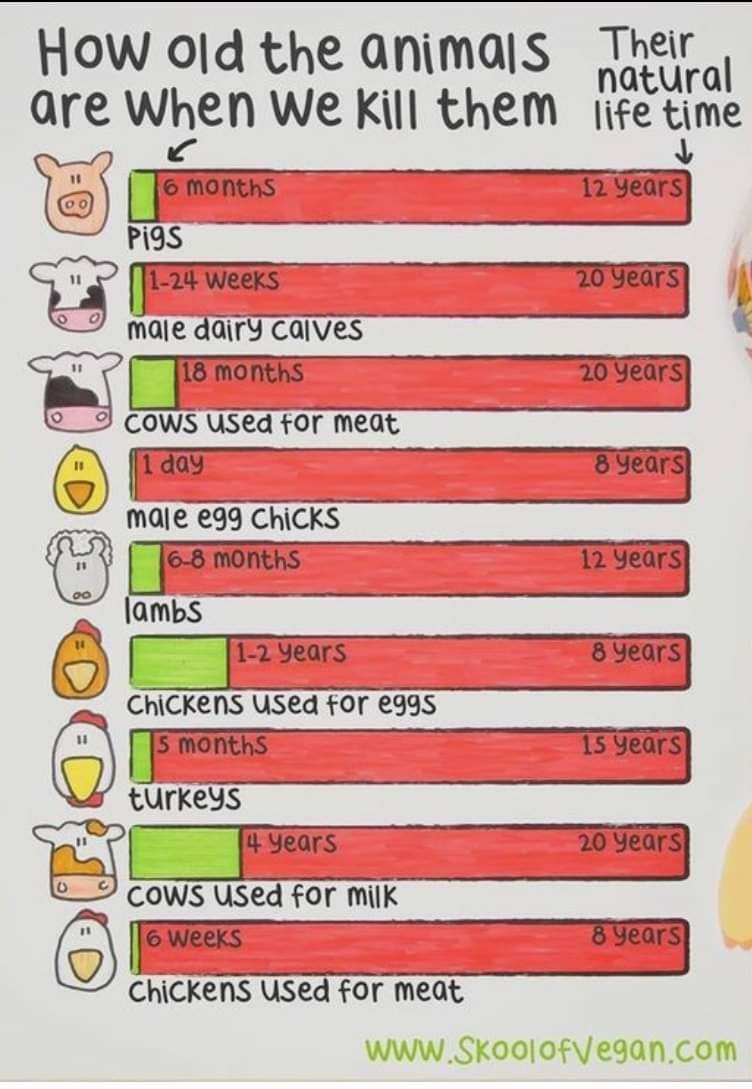
It is worth remembering that free from cages does not mean free from cruelty. The egg industry is inherently cruel and denies animals everything that’s natural and important to them, and the best way to help hens is by simply avoiding eggs.

However, banning cages is an important step to reduce the suffering of animals and deserves to be celebrated.

YOU MAKE A DIFFERENCE: This milestone wouldn’t have been possible without the work and support of thousands of volunteers across Brazil. You can help animals with campaigns in the United States, too, by signing petitions, taking action on social media, and at in-person demonstrations.

Join The Animal Protectors, our online group of volunteers, and assist our corporate outreach team in making changes to our broken food system.

Brazil’s Second Largest Food Retailer to go Cage-Free

And I mean…It’s a huge industry!
Brazil ranks second among the largest poultry producing countries behind the USA and is the most important force in the international poultry trade.

In 2016, 5.86 billion chickens were slaughtered there. Brazil exports meat to over 160 countries.

And another number: eleven percent of water consumption in Brazil is accounted for by animal breeding.

For the European Union, Brazil is the most important country of origin of imported chicken.

Brazilian chickens make up about 60 percent of imports, of which 76.2 percent are processed and salted poultry. The majority of deliveries in the EU go to Belgium, Germany, and Great Britain.

However, these European countries are not necessarily the countries where chicken meat is ultimately sold and consumed.

The Brazilian poultry industry is dominated locally by two multinational corporations: BRF and JBS.
BRF is the largest poultry company in the country, with 105,000 employees, and is largely owned by a mutual fund.
JBS is a Brazilian public company, the largest company in the country, but also the largest meat producer in the world.

In March 2017 there was the so-called rotten meat scandal: the Brazilian federal police uncovered hygiene violations in 21 industrial plants for the slaughter of cattle, pigs, and chickens.

According to the police, the investigation found that corrupt health officials and inspectors from the Brazilian Ministry of Agriculture covered the sale of rotten meat in some slaughterhouses.
The largest poultry exporting companies BRF and JBS were also involved in the scandal.

However, just a few weeks after the allegations became known, most of the major import markets – including the European Union – had resumed trading with the Brazilian poultry industry.

When you consider these meat production conditions in the country, it is really a big step that GPA abolishes the cages.
Even in 7 years, better later than never.

My best regards to all, Venus

France: British Expat Shot Dead By Hunter Who ‘Mistook’ Him For A Wild Boar !


British expat, 25, shot dead outside his home by French hunter, 33, who mistook him for a boar – as ‘mortified’ gunman is arrested for manslaughter

  • Morgan Keane is thought to have died instantly when he was shot in La Garrigue 
  • 33-year-old huntsman, who has not been named, was later taken into custody 
  • Both of Mr Keane’s parents died, leaving him and younger brother in the house 
  • Their father believed to have died recently and sons were looking after affairs 

Read the full story, with photos, at:

ttps://www.dailymail.co.uk/news/article-9015185/British-expat-shot-dead-French-hunter-mistook-boar.html?ito=push-notification&ci=57183&si=17774922