Month: November 2022

Germany: To tighten up export rules in 2023, sparing countless animals from suffering.

5 November 2022

In what spells as positive news for millions of farm animals, the Federal Ministry of Food and Agriculture has declared it will restrict the export of various species used for breeding to third countries from Germany.

What are Germany’s new export rules?

From July 1 2023, German veterinary certificates for the export of cattle, sheep and goats used for breeding to several countries outside the EU will be withdrawn, a recent press release from BMEL states.

This is not the first time Germany has tightened up their export rules to support higher animal welfare, having already withdrawn certificates for animals used for fattening and slaughter purposes to third countries. However, by extending these restrictions to breeding animals, too, the country is taking an even stronger stand against the issues of international animal trade and the cruelties that livestock faces in this system: sending a powerful message about the importance of good welfare at every stage of an animal’s life.

Germany has made the first move… now, over to the EU 

Germany has set a compelling precedent at national level… but if we are to address live exports globally, it’s important that the rest of the EU takes the initiative to radically change the rules of this trade.

This is something that Germany’s Federal Minister, Cem Özdemir, understands well. Commenting on their recent decision, he stated “we urgently need better common rules in Europe” to make sure that national restrictions such as theirs “are not circumvented” and undermined. For instance, despite Germany’s new law, suppliers could technically export animals to other countries in the EU to then be re-exported to third countries: taking advantage of a problematic loophole that an EU-wide law could close.

Eurogroup for Animals are campaigning for the EU to ban the transport of live animals outside its borders entirely, and eventually revolutionise the trade to end their live export completely. In the interim, we’re also asking policymakers to devise stricter species-specific requirements for transport as well. 

What do Members think of Germany’s new export restrictions?

Several of our member organisations have been concerned with the consequences of live animal exports for years. Germany’s news thus comes as a victory, though it’s clear there’s much more to do.

Animals International has worked tirelessly to expose the conditions animals face while being exported outside of Europe – including, specifically, from Germany, with their investigations into German exports tracing back as far as 2017. 

“We want to see the EC listening to the fresh wave that Germany has started, by installing an EU wide ban on live exports,” Director Gabriel Paun states. He adds that despite this, the recent restrictions come as “news worth celebrating” that heeds “the call of millions of compassionate EU citizens who want an end to this cruel and ruthless trade”. 

Deutscher Tierschutzbund has also vocalised their support for this change via Twitter, but are conscious of the further developments that are needed. “This is not about the end of transport, and so we still demand that the German ministry bans exports completely from Germany to countries outside of Europe,” states Frigga Wirths, their Specialist for Transport, Slaughter and Cattle.

Four Paws International is of a similar mind, and have campaigned extensively for change within the live animal export trade in Europe. Livestock Expert Ina Mueller-Arnke commented that “the BMEL withdrawing the bilateral veterinary certificates is a good first step, but insufficient, as it is not equivalent to an export ban.” She adds that, to seal lasting change, “we need to prohibit live animal exports at the European level, including to all third countries.”

The Animal Welfare Foundation is strongly against the long-distance transport of animals across Europe, as well as exports from Europe to third countries. Iris Baumgärtner, their Vice Chair, told us “we expect a national export ban of German animals from our Green Minister of Agriculture”, though their most recent restrictions are “the fastest measure to send a clear signal to the EU Commission.” That being said, they’re concerned that this move “will hardly reduce exports. For this reason, we need a national export ban with better enforcement options for the authorities to stop indirect transports.”

Ultimately, the message is clear: while this restriction is a win for several farm animals in Germany, to make it a win for all animals, we need the EU to step up and create EU-wide legislation to seriously improve the export trade. We hope to see it rise to the challenge.

Regards Mark

Italy: End the cage age: Investigation by Essere Animali reveals suffering on quail farms in Italy.

4 November 2022

Essere Animali

In coordination with the End The Cage Age initiative, the investigative team at Essere Animali has just released a shocking video that exposes how quails are being treated across two farms in Lombardy and Veneto, Italy.

Their footage in particular shows a number of disturbing scenes:

Cramped quarters: Quails are being raised in sheds, crammed into bare cages with no source of entertainment or stimulation. Only 1 metre long by 0.5 metres wide, 50 quails are stuffed into each cage, causing emotional and physical issues

Fatal flaws: Cages are floored with wire mesh, which can malform and injure the inhabitants’ legs and risk infections and diseases. It can even be deadly to chicks, as their feet can get stuck

Animals exhibiting physical and psychological distress: Essere Animali’s investigation reveals many quails with plumage loss, and several others dying or dead. Those that are alive are clearly in a great state of anxiety, and when startled, are seen trying to escape – often flying into the upper floor of their cages and risking serious injuries.

What’s more, these issues can cause huge problems across the entire flock… as well as for people. With each day a struggle, the immune systems of these quails can suffer, increasing their chances of catching and spreading diseases in such close quarters. In turn, this can incur the use of antibiotics – which are regularly used on animals in intensive farming systems – spurring on the antimicrobial resistance crisis that is affecting animals and humans alike.

These quails deserve truly cage-free lives

The good news? We’re already on the road to changing the futures of these quails. On 30 June 2021, the European Commission promised to ban the use of cages on farms by 2027, spurred on by incredible results of the End The Cage Age ECI

But, as our campaigning in this area shows, the fight is far from over. A legislative proposal will be presented by 2023, detailing how cages can be phased out and what could happen next. However, every proposal must be adopted by the Council of the European Union and the European Parliament. Further, getting these proposals right will be critical for farm animals, to ensure that cages are truly banned and not simply replaced by other forms of confinement: for instance, the ‘enriched cages’ that the EU offered as a replacement for battery cages in 2012, that still do not sufficiently enable hens to experience good lives.

The End The Cage Age coalition is now working tirelessly to ensure the Commission delivers on its commitments. On the same hand, EU nations should seize this opportunity to take a stand against cages – showing there’s no place for them in the future of farming.

“The role of Italy and of the new Italian government can be fundamental in this important step,” a representative from the End The Cage Age coalition stated. “We call on Francesco Lollobrigida, Minister of Agriculture, and Orazio Schillaci, Minister of Health, to take a clear position against the use of cages in animal farming, supporting the commitment made by the European Commission, as well as promoting the urgent adoption of legislation at the national level that prohibits their use”. 

Regards Mark

England (London): Remember, Remember the 5th of November, 1605. A Gunpowder, Treason and Plot.

Like all good plots; this one starts in a pub !

Today is the 5th on November – or as it better commonly known in the UK, ‘Bonfire Night’.

In 1604 a plot was made to blow up the houses of parliament, the King, and al those within

On 5th November 1605 at the very last stages of the gunpowder plot, Guido Fawkes, or Guy Fawkes as he is more commonly know, was an English explosive expert who had previously been fighting in Spain. He was captured with all the barrels of gunpowder under the House of Lords. He was tortured in the Tower of London – confessed the names of the other plotters under torture; who were quickly all caught and suffered terrible executions as you can see in one video below.

Bonfire night is still celebrated here today, many centuries later.

We have a poem which says:

Remember, remember, the 5th of November,

Gunpowder, treason and plot.

I see no reason

Why gunpowder treason

Should ever be forgot.

And it is not.

With the current political system here, many say we need another Guy Fawkes.

I will let the videos tell you the rest.

Regards Mark

In memory of the brilliant Joe Strummer of ‘The Clash’.

EU: Digital Services Act: how does it protect animals from the illegal online trade?

3 November 2022

On the 19th of October 2022, the European Parliament and the Council adopted the Digital Services Act (DSA), a precious tool to tackle the illegal online trade. But what does it mean concretely for the animals victim of this trade?

What is the DSA?

The Digital Services Act (DSA), along with the Digital Markets Act (DMA), are new legislation that aim to better regulate online services to ensure a safer digital environment. In this context, the DSA contributes to tackling the dissemination of illegal and harmful content on online platforms and clarifies the liability and accountability of these platforms.

How is it relevant for animals?

The large majority of cats and dogs and exotic wild animals destined for the pet market (from cross-border illegal trade), are sold online and their lucrative trade is booming. This situation has serious consequences on the welfare of animals bred and sold to fuel this trade.

The Illegal Pet Trade: Game Over

BROWSE TO THIS PUBLICATION

During transport, many welfare issues arise such as risk of dehydration and heat stress, lack of enough space to be able to stand/lay down, high potential for spreading of infectious diseases among the transported animals and beyond, and a higher likelihood of pregnant dogs & cats transported too close to their estimated due dates to name but a few.

During transport, many welfare issues arise such as risk of dehydration and heat stress, lack of enough space to be able to stand/lay down, high potential for spreading of infectious diseases among the transported animals and beyond, and a higher likelihood of pregnant dogs & cats transported too close to their estimated due dates to name but a few.

In relation to breeding practices, cosmetic and convenience surgeries vastly performed outside the EU, resulting in severe pain and impairing of social communication (through tail docking, ear cropping, debarking, declawing,…), lack of socialisation resulting in extreme fearful and anxious animals, lack of genetic variation as a consequence of inbreeding leading to poor health and unfitness to carry a normal life.

In addition, it represents a high risk for the health of European consumers due to the potential introduction of parasites and diseases such as rabies. 

Acknowledging this situation, the DSA’s recitals refer to animals twice. Illegal sale of live animals is expressly mentioned in the list of illegal content (recital 12), and Very Large Online Platforms (VLOPs) must assess risks related to the dissemination of illegal content, including illegally traded animals (recital 80).

Although recitals are not legally binding and aim to contextualise the legislation, they give strong indications on the objectives of the text and clarify that the trade of animals falls within the scope of the legislation.

What are the obligations of online platforms?

Very Large Online Platforms (VLOPs) must strengthen checks to prove that the information provided by sellers is reliable and accurate. In particular, they must “make reasonable efforts to randomly check in any official, freely accessible and machine-readable online database or online interface whether the products or services offered have been identified as illegal”.

It is uncertain at this stage what such checks entail in relation to animals but we will continue to work with the European Commission and Member States to ensure that they are appropriately and efficiently conducted. With regards to companion animals, such controls should ideally aim to verify that only dogs and cats that are microchipped, registered and offered by their owner, or registered breeder, can be sold online. 

VLOPs must also assess and mitigate systemic risks (including dissemination of illegally traded animals content) each year, implement “effective mitigation measures”, including moderation processes and advertising and recommendations systems/algorithms and be subject to annual independent audits. 

It is important to note that these obligations only apply to VLOPs:  platforms with more than 45 million active users in the EU. The text indeed exempts Small and Medium Enterprises (SMEs) from these provisions. This means that smaller online platforms where a lot of animals are traded remain out of the scope of these obligations and traders can potentially simply move to smaller platforms to get around these rules. It also remains unclear whether content published on closed groups, that require the intervention of a human to access, are concerned by these provisions.

However, all online marketplaces must annually publicise reports on content moderation, in particular the number of orders received from Member States’ authorities. Courts and competent authorities (administrative, including law enforcement) of the Member States may indeed issue orders to marketplaces if they identify illegal content. Such orders must detail the reasons why the content is suspected to be illegal. The scope of orders is in principle limited to the Member State in which it was issued. However, it is possible for the authorities to communicate the information to other Member States.

What are the obligations of Member States?

Member States must appoint an authority that will act as the Digital Services Coordinator and will be in charge of overseeing the enforcement of the regulation. Among other things, the Coordinator is in charge of designating trusted flaggers, who are entities that will be able to identify illegal content and inform online platforms through “notice and action” mechanisms. Trusted flaggers should demonstrate that they have expertise to conduct this mission in a diligent, accurate and objective manner and be independent from online platforms but it remains to be seen if NGOs comply with such requirements. These trusted flaggers should also publish reports of their notices. It is expected that this information, coupled with reports from online platforms and independent audits, will help inform the status and trends of illegal animal trade on VLOPs.

It is also worth noting that a platform will be set up by the European Commission so that all Digital Services Coordinators can exchange information, which is especially relevant for cross-border investigations.

What can Animal protection organisations do?

Although it remains uncertain whether Animal Welfare Organisations (AWOs) can be trusted flaggers, as specified above, there are a number of actions that can be undertaken. First, AWOs can investigate to identify illegal sales advertisements of animals and:

Report the content to the platform;

Transfer the information to competent authorities, including the national Digital Services Coordinator.

Based on this information, the services provider will be able to remove the content or/and the authorities will be able to issue orders to such providers so that the content can be removed.

It is also important to raise awareness of national authorities on the possibility to maximise the efficiency of controls, especially for VLOPs for which checks are mandatory, thanks to microchips and identification of cats and dogs.

Eurogroup for Animals will continue to exchange with the European Commission to clarify implementation mechanisms of the DSA with regards to the illegal animal trade. We will also monitor and communicate on reports published by platforms, as well as audits.

In addition, it is worth mentioning that the European Commission is currently conducting a Coordinated Control Plan on the illegal pet trade until the beginning of 2023. In this context, AWOs can report illegal pet trade cases to national fraud units or the Health and Food Safety Department by email at SANTE-food-fraud@ec.europa.eu. 

When will the DSA be applicable in Member States?

The DSA will enter into force on 16 November and will be directly applicable in Member States from February  2024.

Regards Mark

Sweden: Djurens Rätt proposes 10 measures for increased fish welfare.

2 November 2022

Djurens Rätt

In a new white paper, our member organisation Djurens Rätt describes serious animal welfare deficiencies affecting fish in aquaculture and wild capture fisheries, and proposes ten measures for increased fish welfare.

While it is well established that fish can feel pain and suffer, they are often treated as if they were emotionless beings. There are more than 30,000 species of fish, with both common and species-specific behaviours, needs and incredible abilities.

For human consumption, fish are either raised in factories (known as aquaculture or fish farms) or caught in wild capture fisheries. In both these industries, fish are measured in tonnes and not in numbers, which makes it difficult to know exactly how many fish are affected. It is estimated that around one to two thousand billion (one to two trillion) fish are caught and killed each year globally in fisheries. In fish farming, the corresponding figure is 50-150 billion.

We must treat fish as the sentient individuals they are, it is unsustainable to talk about expanding fish factories when there are already so many animal welfare deficiencies. For example, fish raised in Swedish fish factories are still subjected to painful carbon dioxide stunning before slaughter. Action is needed against this suffering and to increase fish welfare.

Camilla Bergvall, President of Djurens Rätt

Djurens Rätt launched the White Paper during a webinar on fish welfare on Wednesday 26th October. The White Paper lists ten of the most important measures that need to be implemented in order to improve the situation for fish: 

1. Fish must increasingly begin to be seen and treated as the living, sentient individuals they are.
2. A strengthened animal welfare legislation for fish at EU level.
3. A strengthened animal welfare legislation for fish at national level.
4. A ban on carbon dioxide stunning at fish slaughter.
5. More resources for research on fish welfare at slaughter.
6. Fish caught in wild capture fisheries must be subject to animal welfare legislation.
7. Certifications of fish products must include relevant fish welfare criteria.
8. A ban on bottom trawling and beam trawling.
9. The National Agency for Public Procurement must add animal welfare criteria to their fish standard, for example regarding stunning and slaughter.
10. The EU Commission must establish a European Fish Welfare Reference Centre.

Read more at source

Djurens Rätt White Paper: Ten measures for increased fish welfare

Regards Mark

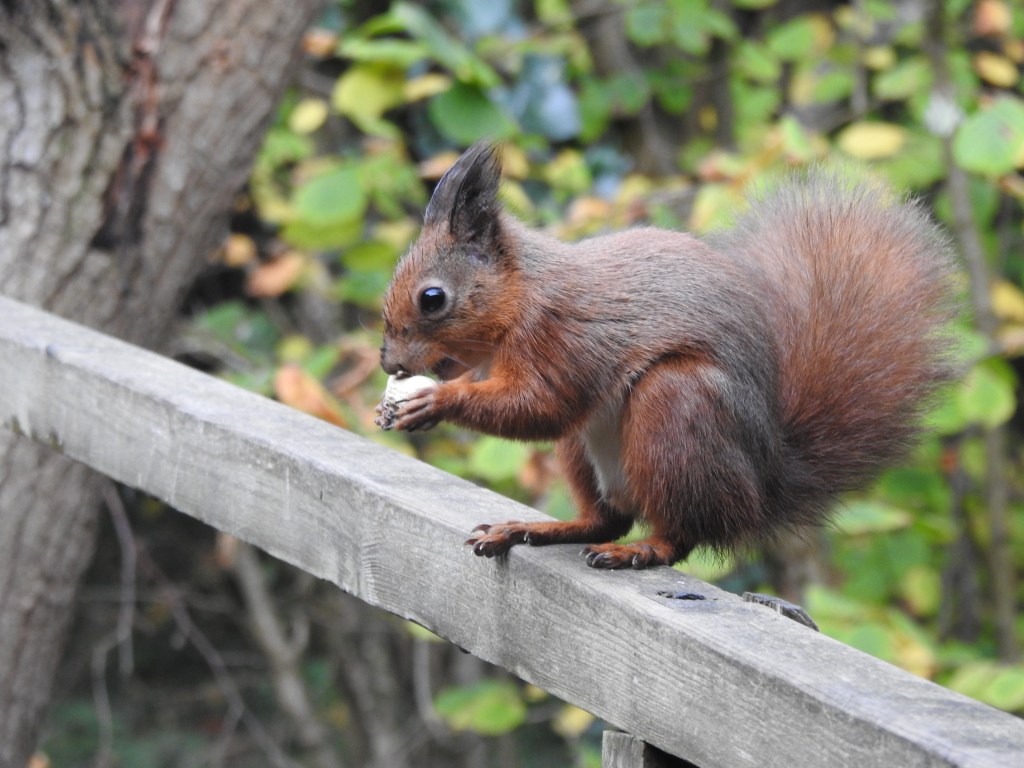
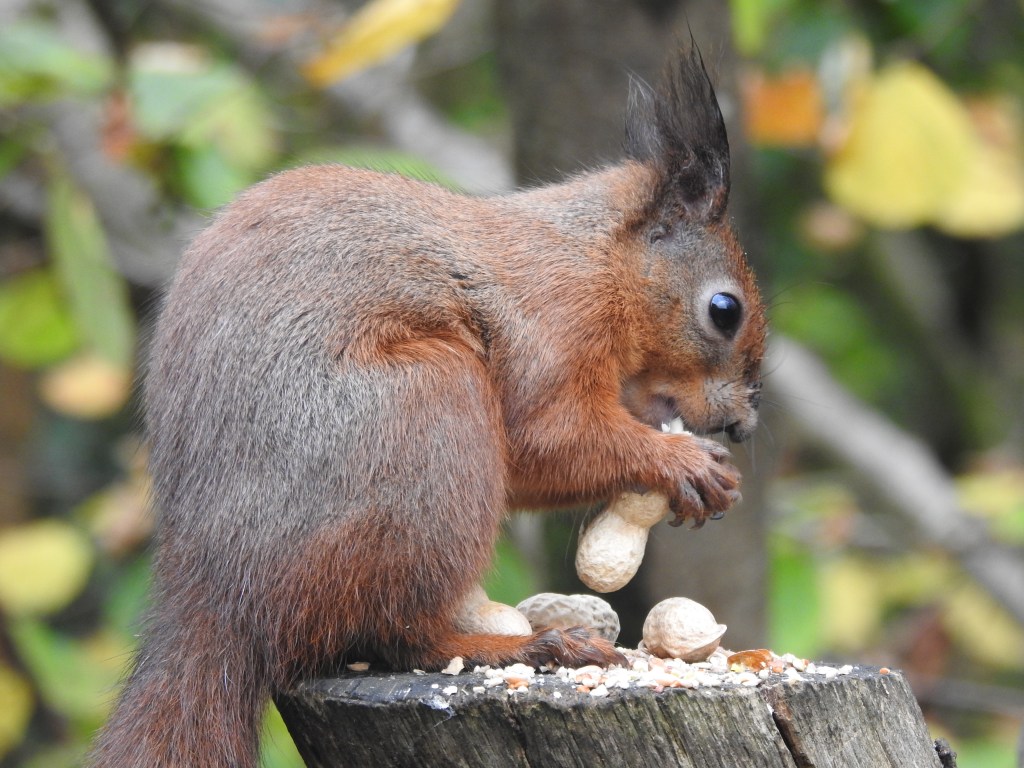
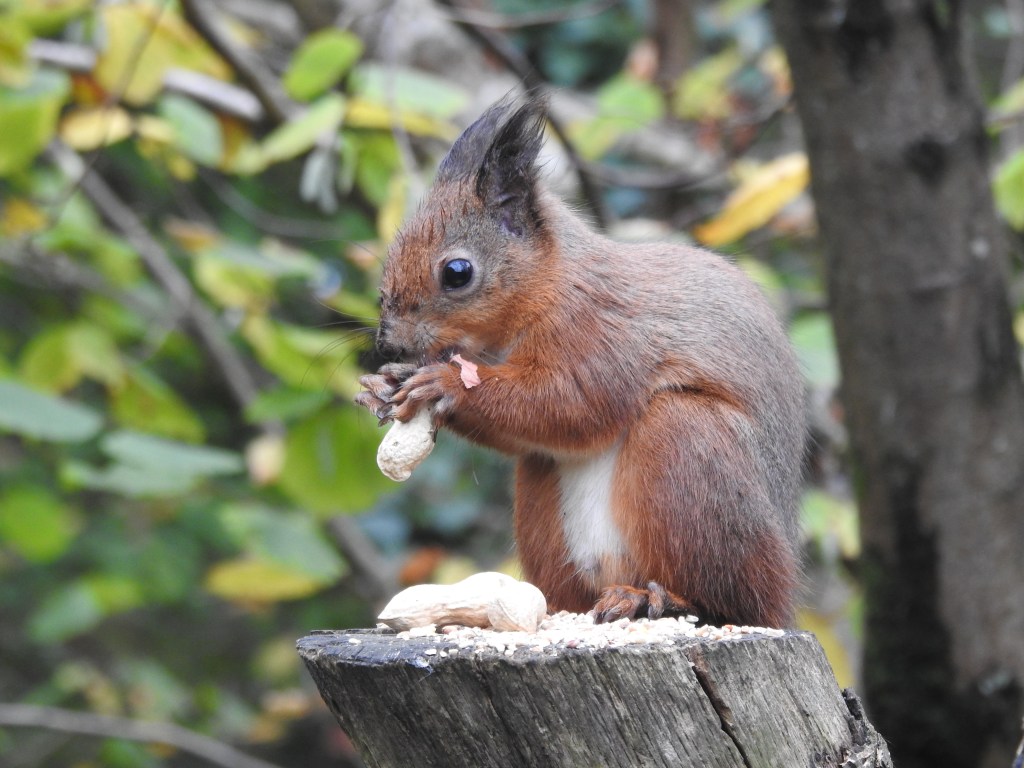
England: Pictures Of the (Now) Rare Red Squirrel From Animal Buddy Pauline.

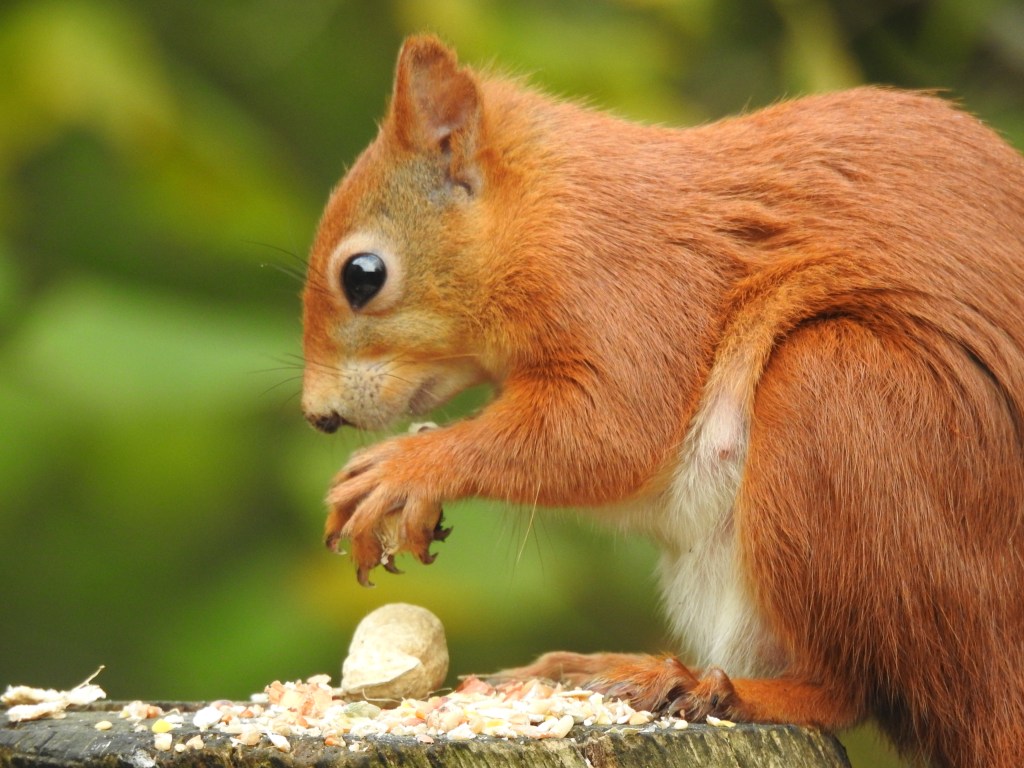
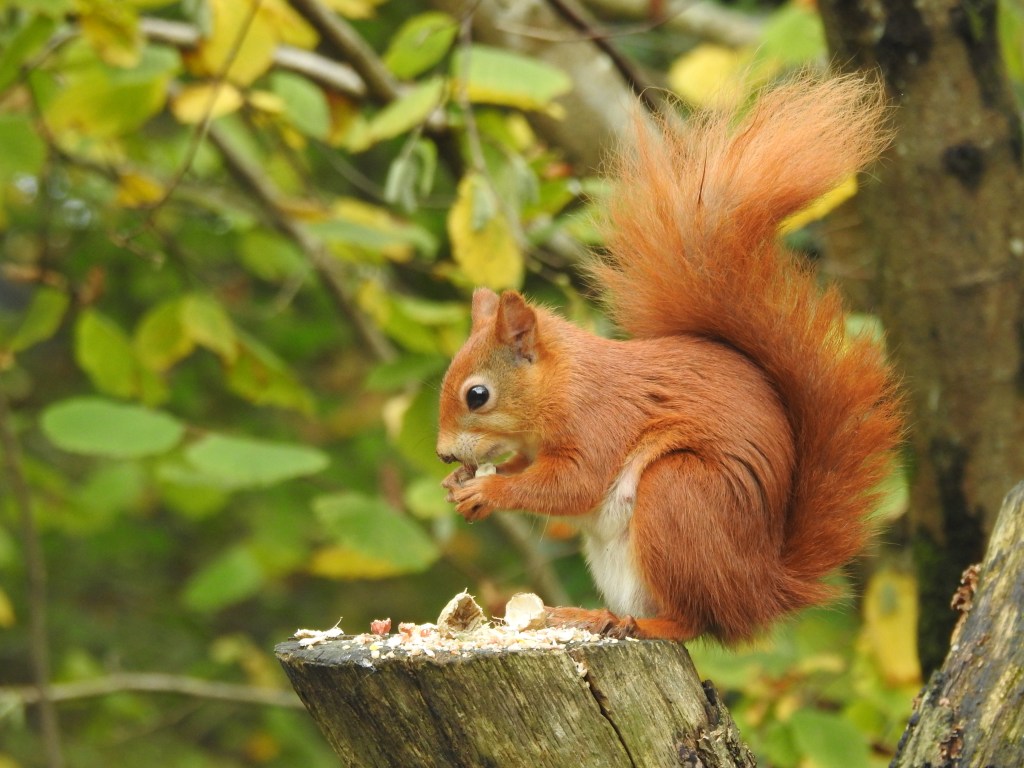
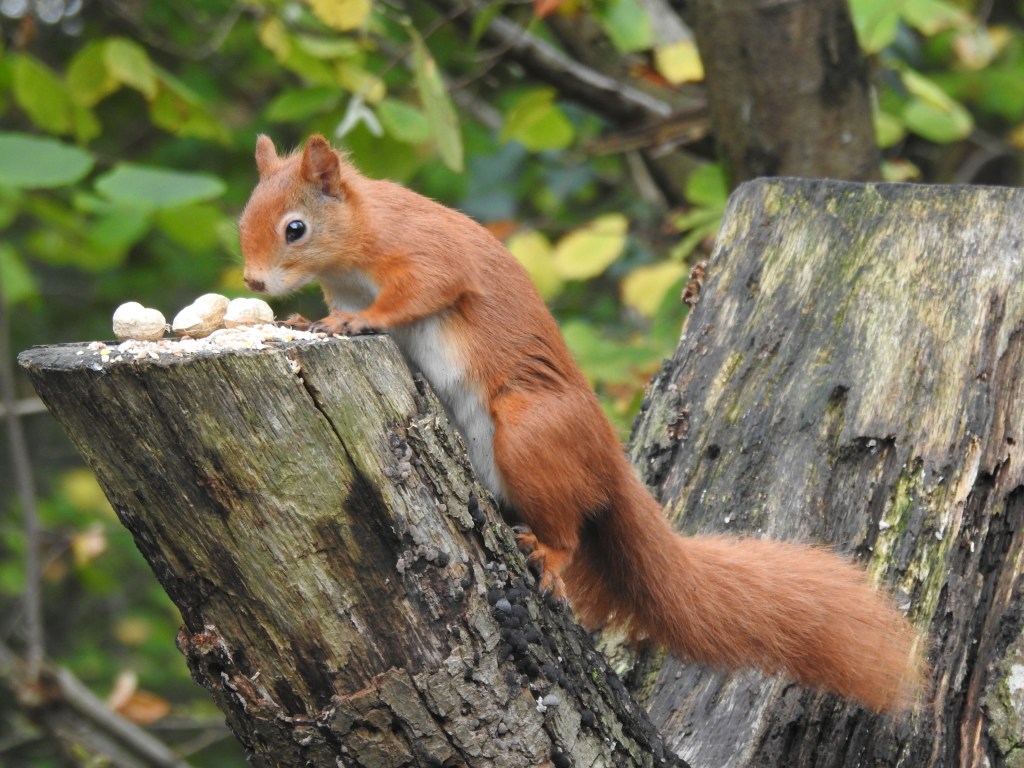
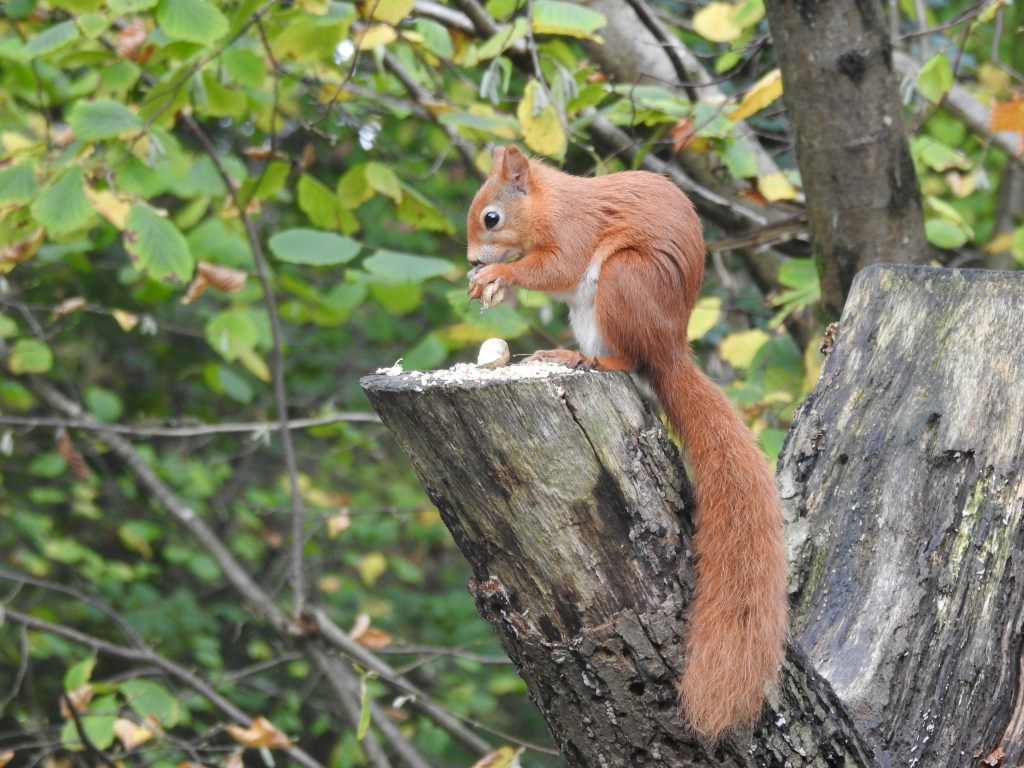
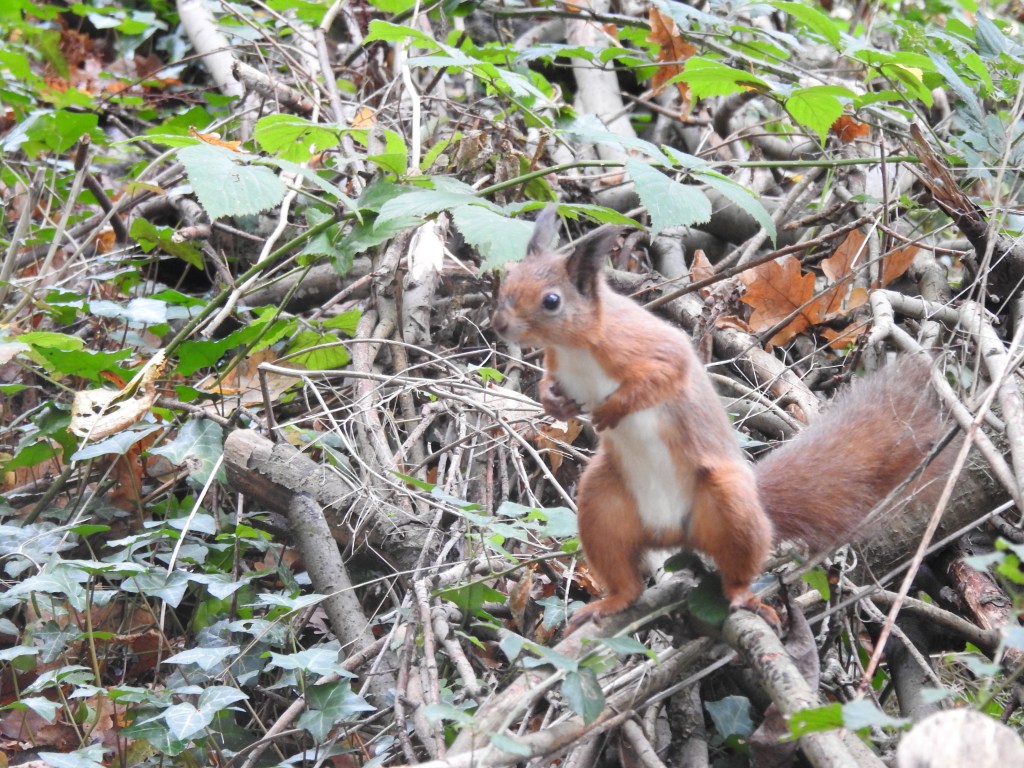
These beautiful pictures of the Red Squirrel were sent to me by animal buddy and good friend Pauline, who captured these shots during a recent break.  Sadly, outnumbered and dominated by the larger Greys, the Red is rather a rare sighting in the UK now days.  Here below is some info and links I have gathered associated with the red.

Red squirrels need woodland to survive and can be found in coniferous, broadleaved and mixed woodland. They were once found across the UK, but have disappeared from most of the country due to the introduction of grey squirrels. Now red squirrels are confined to Scotland, pockets of northern England and Wales and small islands off England’s south coast. The species can still be found across much of Ireland, but its range is shrinking there too.

Red squirrels have undergone one of the most drastic declines of all UK mammals. This is largely due to the introduction of non-native grey squirrels in the early 20th century. The larger greys are able to outcompete reds and they also carry the squirrelpox virus, which they are immune to, but which is fatal to reds.

Reds have now disappeared from most of England and Wales. There are an estimated 287,000 red squirrels in Britain, compared to 2.7 million greys. The Woodland Trust is helping to conserve the red squirrel by protecting its habitat. We support grey squirrel management in red-squirrel areas  

We have also backed research that suggests the recovery of pine martens could help boost red squirrel numbers.

Check out all you need to know about Red Squirrels by visiting:

Red Squirrel (Sciurus vulgaris) – Woodland Trust

Video:

More info from Wikipedia:

Red squirrel – Wikipedia

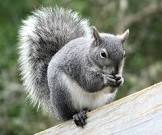
I only get Greys into my garden, which is located in SE England.  Here is a picture of the Grey so that you can compare.  They are larger in size.

The red squirrel has a typical head-and-body length of 19 to 23 cm (7+12 to 9 in), a tail length of 15 to 20 cm (6 to 8 in), and a mass of 250 to 340 g (9 to 12 oz). Males and females are the same size. The red squirrel is somewhat smaller than the eastern grey squirrel which has a head-and-body length of 25 to 30 cm (10 to 12 in) and weighs between 400 and 800 g (14 oz and 1 lb 12 oz).

Compare to the pictures of the larger Grey:

Regards Mark (and Pauline)