Month: June 2023

No Animal Left Behind: why the live animal transport industry urgently needs to change.

12 June 2023

Around 1.5 million farm animals undergo long and gruelling journeys from Europe to other countries each year. Transported via land and sea, these poor sentient beings have few rules in place to ensure their welfare, especially when they are exported to countries outside the EU’s scope. Affecting so many species and in such great numbers, it’s vital the European Commission puts the live animal transport industry under the microscope while revising the animal welfare legislation.

At Eurogroup for Animals, we’ve been campaigning for change in the live animal transport industry for years. Not only is it detrimental to the welfare of countless animals, but tragedies in this sector are common.

In the best case scenario, the European Commission should aim towards phasing out live animal transport entirely – substituting it for a meat and carcasses trade, so that no animals should be forced to endure difficult journeys that are innately abnormal for them. At the very least, they should enforce much stricter laws within the sector to ensure these animals experience the highest possible welfare standards during transportation. We dig into the issues a little more below.

Some quick facts about live animal transport in the EU

The below was taken from our 2021 white paper, ‘Live Animal Transport: Time to Change the Rules’. Download it here for more insights.

In 2019:

 1,618,275,545 ovines, bovines, poultry and pigs were transported alive across the EU and from the EU to non-European countries

Poultry made up 98% of total live animal exports, which made them the most traded farm animal species. The top EU exporters of poultry were Poland, Hungary, the Netherlands and France

57,523 tonnes of fish was reported as exported alive from the EU, with 93% of these destined for other Member States

87,817 horses, asses, mules and hinnies were transported alive across the EU and to the rest of the world.

These are not small numbers. Changes to the laws surrounding live animal transport would affect millions of lives and most kept species, making it arguably one of the most important sectors for the European Commission to address in their ongoing changes to the animal welfare legislation, especially as…

The live animal transport industry is riddled with problems

This sector is not in a good state. Current laws for live animal transport are not strong enough or go far enough to protect all the animals that are transported annually. As of this moment, the industry:

Does not have any strict limitations on journey times: Which means animals can be transported for days – or even weeks – before they get to their destination. Can you imagine being hungry, thirsty, sleepless and stressed for this long?

Permits ‘unfit animals’ to be transported: This includes heavily pregnant and injured animals, as well as babies. These sentient beings feel the burdens of live transport even more heavily than their ‘healthy’ counterparts. Sometimes, even sick animals are subjected to these journeys as well, as they are not inspected properly before being loaded onto transport vessels – which poses a big risk to both the animals they are travelling with and public health

Does not have any control over what happens to exported animals: The European Commission cannot regulate what happens to animals once they are transported beyond the EU’s borders. As a result, millions of animals ‘disappear’ beyond the scope of our welfare laws, and become the victims of potentially horrific treatment

Does not enforce good welfare conditions for transported animals: There are currently few measures in place to monitor the welfare of transported animals, meaning there’s little knowledge of what really goes on in the sector. What’s more, there’s evidence these oversights are being exploited – recent investigations by our members Essere Animali and the Animal Welfare Foundation report animals being neglected, injured and malnourished during journeys this year.

Across the world, live animal transport causes countless tragedies

The past few years have played host to a number of awful incidents related to the live animal transport industry, too. 

In 2019, over 14,000 sheep were left to die in the Black Sea after a boat capsized on the way to Saudi Arabia.

In 2020, the Gulf Livestock 1 vessel sank off the coast of Japan while travelling to China, taking around 6,000 animals with it.

Similarly two vessels bound for Turkey – the Karim Allah and Elbeik – ended up being stranded at sea for over three months in 2020, resulting in the deaths of hundreds of cattle. We worked with the Animal Welfare Foundation to produce a report on this incident, concluding the welfare of the animals on these ships was seriously compromised from the start.

Travelling via land or sea in boats, lorries and otherwise is in itself an unnatural experience for non-human animals – and in the worst cases, it can be fatal. The European Commission must do everything it can to reduce the stress, discomfort and fear these poor beings feel while being transported alive, as well as to mitigate the potential loss of life that can be incurred through long distance exportations. It’s the least they can do.

Official bodies agree the live animal transport industry cannot be ignored – and some countries are already setting the standard for change

In 2022, the European Food Safety Authority published their recommendations to improve animal welfare during live transport, which included shorter journey times and more space for the animals to move.

Even more recently, in 2023, the European Court of Auditors released a review on the transport of live animals, concluding structural changes to the industry and more notice of welfare provisions were much-needed.

We welcome this support from these official bodies to change live transport for the better – and in fact, a lot of what they recommend echoes the steps we laid out in our 2021 white paper to improve the standards in this sector. When it comes to exports in particular, however, the Commission should go even further – by banning live animal exports to countries outside the EU entirely. Live animal exports by sea have already been banned in New Zealand, and a trial court in Brazil opted to make a similar move earlier this year. A little closer to home, Luxembourg banned the export of live animals to third countries for slaughter purposes in 2022. As the welfare of exported animals outside Member States can’t be guaranteed, and the risks are greater during these longer journeys, a full ban on this type of transport is the only move that makes sense.

The European Commission must not miss this opportunity to reform live animal transport for the better

This is a critical year for kept animals, as the European Commission continues to revise its animal welfare legislation. The only way for them to show they’re taking higher animal welfare standards as seriously as they deserve, however, is to make bold and enforceable changes to the laws related to live animal transport: an industry which influences the fates of so many sentient beings, and therefore wields enormous power over their welfare as a whole. Will you tweet in support of better animal welfare standards for all?

We’re putting the spotlight on animal welfare this year through phase two of our No Animal Left Behind campaign. Find out more about how we’re trying to change history for animals.

Regards Mark

China: Yulin Dog Meat ‘Festival’ Just Weeks Away. Could Be Biggest In Years.

I am attempting to get more about this years Yulin dog meat festival; Julia de Cadenet, founder of NoToDogMeat, said the controversial Yulin Dog Meat Festival in China could be the biggest for years as organisers try to make a spectacle for tourists.

We are expecting this year’s festival to be even bigger than in the pandemic years, as covid restrictions have now been lifted.

Lychee and Dog Meat Festival – Wikipedia

Read a lot more here:

Chinese dog meat festival to be biggest for years as organisers ‘put on show’ for tourists | UK | News | Express.co.uk

Appeal – we need a war chest – TotalGiving™ – Yulin 2023, We Need A ‘War Chest’ – NoToDogMeat Foundation – Fundraising Page

Yulin Dog Meat Festival 2023 in China – Dates (rove.me)

More to be published as info is obtained.

Regards Mark

EU: Live animal transport: new Essere Animali report presented to the European Parliament.

Live animal transport: new Essere Animali report presented to the European Parliament

9 June 2023

Essere Animali

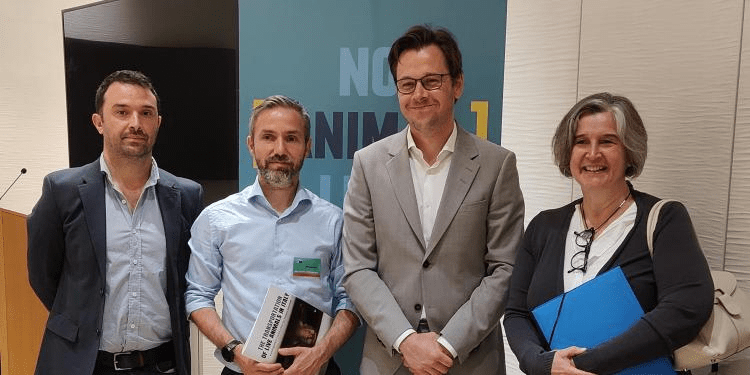
Yesterday at the European Parliament Essere Animali presented a new report dedicated to the investigations on live animal transport conducted in the last three years.

The event was hosted by Niels Fuglsang MEP (S&D, Denmark), Vice-President of the Intergroup on the welfare and conservation of animals and Chairman of the Animal transport working group.

The report analyses the law enforcement controls that took place during the investigations conducted in Italy and the shortcomings of the current European Regulation which is currently being revised by the European Commission.

The debate was also an opportunity for MEPs from different parliamentary groups to exchange views on such a complex and important issue in order to truly guarantee compliance with higher welfare standards in the EU.

The key priorities for the Transport Regulation’s review must be the 8-hour limit for all transport and the ban on transport for pregnant and unweaned animals. Another crucial aspect is the ban on extra-EU transports. We believe that these points and animal welfare should be included in the manifestos for the next European elections in 2024 and we will work in this direction.

Niels Fuglsang – MEP

Francisco Guerreiro MEP (Greens, Portugal) emphasised that “The role of the European parties to include these demands in the electoral programmes is crucial”.

Every year, more than one billion animals are transported in Europe both to extra-EU countries and within Europe’s borders. According to the latest report released at the end of 2022 by the Italian Ministry of Health on the activity carried out by the Border Control Posts (PCF) and the Veterinary Offices for Community Compliance (UVAC), in 2021 the following animals were imported into Italy from other EU countries: 1.4 million pigs, 1.3 million cattle, 790 thousand sheep and over 56 million poultry, most of which were 1-day-old chicks.

Essere Animali investigations, started in 2021 and carried out until Easter 2023, focused on two of the main problems affecting Italy: the long-distance transport of lambs and the very high temperatures that affect animals during transport, even on short distances, in the summer. 

The latest shocking checks by Essere Animali conducted in Easter this year showed the terrible suffering to which animals are still subjected, with conditions so painful that Italian vets found themselves forced to euthanise some animals inside the trucks. 

The lambs transported on long distances often travel in overcrowded conditions, without access to food and water and without protection from dangerous gaps that often cause injuries and end up trapping body parts of these fragile and very young animals.

In recent years, the European Parliament has tried, with the ANIT Committee, to document the limitations of the current legislation, but the final Recommendations called for minor improvements rather than systemic change.  

Investigations conducted also in recent weeks show that animal transport is one of the phases of production with the most violations, the least protection for animals and continuous suffering and mistreatment that can no longer be ignored.

We hope, therefore, that the Commission can take into account our report and the scientific evidence also highlighted by the latest EFSA opinions (2022) and propose a revision that can really protect animals during this phase, raising animal welfare standards and at the same time starting a transition to the transport of meat and carcasses.

Chiara Caprio, Head of Public Affairs at Essere Animali

Regards Mark

EU: ECHA workshop highlights commitment to animal-free regulatory system for industrial chemicals.

ECHA workshop highlights commitment to animal-free regulatory system for industrial chemicals

9 June 2023

The European Chemicals Agency (ECHA) hosted a two day workshop to hear feedback from regulators, industry, academia, and environmental and animal protection organisations on how to accelerate the transition to a chemicals regulatory system free from animal testing.

The workshop’s main objectives were to explore opportunities to increase the use of NAMs in the short term and how research and regulation can support the transition in the longer term, to identify next steps to accelerate the transition to non-animal testing.

The event successfully engaged 500 attendees following other recent key developments, including the unprecedented success of the European Citizens Initiative “Save Cruelty-Free Cosmetics —Commit to a Europe without animal testing“, which received more than 1.2 million validated signatures in January 2023. Subsequently, meetings between the ECI organisers, the European Commission and Members of the European Parliament took place to discuss the ECI’s three objectives. These events built on the majority support received in 2021 from the European Parliament, which led to a resolution calling on the European Commission to coordinate a plan to accelerate the transition to innovation without the use of animals in research, regulatory testing, and education.

At the end of the event, 75% of attendees felt ‘more confident’ that animal testing can be replaced with non-animal methods and that increasing confidence in these methods is critical to transition to an animal-free chemicals safety testing system. ECHA closed the event by remarking on the community’s strong commitment to move towards animal-free chemical safety assessments, the different understanding of NAMs among stakeholders, and the importance of having goals and concrete milestones to make progress. This aligned with earlier remarks from the European Commission (DG Environment) to identify ‘critical milestones along the way’.

However, presentations from DG Environment on short-term planned actions under the Chemicals Strategy for Sustainability showed that – despite some efforts to adopt non-animal methods – the revisions of REACH and CLP will still lead to an increase in the use of animal testing for new purposes, and suggestions from the Commission’s scientists (DG JRC) to avoid new tests have not been fully taken into consideration at this stage.

Eurogroup for Animals will continue its efforts to build support for concrete actions and next steps on the roadmap from the European Commission, to ensure an active transition towards animal-free regulatory testing and scientific innovation.

Regards Mark

EU: The time is now – animal protection organisations and MEPs urge the European Commission to uphold its commitment on animal welfare.

8 June 2023

Photo – Mark

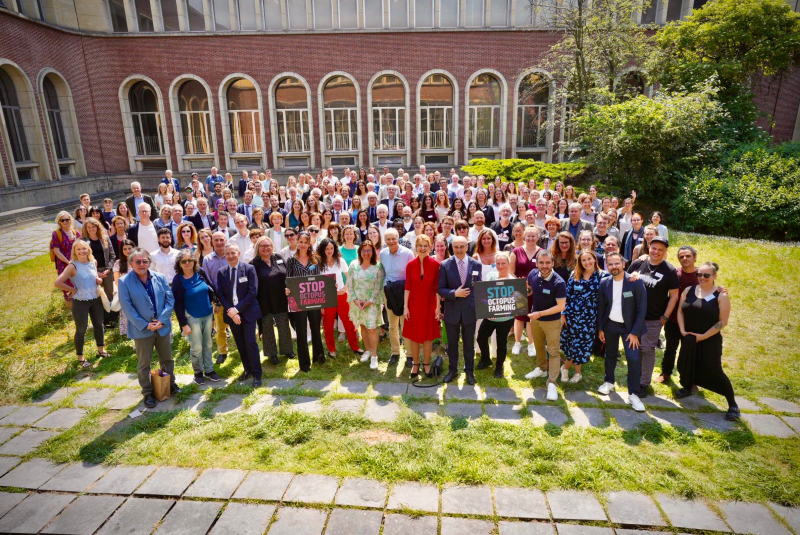
The importance of a comprehensive and ambitious revision of the animal welfare legislation took centre stage at Eurogroup for Animals’ annual conference in Brussels.

Yesterday, over two hundred guests from all over Europe came together in Brussels and more than one hundred participants followed the online streaming for Eurogroup for Animals’ annual conference, just months before the European Commission (EC) is set to unveil its revised legislation on animal welfare. 

This conference comes at a critical moment in time and animal protection organisations, along with MEPs, are calling on the European Commission to uphold its commitment to animal welfare, and to ensure a bold new legislation that allows for the true protection of animals. 

Held at the Royal Library of Belgium, the event hosted Eurogroup for Animals’ member organisations from 26 Member States, MEPS, representatives of the European Commission, and other stakeholders.

The organisation was honoured to welcome Peter Singer, Professor of bioethics and author of ‘Animal Liberation Now’, The book is a revised version of the classic ‘Animal Liberation’, which was one of the foundations of today’s animal protection movement. 

I am delighted to be able to present my new book, ‘Animal Liberation Now’, at the annual conference of Eurogroup for Animals. This book renews and brings fully up to date the ideas I presented in 1975 in Animal Liberation. Since that time, there has been a significant improvement in the conditions in which hundreds of millions of animals live in Europe, especially those in factory farms, and Eurogroup for Animals has been leading the way in its advocacy of these changes. Nevertheless, these reforms still fall far short of what is required for us to treat animals ethically, and without speciesism. What happens in Europe is important not only for animals in Europe, but worldwide, as it sets an example of what’s possible. The EU institutions have the opportunity to be a leader

Peter Singer

Peter Singer at Eurogroup for Animals’ Conference

During the event, Tilly Metz MEP (Greens, LU) insisted that the revision should not be further delayed because of the Regulatory Scrutiny Board that failed to analyse the long-term impact of such policies:“The science is clear, there is enough data, it is incomprehensible that this is delayed any further,” she said.

Niels Fugslang MEP (S&D, DK) expressed the strong desire among MEPs to have an Animal Welfare Commissioner, a significant role that will ensure more accountability and which has been widely supported by citizens. 

The importance of securing a budget to protect farmers and support them in transitioning to cage-free systems was put forward by Andrea Gavinelli, Head of the Animal welfare and Antimicrobial Resistance Unit (EC), a remark supported by Joanna Stawowy, Member of the Cabinet of the European Commissioner for Agriculture.

“2023 is a critical year for the animals – after ten years, change is in sight, as the EC is set to revise its animal welfare legislation which is seriously outdated when it comes to science and civil societies’ demands. Over 20 EFSA opinions have not been incorporated in actual legislative provisions. This has resulted in a dire situation for the animals across the board. With 5- soon to be 6- European Citizens Initiatives calling for better animal welfare, the institutions can’t ignore this any longer. We trust the European Commission will uphold its commitments”, commented Reineke Hameleers, CEO, Eurogroup for Animals. 

“Factory farming is the biggest cause of food waste in the world, it undermines the very thing we all need – healthy soil. Not addressing the meat and dairy industry will mean that climate, biodiversity and food security talks will fail. Regenerative farming is the only way forward, we simply cannot afford not to change,” added Philip Lymbery, President of Eurogroup for Animals.

Keynote speaker Melanie Challenger, writer, researcher and broadcaster on environmental history, philosophy of science and bioethics added: “This is both an exciting and a testing time for our relations with other animals. Our exploitation of non-human animals has increased at the same time as our moral sensitivity, and those two shifts are out of sync. Exceptional times require exceptional responses. I believe we need to recognise the dignity of other species and find ways to allow them to be heard in the political arena.”  

During the event, Eurogroup for Animals presented its awards, which aim to acknowledge the efforts of member organisations and corporates in their fight for animal welfare. Djurens Rätt was awarded the Campaign for Animal Award for their campaign “The World’s Best Animal Welfare”, which featured an animated short movie that reflects the life of broiler chickens, and was streamed across cinemas in Sweden. 

The Corporate Campaign Award was presented to IKEA Belgium for offering innovative solutions to the substitution of animal products and the use of animals in their products. GAIA, which submitted the candidature, welcomed the award: “We nominated IKEA Belgium for its commitment and approach. This is highly visible to both staff and customers in their restaurants where plant-based alternatives are given priority and are also offered at lower costs. This is the way forward for other businesses”, commented Ann De Greef, CEO at GAIA. 

Participants at conference

Regards Mark

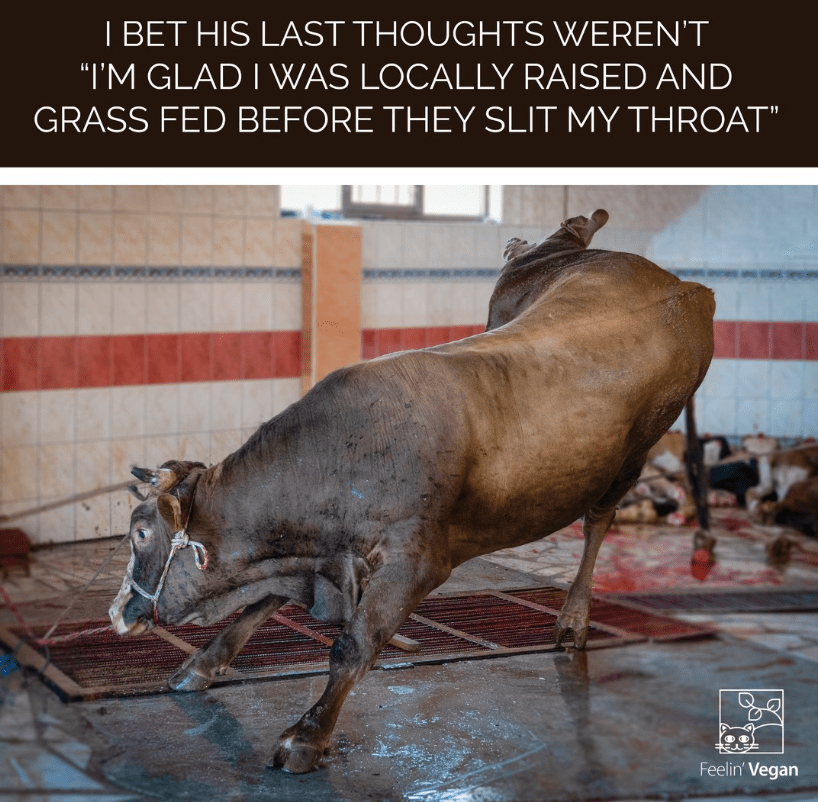
You support killing animals so you can boast they ate grass before they were killed?

You support killing animals so you can boast they ate grass before they were killed? | Our Compass (our-compass.org)

The fact of the matter is, it doesn’t matter how nice a life an animal has, the moment we exploit them for what is rightfully theirs and eventually take them to the slaughterhouse or to the yard to kill them, that is abuse. Animals don’t want bigger cages or larger barns, they don’t care whether or not they’re grass-fed, or organic. All the animals want is to be free, truly free. Not free-range, not free to pasture months of the year. Free to live their lives in their entirety, without fear of human inflicted pain, suffering or exploitation. Earthling Ed

Do remember that small farms are largely defunct due to the global demand for cheap flesh; while there are still small farms in existence, they are the exception, and even though everyone in the multiverse claims to be opposed to factory farms, given their dominance “producing” 99% of animals consumed in the USA and >75% according to one source and >90% according to another, of animals consumed globally, each year, someone’s lying. Case in point: I recently came across a person who vehemently defended his position as being opposed to factory farms … while admitting he eats factory-farmed animals. This is why a welfarist position is meaningless: it requires animal suffering and death, and for many humans is 100% verbal and includes 0% actual concern and action FOR THE ANIMALS. (And the discrepancy in factory-farmed numbers is likely because the numbers of animals violently killed globally each year is so mind-numbingly high, it’s difficult for humans, the “intellectually superior species”, to count.) SL

Download Your FREE Vegan PDF HERE

Order a FREE vegan kit HERE

Dairy-Free Info HERE

Take the Dairy-Free Challenge HERE

Click HERE for more Dairy-Free

Fish alternatives can be found HERE

Learn about eggs HERE

Find bacon alternatives HERE and HERE

Take PETA’s Cruelty-Free Shopping Guide along with you next time you head to the store! The handy guide will help you find humane products at a glance. Order a FREE copy HERE

Searching for Cruelty-Free Cosmetics, Personal-Care Products, Vegan Products, or more?
Click HERE to search.

Free PDF of Vegan & Cruelty-Free Products/Companies HERE

Click HERE for clothing without suffering

Click below for nominal, or no, fees to vegan literature that you can use to convince others that veganism is the only humane:

PETA HERE

Vegan Outreach HERE

Get your FREE Anti-Speciesism Activist Kit from PETA HERE

Click HERE for Well-Fed World’s Free Climate Food Guide PDF

Thanks Stacey – Regards Mark

World Food Safety Day: what’s at stake for animals?

5 June 2023

Food safety is a matter of growing concern for the health of EU citizens: how we produce and consume food has an impact not only on animals but also on public health, environment, people and climate.

Kangaroos

60-75 % of human disease comes from wildlife disease transmitted to humans, in part by the wildlife trade and consumption. After they are shot in remote areas, the carcasses of kangaroos are eviscerated and transported in unrefrigerated open trucks, sometimes all night long, and under very high temperatures. In order to tentatively prevent Salmonella and E.coli contaminations, the carcasses are washed with lactic acid, although this isn’t an allowed practice for fresh game meat in the EU and does not fully eliminate contamination risks. Russia has banned imports of kangaroo meat based on these hygienic issues. Lead poisoning from the bullets is another health concern, also posing a serious environmental risk, as highlighted by recent ECHA reports on the restriction of lead ammunition in the EU. In this context, Eurogroup for Animals calls on an EU ban on imports of kangaroo products, including meat. You can sign our petition to support this call.

The EU must stop imports of kangaroo products

BROWSE TO THIS PUBLICATION

Horse meat

Despite the 2013 horse meat scandal, little has been done to prevent such food safety issues. In the EU, horses can be excluded from the food chain when they are administered substances making the consumption of their meat unsafe. However, recent Europol investigations revealed massive frauds with horses excluded from the food chain slaughtered and their meat distributed throughout the EU, highlighting the insufficiencies in the implementation of traceability requirements. We call on the EU to ensure the proper implementation of traceability requirements and to introduce Country of Origin Labelling for horse meat, indicating the country where the animal has been born, reared and slaughtered.

Besides horse meat produced in the EU, EU audits, NGO investigations, also summarised in the Stable to Fork report, and academic papers (see, for example, Weber et al., 2023),   reveal severe shortcomings in the traceability and identification of horses slaughtered in third countries whose meat is imported into the EU. Veterinary medical treatments are not properly recorded leading to horses that were administered banned drugs, such as phenylbutazone, to enter the food chain. It is important to note that equine traceability requirements implemented in the EU do not apply to animals whose products are imported.

From stable to fork: EU Horse Meat Imports (updated version)

BROWSE TO THIS PUBLICATION

Reducing meat and dairy consumption

Highly contagious diseases, either emerging or endemic, in animal populations such as Avian Influenza, African Swine Fever or, more recently, COVID-19 stress the need to build more resilient and sustainable societies. 

How we produce and consume food has an impact not only on animals but also on public health,environment, people and climate.

An increased focus on animal welfare can play a key role in finding solutions to many of the current global food safety challenges we are facing. De-intensifying animal production by reducing the numbers of animals coupled with better animal welfare will improve animal health and welfare and contribute to reducing the risk of future pandemics.

Regards Mark

EU: Fear mongering will not stop the transition to a better world for farmed animals.

5 June 2023

Impact study by lobby organisation on the phasing out of cages contradicts scientific findings.

The impact study on transitioning to cage-free farming presented by Copa-Cogeca, the largest industry body representing the biggest farming entities, is a far stretch from EFSA’s scientific conclusions. The assumptions by the lobby organisation uses fear mongering to paint a picture that is far from the truth.  

In this assessment, Copa-Cogeca starts from the premise that EU producers would need to adhere to standards mostly higher than those applied in third countries. This would turn the EU, currently a net exporter of animal products, into a net importer of such products. Moreover, it ends on the unsubstantiated assumption that the European Commission could be considering a “shock scenario” in their revised animal welfare legislation. This vision does not match the numerous commitments made by the European Commission to consider introducing import requirements in the new legislation. 

Copa-Cogeca put forward calculations of welfare consequences which are strikingly different from those presented by EFSA in their scientific opinion on pig welfare, claiming a rise in piglet mortality and sow injuries, increased aggressive behaviour in sows and increase of culling. 

Numerous scientific sources included in the EFSA opinion point to the opposite conclusions: that cage-free systems and free farrowing do not increase piglet mortality and generally improve the welfare of the animals. 

Sows are calmer when they are free to move around and the satisfaction of staff is improved when they interact with animals with lower levels of stress. With the correct management, free-farrowing systems can be beneficial to both animals and staff, contrary to claims by the industry.  The lobbying industry continued to ignore scientific basis, claiming that rabbits are impossible to farm commercially without cages, ignoring the fact that numerous farmers have been doing this for years. The basis of the revised animal welfare legislation, which is also looking into the ban of cages for rabbits, is based on scientific evidence and industry experience.  

The economic analysis also contradicts the findings of existing studies on the matter. While Copa-Cogeca claims that cage-free systems are less profitable, existing studies establish that the most profitable system to the farmer is indeed free-range. The Best Hens Practice project has also demonstrated to farmers that there will be no difference in income when they transition from cages. Furthermore, the number of eggs produced in all EU Member States is growing despite the increase of cage-free systems being adopted. 

Conveniently, the massive animal welfare consequences resulting from the current farming practices in caged systems were completely left out of the presentation. Scientists around the globe concur that cages are detrimental to animal welfare, and EFSA scientific opinions are very clear about the need to phase out cages for all farmed species. Consumer preferences were also absent from the presentation, despite the fact that millions of European citizens support the transition to cage-free farming and have high expectations when it comes to protection of animal welfare in the EU.

Despite the numerous claims of the report that contradict reputable welfare and economic studies, we agree with one of the conclusions: financial support from the EU is crucial for farmers to transition sustainably and keep farmers in the profession. We are pleased to see that this call is being echoed among all stakeholders in this debate, together with the ask to apply the same animal welfare standards to domestically produced products and imported goods.  

The transition to cage-free will ensure a level-playing field across Europe, safeguarding the livelihoods of farmers. With that in mind, the shift should be swift to avoid creating more disparity among Member States and incurring any negative impacts, such as those that the industry encountered when the ban on barren cages came into force in 2012. As indicated in the report on the fitness check of the current animal welfare legislation, the long transition period to enriched cages led some producers to wait until the last possible moment before changing their infrastructure, which unnecessarily increased egg prices and created a situation of unfair competition among Member States. Such a situation can be avoided by setting short but realistic transition periods. 

In the European survey of farmers’ experiences, early adopters of this transition encouraged others to do the same, and to look at how different animal farming can be, when based on best practices and backed up by science. As one of the farmers interviewed for our report said: “To sum up, it is worth it. I think we all agree on that”.

Regards Mark

England: Trust A Government ? – No, I Will Take the Kick In the Teeth Thanks.

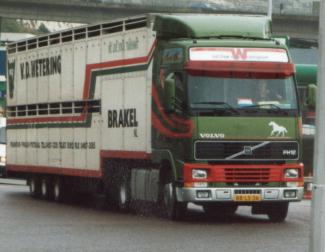
A few years ago I took part in a government consultation which aimed to move on and stop live animal exports – a campaign which I had personally been involved with for around 30 years.

In my response to the consultation I submitted around 40 pages of answers and evidence as to why there should be a ban on live animal transport.  Exports were just one part of the Animal Welfare (Kept Animals) Bill, which you can read more about below.

By scrapping the Bill now, the Conservatives are showing their true colours.  There was lots of talk on the issue by Boris when he became leader; but now the excuse is being used that Labour was ‘seeking to widen its scope’.  So what is wrong with that ? – improving animal welfare issues even more ?

I think the reality is that the Conservatives are not that concerned about this legislation; it has been running around the corridors of Whitehall for a long time now, the result being that it has not become lawful legislation.  In theory, for live exports, this does open up the chance that someone may decide to try and operate a service out of England once again.  By scrapping the Bill, we are now back in a position where transporters from Ireland use the UK as a ’land bridge’ to transport Irish livestock into Europe; something which the Bill would have stopped.

I could go on and on about this, giving you a lot more, especially as the Bill also aimed to prohibit puppy farming and puppy smuggling.  We have a General Election here in the UK in the next 18 months (or earlier);  and so this scrapping of potential legislation will NOT go down well with voters when the time comes.

And the lesson, which I think many of us voters are fully aware of, is never trust what a government says.  Lets see what the next election brings; but this is something we can remind Tory MP’s of when they come knocking on our doors asking for me and you to vote for them.

Mark

———————————————————-

Legislation designed to protect pets, livestock and wild animals has been scrapped, the government has confirmed.

Environment minister Moark Spencer said the Animal Welfare (Kept Animals) Bill, which had almost completed its passage through the Commons, will no longer go ahead over concerns that Labour was seeking to widen its scope.

The Bill sought to tackle puppy smuggling by reducing the number of pets (dogs, cats and ferrets) that can travel under pet travel rules and see a ban on the export of live animals for slaughter and fattening.

Ministers scrap animal welfare bill designed to protect pets, livestock and wild animals | ITV News

Other policies within the Bill would have banned the keeping of primates as pets, protect livestock from dangerous and out of control dogs and ensure zoos are doing more to contribute to conservation.

Mr Spencer insisted the government remained “fully committed to delivering” on those promises but would do so by taking the measures forward individually rather than collectively.

But Labour said the move is “further proof that you can’t trust the Tories to deliver on animal welfare”.

Shadow Environment Secretary Jim McMahon added: “The government’s decision to scrap the Kept Animals Bill demonstrates that it has lost the ability to get its own legislation through Parliament.”

Battersea Dogs and Cats Home tweeted to say it was “deeply disappointed” about the Bill being withdrawn.

“This is a major setback for both animal welfare and our community of animal lovers,” it said.

Explaining why the Bill was being scrapped, Mr Spencer said: “Unfortunately this multi-issue nature means that there has been considerable scope creep.“The Bill risked being extended far beyond the original commitments in the manifesto and the action plan. “And in particular, Labour is clearly determined to play political games by widening the scope of this Bill.”

He said “enormous progress” on animal welfare has already been made with “single-issue” legislation, adding: “Therefore we will be taking forward measures in the Kept Animals Bill individually during the remainder of this Parliament.

“We remain fully committed to delivering our manifesto commitments. And this approach is now the surest and quickest way of doing so, rather than letting it be mired in political game-playing.”

Labour’s shadow Commons leader Thangam Debbonaire said the move was “shocking”.

Speaking in the Commons before the legislation was scrapped, she asked: “Is this prime minister so weak he can’t even bring himself to stand up against evil puppy smugglers? What a way to run a government.”

The Bill had already suffered long delays since it was first introduced in June 2021.

Senior director of campaigns and public affairs at Humane Society International/UK, Claire Bass, said: “The government’s decision to abandon the Kept Animals Bill is an astonishing betrayal of both animals and public trust.”

Regards Mark