Month: July 2023

EU: Beware of “sustainable aquaculture” labels.

Beware of “sustainable aquaculture” labels

26 July 2023

Essere Animali
When consumers look to purchase more animal and planet-friendy products, many turn to labelling schemes for guidance. Little do they realise, the majority of sustainable aquaculture certification schemes fail to consider animal welfare at all. Essere Animali has launched a new campaign against misleading labelling in aquaculture.

According to the EU’s Common market for fisheries & aquaculture Regulation, sustainable aquaculture activities include environmental protection, animal health and animal welfare. Similarly, the World Organisation for Animal Health (WOAH) recognised fish as sentient beings capable of experiencing feelings such as fear and pain, and their welfare is explicitly mentioned in all official documents dealing with sustainability in aquaculture, from the European Commission’s Strategic Aquaculture Guidelines to the guidelines for companies developed by the Global Reporting Initiative. In other words, animal welfare is intrinsic to sustainability. 

Certification schemes that fail to protect fish welfare will do nothing to relieve the unnecessary pain and suffering that farmed fish undergo in aquaculture. Practices such as high stocking densities, lack of environmental enrichment, poor water quality, painful procedures (egg/semen collection, vaccinations, catching for transport) and unstunned slaughter are highly stressful and lead to poor welfare outcomes for fish. 

poll carried out by Compassion in World Farming and YouGov in May 2020 found that 63% of participants were not clear on whether existing certification schemes protect fish welfare, but that 78% think that they should. Indeed, a recent study found that fish welfare is an important factor for consumers, and they were more likely to pay for an organic label if they knew that it addressed fish welfare. 

With Essere Animali’s new campaign, UNsustainable aquaculture, the organisation is calling out an Italian certification scheme developed by the Italian Ministry of Agriculture together with the Italian fish producer association API for failing to address welfare. The scheme allows fish products to be labelled as “sustainable aquaculture”, without any specific animal welfare improvement, which Essere Animali claims misleads consumers. Essere Animali have four main requests for the scheme: to include a clear definition of animal welfare, an effective stunning requirement, and maximum densities and water quality requirements. Citizens are invited to participate in an email campaign to join the call for improved welfare standards.

Well-known global fish certification schemes also fall short on welfare. The Aquaculture Stewardship Council (ASC) is currently developing new fish welfare indicators that include stunning requirements, but ignore welfare standards during the farming phase. A public consultation of these indicators is foreseen by the end of the year.

Read more at source

UNsustainable Aquaculture

Regards Mark

EU: As With Live Animal Transport, the EU Commission Fails ITS People Once Again – This Time, On Cosmetic Testing.

European Commission backs phase-out of animal use in experiments and chemicals tests but ignores citizens’ wishes on cosmetics

24 July 2023

The European Commission today kick-started a plan to phase out animal testing for chemicals across Europe but will not protect the EU ban on animal testing for cosmetics in response to the “Save Cruelty Free Cosmetics – Commit to a Europe Without Animal Testing” European citizens’ initiative (ECI) signed by 1.2 million European citizens.

While campaigners welcome the plan to ultimately eliminate animal testing for chemicals and the longer-term proposals to reduce and phase out the use of animals in research and education, outrageously, the Commission ignored citizens’ calls to uphold the ban on animal testing for cosmetics, a ban established by legislators over a decade ago.

Despite the introduction of an EU ban on animal testing for cosmetics ingredients in 2009, animal tests for chemicals handled by industrial workers or which may be released into the environment are still being required under the EU’s REACH (Registration, Evaluation, Authorisation and Restriction of Chemicals) regulation. Disturbingly, proposed updates to REACH indicate that animal testing for chemicals is set to surge over the coming years. Rather than waiting for the EU courts to resolve this issue in an ongoing case, citizens’ demands must be immediately addressed to prevent further animal suffering.

In the EU and Norway, a shocking 7.9 million animals suffered in laboratories in 2020 – among them rabbits, mice, cats, and dogs. Substances are forcibly administered down their throats, and they are infected with debilitating diseases, genetically manipulated, given brain damage through surgery, exposed to severe pain, and used in breeding programmes that perpetuate this cycle of suffering. Although the Commission is exploring actions to accelerate the development and use of non-animal methods, they do not constitute the root-and-branch reform demanded by EU citizens via the ECI.

The ECI was launched in August 2021 by animal protection groups Cruelty Free Europe, Eurogroup for Animals, the European Coalition to End Animal Experiments, Humane Society International/Europe, and People for the Ethical Treatment of Animals, with the backing of beauty brands The Body Shop and Dove. The ECI called for the strengthening and protection of the ban on animal testing for cosmetics, the transformation of chemicals regulations to bring an end to testing on animals, and a commitment to phasing out all testing on animals in Europe.

Positive commitments made by the Commission in response to the ECI include the following:

To develop a roadmap to end all mandated tests on animals for industrial chemicals, pesticides, biocides, and human and veterinary medicines

To explore the creation of an expert scientific committee to provide advice on the development and uptake of non-animal approaches

To propose an action of the European Research Area to coordinate national policies to replace the use of animals in laboratories and speed up development and implementation of non-animal methods

To organise one or more workshops with experts to determine future priority areas of research to accelerate the transition to animal-free science

Citizens will now expect that everyone involved works to ensure that the measures suggested by the Commission have maximum and meaningful impact, and we will continue to advocate for more action where it is needed.

“The people of Europe have made it clear that experimentation on animals has no place in our modern society. While we welcome positive actions to replace the use of animals in experiments and chemicals tests, we wholly condemn the Commission for failing to end the suffering of thousands of animals used in cosmetics tests. The Commission must now propose meaningful changes to existing legislation and policies to set member states, regulators, and assessment bodies on the path to phasing out all uses of animals in laboratories. Therefore, we are calling on all actors to pursue the goals of the ECI, commented Sabrina Engel, chair of the ECI organising committee.

In an open letter, over 100 European scientists from 16 EU countries have called on the European Commission and Member States to commit to establishing an EU roadmap to accelerate the transition to non-animal science.

“We are glad to see a commitment for a first roadmap to phase out animal testing, and proposed actions that prioritise a transition to non-animal science. However, the reply of the Commission falls short in delivering meaningful changes to animals in laboratories. Despite the persistent voices of EU citizens, animals will continue to be used for cosmetics testing, and we are missing a commitment for an overarching plan that completely eliminates the use of animals in science.

There is a scientific, ethical and economic opportunity to shift the landscape to allow for innovative and more humane and relevant research that better protects humans, animals and the environment. To fully respect the democratic process, we require more ambitious action.”

Reineke Hameleers, CEO at Eurogroup for Animals

Regards Mark

India: July 2023 News and Rescues.

Dear Mark,   

When we consider the quality of life of animals who are other-abled, it’s joyous to see how much love and play are core elements that make a life worth living. 

Although first-time visitors may express sadness in seeing dogs with physical impairments, our volunteers almost always express finding, after even just a few days, that it’s not the number of legs that measure happiness.

Instead, the dogs’ happiness is expressed in their play, curiosity, mischief and in the friendships they form with other dogs and people.

Thank you for helping us provide not only a safety net for the healing, the blind, the 2-and-3-leggers, the oldies and youngies, but also place where every bed can become a trampoline when the mood strikes! 

Transformed by trust, Cheeto won’t stop playing!

Cheeto was in excruciating pain from a laceration to the side of his face, and cried out in fear when we approached. We gently placed a blanket over his eyes to calm him down enough to let us carry him to our ambulance.

He was so forlorn during his first treatment and we found the wounds were very deep. But within just days the swelling had reduced, his pain was subsiding and suddenly he became a whirlwind of love! Meet Cheeto now!

Help put the life back in the party for someone hurting. Make a donation today.

Trapped in a sewer, a paralysed dog needed our help to get out.

We’d received a call that a dog was lying in a sewage drain, unable to move. We found him forlorn and worried, sitting perfectly still as the cold sewage water rushed past him. 

We found that his hind legs were not responding when we checked for sensation, indicating spinal injury. Spinal injuries have different rates of recovery depending on the severity, and we were very worried by the lack of sensation in his toes. But we gave him a chance, and began his bedrest and physical therapy in hopes that the sensation and movement would come back to his legs.

After several weeks working with him daily and helping him stand, Hopper surprised us all!

For someone in desperate need of help: Make a donation today.

More shade and shelter for our biggest boys and girls.

Preparing for this year’s monsoon season which began a few weeks ago, we have built more shade throughout the shelter including an addition in the large animal hospital, giving more space where the biggest boys and girls can go for a nap or night’s sleep without getting wet or muddy. 

Thank you for giving us the means to continually improve Animal Aid’s shelter each year.

Your wonderful donations at work!

Our June statistics reflect an increased number of spay-neuter surgeries thanks to the re-opening of our Animal Birth Control (ABC) Center, and we thank our donors for enabling this wonderful boost

Lovely ways to help animals.

100% of the proceeds go to our street animal rescues

https://shop.animalaidunlimited.org/

We thank you deeply for all you do, are, and inspire for animals.

Founding family Erika, Claire and Jim,

and the Animal Aid Unlimited team.

EU: The second worst animal welfare problem in Europe? Here’s what’s really happening to dairy cows.

The second worst animal welfare problem in Europe? Here’s what’s really happening to dairy cows

24 July 2023

Are you clued up when it comes to what factory farmed dairy cows in Europe go through? Millions of these animals are spending nearly their whole lives sick, confined and in pain. Here are some of the main problems they face – and how policymakers should address them as they continue to revise the animal welfare legislation.

You’ll be hard-pressed to find a ‘healthy’ dairy cow in a factory farm. Forced to produce massive amounts of milk and subjected to zero-grazing systems, inadequate housing and improper monitoring and treatment, millions of these poor beings spend nearly their whole lives in pain. In fact, their health problems are so severe that they’re considered by the European Union to be the second-worst animal welfare problem in Europe. With that said, the welfare laws for dairy cows have not been addressed for decades. It’s time that changes.

The stats listed below are from the 2021 No Animal Left Behind report.

Across factory farms in the EU, dairy cows commonly suffer from two major challenges:

Lameness, which hinders their movements and increases their susceptibility to mastitis and other metabolic disorders. There hasn’t  been a meaningful  reduction in the prevalence of this illness for the past 20 years, which affects up to 31% of dairy cows in industrial farming systems

Mastitis, which can permanently injure their udders and is caused by physical trauma and infections. It affects between 20% – 30% of cows per herd, and it can be very hard to treat and has a high chance to come back.

Lack of access to pasture is a big reason why these dairy cows are suffering so much

Cows have evolved to thrive on pasture, where they can graze, exercise, socialise, and explore the environment at their will. These natural habits are critical for their welfare, and are something they’re strongly motivated to do. Dairy cows have been known to push against weighted gates to access pasture, even when they’ve been hungry and exhausted – clearly, their desire to be in these spaces is deeply-rooted, regardless of their physical state.

Cows simply need pasture. There’s no long-term replacement for it. However, surveys show that there has been a decline in grazing dairy cows across Europe over the past decade, with evidence concurrently showing that this lack of access to the outdoors has contributed to health issues like mastitis, dystocia, lameness, and teat trampling. 

Dairy cows and calves also spend too much time alone, bored and starving

The indoor environment millions of dairy cows are forced to live in is nowhere near good enough to keep them satisfied, comfortable and sickness-free. Numerous cows are tethered within ‘tie-stall systems’ where they find it incredibly difficult to lie down and relax, and where they are far more likely to get sick (as opposed to cows in ‘loose-housed’ systems, who can roam and look after themselves more effectively).

Cows are commonly lonely on factory farms, too. 60% of Europe’s dairy cows are housed individually for at least the first eight weeks of their lives. This impedes their ability to learn, socialise, and develop good coping mechanisms, as well as restricts their behaviours and ability to move. Adult dairy cows can be tethered throughout their lives, as well. 

The grass is greener on the other side: the European Commission must free Europe’s dairy cows and protect their welfare.

These problems clearly cannot be allowed to continue or worsen. The EU’s dairy cows desperately need changes to be put in place for their welfare as the European Commission continues to revise the animal welfare laws, including provisions to:

Enable them to access good-quality pasture more frequently

House calves socially, so they don’t have to grow up alone

Improve their indoor environment – so when dairy cows do have to be indoors, they have plenty to do to keep themselves healthy and entertained. A simple measure that could be implemented is the use of mechanical brushes, which can reduce boredom, stress and frustration, as well as improve their hygiene and make them happier

Fed sufficient amounts of nutritious food

Tethering of dairy cows should be banned, so no cow has to endure being tied to the same place for months in a row.

Dairy cows deserve to be free, comfortable, healthy, nourished and happy – as does every other living thing. Share this tweet if you agree – dairy cows and all other kept animals need stronger laws for their welfare! 

Regards Mark

Belgium: Keep Wildlife In the Wild – GAIA and The Launch of Europe’s First Virtual Zoo.

Launch of Europe’s first virtual zoo

24 July 2023

GAIA – https://www.gaia.be/en

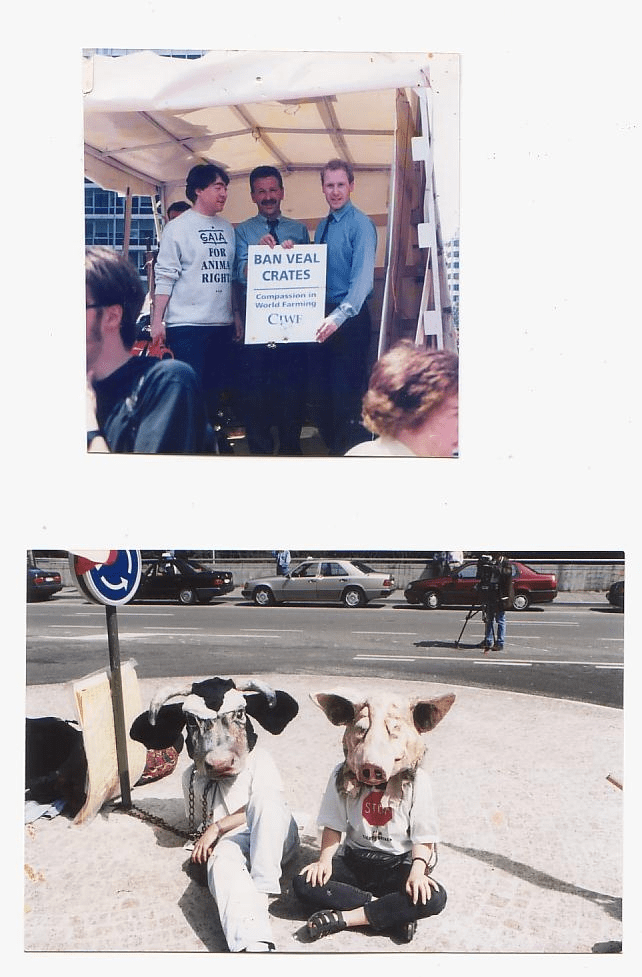
WAV comment – I (Mark) want to personally thank GAIA President Michel Vandenbosch for all his wonderful work and a life completely devoted to the welfare of animals. I first encountered a young Michel back in the 80’s when we were campaigning at EU headquarters, Brussels, for ban on veal crates.

Michel has over the years led GAIA to become a real primary voice for the voiceless in Europe, and he deserves credit for all the work he has undertaken for deacades relating to his devotion to animal welfare.

Here is the photo (below) I took back in the 80’s at that Brussels veal crate demo – you can see Michel on the left.

This virtual zoo is yet another of Micel’s wonderful contributions to the bettering of welfare for animals, Thank you Michel.

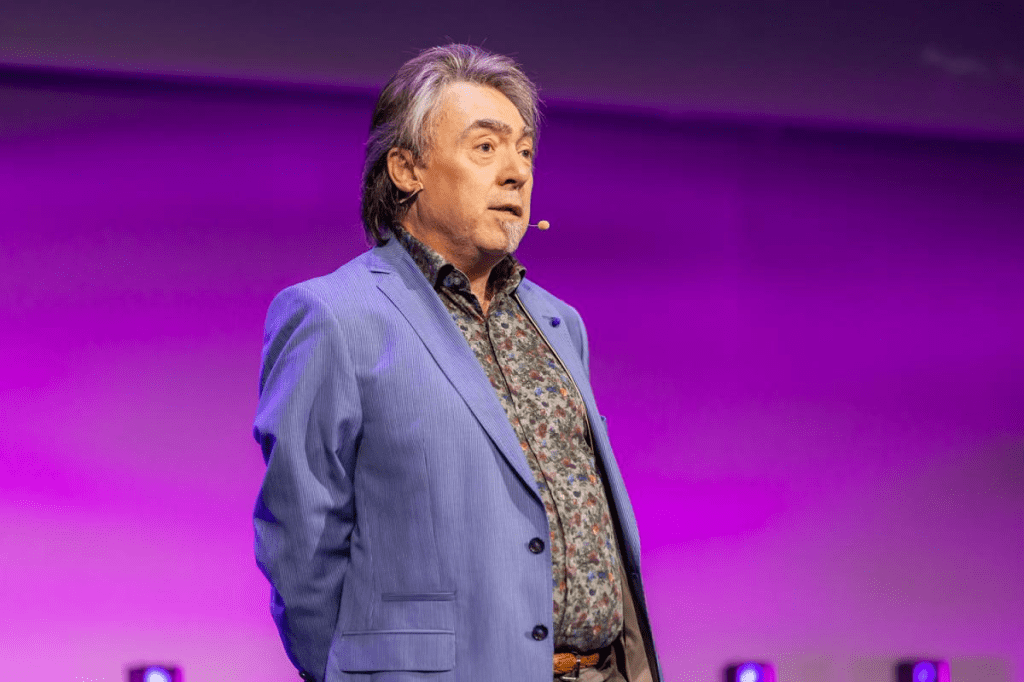
Above – GAIA President Michel Vandenbosch

Related:

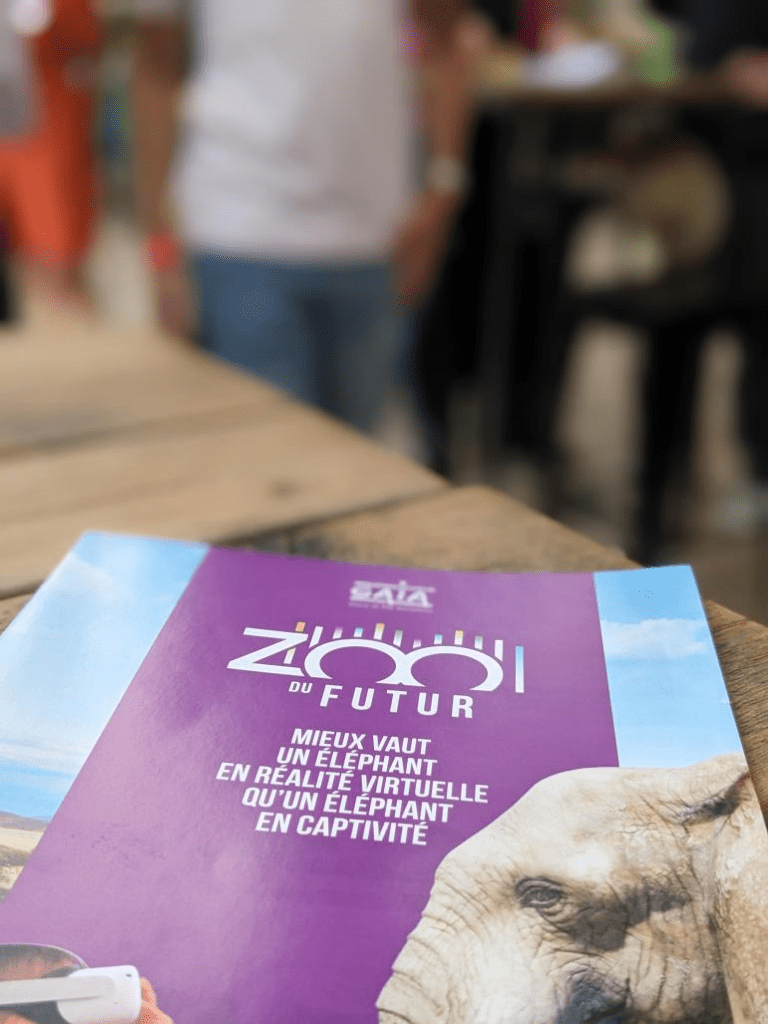
On Wednesday 19 July, GAIA inaugurated the first virtual reality zoo alongside Prince Laurent of Belgium and Bernard Clerfayt, Brussels Minister for Animal Welfare. This zoo of the future immerses visitors in wild habitats in virtual reality, allowing them to observe all kinds of animals, from tigers and penguins to giraffes and elephants.

Several million wild animals are kept in captivity in the 10,000 zoos currently counted around the world. Locked up in enclosures infinitely smaller than their natural habitat, in artificial environments that have little to do with their original savannah or forest, the animals suffer. 

Many of them develop stereotypies (abnormal repetitive behaviour, a sign of psychological suffering). Boredom and frustration drive animals to incessant pacing, constant rocking, compulsive grooming and self-mutilation.

GAIA’s idea is simple: rather than observing polar bears pacing on a fake concrete ice floe, or bored monkeys in a glass enclosure, it would be better to get to know them while respecting their freedom.

In GAIA’s new virtual zoo, we will be able to admire wild animals evolving freely in their environment without being disturbed by visitors. This initiative could significantly reduce the number of animals kept in zoos, especially where minimum welfare standards cannot be met.

The value of this initiative also outweighs the educational benefits of zoos, where visitors cannot learn the natural behaviours of wild animals. Besides exotic animals, there are thousands of wild animals that can be observed, with patience and precaution, close to your home.

If you’re in Belgium, GAIA’s virtual zoo will be travelling to a number of major cities this summer. Here are the tour dates:

25/07 Brussels (Place de la Monnaie)

26/07 Antwerp (Wapper)

28/07 Leuven (Place de l’ange)

01/08 Charleroi (Place verte)

02/08 Hasselt (Molenpoortplein)

03/08 Bruges (Grote Markt)

04/08 Blankenberge (Zeedijk)

08/08 Gent (E. Braunplein)

09/08 Mons (location to be confirmed)

10/08 Liège (location to be confirmed)

11/08 Eupen (Marktplatz)


Regards Mark

EU: Fur Free Europe officially presented to the European Commission.

20 July 2023

Press Release

It’s now up to the European Commission to provide a formal reply to the 1.5 million citizens who have called for a Fur Free Europe, in the most successful European Citizen Initiative related to animal welfare.

Today the European Citizen Initiative (ECI) organisers formally met with the European Commission (EC) to present the case, and signify the importance of a full harmonised ban on fur farms and on the placement of farmed fur products on the European market.

More than 1.5 million citizens asked for a Fur Free Europe, and 19 Member States have already totally or partially banned fur farming on grounds of animal welfare and public health: a clear sign is being sent to the EC that this practice cannot be justified under any circumstances.

The call was also recently reiterated by a majority of Member States during the last session of the Agriculture and Fisheries Council (AGRIFISH) and has been publicly supported by a number of members of the European Parliament.

By the end of 2023, the EC will publish a proposal aimed at improving the EU’s animal welfare legislation to align it with the latest scientific evidence. The organisers reiterated once more that while it’s possible to improve welfare standards for domesticated animals, science has clearly shown that this is not possible for wild animals on fur farms. Consequently, a ban on fur farming should be included in the proposal.

In addition, fur farms pose significant risk for the spread of zoonotic diseases, putting both humans and animals at risk, a fact which became widely evident during recent COVID-19 outbreaks. Banning the placement of farmed fur products on the EU market will ensure that fur produced under similarly cruel conditions in third countries is not allowed to be sold within the EU.

After the autumn hearing at the European Parliament, The EC will provide a formal reply to the ECI by mid-December.

As the EU is preparing to take a giant leap for animals, and with the set revision for the Kept Animals Regulation, this is a great opportunity to show that such cruel unjustifiable practices have no place in Europe. Citizens have made their voice loudly heard, and for this democratic tool to be successful, we expect a positive response from the EC soon,”

Reineke Hameleers, CEO, Eurogroup for Animals.

Regards Mark

Belgium: GAIA welcomes new animal welfare revision, but notes shortfalls.

GAIA welcomes new animal welfare revision, but notes shortfalls.

18 July 2023

GAIA

GAIA welcomes the new Flemish Animal Welfare legislation, saying it is a clear step forward for animal welfare but which has a number of major shortcomings which must be addressed. The revision was announced by Flemish Animal Welfare Minister Ben Weyts and agreed by the Flemish Government on Friday.

In addition to all the existing bans on slaughter without stunning, wild animals in circuses, fur farming, street horse racing, force-feeding for foie gras production, rabbits in individual battery cages and compulsory sterilisation of cats, as well as other regulations, the Flemish Animal Welfare Code contains important new provisions for which GAIA has been campaigning for many years:

  1. Ban on all cage systems for laying hens:

Ban for new businesses from 01/01/2024. For existing businesses, the ban takes effect from 01/01/2036. “Of course, we would have preferred the 12-year transition period to be much shorter, but the principle of the ban is legally supported by a clear perspective for change (switch to free-range systems): no more caged laying hens by 1 January 2036 at the latest!” commented Michel Vandenbosch, President of GAIA.

  1. Ban on keeping cetaceans in captivity:

We welcome the ban on imports and breeding BUT an exception has been made (conditional derogation) for Boudewijn Seapark, which is still allowed to keep a maximum of 6 dolphins on condition that an outdoor dolphin tank is built by 2027. If an assessment concludes that there is an operational alternative, such as a sanctuary, which offers the dolphins a better level of comfort and quality of life, the dolphins will have to be transferred to this site. The first assessment is not due until 2037, which means that these changes will not be implemented until then. We believe that a waiting period of more than 13 years is too long for the dolphins.

I don’t see why the dolphins in Bruges couldn’t be transferred immediately if a more appropriate environment where they can spend the rest of their lives can be found sooner,” commented Michel Vandenbosch.

  1. Mandatory shelter for all animals (previously only equines) from 01/01/2029.
  2. A general ban on the home slaughter of pigs, goats and sheep.
  3. Livestock markets will be banned (with the exception of annual markets, such as the Torhout horse market and the Sint-Lievens-Houtem livestock market).
  4. The culling of male day-old chicks will be banned, but this ban will be subject to the development of an in-egg detection technique. However, this technique is already being used successfully. Eggs selected using this technique can already be found on the shelves of certain Belgian supermarkets (Bioplanet, for example).
  5. There will be an animal-oriented police service in each police zone.
  6. Ban on killing animals for folk practices/events.
  7. A ban on the use of  glue traps to control supposedly harmful animals.
  8. Standstill principle: new animal welfare laws and regulations cannot be rolled back.
  9. Animals are explicitly recognised as living beings with inherent sentience and value.
  10. The breeding of fighting cocks will be banned.
  11. Centres for exotic and wild animals will be given a specific status: they will no longer be equated with zoos because they are different in their philosophy and objectives.

GAIA regrets the following shortcomings in the Code:

The Code does not prohibit the cruel surgical castration of piglets. The most animal-friendly alternatives will not be compulsory and pig farmers are allowed to decide which alternative suits them best. In addition, there is no transition period set.

  • Another negative point is that it will not be forbidden to cook live lobsters or cut them in half, but a legal basis has been created for this. 
  • There is no ban on animal testing for cleaning products.
  • The Code still allows laboratories to keep animals captured in the wild. Given the scientifically proven impact of capturing wild animals on the decline of species, and the increasing risk of transmission of viruses from wild animals to humans, we should expect scientific research laboratories to stop importing wild animals for animal testing, at least for safety reasons. So why is this practice still allowed?

With this Code, we are already making significant progress and obtaining new legislation for which we have been campaigning for years. With the standstill principle explicitly mentioned, the Flemish Code indicates the direction in which regulations must evolve in the interests of animals: gradually and without going backwards.”

Michel Vandenbosch, President of GAIA

Significant progress, but much remains to be done

“The same applies to long transition periods,” adds GAIA. “The legal settlement of the dolphin issue also provides for unreasonable delays. In any case, the Animal Welfare Code offers a legal perspective that will (in the long and short term) put an end to certain persistent forms of organised animal cruelty and avoidable animal suffering that GAIA has been fighting against for yearsEven with this Code, there is still a lot of work to be done.”

It is regrettable, however, that the Code does not prohibit, among other things, a practice as cruel as the castration of piglets, which causes clearly avoidable suffering to millions of piglets.

Regards Mark

Injecting animal welfare in renewed EU-Latin American trade relationships.

Injecting animal welfare in renewed EU-Latin American trade relationships

18 July 2023

As leaders from the EU and from the Community of Latin American and Caribbean States (CELAC) gather in Brussels for the third EU-CELAC summit, willingness to accelerate the conclusion of controversial trade agreements is on the agenda. What’s at stake for animals?

During the EU-CELAC Summit on 17-18 July, the Executive Vice-President of the European Commission and Ministers of Foreign Affairs of Mercosur countries reiterated their “determination to work towards the conclusion of the Agreement between the EU and MERCOSUR by the end of 2023”. 

Instead of pushing forward an unsustainable and harmful trade policy, the EU should redesign  its trade deals to be compatible with the EU Green Deal and the Farm-to-Fork Strategy.  These deals, as exemplified by the EU-Mercosur FTA, grant further unconditional market access to animal based products, leading to an increase in the trade and further fuelling the intensification of farming both in the EU and abroad. This trend not only implies poor animal welfare conditions, but also raises public health concerns in terms of zoonoses and antimicrobial resistance (AMR). Intensification of animal production also generates high levels of deforestation, impacting the welfare of millions of wild animals.

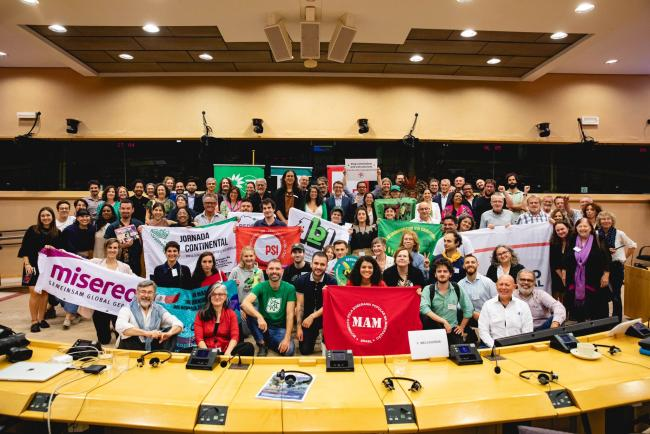
For all these reasons, Eurogroup for Animals, together with 50 civil society organisations from South America and Europe, and with the support of MEPs from the Greens/EFA, the Left and S&D, organised an international conference calling for ‘A new EU-Latin America trade relationship for the 21st Century’

The Left in the EP

During the conference, a wide range of speakers from the EU and South America agreed that the EU-Mercosur deal is toxic for indigenous people, workers, the environment and animals, and that the proposed additional protocol offers nothing more than cosmetic, unenforceable adjustments. Furthermore, the risks of the deal aggravating deforestation cannot be restrained by the recent EU legislation on imported deforestation, given that the legislation ignores many products that contribute to deforestation and other biomes destroyed by intensive agriculture. For example, soy-fed animals such as poultry are not covered by the legislation. 

Other speakers echoed Eurogroup for Animals’ criticism of the EU-Mexico and EU-Chile agreements. These deals have had devastating consequences for local communities, including pollution and destruction of natural habitats, and  their “modernised”  versions are likely to have further negative impacts on animal welfare, human rights, deforestation, the climate crisis and biodiversity. While the agreements do include some animal welfare provisions – including on animal sentience and growth promoters and, in the case of Mexico, a standalone chapter on animal welfare and antimicrobial resistance – the language is weak and will do nothing to offset the negative impacts unconditional trade liberalisation will have on animals, people and the planet.

All eyes are now on the European Commission, the European Parliament and the Council to avoid fast-tracking the EU-Chile and the EU-Mexico FTAs by side-stepping national and regional parliaments and removing Member States’ veto right. This is critical given the range of negative impacts the agreements will have on animal welfare, human rights, the climate crisis and biodiversity. Concerning the EU-Mercosur FTA, Eurogroup for Animals calls for a full renegotiation of the deal, including conditioning all trade preferences granted in the agreement to EU-equivalent animal welfare standards.

Regards Mark

Spain: Making animals count in the Spanish elections.

Making animals count in the Spanish elections

19 July 2023

AnimaNaturalis

AnimaNaturalis, together with Equalia, FAADA and over 50 other Spanish animal protection organisations have launched a campaign to influence Spain’s political agenda and encourage citizens to vote in the national elections this Sunday 23rd July.

Following disappointing results for the leading Spanish Socialist party (PSOE) in the May local elections, Prime Minister Pedro Sánchez called snap elections for the end of July. The Popular Party (PP) under Alberto Núñez Feijóo have their eye on victory, but neither the PP nor PSOE are projected to win enough votes to govern on their own – with the conservatives likely needing the support of far-right party Vox, and the Socialists looking to left-wing group Sumar. 

Under AnimaNaturalis’ initiative, the new coalition of animal protection organisations in Spain have been working together to ensure that the main political parties include animal welfare commitments, such as explicit support for the end of cages in European livestock farming based on the “End the Cage Age” initiative.

The coalition prepared a decalogue of 17 asks for animals in the next term. A website launched earlier this month, AgendAnimal, includes a ranking of political parties according to their commitments to these asks.  

The ranking shows support for many of the asks by parties Sumar, PACMA, Junts and ERC. Closing fur farms received the most consensus (6 parties), and 5 parties commit to move towards the end of cetacean captivity.

The union of animal organisations is key to achieving our objectives and defending the rights and welfare of animals effectively. Together we are stronger in our fight for a world where all living creatures are treated with compassion and respect. We have always been clear about it, but at such a decisive moment for Spain as the one we are currently experiencing, we could not act otherwise.

Cristina Ibáñez García, Lawyer and Coordinator AnimaNaturalis International

See below the decalogue of asks for animals: 

Repeal Law 18/2013 for the regulation of bullfighting as cultural heritage

Develop the regulations of Law 7/2023 on the protection of animal rights and welfare

Include companion animals expressly excluded from Law 7/2023 

Reduce veterinary VAT for pets from the general rate of 21% of the reduced rate of 10%

Develop a clear labelling system for meat products and derivatives

Support the transition to a cage-free system 

Prohibit the slaughter of day-old chicks

Ban force-feeding ducks and geese to produce foie gras

Promote good aquaculture practices that prioritise animal welfare and sustainability 

Close fur farms

Apply and promote the protection of fauna in wind farms and power lines

Prohibit pigeon shooting

Promote R&D of alternative methods to animal experimentation

New regulations on zoos 

Moving towards the end of cetacean captivity

Build a state rescue centre for seizures of CITES species

Guarantee the continuity of the General Directorate for Animal Rights

Read more at source

AgendAnimal

Regards Mark