Day: January 12, 2024

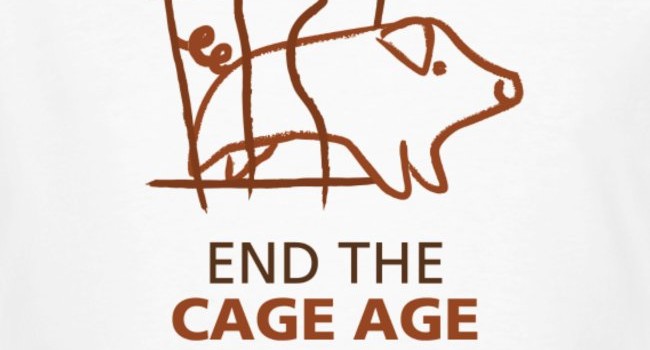
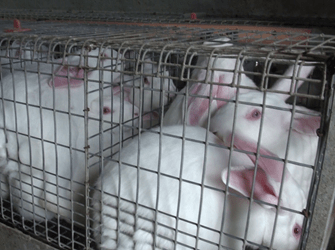
EU: End the Cage Age: Ombudsman opens inquiry on European Commission’s failure to act.

8 January 2024

The European Ombudsman has opened an inquiry into the European Commission’s (EC) failure to publish a legislative proposal to phase-out and ultimately ban cages for farm animals, in line with its official answer to the End the Cage Age European Citizens’ Initiative (ECI).

Eurogroup for Animals and numerous other animal protection organisations wrote to the European Commission in October after it unexpectedly backtracked on the commitment to bring forward legislation banning cages in 2023, and did not provide any clarity on when it would be published.

In June 2021, the EC promised that by the end of 2023, it would put forward a legislative proposal to phase out and finally prohibit the use of cages, a commitment which it re-stated and reinforced on numerous occasions. The EC had generated considerable legitimate expectation among citizens that legislation would be forthcoming, creating a case of maladministration. 

After not receiving a response from the EC, in November 2023, Eurogroup for Animals and several of its members made an official maladministration complaint to the European Ombudsman against the EC for failure to uphold its commitment to an ECI in which 1.4 million citizens asked for a ban on cages and failure to appropriately communicate its u-turn on this promise.
The complaint raises the issue of the EC undermining the rules that govern ECIs and the very credibility of the democratic participatory process they represent. In the run up to the European elections in June of this year, this is a particularly poor signal to send to citizens.

The European Ombudsman has now asked the EC to send an official reply to Eurogroup for Animals and all the other complainants by the end of January. 

The opening of the inquiry of the European Ombudsman sends a clear signal that the democratic tool of the ECI should not be undermined. Citizens are using the tools at their disposal to make their voice heard on issues that matter. We expect the European Commission to follow through on its commitment, and we continue asking for a timeline indicating when the promised proposals will be published.
Reineke Hameleers, CEO, Eurogroup for Animals

Regards Mark
Belgium: Live animal transport proposal not a priority for Belgian presidency.

10 January 2024

The Belgian Presidency does not plan to address the proposal for animal transport in its term according to the programme of legislative files that will be worked on. The presidency of the Council is responsible for setting the agenda and facilitating dialogue between the Council and other EU institutions. It is now Belgium’s turn to take on the role until June of this year.

In December the European Commission published a proposal for the transport of live animals, but the proposed text failed to recommend actions that can make significant improvements for animal welfare, ignoring several EFSA opinions. Most strikingly, it still allows for animals to be transported live to non-EU countries, despite the ever growing concerns on the consequences of such journeys.

It was hoped that the Council could work on the topic and strengthen the proposal. However, with the Belgian Presidency deciding to kick the can down the road, the EU will not be in a position to adopt new welfare standards for the transport of live animals any time soon. The programme only mentions the drafting of a progress report on animal transport, and will only be worked on “if there is time”, which according to news reports, is highly unlikely.

At the beginning of its term in 2019, this Commission under President Ursula von der Leyen committed to improving the lives of farmed animals by coming forward with a number of proposals, of which transport is just one. 

It was expected that this whole package could come into force and start improving the lives of millions of animals across the EU as soon as 2027. So far the Commission has only brought forward the proposal on transport, which could now be further delayed, and a proposed regulation on cats and dogs which the Council is expected to adopt a general approach on.

Regards Mark

EU: Illegal pet trade: findings of the EU enforcement action plan.

12 January 2024

The breeding and trade of cats and dogs within the EU is a profitable economic sector; valued at over 1.3 billion € annually, it’s riddled with fraudulent activities that jeopardise the health and welfare of animals, compromise public health, undermine consumer protection and distort the internal market.

These risks have been given the attention they deserve at EU level through a coordinated Action Plan involving relevant stakeholders, among which are Directorate Generals of the European Commission, EU non-governmental organisations and Europol.

The sale of dogs and cats is increasingly growing through online platforms and social media, with an estimate of around 60% of dog and cat owners purchasing their pet through the Internet, representing 4,8 million dogs and 1,2 million cats. We expect the new Proposal for a Regulation on the welfare of dogs and cats and their traceability to address fraudulent operations via mandatory identification and registration of dogs and cats circulating on the internal market.

Lack of enforcement is a major issue due to lack of prioritisation of the illegal pet trade, in spite of it bearing all the hallmarks of organised crime. There is a compelling need for a deeper collective and structured cooperation at EU level between law enforcement, custom tax authorities, magistrates, European institutions and agencies and, where relevant, third countries, international organisations and the private sector.

The Action Plan has also discovered ineffective, disproportionate and non dissuasive penalties for fraudulent practices that underestimate the large amounts of money moving through the illegal pet trade.

Companion animals moved for commercial purposes from non-EU countries to the EU must be declared to customs authorities to prevent tax evasion. Commercial movement has been found to be largely disguised as private travel, hence undeclared for custom purposes, making the origin of the animals unverifiable.

Other disturbing findings pointed towards illegal trafficking of dogs through shelters, for example in Romania, without the necessary permits and incorrect data in health certificates of passports. This highlights the need to include animal shelters in the scope of the new Regulation.

The primary suppliers of illegally traded animals within the EU were Romania and Hungary, and from outside the EU were Turkey, Serbia, Ukraine, Russia and Belarus with 45% of the Action Plan cases originating from non-EU countries. 

The insights from this EU Action Plan should be used to implement more targeted and effective controls, stronger penalties, effective law enforcement and the need for unified regulations in Member States. Special attention should be granted to the online side of the illegal pet trade, which would benefit from an enhanced collaboration between all relevant national authorities (veterinary, customs, police and judicial), as well as a larger focus on public awareness campaigns to empower consumers to make informed choices.

Regards Mark

UK: Live Exports – Remaining Stages In House of Commons Mon. 15th January. Take Action and Ask Your MP To Attend (UK Residents Only).

Photo – Mark (WAV) – A Dutch Horse Transporter heads out of Dover UK.

The Animal Welfare (Livestock Exports) Bill will have its Committee of the Whole House and Remaining Stages in the House of Commons on Monday 15th January.

This means if the Bill passes (WAV Comment – Sure it will as it has full Cross Party Support) it will be ready to enter the House of Lords to complete its passage.

This important Bill will ban the export of cattle, sheep, goats, pigs and horses for slaughter and fattening from Great Britain, stopping unnecessary stress, exhaustion and injury caused by exporting live animals. In doing so, it will deliver a key Conservative Manifesto commitment and part of Defra’s Action Plan for Animal Welfare.

You can read more about the Bill here <https://conservativeanimalwelfarefoundation.us12.list-manage.com/track/click?u=39260baecf6044e1f26ef4f9d&id=a42797764a&e=57f5095601> .

During live export animals may end up in countries with far poorer welfare standards than our own, enduring practices which are illegal in the UK such as veal crates. Calves placed into the Dutch white veal pen systems, where they are unable to perform natural behaviour, are barely able to turn around.

UK ACTION – We are asking our supporters to contact their local MP and ask them to attend these important final stages of the Bill in the House of Commons. To make this easier for you, we have drafted a template below which you can copy and paste.

We hope you will join us in the mission to end live exports for fattening and slaughter.

With warmest wishes,

Email to: your MP

Dear (name of MP),

I am contacting you to ask you to support the Animal Welfare (Livestock Exports) Bill which will enter its final stages in the House of Commons on Monday 15th January. Ending live exports for fattening and slaughter was included in the Conservative Manifesto and Defra’s Action Plan for Animal Welfare.

With a General Election this year, I am keen to ensure this important Bill becomes law as soon as possible. I therefore ask you to attend and vote in favour of the Bill during its final stages on Monday, to prevent the cruelty of live exports from continuing in the future.

Historically the UK has exported thousands of sheep and calves abroad to France and as far afield as Spain. Overcrowding means that some cannot lie down at all, while those who do may be injured or trampled to death. They can be in transit for days, suffering extremes of temperature and often without sufficient food, water or rest. Please help to end live exports for fattening and slaughter for good.

I look forward to hearing from you.

Best wishes,

Your name

Your Address.

———————————————————–

Regards Mark