Day: February 18, 2024

Facts to Know Abut the ‘Man of the Forest’ – The Orangutan.

Orangutans are solitary creatures but like to laugh at a joke. They can learn to use tools and communicate with sign language, and are strong but gentle. Yes, there’s lots to celebrate on August 19, which is designated International Orangutan Day (#OrangutanDay). The day is not only designed to raise awareness of these large tree dwellers so fond of fruit and swinging on branches, but to raise awareness of their plight as a species threatened with extinction because of disappearing jungle habitat. So here are 20 things worth knowing about these orange-furred apes.

In Malay, “orangutan” means “man of the forest,” since the animal lives a solitary existence in lowland forests, as they “feast on wild fruits like lychees, mangosteens, and figs, and slurp water from holes in trees.” The two main types of these apes, Bornean and Sumatran orangutans, are much alike in how they look and behave. They both have shaggy reddish fur, but Sumatran orangutans boast longer facial hair. The Tapanuli orangutan is a third species of orangutan, described as distinct since 2017. Only about 800 of these animals live in the wild, making it the most endangered of the orangutans.
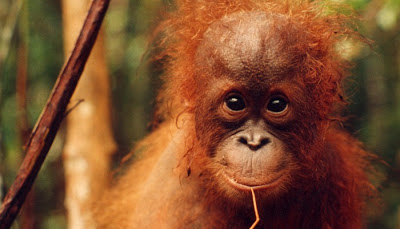
While orangutans have short legs, they have proportionately long arms, in fact the longest of the great apes (their arms stretch to the ankles when they are standing). With a span reaching lengths of 2.2 metres, or seven feet, the arms end in hook-like hands with long fingers and short thumbs. Orangutans can swing through the trees using their arms alone.

Orangutans have a lot of heft. They are the largest and heaviest tree-dwelling mammals. On average males weigh 83 kilograms (183 pounds) and are about 1.5 metres (five feet) tall. Females are usually smaller and lighter, averaging 37 kg (82 lb.). They tend to build nests in trees, although adult males sometimes make themselves comfortable sleeping on the ground.

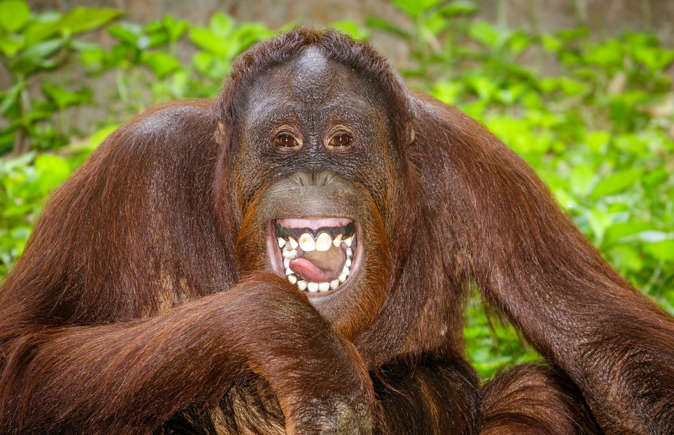
Apparently orangutans like to laugh. Research has shown that during play these apes will tickle each other, punch playfully, and when one does a gaping grin—their version of laughter—their playmate will often respond in kind, demonstrating they possess empathy. “It shows how important this form of emotional communication is,” says researcher Marina Davila Ross. “Empathy helps one communicate with social partners … It helps form social bonds and it’s supportive in terms of cooperation.”

Chantek was one smart cookie. The male orangutan, who lived at Zoo Atlanta, learned to communicate with American Sign Language under the care of an anthropologist. He was also able to clean his room, use a regular toilet, and haggle for his favourite treats—particularly cheeseburgers. Sadly, he died in 2017, at the ripe old orangutan age of 39, despite being placed on a low-sodium diet and regularly monitored with cardiac ultrasounds, blood pressure tests and blood work.

In the jungle, orangutans swing from branch to branch. But if there’s a gap too big for a youngster to negotiate, the mother will often make “a living bridge for the baby to scamper across.” If adult males can’t swing across the gap between trees, because their weight is too much for a branch, they will quite sensibly descend to the ground and walk to the next tree.

Want to continue knowing more ?

Then click on the link at the start.

Regards Mark

USA: Justice For Milo – Beaten So Badly He Could Not Be Saved.

SIGN: JUSTICE FOR BRUTALLY BEATEN BLACK CAT

Milo (Courtesy of Syracuse Police Department)

Petition link – SIGN: Justice for Brutally Beaten Black Cat (ladyfreethinker.org)

PETITION TARGET: Onondaga County District Attorney William J. Fitzpatrick

black cat named Milo was ruthlessly stomped on and beaten using fists and other objects in Syracuse, New York. He was beaten so horrifically that he could not be saved.

A 24-year-old man has since been arrested.

According to the Syracuse Police Animal Cruelty Unit, the person who beat Milo first tried to get a dog to attack Milo. Milo appears to have attempted to scratch the individual out of fear and self-defense. That’s when Milo was violently attacked.

Cornell University’s autopsy found that Milo suffered a brutal and painful beating. His right eye was displaced, his eye socket fractured, and he suffered an open rib fracture, which made it difficult to breathe.

Veterinary staff ultimately determined the most humane response was euthanasia.

The arrested man has been charged with aggravated cruelty to animals, which is a felony. He has been released awaiting his day in court.

No innocent cat deserves such a gruesome and painful demise.

Sign our petition to get justice for Milo by holding the perpetrator of this senseless violence accountable to the fullest extent of the law and forbidding the person responsible from ever having animals in the future.

SIGN: Justice for Brutally Beaten Black Cat (ladyfreethinker.org)

Regards Mark

England: Thousands more badgers could be killed under proposal to raise target numbers in cull.

Thousands more badgers could be killed under proposal to raise target numbers in cull (msn.com)

Thousands more badgers than planned could be killed if the government gives the go-ahead next week to raising the target number of animals in certain areas, experts say.

Until now, official policy has been that culls aimed to reduce badger numbers by 70 per cent within in each cull area and across most of southwest England.

But The Independent understands that ministers are preparing to allow that target to be raised to 100 per cent in “exceptional” circumstances, subject to a consultation.

The announcement could be made as early as next week – during the National Farmers’ Union annual conference.

The permission would be similar to that granted to sugar-beet farmers to use bee-killing pesticides – which has been given four years running.

The change to the 100 per cent target would begin after January 2026, if it is approved after a consultation.

More than 260,000 badgers in England – over half the population – are thought to have been killed since culling began in 2013, as the government has sought to eradicate tuberculosis in cattle, which is costly for farmers.

The cull has repeatedly been expanded, including as late as last year.

The spread of the disease is blamed on badgers but wildlife defenders dispute this, saying cattle are 800 times more likely to spread the disease than badgers are.

One expert said “exceptional circumstances” was poorly defined so feared the policy could become standard practice.

Tom Langton, an ecologist who has challenged culling in the courts, said the toll of extra badgers killed would depend on how many areas got the go-ahead, but if it was the entire “edge area” – that is medium-risk – up to 20,000 or more a year could be killed.

He said: “If the exception is just a badger with bovine TB is found or trapped within say 1km of a farm, it could just become the new normal to cull every year over wide areas. So this risks being the cull anywhere, for ever moment.”

Especially with a General Election on the horizon this year.

The government had promised the culls would end next year and be replaced by increasing vaccinations, but last year landowners and farmers were given the go-ahead to kill tens of thousands more badgers.

Mr Langton said 100 per cent culling was tried in 2018 around Penrith in Cumbria in cattle imported from Northern Ireland.

They went in and shot 1,115 badgers – all of them – but could not then attribute change in TB rates to culling as seven farms were quite clearly reinfecting themselves because of the failed testing regime,” he said.

A spokesperson for the Department for Environment, Food and Rural Affairs said: “Our approach to disease control continues to be informed by science (WAV – What !!) and deploys all tools at our disposal.

“We are moving to the next phase of our strategy which will focus on wider scale badger vaccination – but as we clearly set out in the 2020 Godfray Review response and subsequent consultation and response in 2021, culling remains an option where epidemiological assessment indicates that it is needed, alongside other measures in our bovine TB eradication strategy.”

Regards Mark / Diana

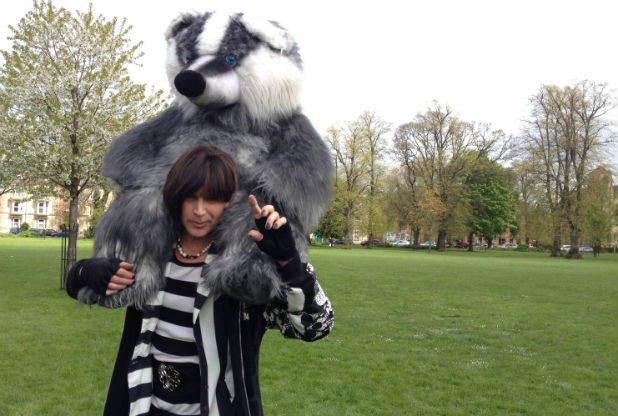
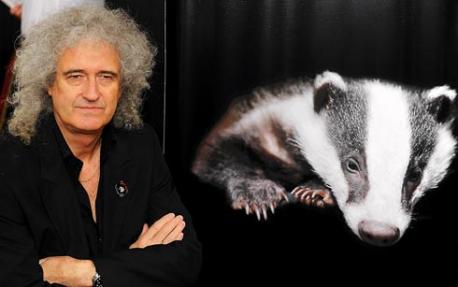
Dr Brian May

https://worldanimalsvoice.com/?s=badgers

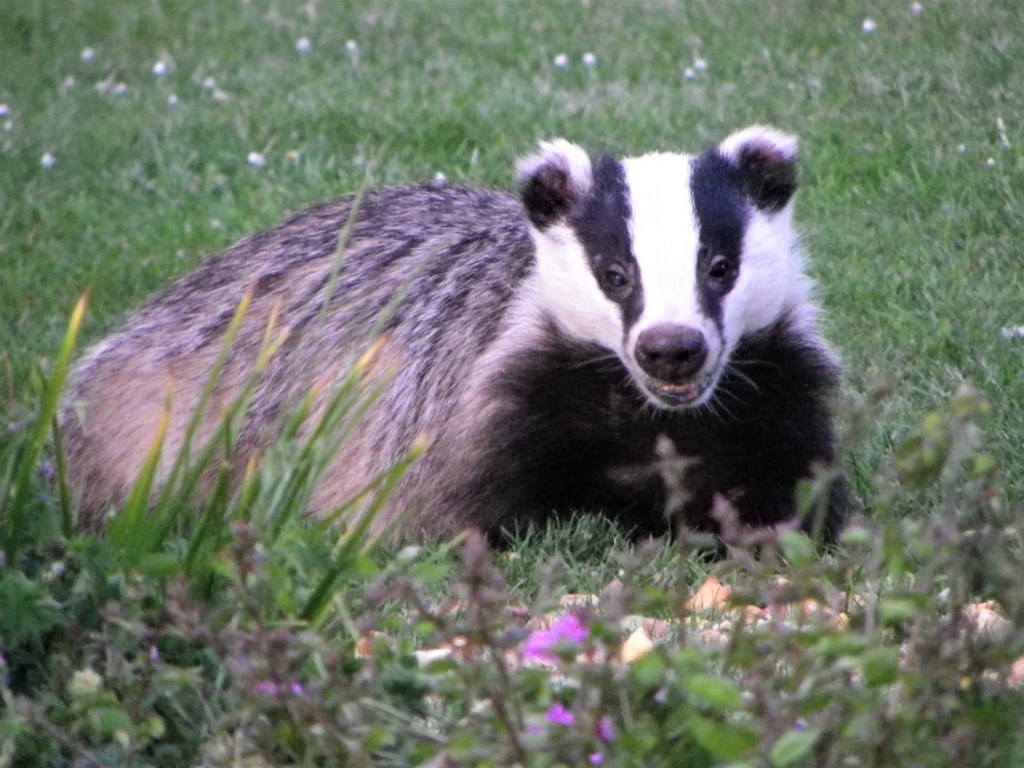
Safe if I have anything to do with it – a Badger in my own garden:

Indonesia: The Monkey Haters – INDONESIAN SUSPECT ARRESTED FOR TORTURING MONKEYS AND SELLING THE VIDEOS ONLINE.

BBC – The Monkey Haters

The Monkey Haters: BBC Eye exposes ring behind torture videos – Media Centre

INDONESIAN SUSPECT ARRESTED FOR TORTURING MONKEYS AND SELLING THE VIDEOS ONLINE

By Lady Freethinker | February 13, 2024

Lady Freethinker and Action for Primates welcome action taken by West Kalimantan Police in Indonesia in the arrest and subsequent charging of an individual suspected of torturing and killing baby monkeys on camera and selling the videos to buyers in the U.S. and abroad for $50-$100 USD per video.

The person has now been charged under Article 91 of the Law on Animal Husbandry and Health; and/or Article 302 of the Criminal Code concerning Mistreatment of Animals. He faces a prison sentence of 9 months.

Police reportedly found a dead, mutilated monkey wrapped in plastic outside the suspect’s home; torture apparatus inside the home, including a gas stove, soldering iron, hammer and slingshot; and 58 videos depicting sadistic torture of baby, long-tailed macaques on his mobile device. The suspect’s name has not yet been released publicly.

Lady Freethinker and Action for Primates, together with other animal groups such as Jakarta Animal Aid Network (JAAN), have been investigating the disturbing world of online monkey torture rings for over two years to end the horrifying violence inflicted upon baby monkeys for online circulation.

The collaboration began with an investigation in 2021 that uncovered the disturbing escalation of private online groups on platforms like Telegram, in which people in Indonesia created custom monkey torture videos for an audience of monkey “haters” in the U.S., U.K., and elsewhere. Members of the group paid for and dictated what method of torture they wanted inflicted on the monkeys.

These underground rings were the topic of the recent BBC documentary “The Monkey Haters,” for which Lady Freethinker, Action for Primates and JAAN provided information and intelligence.

In the last 18 months, two other individuals in Indonesia have been convicted and imprisoned for their part in torturing and killing baby monkeys; one individual in the U.S. has been jailed with two others charged for their roles in online monkey torture gangs, and there have been several arrests in the UK.

Shockingly, many of these graphic videos – depicting mutilation, burning, beating, and more – have also been posted on Facebook and YouTube, making them easily available for others, including children, to access and view. Lady Freethinker and Action for Primates are calling on social media and video sharing platforms to take immediate action to stop the proliferation of animal torture content that is being posted online.

I’m thankful to West Kalimantan Police for arresting the person thought to be responsible for horrific violence against dozens of innocent monkeys for profit,” said Lady Freethinker founder Nina Jackel. “Such crimes must be taken seriously, especially as evidence shows time and time again the link between animal cruelty and violence against humans.”

We welcome the action taken by the Indonesian Police,” said Action for Primates Co-Founder Sarah Kite. “Filming the torture and killing of baby monkeys for ‘entertainment’ is abhorrent and must never be tolerated. We hope the arrest and subsequent charging of this individual will deter other people from becoming involved in these perverted and sadistic activities.”

Mark / Diana