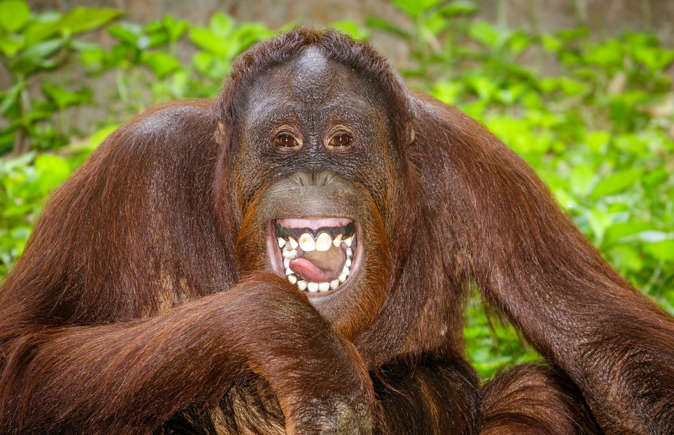
Orangutans are solitary creatures but like to laugh at a joke. They can learn to use tools and communicate with sign language, and are strong but gentle. Yes, there’s lots to celebrate on August 19, which is designated International Orangutan Day (#OrangutanDay). The day is not only designed to raise awareness of these large tree dwellers so fond of fruit and swinging on branches, but to raise awareness of their plight as a species threatened with extinction because of disappearing jungle habitat. So here are 20 things worth knowing about these orange-furred apes.
In Malay, “orangutan” means “man of the forest,” since the animal lives a solitary existence in lowland forests, as they “feast on wild fruits like lychees, mangosteens, and figs, and slurp water from holes in trees.” The two main types of these apes, Bornean and Sumatran orangutans, are much alike in how they look and behave. They both have shaggy reddish fur, but Sumatran orangutans boast longer facial hair. The Tapanuli orangutan is a third species of orangutan, described as distinct since 2017. Only about 800 of these animals live in the wild, making it the most endangered of the orangutans.
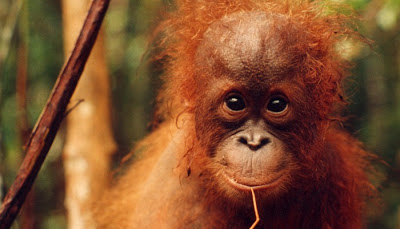
While orangutans have short legs, they have proportionately long arms, in fact the longest of the great apes (their arms stretch to the ankles when they are standing). With a span reaching lengths of 2.2 metres, or seven feet, the arms end in hook-like hands with long fingers and short thumbs. Orangutans can swing through the trees using their arms alone.
Orangutans have a lot of heft. They are the largest and heaviest tree-dwelling mammals. On average males weigh 83 kilograms (183 pounds) and are about 1.5 metres (five feet) tall. Females are usually smaller and lighter, averaging 37 kg (82 lb.). They tend to build nests in trees, although adult males sometimes make themselves comfortable sleeping on the ground.
Apparently orangutans like to laugh. Research has shown that during play these apes will tickle each other, punch playfully, and when one does a gaping grin—their version of laughter—their playmate will often respond in kind, demonstrating they possess empathy. “It shows how important this form of emotional communication is,” says researcher Marina Davila Ross. “Empathy helps one communicate with social partners … It helps form social bonds and it’s supportive in terms of cooperation.”
Chantek was one smart cookie. The male orangutan, who lived at Zoo Atlanta, learned to communicate with American Sign Language under the care of an anthropologist. He was also able to clean his room, use a regular toilet, and haggle for his favourite treats—particularly cheeseburgers. Sadly, he died in 2017, at the ripe old orangutan age of 39, despite being placed on a low-sodium diet and regularly monitored with cardiac ultrasounds, blood pressure tests and blood work.
In the jungle, orangutans swing from branch to branch. But if there’s a gap too big for a youngster to negotiate, the mother will often make “a living bridge for the baby to scamper across.” If adult males can’t swing across the gap between trees, because their weight is too much for a branch, they will quite sensibly descend to the ground and walk to the next tree.
Want to continue knowing more ?
Then click on the link at the start.
Regards Mark
 World Animals Voice