While this may seem as an endless repeat of tortures and killings, we must bear in mind that each one of these victims suffers the unspeakable, and each is unique, and not just a number in the ongoing and growing list of perversions perpetrated on the utterly helpless.
Time for animal abusers in China to face proper justice
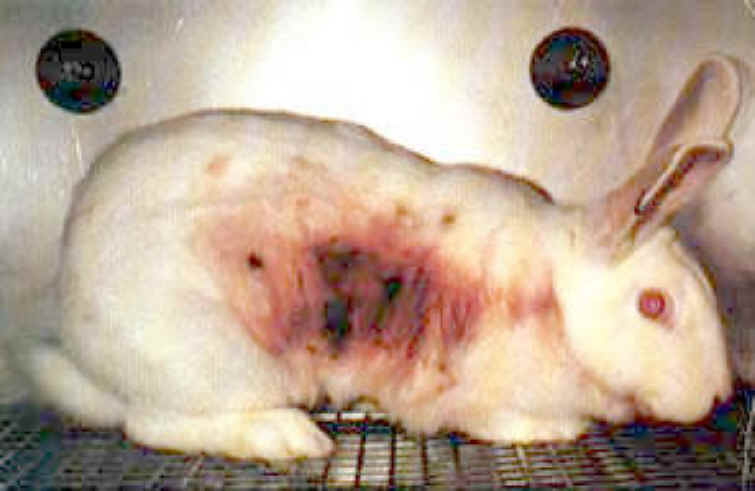
All pictures – WAV Archives.
A student expelled after beating a cat has prompted debate about morality and the lack of animal cruelty laws
Lawyers say it is difficult to define abuse or decide which animals to include, but tough laws could also ultimately help protect people from violent offenders
A video posted on Weibo last month – showing a college student in Jiangxi province holding a white kitten, kicking it, beating it with a coat hanger and hitting it against a door, making the cat cry out in pain – has roused public anger in China.
After the video was posted, the college announced they had expelled the student after receiving 14 letters accusing him of animal abuse. According to a document read out by a college spokesperson, “The incident spread widely online and affected the school’s reputation.” It also accused the student of sharing lewd videos and skipping classes.
A few days earlier, a similar case of animal abuse surfaced, this time involving a student who had scored the highest mark in a graduate school entrance exam for Nanjing University’s nuclear physics course. In that case, netizens found out he had previously uploaded videos of himself abusing a cat.
The university quickly responded to public concerns, saying that the student had not made it to the final round of applicants due to “failing the ideological and moral assessment”. He also failed to get into his second choice, Lanzhou University, a few days later.
Some said Nanjing University had crossed a line by rejecting a student based on “morals”. Others said it reflected what is most valued in the education system nowadays: universities should focus not only on passing on knowledge, but also on instilling into young people integrity and good values.
Of course, these weren’t the first cases of animal abuse recorded in China. Every year, there are numerous videos that shock the public, but after attention wanes, the issue is quietly forgotten without much getting done to prevent abuse from happening again.
At the heart of the issue is the lack of laws and regulations protecting animals from abuse. People resort to online condemnation, while universities might turn down those accused of abuse on “moral” grounds, a loose concept with debatable notions of what justice should look like. The situation would be different with proper rules in place and legal grounds to take action.
In the past, not much action was taken after cases of animal abuse came to light. In 2023, there were reports of internet food vlogger Jack Latiao torturing a cat for an hour, tying it to a tree, burning it and piercing it with a needle.
Police investigated the matter and detained him for causing a “negative social impact”, after which the vlogger apologised, but there was no further punishment that could be taken.
Meanwhile, in the United States, those convicted of the federal crime of animal cruelty face stiff fines and – depending on the state – up to 10 years in prison.
Currently, China has no laws that directly ban animal abuse. Lawyers say it is difficult to define abuse or to decide which animals should be included in the law. Right now, the only way the abuser can be punished is if the owners of the cat or dog sue the abuser for damaging their property. But, in reality, most abusers go after stray animals to avoid any legal liability.
One significant challenge in drafting an animal abuse law is the lack of public consensus that it is a serious crime. Many still believe animals have fewer rights than people. They may think animal abuse is wrong but do not believe people should be jailed for it.
But punishing such abuse isn’t just about protecting animals, it could also help protect people down the line. Research has indicated that animal abuse could be an early indicator that someone would commit serious crimes against people – including assault, murder, rape, partner abuse and child abuse.
The government might also consider criminalising such behaviour if there was more at stake. As an example, in 2020, Shenzhen introduced a regulation to ban eating cats and dogs as part of move to stop the spread of Covid-19.
At the time, many people were surprised that a long-held “tradition” could be banned so easily, but from the government’s point of view, Shenzhen is a relatively new city filled with young people who are against the idea of eating dogs. Moreover, faced with the urgent need to try to stop the pandemic from spreading, it was necessary to ban the practice.
When it comes to animal abuse, if enough people voiced their concerns, the government might eventually take action.
Roberts’ (above) social media accounts show how he is an avid hunter who frequently hunts wild animals alongside his kids. – What a way to raise kids !!!
Upset animal lovers descend on Wyoming over wild wolf torture video – claiming the footage has left them with ‘nightmares’ and calling for a boycott of the state
Video filmed by witnesses showed him kissing the barely conscious wolf and laughing at its distress as it lay on the floor of the Green River Bar
Roberts dragged the wolf into the bar over protests from the owner, and left it there for hours while he drank.
‘He was a jokester about it, while it was just sitting there bleeding to death… He was drunk and rambling mostly. A guy who thinks highly of himself.‘
The owner and many of the other patrons in the bar were unhappy with the situation, but no one challenged Roberts and the bar staff didn’t tell him to leave.
The only female wolf in Baden-Württemberg was probably run over by a car near Schluchsee on Wednesday. Exactly where a wolf pup was fatally captured in December.
WAV Comment – Does not look that ‘damaged’ if it was ‘run over’ by a car. Where is the driver ? – A hunters bullet does not cause massive damage !
Wounds and traces of blood in the fur: A photo shows the dead wolf that was run over on the B500 between the Windgfällweiher and the municipality of Schluchsee (Breisgau-Hochschwarzwald district).
It is not the first dead wolf in the Black Forest. Back in December last year, there was a collision between a car and an eight-month-old wolf pup.
WAV Comment – “Exactly where a wolf pup was fatally captured in December” We have contacts who reside in this very area. Hunters are not supposed to kill wolves; but … many of them ignore the rules – it is exactly the same with the protected Lynx. The body of a shot (hunted) animal will be thrown onto the road, without failure, after the bullet has been removed, and then left to be run over by a vehicle to make the incident look like a road kill, thus making it all look like a terrible accident – being hit by a car, when in fact the animal was actually shot by hunters.
Female killed in accident: wolf was pregnant
According to police, the collision occurred early Wednesday morning. Around seven o’clock, the animal is said to have crossed the road and was fatally hit by a motorist. The Forest Research Institute (FVA) in Freiburg has now seized the animal. Micha Herdtfelder, head of the Wildlife Institute at the FVA, has confirmed to SWR that it is a female wolf – most likely the female from the wolf pack at Schluchsee. In addition, the animal was pregnant.
The carcass is taken to the Institute for Zoo and Wildlife Research in Berlin for further examination. The aim is to obtain nationwide uniform data on the health and nutritional status of killed wolves.
Ministry of the Environment: Formation of packs in BW off the table for the time being
After the only female wolf in Baden-Württemberg was run over, the rebuilding of a pack may have moved into the distant future. “The formation of packs is now off the table in Baden-Württemberg,” said Claudia Hailfinger, press spokeswoman for the Ministry of the Environment.
As the only reproducing female wolf, the female wolf played an important role in the return of the once native predator. After their presumed death, only male wolves are now settled in Baden-Württemberg. According to the Ministry of the Environment, offspring depend on immigrant ferries. It is unclear whether this will happen next year or again in ten years.
He also had mange, a contagious skin disease. The puppy had been detected in July 2023 by photo trap of the Forest Research Institute (FVA). It was the first known wolf offspring in about 150 years. Since 1866, the wolf was considered extinct in Baden-Württemberg.
In 2015, the first wolf was detected in the country, the animal came from Switzerland. It was run over in the same year on the A5 in Lahr (Ortenaukreis). It was not until 2017 that the first male resettled permanently in the Black Forest.
In 2023, the first pack formed in the municipality of Schluchsee. However, Baden-Württemberg is still a long way from a stable population. Nevertheless, the number of specimens is increasing.
Another sedentary wolf detected in the northern Black Forest
In mid-February, a male wolf was genetically identified in the northern Black Forest. According to the Ministry of the Environment, the animal originally comes from a pack in the Gutenbrunn area of Lower Austria. The male dog is probably three or four years old. According to the ministry, his new “Hornisgrinde Territory” in the northern Black Forest is located in the already existing Wolf Prevention Black Forest funding area. The area encompasses the entire natural area of the Black Forest. It has a size of about 8,800 square kilometers.
So far, comparatively few specimens live in the country. By way of comparison, in the 2022/2023 monitoring year, a total of 184 wolf packs, 47 pairs of wolves and 22 sedentary lone wolves were counted nationwide by the Federal Agency for Nature Conservation (BfN) and the Federal Documentation and Advice Centre on the Subject of Wolves (DBBW). Nationwide, the wolf focus is also more likely to be in Lower Saxony and Brandenburg as well as in Saxony, Saxony-Anhalt and Mecklenburg-Western Pomerania. Nevertheless, incidents on the pastures always cause a stir in the southwest.
Over 10,000 animals are abandoned each year in Croatia.
It’s not only a problem for domestic animals like dogs and cats, but also farmed animals.
An amendment of the country’s Penal Code has now made abandoning an animal a criminal offence punishable by up to 2 years in prison, as well as increasing penalties for causing unnecessary pain or suffering, killing or abusing animals.
Amendments to the Croatian Penal Code came into effect on 2 April, bringing with them the long-awaited positive changes in animal protection.
Under the new legislation, individuals who abandon any animal they are responsible for will face imprisonment for up to one year. If the abandonment results in the death of an animal or involves the abandonment of multiple animals, the perpetrator could be sentenced to up to two years in prison.
This significant victory for animal welfare is the culmination of extensive efforts by Animal Friends Croatia, which initiated a petition in 2021 urging for animal abandonment to be treated as a criminal offence. Notably, 80% of the population supported this campaign.
Animal abandonment can now be directly reported to the police or municipal prosecutor’s office, rather than to veterinary inspectors. This streamlined process aims to expedite responses and facilitate the prosecution of offenders. It also serves as a deterrent against animal abandonment, as individuals are now aware that they risk imprisonment and may take the long-term care of animals into consideration before acquiring one.
The penalties for causing unnecessary pain or suffering to animals, and for killing or severely abusing animals, have been increased from a maximum of one year to two years. In cases where these offences are committed for financial gain, perpetrators may now face imprisonment for up to three years instead of two.
Another new measure allows courts to impose restrictions on individuals who have committed animal-related offences if there is a risk of reoffending; a ban on owning or acquiring animals for a period of one to five years.
Animal Friends Croatia is now urging citizens with information about law violations to promptly report any instances of animal abandonment and abuse to the police.
Regards Mark
Excellent, and we congratulate our friends at Animal Friends Croatia for getting this fantastic result.
We have experienced similar issues in the past in Serbia – another Balkans nation.
In a move to update requirements for the appropriate accommodation, care, and killing of animals used for scientific purposes, the European Commission recently adopted a delegated directive with additional requirements for a number of species; but should more be done?
Article 50 of Directive 2010/63/EU on the protection of animals used for scientific purposes empowers the Commission to adapt the Annexes in order to ensure that they reflect technical and scientific progress.
At the time of adoption of the Directive, there was insufficient scientific evidence on the appropriate housing, care and killing methods for certain species, so species-specific requirements for these species were not included.
Since the adoption of the Directive, new scientific knowledge has become available on the welfare requirements of cephalopods, zebrafish and passerine birds used for scientific purposes, and on the killing of cephalopods and zebrafish in a manner causing least pain, suffering and distress. New scientific evidence has also emerged on the inappropriateness of using inert gases to kill rodents. In the light of this evidence, the Commission decided to revise the relevant Annexes (i.e. Annexes III and IV) to the Directive.
In early 2023, the Scientific Committee on Health, Environmental and Emerging Risks (SCHEER) was requested by the Commission to provide a scientific opinion in support of the revision of Annexes III and IV. A call for information was launched by SCHEER to invite all interested parties to submit scientific information on the specific questions on which SCHEER was asked to provide a scientific opinion. Eurogroup for Animals actively engaged with some of its member organisations to provide feedback. The scientific opinion was published in October 2023. Taking into account the opinion issued by SCHEER, the Commission drafted a Delegated directive and initiated a public consultation earlier this year, with Eurogroup for Animals contributing input to the draft. Subsequently, the Delegated directive concerning the revision of Annexes III and IV was officially adopted on 13 March 2024.
We welcome the efforts to establish new standards for cephalopods, zebra fish and passerine birds previously overlooked. However, we also express regret that the revision has missed the opportunity to update existing provisions for other species.
New tool allows citizens to report abuse of crustaceans
15 April 2024
ALI
Decapod crustaceans, such as lobsters, crabs, shrimps and scampi, are frequently kept alive throughout their journey through the seafood supply chain. A new tool allows anyone to report mistreatment whenever these animals are found suffering due to being stocked at high densities, tied, iced, or kept out of water.
Italian citizens can now directly report instances of cruelty towards decapod crustaceans, with the aim of pursuing legal action where possible, thanks to the newly launched SOS Crustaceans project, part of the On behalf of crustaceans campaign, by organisation Animal Law Italia. Through this campaign, the organisation’s team of legal experts will initiate a series of ground-breaking legal actions, so that the need for businesses to follow the latest scientific evidence is definitively recognised.
Something had to be done to actively protect these sentient animals from the many acts of mistreatment that they frequently experience in the seafood supply chain. We hope that through this project, at least some of the practices that the industry routinely exposes these animals to, such as detention on ice and stocking at high densities, will no longer be permitted.
Dr Lorenzo Fruscella, Campaign Lead
Decapod crustaceans would never experience temperatures close to zero in their natural habitats, but in the seafood supply chain they are often kept alive in cold storage, out of water, laid on beds of ice. In many cases their claws are tied, they are not fed, often for weeks, and are forced to live in barren tanks in close proximity with other individuals, despite the fact that most of them are solitary and highly territorial species, at times exposed to direct light sources. Their use within the industry also subjects them to repeated manipulations by inadequately trained personnel, to ultimately be killed with methods that cause prolonged suffering.
Although there are no laws at national level that protect these animals in Italy, there have already been multiple convictions for detention on ice. In Florence, a restaurant manager received a fine of €5,000 for having detained live decapod crustaceans in a cold room and with their claws tied. In 2019, a live lobster with its claws tied on an ice tray was found in the refrigerator of a restaurant near Milan. The public prosecutor requested a fine of €2,000 via criminal decree, which was later reduced to three months of community service.
Animal Law Italia hopes that obtaining further pioneering criminal convictions will be the first step towards changing the law to ensure that decapod crustaceans are adequately protected.
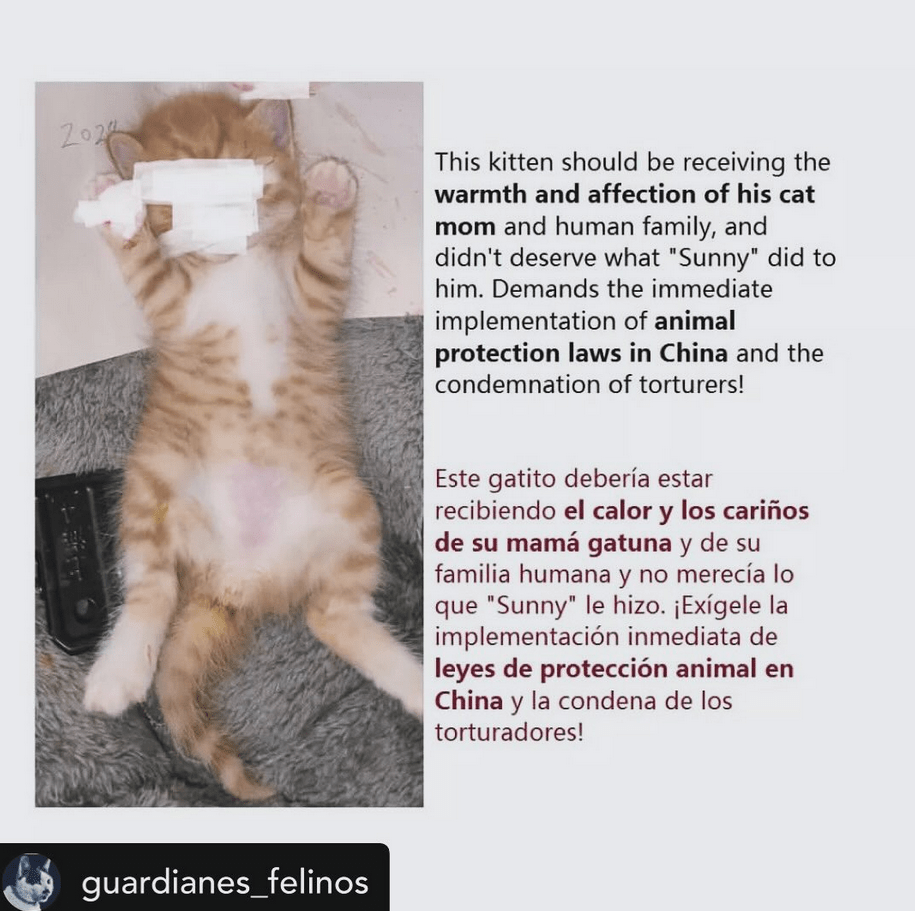
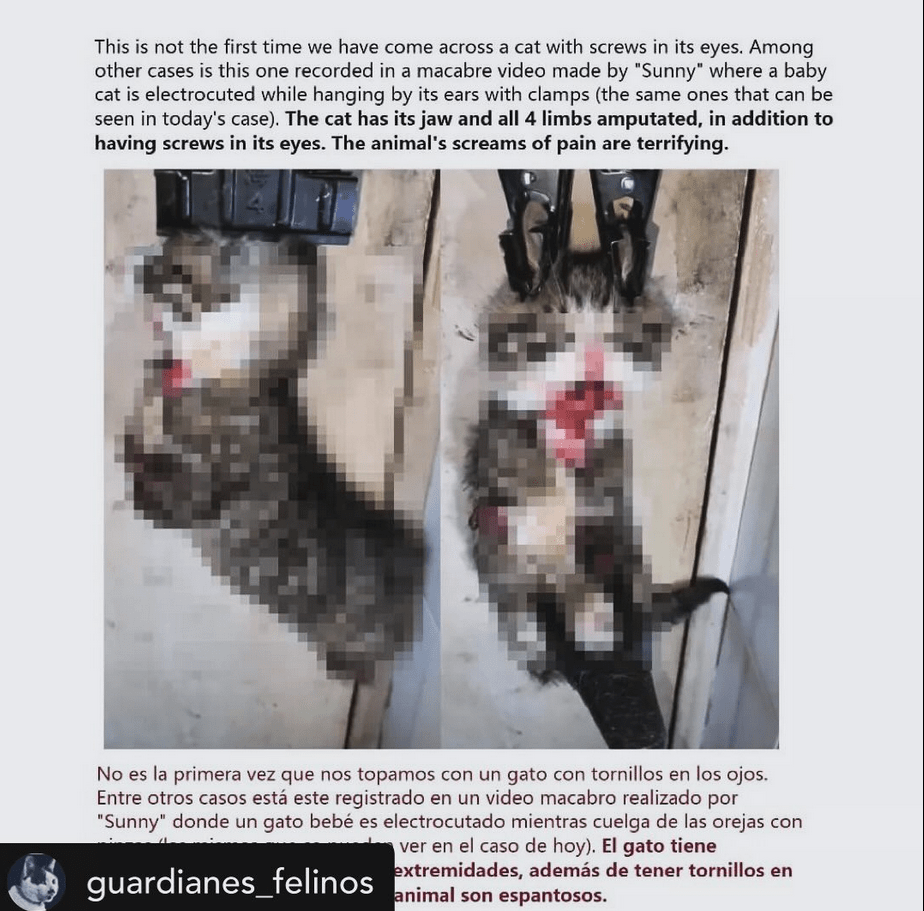
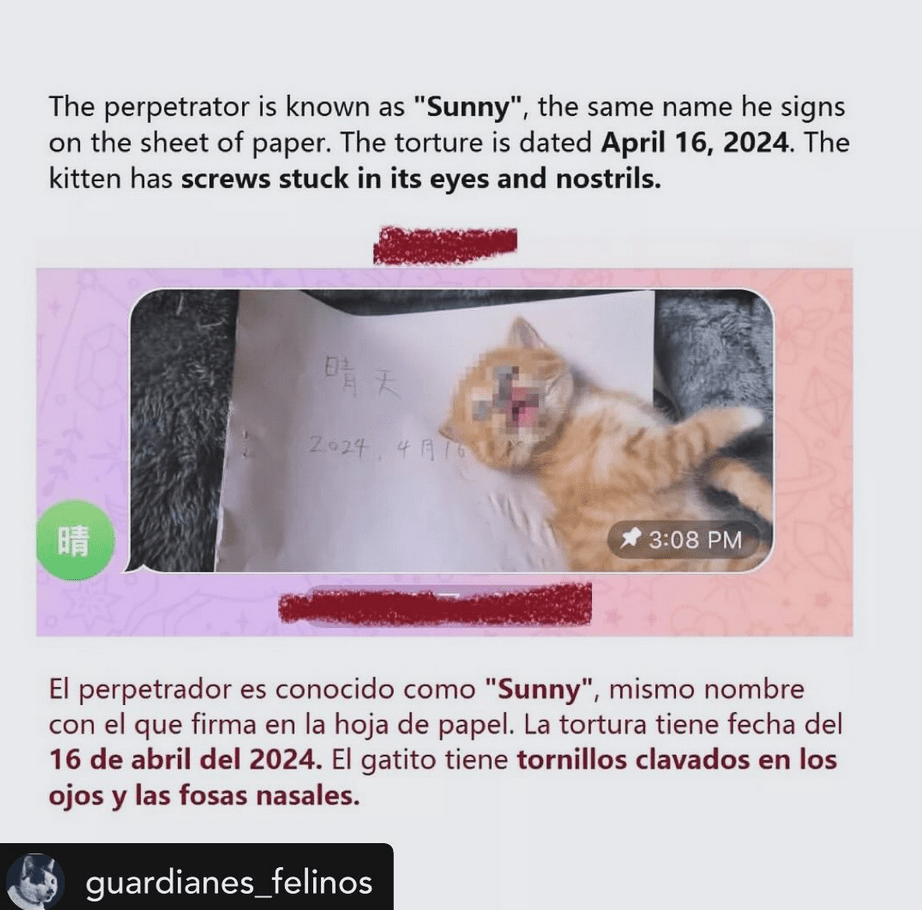
Please take action by supporting the petitions; thank you. Things (not always pleasant) are getting through to us now, that maybe the perverted abusers are now starting to feel the heat a bit more; we must keep on with the pressure regardless until the Chinese authorities take action to close these networks down.
This afternoon, 1515hrs GMT (15/4/24) , 16,097 people have signed the UK petition. 9,624 have signed the German petition. That is around 25,000 people who have supported.
Also, same time and date – there have been 143,315 Views of the UK petition, and it has been further shared and passed on by 12,790 people. Thus, just with the UK petition alone, around 145,000 people have now been informed, and are briefed on the cat abuses going on via the Chinese network sites.
























 World Animals Voice