Day: June 9, 2024

USA: Massive $35,000,000 Fine Hits Dog Breeding Giant for Animal Neglect and Environmental Harm.

In a landmark decision, the Department of Justice and Environmental Protection Agency have imposed a hefty $35 million penalty on a company for serious violations of animal welfare and environmental laws. This fine marks the largest in history under the Animal Welfare Act, highlighting a significant step towards stricter compliance and respect for animal rights and environmental safety.

Animal Breeding: A Harrowing Discovery at Virginia Dog Breeding Facility

The fine stems from a distressing situation uncovered in 2022 at a Virginia-based dog breeding facility operated by Envigo Global Services. The facility, which bred dogs primarily for research purposes, was found severely lacking in meeting the humane standards required by law. Over 4,000 beagles were living in deplorable conditions, prompting a forced surrender by the Department of Justice.

Continue reading https://www.msn.com/en-us/news/us/massive-35-000-000-fine-hits-dog-breeding-giant-for-animal-neglect-and-environmental-harm/ar-BB1nLecW?ocid=BingNewsSearch

Mark

England: ‘Dr Death’, ringleader of Essex dog-fighting gang, jailed along with accomplices for animal cruelty.

‘Dr Death’, ringleader of Essex dog-fighting gang, jailed along with accomplices for animal cruelty

https://www.lbc.co.uk/news/dr-death-dog-fighting-jailed/

Phillip Harris Ali, 67, of Chigwell, was given five years for his role in the repeated acts of animal cruelty. Two other men were also sentenced to prison time, while a woman was given community service.

The dogs were were starved before being put in bouts where they sometimes fought to the death, Chelmsford Crown Court heard on Monday.

They were kept in filthy conditions and were denied clean water and proper bedding.

Judge Jamie Sawyer said the gang showed “a shocking level of barbarism and callousness” for the dogs involved in the case.

He said the fights, which took place in England, Ireland and France, were “highly planned and without a care for the welfare of the animals in question”.

The judge told the defendants: “Dogs were treated as a commodity by each of you. They were playing pieces in your game.”

Much of the key evidence in the case came from a phone belonging to Ali, of Manford Way, Chigwell, Essex.

This included photos and videos of dogs and gruesome match reports detailing how the animals were set upon each other, sent via the encrypted messaging app Signal.

Many of the crimes were committed while Ali was still under licence conditions put in place after a 2007 conviction for attempted murder.

His “right-hand man”, Stephen Albert Brown, 57, of Burrow Road, Chigwell, Essex, was jailed for two years and six months after he was found guilty of five offences under the Animal Welfare Act.

As the fighting ring’s medicine man, he got illegal veterinary medication and equipment and was involved in training dogs and arranging fights.

Personal trainer Billy Leadley, 38, who had a dog fighting pit at his home in Bambers Green, Takeley, Essex, was jailed for four years for 12 different offences.

The judge said reading a match report about one 58-minute fight at which Leadley was referee, in which one of the animals suffered two broken legs, was “horrific”.

His wife, hairdresser Amy Leadley, 39, who was not directly involved in the ring, was sentenced for various offences linked to keeping a premises for dog-fighting and not caring for the animals properly.

She was given an 18-month community order, 200 hours of unpaid work and 25 days of rehabilitation activity.

The four defendants were banned from keeping dogs for ten years.

RSPCA chief inspector Ian Briggs said: “Dog fighting is a barbaric and horrific blood sport which has been illegal in this country for almost 190 years; yet there is a secretive and clandestine underworld where it continues to happen today.

“It has become a hobby, passion and source of entertainment for the people involved, but the reality is that the dogs involved suffer unimaginable pain, suffering, fear and distress.

“This gang dedicated their lives to breeding, preparing and training what they believed were champion fighting dogs.

“They enjoyed the build-up to a fight and the excitement of the bloody brawls, as well as trying to patch their injured and dying dogs back together after the event.

“Sadly, some of the dogs in this case suffered severe injuries and were never found but a mobile phone recovered as part of the investigation included match reports that detailed awful and fatal injuries suffered by some of the dogs involved.”

Mark
EU: Improve pig welfare standards, demand animal rights advocates.

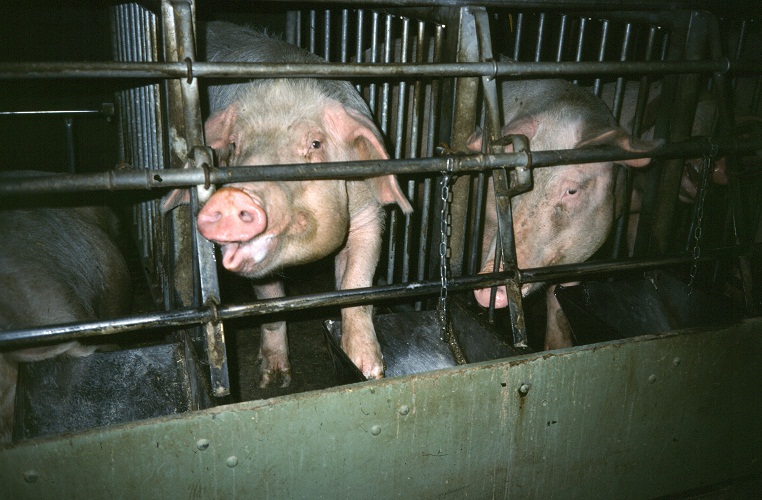
Pig producers across the EU should deliver higher welfare standards than the EU Pig Directive currently requires, say activists who are now calling for better practices and additional measures to ensure pig welfare.

“The legislation that exists right now, the EU Pig Directive, is seriously out of date, and it really needs to be brought up to date with current understandings of animal welfare science,” says Jo Swabe Senior Director of Public Affairs at Humane Society International Europe (HSI/Europe).

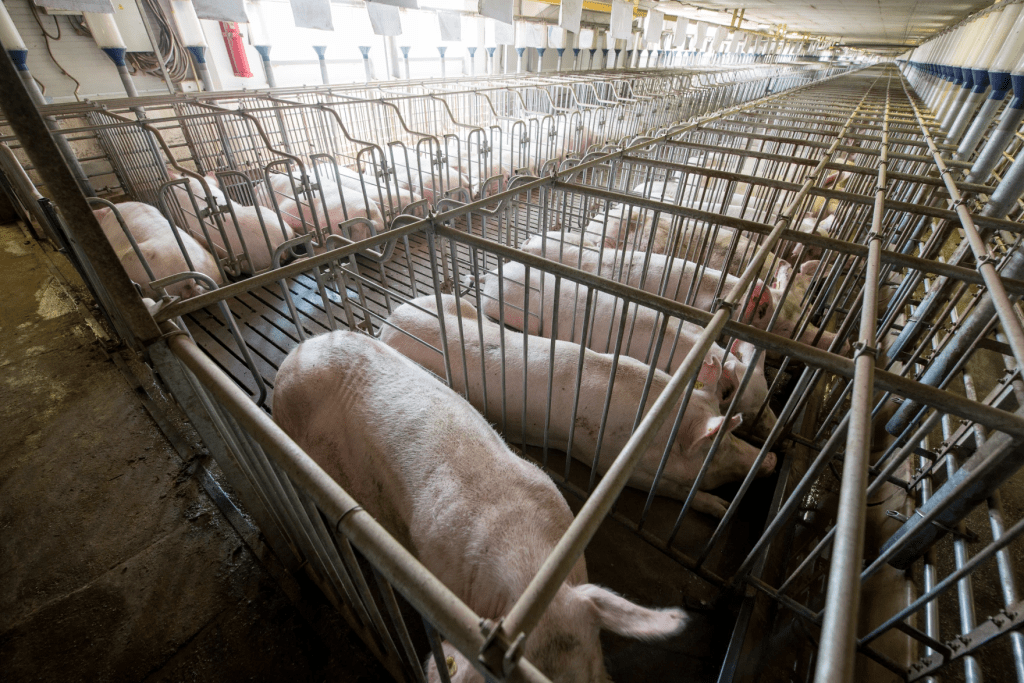
As the ‘End the Cage Age’ row rages, removing cages within pig husbandry is a significant part of the issue. “Pigs can still be isolated in an individual crate for up to 28 days of the gestation period,” said Swabe, adding that preventing the mutilation of piglets, through castration, tail docking and earmarking is also a top priority.

Continue reading at

Mark

USA: The Changing Face of Animal Rights and Legislation in the US.

What does the evolution of animal welfare laws tell us about our society’s values and priorities?

The legal environment regarding animal welfare has seen a substantial change in the United States within the last ten years.

Driven by both public demand and evolving ethical standards, state and federal governments have enacted numerous laws aimed at protecting animals from cruelty and enhancing their living conditions. Let’s take a closer look.

Continue at https://business-review.eu/business/the-changing-face-of-animal-rights-and-legislation-in-the-us-261599

Regards Mark

USA: Animal Rights Want End To Utah Gestation Crates.

Agnor Mark Rayan/Agnormark – Stock.Adobe.Com

Since 2002, 11 states have restricted or banned gestation crates but Utah is not among them. Pork producers keep sows in these cramped crates throughout their lives, artificially impregnate them and take away their young to keep up with the demand for meat.

As of December 2021, Utah farms accounted for just over 1% of the total U.S. hog inventory, according to the National Pork Producers Council.

Devon Dear, institutional outreach manager for the group Animal Equality, said improvements have been made, but more needs to be done.

“We’ve seen some really big players in this industry move away from crates; McDonald’s, Wendy’s, Jack in the Box, Chipotle, Shake Shack, Panera Bread,” Dear outlined. “These companies have significantly reduced or eliminated crates from their supply chain, so we know it can be done successfully.”

Dear added around 60% of pigs in the U.S. are crated for their entire pregnancies and will spend, on average, 74% of their lives in crates. The report lists corporations like Denny’s, Chick-fil-A, Dunkin’ and KFC among others as not being aggressive enough in reducing their crate usage. Dear hopes the Farm Bill currently being debated in Congress can help advance the issue.

Continue reading:

https://www.upr.org/utah-news/2024-06-06/animal-rights-group-wants-to-end-use-of-livestock-gestation-crates

Mark

EU: EU Elections: 1000 candidates take the pledge for animals.

7 June 2024

Press Release

Over 1000 candidate MEPs have committed to work towards better animal welfare in the EU, should they be elected in the current European Elections.

The Vote for Animals campaign, run by Eurogroup for Animals and its members, asks candidates to take a pledge committing to do more for better protection of all animals at EU level.

Candidates spanning the entire political spectrum across 27 Member States have made the commitment. Spain, Italy, Finland and France have the largest number of candidates supporting the pledge.

The Vote for Animals pledge calls for:

  • New species-specific legislation for all farmed species, and a transition to non-cage systems within five years, as promised in response to the End the Cage Age ECI.
  • An end to the suffering of animals during live transport, moving away from live animals towards transporting meat products.
  • Higher standards for aquatic species, both farmed and wild, in farming, transport and slaughter; and a ban on the introduction of octopus farming.
  • A Common Agricultural Policy that supports a sustainable food system, and a transition to higher animal welfare, and a shift towards plant-based diets.
  • Trade requirements that respect the same standards as those established by revised EU legislation.
  • Raised efforts and resources to accelerate the transition to non-animal methods in research, and support the scientific community to shift towards animal-free testing. 
  • Better legislation for wild animals, including a positive list of animal species allowed to be kept as pets, strengthened EU legislation for zoos, action against wildlife trafficking, and humane methods in wildlife management.
  • A ban, without delay, of fur farms and fur products on the EU market, as per the demands of the Fur Free Europe ECI.
  • Full traceability, improved breeding practices, stricter controls on sales and transportation, and better treatment of companion animals.
  • An EU commissioner responsible for animal welfare, to ensure consistent attention and action in this area.

The feedback to our Vote for Animals campaign is reflective of the demands of EU citizens for better protection for animals. It is now time to go and vote, to help shape an EU that will place animal welfare at the forefront, and ensure revised and better legislation that is fit for a progressive Europe

Reineke Hameleers, CEO, Eurogroup for Animals.

Regards Mark

EU: Public consultation: tell the EU you want seals to stay protected.

6 June 2024

Responding to a major outcry against cruel hunting of seals, the EU adopted a groundbreaking legislation restricting imports of seal products in 2009. This legislation is one of the key factors in the recovery of seal populations in Canada. After a decade, the European Commission is assessing whether the legislation remains fit for purpose.

Tell the EU that seals should remain protected by taking part in the public consultation.

To help you with your feedback, we’ve put together some of the top arguments why we need to uphold this landmark legislation:

The EU seal regime meets its objective of protecting animal welfare

The aim of the EU seal regime is to prevent animal welfare harm to address concerns of EU citizens. EU citizens’ desire for better animal welfare has continued to increase (as demonstrated by the latest Eurobarometer). Citizens remain strongly against cruel and unnecessary culling of seals, which is evident in typical killing methods that involve firearms, netting, trapping and the use of hakapik.

Seals provide important socio-economic and ecosystem services

We must coexist with seals. As apex predators, they play a crucial role in the trophic cascade helping maintain healthy fish populations. For instance, seals act as pest control for invasive species which have a negative impact on commercial fish stocks and ecosystems. They also bring in significant revenue for the tourism industry through wildlife observation. 

Potential impact of seals on the fishing industry can be tackled with non-lethal methods

The EU seal regime does not prevent the management of seals where necessary, but non-lethal methods are available and should be used to keep seals away from aquaculture basins or fishing nets and grounds, such as acoustic deterrents. Non-lethal management methods, such as fertility control, could be further explored. The availability of alternative methods to protect fish stocks and fishing equipment makes the commercial hunt of seal irrelevant and disproportionate. It is also essential to recall that the Regulation is not intended to protect fisheries and aquaculture. 

Trade in seal products is not sustainable and threatens fragile populations

Seal populations have significantly increased since the implementation of the EU seal regime, demonstrating the devastating impact of commercial hunting on the species. Deregulating trade in seal products would dangerously jeopardise current successful conservation efforts and undermine the protection of animal welfare. 

It is important to consider the multiple threats they are facing. Climate change and overfishing are having a major impact on seals and other marine mammals, reducing prey availability and increasing food competition. Water pollution and zoonotic diseases are other factors affecting the viability of these populations. Commercial hunting would exert additional pressure on their survival. The trade of seal products is therefore not in line with sustainability requirements, contrary to the claims of the industry.

The EU seal regime is not a ban, allowing sufficient flexibility

Regulation 1007/2009 is often referred to as the seal ban. However, the EU Regulation is not a ban on the imports of all seal products, it simply restricts it to products derived from traditional hunts, contributing to the livelihood of indigenous communities and with due consideration to animal welfare. In this context, the EU market remains open to indigenous communities who depend on seals for their subsistence. It is also important to note that the import of seal products for processing, and re-export of the processed goods, is not prohibited by the Regulation, allowing further flexibility. 

The EU must uphold its leadership on animal welfare at the World Trade Organisation 

The EU Seal Regime brought groundbreaking discussions at the World Trade Organization (WTO). For the first time ever, the WTO found that a legislation restricting trade based on  animal welfare grounds falls within the exceptions allowed under the WTO rules, as it was deemed necessary to protect ethical concerns of citizens. 

The EU seal regime had a significant impact on the welfare of seals. Following its announcement, international demand for seal products declined sharply. Reversing the regime would undermine its objectives and impact the EU’s credibility at the WTO, at a time when the EU is introducing a proposal to restrict imports of cats and dogs based on breeding conditions and contemplating more import requirements on farm animal welfare, all of which would also be justified based on ethical concerns of EU citizens.  

Tell the EU that seals should remain protected by responding to the public consultation by 7 August 2024.

Regards Mark