
https://www.wantedinrome.com/news/italy-animal-rights-group-decry-killing-bear-kj1.html
Mark

31 July 2024
Essere Animali
As heat waves surge throughout Europe, animals are vulnerable to extreme temperatures, especially when they are being transported by road and sea. A new investigation found animals forced to travel at temperatures above 45° without water and left under scorching sun in Italy, whilst another explored the issue of dead animals being tossed off of export vessels into the Mediterranean sea.
A recent investigation by Essere Animali, in which they monitored transport shipments of animals on highways in Italy, revealed some animals are being transported in trucks of internal temperatures reaching up to 48 degrees. Their photos and footage show pigs gasping for air and left without access to water. In one case, animals were left for long periods under the scorching sun with fans turned off in the truck, while drivers took their break.
Unfortunately, this is not an isolated case. The welfare of animals during transport continues to be poorly protected by European laws. According to regulations animals should be safeguarded against “extreme temperatures”, but there are no clear definitions, as well as no enforcement. Furthermore, national travel is exempt from this rule.
Essere Animali, together with Eurogroup for Animals, calls for the long distance transport of live animals to be banned, and that clear references are introduced for temperatures, taking into account humidity and the condition of animals.
Animals washed up on beaches
The demand for exports to third countries has risen sharply. The EU’s Member States export around three million animals by sea to distant countries, posing significant risks to animals with increased mortality rates.
Treated like unwanted waste, deceased animals are disposed of in the Mediterranean. Not only is this completely insensitive, but it increases pollution and also risk of shark attacks at numerous tourist hotspots on Mediterranean beaches.
In over 50 media-documented cases, dead and discarded animals from livestock vessels were washed ashore in France, Spain, Greece, Israel and Portugal among others.
A new film by Animal Welfare Foundation shows the extent of this issue, with a clear call to action: live animal transports to third countries are wrong in every respect and must be stopped.
egards Mark

29 July 2024
Long-awaited statistics on the use of animals for scientific purposes in the 27 EU Member States and Norway during 2021 and 2022 have been published. We dive into the figures to see how many animals were used, which species, and in which ways, to explore how the data can inform the transition away from animal use.
For the first time, a systematic trend analysis was included to make direct comparison with previous years data available in order to monitor the objectives of Directive 2010/63/EU.
2021 Statistics
In 2021, after three years of consecutive decrease, the total number of animals used for the first time increased significantly to 9.41 million. This is 18.5% higher than in 2020, and 6.6% higher compared to 2018.
This increase is mainly due to three research projects, two using salmon in Norway and one using larval form of sea bass in Spain, accounting for over 1.3 million animals. Part of the increase can also be attributed to projects that were either cancelled or postponed in 2020 due to COVID-19 lockdowns and carried out in 2021.
Positively, 13 Member States reduced the number of animals used for the first time in 2021 compared to 2020.
2022 Statistics
In 2022, the total number of animals used for the first time decreased to 8.39 million, 10.9% lower than 2021, and 5% lower than 2018.
This confirms the exceptional nature of the increase reported in 2021, and highlights a longer-term decreasing trend.
Species
In both years, mice continue to be the most used species, followed by fish, rats, domestic fowl and rabbits.
Fish saw a dramatic increase in use in 2021, whilst 2022 saw an increase in the proportion of reptiles used.
Disappointingly, the total number of non-human primates used for the first time increased. Most non-human primates were imported from Africa and Asia, shifting more prominently towards Africa after the Chinese export ban introduced in 2020. The percentage of those that came from self-sustaining colonies (from parents bred in captivity) increased from 58.8% in 2021 to 74.4% in 2022, a positive shift towards eliminating capture of wild primates for breeding purposes.
Genetic alteration
In 2022, 24.8% of animal uses were carried out on animals that were genetically altered, an increase of 4.3% compared to 2021. Of these, 17.5% were carrying a harmful phenotype. Zebrafish and mice continue to be the most genetically altered species.
In addition, 852,145 animals were used in 2022 for the creation and maintenance of genetically altered animal lines, an increase of 28.1% on 2021.
Severity of suffering
The proportion of ‘severe’ uses continues a downward trend since 2018, but this still represents 918,202 animals in 2021, and 784,048 animals in 2022.
However, it is worrisome that the proportion of ‘moderate’ uses has been increasing since 2019, reaching over 42% of uses in 2022.
Types of use
As in previous years, most animal uses were conducted for research purposes.
The number of uses of animals used for regulatory purposes continued to decrease by 6.2% in 2021, and 16.2% in 2022. This is mainly due to continuous reductions in animal uses related to legislations on medicinal products for human use and food legislation, amongst others. This can be attributed to combined efforts from EU regulators, including the EDQM and the European Commission and industry via EPAA, as well as changes in legislation. This includes the decision in 2021 to completely replace the rabbit pyrogen test within five years, and the replacement of the use of mouse bioassay for the purposes of shellfish toxin testing by the so-called Lawrence method.
Unfortunately, this trend is not reflected in other legislation, including medical devices legislation and industrial chemicals legislation, where the number of animals used to satisfy regulatory requirements has been increasing since 2018.
Routine production saw an increase of 1.5% in 2021 and 15.7% in 2022. This category includes monoclonal antibody production by the mouse ascites method, one of the most severe procedures. In 2022, only 3 Member States reported the use of the mouse ascites method, with France representing 99.5% of that, using 49,038 mice. Germany stopped the use of animals for this purpose in 2022. The Commission itself mentions in the 2022 report that the use of mouse ascites method which results in high severities and has alternative production methods available should be discontinued.
What do the statistics tell us?
The statistics indicate that policies to promote the development and use of non-animal technologies and approaches require a further push in order to significantly reduce animal experiments in Europe.
Although a positive trend is now seen in the replacement of a small number of methods, this took decades to achieve after the development of non-animal alternatives. Likewise, the mouse ascites method continues to be accepted in some EU countries despite its near ban in most Member States, and the existence of valid alternatives.
The upward trends in the use of some species like the ones belonging to groups of non-human primates are also worrying in an era where human-based methods have been thriving.
It will be important to take lessons from the social, economic, regulatory and technological factors that influenced the slow transitions that are now taking place, in order to plan more effective transitions moving forward.
Regards Mark

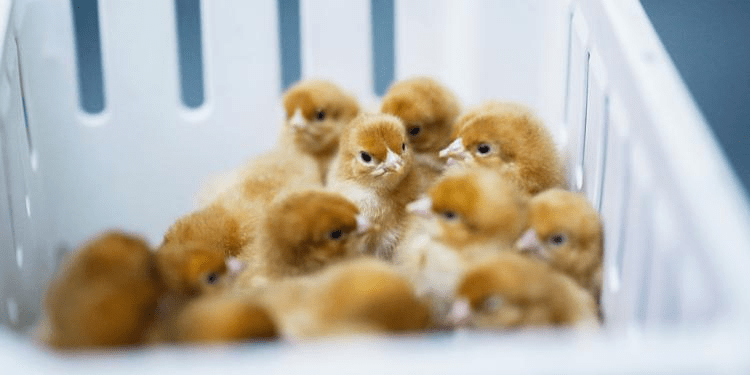
Male Chicks – A ‘Waste’ By Product Of The Egg Industry to the tune of 65,000 lives EVERY DAY.
26 July 2024
GAIA

Male chicks who cannot lay eggs are considered a waste product of the egg industry, condemned to a cruel death as soon as they hatch. In Belgium alone, 65,000 chicks are killed every day, adding up to 24 million per year.
The chicks are killed in shocking ways, such as being tossed into a macerating machine that crushes them, or being gassed to death en masse.
Only one in three Belgian consumers are aware of this practice, according to a research by GAIA, which is asking citizens to participate in an audio petition to call for an end to this practice.
The petition asks citizens to record themselves crowing like a rooster, in order to express their outcry at this cruel practice and call for more respectful treatment of chickens.
The recordings will be collated to create a powerful message for legislators.
Alternatives exist
In-ovo sexing allows producers to determine the sex of the chick in the egg before birth, allowing for sorting before the embryo becomes susceptible. This technique is already used in some Belgian hatcheries. Countries like Germany and France have already taken steps to abolish chick culling, moving to this technology instead.
The survey by GAIA shows that 82% of Belgians believe that supermarkets should only obtain their supplies from producers who do not cull chicks. It also indicates that 82% of Belgians are ready to pay 2 euro cents more for each egg from such a producer. In addition, more than half of Belgians are ready to change brands and turn to a more respectful supermarket, which would offer eggs without grinding or gassing.
Leave a call to save the chicks
The audio petition will pass through twelve major cities in Belgium, asking citizens to share their cry on social networks in order to raise awareness among those around them.
Supermarkets continue to sell eggs from chickens whose chicks are cruelly gassed or crushed alive after birth. However, there are effective technologies to prevent this massacre. It is therefore high time that they take their responsibilities, while responding to the wishes of the vast majority of Belgian consumers.
Sébastien De Jonge, Director of Operations, GAIA
Regards Mark
Click to read the article
Regards Mark


JULY 23, 2024
I’ve been unsure how animal activists should orient themselves in the coming American presidential election. Obviously, in the United States’ two-party system we should vote for the Democratic nominee. But should we do more than simply cast a ballot for the candidate, whoever that ends up being?
I typically argue we should prioritize nonhuman interests to the greatest extent possible, as there are so few people who do. For me, that means picketing legislators and writing letters to newspapers in the hope of using the political process to accelerate the development of cultivated meat.
But, as the election approaches, I wonder if the threat Donald Trump poses to animals and our movement is so extreme we should pause our usual work and temporarily focus on helping to defeat him. I put this question and others to a group of animal advocates who were kind enough to share their time with me.
Merritt Clifton is editor of the Animals 24-7 website. Previously, he was news editor for Animals’ Agenda magazine, as well as the editor of the Animal People newspaper. When asked what a second Trump presidency might look like, Clifton referred to his coverage of the Republican’s first term.
Continue reading this article – see link at top.
Regards Mark

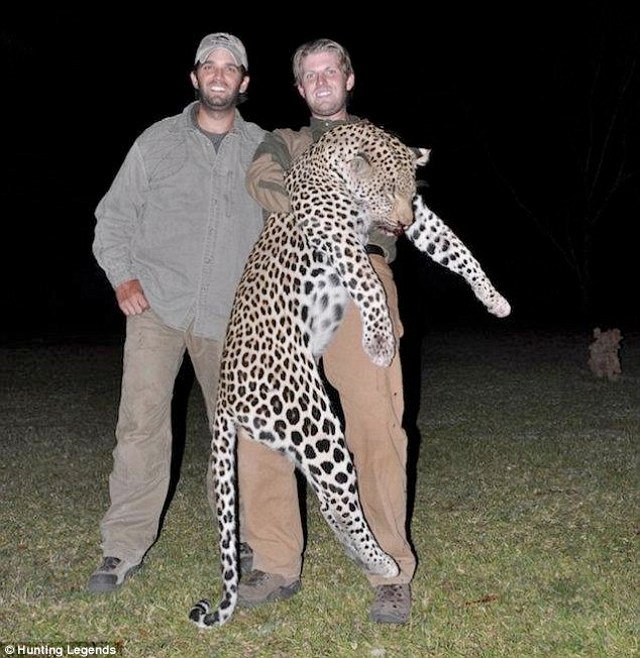


I need a lie down after all that !


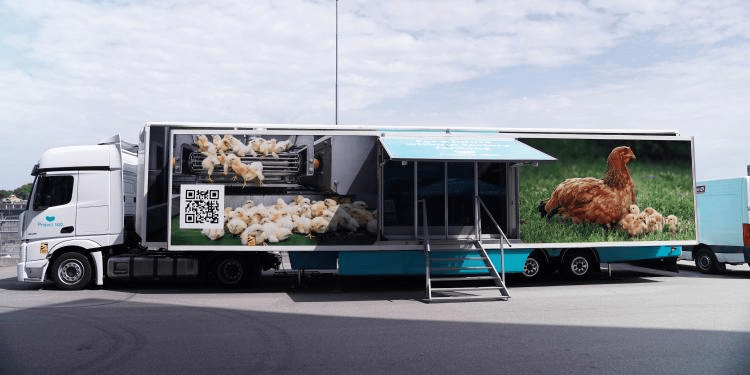
The new animal welfare exhibition truck
Brussels only city to not authorise mobile exhibition on animal welfare
25 July 2024
GAIA
Press Release
Among 20 European cities, Brussels is the only city that has failed to issue a permit for a mobile exhibition that will travel around Europe showcasing issues related to animal welfare, causing concern to animal protection NGOs.
The mobile exhibition For the Animals, by Project 1882, a leading animal advocacy organisation in Sweden, started its Euro Tour in June, going through Helsinki, Tallinn, Riga, Vilnius, Warsaw, Berlin, Bratislava, Prague and Ljubljana. Its journey, through to November, will continue to Budapest, Madrid, Lisbon, Porto, Bologna, Torino, Aarhus, Copenhagen, Malmö, Gutenberg and Stockholm.
Yet, despite efforts by Eurogroup for Animals and GAIA, the city of Brussels has failed to provide a permit for the exhibition. In the long correspondence with several different authorities, the permit was rejected, on claims that the dimensions of the truck are too large, the roads in Brussels are “too fragile”, or because of metro and underground parking lots. This however, is questionable, considering that many other participating cities have similar landscapes and did not raise such concerns.
It is concerning that in Brussels, right in the heart of policy-making in Europe, citizens are unable to participate in this exhibition. With the reasons provided for the lack of permit, we wonder if there is a hidden motive, one that is based on the content of the exhibition, rather than the format? The reality of suffering of animals in Europe should remain visible.
Reineke Hameleers, CEO, Eurogroup for Animals
Today, we had to announce to dozens of major NGOs that Brussels, the Capital of Europe, was not able to host an exhibition that will nonetheless be present in all the major cities on the continent. Brussels, which recently hosted hundreds of tractors, apparently does not have the capacity to accommodate a truck for a one-day event? It’s grotesque and deplorable.
Ann De Greef, CEO, GAIA

Above – London.
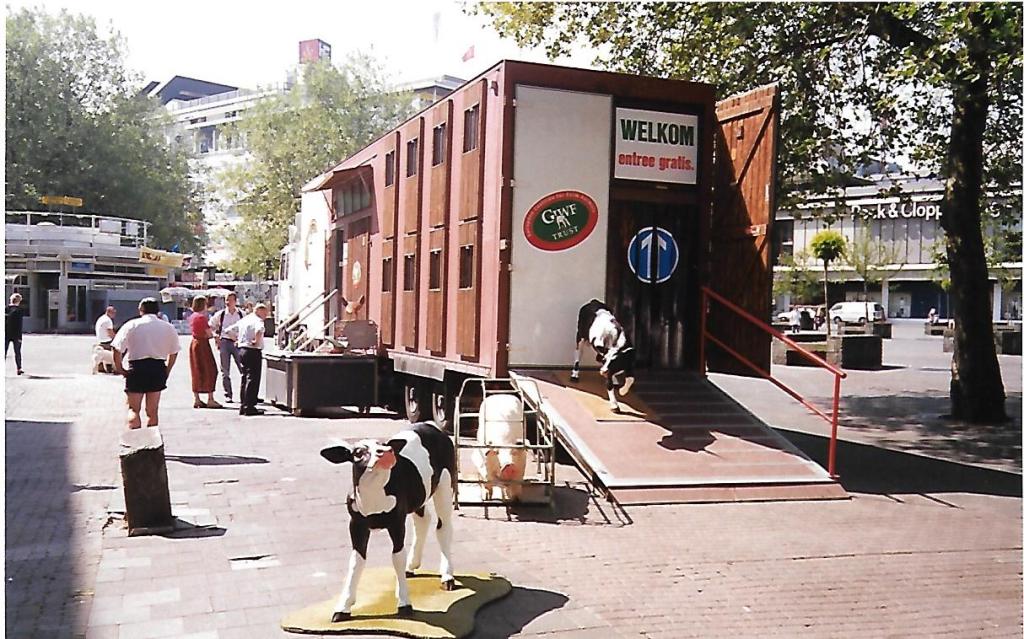
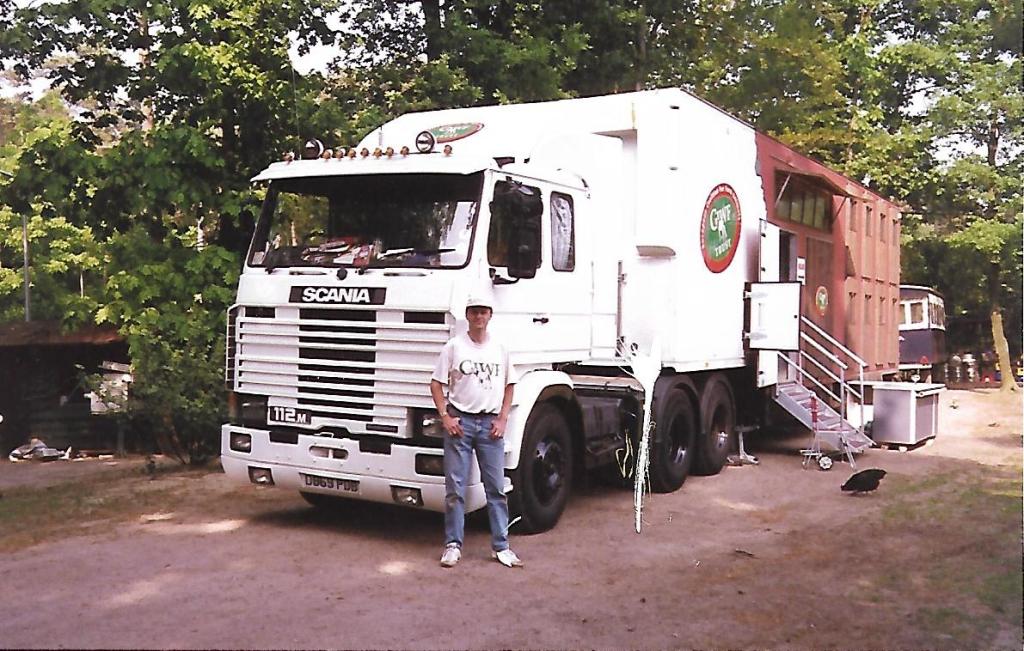
Yours truly somewhere in the Netherlands – note free range chickens – how they should be !
Brussels, oh yeah yup I get it – home of the EU, where decisions like live animal regulations are rules, and where intensive farming regulations for the entire EU member states are made, Then they have never had the bollocks to do what EU man demands; just a few ? flimsy animal abusers from start to finish; their own little powerhouse doing what they want rather than to go with animal welfare friendly common man.

Ever asked yourself why it was only upon leaving the EU that the United Kingdom was able introduce legislation which ended up with an export ban for British animals going into Europe ? – best thig the UK has done for a long time !
I know, its called getting out of the EU !
I travelled with the Ban live export tour truck in Europe decades ago – now out, the UK is free from the EU shackles of that abuse; whilst those still in Europe sadly still see live animal shipments day in day out – why ? cos the gutless Commission lets and animals suffer continually for a few pennies more,
SHAME ON THEM – Let the animals free !
Mark
The incredible ways that animals impact the earth.
One comment – well said: Human beings are the worst!!!! These beautiful beings are super intelligent, sentient, friendly and must be respected. You do not “FARM” sentient beings. You farm tomatoes!!!!!!!
18 July 2024
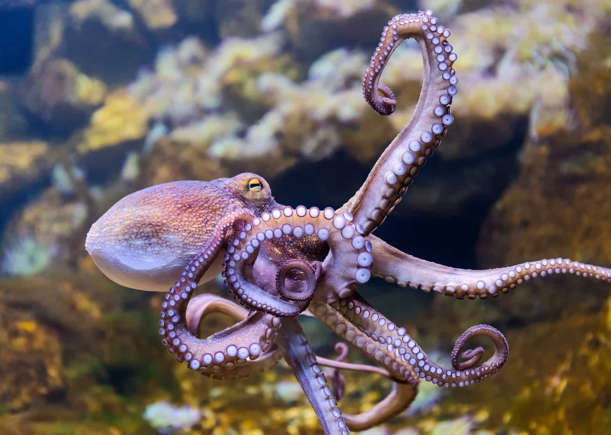
Currently, all octopus products available on the market are wild-caught, as octopuses have never been commercially farmed at scale. This is not due to a lack of trying.
In Europe, particularly in Spain, octopus farming has so far been confined to fattening young wild-caught octopuses in ocean cages, in order for them to reach market weight. These cages were typically anchored to the sea floor, or simply suspended from rafts being used to farm mussels. In an attempt to prevent aggression and cannibalism, ocean cages included individual, compartmentalised octopus shelters made of pvc pipes or other plastic cylinders.
After having some success in the early 2000s, most octopus fattening systems have since shut down due to stricter fisheries regulations, unstable yearly catches, variations in octopus mortality rates, and expensive feed requirements. Raising wild-caught octopuses in on-land aquaculture tanks has also been attempted in Mediterranean countries as well as Australia and Latin America. However, efforts have not progressed past the experimental level as there are limited options for scalability.
Research and investments have more heavily focused on breeding octopuses in captivity. These efforts have been ongoing since the 1970s with major hurdles linked to cannibalism, containment issues, inadequate feed options and low survival rates among pregnant and young octopuses.
A new milestone was reached in 2019 when Spanish multinational seafood company Nueva Pescanova announced that they had successfully closed “the octopus reproduction cycle in aquaculture”, meaning they had bred and raised octopuses through every stage of their life cycle in an artificial environment. The company is now applying for permits to open the world’s first industrial octopus farm, aiming to farm and slaughter one million octopuses annually for introduction to the market by 2027.
Although the first, Spain is not the only country interested in the prospect of this new industry. Similar plans to factory farm octopuses are unfolding across the globe, including in Portugal, Greece, Mexico, Chile, Australia, China and Japan.
Octopuses have a complex life cycle and are particularly ill-suited to farming conditions, making it challenging to raise them in captivity. Here are some significant issues associated with octopus farming:
1. Dietary needs
Octopuses are carnivorous animals and require live food during the early stages of development. Providing a natural diet in a farming environment can be resource-intensive, unsanitary and costly. Feeding octopuses at the industrial scale is also environmentally unsustainable due to its reliance on wild-caught fish ingredients.
2. Solitary nature
Naturally solitary, octopuses may become overly stressed and resort to aggression and cannibalism in crowded farming conditions. Their need for space and isolation makes intensive farming impractical and inhumane.
3. Physical vulnerability
Without an internal or external skeleton, octopuses have fragile skin that can easily be damaged in farm tanks. This issue is exacerbated with their tendency to use jet propulsion to move quickly about their environments.
4. Unsuitable slaughter method
No humane slaughter method exists to kill octopuses for human consumption. Nueva Pescanova’s plans propose using ice slurry, which involves plunging the octopuses into freezing water. This method is known to cause a painful, stressful and slow death.
A study by the London School of Economics found that octopuses feel pain and pleasure, leading to their recognition as sentient beings in the UK’s Animal Welfare (Sentience) Act 2022. Professor Jonathan Birch and his co-authors argue that high-welfare octopus farming is impossible and that killing via ice slurry “would not be an acceptable method of killing in a lab“. They also recommended the UK government consider a pre-emptive ban on farmed octopus production and imports.
“Large numbers of octopuses should never be kept together in close proximity. Doing this leads to stress, conflict and high mortality. A figure of 10-15% mortality should not be acceptable for any kind of farming.” – Professor Jonathan Birch, London School of Economics.
Globally, there are also mounting concerns around octopus farming. The world’s first legislative ban on octopus farming was signed into law in Washington state in March 2024. Several other US states are introducing similar legislative proposals, with some such as California extending to ban imports of farmed octopus.
While it may be possible to farm octopuses, Eurogroup for Animals remains steadfast in its conviction that octopuses are unsuited to farming conditions and should not be farmed.
Uncovering the horrific reality of octopus farming
Exposing the environmental risks of octopus farming
Regards Mark
 World Animals Voice