Day: July 1, 2024

Australia: Legislation to bring the live sheep export industry to an end has just been passed in the Senate.

I feel such emotion as I write the following words, ‘we did it’. Legislation to bring the live sheep export industry to an end has just been passed in the Senate.

This is the moment we have been hoping for – that we have worked so hard for. This is a moment for us to savour. As you know so well, this historic outcome for animals has taken many years, in fact decades, of our lives to achieve.  In the face of great challenges, our resilience was tested time and time again, but we ‘stayed the course’, because our hearts would not let us do otherwise. It was long ago that our ancestors named the four legged woolly creatures who grazed peacefully together, ‘sheep’.  Back then, no-one could have foreseen that these gentle animals would be subjected to an industry that would unite people across a vast continent to plead, on their behalf, for mercy. Nor could we have known the number of years it would take for governments to heed our calls for compassion.
But that momentous day has finally come.

WATCH: In this brief video Shatha and I reflect on this momentous day. 
https://vimeo.com/972568204/b7a61389cc?share=copy

On this historic day, it is so very important for me to acknowledge those who have helped achieve the passage of this legislation. To Dr Jed Goodfellow and Dr Bidda Jones from the Australian Alliance for Animals and Dr Suzie Fowler and Joanne Webb from RSPCA Australia – thank you so very much. Your public advocacy and political lobbying over the past year has been exceptional. The voices of Dr Lynn Simpson, and Dr Sue Foster and her team at Vets Against Live Export have been critical in providing scientific evidence and expertise to the calls to end live sheep export. So too my heartfelt gratitude goes to Stop Live Exports for their decades-long superb frontline work protesting and representing the sheep in WA – with a special ‘shout out’ to Katrina Love. To my own team at Animals Australia who have led the campaign to end live sheep export over the past two decades – shining light on the suffering of exported sheep year after year – you have been magnificent. Over so very many years, it was politicians such as Andrew Wilkie, Melissa Parke, Lee Rhiannon, Mehreen Faruqi, Josh Wilson and Sussan Ley who spearheaded debate on behalf of live exported sheep in parliament, ensuring they were not forgotten. To each and every MP and Senator who gave these animals their voice, we will be forever grateful.  And to the Albanese government – and crossbench MPs – the first government in Australia’s history to recognise our societal responsibility to animals, we applaud you and we thank you.
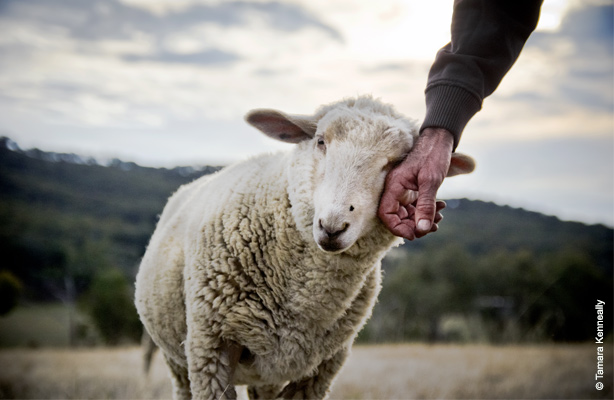
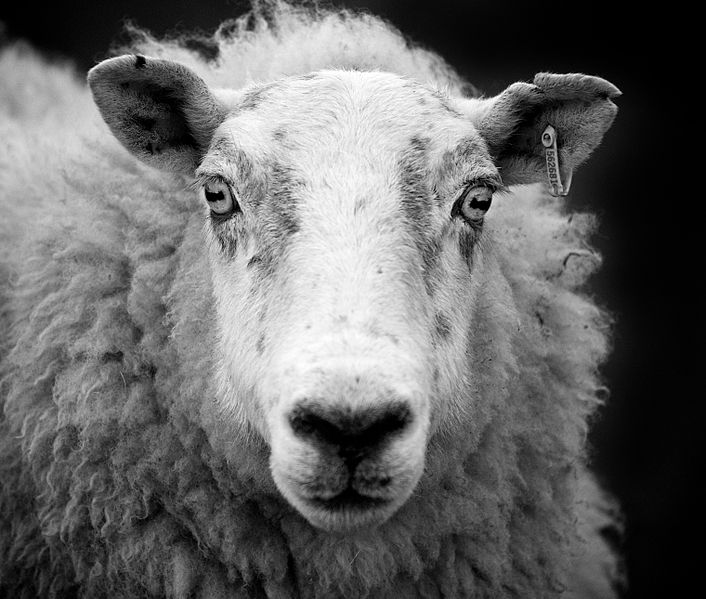
A sheep in a field leaning in and resting his head on the hand of an older gentleman.
So very many learnings have flowed from this journey together. First and foremost is the extraordinary power of compassion to bring like-hearted people from all walks of life together. It was compassion that led my life path to intersect with Fazal Ullah’s. Without Fazal’s extraordinary courage, Australians would not have witnessed the unimaginable suffering that had been occurring on sheep ships over many decades. I would not have met Shatha Hamade had our hearts not united in service to exported sheep.

There were so many moments, when faced with great suffering in animal markets and slaughterhouses half a world away, that we made silent commitments to our sheep that we would be their voice. I am so very glad that those promises have been fulfilled today. And the truth is, I would not have ‘met’ you, and had the privilege of witnessing your amazing strength of heart, had it not been for our shared compassion for these animals. I know I have been changed forever through this journey together, and I suspect you have been too. It has challenged us to become more, to do more, to care more. And you magnificently accepted that challenge. Words could never adequately express my gratitude to you – for every email and letter you wrote, for every protest you attended, for every investigation you funded. From my heart to yours… thank you.

This day would not have come, had it not been for you.   Today, with the passage of this unprecedented legislation, history has been made. And we are one step closer to that kinder world that awaits us all. For the sheep,
Lyn White Lyn Lyn White AM Director of Strategy

Fantastic News – I personally know how long and hard anti live export work is.

Mega congrats to all those who reached this triumphant day !

And also especially to our own Patron Phil who has personally made this a major issue.

Regards Mark

India: Actress Sonyaa Saamoor advocates for animal compassion and vegetarianism.

In a recent heartfelt statement, actress Sonyaa Saamoor has expressed her deep-seated compassion for animals, emphasizing a philosophy that extends far beyond domestic pets like dogs and cats. Known for her roles in various television dramas and popularly known for her character in Kasautii Zindagii Kay , Saamoor has not only embraced a vegetarian lifestyle but has also become a vocal advocate for animal rights and compassion.

“My love goes beyond just dogs and cats; I have compassion for all animals. I am a true animal lover,” Saamoor passionately stated. “I am a vegetarian because I cannot harm animals. I don’t understand why people think only their pets’ lives are precious. Why isn’t every animal’s life precious?” Saamoor, who believes that connecting with animals and adopting a vegetarian diet enhances spiritual growth, remarked on the transformative effect it has had on her.

“I believe that getting closer to animals and becoming a vegetarian opens your heart chakra. It certainly opened mine,” she explained. The actress has recently adopted a cat, named her Diego. The actress also shared endearing anecdotes about her personal experiences with animals, particularly highlighting the often misunderstood nature of cats.

“People often have misconceptions about cats, but once you interact closely with them, you learn about their loving side,” Saamoor reflected. “Cats are funnier than dogs; their playfulness and mannerisms always make me laugh. My cat is my alarm clock, waking me up at exactly 6 am.” Her admiration for animals extends to a broader spiritual belief. “Animals are angels sent from heaven, brightening every difficult situation with their funny gestures,” she remarked, underscoring her belief that adopting a pet can enrich one’s life immeasurably.

Furthermore, Saamoor drew parallels between her advocacy for animals and teachings from various spiritual traditions. “Lord Shiva’s depictions teach us to be compassionate towards every animal. Every enlightened being that walked the face of the earth taught us to be compassionate towards all animals,” she pointed out. “We put up Buddha’s art on our walls but learn nothing about his teachings.” As she continues to promote awareness about animal welfare and vegetarianism, Saamoor hopes to inspire others to embrace a similar philosophy of compassion and respect towards all living beings.

Mark

https://www.msn.com/en-in/entertainment/oscars/actress-sonyaa-saamoor-advocates-for-animal-compassion-and-vegetarianism/ar-BB1pa9zZ?ocid=BingNewsVerp

USA: Two Facing Animal Cruelty Charges In Etowah Co.

https://www.msn.com/en-us/news/crime/two-facing-animal-cruelty-charges-in-etowah-co/ar-BB1ped9E?ocid=BingNewsVerp

ETOWAH COUNTY, Ala. (WBRC) – Two people have been charged with animal cruelty in Etowah County after a video was found on social media.

According to Sheriff Jonathon Horton, on Saturday morning, June 29, 2024, the Etowah County Sheriff’s Office was told about a video on social media of cruel treatment of a dog.

By Saturday afternoon, investigators identified all the people they say were involved in the incident and the weapon that was used was recovered.

Two people have been charged. One of those people is a juvenile and wasn’t named because of their age.

The second person accused is 18-year-old Trenton Dewayne Sudberry of Gadsden.

Sudberry was arrested and charged with animal cruelty. He was taken to the Etowah Co. Detention Center to await bond.

Officials say “Bullet” is back home with his family and is safe as of Sunday night. “Bullet” will be examined, but appears to be in good spirits and should make a good recovery.

“It’s unfortunate that animals are mistreated! Animals cannot speak up, so we have to make sure we do our best to take care of them and be their voice. Animal cases are just as important as any case we work,” said Sheriff Horton.

Well said Sheriff Horton !

Regards Mark

Paris Olympic Games To Serve Foie Gras !: Stark Reminder The Cruel Industry Continues.

All photos – WAV Archives.

1 July 2024

Animal Equality

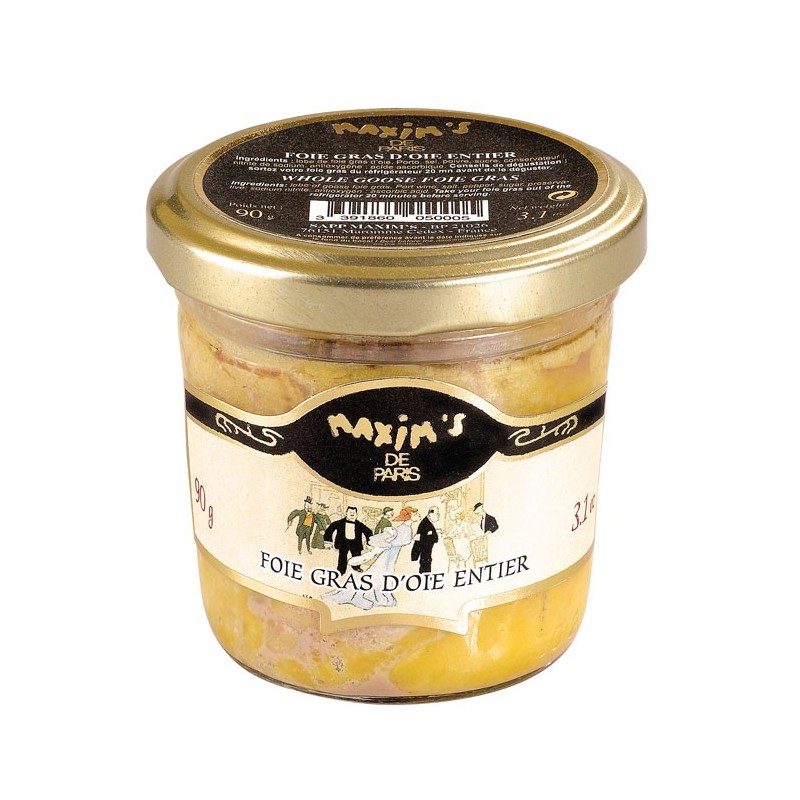
Foie gras is set to be provided at this year’s Olympic games: a product connected to the intense suffering of countless ducks and geese in Europe. Animal Equality has launched a petition calling on the committee to rethink this decision, while the issue itself serves as a strong reminder for why an EU-level ban on force-feeding for foie gras production is still needed.

13 million meals will be dished up at this year’s Olympic games, which will take place in Paris between July 26 and August 11. Of these, 60% will be plant-based, according to the International Olympic Committee. 

While this shows a positive commitment to more sustainable and healthy diets, it is a stark contradiction that a cruel and controversial product  is also on offer to the games’ VIP guests: foie gras.

The suffering behind foie gras production

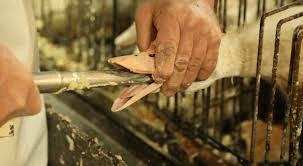
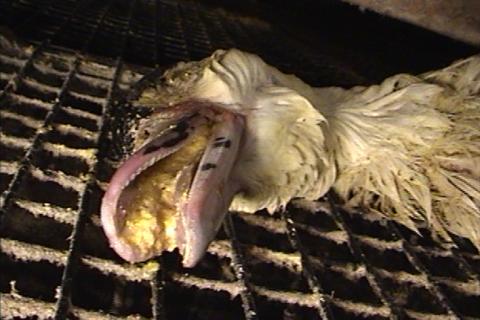
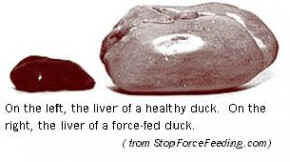
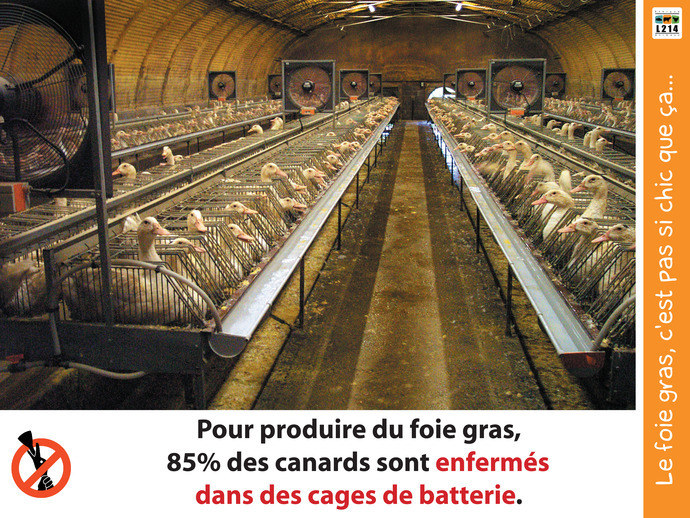
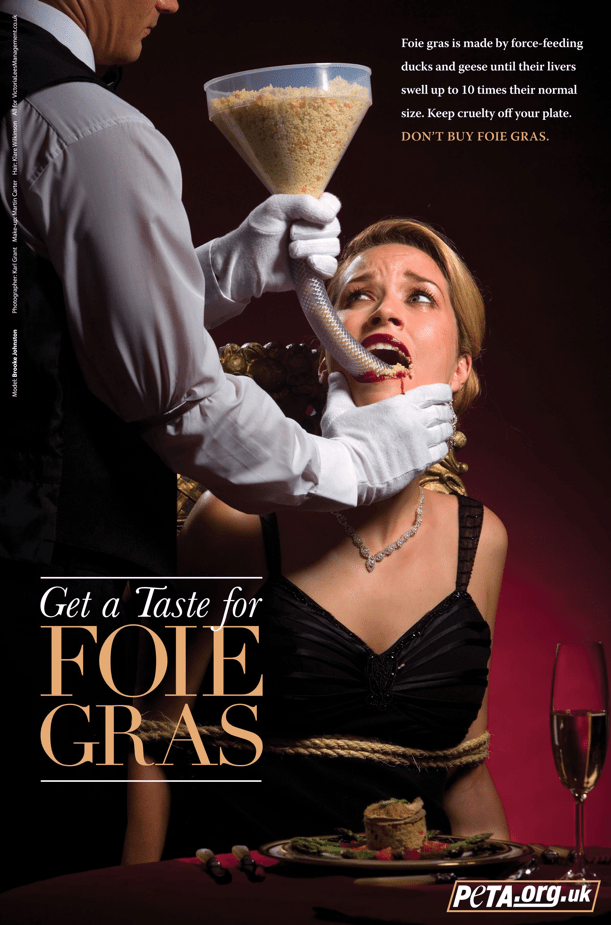
The production of foie gras is brutal. Geese and ducks are force-fed large quantities of food through a funnel up to three times a day for 12 to 16 days, after which they are then slaughtered. In most cases, these birds are made to live in horrible conditions during this process: in small cages fitted with a moving grid, within which they are squeezed at the time of force-feeding, to make their necks easier to grasp.

22 Member States have already recognised the barbarism of this practice and have outlawed the production of foie gras, with the exception of some countries including France, Hungary and Spain. In the countries that still allow it, the savage treatment of geese and ducks in the sector has been well-documented, including by the French NGO L214 and our Belgian member GAIA, which launched a legal action at the end of 2023 against the Walloon Region for continuing to turn a blind eye to this practice.

It is critical the European Commission steps in to align all 27 of its Member States on this issue, and bans force-feeding for foie gras in legislation, so this cruel process cannot be conducted anywhere within the EU. Indeed, this is a step the European Parliament already called for in 2021. It’s vital we see this change enacted as soon as possible.

The message needs to be clear: foie gras must not be offered to guests at this year’s Olympic gamesHaving claimed it would like to “[showcase] French food that is sourced, produced and consumed in a responsible way”, it would be a hypocritical move by the International Olympic Committee to then include a product that is so closely linked to needless cruelty and suffering. 

Stop foie gras from being served at this year’s Olympic games

Our member, Animal Equality, has launched a petition asking the International Olympic Committee to revoke its decision to serve foie gras:

Sign the petition here

Alternatively, try this link https://animalequality.org.uk/campaign/ban-force-feeding/olympics/

With the world watching, the Olympic games is a powerful moment to take a stand for animal welfare, and show that foie gras has no place on the menu.

A disgusting show of what the movement thinks – disgusting; I will keep my thoughts and words to myself – but please sign the petition; this is gonna be a big issue at the games; so lets make it one !

Regards Mark

EU: EFSA scientific opinion on the welfare of sheep and goats during killing for purposes other than slaughter.

28 June 2024

The European Food Safety Authority (EFSA) has released a scientific opinion addressing the hazards and welfare consequences associated with the on-farm killing of sheep and goats. Eurogroup for Animals calls on the European Commission to take this assessment into account when it revises the Regulation 1099/2009.

EFSA’s new assessment covers situations where sheep and goats need to be killed for purposes other than slaughter for human consumption, such as for disease control, environmental contamination, or the individual euthanasia of unproductive, injured or terminally ill animals. 

The assessment divides the on-farm killing process into two main phases:

  • Pre-killing (phase 1): This includes the handling and moving of animals to the killing location, as well as the restraint of animals before the application of killing methods
  • Stunning and killing (phase 2): This covers the actual stunning and killing of the animals using mechanical, electrical, or lethal injection methods.

For each phase, the EFSA opinion identifies potential welfare consequences that sheep and goats may experience, such as:

  • Handling stress;
  • Restriction of movements;
  • Soft tissue lesions and integument damage;
  • Bone lesions (including fractures and dislocations);
  • Pain;
  • Fear;
  • Distress.

Additionally, the opinion identifies possible welfare hazards for each process, along with their origins and related preventive and corrective measures. Comprehensive outcome tables linking hazards, welfare consequences, animal-based measures, origins, and mitigation strategies are included.

The EFSA assessment provides a thorough evaluation of the animal welfare implications of the on-farm killing of these sentient beings. This information is expected to inform regulatory efforts, such as the upcoming revision of the EU’s Regulation 1099/2009 on the protection of animals at the time of killing. It’s critical that this happens and that this scientific opinion, along with other recent evidence and research in this field, is factored into policy-making: ensuring EU-level legislation reflects the latest knowledge on animal welfare, and minimises their suffering during this vulnerable period to the greatest extent possible. 

Eurogroup for Animals calls for an urgent update to the Slaughter Regulation to ensure humane treatment of animals. Our key proposals include:

  • Replacing outdated and ineffective stunning methods with more humane alternatives
  • Ensuring all animals are adequately stunned before slaughter
  • Banning the use of electric prods
  • Introducing species-specific rules on effective stunning in aquaculture.

Regards Mark