
Mark
Time Out:

Well done Pakistan !
Charity Doings Foundation Pakistan, the country’s 1st National Plant-Based Animal Rights Organization, and Environmental and Animal Rights Consultants Pakistan, the nation’s first dedicated Animal and Environmental Law Firm, are proud to announce Pakistan’s 1st International Animal and Environmental Rights Conference.
The event will take place on January 18 and 19, 2025, at the Pearl Continental Hotel in Lahore.
This landmark event will create a powerful platform for animal and environmental rights dialogue in Pakistan, bringing together eminent speakers from around the world to discuss critical issues in these fields.
Regards Mark


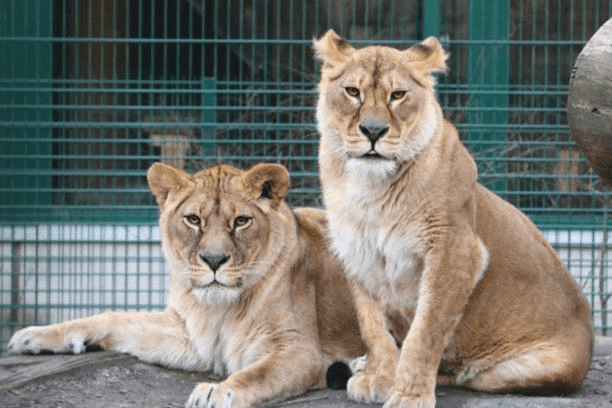
Two lionesses rescued from conflict zones in Ukraine are to find a new home in a Scottish zoo.
Five Sisters Zoo near Polbeth, West Lothian, is preparing to welcome Luna and Plusza, who were evacuated from an area affected by heavy shelling in eastern Ukraine in 2022.
The were initially sheltered in Kyiv and were moved to Poland, then later to the Natuurhulpcentrum animal shelter in Oudsbergen, Belgium.
They will now find a permanent home at Five Sisters Zoo which has a history of helping animals which have experienced hardship.
Great story, read in full here:
Regards Mark


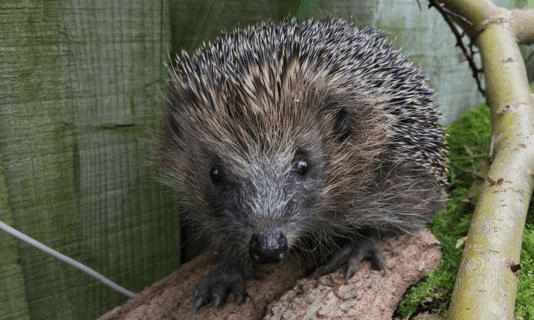
The Mammal Society is calling for people to look after hedgehogs by gardening in a wildlife-friendly way. Photograph: Phillip Horwood/PA© Photograph: Phillip Horwood/PA
Hedgehogs are now listed as “near threatened” on the International Union for Conservation of Nature’s red list after a decline in numbers of at least 30% over the past decade across much of their range.
While hedgehogs were once common across Europe, and were until now listed as of “least concern” on the red list, they are being pushed towards extinction by urban development, intensive farming and roads, which have fragmented their habitat.
Read full article here:
Regards Mark
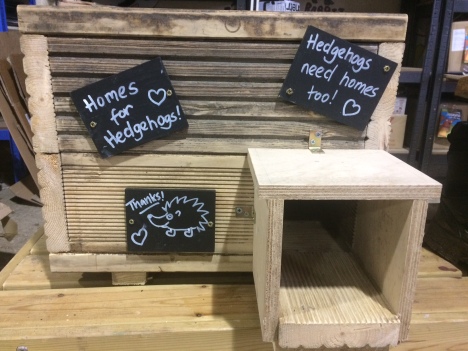
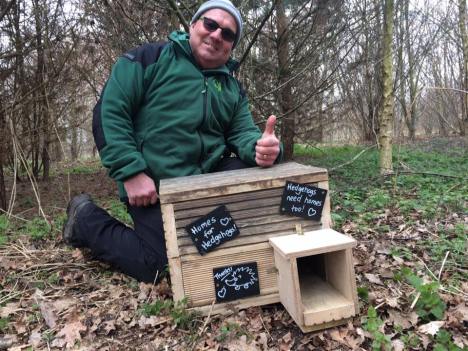
I used to construct hedgehog houses for our local Forestry Commission site. Here is a picture of one of these; and another showing it ‘in the field’ with a ranger. Constructed primarily from old decking it was ideal and thick and weather tough. The protective entrance is an additional to stop and predators getting at the hedgehogs.

28 October 2024
EFI
A large number of animals are still being exported to ports in Israel where they are at high risk. Vulnerable cows and sheep are being sent into the war zone from Member States including Ireland, Romania, Croatia, Slovenia, Hungary and Lithuania, where they face rocket fire, air strikes, and mistreatment by distressed port workers and handlers.
The long journeys to Israel’s largest port, Haifa, have severe effects on the health of these sentient beings, causing respiratory illnesses, ulcers, leg injuries, motion sickness and heat stress. Their suffering is only magnified on arrival in Israel, as from Haifa port to the surrounding quarantine and fattening farms, they face daily barrages of rockets and continuous air raid sirens.
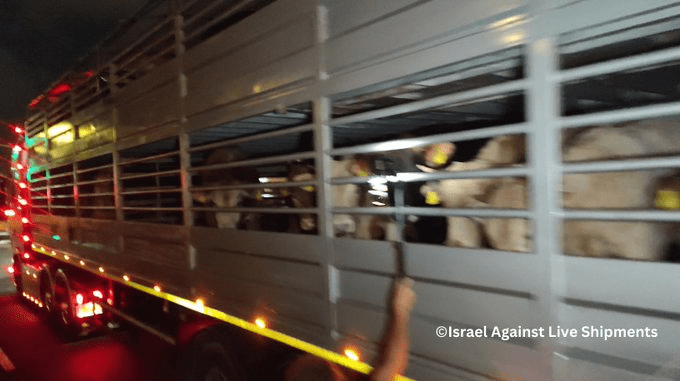
Reports have claimed that a number of dairy farms around Haifa have been hit by missiles in the last weeks, killing a large number of cows. In addition, the unsafe conditions around the port are causing workers to use electric prods to get the cattle off the ships as quickly as possible.
Since the war started, there have been over 100 shipments of cattle and sheep from Europe to Israel. Livestock has continued to be exported to Lebanon since the war expanded in that region.
10 NGOs, including Eurogroup for Animals and Ethical Farming Ireland, have now sent a letter to European Commissioner for Health and Food Safety, Stella Kyriakides, urging her to suspend all live export to Israel and Lebanon with immediate effect.
Ethical Farming Ireland has also urged Ireland’s Minister for Agriculture Charlie McCanalogue to not authorise any more shipments to Israel until the conflict is over.
Regards Mark
IN a significant step towards animal welfare, the Cartagena Department of Health has signed a contract aimed at managing over 110 stray cats in the area. With a budget of €11,641, the plan includes sterilisation, vaccination, deworming, and microchipping these cats, ensuring each one is properly identified.
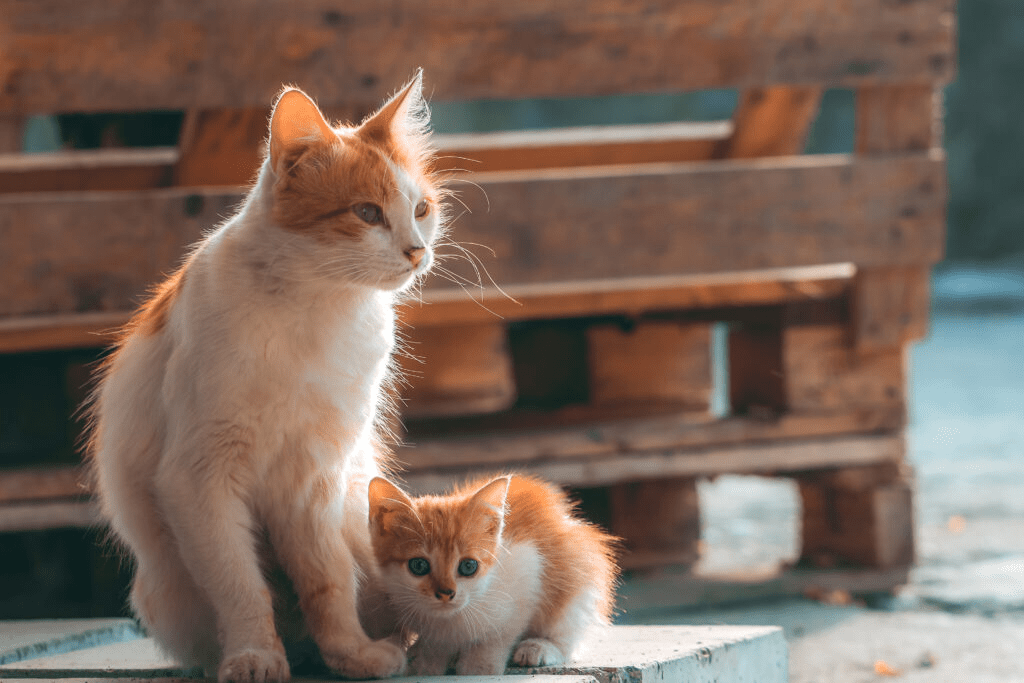
Image – Shutterstock/ rbkomar
The CER method: Effective strategy for stray population control
This plan follows the successful implementation of the CER (Capture, Sterilise, and Return) method, which has been a priority for the department, especially after the pandemic. The agreement, formalised with Los Molinos Veterinary Clinic, allows for essential medical care for cats in various neighbourhoods, including Canteras, Perín, and La Magdalena.
Future funding and commitment to animal welfare
The council highlighted that this contract aligns with the new animal rights law and continues ongoing efforts to control the stray cat population in collaboration with local animal protection organisations. Since the start of the program, about 400 cats from different colonies have already received care. With further funding opportunities on the horizon, Cartagena aims to strengthen its commitment to the health and welfare of its stray cat community.
Benefits of caring for our feline friends
https://euroweeklynews.com/2024/10/27/caring-for-cats-cartagenas-commitment-to-stray-animal-welfare
Excellent – well done them !
Mark


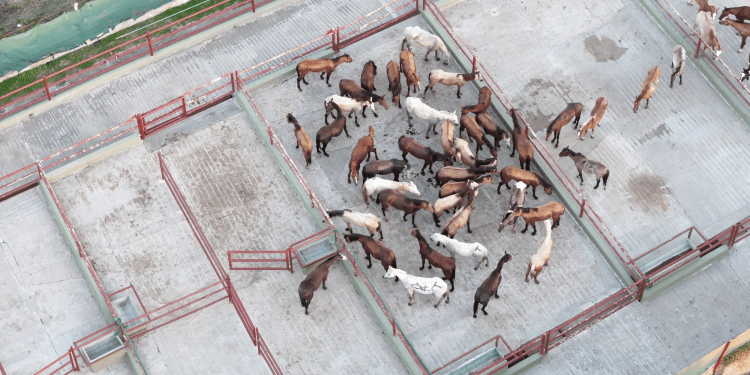
Photo – AWF/ TSB/ GAIA
15 October 2024
GAIA
The German Animal Welfare Foundation (AWF) and the Swiss Tierschutzbund Zürich (TSB) present a new film documentation on horsemeat from Argentina. The footage, taken between 2022 and 2024, shows cruelty and poor animal welfare in the handling of horses at Argentinian horse slaughterhouses and assembly centres and during transport on unsuitable cattle trucks.
Together with Eurogroup for Animals (Brussels), Welfarm (France) and GAIA (Belgium), AWF and TSB are calling on the European Commission to stop the import of horsemeat from Argentina. In a resolution in 2021, the European Parliament also spoke out in favour of an import suspension. The Belgian Meat Federation FEBEV and the Swiss importer Skin Packing, on the contrary, want to prevent reporting on the cruel conditions in Argentinian slaughterhouses by taking AWF and TSB to court.
Since 2010, investigations carried out by AWF, TSB and GAIA have shown that horsemeat producers in Argentina do not comply with the EU’s import requirements. The animal welfare organisations criticise the EU Commission for not imposing the same measure against Argentina as that already imposed against Mexico and Brazil, from which horsemeat imports have been suspended. EU audits conducted in Argentina identified very similar issues regarding food safety and animal welfare, confirmed by EU Commissioner Olivér Várhelyi, who said that “the specific issues raised, such as residues of veterinary medicines, animal welfare, illegal cross-border movement and traceability, were all identified during the audits the Commission services have conducted (…)”. Nevertheless, horsemeat from questionable sources continues to enter Europe.
“Our investigations are disturbing the European importers. They want to prevent the publication of our findings by taking legal action against AWF and TSB. The EU audit reports, however, have repeatedly confirmed what is shown in our film documentaries”, explains Sabrina Gurtner, AWF|TSB project manager.
Argentinian media regularly report on criminal organisations that abuse the horsemeat business, yet even horse traders who have been under police investigation for years and have been banned from the animal trade remain in the business illegally. They are known to use the uncontrollable network of slaughterhouses, assembly centres and horse suppliers for their criminal business. “From official sources, we have received a list of 2,600 addresses of horse assembly centres and suppliers. This network is an ideal hiding place for criminal gangs”, reports Sabrina Gurtner.
For example, the Lamar slaughterhouse near Buenos Aires has repeatedly been the target of police investigations. The media reported a raid in 2022 at the Lamar slaughterhouse and its supplier in Ibicuy. The latter is being investigated by the police for forming a criminal organisation, money laundering, tax evasion, possession of weapons and animal cruelty.
The new film by AWF and TSB shows the state of horsemeat production in Argentina – with seriously injured and highly emaciated horses left unattended, driven limping from the transporters into pens. Foals born in the slaughterhouse wander unprotected between nervous, thirsty and hungry horses. The presence of foals also indicates that heavily pregnant horses continue to be transported, despite being unfit to do so. The film also shows workers beating the horses incessantly with sticks and brooms. The horses are not adequately supplied with food or water, nor do they have sufficient protection from the weather. These horrific animal welfare conditions are present despite the fact that the visited slaughterhouses participate in the European importers’ “Respectful Life” project.
Several audits carried out by the EU as well as investigations of the animal welfare organisations show that the traceability of horses is not guaranteed. This leads to an increased risk to food safety and there is no information about where the horses actually come from. Stolen horses have frequently entered the slaughter pipeline.
A public petition calling on the EU Commission to stop horsemeat imports from overseas, has so far collected more than 213,000 signatures. “On behalf of several European animal welfare organisations, we are calling on the Commission to require equivalent animal welfare standards in exporting countries and to suspend any horsemeat imports from countries where no effective traceability system is in place”, explains Iza Arrieta, Programme Manager, Cats & Dogs and Equines, Eurogroup for Animals.
Sébastien de Jonge, COO GAIA, says: “The investigations carried out by the animal welfare organisations have led many supermarket chains to stop selling horsemeat from countries that violate animal rights. In Belgium, all supermarkets have ceased selling horsemeat from South America. It is now crucial for Europe to follow the example set by these private actors and close its borders to products resulting from the worst practices towards animals.”
Ghislain Zuccolo, CEO WELFARM, says: “It is unacceptable that some supermarkets in France still sell horsemeat from South America. This situation is in total contradiction with the ambitions of these same distributors with regard to animal welfare. They can no longer ignore the sufferings involved with this trade.”
Mark.
23 October 2024
In the run-up to the candidate hearing of EU Commissioner for Health and Animal Welfare Olivér Várhelyi, the European Commission (EC) published the answers to the written questions.
While Eurogroup for Animals welcomes aspects of the candidate’s answers to questions on animal welfare, it stresses the need for much more ambitious actions and concrete commitments to improving the lives of all animals in Europe, and to respect the wishes of citizens who have been calling for the EU to do much more in this respect.
In his answers, candidate Várhelyi promised to work on “policies [that] leave no one behind, creating conditions for truly inclusive health and animal welfare systems catered fairly to the needs of people and animals”.
Eurogroup for Animals welcomes the commitment to modernise animal welfare legislation in line with the latest science, and acting on the End the Cage Age ECI through the phasing out of animal cages.
The answers however, are far from ambitious enough, and the candidate makes no reference to:
Despite the introduction of Animal Welfare in the Commissioner’s name, a news that was widely welcomed, the mission letter barely mentioned animal welfare (only 1 of 14 items).
In reaction, in September, Eurogroup for Animals sent an ideal mission letter to EC President Ursula von der Leyen, detailing the priorities that were missing. MEPs are invited to sign the mission letter during an event that Eurogroup for Animals will host with GAIA at the European Parliament during the week starting 4 November.
With animal welfare being right there in the title of his role, we expect much more ambition on the part of candidate Várhelyi. After decades of new scientific evidence, and resounding calls from citizens, we urgently need more concrete commitments and timelines that ensure better standards for all animals in the EU, with none left behind. We call on MEPs to represent the demands of citizens and request specific answers during the hearing.
Reineke Hameleers, CEO, Eurogroup for Animals
Deel op FacebookDeel op TwitterDeel op PinterestDeel op Linked InDeel op Whatsapp
Related news
Animal welfare commissioner must show more concrete commitments
Silent Suffering: photo exhibition highlights cruel realities of animals in Europe
Strategic dialogue urges EC to deliver the revision of animal welfare legislation by 2026
Mark

25 October 2024
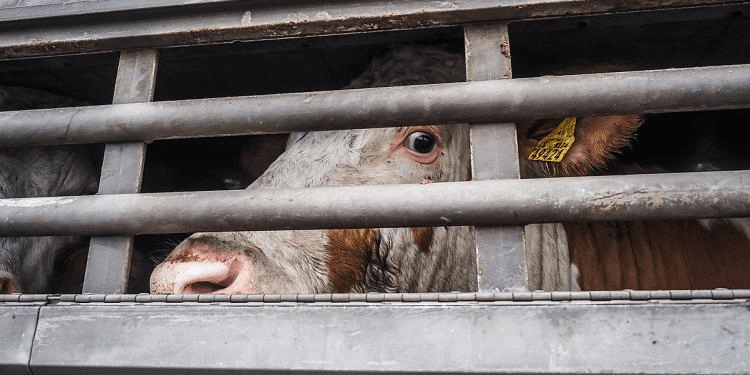
Last week, 69 pregnant heifers suffered a terrible death after being stranded at the border between Bulgaria and Turkey for over four weeks.
Because the cows were coming from Brandebourg, which is considered an epidemic area for the bluetongue virus, Turkish authorities stopped the animals, and legal bureaucracy did not allow a return to the EU.
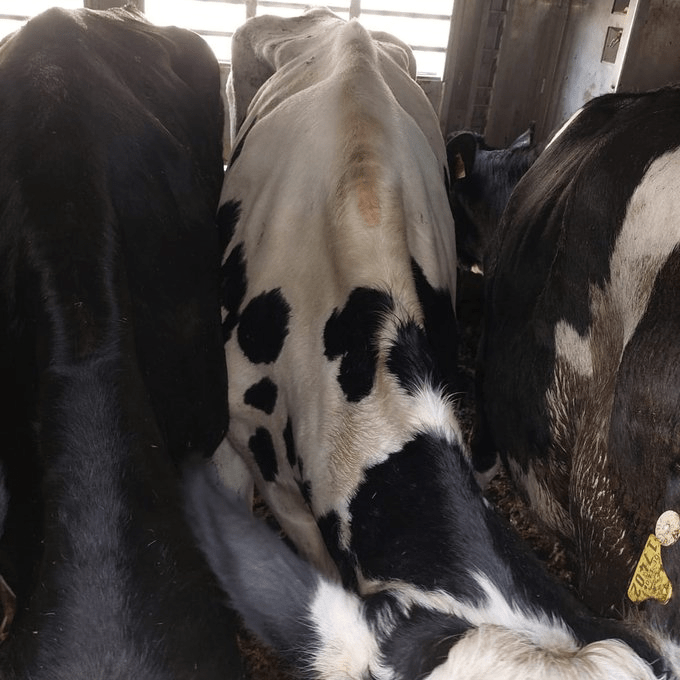
Despite many reports from animal advocacy groups, the cows were left stranded in their own faeces, with many dying in the truck. No authority chose to take responsibility for these animals.
The cows that survived were eventually slaughtered without stunning, a practice that causes severe suffering.
Another tragedy looms
Just days after this terrible event, another situation surfaced at the same border. This time, 47 cows are stranded without food and water. Animals have started to fall ill, and two have already died.
Animals suffer greatly while being transported for days on end, with journeys lasting for up to three weeks. Cramped tightly in vessels that are often filthy and hazardous, they endure injuries, sickness and heat stress.
The effects on vulnerable animals, like young and pregnant animals, can have long-term effects. Evidence shows that in the case of calves, issues sustained during transport can lead to lifelong problems with their digestive and respiratory systems.
What needs to be done?
The EU is not doing enough.
The transport file, where the new legislation is being discussed, is still at a standstill, and it is still legal to transport animals to non-EU countries.
Animal protection NGOs call for legislation that meaningfully protects animals during transport, and an end to all live transport from the EU to third countries.
Regards Mark
James O’Brian is a renowned and outspoken UK Journalist. Have a listen.
We have posted about Animals Lebanon, and the great work they do for the innocent animal victims. Please do support them, if you can. Thank you.
 World Animals Voice