The first war-related environmental crime against a natural reserve has been formally brought before a court by Ukrainian Prosecutors. Kherson prosecutors have filed an indictment against the Russia-appointed head of the Askania-Nova Biosphere Reserve for the illegal transfer of rare and specially protected animals to Russia. A total of seven reserve-protected animals were removed from the Ukrainian territory as a result of the illegal transfer. This case sets a global precedent, demonstrating that crimes committed against the environment during war will not go unpunished.
The Specialised Environmental Prosecutor’s Unit of the Prosecutor General’s Office and Kherson Regional Prosecutor’s Office, with the support of Global Rights Compliance’s Environmental Mobile Justice Team, began conducting an investigation into the case. Following the Russian occupation of Askania-Nova, a UNESCO-protected biosphere reserve, the reserve was unlawfully re-registered under Russian law and the legitimate Ukrainian administration was replaced. On 1 December 2023, the new administration illegally transferred rare and endangered animals (which remain Ukrainian property despite the illegal re-registration) to Russian-controlled zoos without Ukraine’s consent. Among the animals at issue were Chapman’s zebras, American bison, Przewalski’s horses, and one David’s deer, the last of which died during the transfer.
Under international humanitarian law, Russia, as an occupying power, must respect Ukrainian legislation, including Askania-Nova’s protected status. Article 55 of the 1907 Hague Regulations allows an occupier to act only as a temporary administrator of property, not an owner. Additionally, Article 56 prohibits the destruction or seizure of institutions dedicated to the arts and sciences, granting Askania-Nova special protection.
“The war crime of pillage is not just about looting artefacts or property belonging to civilians—it extends to Ukraine’s natural treasures as well. The unlawful transfer of these protected animals is a direct violation of international humanitarian law and must be prosecuted,” said Nataliia Pavlovych, Legal Adviser and Deputy Team Lead of the Environment MJT at Global Rights Compliance.
The suspect in this case is Dmytro Mesheryakov, the Russia-appointed head of Askania-Nova, who is responsible for organising the transfer of protected animals in violation of international law.
While war crimes such as pillage and destruction of cultural heritage have been prosecuted before national courts and international tribunals, this is the first time criminal charges stemming solely from war-related environmental damage to a natural reserve have been brought to court. Ukraine’s legal action, supported by GRC’s legal team, sends a strong signal that environmental destruction will be treated with the same gravity as other war crimes.
“By initiating these proceedings, prosecutors are both beginning to fill this void and sending the message that harm committed to the environment during wartime will no longer go unpunished. They are at the forefront of developing precedent in this area of the law,” added Donna Cline, Lead of the Environment MJT, at Global Rights Compliance.
GRC’s Mobile Justice Team is a part of the Atrocity Crimes Advisory (ACA) Group for Ukraine. The ACA is a multilateral initiative established by the United States, the European Union, and the United Kingdom to support and assist Ukrainian law enforcement and prosecutors in investigating and prosecuting international crimes committed during the full-scale war.
Collection of seven shorts due out in 2025 tells story of conflict from perspective of animals
The occupying Russian soldiers paid little attention to the elderly woman shuffling through the farmland surrounding the villages outside Kyiv, taking her goat to pasture. But she was focused closely on them. After locating their positions, she headed back home with the goat, and later called her grandson, a soldier in the Ukrainian army, to give the coordinates.
The story is one of seven episodes, based on real events from the first year of Russia’s full-scale invasion but lightly fictionalised, that make up a feature film about the war in Ukraine, due out later this year. All seven of the shorts have one thing in common: they tell the story of the conflict from the perspective of animals.
Continue reading …..
Producer Oleh Kokhan during filming. Photograph: Sota
The opposition stems from serious welfare and environmental concerns: the extreme cruelty of confining intelligent, solitary animals like octopuses in farming conditions, the lack of humane slaughter methods, and the damaging impact such farms would have on fragile marine ecosystems.
The Spanish association of law professionals, INTERCIDS, has presented a legislative proposal to national politicians that aims to establish a proactive ban on octopus farming across the country. The proposal responds to the growing chorus of scientists, animal and environmental protection organisations, and citizens who have spoken out against octopus farming.
Although no industrial octopus farms currently exist in Spain or elsewhere, seafood multinational Nueva Pescanova announced plans to establish the world’s first industrial-scale octopus farming in the Canary Islands.
Submitted to the Parliamentary Association for the Defence of Animal Rights (APDDA), the proposal seeks to amend Spain’s national Law 23/1984 on marine farming/aquaculture in order to prohibit the farming of octopuses for food and any other productive purpose. It would also ban the commercialisation of octopus products derived from such activities.
Octopuses consumed as food are currently caught in the wild, primarily by small-scale fisheries. There are no existing legal frameworks regulating octopus aquaculture in Spain. Therefore, INTERCIDS’ proposal aims to close that gap preemptively by enshrining a ban into law that addresses the grave risks associated with the farming of captive octopuses.
The next steps for the proposal will depend on national politicians, who must decide whether they will move forward with submitting it as a formal legislative proposal to be approved by the Parliament in the coming months.
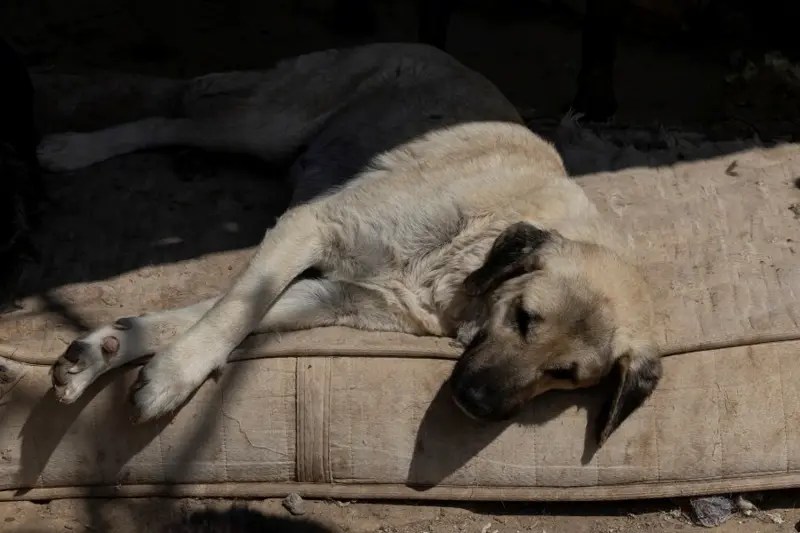
Born on the street, abandoned, thrown out and forgotten, in recent years dogs, apart from state shelters, find refuge in private shelters, which are established by associations for the care and assistance of animals.
“We have a registered shelter, but our animals are mostly with volunteers who take care of them.”
“We believe that it is too demanding, but also dysfunctional, that few people take care of a large number of dogs,” explains Marija Cvijetićanin, founder of the Ventura Association for Help and Care of Animals, for the BBC in Serbian.
There are currently 126 registered dog shelters in Serbia, while the exact number of illegal ones is unknown.
Control of space, equipment, record keeping and preservation of animal welfare in a registered shelter is controlled by a veterinary inspector, according to the written response of the Ministry of Agriculture, Veterinary and Water Management to the BBC in Serbian.
According to the letter of the law, local self-government is obliged to build shelters for dogs, but individuals can also open shelters independently, Marijana Vučinić from the Faculty of Veterinary Medicine in Belgrade told the BBC in Serbian.
But even that does not solve society’s negligence towards animals, she warns.
“Supposedly, there are a large number of societies that love dogs, as well as people who want to help animals, but this creates a new problem, because it seems that now anyone can have a shelter without meeting the basic requirements,” says Vučinić.
Several dozen dogs died recently in Veliki Gradište, near Požarevac, in one of the private shelters.
Criminal proceedings were initiated against the owner, while one of the workers was arrested.
How easy is it to open a dog shelter?
Shelters should be used only for the physical removal of dogs from the streets that sometimes attack people and other animals, injure them, but also obstruct traffic, explains Vučinić.
“Some dogs are better off going to shelters because they have a better chance of being adopted,” she says.
This, however, will not reduce the reproduction of dogs, nor solve the problem of irresponsible ownership, he warns.
A shelter can be established by a natural or legal person, and the shelter will be entered in the Register of the Veterinary Administration if it meets the required conditions for the protection of animal welfare, according to the written response of the competent ministry.
The space must be functional, the entrance under constant surveillance, and the shelter separated and surrounded by a fence, are just some of the prescribed conditions.
This process is too simple, believes Vanja Bajović, professor of criminal law at the Faculty of Law in Belgrade.
“Submitting a request to the Veterinary Administration and paying a fee of 1,840 dinars is often enough to start a dog shelter.
“Entry in the register is often done without prior control of the veterinary inspection – before making a decision, the veterinary inspector does not even check whether the facility meets the requirements for a shelter, so anyone can register it very easily, cheaply and quickly,” warns Bajović.
Reuters
Illegal shelters ‘dented on the map’
Violation of legal provisions is “an offense for which physical persons can be fined from five to 50 thousand dinars, and legal ones from 100,000 to one million dinars”, says Vanja Bajović.
And the work of unregistered shelters is sanctioned by a fine and a decision to ban work.
“Determining the cause of the animal’s death determines the further action of the veterinary organization and the veterinary inspection and determines the procedure of the prosecution and other state authorities,” the Veterinary Administration says.
The Veterinary Inspection controls registered shelters, both on the basis of application and random inspection, explains Bajović.
“However, they are illegal ‘under the radar.’
“No one checks whether the shelter meets the prescribed conditions, so it is not surprising that a total of 126 state and private shelters are officially registered in Serbia, while in fact there are many more,” she warns.
The conditions regulation is “rather paradoxical” and “does not contain any punitive provisions at all.”
“This means that just running an unregistered shelter is not punishable and no one actually controls them, bearing in mind that they are mostly located on private properties,” Bajović points out.
Watch the video about the abandoned dogs of Kragujevac:
“Who looks after the abandoned dogs of Kragujevac”
Video on Page
What should dog shelters look like?
Marija Cvijetićanin from Ventura also thinks that it is not enough to have good will and love for animals.
“Boxes of a certain size are needed in which the dogs can move normally, but also be arranged so that they do not disturb each other.
“There should also be a veterinary clinic in the area of the shelter so that the animal can be helped more easily if it gets sick or injured,” he believes.
She warns that “it is not enough to bring dogs from the street into one room without a clear structure to work on”.
“They often spread infectious diseases, because there is no separate contaminated and clean space”.
Animals should be separated according to age, sex, temperature and species, as well as health, according to the work of the group of veterinarians who care for dogs in shelters in America, Standards in shelters for abandoned animals, published in 2010.
“The point is to give the adopters the certainty that the animal they are adopting is healthy, vaccinated and free of parasites, and therefore ready for a normal life in the family,” concludes Cvijetićanin.
Palić Zoo: A place where confiscated and injured wild animals find a new home
How do shelters affect dogs?
According to professor Vučinić, life in a shelter for dogs that used to roam freely until then can be a challenge.
“They come to a completely new space and there they are in contact with other dogs and people, and because of the change in environment, their immune status further declines,” she says.
TOMS KALNINS/EPA-EFE/REX/Shutterstock
Dogs from shelters and shelters often come to Zoran Lončar’s veterinary clinic infected with infectious diseases.
“They are generally not vaccinated, and as they often all stay together, diseases spread easily and are difficult to control,” Lončar explains to the BBC in Serbian.
Because of life on the street and the traffic accidents they experienced, they often have back, head or limb injuries.
“There are also old fractures, so bone modeling operations are performed.”
“However, as these types of interventions are quite expensive, and shelters and shelters operate with limited funds, many animals are not helped,” he says.
Shelters make sense “only if it is a short-term stay” because “a dog is a social animal and should live with people”, Vučinić believes.
“If you stay in shelters all your life, they become like prisons.”
“This is how their role is rendered meaningless and they quickly grow into centers where dogs accumulate, live in packs and their basic needs, such as having enough food and water, cease to be recognized,” warns Vučinić.
28 environmental charities have served a spoof planning notice to MPs, warning that the Planning & Infrastructure Bill is an application to demolish wildlife
The coalition is calling on Government to urgently fix the Bill with amendments to uphold wildlife protections and help nature recover at the same time as supporting sustainable development—to make the planning system ‘Wilder By Design’.
Writing to charities a year ago, the Deputy Prime Minister said the Government “will not legislate” to amend key nature laws if it would weaken them. In the opinion of the Government’s own nature watchdog, the current bill breaks that promise.
Nature loss in the constituencies of Ministers proposing the reforms is also highlighted today.
MPs have today been served spoof planning notices warning that the Government’s proposed Planning and Infrastructure Bill will ‘bulldoze environmental protections and demolish nature and local greenspaces’ unless crucial changes are made. Conservationists are also highlighting examples of nature loss in the constituencies of key ministers, drawing attention to the wildlife losses that could be worsened by the Bill.
Charities met the Secretary of State, Steve Reed, last week (Thurs 15 May) where they warned that the Bill as it stands would break Government nature commitments. Following this, 28 charities, including the RSPB, the National Trust, The Wildlife Trusts, the Mammal Society, People’s Trust for Endangered Species, and Wildlife and Countryside Link have mailed the spoof notices to all English MPs and Ministers, including the Prime Minister and Secretaries of State, Steve Reed, and Angela Rayner. Environmentalists are calling for MPs to support amendments that will deliver a planning system which works for nature, communities and sustainable development for generations to come.
In July 2024, the Deputy Prime Minister wrote to nature charities to say that the Government would not legislate to amend nature protections in a way that would weaken environmental law. According to the Office for Environmental Protection, environmental lawyers, and nature experts, the Government is now breaking that promise with the current version of the Bill and it must be amended.
England is currently facing a nature crisis, with 1 in 6 British species at risk of extinction, a 32% decrease in wildlife populations since 1970 and the UK among the worst 10% globally for nature loss, alongside 40% less greenspace in new developments compared to older housing. That crisis is being played out across the country. From Steve Reed’s Streatham and Croydon constituency seeing notable losses of butterflies and common birds like the blue tit, to Angela Rayner’s constituency in Greater Manchester seeing a 90% decline in recorded insect species, charities warn that the Bill risks speeding up the loss of nature and disappearance of community greenspaces.
In Chancellor Rachel Reeves’ Leeds West and Pudsey constituency just 1 out of 7 SSSIs in the area is in favourable condition. 1 in 5 species across Yorkshire have declined by more than 25% in the last 30 years: including swifts declining by 50% and red squirrels by 69%.
In Secretary of State Steve Reed’s constituency of Streatham and Croydon North, has seen records of Small Tortoiseshell Butterflies (Aglais urticae) drop to just 10 a year, compared to over 200 a year during the 1990s, and common bird species like Blue Tits (Cyanistes caeruleus) are down more than 10% in the last 20 years. Water voles have largely disappeared from this area and other London constituencies, with just a handful of river sites where they can be found.
In the Ashton-under-Lyne constituency of Angela Rayner, Secretary of State for Housing, Communities and Local Government: records of Great Spotted Woodpeckers (Dendrocopos major) have decreased by 68% since 2007 and Song Thrush (Turdus philomelos) by 68% since 2008. The last inspection of the Hollinwood Branch Canal SSSI protected nature sites found they were in a declining condition. The Huddersfield Narrow Canal SSSI was also found to be in an unfavourable condition.
Richard Benwell, CEO of Wildlife & Countryside Link, said: “As it stands, the Planning Bill is set to demolish legal protection for nature and pave the way for destruction of wildlife. So far, the proposals are a mile away from the Government’s aim for a win-win for nature and development. Even the Government’s nature watchdog agrees that it would damage environmental protection.
“It’s disappointing that Government rejected constructive amendments that could put the Bill back on firm foundations for nature protection and greener development. But we heard Ministers acknowledge the case for change and now we urge them to follow up with quick and decisive fixes for the Bill’s serious flaws. Without major improvements, Parliament should reject these damaging proposals.”
Beccy Speight, RSPB chief executive, said: “This should have been a once in a generation opportunity to create a planning system that helps restore nature at scale while delivering for communities and the economy. Instead, promises from the UK Government have been kicked into the long grass and we’ve been left with a Bill that as currently drafted risks species extinction, irreversible habitat loss and threatens legally binding Environment Act targets. Handing developers a license to destroy precious habitats and species for a fee is not what was promised, and certainly not what our natural world and the people of this country need and deserve. If the UK Government is to maintain a shred of credibility on the environment we must see substantial amends to part three of this Bill without delay.”
Hilary McGrady, Director-General of the National Trust, said: “With the right planning laws in place, we can restore our dwindling wildlife, increase the green spaces near where people live and build much-needed new homes surrounded by great nature. But as it currently stands, the Bill risks doing the very reverse, as the Government’s own nature watchdog has pointed out.
“The question for the Chancellor and the Prime Minister is do they want to be remembered as the Government that brought nature back into millions of people’s lives? Or do they want to further deprive current and future generations of this essential, universal need?”
James Cooper, Head of External Affairs at Woodland Trust, said: “The Government’s Planning and Infrastructure Bill risks taking an axe to our natural environment. In its current form, it could fatally undermine decades-old protections, including those of ancient trees and woods, which are already in need of better protection.
“Public outrage over the felling of treasured trees like the Sycamore Gap and Whitewebbs Oak shows just how important green spaces are to people. Nature is a necessity – not a blocker to be dealt with. The Government urgently needs to rethink its bill and put woods, trees and wildlife at the heart of its reforms, delivering the win-win it promised. This means embedding nature in planning so that everyone can benefit from it – regardless of where they live.”
Craig Macadam, Buglife Director of Conservation, said, “The current Planning Bill could be disastrous for invertebrates and accelerate their already precipitous decline. For years we have seen important invertebrate sites lost to ill-thought-out developments and these proposals would only exacerbate the situation. It is more important than ever that we take crucial steps to help nature recover and deliver our existing commitments to protect and restore vital habitats. A Bill that sacrifices hard fought for environmental protections simply won’t deliver for wildlife or people.”
The warning comes as the Planning Bill moves to Report Stage, a final opportunity for MPs to amend the bill before it progresses to the House of Lords. The coalition fears that the Bill in its current form would severely weaken existing environmental protections and lead to the decline or destruction of UK wildlife, wild places and green spaces in communities, with no guarantee of local environmental improvements in return for new development.
In their notice, the coalition reiterated their warning that the Government’s proposals would leave essential protection for wildlife and local neighbourhoods without the scientific safeguards, the delivery guarantees, or the positive plans for nature recovery that could justify such serious risks. Essential safeguards like the Habitats Regulations could be critically weakened. The Government’s own advisors, the Office for Environmental Protection recently concluded that the Bill constitutes regression on environmental legal protections.
In April, the coalition wrote to Secretary of State Steve Reed and Minister Mathew Pennycook warning of the urgent changes needed to the Government’s Planning and Infrastructure Bill to avoid complete extinction of species and destruction of the natural spaces that millions of people depend on for their health and wellbeing.
The organisations want to see the government commit to supporting amendments which will ensure that the Bill does not leave nature. This includes a commitment to:
Guarantee results: The current law demands a high level of legal and scientific certainty for environmental outcomes. However the Bill only requires outcomes to be “likely”. Government must ensure benefits are delivered and clearly outweigh harm.
Avoid harm: Existing rules require developers to avoid damage to protected wildlife. The Bill drops this in favour of a “pay to pollute” model. Future planning rules must ensure that harm must be avoided wherever possible.
Follow the science: Environmental Delivery Plans should only apply to new protected features where there’s solid scientific evidence they work.
Make planning Wilder By Design: We need a legal duty for Councils to help meet climate and nature targets, strong national and marine plans, and low-cost, nature-friendly design like bee and bird bricks in new developments.
With ever more natural disasters occurring thought ought to be given to other Animals, and how to protect and rescue them – when often, sadly, only Human lives seem to matter. This is, in our view, an impossible situation, and all of us are tasked to change it, with our own behaviour, going forward towards a world where equal consideration is given to all.
When disasters strike, people are not the only victims. Hurricane Katrina raised public attention about how disasters affect dogs, cats, and other animals considered members of the human family. In this short but powerful book, now available in paperback, noted sociologist Leslie Irvine goes beyond Katrina to examine how oil spills, fires, and other calamities affect various animal populations―on factory farms, in research facilities, and in the wild.
In a new preface, Irvine surveys the state of animal welfare in disasters since the first edition. Filling the Ark argues that humans cause most of the risks faced by animals and urges for better decisions about the treatment of animals in disasters. Furthermore, it makes a broad appeal for the ethical necessity of better planning to keep animals out of jeopardy. Irvine not only offers policy recommendations and practical advice for evacuating animals, she also makes a strong case for rethinking our use of animals, suggesting ways to create more secure conditions.
The event is a staple in the island’s tourism calendar
A Sark resident has described calls to end the island’s annual sheep races as “urban wokery gone mad”.
In a letter to the Sark Carnival Committee, People for the Ethical Treatment of Animals group (Peta) wrote “using animals as exhibits has no place in modern entertainment”.
Former owner of Stocks Hotel Paul Armogie argued the Sark Sheep Racing Festival, which has taken place for 30 years, was “part of rural heritage” and said it would be a “tragedy” if it ended.
The festival committee said it had not yet received a letter from Peta, but was seeking advice and would respond “in due course”.
Money raised at the event goes to a local charity subsidising prescriptions
Jennifer White, associate director of media and communications at Peta UK, said the sheep racing was “archaic, outdated and cruel to sheep”.
She said: “Just because something is called a ‘tradition’ certainly does not make it right.”
“We know that sheep are incredibly sensitive, often timid animals and being forced to race in front of noisy crowds would likely be very stressful for them,” she added.
Ms White said: “It’s 2025, we do not need to be treating animals like wind-up toys.
“The best things is for the event to be cancelled, for the sheep to be taken out and for it to be replaced with willing human participants instead.”
Mr Armorgie responded: “If there was any whisper the sheep were being harmed or in any distress then it would not happen.”
He added that as an animal lover, if he thought there was risk, he would be the “first to shout about it”.
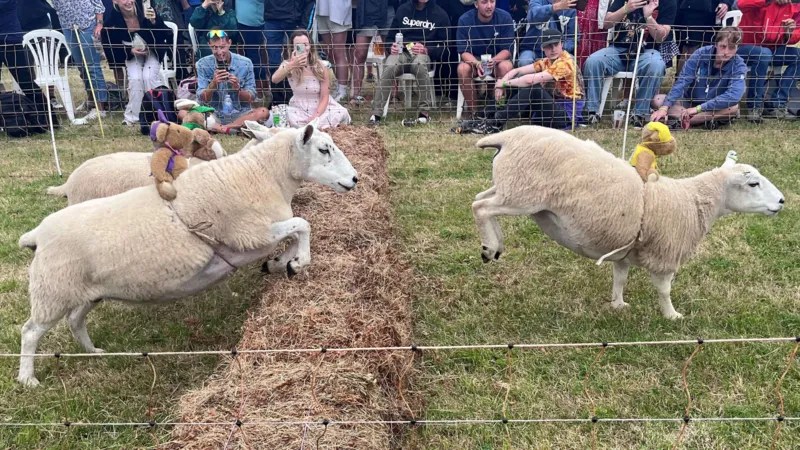
The race takes place annually in July and sees sheep race with teddy jockeys tied to their backs.
It often sees almost 2,000 people travel to the island to spectate.
All proceeds from the event go to the Professor Charles Saint Sark Medical Trust, which helped subsidise medical care in the island.
They don’t yell or protest. They don’t hold signs or march. But in Singapore, a chorus of concern is rising on their behalf. From living rooms to parliament, the country is facing hard questions about the way animals are seen, protected and valued.
In February, a 32-year-old Singaporean man was sentenced to 14 months in jail for abusing five community cats – a spree of violence that culminated in the horrific act of throwing two of them from high-rise public housing blocks in Ang Mo Kio.
Just three months later, in May, a 20-year-old man pleaded guilty to sexually abusing a neighbour’s cat in Bukit Panjang, an act captured on surveillance cameras.
These disturbing events, along with other recent high-profile cases, have triggered widespread public outrage and prompted a national reckoning over animal welfare. Campaigners warn that not only are abuse cases becoming more extreme, but they are also exposing gaps in Singapore’s animal protection laws – and underlining the need for a cultural shift in how animals are treated.
Animal cruelty reports reached a 12-year high last year, according to figures released in January by the Society for the Prevention of Cruelty to Animals (SPCA). The surge has galvanised Singaporeans, with some signing petitions and others submitting proposals to parliamentary representatives, demanding reforms and tougher enforcement.
Authorities have acknowledged the public concern. A legislative review is under way, examining the penalties for animal cruelty and the extent of current animal welfare laws.
Under current legislation, those convicted of animal cruelty in Singapore can face up to 18 months in jail, a fine of up to S$15,000 (US$11,700), or both. Repeat offenders risk three years’ imprisonment or a fine of up to S$30,000.
The Animals and Birds Act – the main legal framework governing animal protection – has been under review since at least 2022, according to a statement from the Animal and Veterinary Service on Friday. The act was last amended in 2014, and authorities say future revisions will incorporate feedback from stakeholder consultations held this year.
From 2017 to 2020, around 1,200 cases of alleged animal cruelty were investigated annually, according to Singapore broadcaster CNA. Between 2017 and 2021, 40 people were fined and 23 jailed for related offences.
In Jalan Besar, newly elected Member of Parliament Shawn Loh said many constituents had approached him with suggestions to strengthen animal protections in the wake of recent incidents.
Suggestions included stricter penalties for abusers, a registry barring convicted lawbreakers from pet ownership and improved community vigilance, Loh told This Week in Asia.
Shawn Loh, the newly elected member of parliament for Jalan Besar multi-seat constituency. Photo: Shawn Loh
“We therefore decided to hold an engagement session to hear all these views, so that I may appropriately engage the relevant agencies and effectively advocate for change,” he said, adding that the coming session had already reached full registration.
“Following our own discussions [with residents] at Jalan Besar GRC, I hope to put together a balanced list of practical recommendations for the government’s consideration and effectively advocate for change on behalf of our residents,” Loh added.
Fellow MP Lee Hui Ying, representing the Nee Soon Group Representation Constituency, made a similar call for stronger laws and enforcement – and better protection for animals – following a visit to the Springleaf Gardens estate on Tuesday following the death of a disembowelled cat.
Momentum is growing elsewhere as well. On May 31, Young PAP, the youth wing of the ruling People’s Action Party, hosted a focus group to discuss stronger animal cruelty laws.
“Cruelty is rising. Protection must keep pace,” the group wrote in a social media post about the event. “We must act now – let’s make animal cruelty a serious crime.”
Several online petitions have echoed that call. One petition, seeking harsher penalties, has garnered more than 12,000 signatures.
“Convicted animal abusers often receive punishment which can only be described as no more than a slap on the wrist,” said Dr Ryan Leong, co-founder of Pets Avenue Veterinary Clinic and Referrals.
“Such punishment will never deter the next person who is about to commit a similar crime.”
Shelby Doshi, 40, a former cat rescuer, said Singapore’s sophisticated surveillance infrastructure should make it easy to identify perpetrators – but that same urgency is lacking when the victims are animals.
Stray cats that were rounded up amid a government-run euthanasia programme in Singapore in 2003. Photo: AP
A person abusing someone in public in Singapore would likely be identified within a day with the help of video surveillance, she said. “Yet, when a similar or more drastic act happens to a community cat, the effort to apprehend [someone] is sorely lacking, simply because they are not viewed as important.”
“As a first-world country, we certainly can and should do better.”
Shef*, an adoption counsellor at Action for Singapore Dogs – a non-profit organisation focused on stray and abandoned dogs – said law enforcement agencies needed to be given “more teeth” to intervene when animals were in danger.
“Even if we see something, all we can do is tell the family we really need the dog back. But if the family says no, there’s only so much we can do as a non-profit,” said the 38-year-old, referring to cases of neglect involving adopted pets.
Public outrage tends to spike whenever a high-profile case of animal cruelty emerges, said Aarthi Sankar, executive director of the SPCA.
“They may urge the SPCA to intensify pressure on the authorities to implement stricter penalties and tighter enforcement of animal welfare laws, both of which the SPCA has been actively lobbying the government on,” she told This Week in Asia.
Sankar added that any legal reform must acknowledge not only the financial burden of animal abuse, but also the lasting trauma inflicted on sentient beings.
“They [animals] may physically recover from the abuse, but any traumatic experience will likely shape how they go on to perceive the world and their interactions with humans,” she said.
Kalai Vanan Balakrishnan, chief executive of Singapore’s Animal Concerns Research and Education Society (Acres), cautioned that legislative change alone would not be enough to stop abuse.
“I’ve been working here 15 years and I’ve seen multiple incidents where there is a high-profile case and uproar on social media. Then that dies down. Then it happens again,” Balakrishnan told This Week in Asia.
“There needs to be a push to get to the root of the problem. And it should involve a multi-agency effort.”
Such collaboration would allow organisations like Acres to share legal expertise and advocate for tougher penalties, he said.
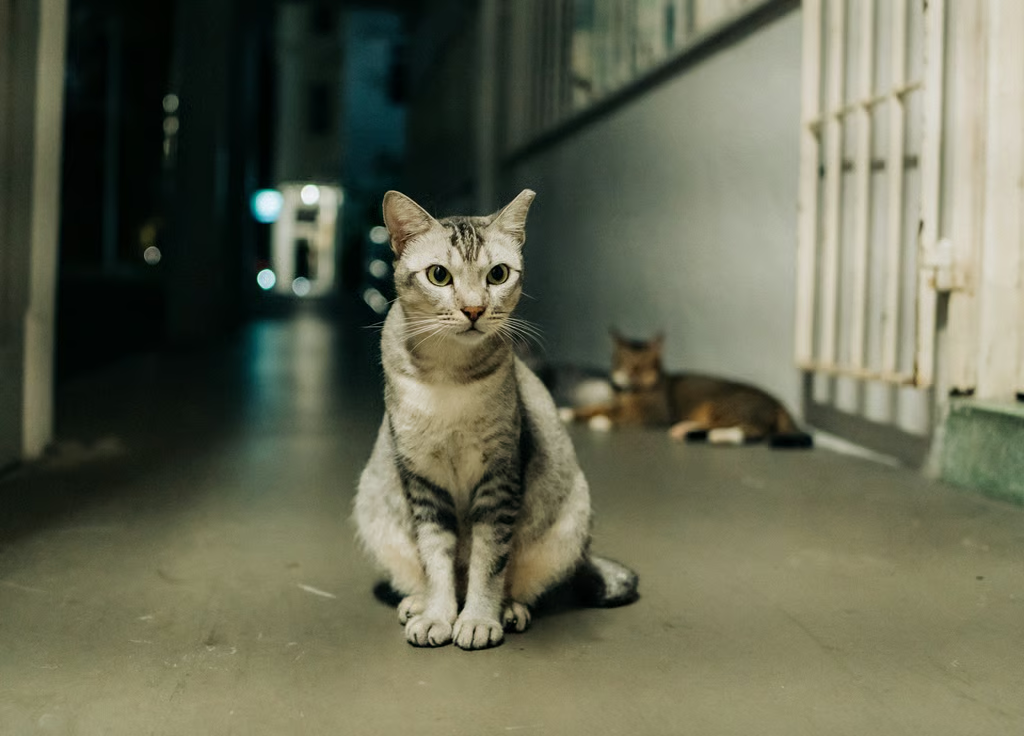
Two feral cats sit in front of a house in Singapore. Experts say cultivating compassion about animals’ pain can help reduce animal cruelty cases. Photo: Shutterstock
He also pointed to deeply ingrained misconceptions about animal sentience – some still believe that certain species, like snakes, do not feel pain. A 2023 case in which men were filmed killing a python with a cleaver highlighted this ignorance.
“If from a young age, we cultivate compassion in children so that they know animals do feel pain and they’re sentient beings, as they grow up, I think we will see less of such cases,” he said.
That view is shared by Dr Genevieve Zhang, a veterinarian at Pets Avenue Veterinary Clinic, who said long-term change would require a cultural shift rooted in empathy.
When more people openly share stories about the emotional bonds they form with pets, non-owners may better understand animals’ capacity to feel and connect, she said.
“They need to understand animals have feelings as well and are lives we need to protect, given that humans can easily overpower them,” Zhang said.
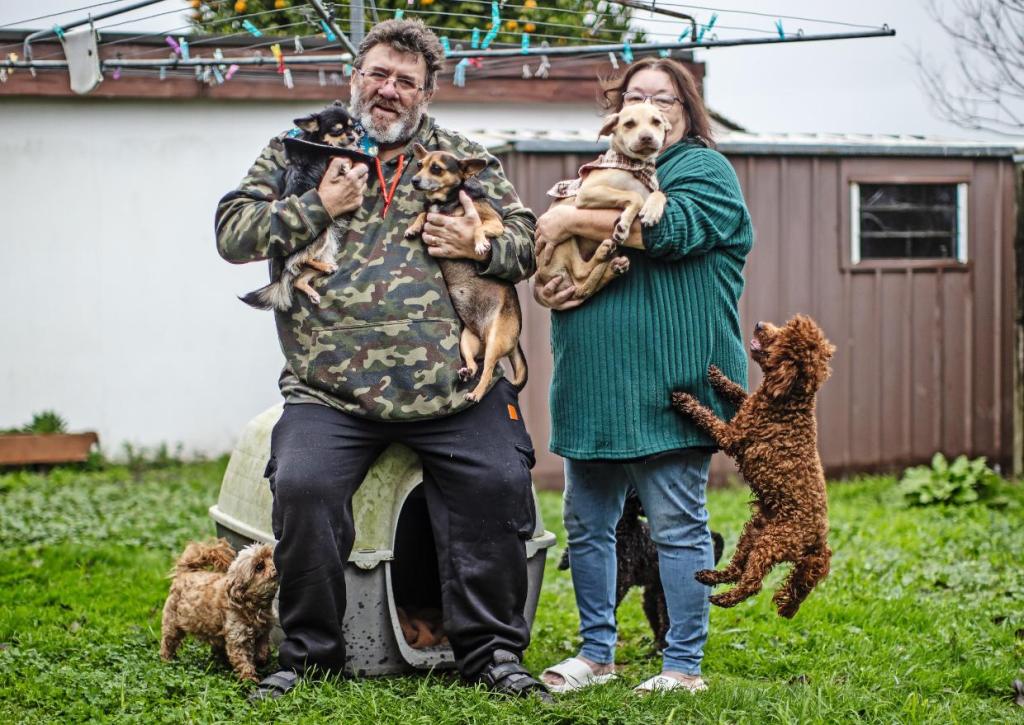
Yvonne Packer and her husband Chris are overwhelmed with rescues at their animal charity in South Auckland. LAWRENCE SMITH / Sunday Star-Times
nday Star-Times
The pair behind a small South Auckland animal charity are frustrated with abuse from the public, and say the SPCA needs to be doing more to help with a surge in roaming animals. Stewart Sowman-Lund reports.
unday Star-Times
The pair behind a small South Auckland animal charity are frustrated with abuse from the public, and say the SPCA needs to be doing more to help with a surge in roaming animals. Stewart Sowman-Lund reports.
The calls can come at any time of the day or night.
Whether it be a dog on the loose, a litter of unhoused kittens, or (on one occasion) some goats – Yvonne Packer will answer the phone.
But after two decades running the South Auckland Animal Rescue, at least half of that time as a registered charity, Yvonne and her husband Chris are growing increasingly frustrated by the level of abuse directed at them by disgruntled members of the public, and want the SPCA to start “doing their job”.
“It’s shocking,” says Yvonne of Auckland’s problem with roaming dogs.
“The amount of phone calls we get daily, and messages daily, asking us to take dogs because people can’t take them to their rentals, or they’re moving, or they’re going overseas, or somebody’s died, or it’s had puppies because they haven’t de-sexed.”
Yvonne Packer says Auckland’s roaming dog problem is out of control. LAWRENCE SMITH / Sunday Star-Times
South Auckland Animal Rescue is just one of a number of smaller outfits dealing with a growing problem. As Yvonne explains, anyone can start a rescue centre and you don’t have to be a registered charity.
The Sunday Star-Times has previously looked at Auckland’s out-of-control problem with roaming dogs and spent time with the team dealing with it on the frontline, the council’s animal management squad. They described how things got worse during Covid-19, as people stuck indoors decided they wanted a pet only to realise after lockdown lifted it was too much.
Yvonne agrees, and says there has been a boom in roaming animals, welfare issues and attacks since the pandemic. This week, a pair of dogs were seized in Glen Innes after eight cats were killed. Roaming dogs killed two of Yvonne’s cats during a spate of attacks last year.
As The Post reported, there were close to 600 dog attacks on people and animals in Auckland in 2024. A clampdown on unregistered dogs saw 5500 infringement notices issued earlier this year.
The surge in welfare issues and roaming animals has also resulted in more abuse directed at Yvonne and her small team of volunteers. People have dumped animals on her doorstep, or yelled at her down the phone. On another occasion, a dog was left tied up to her front gate. The police have even delivered animals to her house.
People think that since Yvonne and Chris run an animal rescue service, they can take in an unlimited number. What they might not realise is that their charity is run from a South Auckland home and relies on fosters willing to take in animals and get them ready for a new life.
“We can only do what we can do, and each rescue is doing their best,” says Yvonne.
Last month, a post was made on South Auckland Animal Rescue’s Facebook page that put it bluntly.
“The abuse being thrown at us is unbelievable,” the post read. “We are not the SPCA and receive no government funding like they do.”
It continued: “To get abuse hurled … threats made because people can’t or won’t take accountability for their own pets is getting beyond a joke.”
Yvonne says it was a volunteer that made the post, but with her consent. It was a bad day, she confesses, but the message needed to be heard.
While some rescues “take and take and take”, adds Chris, that’s not always possible for them – or the right thing to do for the animals.
Yvonne and Chris Packer want the SPCA to step up and help. LAWRENCE SMITH / Sunday Star-Times
“They’re just too full that they end up being an animal hoarder rather than a rescue. And the animals aren’t being helped,” he says.
“And we get abused because we don’t take animals – because if we can’t look after them, the dogs are no better off.”
Yvonne says she’s “disgruntled” with the SPCA and that the charity – which she describes as “the big name” in animal rescue – needs to “up their game”.
“You know, the amount of calls we get, ‘Oh, we rung the SPCA, they won’t help us.’ [Or] ‘We’ve rung the SPCA, they’re closed’,” says Yvonne.
“They’re just a corporate business now, gaining the revenue. But what are they doing with it? Because we’re doing their job.”
An impounded puppy rescued from a property in Wiri during a Sunday Star-Times outing in March. Stewart Sowman-Lund / Sunday Star-Times
In a statement, the SPCA’s general manager of animal services, Dr Corey Regnerus-Kell, rejects that criticism, telling the Star-Times that SPCA centres around the country are “fully funded” by donations, including through adoption fees, pet insurance and the network of op-shops.
An additional funding agreement covers approximately 80% of the operational costs for the SPCA Inspectorate Service.
Yvonne says if it’s a matter of resources, then the SPCA needs to get more staff on the ground and in the community.
“They have to pick up … they need to go back to the way they used to be, and actually do their job.”
But Regnerus-Kell says the SPCA does not have any powers under the Dog Control Act.
“As such, while roaming and stray dogs in communities are overtly managed by councils, SPCA support the proactive measures of providing community desexing opportunities as a reduced or free service for dogs to address the population issues,” he says.
Yvonne would like to see the SPCA share funding with smaller players. Providers like her charity are desperate for extra help.
At the moment, she has between 40 and 60 animals fostered out, and she’s always on the lookout for more people willing to take on an animal, short-term, so it can be rehomed.
“They might do a few [ads] on the TV with that grey kitten,” says Yvonne of the SPCA. “That cat must be just about dead by now. I mean, seriously, it’s been on there for years. ‘Sylvie, the cat. We feed it on Purina’ – yeah, have they not had any more cats since?”
Yvonne Packer says people need to take responsibility for their pets, and can’t rely on rescue centres for help. LAWRENCE SMITH / Sunday Star-Times
Regnerus-Kell says the SPCA does not provide any financial support to other animal welfare groups for operational needs, but offers access to funding to support desexing initiatives.
“We have now pulled this process back in-house, and charitable status will no longer be a requirement. We will restart the SPCA Desexing Grant process later this year.”
A new partnership with Auckland Council will help provide free desexing services in communities across the supercity. “We hope to develop more relationships like this with councils going forward,” says Regnerus-Kell.
Yvonne’s charity entirely relies on public donations, but even that’s not enough. She admits she regularly has to dip into her own pockets to keep the service afloat.
day Star-Times
Regnerus-Kell says the SPCA does not provide any financial support to other animal welfare groups for operational needs, but offers access to funding to support desexing initiatives.
“We have now pulled this process back in-house, and charitable status will no longer be a requirement. We will restart the SPCA Desexing Grant process later this year.”
A new partnership with Auckland Council will help provide free desexing services in communities across the supercity. “We hope to develop more relationships like this with councils going forward,” says Regnerus-Kell.
Yvonne’s charity entirely relies on public donations, but even that’s not enough. She admits she regularly has to dip into her own pockets to keep the service afloat.
“Our average vet bill a month is between $9,000 and 12,000,” she says.
No dog will leave the South Auckland Animal Rescue without being desexed, registered, microchipped and vaccinated – something she believes not all rescues are consistent with. It all adds up.
“We cover all their costs, vet bills, worming, flea treatment, anything they need,” she says.
“We’ve just had 11 pups desexed on Sunday, we had one go in yesterday. Last week, there were four that went in. So we’ve done a heap in this last sort of week. And that’s not cheap.”
And they go the extra mile. At the moment, she’s spending most nights on the North Shore helping to track down a dog that’s been on the run for six weeks.
Her message is simple, and it’s not just a call for more money. It’s to pet owners.
“Take responsibility for the animals that you have in your care,” she says.
“If you cannot afford to feed them, give them medical care, get them desexed: don’t get them. Get a stuffed toy.”
Inaugural State of the World’s Animal Health report finds several animal diseases reaching new areas, with half of those reported able to jump to people.
Key findings:
Animal diseases are migrating into previously unaffected areas, half (47%) of which have zoonotic – or animal-to-human – potential.
Outbreaks of bird flu in mammals more than doubled last year compared to 2023, increasing the risk of further spread and human transmission.
Access to livestock vaccines remains uneven around the world, with disease eradication efforts facing funding and political challenges.
Antibiotic use in animals fell by 5% between 2020 and 2022 and expanding livestock vaccination globally would reduce the risk of antibiotic resistance.
23 May, PARIS – Infectious animal diseases are affecting new areas and species, undermining global food security, human health and biodiversity, according to the first State of the World’s Animal Health report.
The new annual assessment, published by the World Organisation for Animal Health (WOAH), provides the first comprehensive review of animal disease trends, risks and challenges, from the uptake and availability of vaccines to the use of antibiotics in animals. Released ahead of WOAH’s 92nd General Session and its Animal Health Forum – where leading experts will gather to discuss vaccination and innovation in disease prevention – the report sets the stage for high-level discussions on how science-based vaccination strategies and emerging technologies can help address current and future animal health threats through a One Health approach.
Among its findings, the report revealed the reported number of avian influenza outbreaks in mammals more than doubled last year compared to 2023 with 1,022 outbreaks across 55 countries compared to 459 outbreaks in 2023.
The authors highlighted that, while the risk of human infection remains low, the more mammalian species such as cattle, cats or dogs infected, the greater the possibility of the virus adapting to mammal-to-mammal, and potentially human, transmission.
“The spread, prevalence and impact of infectious animal diseases is changing, bringing new challenges for agriculture and food security, human health and development, and natural ecosystems,” said Dr.Emmanuelle Soubeyran, Director General of WOAH.
Bird flu, or high pathogenicity avian influenza (HPAI), which has caused the culling or loss of more than 630 million birds in the last two decades was one of several animal diseases to affect new areas last year.
Peste des petits ruminants (PPR), which has traditionally affected sheep and goats in developing countries, has re-emerged in Europe while Africa swine fever (ASF) reached Sri Lanka, travelling more than 1,800 km from the nearest outbreaks, the report found.
Almost half of the WOAH-listed diseases notified to WOAH between 2005 and 2023 were considered a threat to human health with zoonotic, or animal-to-human infection, potential.
The report cited climate change and increased trade among the factors influencing the spread and prevalence of animal diseases. Many are preventable through a combination of vaccination, improved hygiene and biosecurity measures, but the report noted that access to animal vaccines remains uneven around the world.
“Alongside other measures, vaccination remains one of the most powerful disease prevention tools available, saving countless lives, preventing economic losses and reducing the need for antimicrobial treatments,” Dr.Soubeyran added.
“To limit the spread of highly damaging diseases like avian influenza, foot and mouth disease and PPR, the global community must strengthen international cooperation and ensure equitable access to safe, effective vaccines, alongside other control measures.”
Since 2006, WOAH has supported access to animal vaccines through its vaccine banks and currently operates two, one for rabies and one for PPR. As of May 2025, the WOAH Rabies Vaccine Bank has delivered almost 30 million dog vaccines to countries in Africa and Asia. However, progress towards ending rabies has stalled in recent years, with the percentage of countries reporting implementing control measures falling from 85 per cent to 62 per cent.
The report also emphasised the importance of disease prevention for reducing the need for antibiotic treatment and limiting the development of drug-resistant diseases.
By 2050, antimicrobial resistance is projected to cause livestock losses that jeopardise the food security of two billion people and result in a US$ 100 trillion economic loss if urgent action is not taken.
The latest figures indicate that antimicrobial use, including antibiotics, in animals fell five per cent between 2020 and 2022, with use in Europe seeing the biggest decline of 23 per cent, followed by Africa at 20 per cent. However, one in five countries continue to use antimicrobials as growth promoters, which is discouraged by WOAH.
“The indiscriminate use of antimicrobials contributes to antimicrobial resistance, which is a major threat to both animal and human health,” said Dr.Javier Yugueros-Marcos, Head of the Antimicrobial Resistance and Veterinary Products Department at WOAH. “The declining use of antibiotics in almost all regions is encouraging but further reductions can be achieved by prioritising preventative measures against animal diseases, with vaccination as an essential component of these.”
WOAH calls for investments to strengthen national Veterinary Services, greater global and regional coordination and improved disease surveillance systems to scale up effective disease control. This includes developing and implementing advanced diagnostic tools to differentiate between vaccinated and infected animals, enabling accurate disease tracking and trade transparency.
Read the report – For interviews, please contact media@woah.org
Key success stories on vaccination presented in the report
In October 2023, France became the first EU country to implement a nationwide vaccination campaign against bird flu in ducks, which play a key role in the spread of the disease. The campaign helped reduce the number of outbreaks from a forecasted 700 to just 10, according to the report.
Türkiye developed a new vaccine for an outbreak of FMD within just 37 days, vaccinating 14.2 million cattle – 90% of the national herd – and 2.5 million sheep within six months.
The Philippines has now vaccinated millions of dogs against rabies with help of WOAH vaccine bank. In the past, the country received 500,000 doses of rabies vaccine through EU funding, leading to a noticeable decline in rabies cases.









 World Animals Voice