(Google Translation)
https://www.bbc.com/serbian/lat/srbija-69125393
21 jun 2024

Reuters
Born on the street, abandoned, thrown out and forgotten, in recent years dogs, apart from state shelters, find refuge in private shelters, which are established by associations for the care and assistance of animals.
“We have a registered shelter, but our animals are mostly with volunteers who take care of them.”
“We believe that it is too demanding, but also dysfunctional, that few people take care of a large number of dogs,” explains Marija Cvijetićanin, founder of the Ventura Association for Help and Care of Animals, for the BBC in Serbian.
There are currently 126 registered dog shelters in Serbia, while the exact number of illegal ones is unknown.
Control of space, equipment, record keeping and preservation of animal welfare in a registered shelter is controlled by a veterinary inspector, according to the written response of the Ministry of Agriculture, Veterinary and Water Management to the BBC in Serbian.
According to the letter of the law, local self-government is obliged to build shelters for dogs, but individuals can also open shelters independently, Marijana Vučinić from the Faculty of Veterinary Medicine in Belgrade told the BBC in Serbian.
But even that does not solve society’s negligence towards animals, she warns.
“Supposedly, there are a large number of societies that love dogs, as well as people who want to help animals, but this creates a new problem, because it seems that now anyone can have a shelter without meeting the basic requirements,” says Vučinić.
Several dozen dogs died recently in Veliki Gradište, near Požarevac, in one of the private shelters.
Criminal proceedings were initiated against the owner, while one of the workers was arrested.
How easy is it to open a dog shelter?
Shelters should be used only for the physical removal of dogs from the streets that sometimes attack people and other animals, injure them, but also obstruct traffic, explains Vučinić.
“Some dogs are better off going to shelters because they have a better chance of being adopted,” she says.
This, however, will not reduce the reproduction of dogs, nor solve the problem of irresponsible ownership, he warns.
A shelter can be established by a natural or legal person, and the shelter will be entered in the Register of the Veterinary Administration if it meets the required conditions for the protection of animal welfare, according to the written response of the competent ministry.
The space must be functional, the entrance under constant surveillance, and the shelter separated and surrounded by a fence, are just some of the prescribed conditions.
This process is too simple, believes Vanja Bajović, professor of criminal law at the Faculty of Law in Belgrade.
“Submitting a request to the Veterinary Administration and paying a fee of 1,840 dinars is often enough to start a dog shelter.
“Entry in the register is often done without prior control of the veterinary inspection – before making a decision, the veterinary inspector does not even check whether the facility meets the requirements for a shelter, so anyone can register it very easily, cheaply and quickly,” warns Bajović.
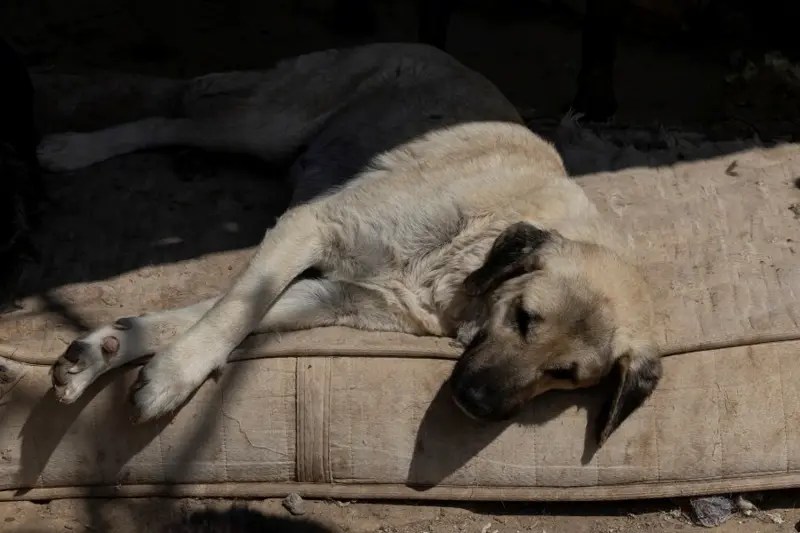
Reuters
Illegal shelters ‘dented on the map’
Violation of legal provisions is “an offense for which physical persons can be fined from five to 50 thousand dinars, and legal ones from 100,000 to one million dinars”, says Vanja Bajović.
And the work of unregistered shelters is sanctioned by a fine and a decision to ban work.
“Determining the cause of the animal’s death determines the further action of the veterinary organization and the veterinary inspection and determines the procedure of the prosecution and other state authorities,” the Veterinary Administration says.
The Veterinary Inspection controls registered shelters, both on the basis of application and random inspection, explains Bajović.
“However, they are illegal ‘under the radar.’
“No one checks whether the shelter meets the prescribed conditions, so it is not surprising that a total of 126 state and private shelters are officially registered in Serbia, while in fact there are many more,” she warns.
The conditions regulation is “rather paradoxical” and “does not contain any punitive provisions at all.”
“This means that just running an unregistered shelter is not punishable and no one actually controls them, bearing in mind that they are mostly located on private properties,” Bajović points out.
Watch the video about the abandoned dogs of Kragujevac:

“Who looks after the abandoned dogs of Kragujevac”
Video on Page
What should dog shelters look like?
Marija Cvijetićanin from Ventura also thinks that it is not enough to have good will and love for animals.
“Boxes of a certain size are needed in which the dogs can move normally, but also be arranged so that they do not disturb each other.
“There should also be a veterinary clinic in the area of the shelter so that the animal can be helped more easily if it gets sick or injured,” he believes.
She warns that “it is not enough to bring dogs from the street into one room without a clear structure to work on”.
“They often spread infectious diseases, because there is no separate contaminated and clean space”.
Animals should be separated according to age, sex, temperature and species, as well as health, according to the work of the group of veterinarians who care for dogs in shelters in America, Standards in shelters for abandoned animals, published in 2010.
“The point is to give the adopters the certainty that the animal they are adopting is healthy, vaccinated and free of parasites, and therefore ready for a normal life in the family,” concludes Cvijetićanin.
Palić Zoo: A place where confiscated and injured wild animals find a new home
How do shelters affect dogs?
According to professor Vučinić, life in a shelter for dogs that used to roam freely until then can be a challenge.
“They come to a completely new space and there they are in contact with other dogs and people, and because of the change in environment, their immune status further declines,” she says.

TOMS KALNINS/EPA-EFE/REX/Shutterstock
Dogs from shelters and shelters often come to Zoran Lončar’s veterinary clinic infected with infectious diseases.
“They are generally not vaccinated, and as they often all stay together, diseases spread easily and are difficult to control,” Lončar explains to the BBC in Serbian.
Because of life on the street and the traffic accidents they experienced, they often have back, head or limb injuries.
“There are also old fractures, so bone modeling operations are performed.”
“However, as these types of interventions are quite expensive, and shelters and shelters operate with limited funds, many animals are not helped,” he says.
Shelters make sense “only if it is a short-term stay” because “a dog is a social animal and should live with people”, Vučinić believes.
“If you stay in shelters all your life, they become like prisons.”
“This is how their role is rendered meaningless and they quickly grow into centers where dogs accumulate, live in packs and their basic needs, such as having enough food and water, cease to be recognized,” warns Vučinić.
 World Animals Voice