Month: June 2025

(AU) Animal shelters struggle with influx of surrendered pets, as owners face cost of living pressure

https://www.abc.net.au/news/2025-06-13/nt-darwin-animal-shelters-see-influx-surrendered-pets/105350000

13.06.2025

RSPCA rescue animal, Spotty, is one of hundreds of pets under the Darwin shelter’s care. (ABC News: Jayden O’Neill)

Bernadette Relos and husband, Nathan Calverley, are self-described animal lovers who live in a bustling house in Darwin’s outskirts suburb of Berrimah.

They have two cats and a one-year-old puppy, which they recently adopted from a shelter.

The South Australian couple who moved to the Top End for work said their “fur babies” brought chaos and destruction, but much-needed colour to their lives.

“They bring life to the household … you can be lonely, and one of the cats will jump on you, and then you’re not lonely anymore,” Mr Calverley said.

“You could walk in the front door, and everyone doesn’t say a word, but the dog will come running … and start licking you and saying hello.”

Ms Relos said they decided to adopt because they wanted pets that would grow up with their young family.

But as some are choosing to bring furry friends into their forever homes, animal shelters are seeing the opposite.

Shelters being pushed to breaking point

Charles Giliam, the Northern Territory’s RSPCA operations manager, said there had been an increasing number of surrendered pets due to people experiencing financial difficulties.

He said most pets being dropped on shelter doorsteps were mixed breeds, weighing around 20 to 30 kilograms, with backyard breeding worsening the situation.

“[People] bring pets to us that are often in need of veterinary treatment … and say, ‘We just don’t have the money’,” he said.

The RSPCA estimates most dog owners spend an average of $25,000 on their pet during its lifetime, while cat owners spend $21,000 on average.

The charity says that within the first year of cat ownership, people could face up to $3,500 of expenses on food, desexing, grooming, bedding, toys and treats.

Mr Giliam said the influx of surrendered pets was creating significant challenges for shelters.

“We probably got about 15 to 20 people on our waiting list who are wanting to surrender … but we are chock-a-block full,” he said.

RSPCA national data showed around 81,000 pets were surrendered in the 2023/2024 financial year, with only 27,000 finding new homes.
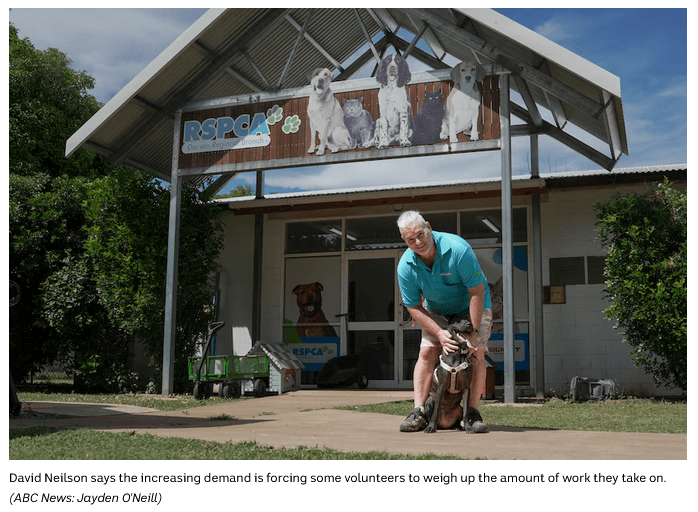
David Neilson, a volunteer at the Darwin RSPCA shelter, said the increasing demand was leaving some volunteers “overwhelmed”.

“There are so many volunteers that are here through the week to walk the dogs and sit with the cats and we are not getting through everything … it makes it difficult,” he said.

Industry voices want to see change

While many in the rescue sector are worried about the growing crisis, there are also concerns the NT’s animal rights laws are ineffective.

Unlike most other Australian jurisdictions, the NT does not have a formal dog breeder licensing scheme, however breeders are still expected to meet standards of care under the Animal Protection Act.

Melissa Purick, a licensed dachshund breeder, said it was “frustrating” to see people buy pets from unlicensed backyard breeders without considering the animal’s welfare.

“I would like to see that stopped to start with, where you can’t sell puppies at the markets or the side of the road,” she said.

Hannah Bohlin, an animal advocate, believes growing use of social media is glamorising pet ownership without highlighting its challenges.

She said if people adopted pets that were incompatible with their lifestyle, cost of living could become a “scapegoat” to surrender animals that were no longer valued.

She wants the NT to look at what other states and countries are doing to manage pet breeding and ownership.

“I would like to see a discussion around the possibility of introducing some kind of licence system [to own a pet],” she said.

“Some European countries do operate this kind of system to get a dog in the first place.”

The NT’s Agriculture and Fisheries Department, which oversees animal welfare, said a review of the Animal Protection Act was currently underway.

“The NT government takes animal welfare seriously and is committed to strengthening animal welfare laws,” a department spokesperson said.

(EU) REACH revision could increase animal testing, says humane group

https://www.euractiv.com/section/economy-jobs/news/reach-revision-could-increase-animal-testing-says-humane-group/

Animal rights group, Humane World for Animals, says it fears a revision of Europe’s regulations for chemical testing in Europe could lead to more animal testing.

Jun 13, 2025

A revision of the EU’s REACH regulation covering the ‘Registration, Evaluation, Authorisation and Restriction of Chemicals’ must clean up the chemicals risk assessment and the chemicals market, falling in line with the Clean Industrial Deal, argue animal rights advocates.

With decarbonisation and boosting competitiveness priorities for the EU, within the chemical testing industries, it should create a ‘simplified legislative framework to reduce the administrative burden for the industry, while still maintaining the safety of human health and the environment’.

While a revision of REACH is welcomed by animal advocacy groups, particularly the opportunity to introduce more non-animal testing methods, the proposals to date have not been met with glee.

CEFIC, the forum of chemical companies across Europe, has produced a 10-point action plan to simplify REACH. One pressing point for Humane World for Animals is its call for the last resort requirement to be put under a microscope and refined in greater detail.

“We really need to see a much better leveraging of the last resort requirement, which is already built within REACH, where, in theory, animal testing should only be done as a last resort. But we, along with a number of our collaborators, published a paper last year which indicated that this wasn’t really happening,” says Jay Ingram, Managing Director, Chemicals, R&T, Humane World for Animals.

“This really needs to be strengthened, there needs to be a lot more specificity around what “last resort” actually means and how it is demonstrated, both by registrants (industry), who are going to be proposing tests, but also by the regulatory bodies themselves, who will be requesting additional data.”

“It needs to be much stronger in terms of how we actually determine whether this last resort threshold has been reached – we really need to see strengthening on the enforcement of that last resort requirement,” he says.

Testing in complex areas

Ingram has also expressed his concerns that the revision of REACH could lead to an increase in testing on animals in some complex areas.

“We are also insisting that this revision of REACH doesn’t bring in new or expanded animal testing. There’s been a revision to the CLP regulation last year, which brought in new classification categories for endocrine disruption, amongst other things,” says Ingram.

“The issue is endocrine disruption is an extremely complex topic from a toxicological perspective, and we fear that this change to CLP will have a knock-on change to REACH, where they will be asking for a huge amount more animal testing to be done to determine the endocrine disruption potential of chemicals,” he explains.

“And not just new chemicals, but also ones that have already gone through the REACH process, and that all of this new data will be generated without a clear idea of how or whether it can be used to make safer decisions about chemicals.”

“There are non-animal methods for endocrine disruption that are available and are of good quality,” says Ingram as he explains how complex the topic of endocrine testing is and that we must better understand the use of the data from such testing before there is a call for an increase on animal testing – technology can play a role as a safe alternative here.

New approach methods

One of CEFIC’s action plans to simplify REACH includes the introduction of a new safety assessment scheme that supports an increased uptake of reliable animal-free safety assessment methods – New Approach Methodologies, or ‘NAMs’.

CEFIC’s suggestion is to ‘reduce the hazard focus of REACH, allowing more flexibility in achieving a high degree of safety’ and to remove ‘default requirements for animal testing wherever possible.’

It wants regulators to give greater justification on ‘why concerns cannot be addressed using exposure-based approaches or NAMs, such as when rejecting proposals for read-across, grouping, or NAMs to avoid animal tests.’ It also seeks to ‘adapt data requirements to utilise NAMs together with exposure considerations: a chemical can only cause harm if it can reach a target and interact with it.’

Could we see a rise in the use of NAMs in chemical testing with the correct revisions to REACH?

“On a positive side, the Commission is also working on the roadmap for phasing out animal testing, which is the result of Save Cruelty Free Cosmetics/End Animal Testing European Citizens’ Initiative (ECI),” says Antigoni Effraimidou, a senior strategist at Humane World for Animals.

She added: “We can see there’s already movement, which we feel is very positive to see, because it marks a landmark opening for the advanced chemical safety assessment, and it can also bring this cultural change in the scientific world that we are looking for, and hopefully also regulatory transformation.”

“There are some complex endpoints which the Commission feels that there will be a need also to develop new non-animal methods, but we do see this attitude from the policy makers, the willingness to go through that,” she said.

(UK) Murder accused killed pet cat before 20-minute spree of violence, court told

https://www.independent.co.uk/news/uk/crime/monzo-court-trial-daniel-anjorin-b2769732.html

Monzo said he ‘received guidance and communication’ in his head that the cat ‘was being used against me by negative forces’

Friday 13 June 2025

Marcus Arduini Monzo with a samurai sword that was shown to the jury in his trail at the Old Bailey (Metropolitan Police/PA) (PA Media)

An alleged sword attacker tried to cook and eat his pet cat, but claimed to have no memory of killing a schoolboy during a rampage in London.

Prosecutors say Marcus Arduini Monzo, 37, skinned and deboned his cat Wizard before launching a 20-minute spree of violence in Hainault, east London, while allegedly under the influence of cannabis on 30 April last year.

Monzo is accused of murdering 14-year-old Daniel Anjorin, as well as mowing down pedestrian Donato Iwule with a van and attacking two police officers and a couple in their home on April 30.

At the Old Bailey on Friday, Monzo cried as he said he did not intend to harm anybody.

Monzo said he tried to cook it, but became “panicked and rushed”, believing an event “like an Armageddon” was happening.

Continue reading …

***************

Clearly a nut, the guy. But again, the link between violence towards Animals and Humans .. as if more proof were needed.

Please refer to ..

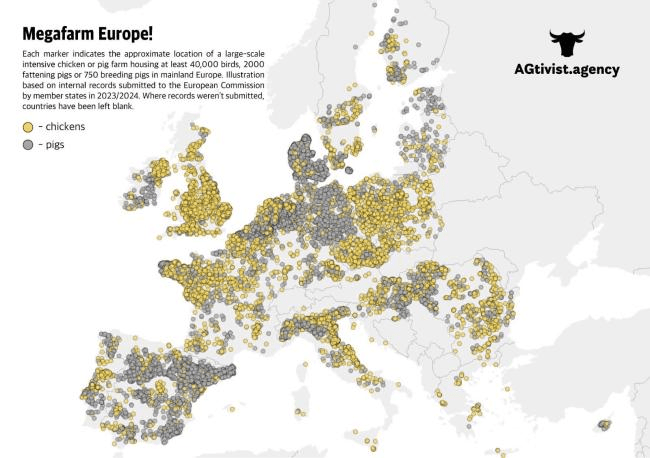
Europe – The Rise Of The Mega Farm – How Industrial Agriculture Is Taking Over Europe.

A new investigation has revealed that the EU is home to 22,263 industrial chicken and pig farms – housing more than 516 MILLION Animals in the worst factory farm conditions.

Despite this, the EU Commission, some producers, and even some Members of the European Parliament (MEPs) are advocating for a further increase in the number of farmed animals.

But what would this increase mean for animal welfare; human health, as well as impact on the environment ?

https://stories.agtivistagency.com/the-face-of-european-farming/

The AGtivist data led investigation has, for the fist time, identified, and mapped these industrial farm around Europe; showing that the EU has 10,862 chicken farms; each holding at LEAST 40,000 birds; raised for egg or meat production, and 8,854 pig farms, holding at least 2,000 pigs each; or 2,547 for breeding pigs.

During the past ten years, 2,746 mega farms have started operations with the EU; with the highest rate of development happening in Spain, where 1,385 new industrial farms started up in the past decade. 5,314 permits for such farms were applied for during the last decade.

Whilst mega farms are sweeping across the EU, small and medium ones are rapidly declining. Between 2005 and 2020 the EU lost 5.3 million farms; most of which were smallholdings. – whilst the total agricultural land area remained stable, thus indicating the change – consolidation – into larger operations.

https://ec.europa.eu/eurostat/statistics-explained/index.php?title=Farms_and_farmland_in_the_European_Union_-_statistics#:~:text=The%20number%20of%20the%20smallest,less%20in%202020%20than%202005.

This represents a decrease of 44% within 15 years.

Meanwhile, the number of mega farms GREW by 56% within the same period; with the top 8% of the highest producing farms controlling a staggering 63% of all livestock in the EU. Here is the proof if you question what we say.

https://www.greenpeace.org/static/planet4-eu-unit-stateless/2024/10/20241003-Go-big-or-go-bust-Greenpeace-report-on-how-EU-farmers-are-pushed-to-produce-more-to-stay-in-business.pdf

The income disparities between these farms increased by up to sixty fold. Proof – https://www.theguardian.com/world/2024/nov/02/revealed-the-growing-income-gap-between-europes-biggest-and-smallest-farms?utm_source=chatgpt.com

Key statistics from the report include:

  • France has the highest number of industrial chicken farms at 2,342 farms.
  • Spain has the highest number of industrial pig farms, with 2,580 for fattening pigs and 821 farms fot breeding pigs. It is also the country that saw the biggest expansion of new farms starting to operate in the last decade.
  • Italy is in the top five countries for both industrial pig and chicken farms – 2,146 combined.

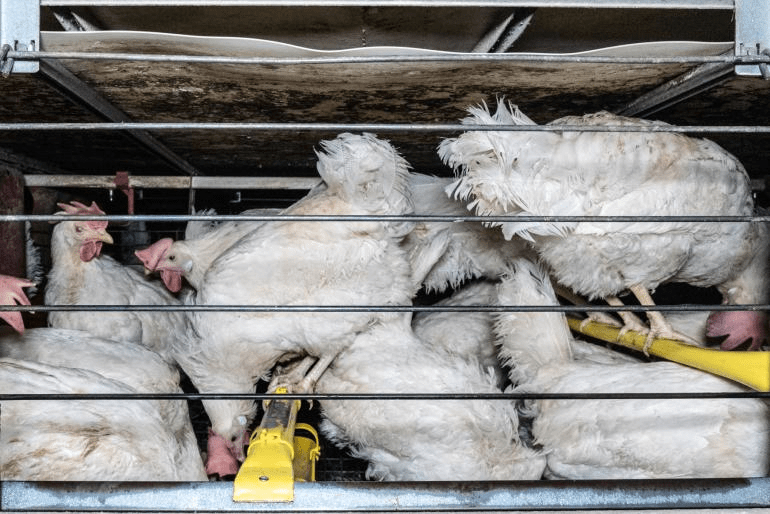
MEGA FARMS OPERATE INTENSVE FARMING SYSTEMS where chickens are densely packed into barns with INADEQUATE VENTILATION, INSANITARY CONDITIONS; ALONG WITTH NO ACCESS TO OUTDOOR SPACE OR NATURAL LIGHT.

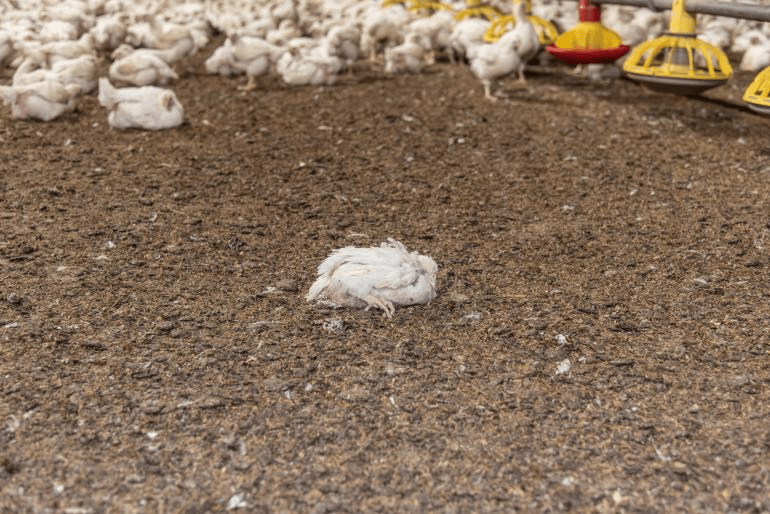
The AGtivist investigations in Italy with our colleagues Essere Animali; revealed the reality of animal welfare on the ground; with chickens at a farm in Bergamo living in their own excrement and unable to stand no their feet because of their unnatural growth.

Photo – Stefania – AGtivist / Essere Animali.

In Brescia, investigators witnessed hens cramped together, on top of each other; while carcasses were left to decompose for around 3 weeks.

Photo – Stefania – AGtivist / Essere Animali.

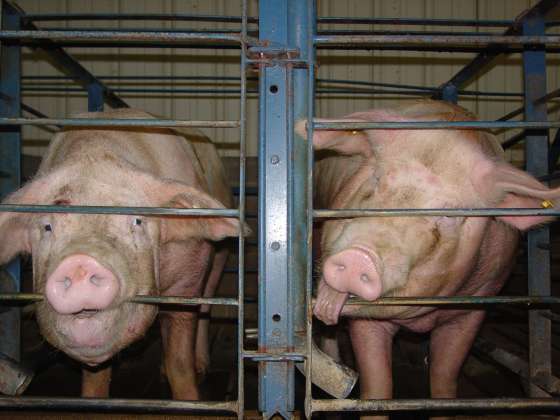
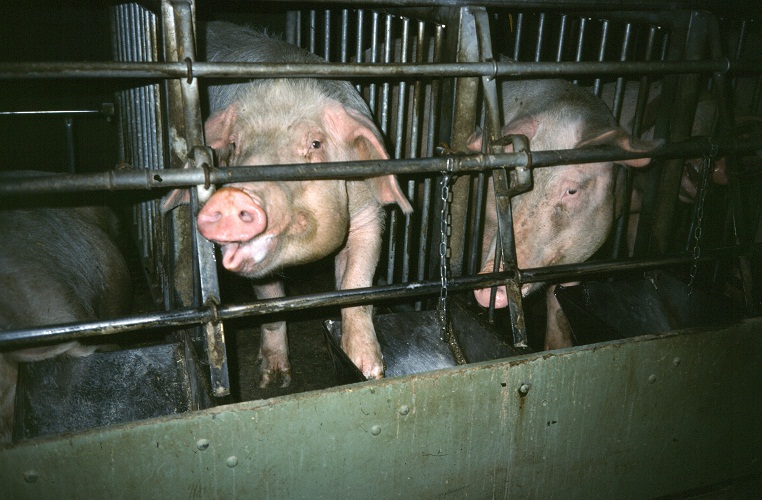
In Spain, local investigators highlight the concentration of pigs in intensive farms, with pigs confined in overcrowded, unsanitary conditions, suffering from both untreated injuries and disease. Sows are enclosed in metal crates of barely two metres squared; preventing natural movement and leading to severe physical repercussions.

Further Link

Attack dogs: how Europe supplies Israel with brutal canine weapons

https://www.theguardian.com/global-development/2025/jun/12/weapons-war-israel-europe-dogs-joint-investigation

Thu 12 Jun 2025 16.07 CEST

An IDF soldier and dog on patrol in Hebron. Photograph: Hazem Bader/AFP/Getty Images

Military dogs involved in attacks on Palestinian civilians – including children – are likely to have been exported from European countries, investigation finds

Warning: readers may find some of the details in this piece distressing

It was only seconds after soldiers entered the Hashash family’s home in the Balata refugee camp in the West Bank that the dog attack began. As military raids rolled out across her neighbourhood one morning in February 2023, Amani Hashash says she took her four children into a bedroom. When she heard Israeli military coming into their home she called out that they were inside and posed no threat.

Moments later the bedroom door was opened and a large, unmuzzled dog launched itself into the room, plunging its teeth into her three-year-old son, Ibrahim, who was asleep in her lap.

Continue reading …

Israeli soldiers from the Oketz canine unit at a training base in southern Israel. Photograph: Jack Guez/AFP/Getty Images

**************

The Donkey.

For many, the little humble donkey is quite simply a neglected, but essential, work tool for its owner. The brick carrier; the tourist transporter, the list is endless. For some, after a life of neglect and suffering, their days unfortunately end with them being sold, barbarically slaughtered, and becoming a ‘suppler of skins’ for use in the traditional Chinese ‘Egiao’ medicine market.

In this post we are simply giving pictures of the different working situations that donkeys find themselves in at different locations around the world. We also reference SPANA, – a British charity which is helping animal owners by providing free veterinary care and veterinary advice.

https://spana.org/about-us/#who_we_are

https://spana.org/about-us/our-work/

https://spana.org/about-us/our-work/#our_impact

The Donkey Skin Trade

https://www.thedonkeysanctuary.org.uk/what-we-do/end-the-donkey-skin-trade

https://economictimes.indiatimes.com/news/new-updates/how-chinas-craze-for-pakistani-donkeys-is-crushing-the-cash-strapped-countrys-poor/articleshow/121722462.cms

Brick Work Donkey

https://spana.org/working-animals/working-donkey-care/brick-kiln-donkeys/

https://spana.org/appeals/kilns-h1/

https://spana.org/success-stories/dhumo-the-brick-kiln-donkeys-excruciating-back-wound/

https://spana.org/success-stories/laloiya-the-donkeys-sore-back/

https://www.safehaven4donkeys.org/watch-broken-the-brick-kiln-donkeys-of-egypt/

https://www.thebrooke.org/our-work/exploitative-industries/brick-kilns

The Tourist Donkey

https://www.thedonkeysanctuary.org.uk/articles/donkeys-in-tourism-and-leisure

https://www.peta.org.au/news/animals-beaten-at-egypt-tourist-sites/

https://www.dailymail.co.uk/travel/article-1178797/Horses-donkeys-abroad-suffering-result-tourist-trade.html

THIS POST TO BE CONTINUED

(Sri Lanka) Animal cruelty still punishable by Rs.100 fine

Animal Welfare Coalition

https://www.dailymirror.lk/breaking-news/Animal-cruelty-still-punishable-by-Rs-100-fine/108-311404

12 June 2025 09:32 pm

Coalition (AWC) has raised concerns over the outdated legal framework governing animal cruelty offences in Sri Lanka, calling for swift legislative reforms to better protect animals.

According to Charuka Wickremesekera, an executive member of the AWC, the country’s current penalties for animal cruelty offences remain based on the Animal Cruelty Act of 1907, enforced through the Cruelty to Animals Ordinance. Under this ordinance, individuals found guilty of most animal cruelty offences can be fined up to 100 rupees, imprisoned for up to three months, or both. In cases involving the killing of an animal in an unnecessarily cruel manner, the maximum imprisonment term extends to six months.

Wickremesekera said that while the Sri Lanka Police continue to make efforts to tackle animal cruelty cases, the absence of robust, modern laws hinders their ability to impose adequate punishments and raise public awareness through legal action.

“It’s time to improve the legal system and protect animals better,” Wickremesekera said.

He also highlighted the growing role of social media in raising public consciousness about animal welfare issues. The sharing of videos exposing acts of animal abuse has not only discouraged such behaviour but also empowered the public to report incidents more readily.

“People now think several times before harming animals after seeing these videos online,” he said. “In the past, there may have been many cases of animal cruelty, but there were no proper organizations where people could complain. Now, many animal welfare groups receive a large number of complaints from the public.”

The AWC believes that alongside stronger laws, public engagement and awareness will play a critical role in eradicating animal cruelty in the country.

(ES) What’s up with Spain’s animal welfare law?

Published: 11 Jun 2025

https://euroweeklynews.com/2025/06/11/whats-up-with-spains-animal-welfare-law/

One of 500 abandoned dogs at AID – SHIN in Mijas, ready for adoption. Credit: EWN

being of pets across the country but has ended up, in the eyes of many, worsening an already bad situation. Since its introduction, animal abandonment has only increased, and animal rights are worse than ever. 

Local management challenges, lack of consultation with professionals, and a perceived ideological bent: with more than 30 million pets in Spain, it was inevitable that a one-size-fits-all approach wasn’t going to work for everyone. One in three households owns at least one companion animal, and not everyone can afford the changes. In Spain, an estimated 6 million pets remain unregistered, posing potential public health risks. In 2023, 285,000 dogs and cats were abandoned, highlighting the need for stricter regulations. But at what financial cost?

The new law sets standards for pet ownership and treatment, including a ban on leaving pets alone for more than 72 hours (24 hours for dogs) and prohibiting their habitual confinement in spaces like terraces, balconies, storage rooms, or vehicles. Sales of dogs, cats, and ferrets are now restricted to authorised, licensed breeders, excluding some intermediaries and private individuals.

Breeds classified as potentially dangerous, such as Rottweilers, remain subject to strict handling rules, including licences, short leashes, and muzzles. Notably, exemptions exist for working animals, like the Spanish Legion’s goat, which can still parade on October 12, or mules and oxen in living nativity scenes, unless their owners register them as pets in the new mandatory pet registry.

Despite its intentions, the law faces hurdles that hurt. Councils are tasked with collecting stray and abandoned animals and providing 24-hour veterinary services, but many lack the funds and resources to comply. As well, local governments must manage feral cat colonies, requiring trained volunteers or staff to capture, vaccinate, deworm, sterilise, and return the cats – a costly mandate that many areas struggle to meet.

If a pet owner now wants help, they have to go to a vet. For many who already owned a pet from before the introduction of the law, vet prices are not an option. According to Fabienne Paques of AID – SHIN, an animal rescue in the Malaga Region with 500 abandoned dogs and 150 cats, ‘A dog needs a chip, and it needs a rabies shot. Before you could go to a hardware shop for that. Now, it costs a lot to go to a vet. Before it was €20, and now it’s €80. To get some dogs castrated or sterilised (as per the new law), it can cost up to €500. The new law considered pets things, items, not animals.’ The shelter has recently had an inordinate amount of pets abandoned at their gates. ‘People don’t know what to do with them. The new law brought a lot of negativity. They say it’s not true, but it’s an absolute disaster.’

Dilemma under new animal rights law of what to do with existing pets?

A few kilometres away in the Miralmonte urbanisation, neighbours are up in arms about one of their neighbours who has several macaws and dogs which appear to be breeding amongst themselves. According to the neighbours, the animals make a terrible noise, and their droppings are attracting rats. The owner at the centre of the situation used to have a pet shop in nearby Coín but has been stopped from selling animals from the store she inherited from her parents. So, now, unable to afford to put them down, she keeps the animals at home. She cannot sell the animals by law, and the local police are reluctant to do anything as they can see both sides of the argument.

Critics of the law, including Professor Christian Gortázar, argue the law lacks scientific grounding and was driven by ideological motives, potentially threatening livestock industries by overly humanising pets. They also claim that there in no provision for pet owners with less resources to cope with the new rules.

José Luis López-Schümmer, president of the Artemisan Foundation, notes the law’s inconsistency with European legislation, which excludes wildlife from welfare regulations. The law also exempts animals raised for food, scientific experiments, bullfighting, or hunting, countering claims that it severely impacts the economy.

A year and a half after its enactment, the law’s limited consensus, even among its proposing parties, and incomplete framework have hindered its full application. Its true long-term impact – positive or negative – remains to be seen, as further data and regulatory clarity are needed to assess this polarising legislation. What is certain, in 2025, is that the situation with the welfare of animals is nowhere near being improved.

Now, unable to buy a dog from a pet shop, ACE – SHIN have a broad selection just looking for a home. Check out their website as they can arrange adoptions in may countries around Europe.

https://ace-charity.org/en/over/