
https://actionnetwork.org/forms/act-now-end-animal-sacrifice-at-the-eid-al-adha/

Animal Welfare Coalition
https://www.dailymirror.lk/breaking-news/Animal-cruelty-still-punishable-by-Rs-100-fine/108-311404
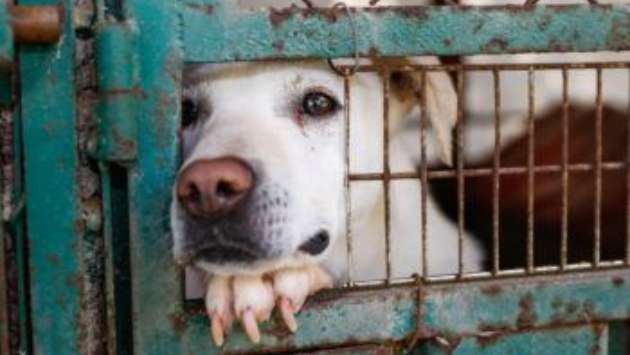
Coalition (AWC) has raised concerns over the outdated legal framework governing animal cruelty offences in Sri Lanka, calling for swift legislative reforms to better protect animals.
According to Charuka Wickremesekera, an executive member of the AWC, the country’s current penalties for animal cruelty offences remain based on the Animal Cruelty Act of 1907, enforced through the Cruelty to Animals Ordinance. Under this ordinance, individuals found guilty of most animal cruelty offences can be fined up to 100 rupees, imprisoned for up to three months, or both. In cases involving the killing of an animal in an unnecessarily cruel manner, the maximum imprisonment term extends to six months.
Wickremesekera said that while the Sri Lanka Police continue to make efforts to tackle animal cruelty cases, the absence of robust, modern laws hinders their ability to impose adequate punishments and raise public awareness through legal action.
“It’s time to improve the legal system and protect animals better,” Wickremesekera said.
He also highlighted the growing role of social media in raising public consciousness about animal welfare issues. The sharing of videos exposing acts of animal abuse has not only discouraged such behaviour but also empowered the public to report incidents more readily.
“People now think several times before harming animals after seeing these videos online,” he said. “In the past, there may have been many cases of animal cruelty, but there were no proper organizations where people could complain. Now, many animal welfare groups receive a large number of complaints from the public.”
The AWC believes that alongside stronger laws, public engagement and awareness will play a critical role in eradicating animal cruelty in the country.
Published: 7 Jun 2025

They don’t yell or protest. They don’t hold signs or march. But in Singapore, a chorus of concern is rising on their behalf. From living rooms to parliament, the country is facing hard questions about the way animals are seen, protected and valued.
In February, a 32-year-old Singaporean man was sentenced to 14 months in jail for abusing five community cats – a spree of violence that culminated in the horrific act of throwing two of them from high-rise public housing blocks in Ang Mo Kio.
Just three months later, in May, a 20-year-old man pleaded guilty to sexually abusing a neighbour’s cat in Bukit Panjang, an act captured on surveillance cameras.
These disturbing events, along with other recent high-profile cases, have triggered widespread public outrage and prompted a national reckoning over animal welfare. Campaigners warn that not only are abuse cases becoming more extreme, but they are also exposing gaps in Singapore’s animal protection laws – and underlining the need for a cultural shift in how animals are treated.
Animal cruelty reports reached a 12-year high last year, according to figures released in January by the Society for the Prevention of Cruelty to Animals (SPCA). The surge has galvanised Singaporeans, with some signing petitions and others submitting proposals to parliamentary representatives, demanding reforms and tougher enforcement.
Authorities have acknowledged the public concern. A legislative review is under way, examining the penalties for animal cruelty and the extent of current animal welfare laws.
Under current legislation, those convicted of animal cruelty in Singapore can face up to 18 months in jail, a fine of up to S$15,000 (US$11,700), or both. Repeat offenders risk three years’ imprisonment or a fine of up to S$30,000.
The Animals and Birds Act – the main legal framework governing animal protection – has been under review since at least 2022, according to a statement from the Animal and Veterinary Service on Friday. The act was last amended in 2014, and authorities say future revisions will incorporate feedback from stakeholder consultations held this year.
From 2017 to 2020, around 1,200 cases of alleged animal cruelty were investigated annually, according to Singapore broadcaster CNA. Between 2017 and 2021, 40 people were fined and 23 jailed for related offences.
In Jalan Besar, newly elected Member of Parliament Shawn Loh said many constituents had approached him with suggestions to strengthen animal protections in the wake of recent incidents.
Suggestions included stricter penalties for abusers, a registry barring convicted lawbreakers from pet ownership and improved community vigilance, Loh told This Week in Asia.

Shawn Loh, the newly elected member of parliament for Jalan Besar multi-seat constituency. Photo: Shawn Loh
“We therefore decided to hold an engagement session to hear all these views, so that I may appropriately engage the relevant agencies and effectively advocate for change,” he said, adding that the coming session had already reached full registration.
“Following our own discussions [with residents] at Jalan Besar GRC, I hope to put together a balanced list of practical recommendations for the government’s consideration and effectively advocate for change on behalf of our residents,” Loh added.
Fellow MP Lee Hui Ying, representing the Nee Soon Group Representation Constituency, made a similar call for stronger laws and enforcement – and better protection for animals – following a visit to the Springleaf Gardens estate on Tuesday following the death of a disembowelled cat.
Momentum is growing elsewhere as well. On May 31, Young PAP, the youth wing of the ruling People’s Action Party, hosted a focus group to discuss stronger animal cruelty laws.
“Cruelty is rising. Protection must keep pace,” the group wrote in a social media post about the event. “We must act now – let’s make animal cruelty a serious crime.”
Several online petitions have echoed that call. One petition, seeking harsher penalties, has garnered more than 12,000 signatures.
“Convicted animal abusers often receive punishment which can only be described as no more than a slap on the wrist,” said Dr Ryan Leong, co-founder of Pets Avenue Veterinary Clinic and Referrals.
“Such punishment will never deter the next person who is about to commit a similar crime.”
Shelby Doshi, 40, a former cat rescuer, said Singapore’s sophisticated surveillance infrastructure should make it easy to identify perpetrators – but that same urgency is lacking when the victims are animals.

Stray cats that were rounded up amid a government-run euthanasia programme in Singapore in 2003. Photo: AP
A person abusing someone in public in Singapore would likely be identified within a day with the help of video surveillance, she said. “Yet, when a similar or more drastic act happens to a community cat, the effort to apprehend [someone] is sorely lacking, simply because they are not viewed as important.”
“As a first-world country, we certainly can and should do better.”
Shef*, an adoption counsellor at Action for Singapore Dogs – a non-profit organisation focused on stray and abandoned dogs – said law enforcement agencies needed to be given “more teeth” to intervene when animals were in danger.
“Even if we see something, all we can do is tell the family we really need the dog back. But if the family says no, there’s only so much we can do as a non-profit,” said the 38-year-old, referring to cases of neglect involving adopted pets.
Public outrage tends to spike whenever a high-profile case of animal cruelty emerges, said Aarthi Sankar, executive director of the SPCA.
“They may urge the SPCA to intensify pressure on the authorities to implement stricter penalties and tighter enforcement of animal welfare laws, both of which the SPCA has been actively lobbying the government on,” she told This Week in Asia.

Sankar added that any legal reform must acknowledge not only the financial burden of animal abuse, but also the lasting trauma inflicted on sentient beings.
“They [animals] may physically recover from the abuse, but any traumatic experience will likely shape how they go on to perceive the world and their interactions with humans,” she said.
Kalai Vanan Balakrishnan, chief executive of Singapore’s Animal Concerns Research and Education Society (Acres), cautioned that legislative change alone would not be enough to stop abuse.
“I’ve been working here 15 years and I’ve seen multiple incidents where there is a high-profile case and uproar on social media. Then that dies down. Then it happens again,” Balakrishnan told This Week in Asia.
“There needs to be a push to get to the root of the problem. And it should involve a multi-agency effort.”
Such collaboration would allow organisations like Acres to share legal expertise and advocate for tougher penalties, he said.
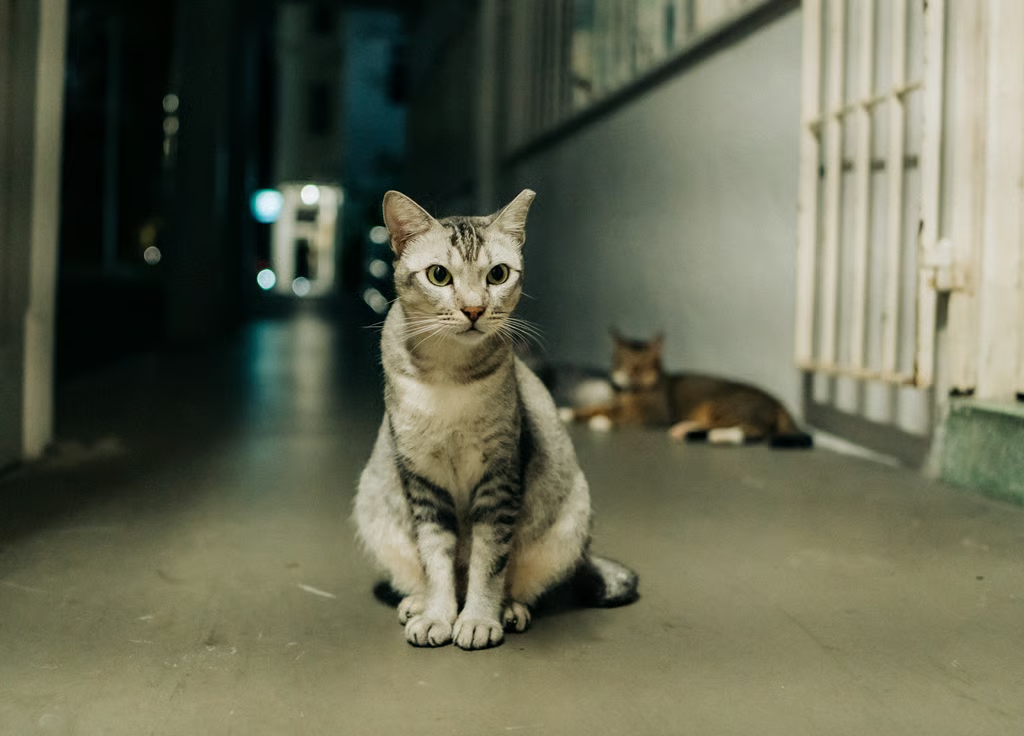
Two feral cats sit in front of a house in Singapore. Experts say cultivating compassion about animals’ pain can help reduce animal cruelty cases.
Photo: Shutterstock
He also pointed to deeply ingrained misconceptions about animal sentience – some still believe that certain species, like snakes, do not feel pain. A 2023 case in which men were filmed killing a python with a cleaver highlighted this ignorance.
“If from a young age, we cultivate compassion in children so that they know animals do feel pain and they’re sentient beings, as they grow up, I think we will see less of such cases,” he said.
That view is shared by Dr Genevieve Zhang, a veterinarian at Pets Avenue Veterinary Clinic, who said long-term change would require a cultural shift rooted in empathy.
When more people openly share stories about the emotional bonds they form with pets, non-owners may better understand animals’ capacity to feel and connect, she said.
“They need to understand animals have feelings as well and are lives we need to protect, given that humans can easily overpower them,” Zhang said.
*Full name withheld at interviewee’s request

You know; we campaigners in the welfare / rights movement have a saying; it goes:
‘Everybody has gone through something that has changed them in a way that they could never go back to the person they once were’.
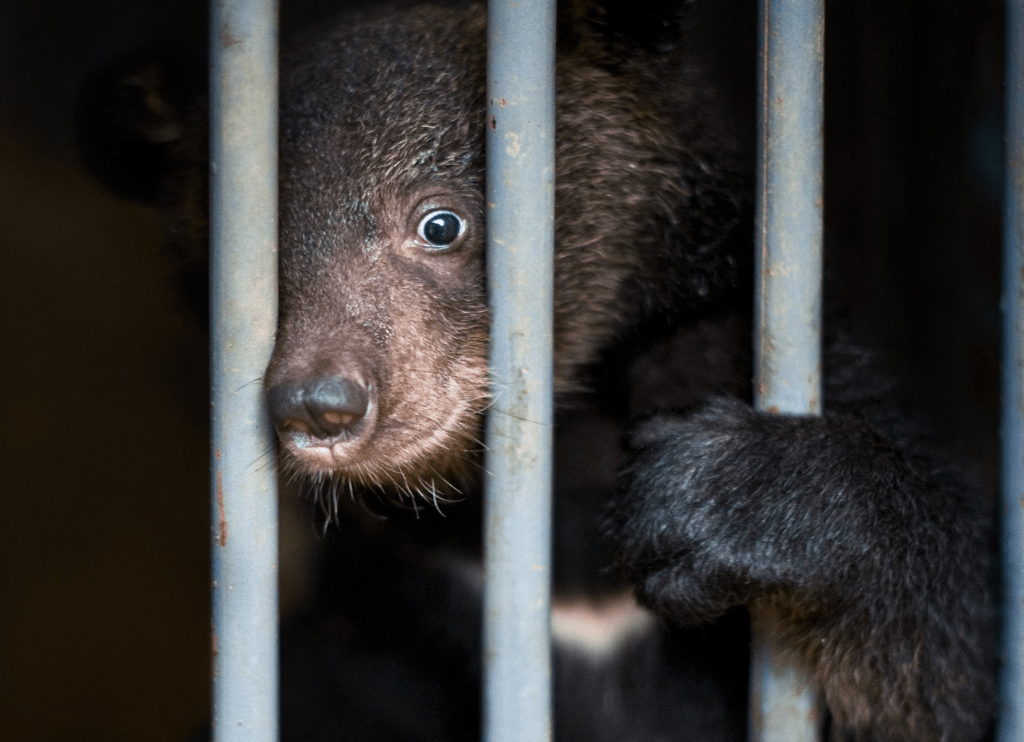
Jill is very much one such person that was changed by something she saw one day – her visit to a bear bile farm; and covertly diverting off down into the vaults to see the actual reality of this disgusting business, was the time, place and specific moment when her world changed forever. Jill says:
** Please refer to the photograph above. **
‘This is Hong, and I must tell you now ,,,,, this was the first and last time I ever saw her.
She never made it out of this farm; but this is the very moment ‘Animals Asia’ began.
By reaching out her paw to me, she started a movement.
Because of you, Hong has saved countless of her Moon Bear brothers and sisters from her own fate.
I still think about her so often – Please, for Hong, for Crescent, for ever set of precious paws still out there, will you give a gift today ?
We have the utmost respect for Jill – Animals Asia has grown from basically nothing at the start; to now what is one of the best and most professional campaign organisations in the world – take a look:
https://www.animalsasia.org/intl/social/jills-blog/
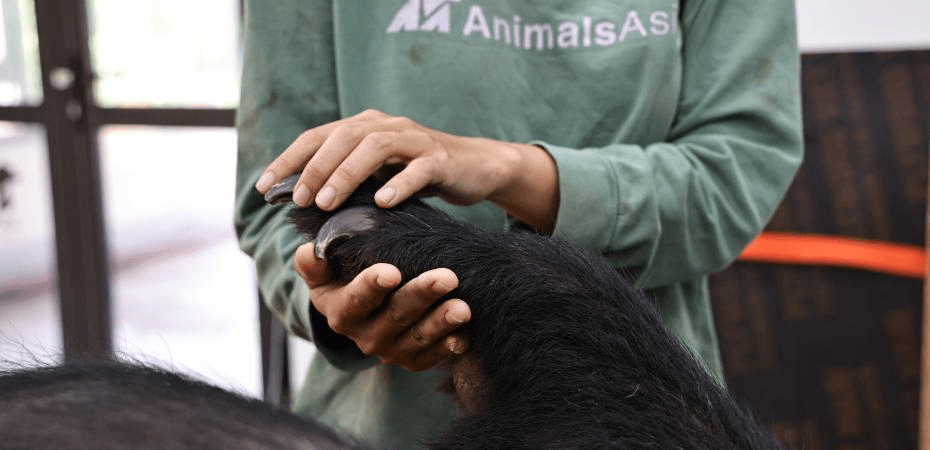
Photo – Animals Asia.
https://www.animalsasia.org/uk/about-us/who-we-are.html
https://www.animalsasia.org/uk/about-us/leadership/
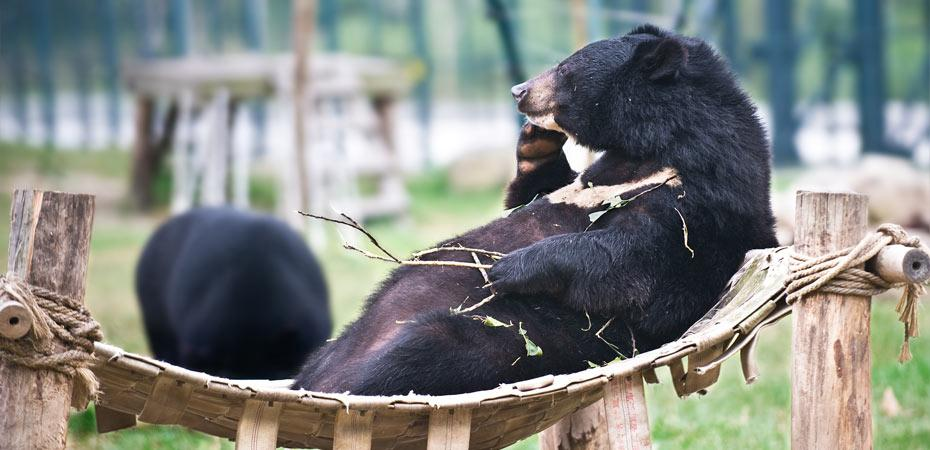
Photos – Animals Asia
https://www.animalsasia.org/intl/our-work/bear-sanctuaries/
https://www.animalsasia.org/uk/our-work/end-bear-bile-farming/

Photo – Animals Asia
https://www.animalsasia.org/uk/our-work/cat-and-dog-welfare/
https://www.animalsasia.org/uk/our-work/captive-animal-welfare-program/

Above – Jill
Below – Jill feeding one of the newly rescued bears.

We urge you please to give anything financially that you can to this wonderful organisation.
https://www.animalsasia.org/uk/donate/
Thank You – for those who have begun; and for those still waiting for a new life of freedom; Mark and Diana.
23.05.2025 – BBC News, Mumbay

Shrinking tiger habitat has led to man-animal conflict in Assam state
A Royal Bengal tiger was killed and dismembered by a mob in India’s north eastern state of Assam, a forest official has said.
Angry residents from a village in the Golaghat district reportedly took the step because the tiger had killed livestock in the area and posed a threat to their lives.
The state’s forest department has registered a case.
Instances of man-animal conflict are not new to Assam. This is the third tiger killing that has been reported this year.
Top forest official Gunadeep Das told Times of India newspaper that the tiger had died from sharp wounds and not gunshots.
The carcass was later recovered in the presence of a magistrate, reports say.
Mr Das told a local newspaper that “around a thousand people had gathered to kill the tiger” and that some of them attacked the tiger with machetes. He added that the tiger’s carcass had been sent for an autopsy.
Mrinal Saikia, a lawmaker from Assam state condemned the killing on X. He shared a video that showed the purported dead body of the tiger with parts of its skin, face and legs missing.
The BBC has not independently verified the video.
“This is a very painful act. The Earth is not only for humans, it is for animals as well,” he said in the post, adding that strict action will be taken against those involved in the killing.
Another forest official, Sonali Ghosh told local media that the origins of the tiger were unclear. According to reports, the animal was killed about 20km (12 miles) away from the Kaziranga National Park.
Latest data by Assam’s forest department shows the population of tigers in the state has steadily increased from just 70 in 2006 to 190 in 2019 due to various conservation efforts.
However, instances of tigers being killed due to conflict with villagers have been often reported in the media, which could be because of shrinking habitat and lack of protection of tiger corridors between different national parks in the state.
Tigers are a protected species under India’s Wildlife Protection Act (1972), which prohibits poaching, hunting and trade of tiger parts.

Wed 28 May 2025 11.08 CEST

…….
Well, novel certainly … not sure we may hope for Chris, CBE, being sainted by the Vatican any time soon … even with the link to S. Francis.
14 May 2025 7:39pm BST

Chris Packham with his portrait, which it is said depicts him as “a living saint”, in the Fitzrovia Chapel Credit: Richard Ansett/Radio Times
Chris Packham has posed as St Francis of Assisi in a portrait celebrating him as a “living saint”.
The portrait of the presenter and environmental campaigner is now on show on the altar of the Fitzrovia Chapel, central London.
Originally commissioned by Radio Times magazine to mark Earth Day, it is the work of photographic artist Richard Ansett.
Packham is surrounded by images of some of the UK’s most endangered species. Mr Ansett said it also made reference to Packham’s neurodiversity – the presenter was diagnosed with autism in his 40s.
“I hope that every pixel of this portrait offers a safe space for anyone challenged by neurodiversity. Packham’s remarkable connection to the natural world drives him relentlessly to save us from ourselves,” Mr Ansett said.
The portrait of Packham is available to view until May 21 at the former chapel, where it is described as a work “elevating him to the status of living saint”.
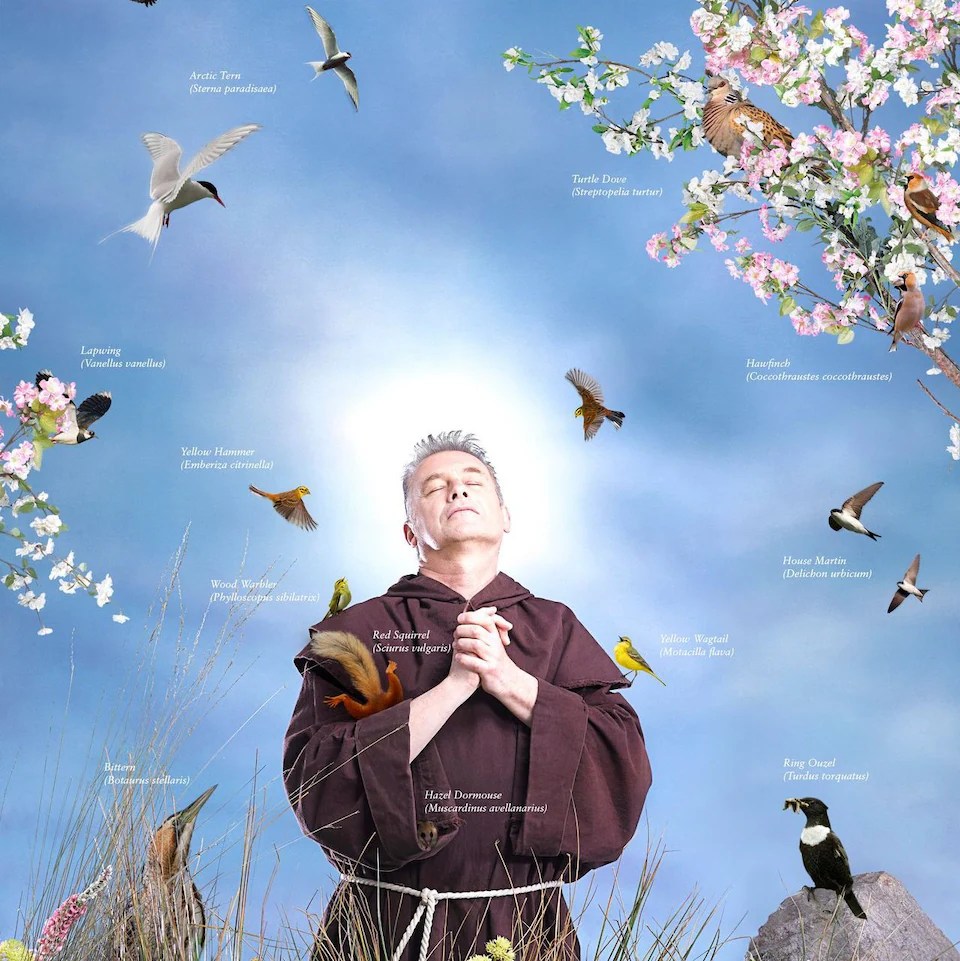
Chris Packham is surrounded by some of the UK’s most endangered species in the artwork Credit: Richard Ansett/Radio Times
Packham said: “This photo is about a fundamental level of engagement, an engagement of equals. It conveys the importance of nature to heal us, provide us with a sanctuary in times of terrible trouble.
“But the species featured are also rare or declining so it serves to remind us that our one and only home, our Earth, is on a brink too many are refusing to see and act to protect and repair.
“This is a photograph about love, a love of life, all life.”
The featured species include the red squirrel, the house martin, the woodcock and the hedgehog.
Mr Ansett, an award-winning photographer whose previous works include Sir Grayson Perry in the style of the Madonna and Child, added that the Packham portrait “recognises the difficulties that he has prevailed over to become a success in his career and a positive light for so many people”.
It is “a personal tribute to Packham’s humanity in challenging the worst parts of ours, in our ambivalence to the destruction created in the wake of our own needs”, the photographer said.
(a new action in relation to this subject already covered extensively on this site)
https://www.idausa.org/campaign/animal-companions/latest/stop-online-cat-torture-groups/
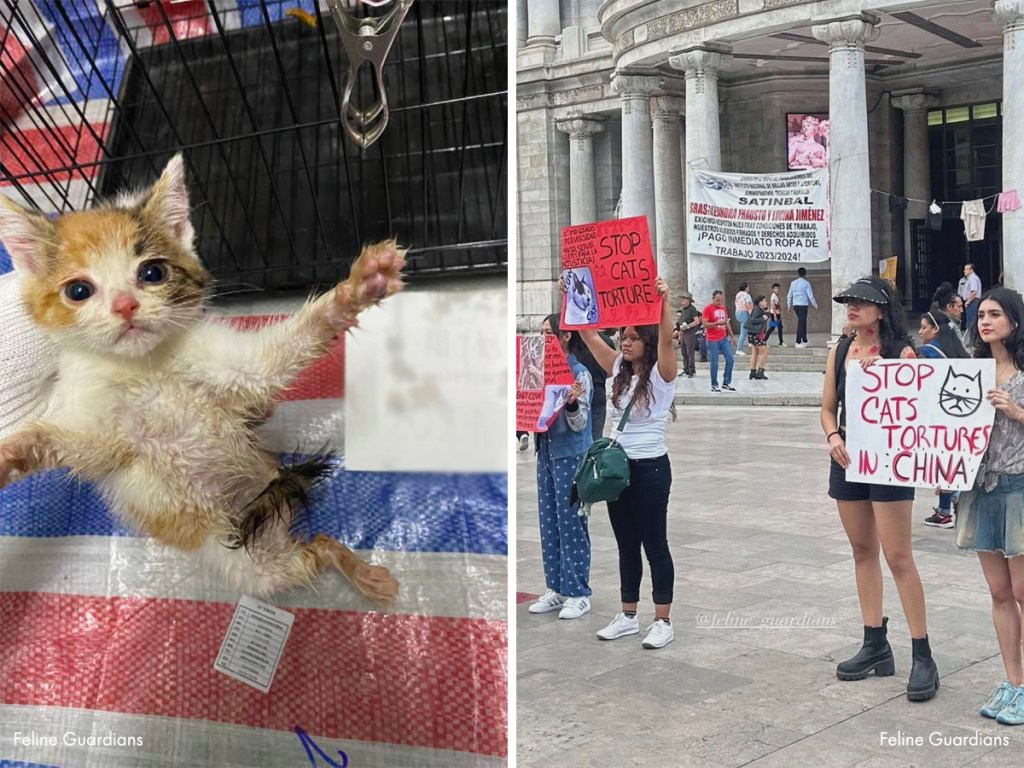
Many people scrolling through various social media sites are completely unaware of sinister channels and private groups that promote and distribute graphic and heartbreaking content of cats and other animals being sadistically maimed, tortured, and killed for views and money. Tell social media platforms to shut these accounts down!
Between July 2020 and August 2021, the Social Media Animal Cruelty Coalition documented 5,480 instances of animal cruelty content found on YouTube, Facebook, or TikTok, which didn’t even include private groups or conversations specifically set up to exchange cruelty content. However, just those few thousand videos were viewed a staggering 5,347,809,262 times.
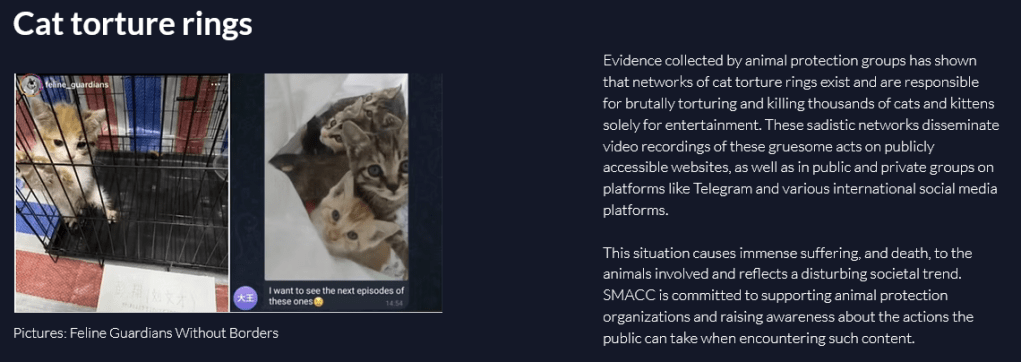
In 2023, multiple horrifying videos of cats being tortured appeared online, causing global outrage. Investigative work by Feline Guardians found that the virality of this content led to subsequent cat torture rings producing and distributing hundreds of new torture videos that circulated across Telegram and other social media platforms.
Between May 2023 and June 2024, an estimated 500 cats became victims of unspeakable cruelty at the hands of members of this cat torture network, with 31 cats killed by a single person.
Further data collected shows an alarming 300% increase in cat torture cases between December 2024 and early 2025, particularly originating from China.
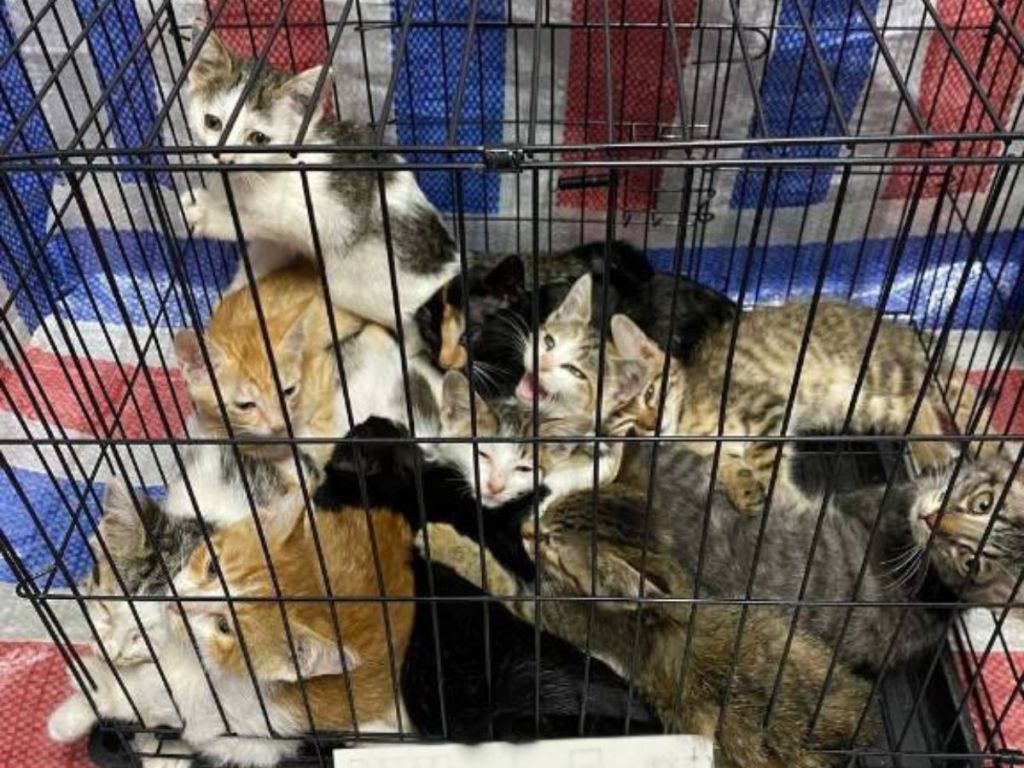
This organized group of criminals was found to be mass producing videos, largely in China, to take advantage of a lack of animal cruelty laws, sharing them on social media, creating websites on the dark net to distribute videos, and using Chinese social media sites to promote these websites and recruit members. To the frustration of Chinese activists and others working to shut this down, less than 1% of abusers have been investigated by authorities.
Dozens of groups on Telegram with thousands of participants are exchanging as much as 100+ of videos daily of horrifying content. More troubling still are the attempts to encourage children and young adults to watch and commit animal torture themselves.
Tragically, this has been found to be an international issue with cruelty content originating from many countries with multiple platforms involved, and it’s been linked to other criminal activity, such as child sex abuse material, terrorism, animal theft, and extortion.
Platforms that allow users to engage in the production and distribution of this content must take action to stop it.

… please refer to the page for contacts/suggestions …




 World Animals Voice