

North West Kent , England. https://youtu.be/-ZOuYo-9afc
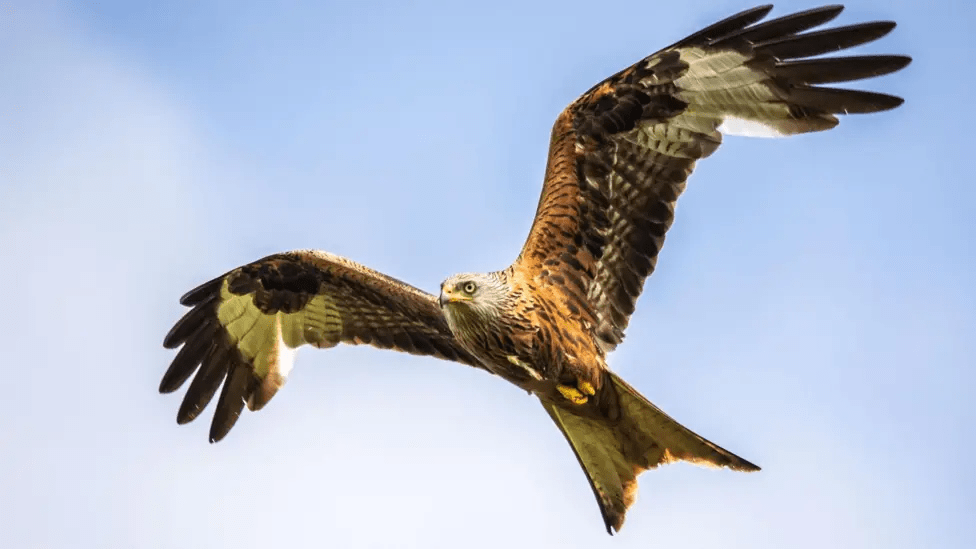
Well, just finishing off the large feeding post / table with the hope that Red Kites are soon going to make the gardens here a regular stop for food. Singles have been seen over the last few months with their very impressive 6 feet wingspan, and we may even think we have a breeding pair. Trying to encourage them as welcome visitors to ‘our patch’.

https://en.wikipedia.org/wiki/Red_kite
https://www.bing.com/images/search?q=red+kite&qpvt=Red+kite&form=IQFRML&first=1
https://www.bing.com/videos/search?q=red+kite&FORM=HDRSC4
https://www.woodlandtrust.org.uk/trees-woods-and-wildlife/animals/birds/red-kite/
https://www.rspb.org.uk/birds-and-wildlife/red-kite
https://www.wildlifetrusts.org/wildlife-explorer/birds/birds-prey/red-kite


More reading:


Kent, England. 16/11/25. ‘Normal’ Sunday morning – around 9 am – decided to sit in the kitchen and enjoy a cup of tea and a few biscuits. Glanced out the window to see the regular birds visiting the garden, when suddenly my eyes went over and upwards towards a neighbours patch.
What was I witnessing ? – the incredible ‘Red Kite’, to me, one of the most beautiful raptors ever. A wingspan of around 180cm, or approximately 6 feet.
My great neighbour and friend, Frank, had sent me a text earlier in the week to tell me that one had visited his garden. At that time I was unable to view. But today, here it was, circling round over my and a few other gardens. I had the impression from its actions that it was hunting for prey on an embankment at the end of the garden. A magnificent bird, and hopefully a regular to our patch – Regards Mark.
https://en.wikipedia.org/wiki/Red_kite
https://www.rspb.org.uk/birds-and-wildlife/red-kite


Please be like me and support Wikipedia if you can, as per their request on the site. it will soon be Christmas and surely most folk can give a few quid, or more, to support the team at this amazing, FREE on line encyclopedia; – thanks.

Mark – I think every animal in every video needs a bloody good drink at the very least !!! – don’t you ?
Well. where do I start ?
WAV is from the county of Kent https://www.bing.com/search?pglt=299&q=kent+england+images&cvid=1d45b283e1e1405bbb1b0ba49eec58fc&gs_lcrp=EgRlZGdlKgYIARBFGDsyCQgAEEUYOxj5BzIGCAEQRRg7MgYIAhAAGEAyBggDEC4YQDIGCAQQRRg9MgYIBRBFGDwyBggGEEUYQTIGCAcQRRhBMgYICBBFGEHSAQg4NjQ2ajBqMagCALACAA&FORM=ANNTA1&PC=DCTS which is directly to the South East of London. For our overseas visitors, Kent is very ‘near to London’, but is VERY different from London. Fortunately, you can visit the county and still see its beautiful historic buildings and real countryside, without realising that it borders one of the wonderful capital cities of the world, London.
So, what is coppicing ? An technique undertaken in Kent and a few other SE counties singe Roman times – I think it best to refer you to wikipedia and Forest Research to give you very detailed information:
https://en.wikipedia.org/wiki/Coppicing
https://www.forestresearch.gov.uk/research/lowland-native-woodlands/coppice-woodlands/
Here are many photographs of coppiced areas and the beautiful fencing that is made by undertaking it: https://www.bing.com/images/search?q=where+do+they+coppice+in+the+world&qpvt=where+do+they+coppice+in+the+world&form=IQFRML&first=1

Coppicing is a special technique used by specially trained persons. Branches are cut back at special angles almost to the original tree stump, but the regrowth which then happens provides more control of the woodland. Coppicing is undertaken at regular intervals and from the WAV side of things, that being animals, the coppiced fencing techniques are used as borders around small fields (not huge endless areas as seen in some other nations) in the UK, which in turn then provide encouragement for lots of wildlife to live – including birds, badgers, foxes, rabbit and hares, deer and especially butterflies, moths and bees which are sadly in decline.
How each stage of coppicing benefits wildlife – https://www.wildlifebcn.org/blog/wildlife-trust-bcn/how-each-stage-coppice-cycle-benefits-wildlife


Coppicing is a dying trade performed by specialists. It retains beautiful woodland, whilst encouraging a huge range of wildlife animals. It needs encouragement to retain this technique – it must never be allowed to die out – Regards Mark.
https://www.bing.com/videos/search?q=where+do+they+coppice+in+the+world&FORM=HDRSC4