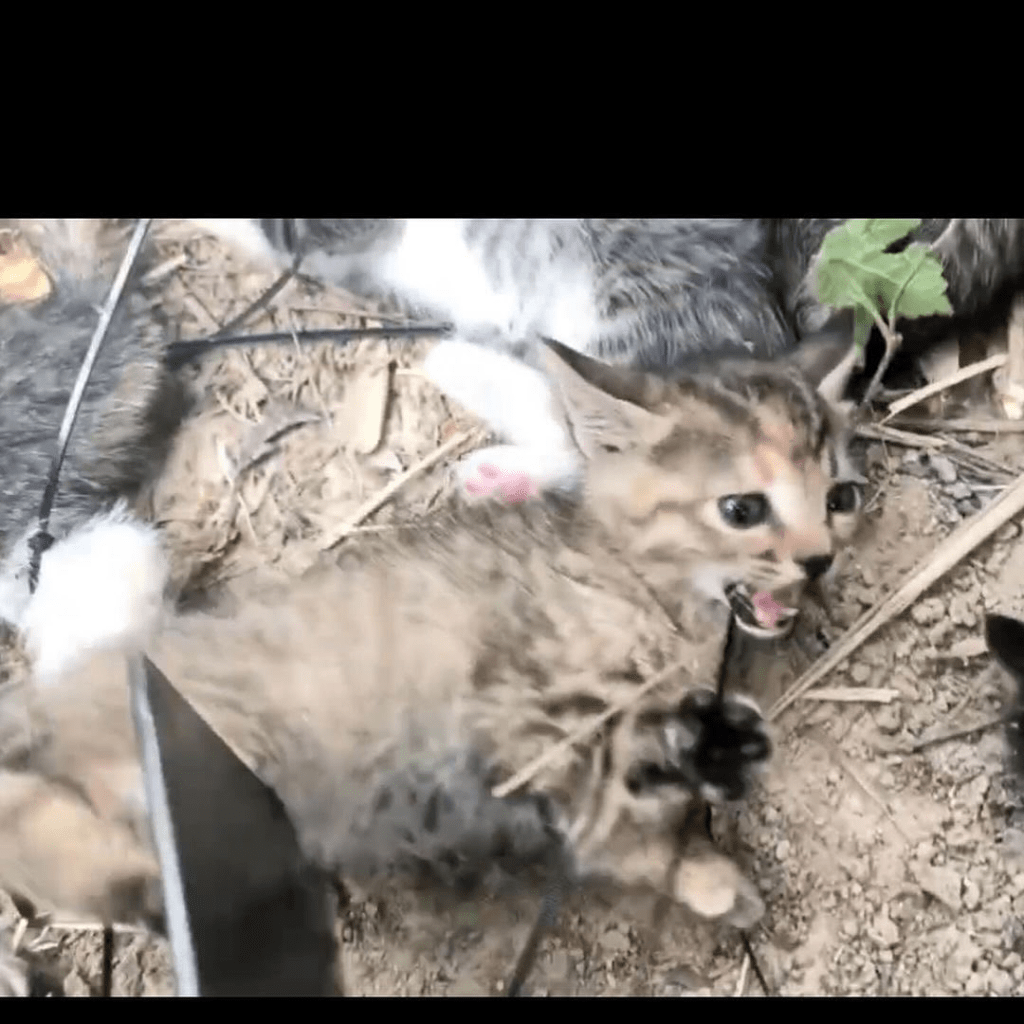
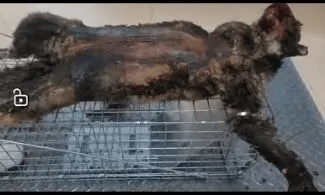
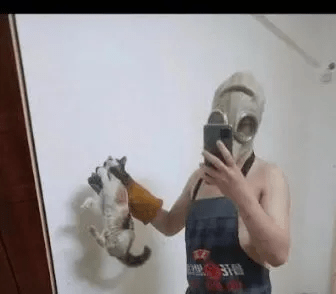
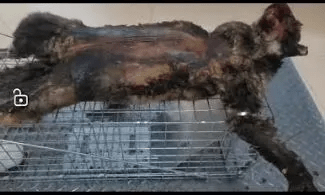
Advertising, and giving away animals for free online, can be a potential death sentence for the animals involved.
Not everyone who takes the ‘free animals’ is going to provide them with a loving, caring home – sometimes they are purchased by abusers and torturers who get enjoyment out of causing untold suffering to these animals – see the link below about the man sentenced to 8 years for torturing and killing at least 10 cats.
Here below is some very helpful advice about advertising animals for free online = DONT DO IT, THINK FIRST ABOUT THE POTENTIAL IMMENSE SUFFERING AND DEATH SENTENCE THE ANIMAL COULD FACE.
It is a dangerous world out there, with potential abusers willing to take advantage of animals offered for free. Please don’t do it – read the following and think before you act, thank you.
As many of you will know, at WAV we have been covering for many months the underground world of sadistic cat torturers / abusers. See the following for more information and our links with Feline Guardians.
Well now we have some positive news to share. The issue has been taken up by the BBC and here is the link to the article which was published yesterday, 4tg August 2025.
This is for information only, but now this issue has the backing of the BBC, we greatly hope that things will move forward at pace.
The Chinese authorities have made it virtually impossible for us to provide data in both London and Berlin; but in the following you will see links to booth UK and German petitions about this. We decided to keep the petitions open with the hope the petition wording will inform everyone about these abuses.
They may appear to be in good condition, but a Hotel in China using red pandas to wake up guests for ‘that ultimate experience’ has been rapped by the local Forestry Commission over concerns about animal rights and hygiene concerns.
Guests can feed chunks of apple to the animals who visit them in their bedrooms for ‘that ultimate wake up experience’ – but there are also concerns about what could happen with children experiencing this encounter.
The Lehe Ledu Liangjiang Hotel offers Red Panda Themed Holidays for its guests; but experiences posted on social media attracted the attention of the Forestry Commission who have taken action by closing down all contact between guests and the very attractive animals.
The hotel is located in South West China.
Why the netting ? – are the animals as free as they declare ?
Children, the animals, and hygiene is of particular concern to the authorities.
Wake up to ‘that ultimate experience’.
Whilst we support anything in China that works more to promoting the better treatment of animals; we are not sure that this is the way. Farm animals; for example, desperately need national legislation to be introduced for their protection, and as we have covered on this site especially; the abuse and torture of cats, using the dark web, is something that also really needs attention and action by the Government. We have provided information; so why no action ?
Monzo said he ‘received guidance and communication’ in his head that the cat ‘was being used against me by negative forces’
Friday 13 June 2025
Marcus Arduini Monzo with a samurai sword that was shown to the jury in his trail at the Old Bailey (Metropolitan Police/PA) (PA Media)
An alleged sword attacker tried to cook and eat his pet cat, but claimed to have no memory of killing a schoolboy during a rampage in London.
Prosecutors say Marcus Arduini Monzo, 37, skinned and deboned his cat Wizard before launching a 20-minute spree of violence in Hainault, east London, while allegedly under the influence of cannabis on 30 April last year.
Monzo is accused of murdering 14-year-old Daniel Anjorin, as well as mowing down pedestrian Donato Iwule with a van and attacking two police officers and a couple in their home on April 30.
At the Old Bailey on Friday, Monzo cried as he said he did not intend to harm anybody.
In the days before the attacks, Monzo said he “received guidance and communication” in his head that the cat “was being used against me by negative forces”. He told jurors he took his pet cat to a park to get rid of it.
He said the cat returned to his Newham flat on the morning of the rampage, and that he strangled it despite claiming he did not want to.
Asked why it was skinned, he told jurors: “After I strangled him he (the communication) was telling me that the cat had taken energy from me and to replenish and get the energy back I had to eat the cat.”
Monzo said he tried to cook it, but became “panicked and rushed”, believing an event “like an Armageddon” was happening.
Continue reading …
***************
Clearly a nut, the guy. But again, the link between violence towards Animals and Humans .. as if more proof were needed.
They don’t yell or protest. They don’t hold signs or march. But in Singapore, a chorus of concern is rising on their behalf. From living rooms to parliament, the country is facing hard questions about the way animals are seen, protected and valued.
In February, a 32-year-old Singaporean man was sentenced to 14 months in jail for abusing five community cats – a spree of violence that culminated in the horrific act of throwing two of them from high-rise public housing blocks in Ang Mo Kio.
Just three months later, in May, a 20-year-old man pleaded guilty to sexually abusing a neighbour’s cat in Bukit Panjang, an act captured on surveillance cameras.
These disturbing events, along with other recent high-profile cases, have triggered widespread public outrage and prompted a national reckoning over animal welfare. Campaigners warn that not only are abuse cases becoming more extreme, but they are also exposing gaps in Singapore’s animal protection laws – and underlining the need for a cultural shift in how animals are treated.
Animal cruelty reports reached a 12-year high last year, according to figures released in January by the Society for the Prevention of Cruelty to Animals (SPCA). The surge has galvanised Singaporeans, with some signing petitions and others submitting proposals to parliamentary representatives, demanding reforms and tougher enforcement.
Authorities have acknowledged the public concern. A legislative review is under way, examining the penalties for animal cruelty and the extent of current animal welfare laws.
Under current legislation, those convicted of animal cruelty in Singapore can face up to 18 months in jail, a fine of up to S$15,000 (US$11,700), or both. Repeat offenders risk three years’ imprisonment or a fine of up to S$30,000.
The Animals and Birds Act – the main legal framework governing animal protection – has been under review since at least 2022, according to a statement from the Animal and Veterinary Service on Friday. The act was last amended in 2014, and authorities say future revisions will incorporate feedback from stakeholder consultations held this year.
From 2017 to 2020, around 1,200 cases of alleged animal cruelty were investigated annually, according to Singapore broadcaster CNA. Between 2017 and 2021, 40 people were fined and 23 jailed for related offences.
In Jalan Besar, newly elected Member of Parliament Shawn Loh said many constituents had approached him with suggestions to strengthen animal protections in the wake of recent incidents.
Suggestions included stricter penalties for abusers, a registry barring convicted lawbreakers from pet ownership and improved community vigilance, Loh told This Week in Asia.
Shawn Loh, the newly elected member of parliament for Jalan Besar multi-seat constituency. Photo: Shawn Loh
“We therefore decided to hold an engagement session to hear all these views, so that I may appropriately engage the relevant agencies and effectively advocate for change,” he said, adding that the coming session had already reached full registration.
“Following our own discussions [with residents] at Jalan Besar GRC, I hope to put together a balanced list of practical recommendations for the government’s consideration and effectively advocate for change on behalf of our residents,” Loh added.
Fellow MP Lee Hui Ying, representing the Nee Soon Group Representation Constituency, made a similar call for stronger laws and enforcement – and better protection for animals – following a visit to the Springleaf Gardens estate on Tuesday following the death of a disembowelled cat.
Momentum is growing elsewhere as well. On May 31, Young PAP, the youth wing of the ruling People’s Action Party, hosted a focus group to discuss stronger animal cruelty laws.
“Cruelty is rising. Protection must keep pace,” the group wrote in a social media post about the event. “We must act now – let’s make animal cruelty a serious crime.”
Several online petitions have echoed that call. One petition, seeking harsher penalties, has garnered more than 12,000 signatures.
“Convicted animal abusers often receive punishment which can only be described as no more than a slap on the wrist,” said Dr Ryan Leong, co-founder of Pets Avenue Veterinary Clinic and Referrals.
“Such punishment will never deter the next person who is about to commit a similar crime.”
Shelby Doshi, 40, a former cat rescuer, said Singapore’s sophisticated surveillance infrastructure should make it easy to identify perpetrators – but that same urgency is lacking when the victims are animals.
Stray cats that were rounded up amid a government-run euthanasia programme in Singapore in 2003. Photo: AP
A person abusing someone in public in Singapore would likely be identified within a day with the help of video surveillance, she said. “Yet, when a similar or more drastic act happens to a community cat, the effort to apprehend [someone] is sorely lacking, simply because they are not viewed as important.”
“As a first-world country, we certainly can and should do better.”
Shef*, an adoption counsellor at Action for Singapore Dogs – a non-profit organisation focused on stray and abandoned dogs – said law enforcement agencies needed to be given “more teeth” to intervene when animals were in danger.
“Even if we see something, all we can do is tell the family we really need the dog back. But if the family says no, there’s only so much we can do as a non-profit,” said the 38-year-old, referring to cases of neglect involving adopted pets.
Public outrage tends to spike whenever a high-profile case of animal cruelty emerges, said Aarthi Sankar, executive director of the SPCA.
“They may urge the SPCA to intensify pressure on the authorities to implement stricter penalties and tighter enforcement of animal welfare laws, both of which the SPCA has been actively lobbying the government on,” she told This Week in Asia.
Sankar added that any legal reform must acknowledge not only the financial burden of animal abuse, but also the lasting trauma inflicted on sentient beings.
“They [animals] may physically recover from the abuse, but any traumatic experience will likely shape how they go on to perceive the world and their interactions with humans,” she said.
Kalai Vanan Balakrishnan, chief executive of Singapore’s Animal Concerns Research and Education Society (Acres), cautioned that legislative change alone would not be enough to stop abuse.
“I’ve been working here 15 years and I’ve seen multiple incidents where there is a high-profile case and uproar on social media. Then that dies down. Then it happens again,” Balakrishnan told This Week in Asia.
“There needs to be a push to get to the root of the problem. And it should involve a multi-agency effort.”
Such collaboration would allow organisations like Acres to share legal expertise and advocate for tougher penalties, he said.
Two feral cats sit in front of a house in Singapore. Experts say cultivating compassion about animals’ pain can help reduce animal cruelty cases. Photo: Shutterstock
He also pointed to deeply ingrained misconceptions about animal sentience – some still believe that certain species, like snakes, do not feel pain. A 2023 case in which men were filmed killing a python with a cleaver highlighted this ignorance.
“If from a young age, we cultivate compassion in children so that they know animals do feel pain and they’re sentient beings, as they grow up, I think we will see less of such cases,” he said.
That view is shared by Dr Genevieve Zhang, a veterinarian at Pets Avenue Veterinary Clinic, who said long-term change would require a cultural shift rooted in empathy.
When more people openly share stories about the emotional bonds they form with pets, non-owners may better understand animals’ capacity to feel and connect, she said.
“They need to understand animals have feelings as well and are lives we need to protect, given that humans can easily overpower them,” Zhang said.