Shark liver oil helps make vaccines more effective, but increased demand for the substance could harm critically endangered species.
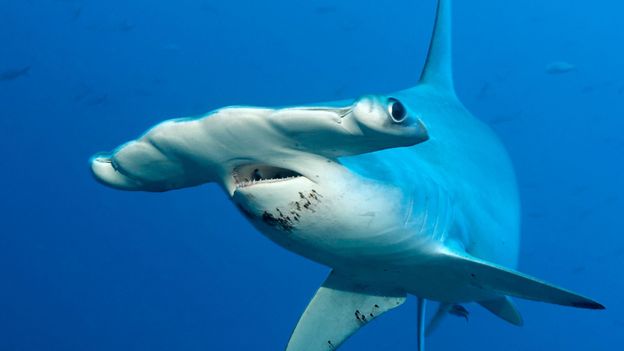
Trawling for prey at more than a thousand feet under the surface, the scalloped hammerhead shark relies on a special oil in its liver to survive the crushing pressures of the deep.
Shark liver oil, or squalene, is a fatty substance that provides vital buoyancy for this critically endangered species and many others. But it’s also a lifesaver for humans as a boosting agent in vaccines, called an adjuvant, that improves the immune system and makes vaccines more effective.
Is the climate crisis pushing the world towards a ‘point of no return’?
A new study claims we may have already reached a hypothetical ‘point of no return’, but other researchers say this is ‘at odds’ with what we know about climate science. Daisy Dunne examines the arguments
It’s a question with no simple answer. Even if humans quit polluting the world overnight, scientists say it would take many decades for the Earth’s climate to reach a new equilibrium. This is largely linked to how heat is stored in the world’s oceans, which can, in turn, have an influence on air temperatures.
Matters might be complicated further by potential “tipping points” in nature that might be triggered by global warming.
For example, rising temperatures are causing permafrost, frozen ground found in high northern latitudes that stores vast amounts of carbon, to thaw out. This thawing causes more carbon to be released into the atmosphere, which, in turn, is adding to rising temperatures. There is a worry that such positive “feedback loops” could ultimately lead to rapid heating, and limiting global warming is important for avoiding such feedbacks.
A new study, published today in the journal Scientific Reports, makes the bold claim that, hypothetically speaking, we could “already [be] past a point of no return for global warming”.
Using a simplistic mathematical model, it simulates what would happen in a hypothetical world where greenhouse gas emissions were stopped in 2020. It finds that, in the simulations, the world continues to heat up for hundreds of years as a result of positive feedback loops such as permafrost thaw.
However, leading climate scientists from across the UK and beyond have urged people to take the results of the new study with extreme caution.
Prof Richard Betts MBE, chair of climate impacts of the University of Exeter and the Met Office, told The Independent: “Having talked to various colleagues, we don’t think there’s any credibility in the model.
“Feedbacks are important. The possibility of eventually becoming committed to long-term climate change is important. But there is no real evidence that this has already happened.”
Because the model used in the new study is simplistic, it does not well simulate important climate feedback loops, Prof Betts explains.
In addition to permafrost thaw, the melting of Arctic sea ice is also an important potential feedback. Warming of the world’s oceans and atmosphere is causing the ice to melt at an astonishing rate. Bright white ice reflects away sunlight, and, once it disappears, the exposed dark ocean begins to absorb more sunlight, heating the ocean further – leading to further ice melting.
Though this feedback is important to take into consideration, the model used in the new study does not well simulate how it works, says Prof Betts.
The results also stand in contradiction with the findings of the upcoming assessment report from the Intergovernmental Panel on Climate Change (IPCC), an independent group made up of the world’s leading climate scientists.
“The results presented in the paper are interesting but are really at odds with the science community’s understanding of how the climate is changing,” says Prof James Renwick, head of the school of geography, environment and earth sciences at the Victoria University of Wellington.
“The latest round of climate model simulations show that if greenhouse gas emissions were to stop immediately, there is likely to be very little further increase in temperatures and no sign of warming resuming in future.”
The models used by the IPCC are more advanced and better able to simulate the behaviour of the Earth’s feedback loops, says Prof Mark Maslin, a climate scientist at University College London.
“These results do need to be confirmed by more complex climate models used in the IPCC reports, because these results come from one model which has not undergone the rigorous cross checking and testing that is usual for climate models,” he says.
In their paper, the authors note the simplicity of their model by saying that they “encourage other model builders to explore our discovery in their [bigger] models, and report on their findings”.
It is important to understand that it is not too late to take actions to address the climate crisis, says Prof Betts: “I really wouldn’t want people to take [the research paper] seriously and start getting worried that the climate catastrophe is now unavoidable.”
Claims that the world is “doomed” to suffer extremely high levels of warming can be detrimental to global efforts to tackle the climate crisis, explains Leo Barasi, author of the Climate Majority.
“Claims the world is irreversibly doomed to runaway warming, and no amount of emission cuts can help us, can always find an audience, just like claims that climate change is nothing to worry about,” he told The Independent.
“But these assertions usually rest on outlying studies or data that’s been taken out of context and ignore all the opposing evidence.
“Telling the world that we’re doomed, when that’s not backed up by the evidence, is irresponsible and unlikely to motivate the urgent action that can still prevent disastrous warming.”
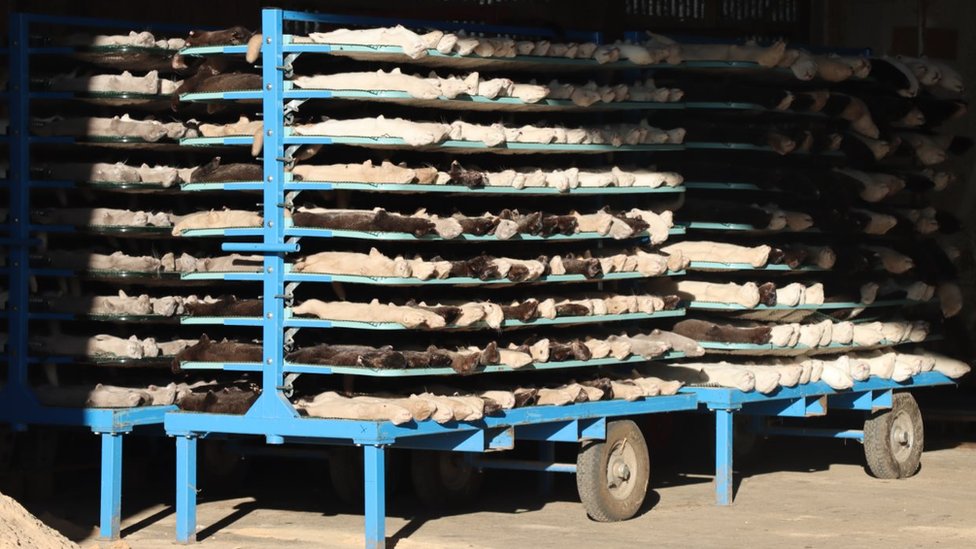
Kopenhagen Fur, the world’s largest fur auction house and owned by Danish fur breeders, has announced plans to close. This follows the news last week that Denmark announced plansto cull all its mink – as many as 17 million – after a mutated form of coronavirus that can spread to humans and threatens the efficacy of potential vaccines was found on mink factory farms.
Jesper Lauge, CEO at Kopenhagen Fur said: “the loss of the Danish mink production means that the ownership base disappears and therefore, the company’s management has decided to gradually downsize the company and make a controlled shutdown over a period of 2-3 years, “
The devastating impact of fur factory farming is now exposed as unsustainable, unprofitable and cruel. The coronavirus mink outbreaks have made news around the world. It is upsetting to see so many innocent animals killed in such high numbers and worrying to contemplate the potential threat to human health.
Fur farming is a disaster for animal welfare and a risk to human health. It is now important for governments to ban this cruelty once and for all.
A number of outrageous failings in the animal welfare of mink have been reported in Denmark over recent days, including:
A viral video showing a still alive mink surrounded by dead carcasses in a killing box. The animal, which is half gassed, is struggling to breath through an open gap in the box as workers attempt to roughly push the animal’s head back inside.
Numerous accounts report that thousands of mink bodies have been strewn across a motorway in Denmark.
Denmark’s animal welfare group, Dyrenes Beskyttelse, has reported the Danish state to the police amid accusations of cruelty.
The bombshell announcement from Kopenhagen Fur comes as the European Centre for Disease Prevention and Control said on Thursday, 12 November, that the virus mutation found in Danish mink “could potentially affect the level of overall vaccine effectiveness of vaccines under development.”
England: Respect for Animals Campaign’s Director, Mark Glover, said:
“I have devoted decades of my life to campaigning against the fur industry. The amount of animal cruelty I have seen during these years has stayed with me. The fur trade is a morally repugnant industry, relying on terrible animal suffering for a product no one really needs.
We have come a long way in the 20 years since the UK fur farming ban passed into law, which was a bitter fight.
The demise of Kopenhagen Fur is welcome but we should not forget the countless millions of suffering animals this company has profited from for around 90 years.
We now need to shut down the morally bankrupt fur industry everywhere. We won’t stop until we succeed.”
——————————————————–
Kopenhagen Fur, the world’s largest fur auction house and owned by Danish fur breeders, has announced plans to close. This follows the news last week that Denmark announced plansto cull all its mink – as many as 17 million – after a mutated form of coronavirus that can spread to humans and threatens the efficacy of potential vaccines was found on mink factory farms.
The 90-year-old company says it has enough pelts to hold auctions next year and possibly further into the future, but will start liquidating the business after that, according to a statement on its website.
Jesper Lauge, CEO at Kopenhagen Fur said: “the loss of the Danish mink production means that the ownership base disappears and therefore, the company’s management has decided to gradually downsize the company and make a controlled shutdown over a period of 2-3 years, “
The devastating impact of fur factory farming is now exposed as unsustainable, unprofitable and cruel. The coronavirus mink outbreaks have made news around the world. It is upsetting to see so many innocent animals killed in such high numbers and worrying to contemplate the potential threat to human health.
Fur farming is a disaster for animal welfare and a risk to human health. It is now important for governments to ban this cruelty once and for all.
A number of outrageous failings in the animal welfare of mink have been reported in Denmark over recent days, including:
A viral video showing a still alive mink surrounded by dead carcasses in a killing box. The animal, which is half gassed, is struggling to breath through an open gap in the box as workers attempt to roughly push the animal’s head back inside.
Numerous accounts report that thousands of mink bodies have been strewn across a motorway in Denmark.
Denmark’s animal welfare group, Dyrenes Beskyttelse, has reported the Danish state to the police amid accusations of cruelty.
The bombshell announcement from Kopenhagen Fur comes as the European Centre for Disease Prevention and Control said on Thursday, 12 November, that the virus mutation found in Danish mink “could potentially affect the level of overall vaccine effectiveness of vaccines under development.”
The UK has imposed an immediate ban on all visitors from Denmark amid concerns about the new strain.
The political fallout in Denmark has been complicated. The PM’s decision to wipe out Denmark’s entire mink population lacked a legal mandate, forcing the government to regroup and draft an emergency bill. That failed to win the three-quarters parliamentary support needed to pass, and the legislative process is now in limbo.
The government currently expects a standard bill to pass with a simple majority of more than 50%, and wants all Danish mink farming to be banned until 2022. That means breeding animals will be wiped out, meaning the scale of Denmark’s mink industry will be unrecognisable for the foreseeable future and may never recover.
This is mainly for UK supporters; but we guess international e mails are also accepted – which strengthens the case.
As our many UK supporters will know; Tesco, a major food store and supplier, have a saying that ‘Every Little Helps’.
How about that is changed to ‘Every E mail Helps’. Click on the link below and send a clear message about Amazon rain forest destruction to the new Tesco CEO Ken Murphy.
Tell him; we don’t want the beautiful Amazon forests destroyed for the production of cheap meat that is sold in your stores – simple as that !
Regards Mark
(sent to us by Liza in London – animal campaigner buddy)
Last month Tesco announced that they’re going to increase their sales of plant-based meat alternatives by 300%. [1]
But unless they also reduce the amount of industrial meat on their shelves, forests like the Amazon will continue to burn. For the first time in six years Tesco now has a new CEO, and we have a real opportunity to make sure he does the right thing.
Will you email Tesco’s new CEO, Ken Murphy and ask him to stop supporting deforestation?
Opportunities like this don’t come around very often and a new CEO could mean a fresh start. Ken Murphy has the chance to do something positive with his time in charge, but he needs to act fast.
As you’re reading this email South American forests like the Amazon continue to be destroyed to produce industrial meat, and the situation is getting worse. [2] As the UK’s biggest supermarket, Tesco is directly involved in this destruction by selling unsustainable amounts of meat, and by doing business with forest-destroying companies.
Earlier this year over 60,000 of you emailed Tesco’s former CEO, which helped lead to their announcement on plant-based meat alternatives. Now there’s a new CEO in charge, we need to keep up the pressure to make sure Tesco doesn’t stop there.
Please email Ken Murphy now and tell him personally about why we need to protect our forests.
With a new CEO in charge, this is a unique opportunity to make our voices heard. And the more of us who get in touch, the louder the message will be – Tesco should lead by example and stand up to deforestation.
I’ve drafted an email to new CEO Ken Murphy that you can send or edit. It asks him to cut ties with forest-destroying meat companies and halve the amount of meat that Tesco sells.
Adding a line at the start of the email to express why you care about deforestation will have an even bigger impact on Ken Murphy. You can also edit the subject line.
The New Zealand town of Punakaiki has decided to turn off the lights in the next few weeks. The aim is to help save an endangered seabird whose only known breeding site is in the immediate vicinity of the small community. 🐦
Specifically, the street lights on a 3.4-kilometer stretch on the South Island will remain switched off at night until the New Year, the authorities said on Wednesday.
The reason: juveniles of the Westland petrel, classified as endangered, could lose their orientation due to the lights.
Especially bright lights could cause the animals to crash land, said Bruce Stuart-Menteath, spokesman for the Westland Petrel Conservation Trust, which is committed to protecting birds.
Some of them were seriously injured or were run over by cars.
Spotting the lanterns is a “fantastic” initiative for the birds, who normally can’t get off the level ground, said Stuart-Menteath.
The breeding season lasts from April to December. The birds are only active on land at night.
WAV Comment: A positive move by the British government to take action against illegal activities. We welcome and hope other nations will also follow with something like this.
British companies will be forced to reveal the sources of their raw materials, under new laws to end deforestation.
The Environment Bill will force businesses to comply with local deforestation rules
British companies will be forced to reveal the sources of their raw materials under new laws to clamp down on deforestation, the government has revealed.
Sourcing materials in a way which illegally degrades the environment abroad will be made illegal under the Environment Bill, ministers announced, in response to a government consultation.
Over 60,000 people responded, with 99 per cent in favour of legislating in favour of the issue.
Currently, the nature of our supply chains means that products such as soy, beef, palm oil and leather are difficult to trace back to their original source.
Now, key commodities such as these will have to be declared by companies, who will have to act quickly in order to ensure their suppliers are not taking part in illegal deforestation abroad or degrading other important natural ecosystems.
According to a new government report, 80 per cent of deforestation is linked to the expansion of agriculture, with land being cleared to make way for grazing animals and to grow crops. The UK imports over half of the food it consumes, and while in global terms the UK is a relatively small consumer of forest risk commodities such as cocoa, rubber, soya, and palm oil, we are leaving an ever-larger footprint on the world’s forests.
International Environment Minister, Lord Goldsmith, said: “In every conceivable way we depend on the natural world around us. Rainforests cool the planet, provide clean air and water, and are a haven for some of the most endangered species on Earth – and so protecting them must be a core priority.
“Our new due diligence law is one piece of a much bigger package of measures that we are putting in place to tackle deforestation. Our intent is not just to take world-leading domestic measures, but to build a global alliance of countries committed to working together to protect the world’s precious forests.
“Last month, nearly 80 countries signed the Leader’s Pledge for Nature, committing to reverse the destruction of nature by 2030. The UK played a key role in crafting the pledge, and as hosts of the next and all important UN Climate Conference, we have a chance to turn those powerful words into action.”
The minister has committed to cleaning up Britain’s supply chains, and a larger package of measures is set to be announced, including through future trade policies, public procurement, and the development of a sustainable Food Service Sector Action Plan. Igniting change in the financial sector also features heavily in the government’s approach, including scaling up investment in sustainable land-use.
The government is also working with supermarkets, urging them to make zero deforestation pledges.
CEO of Tesco UK & ROI, Jason Tarry, said: “Due diligence has an important role to play in halting deforestation, fighting climate change and protecting communities. We welcome these new measures as an important first step towards creating a level playing field in the UK, aligned with Tesco’s goal of zero deforestation. We hope this encourages all businesses to do the right thing.”
WAV Comment: We are currently preparing a letter to the Danish embassy in London expressing our disgust at what is going on in Demark regading the mink murders. Along with many other (animal welfare) organisations; we will be asking the Danes to immediately introduce legislation to stop all fur farming in Denmark; and just for once to put animal welfare above financial importance – something they are not doing at present. Here in the UK, legislation is currently being produced to stop the import of fur products into the UK. We will remind the Danes that whilst we wish to remain friends with them; we (as a nation) do not want to be involved with supporting their disgusting fur farming businesses. It is 2020 and we strongly suggest to the Danes that they follow other EU nations (NL, Poland) at present by introducing a total fur production ban and moving to better, non cruel business.We as a group are in full friendship with, and give our full support to Animal Protection Denmark. Bring on the ban !
Coronavirus: Denmark shaken by cull of millions of mink
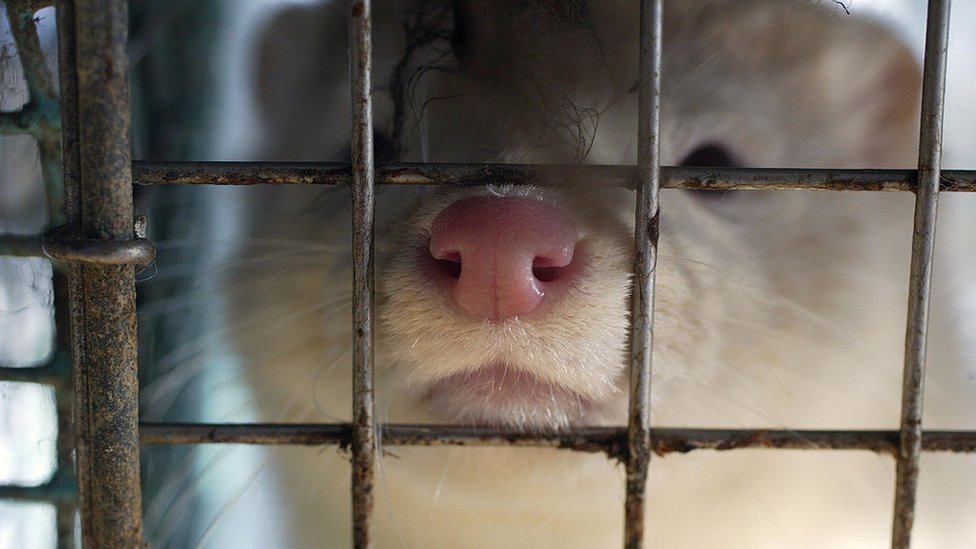
There was shock last week when Denmark decided to cull all its mink – up to 17 million animals – because of the spread of coronavirus. That national cull has turned into a political outcry, now that the prime minister has admitted the plan was rushed and had no legal basis.
Danish authorities worry that a mutated form of coronavirus found in mink could potentially hamper the effectiveness of a future vaccine.
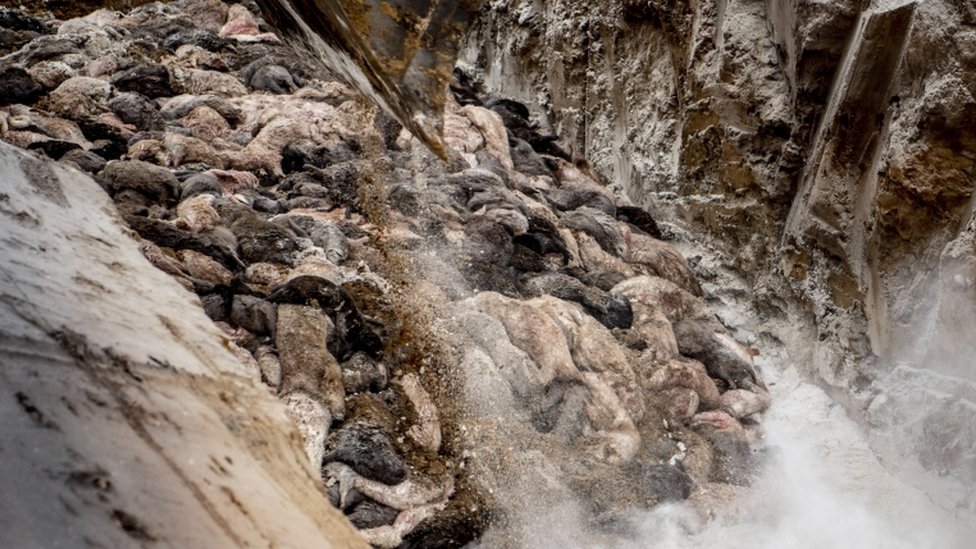
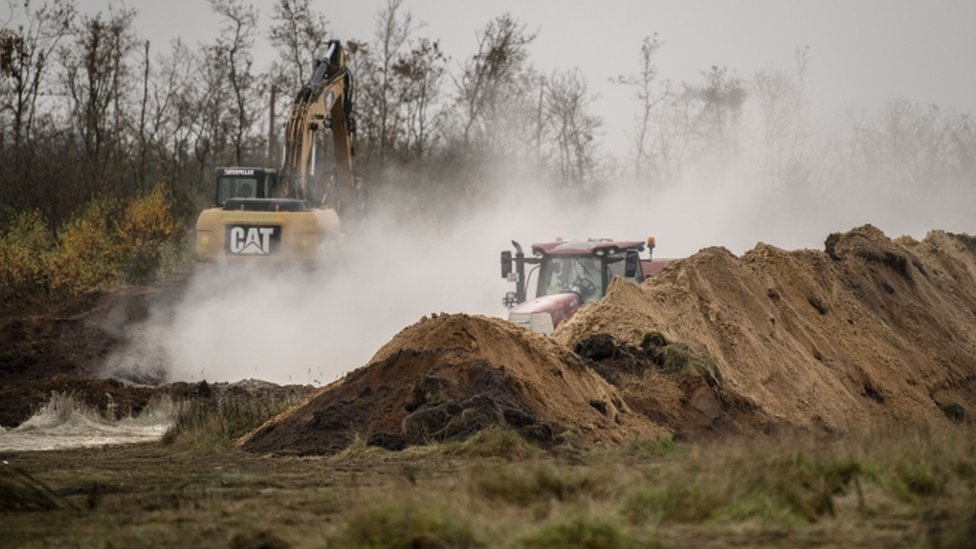
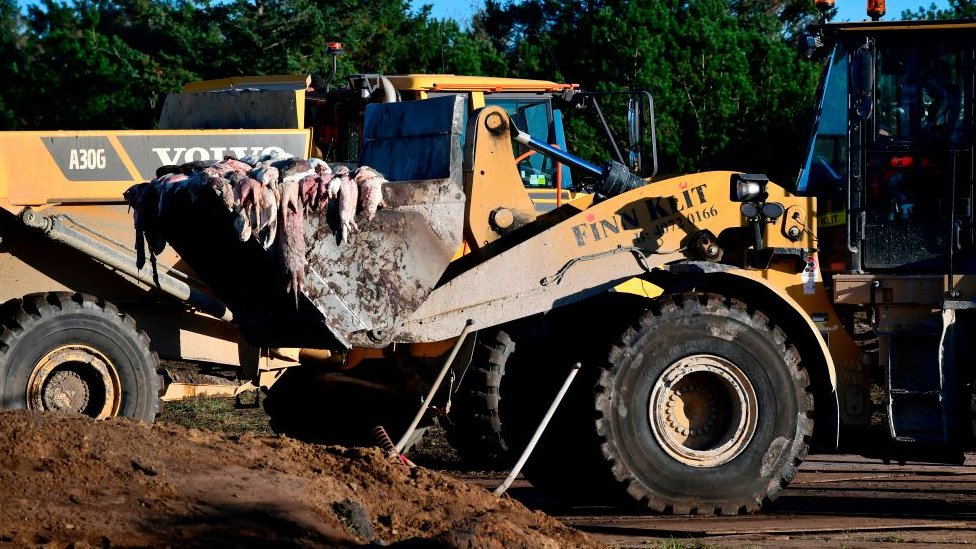
As the politicians argue, mass graves have appeared in the Danish countryside filled with the slaughtered animals.
‘A hard blow’
Police and the armed forces have been deployed and farmers have been told to cull their healthy animals too -but the task will take weeks.
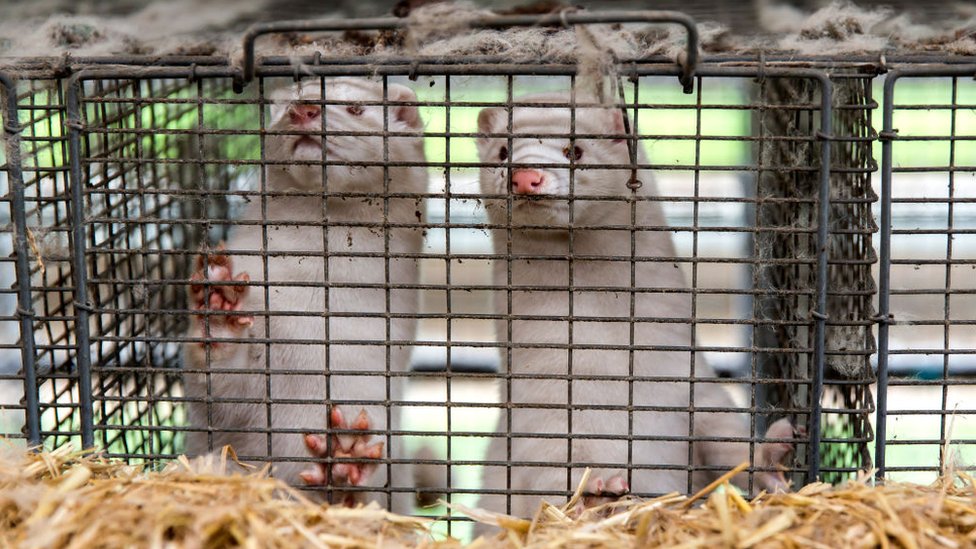
“We have 65,000 mink. In the coming week all will be put down,” says Martin From, pointing to rows of long huts housing thousands of mink on his farm in rural Funen. A Danish flag flies at half-mast in his garden.
Overnight he has seen his livelihood wiped out. “It seems very unjust,” he adds.
Mr From is a third-generation fur farmer, and after 60 years of the family business, the cull has devastated him. He is not alone. Farmers have appeared on Danish TV in tears.
Denmark’s mink cull has in fact been going on for several weeks, with 2.85 million already put down. By Tuesday, coronavirus had been reported on 237 farms in Jutland with further cases suspected on another 33.
The Danish Veterinary and Food Administration says the cull is complete on 116 farms and the work continues.
Why the cull was ordered
Denmark is not the first country to report outbreaks on fur farms but it is the world’s biggest producer. Spain, Sweden, Italy, and the US have all been affected, as has the Netherlands, where mink farming will be outlawed by spring next year.
Here in Denmark, more than one in five farms have reported infections.
Scientists from Statens Serum Institute in Copenhagen first raised the alert after detecting mutations in strains of coronavirus found in mink. Then came the order for a mass cull last Wednesday and a four-week lockdown for people living in the northwest of the country.
“Mutation happens all the time, but once in a while these mutations happen in the spike protein,” says Prof Anders Fomsgaard, SSI’s head of virus research.
That spike protein of the coronavirus is the target of some vaccines in development. “So we are a little nervous once we see mutations that change amino acids and the shape of this protein,” he tells the BBC.
‘Cluster 5’
Covid-19 originally came from a wild animal, it was then transmitted to humans and, later, passed on to farmed mink, before jumping back to a small number of humans.
Several different mutations have been discovered in the virus in mink that do not arise in humans. But one called “Cluster 5” is of particular concern and 12 people are known to have caught it in Denmark. More than 200 other people have contracted other mink-related strains of the virus.
Prof Fomsgaard stresses that the worry about a vaccine is hypothetical so far. But tests have found that patient antibodies responded less well to Cluster 5 and further laboratory investigations are being carried out.
“We are working hard to find if this has any biological effects and vaccine issues. Therefore we have to look into it immediately before this potential problem grows.”
The infections have attracted widespread international attention, and prompted the UK to ban travellers from Denmark.
However there’s also concern that Denmark may have overreacted and scientists at home and abroad have tried to assess the risk.
While scientists told Denmark’s Berlingske Tidende newspaper that Cluster 5 had not been detected since September, the head of Denmark’s health authority, Soren Brostrom, said the risk was too great when the virus was spreading among the mink population.
‘Mistakes have been made’
The government admitted on Tuesday it lacked the legal framework for a nationwide order and only had jurisdiction to cull infected mink or herds within a safety radius.
“It is a mistake. It is a regrettable mistake,” said Prime Minister Mette Frederiksen as she apologised to parliament.
The government has tried to remedy that by rushing through emergency legislation, but opposition parties say they are unlikely to support the new bill and getting it through parliament could take time.
Liberal Party chairman Jakob Ellemann-Jensen called it “shocking” and criticised a lack of transparency. Compensation for farmers should have been in place first, he said. Even parties allied to the government have called for an investigation.
“Mistakes have been made,” said Mogens Jensen, Minister for Food, Agriculture and Fisheries. “But that does not change the fact that there is a great risk of having mink breeding in Denmark under corona.”
Farmers were recently sent papers telling them to cull their herds by 16 November but some have refused to co-operate.
But Martin From says with coronavirus spreading between farms he cannot afford to wait. “We are just carrying on. it makes no difference.”
Is this the end of the mink business in Denmark?
Denmark is home to more than 1,000 farms, so the head of trade body Kopenhagen Fur has termed the nationwide cull a disaster.
“It is a de facto permanent closure and liquidation of the fur industry,” said its chairman, Tage Pedersen, who predicted 6,000 jobs could be affected.
The industry had a reported turnover of almost $1bn (£750m) in 2018-19. Furs are sold to the garment industry but also used in some false eyelash products. China and Hong Kong in particular provide the biggest market.
Coronavirus outbreaks have already spelled the end of the mink industry in the Netherlands. The UK and Austria banned fur production years ago, Germany has phased it out and Belgium, France and Norway plan to as well.
Across Europe there are some 4,350 mink farms, with Poland, Finland, Lithuania and Greece also part of the sector.
Industry group Fur Europe insists demand for natural fur is still strong. “The market has already reacted to next year’s reduced supply with higher pelt prices,” it told the BBC.
But Danish animal rights groups believe it is time to follow the example of other European countries and phase out the trade completely.
“It’s highly unacceptable to treat animals the way that mink are treated in the industry,” says Birgitte Iversen Damm of Animal Protection Denmark.
Tell the Danish Government to shut down fur farming:
Five mutations of the novel coronavirus have been found in minks on Danish fur farms and have spread to over 200 humans since June 2020, and the latest one may be resistant to a vaccine, prompting a proposal by Danish officials to cull all minks on fur farms. An outbreak of this strain could have “devastating consequences” worldwide.
Pfizer’s CEO cashed out 60% of his stock on the same day the company unveiled the results of its COVID-19 vaccine trial | Markets Insider
Pfizer chief executive Albert Bourla sold 62% of his stock in the company on the same day the drugmaker announced the results of its COVID-19 vaccine trial.
Bourla sold $5.6 million in stock on Monday as part of a predetermined trading plan adopted on August 19.
His stock sale was carried out at $41.94 a share. The 52-week-high for Pfizer stock is $41.99, which means the CEO cashed out his shares close to their highest this year.
Pfizer and its German partner BioNTech are the first to post positive results from pivotal COVID-19 vaccine trials.
“Man worships an invisible God and destroys a visible Nature. Unaware that this Nature he’s destroying is this God he’s worshiping.” Hubert Reeves
Banks Facing Calls To ‘Stop Funding Factory Farming’ To Protect Animals, The Planet, And Public Health
The livestock sector is not on the radar of many development banks when it comes to reducing emissions despite being such a large contributor
Development banks are facing calls to stop funding factory farming, which is playing a significant role in existential crises facing humanity including the climate breakdown, biodiversity loss, and antibiotic resistance.
This is the message coming from Sinergia Animal, an international animal protection organization set up to ‘end the worst practices of industrial animal agriculture’. It works in countries of the Global South – Southeast Asia and Latin America.
The organization has scored some significant victories for animals. In addition, it was recognized as one of the most effective animal protection NGOs in the world by Animal Charity Evaluators (ACE) in 2018 after just over a year of work. It retained this recognition in 2019.
Animal agriculture
Sinergia Animal points out that factory farming is responsible for significant Amazon deforestation as well as 14.5 percent of greenhouse gas emissions, according to the United Nations’ Food and Agriculture Organisation (FAO).
The dirty and inhumane conditions in which industrially-farmed animals are kept cause tremendous animal suffering and are a major risk for the transmission of new zoonotic diseases similar to COVID-19.
Another public health threat in which animal farming plays a significant role is antibiotic resistance. According to the WHO, the ‘high volume of antibiotics in food-producing animals contributes to the development of antimicrobial-resistant bacteria, particularly in settings of intensive animal production’.
Despite intensive animal farming being a major factor in these existential threats, money – to the tune of billions of dollars – has been poured into the sector by development banks.
Development banks
The role of development banks is to invest medium and long-term capital into industries in poorer countries in a bid to boost economic growth. What many may be troubled to learn is that taxes fund development banks.
Two of the world’s biggest development banks are the World Bank and European Bank for Reconstruction and Development (EBRD). Despite pledging to tackle climate change, both have pumped billions of dollars into animal agriculture over the last decade.
They have invested $2.6bn (£2.1bn) into beef, pig, and poultry farming, as well as dairy production and abattoirs between them. This is in the last decade alone.
Development banks
This support goes against what these institutions should do, says Sinergia Animal. “A development bank’s mission should be to support the sustainable development of a country or a region,” spokesperson Carolina Galvani told Plant Based News.
“It does this with taxpayers’ money. Therefore, the projects, companies, and activities they finance should benefit the common good. Therefore, development banks should refrain from financing activities that hamper the achievement of the Paris Agreement goals and the sustainable development goals (SDGs).
“Industrial livestock is such a sector. This is due to its contribution to deforestation, GHG emissions, and pollution. And that’s not all. Other issues include zoonotic diseases, antibiotic resistance, unhealthy diets, and employees’ exposure to bad working conditions.
“Moreover, it also causes immense animal suffering. Development banks should support countries in developing sustainable and fair food production systems, instead of financing intensive livestock projects.”
‘Crazily disjointed’
Sinergia Animal is not alone in its condemnation of these investments. Jeremy Coller is the head of investment firm Coller Capital and founder of responsible finance network FAIRR.
Coller has described the investment of public funds into intensive animal agriculture by these banks as ‘crazily disjointed and inconsistent’. This is because intensive agriculture is ‘one of the world’s highest-emitting industries’.
On the issue of the money coming from public funds, Sinergia Animal says: “Many taxpayers might not be so aware of the impacts of the industrial livestock sector. Still, in general, taxpayers would like their tax money to be invested in genuinely sustainable projects that benefit the common good and not in projects that benefit only a few corporations and contribute to many problems.”
‘A radical shift’
So how are development banks able to get away with pumping cash into these operations when they are so harmful?
Sinergia Animal puts it down to a lack of knowledge. Galvani said: “For many banks, the livestock sector is still not really on their radar. They think about energy and transport when they think about reducing emissions, but not about livestock. This is strange, considering it is such a large contributor to GHG emissions.”
She added that while development banks have ESG (Environmental, Social, and Governance) policies in place, these are ‘narrow-focused’. And, they only look at the impacts of individual projects. This means as long as these respect certain impact limits, and certain GHG emissions, banks are able to finance them.
“But looking at projects at an individual level does not show the full picture,” said Galvani. “To meet the Paris Agreement’s goals and the SDGs, the world needs a radical shift in how it produces food. And it should be the role of a development bank to help countries, especially the ones from the Global South ones, to achieve this shift.”
Pandemics, environmental destruction, resistant germs …
Massive rainforest destruction for animal feed, factory farming, manure, destruction of the rainforest for palm oil plantations, wild animal markets and and and.
More and more monocultures are being grown and land grabbing, especially rainforests is being sacrificed for this.
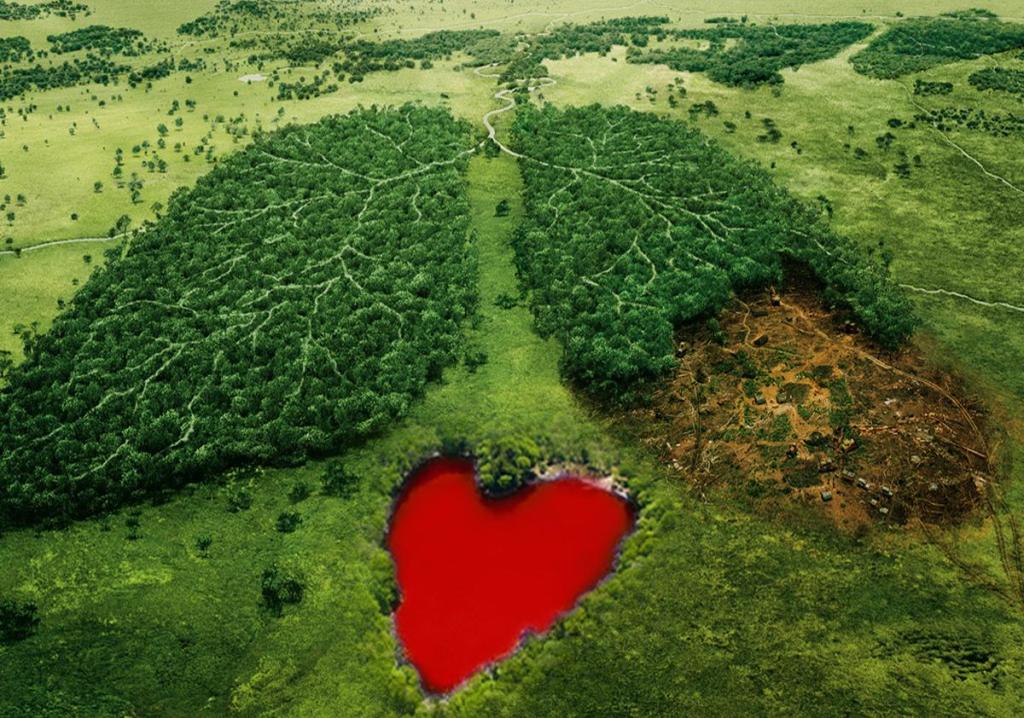
The loss of the “green lung” of the Amazon is irrevocable and no government takes action to stop it.
Primarily responsible: Customers of the animal industries of leather, fur, feathers, wool, and the consumers of animal products, i.e. milk/milk product, meat/meat products, eggs…
The farmers deny it again and again, but currently, 85-90% of global soy yields end up in animal husbandry.
The greed for animal products grows every day and carries many risks, not only for animals.
The environmental organization Germanwatch shows very clearly: 35 percent of the chickens examined were contaminated with germs that are resistant to so-called reserve antibiotics.
This, our greed is also the alleged propagator and cause of many pandemics:
Ebola, Spain flu, swine flu, bird flu, Malaria, HIV, SARS-COV-2 SARD-COV (new).
The next pandemics are on the march and will come out of a stable again if we carry on as before.
The latest example: Denmark! where coronavirus mounted on mink farms and passed on to humans.
This is where the topic of multi-resistant germs comes into play, which was mentioned above.
We finally have to see the connections.
But we deny it! Instead, we slaughter millions of animals to protect the disease breeding grounds of the meat/milk/fur industry and in the end, we only fight the symptoms of self-created diseases.
There is only one way to counteract this trend:
An immediate exit from intensive animal husbandry.
Tax incentives for businesses that rely on future-oriented, plant-based agriculture.
Tax relief for vegan products.
The tax burden on animal products.
All of this must be decided immediately.
Einstein said: “You can’t solve a problem if you think the same way you did when you created it”
‘Mutant coronavirus’ seen before on mink farms, say scientists – BBC News
Photo – Getty Images.
Further news 09/11/20.
‘Mutant coronavirus’ seen before on mink farms, say scientists
A mutant form of coronavirus found in Danish mink has arisen before, scientists have revealed.
The mutated virus, which appears to have spread from animals to humans in Denmark, has been detected retrospectively at a mink farm in the Netherlands, according to a leading Dutch expert.
The mink were culled and the mutation did not infect humans there, he said.
Six countries have reported coronavirus outbreaks at mink farms.
They include the Netherlands, Denmark, Spain, Sweden, Italy and the US.
Mink are known to be susceptible to Sars-CoV-2, the virus that causes Covid-19, which can spread rapidly from animal to animal in mink farms.
Animals have become infected by farm workers during the pandemic, and have occasionally passed the virus on to humans, raising the risk of the virus acquiring mutations.
Danish scientists are worried that genetic changes in a mink-related form of the virus, infecting a dozen people, has the potential to make future vaccines less effective.
‘Mutant coronavirus’ seen before on mink farms, say scientists – BBC News
Getty Images.
The genetic change is in the spike protein of the virus, which is important in the body’s immune response, and a key target for vaccines.
The Danish genome sequences were recently released on a public database, allowing scientists in other countries to look for evidence of the mutation.






 World Animals Voice