WAV Comment: A wonderful story that shows the very best in people and what they will do to save an animal from death. We give credit and solidarity to our amazing Italian rescuer friends. Check out the video and link below for more information.
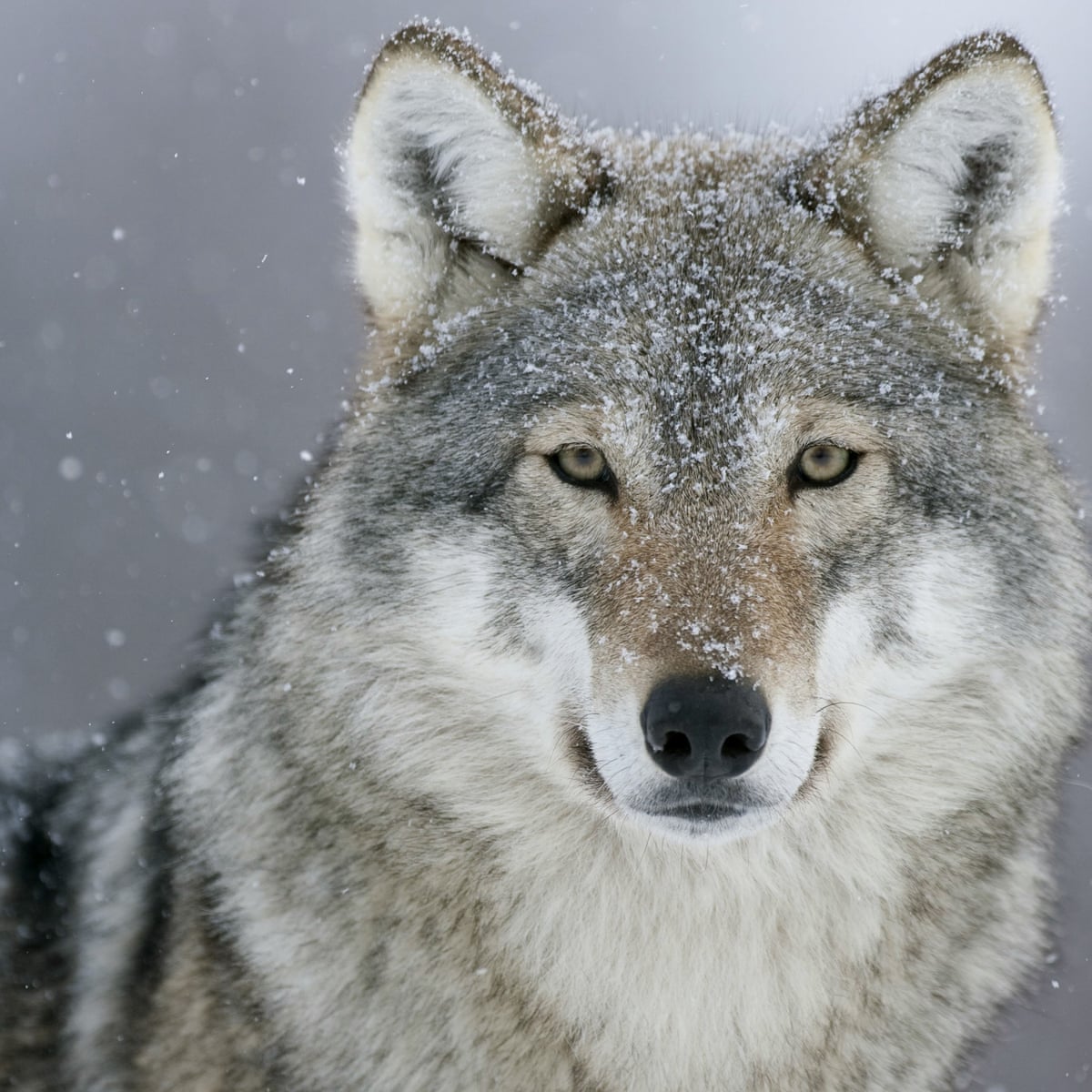
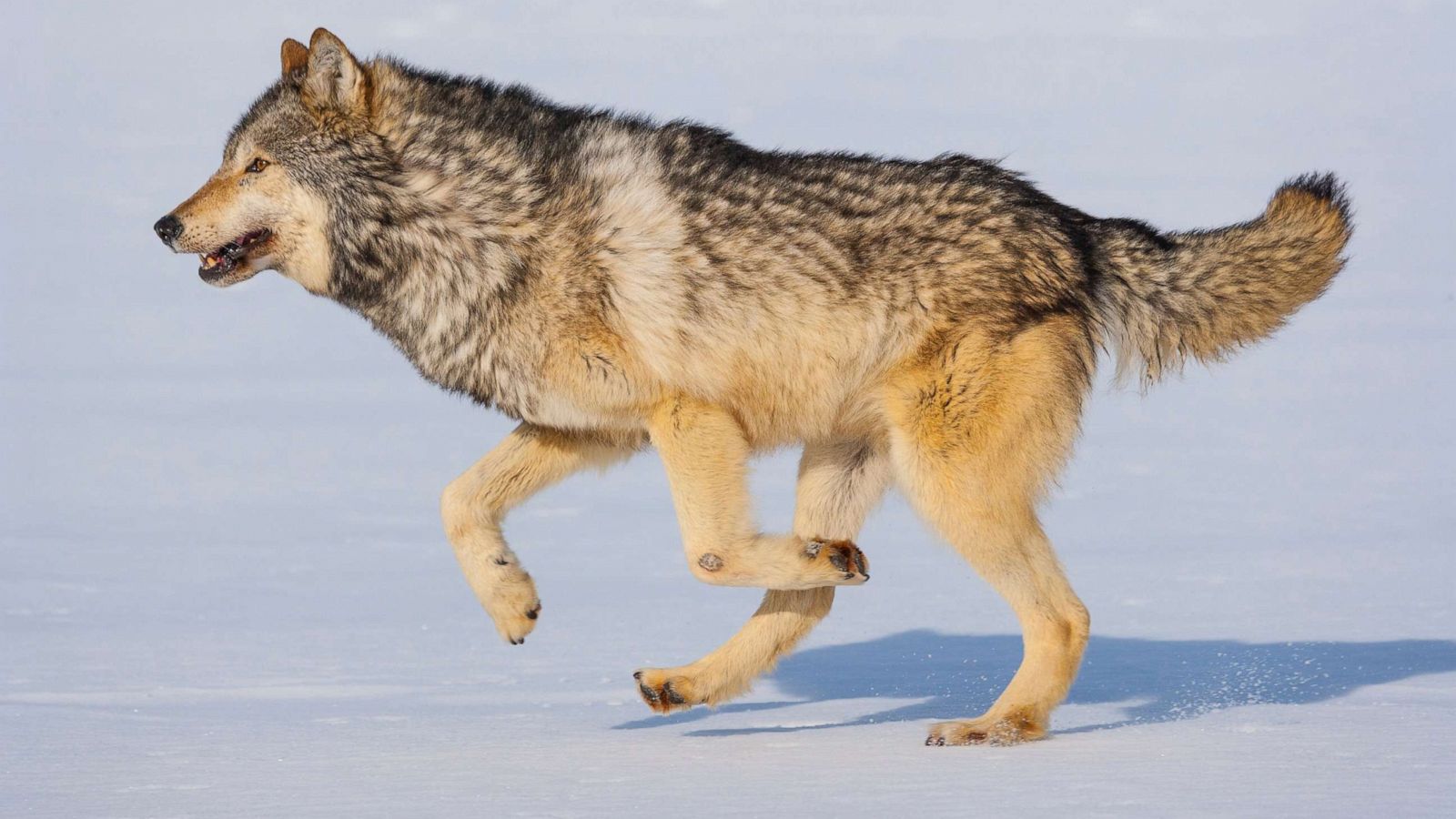
Poor wolf was nearly frozen to death when he was found unable to move in an icy river in Italy.
A group of kind men waded out in the frigid waters to carry the ailing wolf to shore, a video posted to YouTube shows. As rescuers carry the wolf’s limp body up the embankment, it almost seems as though all hope for his survival is lost.
Wolf isn’t breathing, and they can’t find a heartbeat. People surround the wolf, trying to resuscitate him. A man stands over Navarre, with his hands over the wolf’s heart, trying to get it pumping again. A woman leans close to the wolf to see if there’s any sign of breath. She even tries to breathe life back into the wolf’s mouth.
Watching the footage, the attempt seems hopeless — until a miracle seems to happen: Wolf starts to breathe again. Rescuers set to work warming Navarre, putting him under a blanket and drying his fur with a hair dryer, as they transport him to a recovery centre. Wolf’s back legs were paralyzed from the cold. Along with the other strides he needed to make in recovery, he would need to relearn how to walk.
Veganism is gaining momentum around the world. And vegan musicians are leading the trend.
Plant-based, cruelty-free living is becoming popular in industries everywhere; many doctors are promoting the health benefits of vegan food, fashion designers are featuring animal-free materials in their work, and athletes are adopting plant-based diets to boost performance.
The music scene is just as involved. More and more artists are going vegan and many are keen to let their fans know about it.
Why Celebrities Go Vegan
Various factors motivate celebrities to go vegan. Health is a major motivator. A growing body of research is finding links between meat, dairy, and eggs, and disease. Animal products often contain high levels of saturated and trans fats, which can increase blood cholesterol. High cholesterol can increase the risk of peripheral artery disease, stroke, and heart attack.
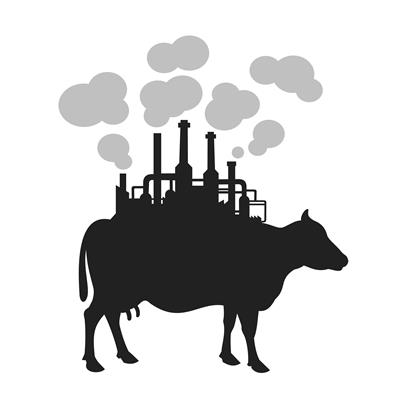
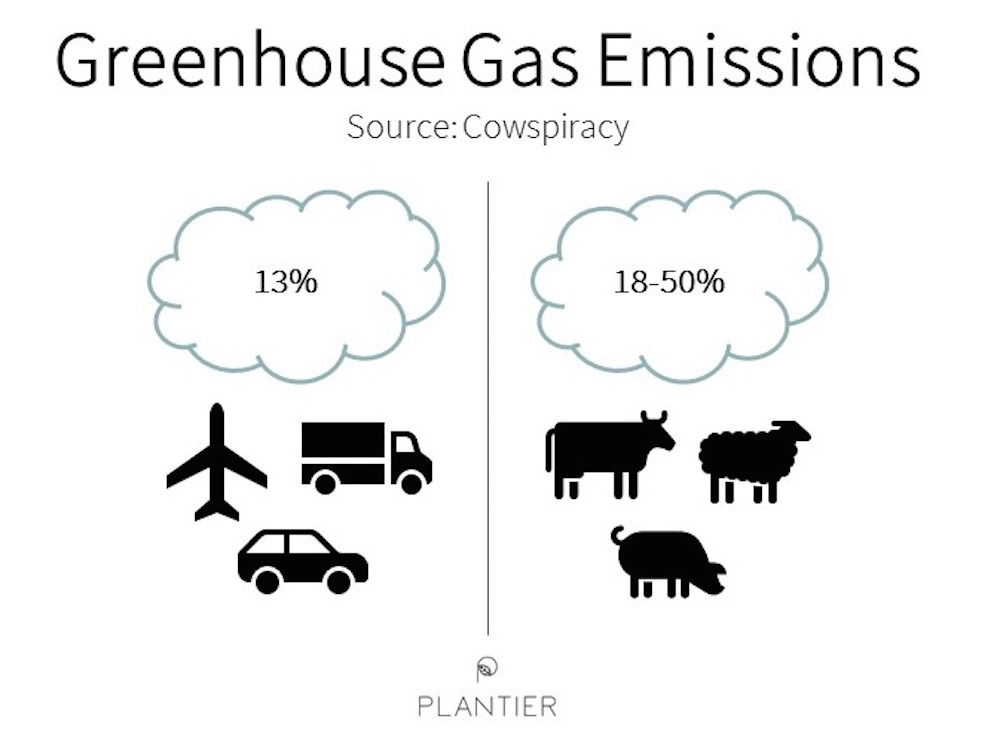
More than ever, celebrities are doing their part for the planet by updating their diet. Animal agriculture is to blame for more greenhouse gas emissions than the entire transportation sector combined. It also uses vastly more land and water than plant-based farming.
Animal welfare is another leading reason that celebrities go vegan. The meat, dairy, and egg industries are rife with animal welfare violations. More musicians are making the connection between what’s on their plate and the animal it’s sourced from, and boycotting animal products to take a stand against cruelty.
Benefits Of A Vegan Diet
The decision to adopt a vegan diet could bring with it a range of health benefits. Plant-based food, by nature, contains no cholesterol; cholesterol is only found in animal products. Vegan food also contains good amounts of fibre, while animal-based foods have none. Cholesterol-free, fibre-rich diets lower the risk of disease and can extend lifespan. Data collected from 185 observational studies said that individuals who eat the most fibre are 15 to 30 percent less likely to die prematurely. Fibre-rich diets were also connected to a 16 to 24 percent reduced incidence of type 2 diabetes, stroke, and colon cancer.
Vegan Diet And The Climate
Vegan lifestyles are good for the planet’s health, too. Eating animal-product-free can help clean the planet and save resources.
According to the 2014 documentary Cowspiracy, 70 to 90 percent of freshwater pollution in western countries is linked to animal agriculture. A study by the European Commission Joint Research Centre (JRC), which was published in Nature in 2018, found that a vegan diet uses five times less water than a meat-based one.
The most comprehensive analysis of farming’s impact on the planet looked at data from 40,000 farms in 119 countries. Researchers found that if everyone on the planet went vegan, global farmland use would drop by 75 percent. This move would free up landmass the size of Australia, China, the EU, and the U.S. combined.
Oxford University researcher Joseph Poore, who led the study, stated: “A vegan diet is probably the single biggest way to reduce your impact on planet Earth, not just greenhouse gases, but global acidification, eutrophication, land use and water use.”
OPERATION DOLPHIN BYCATCH Sea Shepherd threatened and attacked by fishermen
“This video shows local fishermen threatening and attacking our team”.
The recordings were made in Brittany, France, at the end of September. OPERATION DOLPHIN BYCATCH is documenting legal, non-selective fishing methods that kill 10,000 dolphins in the Bay of Biscay each year.
Sea Shepherd has been patrolling the area since 2017 to alert the global public to this problem, which is not confined to large industrial factory vessels. So-called small fishers, who also use non-selective fishing methods, can be found by the hundreds at the dolphin grounds.
Together they lay a total of 45,000 km of nets in the Bay of Biscay every 24 hours, enough to reach around the equator once.
And they do it quite legally.
To put an end to this, we have to stop or drastically reduce our fish consumption.
Because more than global warming, more than environmental pollution, it is simply our limitless appetite for fish that is destroying the ocean. Dolphins are only the visible messengers of this invisible and massive destruction of life. ”
Lamya Essemlali President Sea Shepherd France
And I mean… More fish is eaten around the world than ever before. In the last three decades alone, fish consumption has more than doubled.
Up to 40 percent of the global catch is bycatch.
These include sharks, sea birds, and sea turtles, but also dolphins and whales.
Most animals are thrown overboard again and often die a painful death. In addition, the most huge trawls damage the flora and fauna on the seafloor.
Unwanted bycatch was estimated at 1.7 million tons of fish per year in 2011.
The overfishing of the European seas should come to an end by 2020 – this is what the EU has set out in its Common Fisheries Policy (CFP).
But the EU is “far away” from its 2020 target.
It is worst in the Mediterranean, where around 90 percent of fish stocks are overfished and some species are on the verge of collapse.
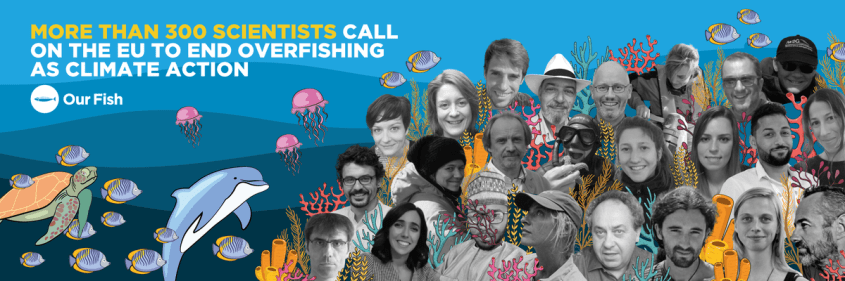
In September 2020, more than 300 scientists called for an end to overfishing to protect the climate. German environmental aid and the “Our Fish” initiative are calling on the EU Commission, the EU Parliament, and all EU member states to adhere to the definition of catch quotas for 2021 THIS YEAR without exception.
I see very little hope for an effective EU reaction to this good initiative.
Because the EU has long been the largest export market for fishery products. According to estimates, up to a third comes from illegal catches, which in turn are mainly made off the coast of West Africa.
Although 90 percent of European waters are overfished, European fishing groups are constantly reacting by expanding their fishing grounds.
The ships got bigger, the corporations negotiated fishing licenses with West African states, which the EU – according to Greenpeace – subsidized with around 140 million euros.
And so the EU will continue to sell the future of our marine ecosystems in the bazaar of the European fisheries lobby.
Happy World Vegan Day! We’ve put together some of our favourite recipes from around the world to celebrate this amazing international cuisine.
We’ve just launched our incredible new programme V7 where users can try vegan for a week! You’ll receive a complete shopping list for seven days of delicious recipes, plus handy tips and advice.
Our guest chef this month is the incredible TJ Waterfall (Meat Free Fitness) – specialising in vegan sports nutrition, he has provided us with some healthy and incredibly delicious recipes: win, win!
We’d like to whet your appetite for when international travel is back on the agenda – take a vicarious journey to Paris with our guide to this plant-based city of delights!
Sending you lots of love during this challenging time.
Happy cooking, eating and reading ♥ The Vegan Recipe Club Team
Check out all the Viva ! Podcasts on a whole range of animal / vegan issues by clicking on the following link:
Note: Regarding Protect the Harvest’s ludicrous and deceptive claim of the nonexistence of factory farms, “family” has zero legal distinction regarding farm size; indeed, a “family” can refer to Kraft, Ford, Trump, Smithfield, and Walmart. The government defines size, and anyone with even a rudimentary understanding of Google can easily find this data. To suggest that the greater than 10 billion land animals killed annually in the US alone come from Uncle Ted’s backyard hinges on desperation to continue the animal holocaust unseen and socially accepted. SL
The U.S. Environmental Protection Agency (EPA) defines AFOs as agricultural enterprises where animals are kept and raised in confined situations. AFOs congregate animals, feed, manure and urine, dead animals, and production operations on a small land area. Feed is brought to the animals rather than the animals grazing or otherwise seeking feed in pastures, fields, or on rangeland. There are approximately 450,000 AFOs in the United States.
A CAFO is another EPA term for a large concentrated AFO. A CAFO is an AFO with more than 1000 animal units (an animal unit is defined as an animal equivalent of 1000 pounds live weight and equates to 1000 head of beef cattle, 700 dairy cows, 2500 swine weighing more than 55 lbs, 125 thousand broiler chickens, or 82 thousand laying hens or pullets) confined on site for more than 45 days during the year. Any size AFO that discharges manure or wastewater into a natural or man-made ditch, stream or other waterway is defined as a CAFO, regardless of size. CAFOs are regulated by EPA under the Clean Water Act in both the 2003 and 2008 versions of the “CAFO” rule.
Veganism, at its essence, is the recognition that all animals have the right to bodily integrity. Humans do not own the bodies, families or lives of other animals – we can be guardians to animals in need of rescue, but animals are never our property or commodities.
Donald Trump has demonstrated, over and over again, that he sees animals only as obstacles to be cleared or resources to be used to serve corporate interests and generate maximum profits.
But his actions don’t reveal a detached view of other species as objects or commodities so much as a seething contempt – for the natural world, for animals and for anyone trying to protect them.
Putting animal haters in charge
At every turn, Trump has placed people who actively oppose animal welfare, wildlife and environmental protection in leadership roles at the agencies responsible for carrying out those protections. Not surprisingly, this fox-guarding-the-hen-house strategy has resulted in dire consequences for animals and their habitat.
In 2016 he selected Brian Klippenstein, executive director of a particularly vile organization called Protect the Harvest, to serve as senior advisor to the USDA – the agency charged with safeguarding animals used in commerce.
Protect the Harvest exists to “save the agricultural industry from the growing threat of the radical animal rights movement” by lobbying against animal welfare legislation, supporting ag-gag bills and promoting animal commoditization in all forms – including circuses, rodeos, dog and horse racing, horse carriages, puppy mills and horse slaughter.
One of the group’s campaigns aims to soothe consumers’ growing concern regarding confined animal feeding operations by assuring the publicthat factory farming is just a “fictional concept created by activists.”
Next, Trump chose to appease animal agriculture and fossil fuel industry elites by putting climate change denier Scott Pruitt in charge of the Environmental Protection Agency – a move that led to the rollback of several critical climate and pollution regulations, along with the U.S. decision to withdraw from the Paris Agreement.
Pruitt, once honored with an award for his contribution to the success of the beef cattle industry, has described himself as a “leading advocate against the EPA’s activist agenda” and “a big fan of beef.”
Though he resigned in 2018 under the weight of numerous legal and ethics investigations, EPA leadership continues to prioritize industry demands over keeping the country’s air and water clean. In March the agency used the COVID-19 chaos as a cover to release polluting industries from monitoring and reporting requirements.
Perhaps the most stunning hire Trump made was William Perry Pendley, a former oil and gas attorney he installed to wreak havoc on the Bureau of Land Management. That’s the agency charged with conserving public lands – such as national parks – in 11 Western states and Alaska.
Pendley, who spent the bulk of his career lobbying for oil companies’ rights to drill in pristine wilderness, does not believe public lands should exist at all.
He has joked on video about illegally killing and burying endangered animals, and tweeted that climate change is like a unicorn because “neither exists.” He also has a grotesque obsession with eradicating wild horses and burros – insisting that they (rather than cattle grazing or resource extraction) represent an “existential threat” to public lands.
A judge recently ruled that Pendley’s service violates the Constitution because he was never confirmed by the Senate, but so far he has refused to leave his post.
Please click on the above link to continue reading the full article.
Australian scientists find a huge new healthy coral reef off the northern coast!
SYDNEY (Reuters) – Australian scientists found a detached coral reef on the Great Barrier Reef that exceeds the height of the Empire State Building and the Eiffel Tower, the Schmidt Ocean Institute said this week, the first such discovery in over 100 years.
The “blade-like” reef is nearly 500 meters tall and 1.5 kilometers wide, said the institute founded by ex-Google boss Eric Schmidt and his wife Wendy.
Australia: Great Barrier Reef.
It lies 40 meters below the ocean surface and about six kilometers from the edge of the Great Barrier Reef.
A team of scientists from James Cook University, led by Dr. Robin Beaman, were mapping the northern seafloor of the Great Barrier Reef onboard the institute’s research vessel Falkor, when they found the reef on Oct. 20.
“We are surprised and elated by what we have found,” said Beaman.
He said it was the first detached reef of that size to be discovered in over 120 years and that it was thriving with a “blizzard of fish” in a healthy ecosystem.
The discovery comes after a study earlier this month found the Great Barrier Reef had lost more than half its coral in the last three decades.
EC study find outs the livestock sector is responsible for 81-86% of the agricultural greenhouse gas emission
22 October 2020
On 14 October 2020, the European Commission published a report examining the environmental, economic and social consequences of EU livestock production and how this sector can contribute to sustainable agriculture.
While recognising the important economic role played by livestock production in the EU economy, the report stresses the significant environmental impacts associated with industrial animal production. Such impacts can affect biodiversity, human health, and the functioning of ecosystems.
In particular, by including in calculations the environmental impacts of the production, processing, and transport of feed, the report concludes that the livestock sector is responsible for 86-88% of the EU’s agricultural GHG emissions.
Additionally, more than 80% of nitrogen of agricultural origin present in all EU aquatic environments is linked to livestock farming, and livestock farms are the main sources of ammonia.
On animal welfare, the report recalls the results of the last special Eurobarometer on animal welfare (add link) showing that 94% of European citizens attach importance to animal welfare, with 82% agreeing that farm animals should be better protected. Three key areas need to be addressed to respond to citizens expectations, and namely the intensification of farming, transportation of animals and slaughter.
The report notes that the specialisation and intensification of livestock farming systems has had negative implications for animal welfare, leading to stress and pain due to artificial living conditions in industrial type buildings, damage to animal integrity (e.g., painful husbandry procedures), separation from familiar conspecifics and unnatural levels of mixing. Citizens expect animals to be spared fear and anxiety and to be offered the possibility to experience positive emotions. Such an approach can also have positive knock-on effects on the reduction in the use of antimicrobials in farmed animals, which should be halved by 2030 compared to current levels according to the Farm to Fork strategy.
“Animals in Europe” – EP#2: Interview with Anja Hazekamp MEP
28 October 2020
News
“Animals in Europe” is a bi-weekly podcast to meet animal advocates, decision-makers and experts building together a Europe that cares for animals. Listen to Episode #2!
What were the main highlights for animals last week at the European Parliament?
Is change for animals on the horizon?
What are the biggest political opportunities for animals during this political mandate?
These are some of the questions our host and CEO Reineke Hameleers asks Anja Hazekamp MEP in our podcast.
Biologist and animal advocate, Anja Hazekamp MEP started her political career with the Dutch Party for the Animals and last year she was appointed as President of the Intergroup on the Welfare and Conservation of Animals. She is one of the forces behind the newly constituted Committee of Inquiry on Live Transport of the European Parliament.
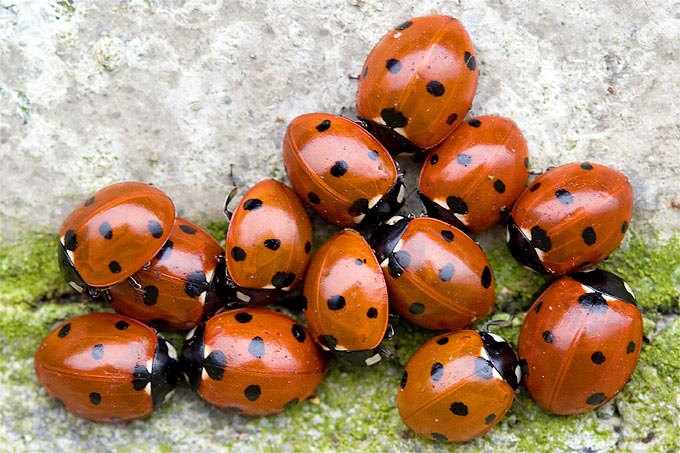
Is there currently a ladybug plague in Germany? (!!!)
In any case, these small insects can be seen everywhere. There is a reason for that.
They hang from house walls, sit in window frames or crawl around in apartments in the bathtub: at the moment, ladybugs are not only found in gardens and on plants. Whole swarms are currently spreading in completely new habitats.
Ladybird plague 2020: Insects are looking for winter quarters from October
But how does it come about? According to a report by the editorial network Germany (RND), the small insects are currently looking for suitable winter quarters again.
To do this, in October and November – at the beginning of the cold season – they set off in large swarms to warmer regions.
Actually, the ladybirds are mostly drawn to European countries, where the winter is rather mild. Due to the mild autumn days in Germany, the spotted beetles are also looking for a roost here.
Many ladybugs now fly around in swarms in this country. This is particularly noticeable because the insects often rest on their journey – the walls of houses or the windows of apartments, among other things, serve as resting places.
To one or the other, it may seem like a ladybug plague. Because especially if you leave your window open for a few hours, you have to expect the bugs to get lost in the house or apartment. But be careful: the insects cannot overwinter inside the living space, they need cool, frost-free rooms for their winter rest.
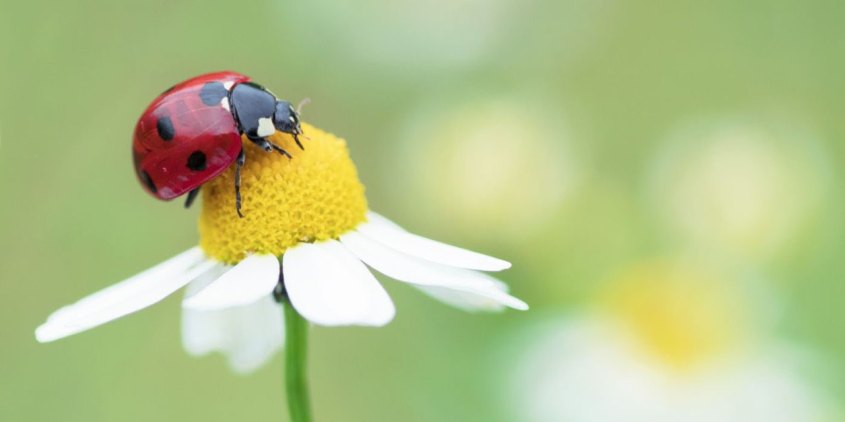
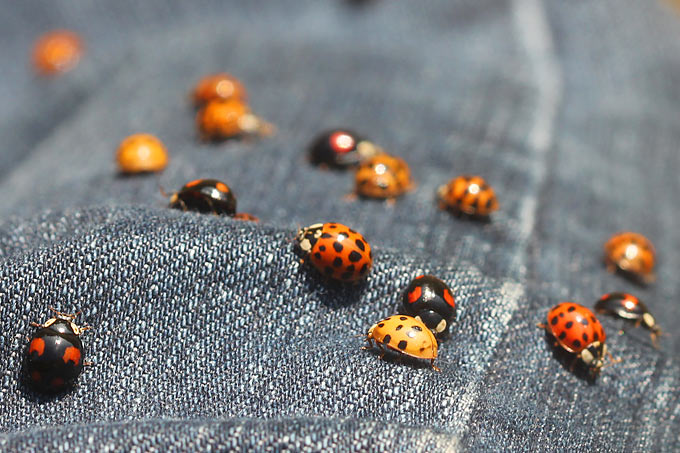
The harlequin ladybird from Asia is now more common than the native species in many regions of Germany.In autumn, the beetles sometimes unite to form large swarms in order to look for winter quarters together.Here some have settled down on the photographer’s pants for a break.– Photo: Helge May
Suitable winter quarters for ladybirds are piles of leaves, dead wood, moss blankets, tufts of grass, and cracks in piles of stones. There the beetles stay in their winter quarters until the next spring and lapse into rigidity.
Between March and April, when the temperatures rise, they leave their winter quarters again.
But if you feel disturbed (!!!) by the current accumulations of ladybugs in your own four walls, there are a few simple ways to get rid of the insects. Important: Ladybugs are absolutely harmless to humans – they should not be killed when they are disposed of.
A fly screen can prevent the bugs from nestling in the window frame.
There are also scents that keep the insects away. These include bay leaves, lavender, and vanilla.
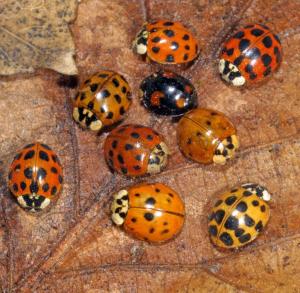
By the way: The current plague of ladybirds mainly consists of beetles from Asia. The species of the so-called harlequin ladybird was initially not native to Germany but has spread more and more in recent decades. The appearance of the insects ranges from orange without spots to black with red spots. Its wings are light yellow to dark red.
The Asian ladybug usually has 19 black spots.
The seven-spotted ladybird is primarily native to Germany. In Central Europe alone, he and his relatives do it in over 70 different ways. There are about 6000 species of the ladybird family worldwide.
And I mean...No! I don’t feel bothered and I have a lot of red flying visitors at my house.
Most people talk about the ladybird plague, the media join in as always.
We have destroyed the climate, the seasons are no longer right, most animals lose their concept because of us.
Animals are just trying to adapt to this disaster, to survive, and we call their response “plague”.
I see only one plague, human plague 2020.
What are we doing? We pollute the environment.
We build roads and new settlements over forests and greenery
We are building everything with supermarkets plus fat parking spaces! We produce so much waste that the seas will soon die …
But … we perceive the over-presence of ladybugs as a plague!
We are the most harmful and stupid species on the planet.











 Australia: Great Barrier Reef.

 World Animals Voice
