Category: Environmental

USA: President Elect Biden Selects Super Environmental Team For the Future.

WAV Comment:  Big Wow ! – congratulations to President elect Joe Biden, Deb Haarland, and Michael Regan on the award of their new positions which will overturn all the environmental destruction caused by loser Trump over recent years.  It is especially wonderful to see Deb Haarland; a Native American, to serve with such an important position in the cabinet; with her department’s jurisdiction covering tribal lands and vast tracts of protected American wilderness, including jewels such as Yellowstone and Yosemite national parks.

Mr. Regan will be a leading member of the new, expanded Biden team focusing on reversing Trump’s environmental rollbacks and address the climate crisis with a plan for bringing the US economy to net-zero greenhouse gas emissions by 2050.

Super choices for an America and its wildlife that very much needs protection from the bad muppets that we have seen from Trump and ‘his mates’ over the past years.

We at WAV very much welcome these appointments; as do the vast eco warrior tribes of the world.  Haarland, a lady who originated from peoples who loved and protected the environment.  We hope she will right all the Trump wrongs in the coming years.

Superb news !

 ———————————
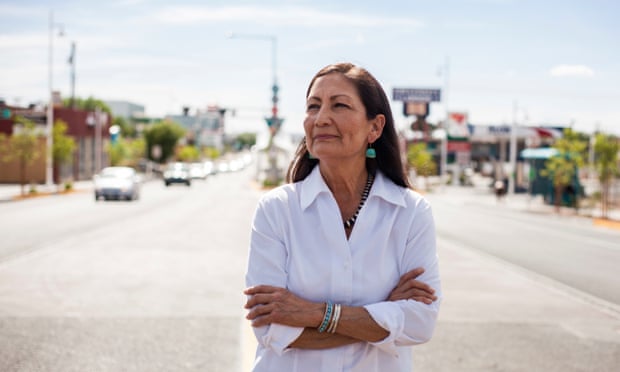
Deb Haaland would be the first Native American cabinet secretary.

Biden picks Deb Haaland as first Native American interior secretary | Biden administration | The Guardian Deb Haaland would be the first Native American cabinet secretary. Photograph: Juan Labreche/AP

Biden picks Deb Haaland as first Native American interior secretary

President-elect will also nominate regulator Michael Regan to head Environmental Protection Agency

Joe Biden has chosen the US lawmaker Deb Haaland as interior secretary and will nominate the North Carolina official Michael Regan to head the Environmental Protection Agency, in two diverse and influential picks to handle crucial issues such as public lands, pollution and the climate crisis.

Haaland, a progressive Democratic congresswoman from New Mexico since 2019, would be the first Native American cabinet secretary and one of the first Native Americans ever to serve in a US cabinet. The department’s jurisdiction covers tribal lands and vast tracts of protected American wilderness, including jewels such as Yellowstone and Yosemite national parks.

In a tweet on Thursday evening, Haaland said she was “honored and ready to serve” as interior secretary.

“A voice like mine has never been a cabinet secretary or at the head of the Department of Interior,” she added.

Haaland is a member of Pueblo of Laguna and would become the first descendant of the original people to populate North America to run the interior department, which has often had a difficult relationship with the 574 federally recognized tribes in the US, the Washington Post reported.

And she has told the Reuters news agency she would seek to usher in an expansion of renewable energy production on federal land to contribute to the fight against climate change, and undo Donald Trump’s regressive focus on bolstering fossil fuels output.

Progressives hailed the selection of Haaland as “perfect choice” and a “fierce ally” of the environmental movement.

“Rep Deb Haaland’s appointment as secretary of the interior is a historic moment for every Native American and the Green New Deal movement,” said Varshini Prakash, the executive director of the youth-led Sunrise Movement.

She added: “With a progressive leader at the helm, we can make real progress on stopping climate change and ensure sovereignty and dignity for all Native people and justice for all.”

Climate activists, joined by progressive members of Congress, tribal leaders and Hollywood celebrities, had mounted a public campaign in support of Haaland. The interior secretary will be critical to enacting Biden’s ambitious climate plan as well as playing an important role leading discussions between the federal government and tribal nations.

The House speaker, Nancy Pelosi, had issued a statement on Wednesday saying: “Congresswoman Haaland knows the territory, and if she is the president-elect’s choice for interior secretary, then he will have made an excellent choice.”

The retiring New Mexico senator Tom Udall, a Democrat who was also reportedly under consideration for the role, was among the first politicians to congratulate Haaland, calling her appointment a “watershed moment for Native communities, and for our nation”.

In a statement, Udall praised her as someone who would use the position to “undo the damage of the Trump administration, restore the department’s workforce and expertise, uphold our obligations to Native communities, and take the bold action needed to tackle the accelerating climate and nature crises.”

“I am confident that she will be both a historic interior secretary and an excellent one,” he added.

Theresa Pierno, the president and CEO for the National Parks Conservation Association, said Haaland would be ready for the job “on day one” and was a congressional “champion” who had helped hold the line on conservation.

“Amid a global pandemic and climate crisis, we need a department of interior secretary who is ready to address 21st-century challenges with bold solutions … to protect our national parks and public lands for the benefit of all Americans,” she said.

Meanwhile, Biden plans to nominate Regan, North Carolina’s top environmental regulator, to head the EPA, according to Reuters.

If confirmed by the US Senate, Regan would become the second Black person to run the EPA, after Lisa Jackson, who served during Barack Obama’s presidency. He would be a leading member of the new, expanded Biden team focusing on reversing Trump’s environmental rollbacks and address the climate crisis with a plan for bringing the US economy to net-zero greenhouse gas emissions by 2050.

Regan brings years of experience dealing with fossil fuel industries in his home state, including overseeing a roughly $9bn settlement agreement with utility Duke Energy for the nation’s largest clean-up of coal ash. Regan has also previously worked at the EPA and worked on climate change and pollution initiatives for the Environmental Defense Fund, a green advocacy group.

“Regan understands that tough environmental goals tempered with economic and technological reality produce the best approach on everything from climate change to more local problems,” said Scott Segal, an attorney for the law firm Bracewell, which has petroleum companies as clients.

Jim Marston, the former head of the Environmental Defense Fund state initiatives program, said: “He could talk with, work with industry. And his own personal history allows him to really relate … to working-class folks who are the workers in plants that need to be regulated,” Marston said.

Democrats have a very narrow majority in the House, so losing Haaland to the cabinet is a risk, making three Democratic members of the House that will be leaving the chamber to join the new administration.

Marcia Fudgewill be nominated to lead the Department of Housing and Urban Development, and Cedric Richmondwill serve as the director of the White House Office of Public Engagement.

https://www.theguardian.com/us-news/2020/dec/17/deb-haaland-joe-biden-interior-secretary

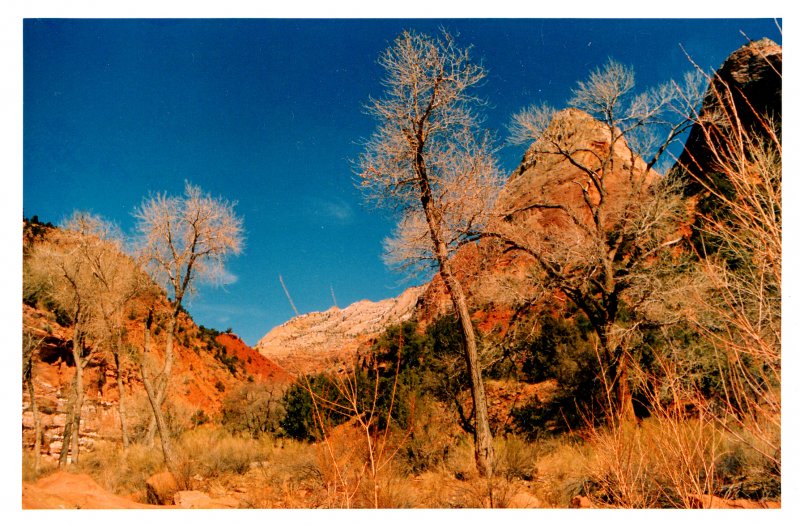
Keep the Environment tops in the USA – a few pictures I took on one of my trips in the USA many moons ago.

Once it has gone, you can never bring it back – so dont let it go in the first place ! – Mark

England: Vegan and Vegetarian Christmas Food Ideas. Plant Based Is the Future. Animal Suffering – Out !

Well as it is fast approaching Christmas; it was decided to search around a bit and try to present you with a few choices for your animal friendly, no kill Christmas.  Here below you will find a selection of links for both Vegetarian and Vegan meals and recipes for your Christmas nosh.

Being based in both England and Germany, we see some great news reaching us – for example; ‘Waitrose’ is a top UK supermarket, selling top range food.  They are probably the No1 supermarket in the UK when it comes to their attention to animal welfare and cruelty free food.  They pride themselves on their high welfare standards, and quite rightly so; having won countless awards for their approach. https://www.waitrose.com/home/inspiration/about_waitrose/the_waitrose_way/waitrose_animal_welfarecommitments.html

Waitrose says: Waitrose & Partners wins best retailer for animal welfare standards

Our animal welfare standards are some of the most stringent in the world. We know this because Waitrose & Partners has retained the award for best retailer in Europe for our farm animal welfare standards. We rear all of our livestock to certified higher welfare standards.  


Animal welfare organisation 
Compassion in World Farming (CiWF) judged our standards better than those of 27 other retailers in Europe, including 10 in the United Kingdom. 

CiWF uses its 
Supermarket Survey to judge the winner based on a company’s animal welfare standards for laying hens, broiler chickens, dairy cows and calves, sows and meat pigs and farmed fish. 

In the UK at the moment, Pre orders for Vegan Christmas food up 700% at Waitrose alone; forgetting all the other supermarkets; and we also see that no less than 20% of the UK population are going to have a solely Vegan Christmas when it comes to food this year – amazing ! : 20% of Brits will serve an entirely vegan Christmas dinner this year (veganfoodandliving.com)

We at WAV hope we have played a very small part in this.  Through the site we have bombarded you with news and videos featuring countless exposes of facilities causing untold animal suffering around the world.  The figures above undoubtedly tell us that today, 2020, the world is changing and people are not going to continue to accept cruel animal practices that have gone on behind closed doors in the past.  We have an old saying here in the UK and that is:  “If slaughterhouse walls were made of glass, then everyone would be a vegetarian / vegan”.

People are now voting with their mouths and with their wallets; and the message they are clearly sending is more than clear that they do not wish to be associated with animal cruelty and suffering.  Plant based is the way forward now; and food retailers and food services the world over are now waking up to this – if you want business, then go for plant based food; and cut out the animal cruelty and suffering.

Wishing you a cruelty free Christmas; but please spare a though also for all those who are still suffering within the cages, bars and confines of the factory farm systems.  The fight to free them all goes on and gets stronger every single day.

Free them ALL – Now !

Regards Mark.

Vegan Christmas Food:

https://www.bbcgoodfood.com/recipes/collection/vegan-christmas-recipes

https://www.peta.org.uk/recipes/

https://avirtualvegan.com/vegan-christmas-dinner-menu/

https://www.jamieoliver.com/christmas/collection/vegan/

https://hurrythefoodup.com/vegan-christmas-dinner-recipes/

UK – Waitrose – Pre order for Vegan Christmas food up 700% at Waitrose !

Vegan Sales Surge: Supermarkets Report ‘Selling Out’ Of Plant-Based Christmas Foods:

https://www.stylist.co.uk/life/recipes/easy-vegan-christmas-dinner-recipes/463393

20% of Brits will serve an entirely vegan Christmas dinner this year:

Vegetarian Christmas Food:

https://www.bbcgoodfood.com/recipes/collection/vegetarian-christmas-recipes

https://www.olivemagazine.com/guides/best-ever/best-ever-vegetarian-christmas/

https://www.deliciousmagazine.co.uk/collections/vegetarian-christmas-dinner-recipes/

https://www.bbcgoodfood.com/recipes/collection/vegetarian-christmas-recipes

https://www.hubbub.org.uk/veggie-christmas-dinner-recipes?gclid=EAIaIQobChMIzNOn1vrZ7QIVjtPtCh03HggMEAAYAiAAEgKWlfD_BwE

https://www.jamieoliver.com/christmas/collection/vegetarian/

https://vegsoc.org/trademarked-products/

https://www.delish.com/holiday-recipes/christmas/g3140/vegetarian-christmas-dinner/

Nature At Its Best – Amazing Starling Murmurations. Enjoy !

Amazing Starling Murmurations

A murmuration of starlings is an amazing sight – a swooping mass of thousands of birds whirling in the sky above

It’s basically a mass aerial stunt – thousands of birds all swooping and diving in unison. It’s completely breathtaking to witness.

We think that starlings do it for many reasons. Grouping together offers safety in numbers – predators such as peregrine falcons find it hard to target one bird in the middle of a hypnotising flock of thousands.

They also gather to keep warm at night and to exchange information, such as good feeding areas. 

They gather over their roosting site, and perform their wheeling stunts before they roost for the night

https://www.rspb.org.uk/birds-and-wildlife/wildlife-guides/bird-a-z/starling/starling-murmurations/

Regards Mark

Denmark: Mink Buried in Mass Graves May Have Contaminated Groundwater.

WAV Comment:

On 12/11/20, we at WAV wrote to the Danish Ambassador in London expressing our concerns over the mass murder of the fur farm Mink.  You can read more about it here:

England: WAV Writes to the Danish Ambassador In London re Denmark’s Mass Mink Murders. – World Animals Voice

Well as of today, 18/12/20 – over 5 weeks since we wrote; we still have heard nothing back or had any response whatsoever from the embassy in London.

A lot has happened since the early days in Denmark; and the latest is that we hear the murdered mink; which were buried in mass graves due to their numbers; have possibly contaminated the groundwater in Denmark.  Read more about it below.  A kind of ‘Fur Farm Karma’ from all the culled animals; we have no sympathy for the Danes – they wanted to do mass fur farming and the abuses that go with it; now they have this problem as a result !

Mink buried in mass graves may have contaminated groundwater in Denmark

18 December 2020

Millions of mink massacred and buried in mass graves in Denmark due to coronavirus fears may have contaminated the groundwater — as parliament announced it would probe the ordeal.

Officials determined last month that all of the country’s more than 15 million mink would need to be slaughtered, after a mutated version of COVID-19 — with the potential to weaken the effectiveness of vaccines — was discovered in fur farms and factories. 

Authorities, who could not handle incinerating so many dead animals at once, instead buried many of them just three feet deep in a military training field in West Jutland, The Guardian reported

Some have even risen from their graves like zombies, propelled by gases released during the decomposition process.

As a result of the mass burials, groundwater in the area may have already been polluted by the carcasses of the furry critters, local station Radio4 reported, citing a study for the environmental protection agency.

Read more at source

New York Post

WAV Comment – check out all our past Danish Mink issues at Search Results for “denmark mink” – World Animals Voice

More Positive News: European Council Sets the Course for a Comprehensive Labelling System That Should Benefit the Whole Animal Food Production Cycle.

Putting animal welfare first: Council sets the course for a comprehensive labelling system that displays the well-being of animals over the whole animal food production cycle

14 December 2020

WAV Comment: Well done German EU Presidency for moving this issue forward. Finally; is the EU listening to what its citizens want ?

Press Release

Under the German Presidency, the Member States have agreed on a way forward in the development of an EU wide animal welfare labelling system that goes beyond voluntary labels and includes all species over their entire lifetime. Eurogroup for Animals sees the next step in introducing a mandatory EU animal welfare label for all animal-based food products.

On December 15, the Council of the European Union on Agriculture and Fisheries made considerable progress in adopting Council Conclusions that call for an EU-wide animal welfare label aimed at improving animal welfare for as many food producing animals as possible. Eurogroup for Animals welcomes the conclusions as the Council clearly sets the starting point for improving the treatment and well-being of farmed animals.

The Council Conclusions are an important step forward toward the comprehensive “Method-of-Production” label proposed by Eurogroup for Animals. We need a label that covers the entire lifetime of animals, including factors such as transport, slaughter and all of the living conditions of the animals. Eurogroup for Animals will gladly support the Commission in the further development of any scheme moving forward.

Says Gemma Willemsen Chair of Eurogroup for Animals’ labelling  working group. 

In a report launched in October, Eurogroup for Animals asks for adoption of a mandatory “Method-of-Production+ label” based on a core set of animal welfare indicators that measure animal welfare over the entire lifetime of the animals. 

“A multi-level label required on all products and for all species by law would be most effective in harmonising practices and setting improvement targets easily identifiable for producers. But it is all about how the conclusions will be implemented. It is  important that the label clearly distinguishes between minimum as well as ambitious lower and higher standards. We commend Member States, and the German Presidency in particular, for moving things in the right direction.”

Comments Jürgen Plinz, Treasurer of Deutscher Tierschutzbund.

Putting animal welfare first: Council sets the course for a comprehensive labelling system that displays the well-being of animals over the whole animal food production cycle | Eurogroup for Animals

Etiquette Bien-Etre Animal

Consumers want the label: the Eurobarometer from 2015 showed that 82% of European consumers ask for increased welfare of farmed animals and more than half of the population actively looks for animal welfare labels. In some Member States, different voluntary labels (see Étiquette Bien-être animal from France) have been introduced. Such a label at EU level  would empower consumers to make their choice for products with the highest animal welfare scores over the animal’s lifetime, including breeding, transport and slaughter, provided that it becomes mandatory. The success story of the EU energy label which played a pivotal role in consumers’ contribution to reducing the energy consumption clearly shows the impact. 

The European Commission is going to start a study on animal welfare labelling in 2021, leading to a proposal following this, expected in 2022.

ENDS

USA: First case of coronavirus detected in wild animal.


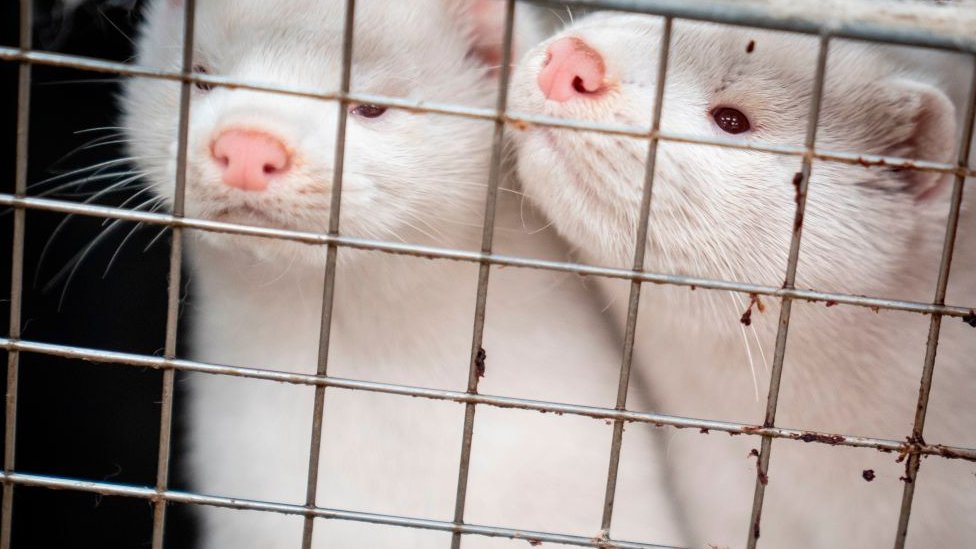
Mink at a farm in Denmark
Picture – Getty Images

 The virus spreads rapidly on fur farms.

WAV Comment: The fur industry has a lot of questions to answer regarding its abuses and what has resulted from this sick trade. Fur out now ! – globally.

First case of coronavirus detected in wild animal

By Helen Briggs
BBC Environment correspondent

The first known case of coronavirus in a wild animal has been reported, leading to calls for widespread monitoring of wildlife.

The US Department of Agriculture (USDA) said a wild mink had tested positive around an infected mink farm in Utah.

Coronavirus outbreaks at fur farms in the US and in Europe have killed thousands of the animals.

As a consequence, millions of farmed mink have had to be culled across Europe.

The USDA said it had found one positive case in “free-ranging, wild mink” in Utah as part of wildlife surveillance around infected farms.

Several animals from different wildlife species were sampled and all tested negative, the agency added.

It said it had notified the World Organisation for Animal Health, but there is no evidence the virus has been widespread in wild populations around infected mink farms.

“To our knowledge, this is the first free-ranging, native wild animal confirmed with Sars-CoV-2,” the USDA said in an alert to the International Society for Infectious Diseases.

The discovery raises concerns that the infection could spread between wild mink, said Dr Dan Horton, a veterinary expert at the University of Surrey, UK.

The case “reinforces the need to undertake surveillance in wildlife and remain vigilant”, he added.

Mink are known to escape from mink farms and become established in the wild. In the UK, a population of mink that escaped from fur farms many years ago is thought to exist, but they are sparsely distributed and rarely come into contact with people, Dr Horton added.

The virus has also been found in zoo tigers, lions and snow leopards in the US, and in a small number of household cats and dogs.

First case of coronavirus detected in wild animal – BBC News

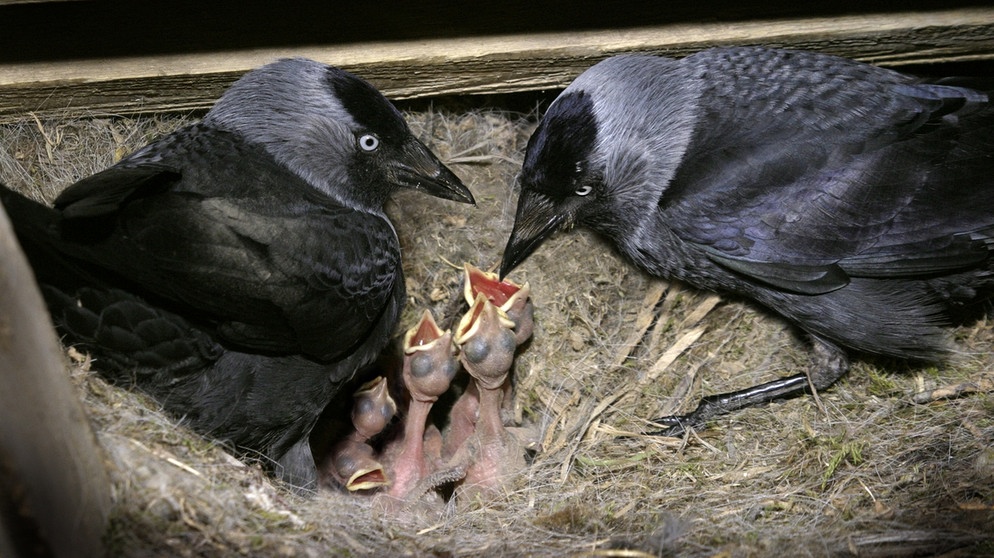
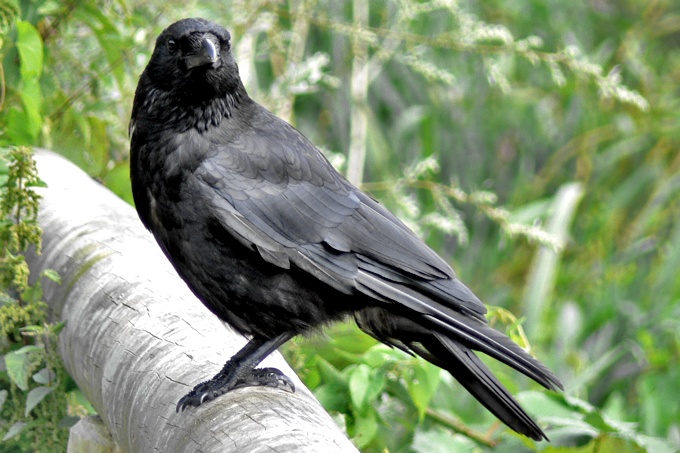
Ravens are as smart as great apes

Ravens are considered to be particularly intelligent: They learn quickly and use tools purposefully. One reason the birds are so smart could be because of their long childhood.

Because some corvids stay with their parents for a very long time – and have so much time to learn even complex things in a protective setting.

Cognitive scientists from the German University of Osnabrück and the Max Planck Society have now investigated how clever they actually are.

They compared the physical and social skills of ravens with those of chimpanzees and orangutans.
It was shown that the tested ravens already had a comparable cognitive performance as great apes at the age of four months.

The study was published in the journal “Scientific Reports”.

The scientists wanted to find out, for example, whether ravens know where to find food. To do this, they hid treats in a cup that was hidden between other cups and moved back and forth like a shell game. The ravens pointed with their beak at the correct cup and pecked at it.

Further tests in development

A total of eight ravens at the age of four, eight, twelve, and 16 months were tested in various task areas, in which, for example, spatial understanding and social behavior such as communication were tested. They mastered tests to understand quantities, cause-effect chains, social learning, and communication just as well as chimpanzees and orangutans!

Continue reading “Ravens are as smart as great apes”

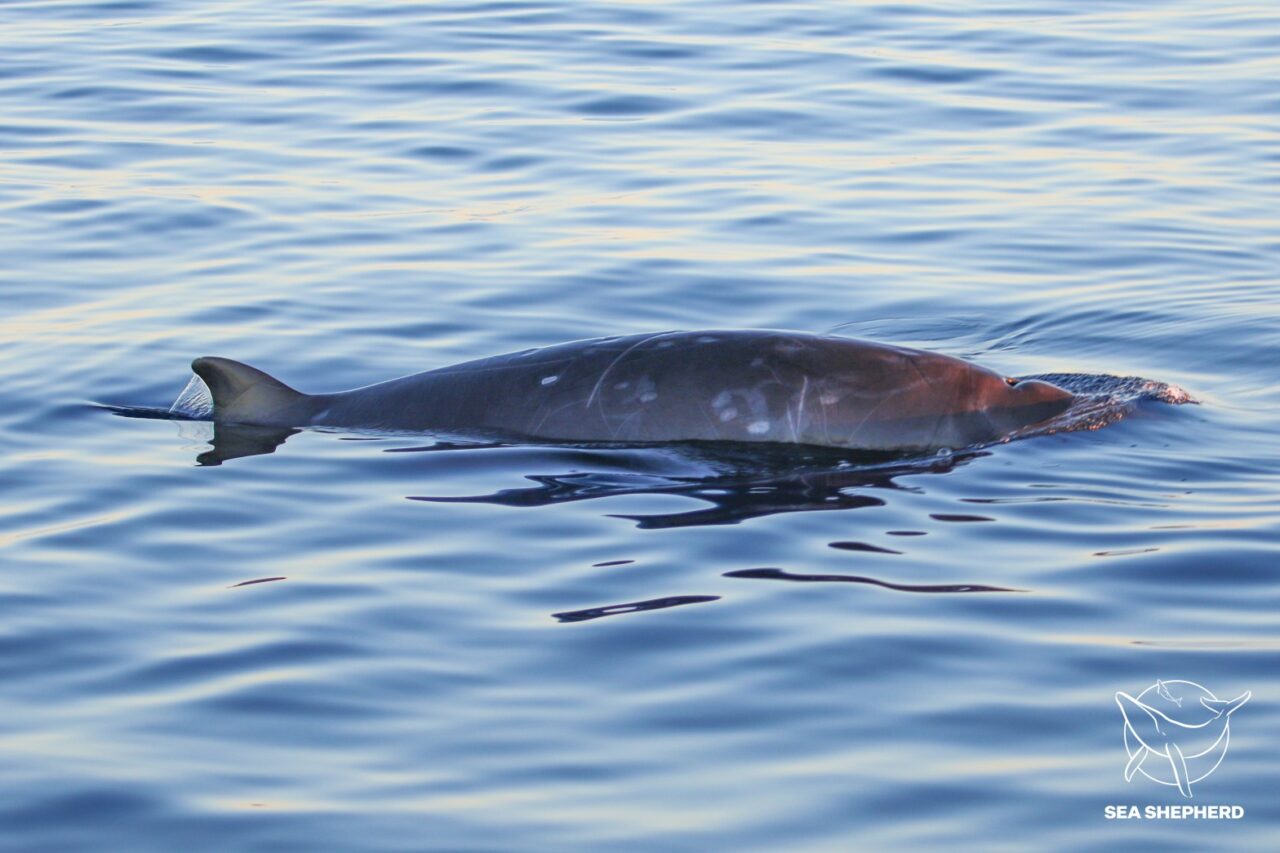
Beaked whales of a new species discovered in Mexico

NEW WALMART DISCOVERED IN MEXICO?

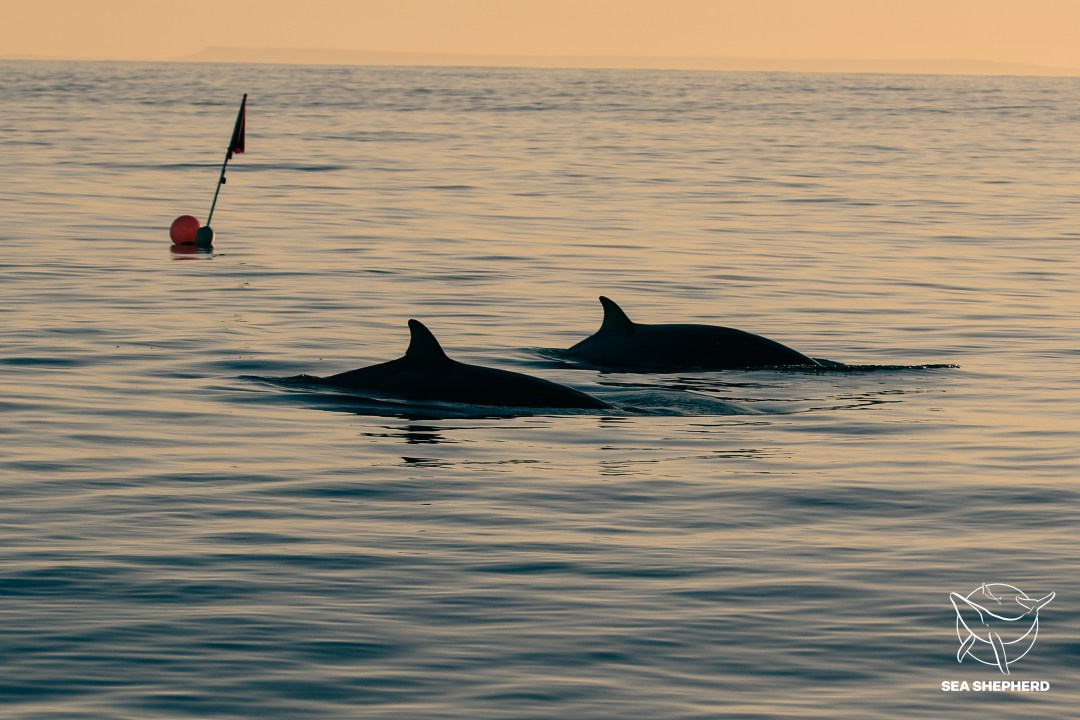
A previously unknown species of the whale may have been discovered in the waters north of Islas San Benito during Sea Shepherd’s research.

Ensenada, Mexico – December 8, 2020: On the morning of November 17, scientists aboard the Sea Shepherd ship MARTIN SHEEN observed three beaked whales in nearby waters.

Elizabeth-Henderson-Sea-Shepherd

The expedition, led by the renowned beaked whale researcher Dr. Gustavo Cárdenas Hinojosa (National Commission for Nature Reserves, Marine Mammal Research), Dr. Jay Barlow and Dr. Elizabeth Henderson, director of the NIWC PAC’s Whale Acoustic Reconnaissance Program in collaboration with Sea Shepherd’s research division, set out to investigate a species of a beaked whale that could be the cause of a previously unidentified acoustic signal previously recorded in the area.

Scientists and the Sea Shepherd crew took photos and video recordings of the animals and used a special underwater microphone to record the acoustic signals from the whales. The beaked whale experts, who are leaders in their field, are “extremely confident” that the photographic and acoustic evidence shows the presence of an entirely new species of whale.

“We saw something new. Something we didn’t expect in this area. Something that doesn’t match anything in appearance or acoustics that is known to exist, ”said Dr. Jay Barlow.

Eine wahrscheinlich neue Schnabelwalart. Foto: Simon Ager / Sea Shepherd

“I get a chill when I think about the fact that we might have done something that most people would consider absolutely impossible – to find a large mammal that exists on earth that is completely unknown to science. Like finding a unicorn”!

Further information on our website: https://sea-shepherd.de/news/neue-walart-in-mexiko-entdeckt/

Comment and Information: Beaked whales live in deep waters and therefore mostly far from the coast. They dive long and deep, and rarely spend time on the surface, usually, they are usually very shy and avoid ships and people, so the sighting of beaked whales (Ziphiidae) is extremely rare.

It is extremely rare for them to be so close to a boat.

That is why Jay Barlow raves about this phenomenal encounter to the press: “It was just the phenomenal encounter. It’s very rare to even see a beaked whale and to find a friendly group of beaked whales, it’s even rarer ”.

These three toothed whales came across a boat full of sharp-eyed marine biologists on a survey who were already using their binoculars and cameras – the video shows that the survey is in progress.

This enabled them to observe the rare marine mammals immediately, take photos, film them above and below the water and record their sounds with the hydrophone.

In addition, the scientists were able to take water samples from the vicinity of the whales that appeared. They are now being searched for traces of DNA.
Due to the technological development of the last few years, it is now possible to recognize the DNA of the animals that have swum through it from a water sample and to prove it.
Even in the complete absence of the DNA donor.

I mean…It is better not to trumpet such news through the media so loudly.
There are certainly many zoo owners who are already thinking about the money that would bring such a “sensation” into their coffers.

My best regards to all, Venus

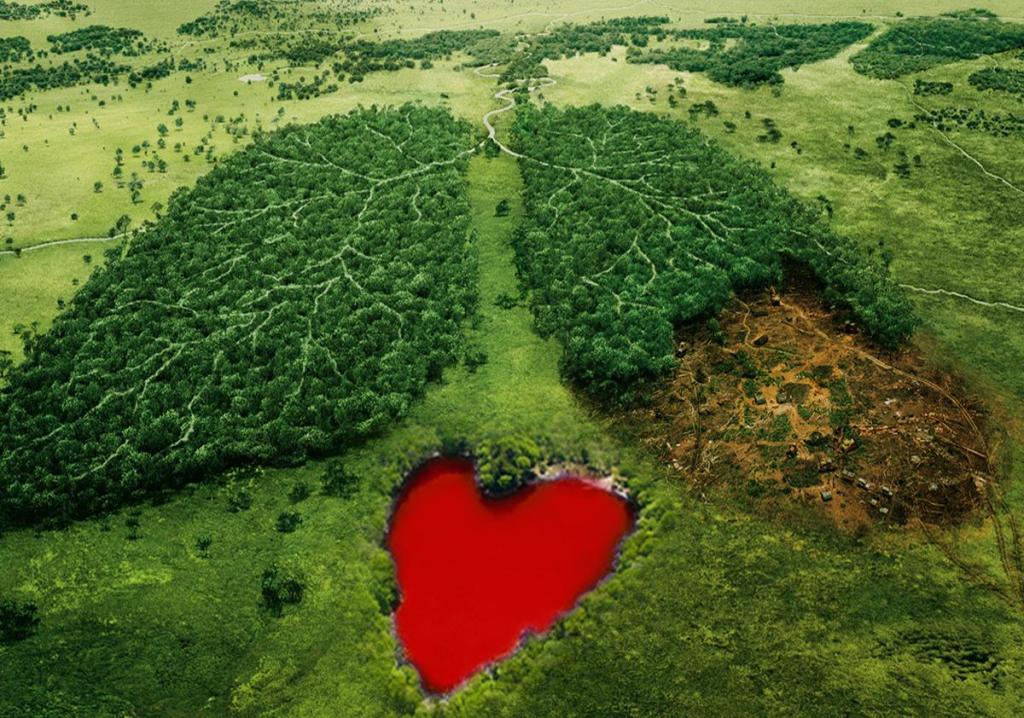
Amazon Frontlines – A Pathway to Protect the Amazon.

Amazon Frontlines

A pathway to protect the Amazon;

Read about it here – click on the link:

A pathway forward to protect the Amazon (mailchi.mp)

Also:

Just yesterday, I was awarded the Goldman Environmental Prize for my people’s struggle to keep our lands free of oil drilling, for lifting up Indigenous peoples’ rights to say “No” to the powerful interests that seek to take from our lands, and for inspiring millions around the world in the fight to protect the Amazon and save our climate.

As a Waorani woman, a mother, and a leader, I know that this award is not mine alone. It is for my ancestors, my elders, and Indigenous peoples across the world risking their lives to protect Mother Earth. And it is for you, too! We are all in this together. And the stakes have never been higher.  

I’m honored and thrilled to announce today that I will be donating every penny of the $200,000 Goldman Prize money to further our peoples’ efforts to protect a rainforest that the entire world depends on. Actions speak louder than words, and I’d like for you to join me!  

I recently learned that only 2% of all global philanthropy worldwide goes to protect Mother Earth. And of that, only a tiny fraction makes it to community-led frontline efforts to protect our lands and rivers. We must change this! Indigenous peoples are up against some of the mightiest interests in the world, and if we are to confront them we need urgent resources on the frontlines. We need you to have our backs so we can continue protecting the air, the water, and the climate that we all depend on.  

Nemonte Nenquimo
Waorani leader, TIME100 Honoree and Goldman Prize Winner

See more:

In honor of mother earth 🌿 (mailchi.mp)

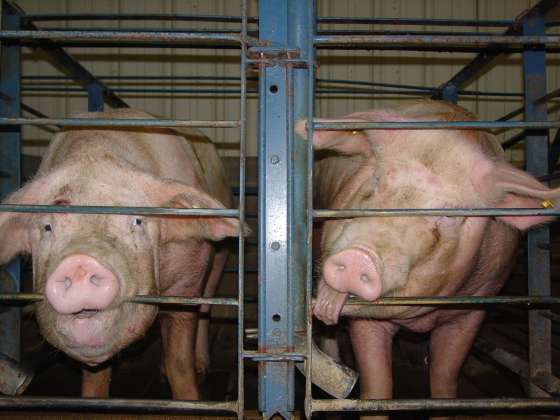
Animal and Environmental Groups Have Their Say At UN General Assembly Special Session on COVID-19.

covid 19 – Google Search

What do you call the disease caused by the novel coronavirus? Covid-19

UN General Assembly Special Session on COVID-19

3 December 2020

World Animals Net

Press Release

Animal protection and environmental groups call for animal welfare to be included in COVID-19 recovery policies at special session of the UN General Assembly addressing pandemic

Today, animal protection and environmental NGOs from across the world are calling on global leaders meeting at a special session of the United Nations General Assembly on the coronavirus pandemic, taking place 3-4 December, to address the wellbeing of animals in COVID-19 recovery and financing efforts, as well as policies intended to “build forward better”. 

As world leaders meet to consider the international cooperation required to deal with COVID-19, animal protection and environmental groups from Africa, Asia, Oceania, the Americas and Europe have signed a new joint-manifesto outlining actions required to transform farming systems, shift food consumption habits, end the unnecessary exploitation of wildlife, increase vaccine development efficiencies, and ensure animal wellbeing.

Reports that the COVID-19 crisis likely arose from the exploitation of animals, as well as recent revelations about potential COVID-19 variants emerging from mink farms, has drawn greater attention to how human uses of animals can increase the risk of future pandemics. In July, a study released by the UN Environment Programme and the International Livestock Research Institute identified the increase in consumption of animal products, intensification of animal production systems, and wildlife exploitation as primary drivers of pandemic risk. 

To reduce the future risk of pandemics the manifesto implores global decision-makers to take concrete steps to incorporate policies linking the health of animals, the environment and humans into COVID-19 policy and financing to ensure a resilient, sustainable and humane future.


Animals Australia says:

The IMF estimates that the cost to the global economy of dealing with COVID-19 will eventually reach US$28 trillion.  The costs of transitioning away from intensive animal farming and other high-risk animal industries, which would reduce animal suffering and the risk of future pandemics, is a fraction of that.  The fact that over 150 global animal welfare and other organisations have come together to highlight the need for a more scientifically considerate and sustainable approach to rebuilding our food systems after the devastations of 2020 is a testament to the importance of these crucial investment considerations.  It is imperative that at this historic moment in time decision-makers around the globe recognise the need to transition to sustainable plant-based agriculture – and we implore them to do so.

Asia for Animals says:

The Asia for Animals Coalition proudly supports this manifesto and the call for it to be addressed at the forthcoming General Assembly Special Session. The UN must seize this opportunity and lead the way in showcasing a One Health and One Welfare approach for the treatment of animals and the environment, and ensure Asian governments prioritise these actions. On behalf of our network organisations around the globe and the many millions of members they represent, we respectfully ask that the UN considers the stringent action points set out in this document as a move towards safeguarding our future globally and the sustainability of our planet as a whole.

Coalition of African Animal Welfare Organisations says:

There has never been an opportunity like we have today ‘to build back better’, Covid-19 is giving humanity a chance to reset and acknowledge our interconnectedness with nature.  Science has proven time and again that zoonotic diseases spread faster and are deadlier when animals are kept in overcrowded conditions.  Africa can not be dealt a blow by ‘paying for the sins’ of the developed world – a world which industrially farms animals.  We call on the United Nations General Assembly to endorse and guide a transition towards a better life for all by promoting sustainable food systems that farm as close as possible to nature.

Eurogroup for Animals says:

As the COVID-19 pandemic has shown the world, the question of how we treat animals has become even more central than before. One of the major drivers behind the spread of zoonoses is the pressure on biodiversity created by the loss of habitat. We’re sacrificing the habitat for agricultural purposes, especially intensive animal farming. A booming wildlife trade also contributes to this phenomenon. If we do not address the way we treat animals, we will only postpone the next pandemic. It is high time for the UN to include this question on its agenda.

The Global Forest Coalition says:

Increased intensification of agricultural products has not only shown the strong links between an increase in demand for meat, deforestation and climate change, but also its effects on human health. Previous swine and avian flu events already warned us about possible future outbreaks, but despite this, intensification of farm animal production has continued. Animal exploitation has reached unthinkable scales, as live animals are being exported without regard to animal welfare or the potential for zoonotic diseases. Today we pay the price. Hence, we need to ensure that sustainable food systems address these risks and put us on the desired path of living in harmony with nature, including the way we relate to other animal species in relation to our consumption habits.

ENDS

Regards to all;

Mark.