Category: Environmental

Alaska: The battle for Bristol Bay is won-Great!

By The Seattle Times editorial board

Construction of the Pebble Mine, a huge gold and copper mine, was officially rejected.
The mining would have destroyed the vast natural area in Bristol Bay, Alaska, and displaced indigenous people.

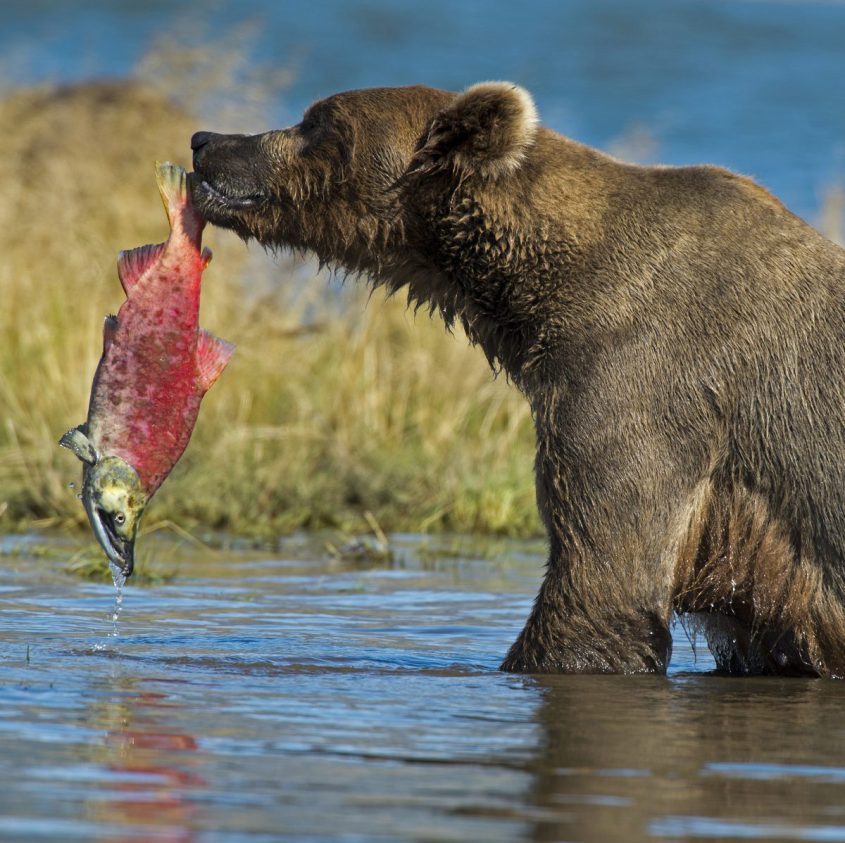
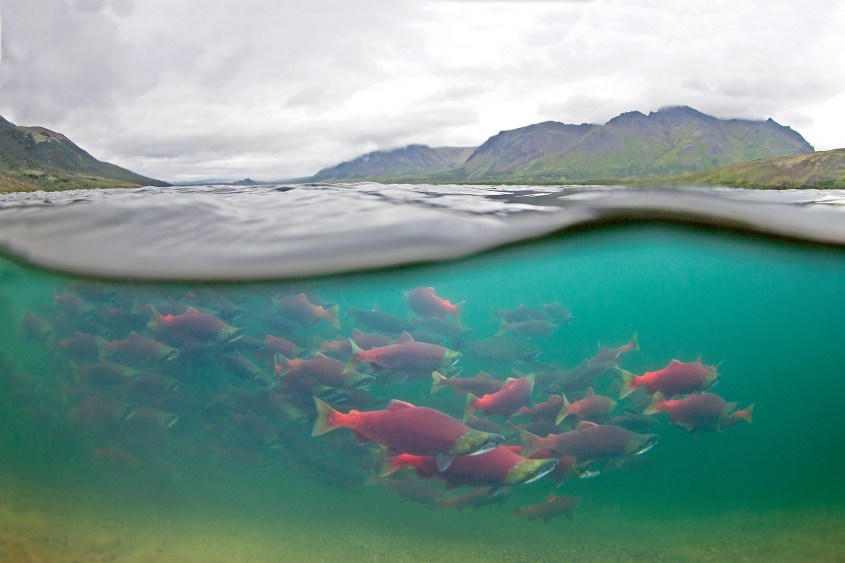
Where whales sing, seals and walruses live and there are extensive wetlands, a huge mine would have irreparably destroyed the region. Bristol Bay is also known for its extraordinary stocks of salmon, which are the livelihoods of the native Eskimos, but also for food from orcas to thousands of brown bears.
Huge mines would destroy the last of the salmon populations, like in Bristol Bay, forever.

After the U.S. Army Corps of Engineers’ decision last week to reject a key permit for Alaska’s proposed Pebble Mine, it’s clear that federal protection is now needed to permanently preserve this uniquely valuable resource.

The project threatened too much destruction to the immense salmon runs of Bristol Bay.

The list of reasons to protect the bay’s watershed is long. Its annual chinook and sockeye salmon runs are the largest on Earth. All five species of Pacific salmon live in Bristol Bay, and its watershed produces about half the world’s annual sockeye harvest.

The commercial and recreational fisheries support large portions of the region’s economy, and Bristol Bay’s salmon have sustained Alaska natives for many generations. Thousands of Washingtonians fish those salmon each year, for work and recreation.

The bay’s diverse salmon runs feed other populations, too — from orcas to the thousands of brown bears on the Alaska peninsula. The mine was predicted to disrupt this food chain mightily in the name of extracting rich veins of copper and gold, and potentially molybdenum and rhenium.

It is fitting that the Corps stopped the mine by denying it a permit required by the Clean Water Act.

The impact on the wetlands surrounding Bristol Bay’s headwaters from excavating millions of tons of minerals each year could have been a catastrophe with long-lasting harmful reverberations.

But the Clean Water Act is not safe from political rollbacks. The Trump administration proved this in undoing more than 80 environmental rules across the past four years, including seven water pollution regulations.

There must be permanent protection for Bristol Bay against an industrial-scale mining concern. As the late U.S. Sen.Ted Stevens, R-Alaska, said in 2008, such a project “is the wrong mine for the wrong place.”

The time has come to permanently, and specifically, target Bristol Bay as a vital national resource. Its health must be preserved even if the Environmental Protection Agency is subverted.

Continue reading “Alaska: The battle for Bristol Bay is won-Great!”

Australia: ‘Devastating’: more than 61,000 koalas among 3 billion animals affected by bushfire crisis.


‘Devastating’: more than 61,000 koalas among 3 billion animals affected by bushfire crisis

A new report says 143 million mammals were affected in the 2019-20 blazes, one of the ‘worst wildlife disasters in modern history’


‘Devastating’: more than 61,000 koalas among 3 billion animals affected by bushfire crisis | Australia news | The Guardian

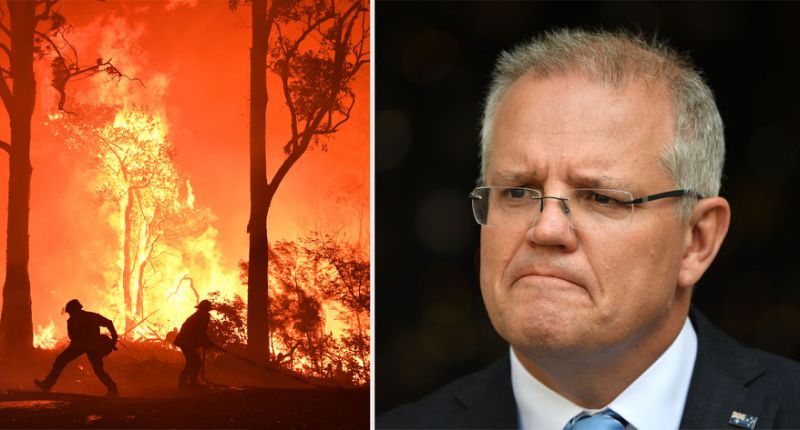
More than 61,000 koalas and almost 143 million other native mammals were likely in the path of the Australian bushfires of late 2019 and early 2020, according to a major assessment of the ecological toll of the “black summer” blazes.

The estimate from 10 researchers and scientists, contained in a report commissioned by environmental group WWF-Australia, recounts the devastating losses in habitats across the country.

Almost 3 billion animals, including 2.46 billion reptiles, were in the path of the flames, the report says – the same number the team calculated in an interim report, revealed in July by the Guardian.

‘Catastrophic’ bushfire burns half of Queensland’s Fraser Island and threatens ecological disaster

Dermot O’Gorman, chief executive of WWF-Australia, says in a foreword that the report shows the fires were “one of the worst wildlife disasters in modern history”.

Prof Chris Dickman, a University of Sydney ecologist who helped guide the project, told the Guardian: “The numbers [of animals affected] are absolutely huge. It’s really a call to arms to try and do something because under climate change these fires will happen again.”

Some 181 million birds and 51 million frogs also lived in habitats inside the burned areas, which covered 12.6m hectares – an area almost the size of England.Among the 143 million mammals affected were one million wombats, 5 million kangaroos and wallabies, 5 million bats, 39 million possums and gliders and 50 million native mice and rats.

About 5½ million bettongs, bandicoots, quokkas and potoroos were also affected.

The team wrote that because of a lack of data and knowledge of how species might survive, as well as uncertainties with how fire interacted with other threats, they couldn’t be sure how many of the 3 billion animals died.

“Even if resident animals were not killed outright by fires and managed to escape, they will surely have experienced higher subsequent risk of death as a result of injuries or later stress and deprivation of key resources,” the report says.

An estimated 61,353 koalas were affected, and O’Gorman wrote: “That is a devastating number for a species that was already sliding towards extinction in eastern Australia. We cannot afford to lose koalas on our watch.”

Between 43,261 and 95,180 koalas had been affected, with a middle estimate of 61,353.

In November, environment minister Sussan Ley announced a national census of the marsupial to address “a serious lack of data about where populations actually are”.

In NSW, a parliamentary inquiry has found koalas would be extinct in the state by 2050 without action to save habitat.

Australia after the bushfires

The WWF-Australia report says the fires affected as many as 14,736 koalas in the state.

Worst hit was Kangaroo Island in South Australia, where about 41,230 koalas were likely in the path of the fires that burned about half the island.

Dickman said the report was important because it documented impacts on Australian icons such as kangaroos and koalas alongside lesser-known, but unique and important wildlife.

“If you work in the forest environment then you know there’s a lot more animals living in these areas that don’t get the publicity – other fantastic charismatic animals like gliders that live alongside them and are being whittled away as well.”A range of techniques and sources were used to estimate the impacts on different species. Estimates for mammals were based on available data on the densities of species in different areas.

Reptile impacts were modelled and for birds, more than 100,000 surveys for BirdLife Australia were accessed. Some 67 frog species were mapped and their densities were estimated using previous research.

But large numbers of other species were likely to have been affected by the fires but were not included in the report.

The report says freshwater fish and crayfish are known to have been badly hit but could not be reliably estimated.

Authorities reported hundreds of thousands of fish dead after bushfire ash and mud washed into rivers.

The assessment also could not include arthropods – a group that includes insects, spiders and other bugs – but pointed to other research estimating trillions of these were likely affected.

The report includes 11 recommendations that call for better understanding of the impacts of bushfires, more research into species, where animals are, and better management of other threats.

“Alongside mortality caused by direct exposure to flames, smoke inhalation, heat, and sediment run-off, fire interacts with other stressors, exacerbating threats to the persistence of threatened species and ecosystems,” the report says.

“Three of the greatest threats to Australian flora, fauna, and ecosystems are altered fire regimes, invasive species, and land clearing; all threats that interact with and compound one another.”

Dickman, a fellow of the Australian Academy of Science, said: “A key step is to try and improve our monitoring of pretty much all the bioregions on the continent.

“We will be in a much better position to understand where populations are and we should then be in a better position to mitigate fires and floods and droughts.”

He said there were many animals that science knew little about, and as more extreme events affected species time could run out. “Windows progressively slam shut,” he said.

Dickman said just one example of the benefits of monitoring was that in the aftermath of the fires, the New South Wales government had dropped carrots and sweet potatoes into habitats of threatened brush-tailed rock wallabies.

That was only possible, he said, because the government knew where the wallabies lived.

Australia had a moral and ecological responsibility to save the animals, he said, because the vast majority of those affected existed nowhere else on Earth.

Germany and its perpetrator-friendly justice!!

No charges against criminal egg thieves in Schleswig-Holstein, Germany:

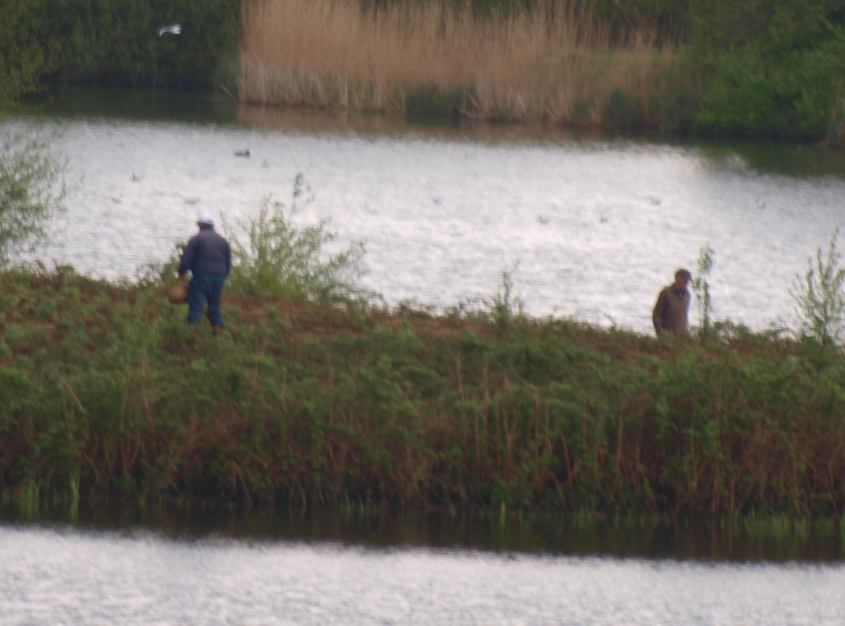
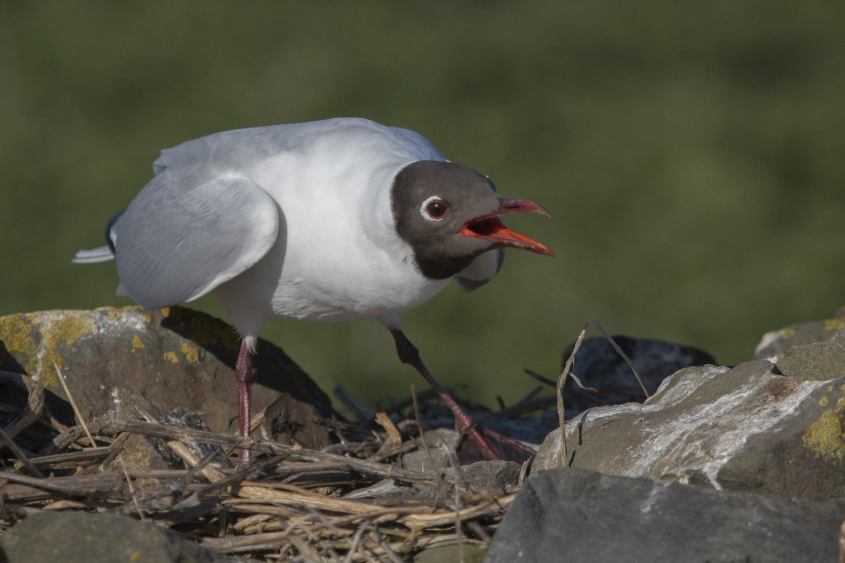
In April 2020, nature lovers had observed two people collecting a whole basket full of eggs in a black-headed gull colony on Molf- lake (Rendsburg-Eckernförde district).
The police, who were called immediately, were there quickly and caught the two men in the act.

The photo shows the two egg thieves in action,
a sign at the Molf- lake, that says:
“Landscape protection area
Driving on the lake with any watercraft is prohibited.
Likewise, swimming to the seagull islands in an area of 50 meters from the islands”

and a black-headed gull from our archive.
The main perpetrator freely admitted that he had illegally stolen gull eggs from the bird colony for years in order to eat them.
Nevertheless, the public prosecutor’s office has now closed the case – because of “lack of public interest” (!!!)

Local conservationists have been looking for the egg thieves for a long time, and endangered black-headed gulls and lapwing breed in the colony – reason enough actually to accuse the repeat offenders of poaching.
The procedure has now been handed over to the responsible district administration.

We hope that the perpetrators have not yet got completely off the hook of the judiciary, because the case was handed over to the district administration for punishment as an administrative offense, and it is to be hoped that a hefty fine will be imposed there, at least.

https://www.facebook.com/Komitee.CABS

And I mean…There is only one explanation: the authorities got something from the eggs.
Maybe there is no public interest in the gull eggs, but for the eggs of the authorities… an active one!

My best regards to all, Venus

Culled minks with COVID-19 mutation literally ‘rise’ from their graves in Denmark.

Culled minks with COVID-19 mutation rise from their graves in Denmark

By Jan M. Olsen  The Associated Press

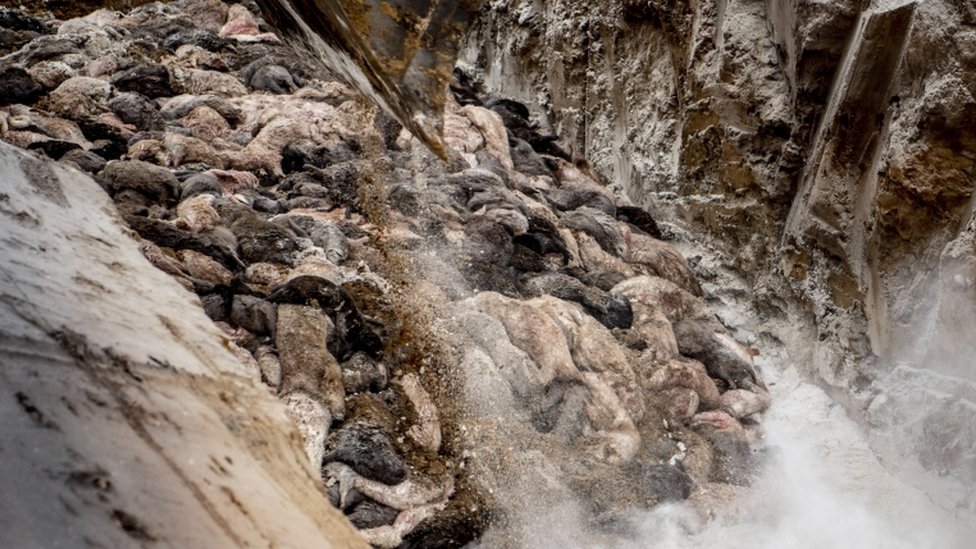
Some of the thousands of mink culled to minimize the risk of them re-transmitting the new coronavirus to humans have risen from their shallow graves in western Denmark after gases built up inside the bodies, Danish authorities said Thursday.

“The gases cause the animals to expand and in the worst cases, the mink get pushed out of the ground,” Jannike Elmegaard of the Danish Veterinary and Food Administration said. He said it affected “a few hundred” animals.

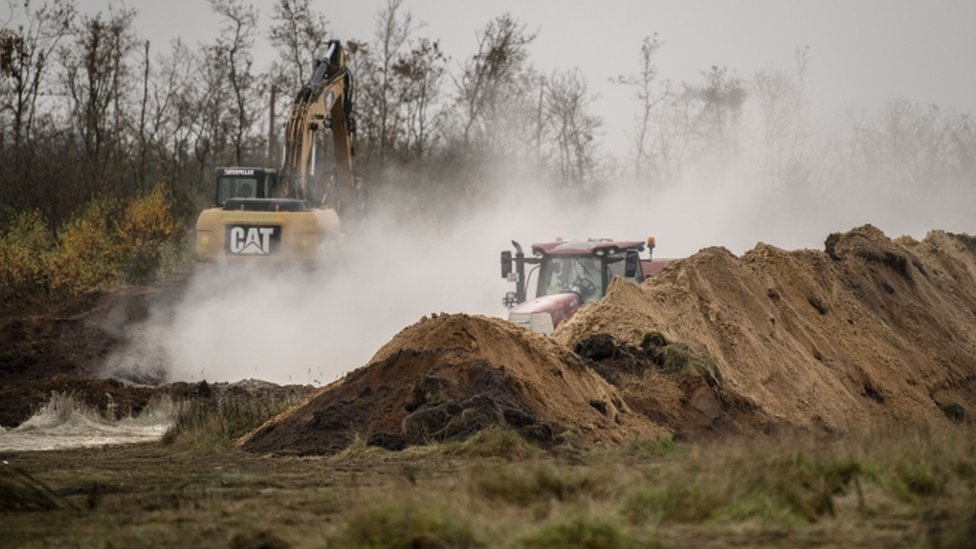
Members of Danish health authorities assisted by members of the Danish Armed Forces dispose of dead mink in a military area near Holstebro in Denmark, 09 November 2020 (issued 10 November 2020).

The mink are buried in trenches that are 2.5 metres (8.25 feet) deep and 3 metres (10 feet) wide. A first layer of about 1 metre of dead mink are then covered with chalk before another layer of animals is laid, covered again with chalk and then with dirt, Elmegaard told The Associated Press.

But because the soil where they are buried is sandy, some have re-emerged. “We assume it is the mink that were in the upper layer that pop up,” he added calling it “a natural process.”

“Had the earth been more clayish, then it would have been heavier and the mink would not have resurfaced,” he told the AP. The animals who resurface are reburied elsewhere, and authorities guard the site to keep away foxes and birds.

Members of Danish health authorities assisted by members of the Danish Armed Forces dispose dead mink in a military area near Holstebro in Denmark, 09 November 2020

Denmark culled thousands of mink in the northern part of the country after 11 people were sickened by a mutated version of the coronavirus that had been observed among the animals.

Earlier this month, the Social Democratic minority government got a majority in parliament to back its decision to cull all of Denmark’s roughly 15 million mink, including healthy ones outside the northern part of the country where infections have been found. The proposed law also bans mink farming until the end of 2021.

The government had announced the cull despite not having the right to order the killing of healthy animals, an embarrassing misstep that caused it to scramble to build political consensus for a new law.

The coronavirus evolves constantly as it replicates but, to date, none of the identified mutations has changed anything about COVID-19’s transmissibility or lethality.

Culled minks with COVID-19 mutation rise from their graves in Denmark – National | Globalnews.ca

Click here to see all of our past WAV posts on the Danish Mink cull:

Search Results for “denmark mink” – World Animals Voice

The „world’s highest garbage dump“-Everest!

A series of newly-published studies based on a National Geographic expedition to Mount Everest in 2019 provides a shocking picture of how human activity is impacting the highest point from sea level on Earth.

One of the studies even found microplastics just below the summit, at 8,440 meters (approximately 27,690 feet).

„Mt. Everest is somewhere I have always considered remote and pristine,“ University of Plymouth scientist and National Geographic Explorer Dr. Imogen Napper, who was the lead author on the plastics study, told EcoWatch in an email.
„To know we are polluting near the top of the tallest mountain on earth is a real eye-opener – we need to protect and care for our planet.“

Microplastics at the Top of the World

Napper’s study, published in the journal One Earth Friday, found microplastics in every snow sample taken from Mount Everest. The findings join a growing body of research showing the extent of microplastic pollution in even the most remote corners of the planet.

„These are the highest microplastics currently ever discovered,“ Napper told EcoWatch. „Although it sounds exciting, this means that microplastics have been discovered from the depths of the ocean all the way to the highest mountain on earth.“

There has been growing awareness in recent years of the buildup of trash on Mount Everest left behind by tourists and climbers.

In 2019, the Tibet Autonomous Region Sports Bureau said it removed 9.3 tons of waste, and China closed its Everest base camp to tourists to prevent more pollution.

Some media outlets have even begun to refer to the mountain as the „world’s highest garbage dump.“

However, Napper’s study is the first to focus on the accumulation of microplastics on the mountain specifically. Microplastics are plastics less than five millimeters in length that typically slough off of larger plastics as they degrade. Their small size means they are easily ingested by animals by mistake and are also extremely difficult to clean up.

Napper’s team found more microplastics collected near the base camp, where climbers tend to congregate.

But they still found five microfibers at the mountain’s „balcony,“ the highest point they studied. Those fibers numbered one clear acrylic fiber, one red polyester fiber, and three blue polyester fibers.

In general, many of the microplastics found on Everest were fibers that could have been brought by climbers.

Continue reading “The „world’s highest garbage dump“-Everest!”

USA: Trump’s misguided attack on wildlife, our ecosystems, and our planet – maybe that is why he will not be Mr President anymore !

Stand up for Wildlife: Help Save Gray Wolves from Trump’s Reckless Assault

President Trump’s U.S. Fish and Wildlife Service (FWS) just finalized its Rule to roll back vital Endangered Species Act (ESA) protections for gray wolves in the lower-48 states. Their disastrous plan will reverse years of recovery for this iconic species.

We are facing a biodiversity crisis of global proportions. The fate of humanity is intertwined with the fate of species and healthy ecosystems. Now is the time to restore species to the landscape — not dial back efforts for an iconic animal that was once nearly exterminated in the U.S.

Furthermore, the Fish and Wildlife Service must develop a national wolf management plan — a plan that incorporates Indigenous knowledge and perspective. The gray wolf holds immense cultural significance for Indigenous groups around the country and is considered sacred by some.

NRDC is doing everything in our power to stop Trump’s latest assault on wildlife — and we’ll take the fight to court if that’s what it takes to stop it — but in the meantime, we need NRDC activists to help create a massive public outcry by submitting letters of protest to Trump’s Fish and Wildlife Service.

Sign the petition protesting Trump’s misguided attack on wildlife, our ecosystems, and our planet — and help save gray wolves!

Stand up for Wildlife: Help Save Gray Wolves from Trump’s Reckless Assault

Above – ‘The President’

Click on this link to take action:

Help Save Gray Wolves | NRDC

The Loser

Coronavirus risk grows as animals move through wildlife trade.

Woman slaughtering rats at a market in Dong Thap, Vietnam (left), and vendor selling live rats in cages (right). Photo credit: WCS/Viet Nam (Huong, et al, 2020)
  • Woman slaughtering rats at a market in Dong Thap, Vietnam (left), and vendor selling live rats in cages (right). Photo credit: WCS/Viet Nam (Huong, et al, 2020)

Coronavirus risk grows as animals move through wildlife trade

Click on this link to see all the photos:

Coronavirus risk grows as animals move through wildlife trade (mongabay.com)

  • Animals consumed by people in Vietnam are increasingly likely to carry coronavirus as they move from the wild to markets to restaurants, a new study shows.
  • The animals with the highest rates of infection are most likely to come into contact with humans.
  • When animals are confined in crowded and stressful conditions, it makes it even easier for the virus to spread.

The COVID-19 pandemic has made it clear that when coronaviruses leap from wild animals to humans, the results can be devastating. A new study from Vietnam provides new insights about how this cross-species spread might happen.

Researchers showed for the first time that as animals move through the wildlife supply chain, from their natural habitats to marketplaces and ultimately to restaurants, they are more likely to become infected with coronaviruses, according to a report in PLOS OneAnd at each stage, people interact with these animals more intensively.

Coronaviruses are most notorious for causing human disease—including SARS, MERS, and COVID-19—but they are widespread in the animal kingdom. There are many different coronaviruses, and they can infect bats, rodents, birds, and domestic livestock like cattle and swine. Understanding where and how these viruses first make contact with humans is critical for preventing future pandemics.

To do this, the best place to start is at the wildlife-human interface: places where wild animals and humans are exposed to each other. A team of Vietnamese scientists, led by Nguyen Quynh Huong and Nguyen Thi Thanh Nga, along with Amanda Fine and Sarah Olson of the Wildlife Conservation Society (WCS) in New York, tested field rats for coronavirus at different points along the wildlife supply chain in Vietnam. They found that with each link in this chain, the percentage of infected animals increased by about 1.5 times.

This factor may not seem like much. However, it means the infection rates increased markedly: 20.7 percent of rats handled by wildlife traders, to 32 percent of rats in the markets, to 55.6 percent of rats in the restaurants.

“They did an amazing job at following the virus surveillance throughout the trade routes,” said senior field veterinarian Marc Valitutto of EcoHealth Alliance, who focuses on pandemic preparedness in Southeast Asia and China. Valitutto, who was not involved in the research, wasn’t aware of any other studies that traced infection rates along trade routes in as much detail.

The team also found that about 75 percent of bats on guano farms (constructed roosts where people collect and sell bat droppings for fertilizer) were infected with coronavirus. That was more than ten times the infection rate of 6.7 percent in naturally roosting bats.

The study demonstrated that the animals in closest contact with humans had the highest infection rates, said Fine. That’s critical to understanding how coronaviruses might infect villagers or city residents: The chance that a virus will transfer from wildlife to people is “directly increased by the number of contacts and the number of humans in that environment,” she said.

Further, when infected animals reach markets and restaurants, they are often housed in close quarters near many different kinds of animals. In such settings, coronaviruses can jump from species to species, said Olson. The team found direct evidence of this: rats and porcupines on a crowded wildlife farm carried coronaviruses from bats and birds.

That’s a noteworthy public health concern, according to Valitutto: Many coronaviruses that have caused major human outbreaks have jumped among a few different species before infecting people.

The authors noted a few caveats. For instance, cross-contamination between animals butchered in restaurants could have created some false positives tests—although such contamination is another way coronavirus could spread to human consumers, said Fine. Also, virus infections among animals are much higher during the wet season, but the team couldn’t sample every testing site during both wet and dry seasons.

Fine, Olson, and Valitutto all hope the sobering results of this study will help bring major changes to wildlife trade regulation in Vietnam and elsewhere to cut down on coronavirus transmissions.

“If this can’t change the status quo,” said Olson, “I don’t think anything can.”

Mexico: 26 Reptiles smuggled from Mexico found at German airport stitched inside dolls. 10 Dead Due to Suffocation.

Reptiles smuggled from Mexico found at German airport stitched inside dolls

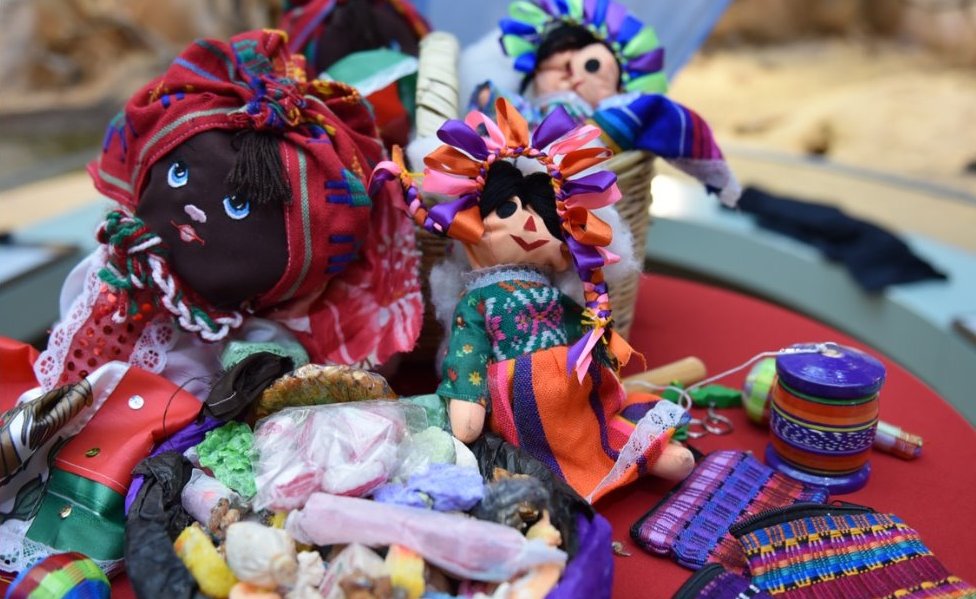
German airport customs officers have found 26 rare reptiles – 10 of them dead – smuggled inside parcels of toys and sweets from Mexico.

Some of the dead animals had suffocated as they had been stitched inside cloth dolls, a statement from Cologne Bonn airport customs said.

The endangered horned lizards, alligator lizards and box turtles were destined for private buyers in Germany.

They are among many species that the global Cites accord seeks to protect.

Seized toys and sweets from Mexico

German officials are now trying to trace the origin of the reptiles, using DNA samples.

It is not yet clear if they came from the wild or from captive breeding programmes. They were in two packages seized on 30 October and 8 November.

The customs service is collaborating with Mexican authorities and with zoologists at the Alexander Koenig Research Museum (ZFMK) in Bonn. The smugglers could be fined, if the police can identify them.

The 16 surviving reptiles might be returned to their Mexican habitat.

ZFMK’s work with customs mostly focuses on illegal goods made from poached endangered species, such as snakeskin handbags or furs.

The 1973 Convention on International Trade in Endangered Species (Cites) has been signed by 182 states and the EU, and covers about 6,000 animal species and 30,000 plant types.

Reptiles smuggled from Mexico found at German airport stitched inside dolls – BBC News

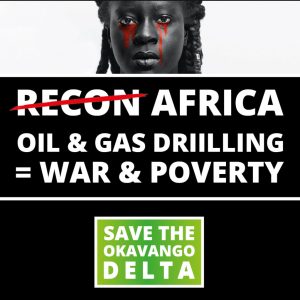
Help stop neo-colonialist and capitalist expansion into the Kavango Conservation Area.

Nature, wildlife, and scarce water supplies in a unique corner of southern Africa are being endangered by a rush to drill for oil. A Canadian company is pushing to explore for oil in the Kavango Basin, an environmentally sensitive area.

Please support the fight against a fossil fuel project that will drive the climate crisis.

Aerial View of the Okavango Delta, Botswana

“The oil needs to stay in the ground”, says Ina Shikongo.

The Fridays for Future (FFF) activist in Namibia’s capital city Windhoek is fighting a project to exploit untapped oil and gas reserves in the northeast of the country.

“The exploitation would be a catastrophe – not only for the global climate but also for wildlife, water resources and the livelihoods of local people”.

The project Ina rejects so fiercely – together with further FFF activists and a citizens’ coalition – is run by ReconAfrica, a firm based in Canada.

The company claims to have discovered an immense deep sedimentary basin. It obtained a license for oil and gas exploration in the Kavango delta, bought a second-hand oil rig in the US, and shipped it across the Atlantic.

If the drilling of the first three test boreholes – slated for December 2020 – is successful, the company plans to extract two billion barrels of oil before drilling into deeper layers of rock.

Environmentalists fear the company will use fracking despite public statements to the contrary, as its marketing materials refer to “unconventional” methodsan industry euphemism for fracking.

The ecological impacts of the projects are likely to be devastating.

It would not only threaten bodies of water in the dry savannas of Namibia, but also Botswana’s UNESCO World Heritage Site, the Okavango Delta, with its unique biodiversity and huge populations of elephants, hippos, rhinos, and birds.

Tourism, an important source of income, is in danger while other livelihood strategies of indigenous San and local people also hang in the balance.

We need to stop ReconAfrica’s project for the sake of the climate, biodiversity, water, and the livelihoods of the local people.

Please support our demands with your signature.

https://www.rainforest-rescue.org/petitions/1231/keep-the-oil-industry-out-of-africas-natural-treasures

And I mean…the head of the farmers’ association Kavango-Ost, Adolf Muremi, says: “Recon Africa says they informed the people here – but we are not aware of anything about this. You can already expect malformations in babies and other diseases that this type of industry leads to agriculture will be just as affected as the groundwater, it will have negative consequences for life for everyone here “

The multinational sells the project as an “exciting future” – for whom?

1) Oil and gas extraction is a menace to wildlife. Loud noises, human movement, and vehicle traffic from drilling operations can disrupt avian species’ communication, breeding, and nesting.

2) The ecosystem will be destroyed by a criminal Canadian Company that harvests 90% of the profits. The state of Namibia is only entitled to ten percent – a hunger share.

3) The construction of roads, facilities, and drilling sites known as well pads requires the use of heavy equipment and can destroy big chunks of pristine wilderness.

4) The underground water will not only be polluted but also depleted. How can the inhabitants giving an overseas company unbridled access to their most precious resource?

There will only be damages to humans and animals, and this harm is irreversible.

Please sign the Petition: https://www.rainforest-rescue.org/petitions/1231/keep-the-oil-industry-out-of-africas-natural-treasures

My best regards to all, Venus