WAV Comment: I (Mark) have not eaten any dead animal meat for well over 33 years. I take a vegan diet as a) I consider plant based to be very healthy; non fattening etc; and b) primarily because of my personal concerns for animal welfare issues. In short, An animal does not die to put something on my plate.
We all have our opinions, which is great and to be encouraged; but I rather hate the fact (as below) that veggie or vegan food is often sold as ‘vegan meat’; ‘vegan steak’, ’vegan bacon’, ‘fishless fillets’ and ‘vegan sausages’ etc. As a vegan, I do not want to eat things that are supposed to represent in any way steak, bacon or fish. Because of my hatred for the way animals are abused to produce the same, I simply want a plant based meal that is just that; a plant based meal without the cruelty. I dont want nit dressed up as something it is not – they should be sold as non meat; not ‘tastes like’ steak, bacon and the rest.
Having a range of plant based products called plant based steak, sausage and fish fillets is typical marketing jargon; but you almost always find that vegans are vegans because they don’t want to be associated with animal abuse or meat in any way. So pretending then that plant based products taste like steak; bacon or fish are not really on my wavelength; so why do it ?. The only positive to me is that ‘real’ steak eaters may eventually try the plant based version and then move over to it; improving their health and doing a great deal for the environment and especially saving animal deaths.
But for me; veganism has principles; and they include avoiding animal abuses; the environment and better health. So lets keep vegan food free from the ‘tastes like bacon or steak’ labels; and sell it is simply for what it is – ie cruelty free food which benefits the environment. How about labelling them instead as ‘animal abuse free’, or ‘more environmentally friendly’ products. This approach may even attract yet more custom; those who want to do the right thing and avoid animal suffering whilst doing better for the mush persecuted environment.
Just my view;
Regards Mark
Value Supermarket Morrisons Launches Vegan Steak And Bacon
The new meat alternatives are part of an extensive range including plant-based burgers, sausages, fishless fillets and more
Morrisons has launched a major new line of vegan meat under its V-Taste branding.
The value supermarket’s new offering includes a range of options including vegan steak (£3) and vegan bacon (£2.50).
Among the other plant-based meat alternatives are fishless fillets (£2), burgers (£2.50), and two styles of sausages – chorizo and Cumberland (£2.50).
Morrisons vegan meat
In a statement sent to Plant Based News, a Morrisons spokesperson described the bacon as ‘thick cut rashers’, which they said are the ‘perfect pairing to a butty on a Sunday’.
The steak, they added, are ‘high in fiber and a source of protein’, and match well with any traditional steak sauces.
The fishless fillets are described as ‘flaky’, and are made from fava beans and rice, coated in a breading.
The Helsinki Police Department has been accused of breaching human rights after footage was shared widely online showing officers pepper-spraying sitting Extinction Rebellion(XR) protesters.
A sit-in protest was organized by Elokapina (Extinction Rebellion Finland) on the busy Kaisaniemenkatu road in Helsinki, where numerous road traffic and tram line routes converge, on Saturday.
The climate protesters were ordered to disperse, having blocked the busy road with their sit-down demonstration all afternoon before police finally, and seemingly without provocation, unloaded with pepper spray canisters, hitting the seated protesters directly in the face as photos and videos from the scene purport to show.
“Within 10 minutes of the protest spreading out, police resorted to pepper spray and sprayed protesters several times, causing severe reactions in roughly a dozen people. Police also prevented some of the sprayed people from rinsing their face with water,” reads a press release from Elokapina.
Activists took to Twitter to share what they experienced at the hands of the police and to express their outrage at what unfolded. Many blasted the actions of the officers and called for them to face disciplinary action. “Shame on you Finland! How dare you!” one irate commenter wrote.
At least 51 protesters, some of whom had locked themselves to a boat, were detained by police according to an Extinction Rebellion press release.
In a statement, the Helsinki police department argued that given the extent of the traffic disruption and length for which the protest had been allowed to continue – roughly five hours – officers used the “most lenient forcible measure at [their disposal].”
Kimmo Nuotio, a professor of criminal law at the University of Helsinki said the situation “doesn’t look good,” from a legal perspective, adding that “use of force must be based on careful discretion and situational consideration.”
In the meantime, another street blockade is planned for Wednesday, October 7 as part of the group’s Autumn Rebellion (Syyskapina).
“Similar civil disobedience will be seen in at least 15 different countries throughout Autumn,” the group wrote on its website.
“I’m frankly annoyed that things didn’t go well in this particular case,” Sanna Heikinheimo, a deputy national police commissioner at the National Police Board said, claiming that 99 percent of demonstrations held in Helsinki pass without incident.
A report has already been submitted to the Ministry of the Interior and an investigation into the police use of force is underway.
Legal experts across Finland have expressed their concern at the use of perceived excessive force in the incident. Miikka Vuorela, a doctoral student of criminology at the University of Helsinki, claimed the officers’ actions “constituted a human rights violation.”
And I mean...it is criminal for the law enforcement police to spray a chemical on the face of some peacefully seated protesters.
Attacking women sitting on the ground with a weapon meant to be used for protection is cowardly.
There are other means of removing them if they disturb the traffic.
We declare solidarity with the activists.
Our protests, our fight against the destruction of the planet, and the exploitation of animals continue.
Governments are afraid of this and want to prevent it by any means.
But we will not be intimidated, nor will we stop and we just have to stay united!
Animal farming in EU worse for climate than all cars
Less and better animal farming is crucial in the fight against climate breakdown, but it is also essential in preventing new pandemics.
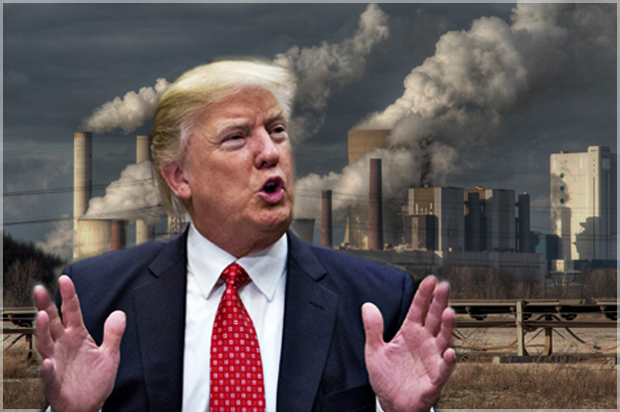
Greenhouse gas emissions from animal farming in the EU account for 17% of the EU’s total emissions, and do more damage to the climate than all cars and vans put together, according to new analysis. The scale of the problem means that the EU cannot reach the goals of the Paris climate agreement, and avoid the worst impacts of climate breakdown, without a reduction in the number of farm animals, said Greenpeace.
The analysis by Greenpeace also found that yearly emissions from animal farming rose by 6% between 2007 and 2018. The increase, the equivalent of 39 million tonnes of CO2, would be like adding 8.4 million cars to European roads.
Science is clear, the numbers as well: we can’t avoid the worst of climate breakdown if politicians keep defending industrial production of meat and dairy.
Marco Contiero, Greenpeace EU agriculture policy director
The new calculations, using UN Food and Agriculture Organization data and other peer-reviewed scientific research, estimate that animals on European farms emit the equivalent of 502 million tonnes of CO2 per year. When including indirect greenhouse gas emissions, coming from animal feed production, land use, deforestation and other land-use change, the total annual emissions attributable to European animal farming are the equivalent of 704 million tonnes of CO2.
Greenhouse gas emissions from animal farming in the EU are:
More than all cars and vans on European roads (656 million tonnes of CO2 per year)
More than the total emissions, from all sectors, of Poland, Slovakia, the Czech Republic and Hungary (647 million tonnes of CO2 per year)
More than 18 times the emissions of the biggest and most polluting coal station in Europe, Poland’s Bełchatów power plant (38 million tonnes of CO2 per year)
The UK has a lot of very old and excellent organisations which campaign long and hard for improvements to animals welfare. Here ids a link to our other site, Serbian Animals Voice (SAV), which has a section devoted to animal organisations; including links to their own web sites. Check it out sometime:
The good animal welfare conscious people living in the UK made the subject just one of the reasons why the UK voted to divorce itself from the uselessness of the EU a few years ago. We (WAV and SAV) have always attempted to show the utter failures of the EU when it comes to improving standards for animals. EU Regulations mean nothing, are hardly ever enforced, which results in massive animal suffering.
The UK voted ‘out’ of the EU after 40+ years as a member, so that it could take back control of pathetic legislation which ‘member states’ are forced to comply with. We wish many other current member states had the willingness to do the same.
The UK officially leaves the EU at the end of 2020.
This will be with or without a trade deal. If there is no deal, then the UK moves over to WTO rules regarding the EU. So until the end of 2020; the UK still has to comply with EU regulations; including the pathetic ones associated with animal ‘welfare’. ‘Welfare’, which includes live animal transport; stalls in which sow pigs are forced to rear their young, rabbit farming, foie gras and much more.
In 2021 the UK will be able (through UK government legislation) to introduce new laws which will meet the wishes of the public and greatly improve animal welfare standards as they wish; one being to stop the live transport (export) of farm animals; an issue we have campaigned about for the last 30+ years.
The current UK government is ‘Conservative’; and will probably remain so for the next 3 or 4 years. It has a big majority of MP’s (Members of Parliament) – around 80; who should be able to vote through legislation with a degree of ease.
It is only through intensive lobbying and providing the evidence that we, as welfare groups, can be a voice for animals – a voice that eventually brings change. We trust that from 2021 onwards when the UK is free from the uselessness of the EU, stronger and larger animal welfare laws will be passed into UK law.
Here is a video just released by the ‘Conservative Animal Welfare Foundation’ (CAWF) which outlines the future prospects for UK animals and their legislation. There are many speakers from the UK government; people who will help to get the new legislation through into (UK) law.
Animal Welfare Matters is a new film by the CAWF filmed by a Cannes Film Festival award winning film maker. It urges for an end to live animal exports for slaughter and fattening, pig farrowing crates, cages for egg laying birds and calls for the introduction of clear mandatory labelling so consumers can make an informed choice.
Speakers include:
Rt Hon Lord Goldsmith, Minister of State (Minister for Pacific and the Environment)
Rt Hon Theresa Villiers MP
Rt Hon Sir Roger Gale MP
Sir David Amess MP
Henry Smith MP
John Flack former MEP
Elise Dunweber Chairman, Esher And Walton Conservative Women’s Organisation
Peter Hall (AM) Director, Conservative Animal Welfare Foundation
Lorraine Platt Co-Founder, Conservative Animal Welfare Foundation
Chris Platt Co-Founder Conservative Animal Welfare Foundation
It is never easy; you don’t give over 30 years of your campaigning life only to fail; global live animal transport bans have been that for me and I am still fighting. People and campaigners have the tenacity to fight through to the end; and they will – eventually winning.
Sentient animals deserve better; and with our input we hope they will get it.
Please watch the video below; and gain strength that we in the UK are moving forward now into 2021 for changes.
If only the EU was not ‘all talk and do nothing’ then animals throughout the EU would do better. That is a matter for citizens of existing member states to vote and make the changes.
Regards Mark.
We are not politically associated with any plitical party – we simply provide the data and let you, the voters, make the choices.
The French Minister for the Ecological Transition, Barbara Pompili, announced on 29 September 2020 the gradual ban on the use of wild animals in travelling circuses and on mink farming. As well as the end of the captivity of dolphins and orcas in inadequate dolphinaria, and the implementation of support to improve the detention of wild animals in zoos.
These measures include a ban on the reproduction of wild animals and on the deliverance of authorisation for new travelling establishments with animals. For animals currently in circuses, estimated to be around 500, solutions will be found on a case by case basis.
Although more than 20 Member States have adopted bans or partial bans on all circuses involving wild animals, and more than 400 French cities have banned their presence, the measures announced will only apply to travelling circuses and not to other shows involving wild animals. The minister did not give a detailed timeline, explaining she prefers implementing a process to reach the objectives as quickly as possible.
Dolphinaria
The measures announced include immediate bans on the creation of new establishments with orcas or dolphins and on the reproduction of captive orcas and dolphins. The end of captivity of orcas is planned within two years and of captive dolphins within seven years. The minister even mentioned the idea of a sanctuary to welcome the current captive animals in the three existing parks. The government will invest 8 million euros in the reconversion of circuses and dolphinaria personnel.
Mink farming
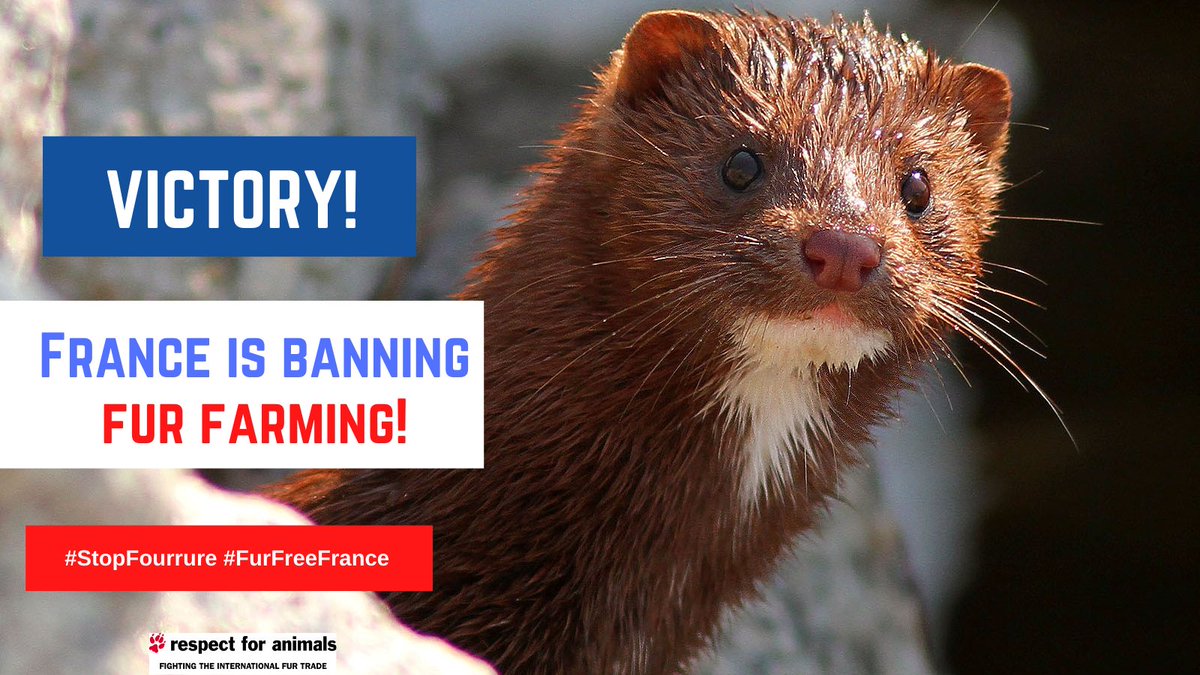
The end of mink farming is planned within five years, giving a due date to the remaining four farms left in France. Brigitte Gothière, co-founder of L214 pays tribute to this measure, saying France finally catches up to other European countries, some of which were among the biggest fur producers.
Zoos
Regarding zoos, the measures provide for economical support for the improvement of the welfare of certain species, for instance polar bears. The minister also mentioned that in shows involving wild animals, the public will be prohibited from touching the animals.
McDonalds is known to most UK animal activists as ‘McShitty’. This is really because of what was dubbed the ‘Mc Libel Case’ many years ago.
It is a story which goes back decades but is still very prominent in the minds of older generation animal activists such as myself (Mark). I will try to summarise the issue as much as possible with big inputs from Wikipedia, a free encyclopedia site which I personally financially contribute to (to help them produce free data) each year.
Read all about it below. It was a huge ‘David and Goliath’ case; the big organisation (McDonalds) against animal / environmental activists Helen and David from London Greenpeace; which was not linked to the main Greenpeace organisation. McDonalds flew into London all their big legal personnel from the USA in an attempt to simply crush the minnows named Helen and David. The result was not quite as simple as McDonalds thought it would be.
And now in 2020; with the plight of the Amazon rainforest being destroyed and cattle farming in the area under vast scrutiny; you have to tell yourself that Helen and David were almost certainly correct with what they said all those years ago. Sadly; as with so many correct people and organisations who speak out; the ;big guns’ and their lobbyists immediately go into overdrive with their vast financial support to eliminate the little ‘Davids’ who so very often speak the real truth.
I can personally remember doing animal rights marches decades ago in ol London town; and the Met police always diverting the march away from any McDonalds because of what was going on with the McLibel case at the time.
Most (or probably all) of those who have a happy meal at McDonalds now do not have a clue about the past actions taken to shut up anyone speaking out about environmental destruction; and animal and human (low wage) abuses. We don’t forget; and despite how Mc dress up their foods as Vegan friendly and the rest; they will always, first and foremost, protect their financial interests and their name at any attempt.
Read below and decide for yourself;
Regards Mark.
Note – UK visitors may recognise a younger Kier Starmer in the video. He is now (2020) the leader of the Labour Party – the main UK opposition party to the current Conservative Party.
————————-
From our friends at Wikipedia, the free encyclopedia
McDonald’s Corporation v Steel & Morris [1997] EWHC QB 366, known as “the McLibel case”, was an English lawsuit for libel filed by McDonald’s Corporation against environmental activists Helen Steel and David Morris (often referred to as “The McLibel Two”) over a factsheet critical of the company. Each of two hearings in English courts found some of the leaflet’s contested claims to be libellous and others to be true.
The original case lasted nearly ten years which, according to the BBC, made it the longest-running libel case in English history.[1] McDonald’s announced it did not plan to collect the £40,000 it was awarded by the courts.[2] Following the decision, the European Court of Human Rights (ECHR) ruled in Steel & Morris v United Kingdom the pair had been denied a fair trial, in breach of Article 6 of the European Convention on Human Rights (right to a fair trial) and their conduct should have been protected by Article 10 of the Convention, which protects the right to freedom of expression. The court awarded a judgement of £57,000 against the UK government.[3] McDonald’s itself was not involved in, or a party to, this action, as applications to the ECHR are independent cases filed against the relevant state
Helen Steel and David Morris were two environmental activists of London Greenpeace, a small environmental campaigning group that existed between 1972 and 2001. In 1986, they co-authored a six-page leaflet titled “What’s wrong with McDonald’s: everything they don’t want you to know” of which they distributed “a few hundred copies” in Strand, London.[4][5]
The leaflet accused the company of paying low wages, of cruelty to animals used in its products and other malpractices.[6] The group were not affiliated with the larger Greenpeace International organisation, which they declined to join as they saw it as too “centralised and mainstream”.[7]
Libel charges
In 1990, McDonald’s brought libel proceedings against five London Greenpeace supporters, Paul Gravett, Andrew Clarke and Jonathan O’Farrell, as well as Steel and Morris, for distributing the sheet on the streets of London. This case followed past instances in which McDonald’s threatened to sue more than fifty organisations for libel, including Channel 4 television and several major publications. In all such cases, the media outlets settled and apologised.[8]
Under English defamation law, the defendant must show that each disparaging statement made is substantively true. This can be an expensive and time-consuming process. Gravett, Clarke and O’Farrell apologised as requested by McDonald’s, but Steel and Morris chose to defend the case.[9]
The two were denied Legal Aid, as was policy for libel cases, despite having limited income.[10] Thus, they had to represent themselves, though they received significant pro bono assistance, including from Keir Starmer. Steel and Morris called 180 witnesses, seeking to prove their assertions about food poisoning, unpaid overtime, misleading claims about how much McDonald’s recycled, and “corporate spies sent to infiltrate the ranks of London Greenpeace”.[11]
McDonald’s spent several million pounds, while Steel and Morris spent £30,000; this disparity in funds meant Steel and Morris were not able to call all the witnesses they wanted, especially witnesses from South America who were intended to support their claims about McDonald’s activities in that continent’s rainforests.[12]
In its libel allegation, McDonald’s asserted all claims in the pamphlet to be false.[13] They found it difficult to support this position despite the indirectness of some of the claims. The case eventually became a media circus. McDonald’s executives, including Ray Cesca, entered the witness box, enabling cross-examination by the defendants.[14]
In June 1995 McDonald’s offered to settle the case (which “was coming up to its [tenth] anniversary in court”[15]) by donating a large sum of money to a charity chosen by the two. They further specified they would drop the case if Steel and Morris agreed to “stop criticising McDonald’s”.[15] Steel and Morris secretly recorded the meeting, in which McDonald’s said the pair could criticise McDonald’s privately to friends but must cease talking to the media or distributing leaflets. Steel and Morris wrote a letter in response saying they would agree to the terms if McDonald’s ceased advertising its products and instead only recommended the restaurant privately to friends.[12]
Judgment
High Court
The case was adjudicated by the Hon. Mr. Justice Rodger Bell.[16] On 19 June 1997, Bell J delivered his more than 1,000-page judgment largely in favour of McDonald’s, finding the claims that McDonald’s was responsible for starvation and deforestation were false and libellous.[17] The ruling was summarized by a 45-page paper read in court.[18] Steel and Morris were found liable on several points, but the judge also found some of the points in the factsheet were true.[12] McDonald’s considered this a legal victory, though it was tempered by the judge’s endorsement of some of the allegations in the sheet. Specifically, Bell J ruled that McDonald’s endangered the health of their workers and customers by “misleading advertising”, that they “exploit children”, that they were “culpably responsible” in the infliction of unnecessary cruelty to animals, and they were “antipathetic”[19] to unionisation and paid their workers low wages.[20] Furthermore, although the decision awarded £60,000 to the company, McDonald’s legal costs were much greater, and the defendants lacked the funds to pay it. Steel and Morris immediately appealed against the decision.[21]
In 1998 a documentary film was made about the case, also titled McLibel. This was updated in 2005 after the verdict of the final appeal.
In September 1998, the pair sued the Metropolitan Police for disclosing confidential information to investigators hired by McDonald’s and received £10,000 and an apology for the alleged disclosure.
Court of Appeal
An appeal began on 12 January 1999 and lasted 23 court days, ending on 26 February.[22] The case was heard in Court 1 of the Court of Appeal in the Royal Courts of Justice. The case was adjudicated by Lord Justices Pill and May and Mr Justice Keene. The defendants represented themselves in court, assisted by first year law student Kalvin P. Chapman (King’s College London).
McDonald’s were represented by libel lawyer Richard Rampton QC,[23] and a junior barrister, Timothy Atkinson,[24] and Ms Pattie Brinley-Codd of Barlow, Lyde & Gilbert.[25] Steel and Morris filed a 63-point appeal. They had requested a time extension, but were denied. The verdict for the appeal was handed down on 31 March, in Court 1 at the Royal Courts of Justice.[26]
The judges ruled it was fair comment to say that McDonald’s employees worldwide “do badly in terms of pay and conditions”[27] and true “if one eats enough McDonald’s food, one’s diet may well become high in fat, etc., with the very real risk of heart disease”.
As a result of their further findings against the Corporation, the three Lord Justices reduced Mr Justice Bell’s award of £60,000 damages to McDonald’s by £20,000. The court ruled against the argument by Steel and Morris that multinational corporations should no longer be able to sue for libel over public interest issues. Steel and Morris announced their intention to appeal over these and other points to the House of Lords, and then take the UK government to the European Court of Human Rights if necessary.
In response to the verdict, David Pannick QC said in The Times: “The McLibel case has achieved what many lawyers thought impossible: to lower further the reputation of our law of defamation in the minds of all right thinking people.”[28]
Steel and Morris appealed to the Law Lords, arguing that their right to legal aid had been unjustly denied. When the Law Lords refused to accept the case, the pair formally retained solicitorMark Stephens[29] and barristerKeir Starmer QC (later Director of Public Prosecutions (England and Wales), Head of the Crown Prosecution Service and Leader of the Labour Party) to file a case with the European Court of Human Rights (ECHR), contesting the UK government’s policy that legal aid was not available in libel cases, and setting out a highly detailed case for what they believed to be the oppressive and unfair nature of UK libel laws in general, and in their case in particular.[30] In September 2004, this action was heard by the ECHR. Lawyers for Steel and Morris argued that the lack of legal aid had breached the pair’s right to freedom of expression and to a fair trial.
European Court of Human Rights
An anti-McDonald’s leafleting campaign in front of the McDonald’s restaurant in Leicester Square, London, during the European Social Forum season, 16-10-2004.
On 15 February 2005, the European Court of Human Rights ruled[31] that the original case had breached Article 6 (right to a fair trial) and Article 10 (right to freedom of expression) of the European Convention on Human Rights and ordered that the UK government pay Steel and Morris £57,000 in compensation.
In their ruling, the ECHR criticised the way in which UK laws had failed to protect the public right to criticise corporations whose business practices affect people’s lives and the environment (which violates Article 10); they also ruled that the trial was biased because of the defendants’ comparative lack of resources and what they believed were complex and oppressive UK libel laws
This has always been at the back of our minds with WAV – we attempt to tell the real truth and nothing but the truth regarding animal and environmental abuses. At the end of the day; different people have different opinions, and we respect that.
We will continue to be a world animals voice confident in the data we provide and with the past McLibel issue firmly entrenched in our minds.
1.4 million signatures call the EU to act on farmed animal welfare
1 October 2020
CIWF
Press Release
Today, on World Day for Farmed Animals, the European Commission received the signatures collected across the EU by the End The Cage Age European Citizens’ Initiative (ECI): 1.4 million people are calling on the EU to put an end on the use of cages in animal farming.
End The Cage Age was launched in September 2018 by CIWF in partnership with Eurogroup for Animals, and promoted by 170 NGOs. It closed exactly one year later, having gained over 1.4 million signatures. The ECI easily exceeded the required threshold of 1 million signatures, with a total of 1,397,113 validated signatures across the EU. It also outstripped the minimum number of signatures threshold in 18 EU Member States. This makes the End the Cage Age the:
1st successful ECI on farmed animal welfare
3rd with the highest signature count
6th to succeed among 75 registered initiatives in the last eight years
Today’s hand-in of the End the Cage Age is the culmination of a great effort by 1.4 million European citizens who came together to call on the EU to end the cruelty of confining farmed animals in cages. The massive public backing for the Initiative confirms the overwhelming level of interest EU citizens have in animal welfare. Now, the EU Commission must listen and come forward with substantive legislative proposals to phase out the use of cages in EU animal farming.
Commented Reineke Hameleers, CEO at Eurogroup for Animals.
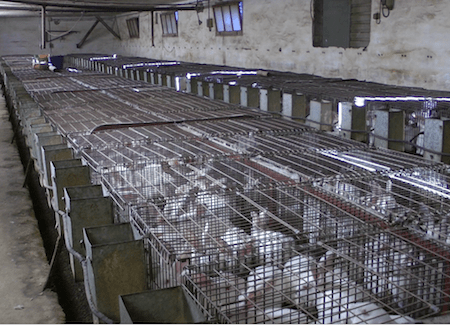
The aim of the End the Cage Age is to end the use of cages for farmed animals across the continent, where over 300 million pigs, hens, rabbits, ducks, quail and calves are imprisoned. Most cages are barren, cramped, and deny animals the space to move freely. Cages are cruel and completely unnecessary since alternatives are available.
Making history for farmed animals has been a collaborative effort, with Eurogroup for Animals joining forces with 170 NGOs from across Europe: environmental, consumer rights and animal protection groups formed a broad-based coalition to rally citizens from every corner of the continent.
Today, we crossed the finish line of the biggest political push in the farmed animal welfare history. We are extremely proud of this collaborative victory. Of all the terrible contraptions used to farm animals, cages are one of the worst. It is high time for the EU Commission to evolve past such cruelty and free farmed animals kept behind bars. A life in a cage is no life worth living.
Environment Secretary George Eustice said the government was “firmly committed” to tackling environmental “devastation” caused by single-use plastics.
Campaigners welcomed the move but said the items formed only a “fraction” of the plastic waste littering the environment.
Sion Elis Williams, of Friends of the Earth, said ministers “must also do more to challenge our throwaway culture by forcing a shift away from all single-use materials in favour of reusable alternatives”.
Tatiana Lujan, of environmental law charity ClientEarth said straws, cotton buds and stirrers were “some of the most pointless plastics out there” and the ban on them was “a no-brainer”.
But they remained “a tiny fraction” of single-use plastics, she said, adding that countries such as Ireland and France had “shown far more ambition” with targets on reusable packaging and deposit return schemes.
Mr Eustice said the government was “building plans” for a deposit return scheme to encourage recycling of single-use drinks containers.
The summit is supposed to have taken place on 30/9/20. We will produce more on this as post meeting facts are known.
The year 2020 was meant to be a super year for nature and biodiversity, according to the UN. But with swathes of the planet in lockdown, Covid-19 has highlighted the risk of humanity’s unstable relationship with nature, with repeated warnings linking the pandemic with the destruction of ecosystems and species.
On Wednesday, the world will gather to discuss the biodiversity crisis at a virtual summit in New York. The UN secretary general, António Guterres, Prince Charles and the Chinese president, Xi Jinping, will open proceedings. Here is what to look out for.
Will China step up?
Next year China will for the first time host major international talks on the environment – postponed from this year – at Cop15 in Kunming, where the international community will agree a Paris-style agreement for nature. The stakes are high: governments failed to meet any of the UN targets to slow biodiversity loss for the previous decade and the drum beat of warnings about the state of the planet’s health is growing louder. Now the world’s biggest greenhose gas emitter is tasked with using its growing might to corral 196 countries into agreeing a plan worthy of the crisis.
Q&A
What is biodiversity and why does it matter?
Biodiversity is the variety of life on Earth, in all its forms and all its interactions. “Without biodiversity, there is no future for humanity,” says Prof David Macdonald, at Oxford University. It is comprised of several levels, starting with genes, then individual species, then communities of creatures and finally entire ecosystems, such as forests or coral reefs, where life interplays with the physical environment.
Without plants there would be no oxygen and without bees to pollinate there would be no fruit or nuts. The services provided by ecosystems are estimated to be worth trillions of dollars – double the world’s GDP. Biodiversity loss in Europe alone is estimated to cost the continent about 3% of its GDP, or €450m (£400m) a year.
Changes to the climate are reversible, even if that takes centuries or millennia, and conservation efforts can work. But once species become extinct, there is no going back.
China’s modern record on the environment is poor. Rapid economic development and huge infrastructure projects such as the Belt and Road Initiative have come at a huge cost to nature, destroying precarious ecosystems and leaving many cities with severe air pollution. But Beijing is uniquely placed to influence countries eager to follow its development model but distrustful of the conservation-focus approach of some European nations whose wild areas largely disappeared with industrialisation.
“I think China is absolutely critical to the issue of both climate change and biodiversity and land degradation. We are not going to solve these problems without leadership from China,” says Sir Robert Watson, former chair of the Intergovernmental Science-Policy Platform on Biodiversity and Ecosystem Services (IPBES), which informs the UN biodiversity negotiations with the latest science.
Some privately suspect that President Xi will surprise world leaders with another major environmental commitment during his speech at the summit’s opening, just days after he ramped up China’s carbon commitments by pledging to achieve carbon neutrality by 2060.
“They’ve had some really bad examples of land degradation when they deforested the Yangtze basin. Now, as I understand it, they’ve done a fairly significant replanting of trees in the Yangtze basin because it was leading to extreme floods and dust bowls. They also, of course, have terrible air pollution in their cities. I’m somewhat optimistic that China wants to show it is an economic power and play a leadership role in the world,” Watson says.
“I would argue that governments around the world need to work closely with China and see if, collectively, we can move in the right direction.”
The absentees and the reluctant
Summit organisers have been overwhelmed with requests from world leaders to speak on Wednesday. The Indian prime minister, Narendra Modi, Turkish leader Recep Tayyip Erdoğan, South African prime minister Cyril Ramaphosa and Britain’s prime minister, Boris Johnson, are among dozens of leaders jostling to make statements at the oversubscribed event. But the talks will be marked by those who are not scheduled to speak.
The US president, Donald Trump, will not appear and nobody from his administration is scheduled to address the event. Brazilian foreign minister Ernesto Araújo – who has previously dismissed the climate crisis as a Marxist plot – had been listed to represent his country in the place of president Jair Bolsonaro but the South American leader will now speak.
Russian president Vladimir Putin will not appear, sending the head of the ministry of natural resources, Dmitry Kobylkin, in his place.
All three men oversee vital life-sustaining ecosystems with global significance and Brazil has traditionally been a major player in UN environmental circles through its impressive diplomatic machine.
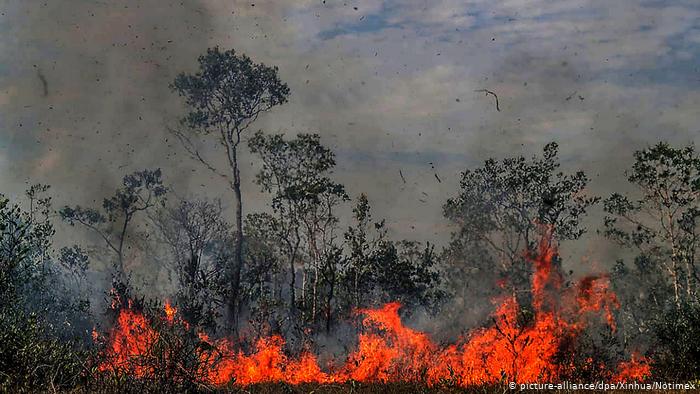
But under Bolsonaro, the Amazon rainforest continues to burn and many fear Brazil’s leader is steering his country towards environmental ruin. Last week the president hit back at the UN general assembly for a second year in a row about how the Amazon has been treated under his leadership, claiming Brazil was the target of a “brutal disinformation campaign”. While the US is not a party to the UN convention on biodiversity, Bolsonaro’s stance on the environment could have a major sway over the final Kunming agreement. Governments will listen to what Bolsonaro has to say with great interest.
One to watch
In between the world leaders, heads of state and royalty, indigenous youth activist Archana Soreng will also speak at the summit’s opening. The member of the Khadia tribe in India is part of the UN secretary general’s youth advisory group on climate change and will be a powerful voice for her generation.
Ambition to protect the planet
Before the coronavirus pandemic disrupted talks, Wednesday’s summit was meant to be the moment international leaders gave their input before negotiators headed to Kunming to thrash out a final agreement. While there is a danger that governments might ignore the environmental targets while grappling to rescue economies and save lives, there is cautious optimism that the opposite has happened.
“Look at the number of governments and states which have registered to make statements. That clearly by itself says something,” the UN’s biodiversity head, Elizabeth Maruma Mrema, told the Guardian. “Noticeable trends have emerged in this period of pandemic and in lockdowns. It has really brought up the voices of many actors we probably would not have seen or noticed.”
Despite the optimism, the ambition of the “Paris agreement for nature” will be reflected in the detail of measurable, targeted actions. As things stand, the draft Kunming agreement has headline targets of protecting 30% of the world’s land and sea by 2030, introducing controls on invasive species and reducing pollution from plastic waste and excess nutrients. Ahead of Wednesday’s summit, 64 leaders and the EU published an ambitious 10-point pledge that many privately hope will bounce other countries into being more ambitious. Watch out for how that translates into statements by countries such as Australia, China and India that did not sign the pledge.
Giving nature a financial value
Expressing nature’s value in financial terms has become a big focus of conservation efforts. With the cost of deforestation, pollution and species extinction absent from most economic models, calculating the economic contribution of ecosystem services that healthy forests, rivers and oceans provide to humanity has helped reframe the conservation debate.
Ahead of the talks, the insurance company Swiss Re calculated that more than half (55%) of global GDP, equal to $41.7tn, is dependent on high-functioning biodiversity and ecosystem services. But the research also found that major economies in south-east Asia, Europe and the US are exposed to ecosystem decline. The EU, Germany, Norway, Costa Rica and the UK are leading efforts to increase funding for nature. But to take meaningful action on the environment, many developing nations with high biodiversity – including Brazil and a number of African countries – want the creation of a global financial system that recognises their ecosystem services.
The UN’s co-chair on the Kunming process, Basile van Havre, who is tasked with combining all of the negotiating positions into a final agreement, said he understood their position.
“I think they’re putting on the table some concerns that need to be heard. There are commodities leaving Brazil and going to other places in the world, and they’re feeding economies in the other places. So, if I buy food items in the supermarket, how do we flow the money back to Brazil to support conservation? I totally understand the need of those local communities.”
While these issues will be sorted in the midnight negotiating hours in Kunming next year, watch for world leaders laying out their countries’ positions on ecosystem services on Wednesday.
The private sector and vested interests
Alongside governments, banks and private companies have announced commitments to protect nature ahead of Wednesday’s summit. HSBC, Allianz and Axa are among 26 financial institutions – representing more than €3tn in assets – calling on world leaders to reach an agreement to protect ecosystem function. Larry Fink, CEO of BlackRock, the world’s largest investor, will also take part in the leaders’ dialogue on harnessing science, technology and innovation for biodiversity.
But like the fossil fuel industry with climate talks, there could be significant pushback from major chemical and agricultural companies that might lose out through restrictions on fertiliser, farming practices and pollution through any agreement. Half a billion dollars of environmentally harmful government subsidies was highlighted as a key failure in the UN report on biodiversity targets.
“The landscape in the private sector is a bit different on nature and that’s one advantage we have,” Van Havre notes. “All that system of agri-food is very active and very worried because their bottom line depends on effective natural systems. They’re very engaged. They’ve learned from their climate change experience. So we’re not dragging them, they’re dragging us.
“It’s a very different world from the energy sector. We’re going to need to feed more people. So if anything, they have a bigger place in the world, it’s just a very different place.”
The summit as a focal point for campaigners
Ahead of the meeting, conservation groups and organisations have fired off a slew of press releases about biodiversity and their campaigning goals. Business leaders and philanthropists have announced increased funding for the preservation of nature alongside foreign ministers.
The Wildlife Trusts has launched a £30m fundraising appeal alongside the UK’s new commitment to protect 30% of land and sea by 2030. Most events have been based around the four-day Nature for Life events, with discussions on the sustainable development goals, business and nature, global ambition and local action.
• This article was amended on 30 September 2020 to reflect an update to the list of leaders expected to address the summit. A caption was also expanded, for avoidance of doubt, to make clear that the sheep photographed were sculptures.
We now have a bit more clarity on what exactly is going to happen.
France to ban use of wild animals in circuses, marine parks
France’s environment minister has announced a gradual ban in the coming years on the use of wild animals in travelling circuses and on keeping dolphins and killer whales in captivity in marine parks
PARIS — France’s environment minister has announced a gradual ban on using wild animals in traveling circuses, on keeping dolphins and killer whales in captivity in marine parks and on raising mink on fur farms.
Barbara Pompili, France’s minister of ecological transition, said in a news conference Tuesday (29/9/20) that bears, tigers, lions, elephants and other wild animals won’t be allowed any more in travelling circuses “in the coming years.”
In addition, starting immediately, France’s three marine parks won’t be able to bring in nor breed dolphins and killer whales any more, she said.
“It is time to open a new era in our relationship with these (wild) animals,” she said, arguing that animal welfare is a priority.
Pompili said the measures will also bring an end to mink farming, where animals are raised for their fur, within the next five years.
The ban does not apply to wild animals in other permanent shows and in zoos.
Pompili did not set any precise date for the ban in travelling circuses, saying the process should start “as soon as possible.” She promised solutions will be found for each animal “on a case-by-case basis.”
The French government will implement an 8 million-euro ($9.2 million) package to help people working in circuses and marine parks find other jobs.
“That transition will be spread over several years, because it will change the lives of many people,” she said.















 World Animals Voice