Category: Environmental

Brazil: Amazon fires at 13-year high for June.

Brazil


bol 5


Click on the following link to see a disturbing video of a reporter flying over the devastation:

https://www.bbc.co.uk/news/world-latin-america-53262565

Amazon fires at 13-year high for June


Fires in Brazil’s Amazon rainforest rose by almost 20% in June – a 13-year high for the month, according to government data.

With such an increase at the start of the dry season, there are concerns that this year’s fires could surpass 2019’s disastrous blazes.

Activists say the coronavirus pandemic is exacerbating the problem.

They believe arson is likely to be even less monitored while authorities are stretched.

Many forest fires in the country are started deliberately by illegal loggers and farmers wanting to quickly clear ground.

Brazil has the world’s second-highest coronavirus death toll, after the US, and there are also concerns that increased smoke could have a damaging effect on the breathing of virus patients.


In June, the country’s National Institute for Space Research (INPE) recorded 2,248 fires using satellite imagery, as opposed to 1,880 fires in June 2019.

The burning usually increases throughout July, August and September.

“We cannot allow the 2019 situation to repeat itself,” Mauricio Voivodic, executive director of the World Wildlife Fund NGO in Brazil, told the Folha de Sao Paulo newspaper, accusing the government of inaction.

Last year’s fires peaked in August, with 30,901 – threefold the number for the same period the previous year.

The 2019 fires led to protests domestically and internationally, with threats of financial penalties from foreign governments, and broad condemnation of President Jair Bolsonaro’s environmental policies.

The president has been criticised for slashing the Ministry of the Environment’s funding, and encouraging business over conservation.


BBC analysis in 2019 showed that a sharp drop in fines for environmental violations during his administration had coincided with the increase in fires.


However, the president has consistently rejected criticism from abroad. “Certain countries, instead of helping … behaved in a disrespectful manner and with a colonialist spirit,” he said in September, rejecting the “misconception” that the Amazon is the lungs of the world.

The Amazon – which spans multiple South American countries but is 60% in Brazil – is a vital carbon store that slows down the pace of global warming.


It is home to about three million species of plants and animals, as well as some one million indigenous people.


Last year, the BBC reported how an area of Amazon rainforest roughly the size of a football pitch is now being lost every single minute, according to satellite data.


Scientists say it could be close to “the tipping point“, when its nature completely changes.

This will happen when total deforestation reaches between 20% and 25% – which could be in the next 20 or 30 years.


England: COVID-19 – STOPPING THE ABUSE OF SENTIENT ANIMALS – BY PHILIP LYMBERY (CEO CIWF London).

England


Mark (WAV) and Phil (CIWF) campaigned together for many years regarding the live export of animals from English ports.  They are still friends and communicate on current animal issues when necessary.  Although (I am) not religious; I find this article by Phil interesting – and feel that it should be included in our posts.  I have included the link below should you wish to see the pictures, and have also included the un amended article also..

Regards Mark.


Article Link:

https://catholic-animals.com/uncategorized/covid-19-stopping-the-abuse-of-sentient-animals-by-philip-lymbery/


COVID-19 – STOPPING THE ABUSE OF SENTIENT ANIMALS – BY PHILIP LYMBERY


Philip Lymbery is the Chief Executive of Compassion in World Farming and Chair of Eurogroup for Animals. He is author of the books Farmageddon and Dead Zone.

Here he describes how Covid-19 demonstrates why we must ban wildlife markets and improve farming standards if we are to prevent the next pandemic or Farmageddon.


Farmageddon: The True Cost of Cheap Meat: Amazon.co.uk: Lymbery ...
Dead Zone: Where the Wild Things Were: Philip Lymbery: Bloomsbury ...


In early April whilst most of the world was coming to terms with the horror of the Covid-19 pandemic, Compassion in World Farming, along with some 200 other organisations, signed an Open Letter to the World Health Organisation (WHO).

We called upon the WHO to take actions including recommending that governments worldwide institute a permanent ban on live wildlife markets, drawing an unequivocal link between these markets and their proven threats to human health.

Covid-19 is just the latest example of an infection that has made the leap from animals into humans – and when infections do this, they can be particularly deadly. Three out of four new or emerging infectious diseases in people came from wild animals, including Severe Acute Respiratory Syndrome (SARS), Ebola, MERS and HIV.

The risk of transmission of new and deadly diseases is heightened by the ways in which wild animals are typically farmed or captured and exacerbated by the inhumane and unhygienic conditions in wildlife markets, where close proximity provides the perfect opportunity for pathogens to spread between humans and animals.

Whilst our call for action has received widespread support, it has also received criticism on the grounds that wildlife trade bans might risk increased illegal trade, increased involvement of organised crime and be detrimental to livelihoods. Frankly I’m astonished by such arguments. I could not agree more with Jill Robinson, Founder and Chief Executive of Animals Asia, who has spent over three decades investigating the wildlife trade and wildlife markets. Responding to criticisms of the Open Letter to WHO, Jill commented, “The trade is already controlled by organised crime. Far better to spend millions or even billions on defeating and ending this crime and ending the trade now, rather than the trillions in the next pandemic caused by the very same dysfunctional and largely corrupt components of the wildlife trade”.

During my own investigations around the world, and particularly in Asia, I’ve seen the suffering of wild animals, caged and confined in markets. I’ve been forced to watch as they’ve been treated with no more regard than would be afforded vegetables or tin cans.

In the 1970s Peter Roberts, Compassion in World Farming’s founder, feared that by adopting a violent attitude to Nature, man would find himself “threatened on all sides by disease, hunger and pests”. Today the world faces an onslaught of health issues, often linked to the abuse of animals, both wild and farmed.  The Coronavirus tragedy, like SARS before it, is demonstrating to the world how treating animals as mere commodities is like playing Russian Roulette with peoples’ health.


Reconnecting with our Humanity to Animals

A key component of reducing the risk of devastating diseases tomorrow is to reconnect with our humanity for animals today. Our cruel abuse of animals, both wild and farmed, is damaging our health and will continue do to so unless we fundamentally reassess our relationship with animals and recognise our ethical obligations to treat them with respect.

As a first step, I’d like to see governments around the world acting to ban wildlife markets and instituting the other measures called for in the Open Letter to WHO, as a matter of urgency.  There are many examples of successful bans that have been combined with measures that address cultural practices and provide alternative livelihoods for those in need, for example the ban on dancing bears in India.

As we move away from wet markets and the use of wildlife for food, some will call for these food sources to be replaced by factory farming. But this too is a hot house of disease linked to the emergence of deadly diseases, including highly pathogenic Avian and Swine flu strains. Indeed, I fear that factory farms may be the source of the next global pandemic.

Everyday we understand more and more how the health of animals and people are closely intertwined. As Albert Schweitzer once said, “Until he extends the circle of his compassion to all living things, Man will not himself find peace”.


Factory Farming – A Health Crisis for the Future

With the world gripped by the worst pandemic in a lifetime, questions are starting to be asked about how our treatment of animals is storing up health crises for the future.

Whilst Covid-19 is thought to have its roots in wildlife, future pandemics may be triggered by the way animals are factory farmed. The sad fact is that factory farming is not only extremely cruel, but also a major public health risk. Keeping animals packed into cages and confined provides the perfect breeding ground for disease.  Factory farms are a ticking time-bomb for future pandemics.

Hundreds of coronaviruses are in circulation, most of them amongst animals including pigs, camels, bats and cats. Sometimes those viruses jump to humans – called a spill-over event – and can cause disease. When SARS (Severe Acute Respiratory Syndrome) emerged from China in 2002, it swept across the globe – largely through air travel – causing deadly illness. More than 8,000 people fell ill and 774 died, numbers surpassed by Covid-19 within two months. The 2009 Swine flu pandemic was linked to the factory farming of pigs in Mexico. Within a year, according to the WHO, the virus was linked to over 18,000 deaths worldwide.

Three out of four new or emerging infectious diseases in people come from animals, including Swine flu, Avian flu, HIV, Ebola, MERS and SARS. They are known as zoonotic diseases. The Wuhan coronavirus is the latest example of an infection that has jumped from animals into humans – and when infections do this, they can be particularly deadly.


Breeding Grounds for New Pandemics

The caged, crammed and confined conditions of factory farms provide the ideal breeding ground for new and more deadly strains of virus. Swine flu and highly pathogenic Avian flu being just two examples. When faced with a disease crisis involving farmed animals, the industry’s reaction is to fall back on locking animals inside. After all, if they are confined indoors then they are surely protected in ‘biosecure’ units that can keep out vectors of disease transmission.

What is overlooked is that those very same ‘biosecure’ intensive farm buildings are the cause of the problem. The perfect breeding ground for disease. The hothouse where new and more dangerous strains of disease emerge, often with devastating consequences for both animals and people alike.


Playing Russian Roulette with our Earth

Keeping too many animals in too small a space, often in darkened, filthy and crowded conditions, provides viruses like Avian Influenza the conditions they need to spread rapidly. As they replicate at speed, mutations can occur in the virus’ DNA, causing new strains to emerge. This allows new and deadlier strains to form and spread quickly. So, contrary to the myth levied by the industrial farming industry, keeping animals indoors simply increases the risk of disease.

The coronavirus tragedy, and Swine flu a decade earlier, have shown that treating animals as mere commodities – be they domesticated or wild – is like playing Russian Roulette with peoples’ health.


One Health, One Welfare

What I’ve come to see is that a key component of reducing the risk of devastating diseases tomorrow, is to reconnect with our humanity for animals today. The coronavirus epidemic is not a warning, but a potent demonstration of what is going wrong, what life could become. A global lifestyle that just months ago seemed invincible, suddenly seems extremely fragile. The way that the wellbeing of people, animals and the environment are interlinked have become increasingly clear. Factory farming is a public health disaster waiting to happen and it is clear that future generations will be well served by its abandonment.

Your help is vital. Thank you for your support in our movement to end factory farming. For animals, people and the planet, let’s take action today.

 

USA: Project Coyote PR – County Residents Urged to Oppose Killing of Wildlife in Mendocino County.

american-flag-120402148


Regards Mark


PCMR


For Immediate Release: July 2, 2020

County Residents Urged to Oppose Killing of Wildlife
in Mendocino County

Board of Supervisors to vote on Controversial USDA “Wildlife Services” program

Ukiah, CA – The Mendocino Non-lethal Wildlife Alliance (MNWA) and Project Coyote urge Mendocino County residents to virtually attend the July 14th County Board of Supervisors meeting via the tele-meeting option and express their strong opposition to the County’s likely renewal of their $170,000 contract with USDA Wildlife Services. Those who are unable to attend the meeting on the 14th are encouraged to urge their Supervisor to oppose the renewal of the contract.


Residents are also encouraged to sign a related petition urging the Board to end their contract with Wildlife Services at this link:

https://www.thepetitionsite.com/842/567/041/stop-the-killing-now/#published


“The Public Trust Doctrine holds that wildlife is to be managed for the benefit of the public, and yet Mendocino County continues to spend tax dollars to contract with Wildlife Services to trap, shoot, and kill hundreds of bears, bobcats, coyotes, foxes, mountain lions and other wildlife each year at the behest of private ranchers and other agricultural interests,” said Camilla Fox, Executive Director of Project Coyote. 

For more than a century, Wildlife Services has killed millions of wild animals annually using shockingly cruel and inhumane methods. These methods include aerial gunning, body-gripping traps, poisoning, strangulation neck snares and M-44s (mini-cyanide bombs that explode in an unsuspecting animal’s mouth, causing an excruciating death). Wildlife Services only refrains from using these barbaric killing methods when they are forced to do so by lawsuit, ballot initiative or public pressure. 

“We do not believe that public tax dollars should be used to support an agency that has no moral code and a history of brutally killing not only native wildlife but also our beloved pets who get caught in their traps,” said Carol Misseldine, MNWA Steering Committee member.

A bare majority of the County Board has signalled their interest in not only renewing their contract with this rogue agency, but in actually expanding permissible killing methods to include neck wringing, cervical dislocation and the use of CO2—all of which can cause extreme pain and suffering. The intended private beneficiaries of the public tax dollars funding these contracts are primarily ranchers and their livestock. However, the scientific research is overwhelming and clear: killing wildlife to reduce livestock predation is not only ineffective, it is often counterproductive in that livestock predation often increases as a result of predator social systems being destabilized when older or alpha members are killed.

Counties throughout the country, including neighboring Marin and Sonoma, have already ended their contracts with Wildlife Services and have instead brought in non-lethal wildlife management methods and services to protect property and livestock. Such non-lethal wildlife exclusion techniques, including fencing, night corrals and Foxlights, have proven far more effective than senseless killing by Wildlife Services.

Gowan Batist, a fifth-generation Mendocino County resident and the farm manager at Fortunate Farm in Caspar, is a devout champion of using non-lethal strategies to protect her livestock. “I raise sheep, which are extremely vulnerable to predation; some say that lambs are basically nature’s tater tots.  But since implementing non-lethal control methods on my farm six years ago, I have not had a single loss to a coyote. The only loss I’ve had in those six years was to a mountain lion, and that was by a hungry teenage lion in the immediate aftermath of its mother being killed by a neighbor or Wildlife Services, which goes to what the science tells us: killing predators only increases livestock predation,” she said.

Maureen Mulheren and Mari Rodin are running for the County Supervisor seat currently held by John McCowen. McCowen, a strong proponent for the continuation of Wildlife Services’ killing program, is retiring at the end of his current term in January 2021.

Mulheren agrees that the County should not be spending public dollars on behalf of private interests. “The lethal predator control methods that the USDA Wildlife Service employs are ineffective and outdated. As Supervisor, I will vote to terminate the County’s contract with Wildlife Services and instead use that $170,000 in tax dollars on education about and implementation of non-lethal techniques.”

Rodin said, “I base my decisions on sound scientific data and in this instance the science indicates that the methods used by USDA Wildlife Service are both ineffective and counterproductive. Moreover, they appear to be unethical. As Supervisor, I will vote to terminate our contract with Wildlife Services and instead support the use of non-lethal methods to manage human conflicts with wildlife by a local entity.”

Due to the Covid-19 health emergency, the Mendocino County Board of Supervisors is conducting all business virtually. To provide public comment, individuals must fill out the “comment request form” at the link below no later than 8:00 am on the day of the meeting. Once the form has been received and reviewed, instructions will be sent for how to call into the Zoom meeting and provide public comment.

https://www.mendocinocounty.org/government/board-of-supervisors/agendas-and-minutes

# # #


Australia: Koalas face extinction in New South Wales by 2050, report finds.

australia


WAV Comment ; How the Australian people elect and put up with such a dick PM is beyond belief. Koalas, live export; what planet is this blob from to allow all this to continue ?


Koalas face extinction in New South Wales by 2050, report finds

  • 30 June 2020


https://www.bbc.co.uk/news/world-australia-53231348


Koalas will be extinct in the Australian state of New South Wales (NSW) by 2050 unless there is urgent action, an inquiry has found.

The once-thriving marsupial has been ravaged by habitat loss, disease and climatic events in recent years.

About 5,000 koalas are thought to have died in devastating recent bushfires, the report to state parliament said.

It urged lawmakers to ensure that remaining populations did not perish in rapidly diminishing habitats.

The inquiry, by a cross-party committee, found pre-bushfire estimates that koalas numbered 36,000 in NSW were now outdated.

In the past year, blazes which scorched more than five million hectares statewide had affected 24% of koala habitats, it said.


The logging and fracturing of other koala areas has also been detrimental to their survival, according to the year-long investigation.

The committee said climate change posed an ongoing threat by exacerbating bushfires and drought, and by reducing the quality of the animal’s eucalyptus leaf diet.


morrison fire 3

Basically, I could not give a shit – coal anytime !


“At every turn we were handed evidence that showed our current laws are inadequate and facilitating the clearing of core koala habitat,” said chairwoman Cate Faehrmann.

“The strategies and policies currently in place to protect the koala aren’t working.”

The committee made 42 recommendations, including establishing new national parks in identified areas and reducing land clearing.

The state government welcomed the report but did not immediately confirm which recommendations it would adopt.

“Koalas are an iconic Australian animal recognised the world over and a national treasure which we will do everything we can to protect for future generations,” state Environment Minster Matt Kean.

Koalas are also found in Queensland, South Australia, Victoria and the Australian Capital Territory but their numbers are on the decline nationally, according to conservation groups.

Last year, the Australian Koala Foundation estimated there were “no more than 80,000” left in Australia – though others say it is difficult to know for sure.

Their principal threats – habitat loss, diseases such as chlamydia, and the impacts of climate change – are a concern nationwide.

France: A Poem From A French Activist. I could never forget you. I could never forgive them.

Flag of France, hand drawn watercolor illustration


La Ligue des Animaux

https://www.facebook.com/LaLigueDesAnimaux/

Hi all;

Today 1/7/20, we were contacted by an activist in France regarding a picture posted in an article recently by Venus.

Here is the photo.


They were very moved by the picture and the activist has written a beautiful poem as a result.

We publish it here; as we know she will not mind.


Regards Mark and Venus.


Here is the message and poem.  She kindly says:


Thank you very much for your information. You’re right, this photo is terrible. We sometimes write poems/speeches when we face certain kind of pic. This one is one of them.


It inspired me, this one I wrote  :


Do not look away, here is the real horror face of captivity.

There is no drop of blood, no cry of pain but my heart is torn apart by the distress of this little abandoned being.

Tight throat, shortness of breath, my tears flow for this innocent victim of merciless torturers.

I cry for this stolen life, broken, torn from the heat of the arms of his home, subdued by the chain.

I cry because head lowered, curled up, terrorized, clenched fist, he is waiting , trembling,  for the next humiliations without ever being able to refuse.

Is he hungry? Is he thirsty?  You know the answer…

Reduced as an object in the service of humans, how can we mistreat a being endowed with such sensitivity?

To all these jailers, thieves of freedom: you are nothing but miserable less than nothing without any dignity.

Your feeling of omnipotence towards your animal captives is none other than a reflection of your insignificance within society.

Wherever you are, my adorable prisoner friend, your image of suffering will never be able to leave me.

Each of my tears of rage will strengthen our relentless fight against captivity in whatever form!


I could never forget you. I could never forgive them.


Thanks for all your hard work and fight for those you can’t speak up.

With my best Regards,

An Activist – France.


La Ligue des Animaux

https://www.facebook.com/LaLigueDesAnimaux/

Regards;

Mark.


Worrying; Very !!


Hi Mark,

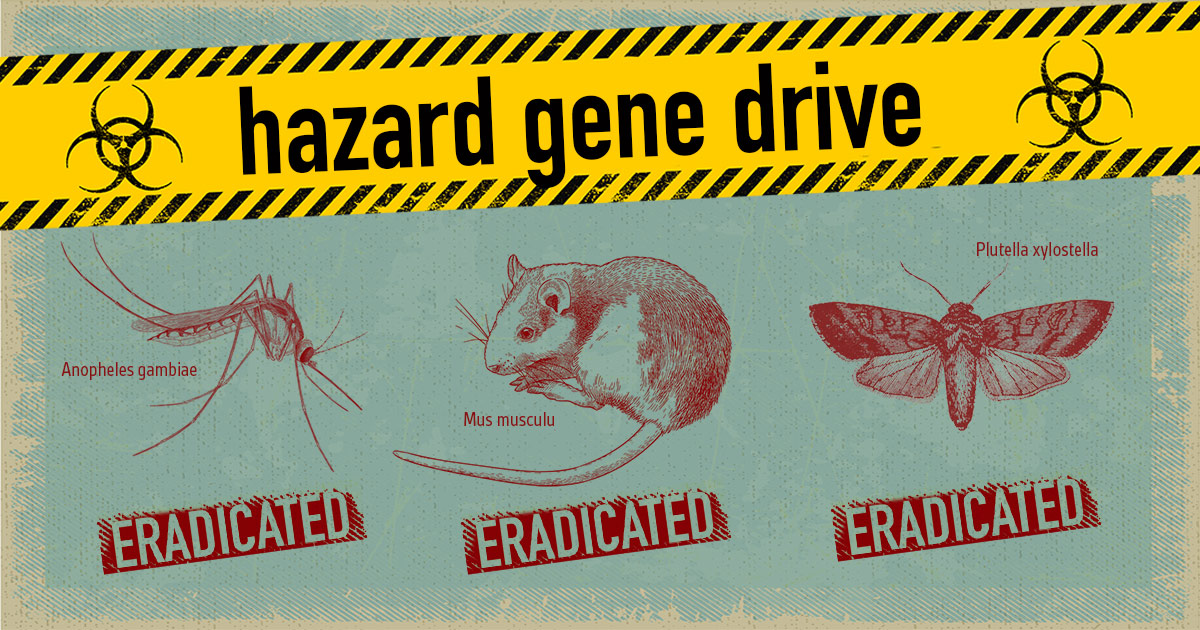
With the coronavirus, we’ve learned how fast a new organism can spread. Imagine genetically engineered mosquitoes designed to inherit their genes at a very fast pace, jeopardise the food chain, and wipe out their natural siblings by making them infertile. [1]

According to scientists, there is a risk the so-called “gene drive” could even spread from mosquitoes to butterflies, killing pollinators en masse, risking crops, plants and entire ecosystems. [2]

Nobody pushing this new technology has a solution that would successfully mitigate these risks, but even so, plans are proceeding to make gene drives a reality. 

Most of the funding to make this happen is being provided by the US military and the Bill & Melinda Gates Foundation. [3]

With your help, we can start the process to put a moratorium on it. Next week, experts and government officials will come together to discuss this new and risky technology. Our partners have secured two seats at this private online meeting and will represent our voices.

If thousands of us sign the petition calling for a moratorium, what our partners say will count much more. Add your name to ensure we don’t release any genetically engineered organism without properly assessing its severe risks.


Sign the petition at:

https://act.wemove.eu/campaigns/gene-drive-moratorium-uk?action=sign&utm_source=civimail-31162&utm_medium=email&utm_campaign=20200629_EN

The billionaire Bill Gates is excited about the potential of this new technology. [4] He hopes to get rid of mosquitos that pass on diseases, but until now no scientist has been able to assess the risk. [5] We don’t want to solve one problem only to create another bigger one. [6]

Imagine we eradicate one species of mosquitoes, but what happens to frogs, birds and fish feeding on mosquitoes and their eggs? How will the behaviour of other animals change when mosquitoes disappear? Deer may not hide in the mountains to protect themselves against their bites, instead staying in valleys and feeding differently.

The biggest imaginable risk is the collapse of whole ecosystems happening with the release of even a handful of gene drive mosquitoes. With what we know about gene drives now, their effects cannot be predicted, stopped, or reversed. We want to support the great system that is nature and understand it before we mess with it. A moratorium will give us the time to work out what we need to do next to protect nature and life.

The upcoming meeting of experts is to inform EU and global decision makers about the risks. This is the moment we need to be heard. Unfortunately, we don’t know yet who will participate and we cannot address them directly, but only two of us will join the meeting – and we need them to be powerful.


Sign the petition at:

https://act.wemove.eu/campaigns/gene-drive-moratorium-uk?action=sign&utm_source=civimail-31162&utm_medium=email&utm_campaign=20200629_EN

Our signatures show people power from all over Europe. We have shown time and time again how, starting with a simple petition, we can achieve big wins: just a few weeks ago we shared how together we stopped barley, brewing, and ultimately all beer production from being patented. It started with a simple petition.

If we act now, we can have a moratorium before it’s too late.

David, Jörg (Lübeck), and the entire WeMove Europe team


PS: Before we release a new technology, we need to make sure we don’t risk destroying entire ecosystems by making the world an experimental laboratory. Please sign and share widely to put a moratorium on gene drives.


References:
[1] https://www.sciencedaily.com/releases/2019/12/191219142646.htm
[2] There is evidence from insects that a bacterium called Wolbachia can transfer genes between different insect species. So, it is theoretically possible that Wolbachia genetic transfer could take place between mosquitoes and pollinating insects. https://www.ncbi.nlm.nih.gov/pmc/articles/PMC4882834/
[3] “Total funding for gene drive development is currently estimated to exceed a quarter of a billion US dollars. The largest single government funder of gene drive research is the U.S. military (DARPA).” https://www.etcgroup.org/content/gene-drive-files
[4] https://www.geekwire.com/2020/bill-gates-thinks-gene-editing-artificial-intelligence-save-world/
[5] The first disease the Bill & Melinda Gates Foundation wants to tackle is malaria. https://www.theguardian.com/world/2018/nov/25/gm-mosquitoes-released-burkina-faso-malaria-gene-drive Malaria was once widespread in Europe as well and was eradicated. https://en.wikipedia.org/wiki/Malaria
[6] https://www.stop-genedrives.eu/en/gene-drives/


WeMove Europe is an independent and values-based organisation that seeks to build people power to transform Europe in the name of our community, future generations and the planet. To unsubscribe from WeMove Europe, please click here. To unsubscribe from WeMove Europe, please click here.

WeMove Europe is funded by donations from our community across Europe. Can you chip in with a few pounds a month and help make sure we can move fast to win the campaigns that matter to all of us?Donate

Follow on Twitter | Like on Facebook | Subscribe on Youtube

Botswana: 400 Elephants Dead In Months – But Not For Ivory Poaching. Waterhole Reasons ? -Possible.

Botswana


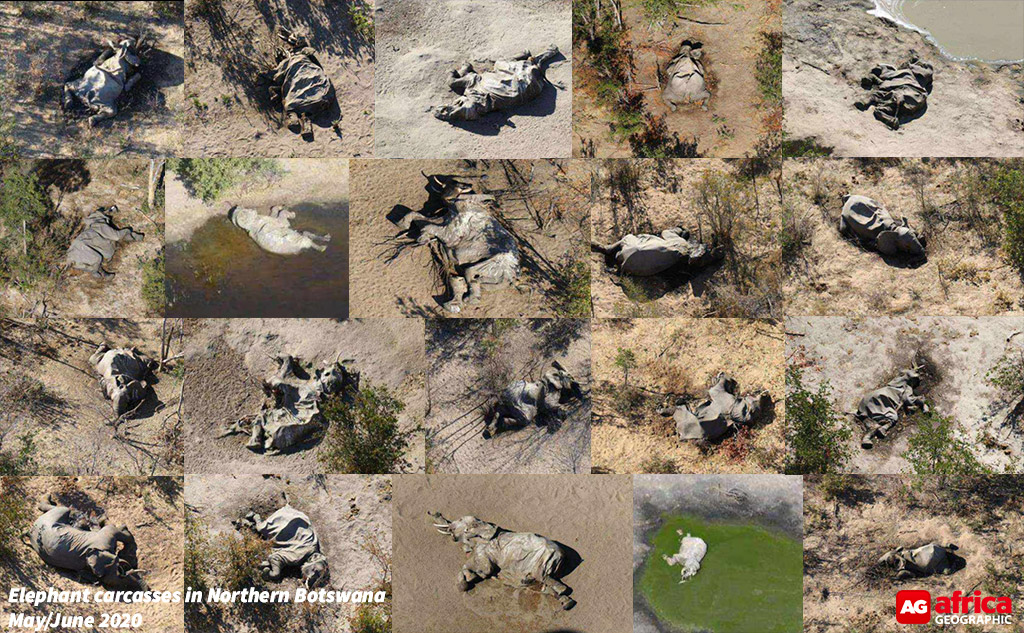
It’s no secret that elephants have been dying in northern Botswana during the last few months and that samples taken from carcasses by government officials have yet to shed light on the cause of death.


Rather than add to the speculation already out there about the cause/s of death and why the sample results are not yet available, we contacted various trusted sources to compile this list of known details/observations


Botswana elephants dying


THIS IS WHAT WE KNOW:


  • The first reported elephant deaths were in March 2020, with higher volumes reported from May onwards;
  • The death toll has now risen to approximately 400 elephants of both sexes and all ages;
  • Most carcasses are in the NG11 area, near the village of Seronga on the northern fringes of the Okavango Delta. Read this account of the impacts of elephants on people living in the area: Life with Elephants;
  • 30% of deaths occurred in the last two weeks and 70% about one month or more ago;
  • Tusks have not been removed from the dead elephants and carcasses show no sign of having been chopped to extract the ivory;
  • Some elephants died in an upright position, suggesting a sudden death;
  • 70% of the carcasses were seen near waterholes/pans;
  • There have been no reports of similar deaths in Namibia – a short distance north of NG11;
  • Live elephants near water sources were observed to be lethargic and disoriented, and some appeared to have little control over their legs. One was seen wandering in circles;
  • A dead horse was seen in one waterhole/pan;
  • No other species carcasses have been seen in the area, and vultures feasting on the elephant carcasses appear unaffected.


https://africageographic.com/stories/botswana-elephant-graveyard-mystery-death-toll-rises-to-400/?fbclid=IwAR2Wdqt8_vUR5Qo2pkTNYZXikUkuMGxg_csUSF0MH7EuqR-leKMx6oleEDg


England: Of Mice and Bees !

England


30/6/20


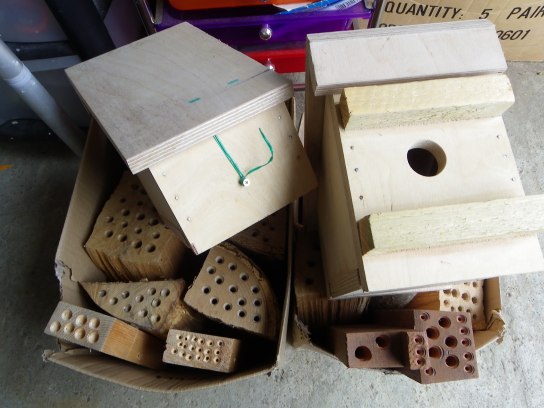
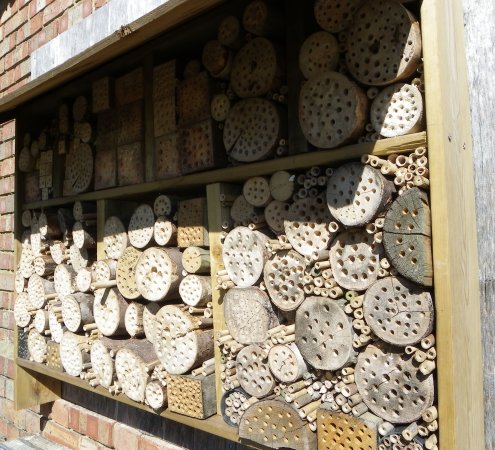
Well things have been busy here – just preparing new drilled logs for the ‘Bee Hotel’ to keep our bee friends happy and also so that they can pollinate all the apple trees in the orchards.

Read more about the process by looking at the very recent post that I did on the subject of the bees and the hotel – you may find the process interesting – I know I do !:


https://worldanimalsvoice.com/2020/06/07/england-bee-hotels-and-dormouse-boxes/


Here are a few new photos of the latest drilled logs which will replace some of the old and very used chambers in the hotel – see photo below of old logs:


IMGP0610

IMGP0612


Above –  Ready for delivery.


IMGP0617


(Above) –  The box on the right is not bad carpentry ! – the little slits front and back of the floor let fresh air to circulate and any urine escape from our little friends when they want to have a pee during their hibernation / sleep cycles.


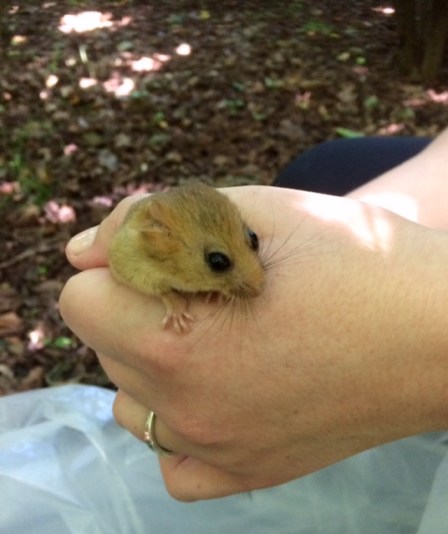
Also, as you can see from these new pictures, I have just finished the last 3 dormouse boxes for our little friends.  They are the same ones as shown in the above link, and so far they have not yet gone off to Jeskyns.

I hope this will encourage you all to become involved in drilling out some log chambers for the solitary bees.  By far they are the best pollinators and a ‘must’ for your garden.


So get cracking; ad get the bees and maybe some dormice into your patch.

Regards Mark


jeskyns-dormouse


One of ‘our’ dormice (a boy) gets a health check and is weighed – all good !


dormouse-nest-in-box


dormouse-sleeping

Sweet ‘nutty’ dreams !


bee hotel use


(Above) –  A drilled newer log (left) at our hotel  and other older ones which we will now replace.

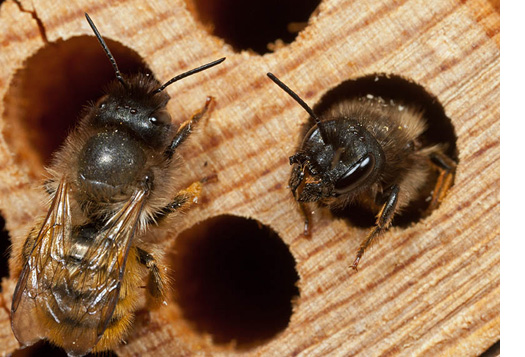
Note some of the chambers sealed up with mud – read the process in the top link.


sol bee 3


sol bee 4

Pollen covered solitary bee.


19 Mar 2 resize

Our bee hotel before it was given a new roof recently.


19-mar-13-resize

Me with Denise the Head Ranger in front of our hotel.


One of my favourite English bands – ‘The Cure’ – song – ‘A Forest’ – Enjoy:


Belgium welcomes first wild wolf cubs in more than a century. If the Hunters Dont do it Again and Slaughter In the Name of ‘Conservation’.

Belgium


Science Source - Gray Wolf and Cubs

Archive photo NOT related directly to article.


WAV Comment – Hunters killing pregnant wolves ? – no, it cant be true; hunters always preach to us that they are the conservationists.

And ‘the pregnant she wolf had killed sheep’. Sad but true; that’s what happens in the wild; especially when pregnant animals need to build up their supplies so that they can provide milk to youngsters when they are born.

The reality here is that a farmer has had a few of his sheep killed by a natural process which involves wild animals looking for food. Thus he cannot sell his sheep and get them loaded onto transporter trucks that go here, there and everywhere whilst evading all the regulations that have been set by the EU to ‘protect the welfare of animals in transport’.

It is great to read that the wolves are going to get more protection; but will it be enough to protect the from the bloodlust psychos who have to shoot everything in sight under the name of ‘conservation’ ?

Hopefully the wolves will live long lives; and the rest ? – I guess farmers want the perfect life of selling each and every one of their animals for terrible slaughter; but hey, who cares ?; as long as they get their cash; and the wolves should just not eat meat; simple as that. Possibly all wolves should now be trained on an orange juice and nut only diet.

Sad world.

Regards Mark


Wildlife conservation: First wild baby wolves for Belgium in 150 years

4 May 2020


Wildlife experts in Belgium are getting excited to welcome the country’s first set of wild wolf cubs in more than 100 years.

Adult wolves were spotted in 2018 in the European country for the first time in over one hundred years, and experts have been keeping a close eye on them and hoping for babies.

Now a female wolf named Noella is expected to give birth to cubs very, very soon.

To protect the wolves hunting has been banned and wildlife rangers are out on patrol, making sure the animals are safe.

Wolves disappeared from most of Western Europe because of hunting, growing cities and more factories being built.

That’s why experts in Belgium are now excited and keen to protect the few that have returned.

https://www.bbc.co.uk/newsround/52530878


Latest news 3 days ago


Belgium welcomes first wild wolf cubs in more than a century


Hunters were suspected of killing the last she-wolf to be pregnant in Belgium but authorities changed the law to protect the new cubs

Belgians are celebrating the safe arrival of the country’s first wild wolf cubs in more than 150 years, after introducing some of the strictest protection laws in the world.

The first pictures of the four cubs to parents August and Noella in the Flemish countryside brought a happy ending to the story of the return of the wolf to Belgium, which was marred by tragedy.

Conservationists accused   hunters of shooting dead the first wild wolf in Belgium for more than a century in rural Limburg, close to the Dutch border, in September 2019, after the pregnant she-wolf had killed sheep. 

https://www.telegraph.co.uk/news/2020/06/24/belgium-welcomes-first-wild-wolf-cubs-century/