Category: Environmental

Press release: European Commission gives green light to reopen hunting season for Turtle‑dove

https://www.birdlife.org/news/2025/04/01/press-release-european-commission-gives-green-light-to-reopen-hunting-season-for-turtle-dove/

1 April 2025

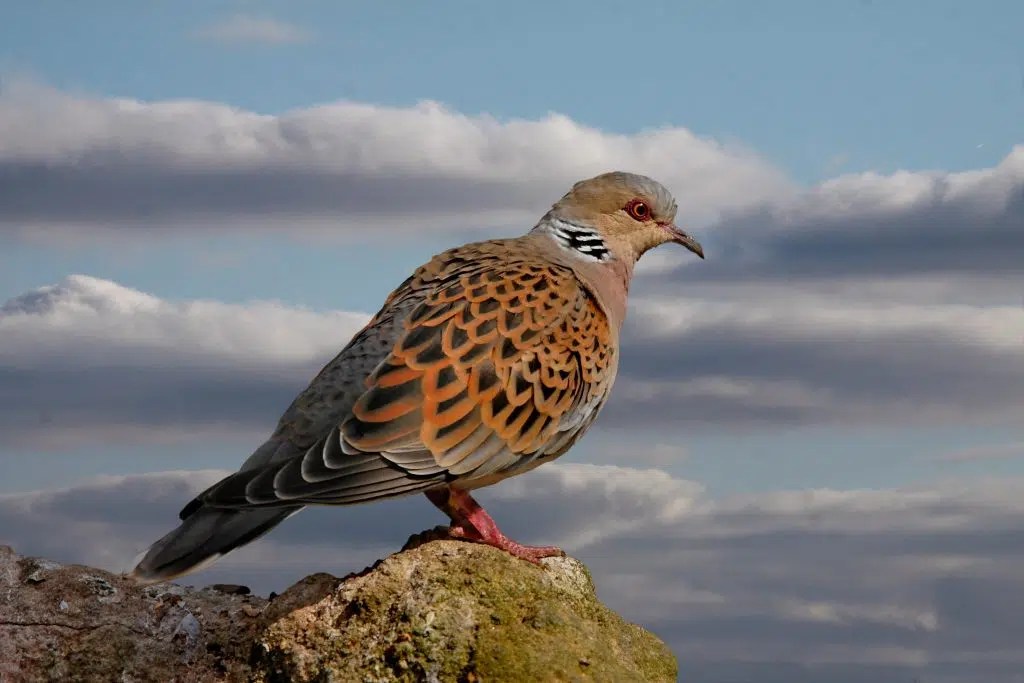
European Turtle-dove by: Tony Brindley/Shutterstock

The European Commission has announced EU countries may re-open the hunting season for the European Turtle-dove (Streptopelia turtur) in parts of Western Europe if they choose to do so. The reopening follows a three-year hunting pause despite the species’ ongoing decline and weak enforcement of hunting laws.

Hunting of iconic species paused since autumn 2021 will continue pushing species to brink.

European Turtle-dove (Streptopelia turtur) in parts of Western Europe if they choose to do so [1]. The reopening follows a three-year hunting pausedespite the species’ ongoing decline and weak enforcement of hunting laws. The moratorium, introduced in 2021, had halted hunting in Spain, France, Portugal, and northwest Italy (Western Flyway) and in 2022 for Austria, Bulgaria, Greece, Italy, Malta, Romania, and Cyprus (Central-Eastern Flyway). Hunting is a major driver of the species’ decline, yet instead of strengthening protections, the Commission is opening the door to more killing.

The hunting pause worked. Data shows that after years of decline, the Turtle-dove population in the Western Flyway has started to recover [2]. But in the Central-Eastern Flyway, where hunting bans have not been properly enforced, no recovery has been observed. The species continues to be classed as ‘Vulnerable’ on the IUCN Red List due to habitat loss and food shortages from intensive farming and pesticide use, and unsustainable hunting.

Despite these fragile gains, the European Commission has recommended resuming hunting in the Western Flyway for the 2025/2026 season, allowing hunters to kill up to 1.5% of the population. The Commission’s recommendation to end the moratorium was based on three conditions:

  1. A population increase for at least two consecutive years
  2. A rise in survival rates
  3. Effective monitoring, control, and enforcement systems

But one of these conditions has still not been met. While population numbers have improved, the enforcement systems remain weak and unreliable [3]. The Commission is relying on a 1.5% hunting quota, assuming it will be sustainable, but there is no way to ensure that hunters will stick to this limit. The risk is clear. Without proper controls, overhunting will resume, and the species will start declining again.

Barbara Herrero, Senior Nature Conservation Policy Officer at BirdLife Europe, said:
“The Turtle-dove did its part. Left alone, it started to recover. But governments failed to uphold their end of the deal. Instead of fixing weak enforcement and protecting habitats, they’re rushing to lift the ban. This is reckless and shortsighted. We know where this path leads – straight back to the brink. The European Commission should have stood firm and kept the moratorium.”

Meanwhile, in the Central-Eastern Flyway, illegal and unsustainable hunting continues unchecked. The Ionian Islands in Greece remain a hotspot for illegal killing during migration. Malta also continues its unlawful spring hunting of Turtle Doves. BirdLife Europe urges these countries to enforce the hunting ban before it’s too late.

The Turtle-dove is not safe. Without strong protections, we risk another devastating population crash. The European Commission must act responsibly and put nature before politics.


‘Half the tree of life’: ecologists’ horror as nature reserves are emptied of insects

https://www.theguardian.com/environment/2025/jun/03/climate-species-collapse-ecology-insects-nature-reserves-aoe

3 Jun 2025 09.00 CEST

A new point in history has been reached, entomologists say, as climate-led species’ collapse moves up the food chain even in supposedly protected regions free of pesticides

Daniel Janzen only began watching the insects – truly watching them – when his ribcage was shattered. Nearly half a century ago, the young ecologist had been out documenting fruit crops in a dense stretch of Costa Rican forest when he fell in a ravine, landing on his back. The long lens of his camera punched up through three ribs, snapping the bones into his thorax.

…..

EU – Council Regulation 1/2005 On The Protection Of Animals During Transport and Related Operations.

https://eur-lex.europa.eu/legal-content/EN/TXT/?uri=celex%3A32005R0001

Believe me; as a welfare campaigner for all animals suffering live transport over several decades; Council Regulation 1/2005 of 22nd December 2004, has become like a bad rash throughout its entire existence.

From the start, it never worked. Over the years this document has been read, reviewed and checked over time and time again to see if we in welfare can gather anything with which to take prosecutions forward.

Now, as covered in my very recent post https://worldanimalsvoice.com/2025/06/01/eu-what-the-hell-is-wrong-with-some-meps-policy-makers-propose-making-the-transport-sector-a-damn-site-worse/ there is movement in some sectors of the EU Parliament to turn what has always been a complete farce as 1/2005 into an even bigger car crash now. Please click on the link above to find out more.

Here is the link to the English version of the legislation – https://eur-lex.europa.eu/legal-content/EN/TXT/PDF/?uri=CELEX:32005R0001

Other EU nationality versions can be found using the eur lex europa link given at the start.

This post is simply written to give everyone an insight into the ‘legal’ issues legislation wise if you want to take things further. Take it from me; there is a lot to absorb as you can see.

The new proposals being put forward now by some MEP’s fill me with dread – a new updated / revised version of 1/2005 should be being presented now to further help and further support ALL animals suffering the indignity of live transportation. 1/2005 has always been, and will continue to be a joke until it finally goes to that big trash basket in the sky. We as campaigners will all rejoice; but what will follow on afterwards with political point scoring now appearing to take priority over what should be animal welfare, science based fact ?

Please enjoy browsing the English version of 1/2005 from the above link.

WHO KNOWS WHAT IS LYING IN WAIT FOR TH FUTURE.

Regards Mark

Sweden – Swedish Cows May Lose Their Right To Graze. And Yes, It’s A Money Thing As Always Nowdays.

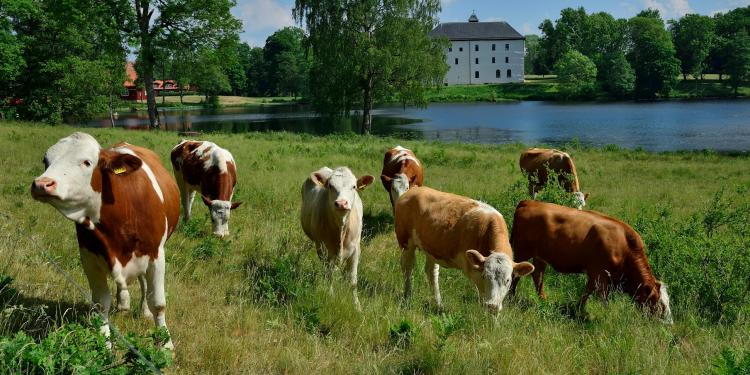
Picture this, a cow doing what it is intended to do – grazing outdoors and feeding, yes, on grass.

Difficult to believe; but Sweden is the only country in the world where cows over 6 months old must be given the opportunity to graze outdoors in Summer. Is that not a sensible and logical thing ? – cows outdoors in the sun eating grass ?

Now this right is under threat as farming unions move TO LOWER COSTS.

As anyone with any sense will tell you; grazing is an important natural behaviour for cows as it contributes to their physical and mental wellbeing. In 2019 the Swedish Board of Agriculture assessed that the grazing issue is too big an animal health and animal welfare issue for it to be removed or replaced. https://www.regeringen.se/contentassets/f5bfaefffbef406ab945f25e687087ef/sjv-rapport-2019-17-krav-pa-att-halla-djur-losgaende.pdf

The European Food Safety Authority also recommends that access to pasture should be mandatory in its latest scientific opinion of dairy cows – https://www.efsa.europa.eu/en/efsajournal/pub/7993

The country’s unique grazing experience is being questioned by the Swedish Farmers Association and other bodies, who argue that this policy makes the rearing of animals in Sweden more expensive than in other parts of the European Union – the EU, thus reducing competitiveness; hence they want the legal settlement to be removed; thus allowing farmers to decide for themselves.

These demands have been picked up by politicians; Minister of Rural Affairs, one Peter Kullgen, has appointed an enquiry into ‘Strengthen competitiveness for food producers’. Kullgrens Party has for many years asked and petitioned the Riksdag to have the grazing requirement removed by law.

The requirement TO ALLOW GRAZING is very well supported by the Swedish public; 84% of Swedes believing that it is important for animals to move freely outdoors. In another study https://www.nature.com/articles/srep44953 it was fount that an overwhelming 95% believe that it is important, or very important, that cows are allowed to graze.

Several animal welfare groups are pushing hard to ensure the legislation is not repealed and that Sweden’s high standards for cows are maintained.

At the end of March, the groups shown with their logos above, held demonstrations outside the Swedish Parliament; in addition to handing over a petition signed by no less than 165,000 persons. The press and media have been very supportive, giving the campaign lots of air time.

Like the current live export issue at the EU Parliament, one has to ask if we are witnessing here again trivial political point scoring overriding proven scientific animal welfare science – we would suggest probably a big ‘yes’ !

We at WAV wish all of our Swedish animal welfare campaigner friends the very best with their campaign to defend the rights of Swedish cows – they have huge public support on their side, so lets hope things continue unchanged for the cows !

EU: What The Hell Is Wrong With Some MEP’s ? – Policy Makers Propose Making The Transport Sector A Damn Site Worse !

I say ‘some’ in the heading; but will acknowledge there have also been some brilliant MEP’s fighting very hard in the defence of animals who are suffering during transport; one immediately springs to mind: Anja Hazenkamp – A Dutch MEP and true hero for all animals:

Those of us who have many decades of experience in investigating the immense wrongs of long distance live animal transport across Europe have always had a saying – ‘Crowd all the negative thinking MEPs together in a transporter truck; with temperatures exceeding 35 degrees; with them crapping and peeing all over each other – THEN SEE HOW QUICKLY THEY WOULD CHANGE THE LEGISLATION WITHIN EUROPE FOR IMPROVEMENTS !!’

Sadly; but realistically; you have to ask what planet some of these people are from; as over 3,000 amendments to the draft update of the Transport Regulation proposed by Members of the European Parliament (MEP) ARE CERTAINLY NOT looking at improving the welfare of animals suffering live transportation across the EU. MEPs represent you – EU Citizens; so are they not supposed to have a certain level of intelligence ?

Several negative thinking MEPs have put forward ideas and suggestions which would weaken or even remove laws that are grossly outdated anyway; and certainly NOT welfare supplements for the billions of sentients being hauled all over Europe each day. Some of the suggested amendments are so bizzare they should be up with the fairies; but they are not; these are proposals presented by some realistic members of the European Parliament.

The Transport Regulation was created over 20 years ago to ‘protect the welfare of animals during transport’ – it never did, and has never worked in the defence of animals – full stop. This chance to now rework the existing joke of legislation should be an ideal opportunity to make thing so much better; but we have some very serious concerns about some proposed changes being put on the table by some MEPs.

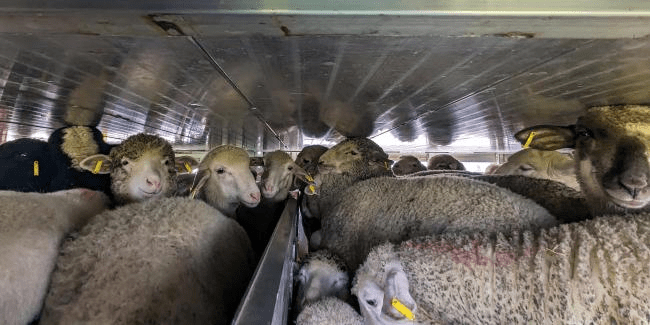
Here is just as one example – one of thousands of recent undercover investigations, here is where current legislation fails the animals. Please take note of stoppage time failures = meaning extensive additional suffering for the animals.

Photo above – Essere Animali

By bringing the policy in line with the latest welfare led science; as well as the recommendations by the European Food Safety Authority, and outlawing some useless, harmful and unnecessary practices, policy makers, the MEPs, could significantly improve the legislation for animals in transport; as well as eradicating the worst aspects of live exports. Unfortunately at this present time, this is not the way things appear to be currently going.

Of the most concern are that if voted on and implemented, in the final policy; some of the legislation would, rather then could, harm rather than help the animals.

Thin I am joking when I say this ? it’s no joke when animal suffering is involved;

The worst amendment put forward on journey times

  • Each transport journey should consist of multiple parts, EACH lasting up to 29 hours
  • Journey times for unweaned calves; lambs, kids, piglets and foals could last for up to 66 sixty six hours.

Transport is inherently stressful for any animal at the best of times, especially those in the early times of their lives. Numerous studies have shown that young animals being transported suffer more than than their elderly peers; as they suffer more due to higher stress and the inability to regulate their own body temperatures. Unweaned animals suffers more as they cannot reach; or are not familiar with drinkers carried of transporters. the only source they know is from their mothers.

Welfare organisations have always stated that journey times should last for a ONE OFF maximum of 8 hours for adult ovines, bovines and swine; and a ONE OFF MAXIMUM OF 4 hours for very young farm animals, which should also include all birds and rabbits.

The worst amendments put forward on extreme temperatures include;

  • Provisions to protect terrestrial animals in extreme road and rail temperatures SHOULD BE REMOVED !
  • Thermal provisions to protect the welfare of animals in containers; including birds and rabbits SHOULD BE REMOVED

Extreme temperatures, especially in Summer, is one of the biggest problems of the live export industry. Past investigations by NGOs have shown that temperatures inside trucks can reach 50 degrees C; leading to severe welfare problems; sometimes fatalities.

The EFSA authority recommends the implementation of lower maximum standards during transport; and that welfare organisations demand that specific species maximums must be defined by official legislation.

The worst amendments on space allowance include:

  • New space allowance provisions, written in line with recommendations by the European Food Safety Authority SHOULD BE REMOVED.

Animals usually suffer from a lack of adequate space during transport. This makes it impossible for them to lie down, move naturally or even move at all to reach essential drinkers. This incapacity exacerbates several of the problems animals already feel, including stress, exhaustion and dehydration.

Welfare science strongly suggests that species and category-specific space allowances must be set by law. Removing or weakening space allowances is clearly a step in the wrong direction.

Getting back on the right path.

The policy of updating the Transport Regulation should be to ensure better protection for all animals undergoing transportation, and not to make a bad situation even worse. MEPs need to unite; accept the latest welfare solutions to them; which is BASED ON SCIENCE. They need to accept the solutions to improve welfare rather then try to score cheap political points as the priority. Only then will the new legislation deliver what it was intended to do.

Further Information

EU based animal welfare anti live export campaign organisations:

https://www.ciwf.org.uk/our-campaigns/ban-live-exports-internationally/

https://www.eyesonanimals.com/

https://www.animals-angels.de/en/

(UK) Snails and slugs are not pests, nor are other animals

https://www.surgeactivism.org/articles/snails-and-slugs-are-not-pests-nor-are-other-animals-rhs

The Royal Horticultural Society, arguably the UK’s foremost gardening charity, has had a change of heart when it comes to our garden gastropods and whether we should be poisoning them. But what about other animals deemed pests, or those who simply don’t have a convenient role or value in our human lives? Claire Hamlett discusses.

Whenever it rains and snails dot the wet pavements, I watch my step, often pausing on walks to move snails to a place of greater safety. But not everyone takes such care over the slow-moving molluscs. Indeed, snails and their bare-backed cousins, slugs, have long been considered the bain of a gardener’s life. If you search for them on the internet, many of the results are about how to kill them or get rid of them. Garden centres are full of poison with which to dispatch them (and any other creature that mistakenly ingests it). But the Royal Horticultural Society (RHS) is now trying to redeem its image by no longer classing them as pests.

The RHS wants gardeners to see the ecological role that slugs and snails play, including eating decomposing matter and being a source of food for animals including birds and hedgehogs. This change of heart is part of the RHS’s broader campaign for ‘Planet-Friendly Gardening’, which it launched last year. While it’s good that an influential organisation like RHS is moving towards a more compassionate outlook, it also feels rather like it is having to do damage control for the prejudice that it has helped to create against these creatures. The current RHS page on snails, which will hopefully get an update soon, leads with an accusation that they “can cause a lot of damage in the garden” and has a whole section on controlling their numbers, including with pesticides. 

I do wonder why it took the RHS so long to start thinking about how it demonises species given that the serious trouble the UK’s wildlife is in has been known for many years. Now it has seen the light on slugs and snails, hopefully, it will soon also update its thinking or many other species it currently classes as pests, and work instead to educate people about their role in the ecosystem and how to keep a balance of species in gardens without resorting to chemicals.

Unfortunately, the murderous mindset that categorises some species as ‘pests’ does not end in people’s back gardens or with molluscs.  

Foxes are not only hunted illegally across the countryside but are persecuted for living their lives in and around the grounds of schools and businesses, as well as in the parks and on the streets of our cities. Fox cubs orphaned after their mother was killed were also shot at a school in North London last year for pooping in the playground and supposedly posing a risk to pupils’ health. There have been fox culls in London, where urban foxes are a common sight, especially after the Christmas period when there is more rubbish left out on the streets for longer. One ‘pest-controller’ interviewed by the Evening Standard said he had shot and killed thousands of foxes over his 30-year career.

But with public pushback, sometimes foxes’ lives are spared. A cull of foxes on a London golf course was halted in 2020 after campaigners including Animal Aid urged the golf club to choose an alternative humane solution. In 2021, hunt saboteurs raised the alarm about a planned fox cull on the grounds of Coca-Cola’s factory in Sidcup. The soft drink giant apologised for the upset and promised to use a humane alternative.

Rats and mice are among the prime ‘villains’ of the animal world in the minds of many people. While it’s understandable to not want rodents living in your house (though I did cohabit with a mouse for many months without any problems), these creatures are subjected to some particularly gruesome methods of ‘control’. Traps set with bait snap their spines. Poison can cause internal bleeding or death by dehydration. Some kill the animals slowly over days. There are humane, no-kill alternatives, but poison and traps sadly seem to be the most popular methods.

Sometimes an animal comes to be considered a pest simply because it disturbs the neat and tidy aesthetic that people prefer. One recent story I found particularly disturbing was a Guardian feature on a man called Jason Bullard in North Carolina, US, who kills armadillos for money. Driven north by climate change from their native habitat in South America, people in North Carolina were so “perturbed at their lawns being torn up by the newly arrived mammals” that they started paying Bullard to hunt and shoot them.

All too often animals are demonised for simply existing and trying to live their lives. Animal behaviour expert Marc Bekoff argues that calling these animals ‘pests’ “devalue[s] them as if they’re non-sentient objects.” Animals often find themselves in urban contexts because humans have taken over so much of what was once their habitat. Sometimes they benefit from living near us, such as by being more easily able to access food and shelter. As Bekoff writes, what we need is a “culture of coexistence”, in which killing is no longer the go-to option for resolving our conflicts with other species. With advocacy from organisations like the RHS, perhaps hearts and minds can finally start to change.

Against human exceptionalism

https://aeon.co/essays/human-exceptionalism-is-a-danger-to-all-human-and-nonhuman

This January, a 57-year-old man in Baltimore received a heart transplant from a pig. Xenotransplantation involves using nonhuman animals as sources of organs for humans. While the idea of using nonhuman animals for this purpose might seem troubling, many humans think that the sacrifice is worth it, provided that we can improve the technology (the man died two months later). As the bioethicists Arthur Caplan and Brendan Parent put it last year: ‘Animal welfare certainly counts, but human lives carry more ethical weight.’

Of course, xenotransplantation is not the only practice through which humans impose burdens on other animals to derive benefits for ourselves. We kill more than 100 billion captive animals per year for food, clothing, research and other purposes, and we likely kill more than 1 trillion wild animals per year for similar purposes. We might not bother to defend these practices frequently. But when we do, we offer the same defence: Human lives carry more ethical weight.

But is this true?

Most humans take this idea of human exceptionalism for granted. …..

(India) Mob kills Royal Bengal tiger in India’s Assam state

23.05.2025 – BBC News, Mumbay

Shrinking tiger habitat has led to man-animal conflict in Assam state

A Royal Bengal tiger was killed and dismembered by a mob in India’s north eastern state of Assam, a forest official has said.

Angry residents from a village in the Golaghat district reportedly took the step because the tiger had killed livestock in the area and posed a threat to their lives.

The state’s forest department has registered a case.

Instances of man-animal conflict are not new to Assam. This is the third tiger killing that has been reported this year.

Top forest official Gunadeep Das told Times of India newspaper that the tiger had died from sharp wounds and not gunshots.

The carcass was later recovered in the presence of a magistrate, reports say.

Mr Das told a local newspaper that “around a thousand people had gathered to kill the tiger” and that some of them attacked the tiger with machetes. He added that the tiger’s carcass had been sent for an autopsy.

Mrinal Saikia, a lawmaker from Assam state condemned the killing on X. He shared a video that showed the purported dead body of the tiger with parts of its skin, face and legs missing.

The BBC has not independently verified the video.

“This is a very painful act. The Earth is not only for humans, it is for animals as well,” he said in the post, adding that strict action will be taken against those involved in the killing.

Another forest official, Sonali Ghosh told local media that the origins of the tiger were unclear. According to reports, the animal was killed about 20km (12 miles) away from the Kaziranga National Park.

Latest data by Assam’s forest department shows the population of tigers in the state has steadily increased from just 70 in 2006 to 190 in 2019 due to various conservation efforts.

However, instances of tigers being killed due to conflict with villagers have been often reported in the media, which could be because of shrinking habitat and lack of protection of tiger corridors between different national parks in the state.

Tigers are a protected species under India’s Wildlife Protection Act (1972), which prohibits poaching, hunting and trade of tiger parts.

Nature Photography and Animal Behavior – Capturing The Wild Ethically; And Knowing When To Stop.

The wild is full of drama, but not every moment should be captured on your camera. Ethical photographers know when to put the camera down.

Especially if an animal is distressed; threatened or vulnerable. As an example; getting too close to nesting birds can cause the parents to abandon their chicks. Chasing or cornering animals for a shot could lead to injury or even death.

Sometimes the most corageous act is to leave no trace, thus allowing nature to unfold, undisturbed.

The respect for boundaries separates the true wildlife photographer from those getting a selfie snapshot.

Here is a link about wild animal photography and how it should be approached:

All photos – Mark

EU – Wolves Betrayed. The European Parliament Bows To Politics Over Science.

8th May 2025

Today was a bad day for the wolf; as the European Parliament voted to back the European Commission’s proposal to weaken the protection of wolves; meaning that wolf hunting will now be possible again.

I can sense the German hunters having a celebratory beer tonight !

This vote is the last step in the legislative process to decrease the level of protection for the wolf in the EU from ‘Strictly Protected’ to just ‘Protected’.

In March, the European Commission proposed to amend wolf protection under the EU Habitats Directive; after the Bern Convention had accepted its request to downgrade the species’ protection in December. The EU Council had already approved the proposal a few weeks ago.

This decision marks a worrying precedent for European nature conservation. Under the EU Habitats Directive, decisions must be based on SCIENCE. Despite the proof that wolf populations are recovering due to strict protections; the species continues to be in an unfavourable conservation status in six out of seven ‘EU biographical regions’.

These decisions undermine the credibility of EU nature laws; as well as threatening the recovery of wolves across Europe.

‘Wolves are vital to healthy ecosystems; but todays vote treats them as a political problem, and not an ecological asset’ said Ilaria Di Silvestre, the Director obut thef Policy and Advocacy at the International Fund for Animal Welfare (IFAW).

There is no data justifying a lower level of protection; but the EU institutions decided to ignore science. Decisions made on the basis of political interests rather than on facts. These now seem to be undoing decades of conservation progress.

The EU was once proud to lead on nature protection; but now we are witnessing vital species such as the wolf being sacrificed for short term political interests that will benefit nobody. Member States must now step up and do the correct thing. Wolves still need STRONG PROTECTION if we are at all serious about saving Europe’s nature.

Despite the Parliaments decision; EU member states can STILL CHOOSE to keep wolves strictly protected – a step nature conservationalists strongly recommend. They remain legally bound to ensure that their wolf populations achieve and stay at a favourable conservation status.