WAV Comment – we want to send our thanks to the good citizens of Australia who are doing everything they can to help rescue and save the wonderful Koala. We are watching with interest from around the world.
We also ask the question why the Australian government never seems to last for more than about 6 months ? – but then we read that principals in government, namely MR Morrison and Mr Elliott are jetting off to far flung corners of the globe for their holidays !! – is this the way to deal with a national crisis in your country; by going on holiday ? – no wonder there is no respect from overseas for these self opinionated, self interested dimwits.
Christ, with the ignorance of live export issues and the denial of global warming; one has to question what the Australian government is about. We know as do many but we refrain from publishing the words, as they may cause offence to the government.
A sad government led by those with self interests;
Thousands of koalas feared dead as massive Australian wildfires destroy habitat
The mid-north coast of New South Wales was home to up to 28,000 koalas, but wildfires in the area in recent months have significantly reduced their population.
Koalas are native to Australia and are one of the country’s most beloved animals, but they have been under threat due to a loss of habitat.
There have been several incidents where desperate koalas have sought help from humans.
South Australian cyclist Anna Heusler was cycling with friends in the countryside outside Adelaide on December 27 when she saw a koala and let it drink from her water bottle.
Environment minister Sussan Ley said: “Up to 30% of their habitat has been destroyed.
“We’ll know more when the fires are calmed down and a proper assessment can be made.”
Images shared of koalas drinking water after being rescued from the wildfires have gone viral on social media in recent days.
Ms Ley said: “I get mail from all around the world from people absolutely moved and amazed by our wildlife volunteer response and also by the habits of these curious creatures.”
Fire danger in New South Wales and the Australian Capital Territory was upgraded to severe on Saturday, as high temperatures built up over the region.
Sydney’s western suburbs reached 41C, while the inner city is expected to hit 31C on Sunday before reaching 35C on Tuesday.
Two wildfires in New South Wales are at the “watch and act” level issued by fire services.
Canberra, Australia’s capital, peaked at 38C on Saturday, with oppressive temperatures forecast for the next seven days.
Meanwhile, New South Wales emergency services minister David Elliott has gone on an overseas family holiday – which comes in the wake of Prime Minister Scott Morrison’s much-criticised recent trip to Hawaii.
Mr Morrison, who apologised for going away, eventually cut short his holiday and returned to Sydney last weekend.
Mr Elliott said he will be briefed daily while overseas, and he added: “If the bushfire situation should demand it, I will return home without hesitation.”
When a picture says more than just a thousand Words, then is this one 💖!
The kind of treatment that EVERY animal deserves.💚
Did you know that Botswana, Zimbabwe and Eswatini (formerly Swaziland) have legalized trade in ivory and animal skins? In many African countries, the elephant is almost extinct.
But there is a tribe in northern Kenya who want to prevent this.
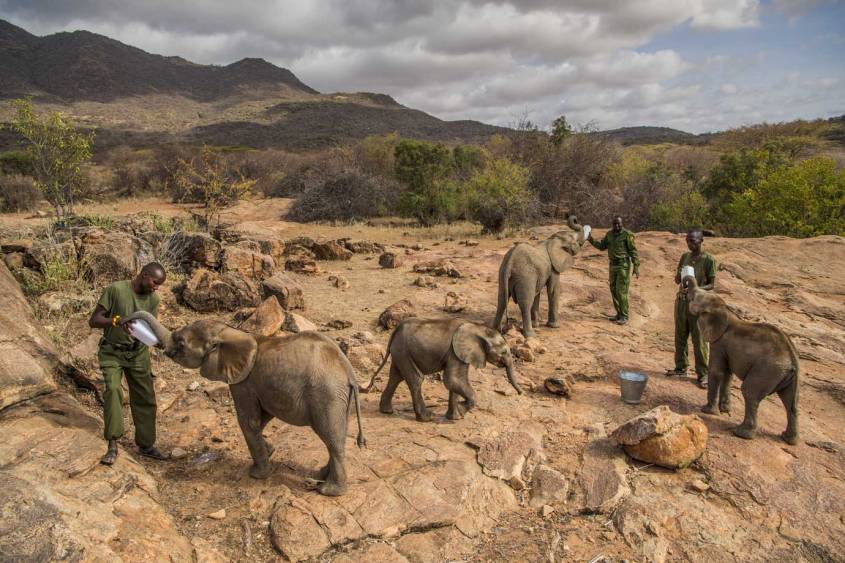
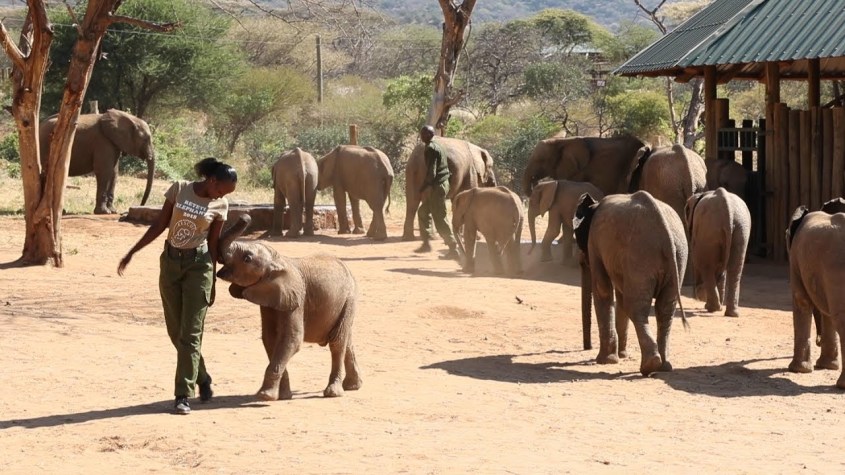
Years ago, these warriors were afraid of elephants. But now they even have an orphanage for little elephant babies.
Innovative Samburu communities in northern Kenya have come together to save orphaned elephants.
The region is home to Turkana, Rendille, Borana and Somali as well as the Samburu – ethnic groups that once fought for the country and its resources until death.
Now they are working together to strengthen their communities and protect the estimated 6,000 elephants that live with them!
The elephant orphanage Reteti, nestled in the gorge next to a crescent-shaped mountain range, is located in a 975,000 hectare thorny bush in northern Kenya and is known as the Namunyak Wildlife Conservation Trust – part of the ancestral home of the Samburu.
It was founded in 2016 by the Samburu. Funding comes from Conservation International, San Diego Zoo Global and Tusk UK. The Kenya Wildlife Service and the Northern Rangelands Trust provide ongoing support.
The 6,000 elephants in this part of Kenya form the second largest population in the country.
Black rhinos are starting to return – a small, carefully guarded population that has been reintroduced to the Sera Conservancy, adjacent to Namunyak, from parks and reserves across Kenya.
Warthog, impala, little kudu, buffalo, leopard, cheetah and reticulated giraffe are also on the rise.
This is Shaba, almost two years old today, the acting matriarch of Reteti’s younger orphans, and she teaches them how to look for food in the wild.
Under the supervision of caregivers, she leads her small herd into the bush outside the protected area, pulls leaves, tastes bark, presses down small trees and takes mud baths (Photo: Ami Vitale, National Geographic)
What happens here in Reteti without much fuss is nothing less than the beginning of a transformation in the way Samburu relate to wild animals that they have long feared.
This oasis, where orphans grow up and learn to be wild so that they can one day return to their herds, is as much about people as it is about elephants.
Yes, they still exist those who protect elephants.
And I mean...Projects like this fill us with joy. Whenever possible, we want to finally see these animals in freedom and joy.
Our great lesson in animal welfare is collaboration and continuity. To be successful, we need to invest in long-term, trustworthy relationships. If an initiative is not strengthened by many groups, the work will not be successful.
Uganda sits on vast oil resources, and three companies are ready to drill – in of all places, Murchison Falls National Park. A Chinese construction company is already expanding a road that cuts through the protected area.
Speak out against this disaster in the making!
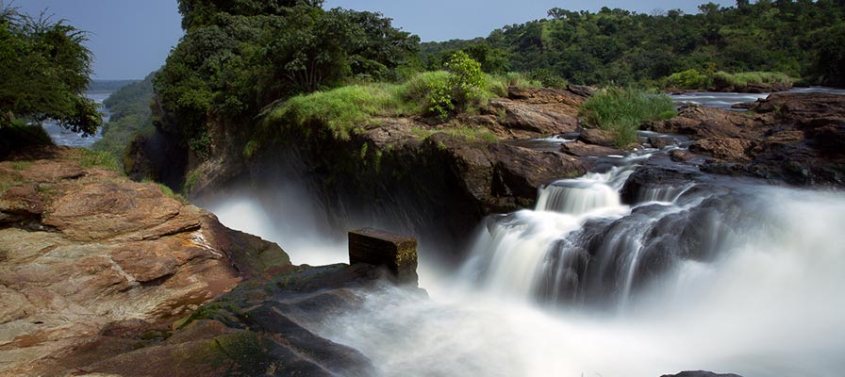
Murchison Falls National Park is one of Africa’s jewels. Every year, thousands of nature lovers come from all over the world to enjoy the spectacle of the Victoria Nile thundering down the cliffs of a narrow gorge.
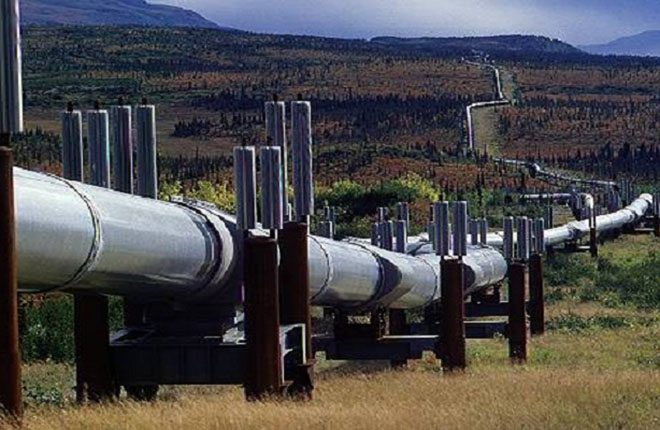
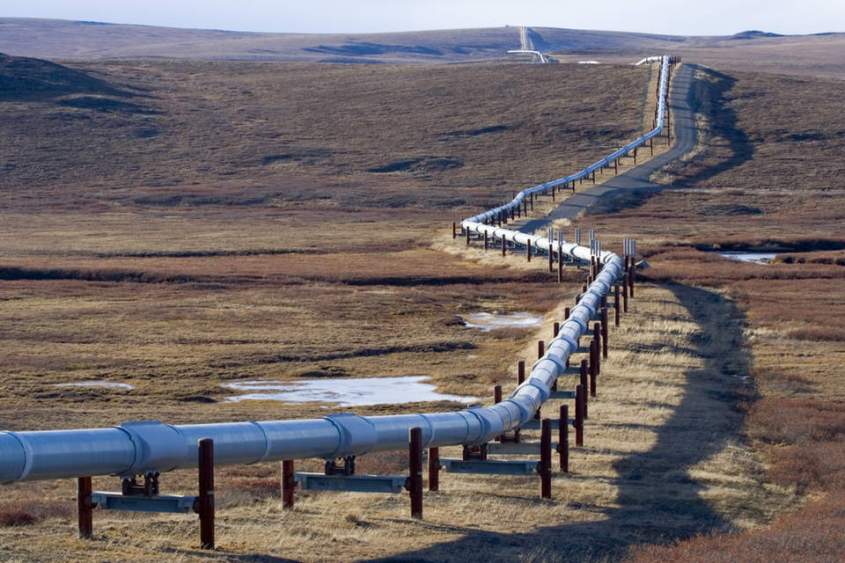
This could soon be history if France’s TOTAL, UK-based Tullow Oil and China National Offshore Oil Corporation (CNOOC) were to drill 419 wells in the region and extract 200,000 barrels a day. They would also build a refinery, an industrial zone and a 1,445-kilometer pipeline-the longest in the world-to the harbor of Tanga in Tanzania.
Tullow confirmed the commercial viability of the oil blocks in 2006 but a final investment decision has been delayed multiple times.
In early 2019, China Communications Construction Company(CCCC) started expanding a dirt track through Murchison Falls National Park used mainly by safari tourists, widening and paving it for heavy vehicles. The road expansion will fragment the national park and cut off wildlife corridors. Environmental activists are convinced that the only possible purpose for the road is to serve the oil industry.
CCCC is one of the biggest construction companies globally. Its projects are textbook examples of how China initiates, finances and realizes major undertakings that run roughshod over the local environment in numerous countries.
Resistance is growing in Uganda: environmentalists and civil society are calling on the government to protect the environment and the livelihoods of ordinary Ugandans from the fossil-fuel industry.
International pressure can be successful, as the cancelation of a hydroelectric dam project close to Murchison Falls has shown. Now our aim is clear: Save the Murchison Falls region – tell Uganda to keep the oil in the ground!
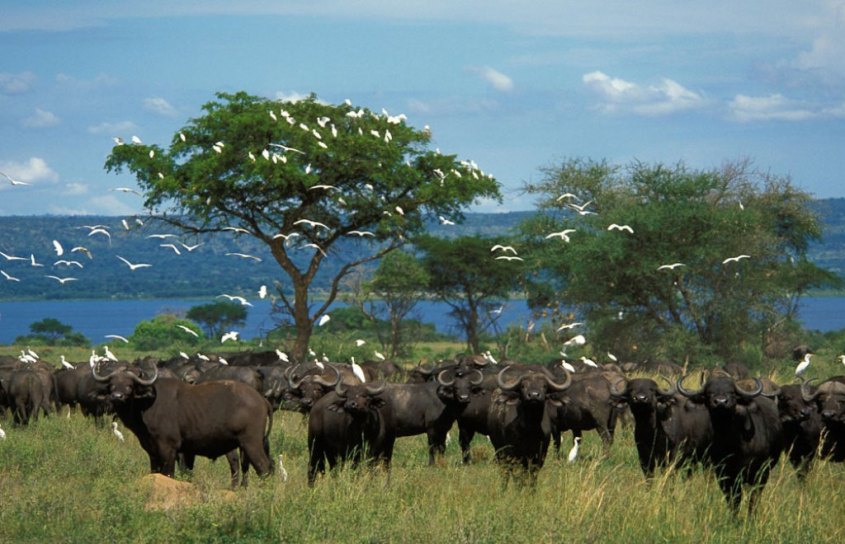
Murchison Falls National Park was established in 1952 and covers an area of 3,878 square kilometers. Scientists have counted 144 mammal, 51 reptile and 755 plant species in the region’s savanna ecosystems, which also includes the Budongo, Bugoma and Wambabya protected areas.
Oil in Murchison Falls National Park – the companies involved
The oil reserves are estimated at 6.5 billion barrels. Between 2011 and 2012, TOTAL and CNOOC each acquired a 33-percent share from the stakeholder, UK-based Tullow Oil.
A number of nature conservation and human rights organizations are already fighting against TOTAL, complaining of land grabbing, the loss of the livelihood of many local people and impoverishment. Les Amis de la Terre France and others are filing a lawsuit against the oil company in Paris, referring to a law on corporate responsibility that also applies to foreign subsidiaries.
Tullow Oil, based in London, which bills itself as “Africa’s leading independent oil company”, is active in 15 countries in Africa, South America and off Jamaica. Its main business activity is the exploration of new oil and gas fields on land and offshore.
China National Offshore Oil Corporation (CNOOC) is the third largest oil company in the People’s Republic of China. It mainly operates in Africa, Iran and more recently in Europe and North America. The company is 70 percent state-owned.
China Communications Construction Company (CCCC) is one of the largest construction groups in the world. In Uganda, it built the 40-kilometer expressway between Entebbe Airport and the capital city, Kampala.
The Export Import Bank of China is involved in the destruction of the Murchison Falls National Park as a financier. The cost for the construction of three “national oil roads” has been estimated at around €485 million, of which 85 percent (€410 million) will be covered by a loan. In addition to CCCC, two other Chinese companies are involved.
According to environmentalists, the start of construction by CCCC is illegal. For example, it is unclear whether an environmental impact assessment has been carried out. During two public hearings on the Tilenga project, it became apparent that numerous regulations had been violated.
Environmentalists compare the construction of roads to opening a Pandora’s box of environmental evils and draw parallels to the spread of cancer cells. Satellite images show how, after a road is opened between population centers, numerous side roads soon branch off into the countryside in a herringbone pattern. These are both official and unofficial roads, some of which are built by logging companies.
Roads open previously inaccessible areas to agriculture (farms, plantations, cattle feedlots), logging, mining, poaching and settlement. Many of the threats to rainforests are associated with the construction of roads. In the tropics, 95 percent of all deforestation takes place within five kilometers of the nearest road.
Uganda already confirmed the existence of huge commercially usable oil reserves around Lake Albert along the western border in 2006.
Tullow Oil, listed on the British stock exchange in France, and the China National Offshore Oil Corporation jointly control three oil blocks in Lake Albert, a huge stretch of water on the Ugandan border with the Democratic Republic of the Congo.
That would be enough to make Uganda an important player in the African oil industry. At least that is the hope of the Ugandan government wich says: “The discussions on ton the various issues are ongoing and we hope to reach an agreement very soon.”
But 13 years after the first discoveries were made, Total said it was stopping technical work on the oilfield and pipeline project following the collapse of a deal to buy additional equity from Tullow and the failure of talks with the Ugandan government to agree legal terms for the investment.
Now the pressure of the public has to be intensified so that this project, which has been postponed several times, does not arise.
Because from our experience in exploiting this continent by white collar criminals from abroad, we know, that the “man on the street” in Uganda – as happened in Nigeria and Angola – will be exploited and bled.
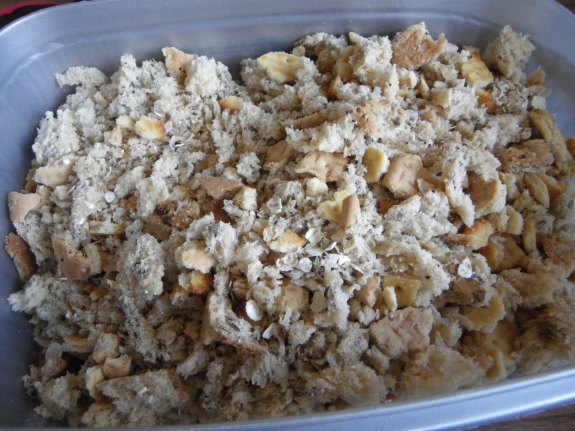
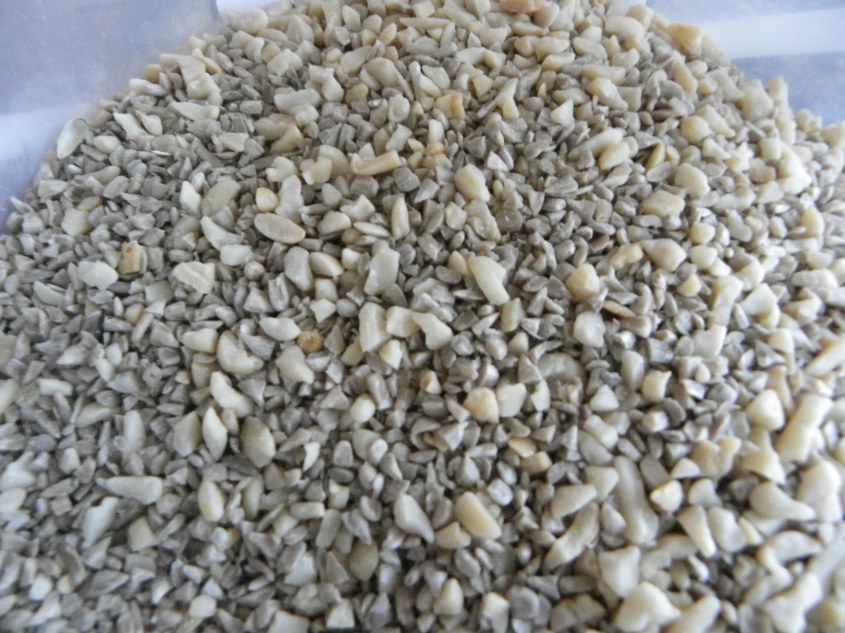
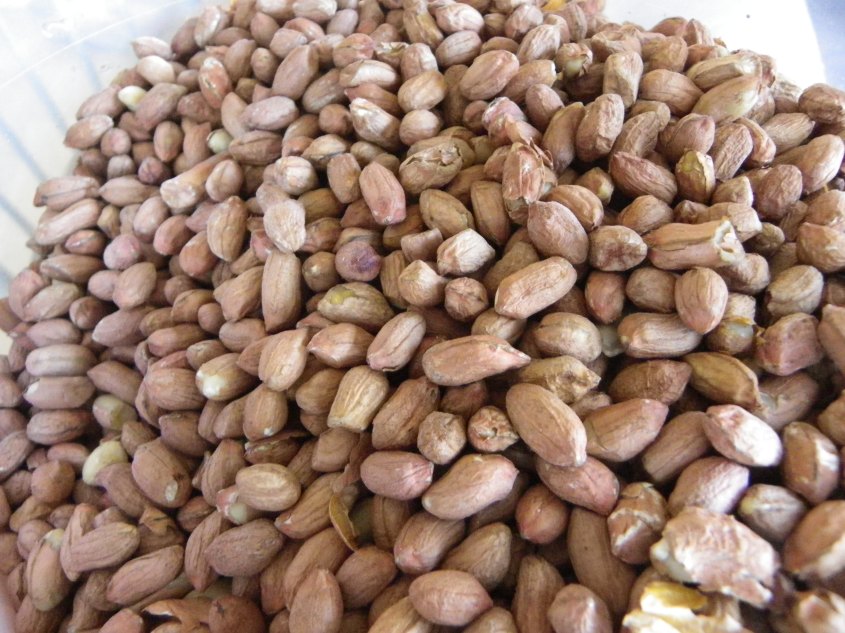
Have been preparing a super big feast for the wild birds today – they always do well but even more today !
Fresh bread, crushed biscuits etc
Sunflower Hearts and crushed nuts
Whole Peanuts for the feeder – never leave whole nuts on the ground – always use feeders
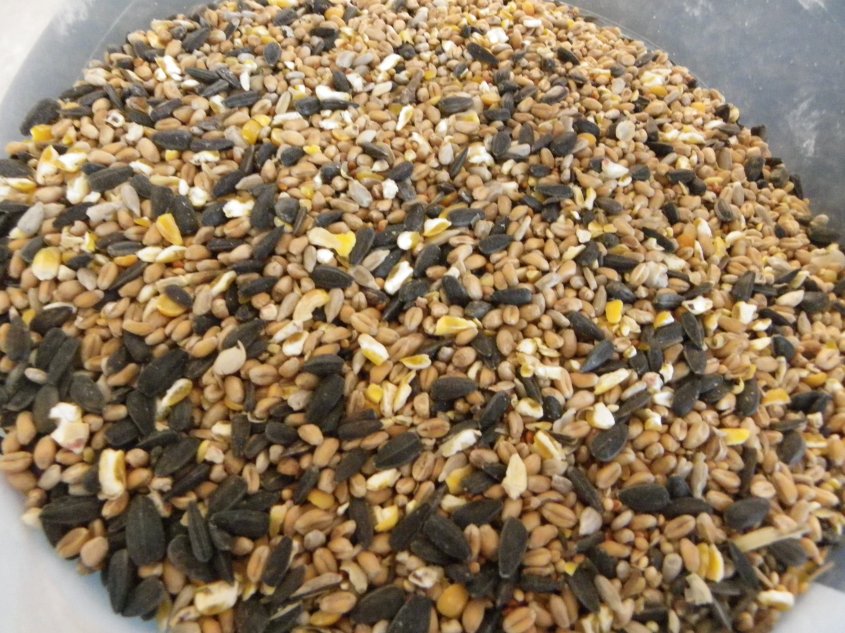
Seed Mix
Fat Balls for the feeders
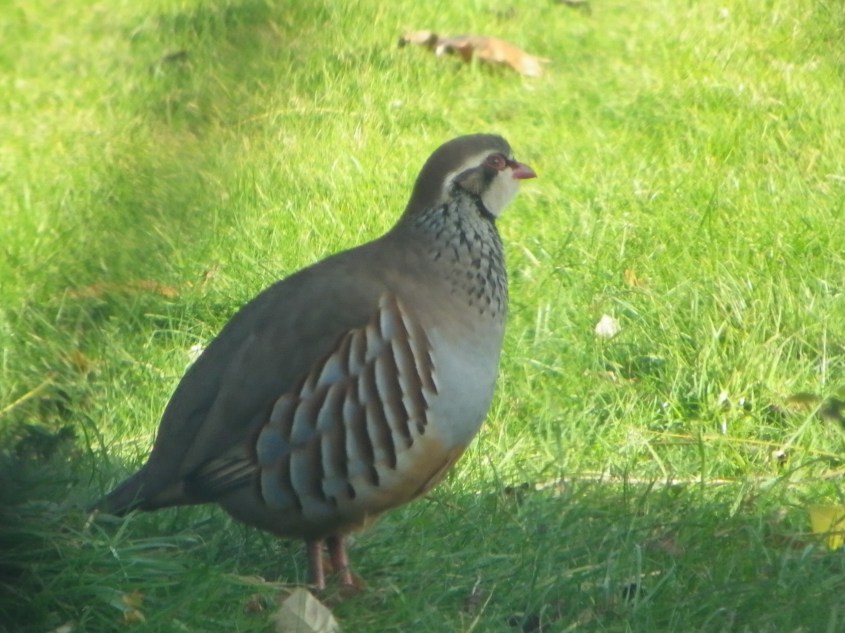
Had about 6 young, wild female pheasants visit recently – they often do;
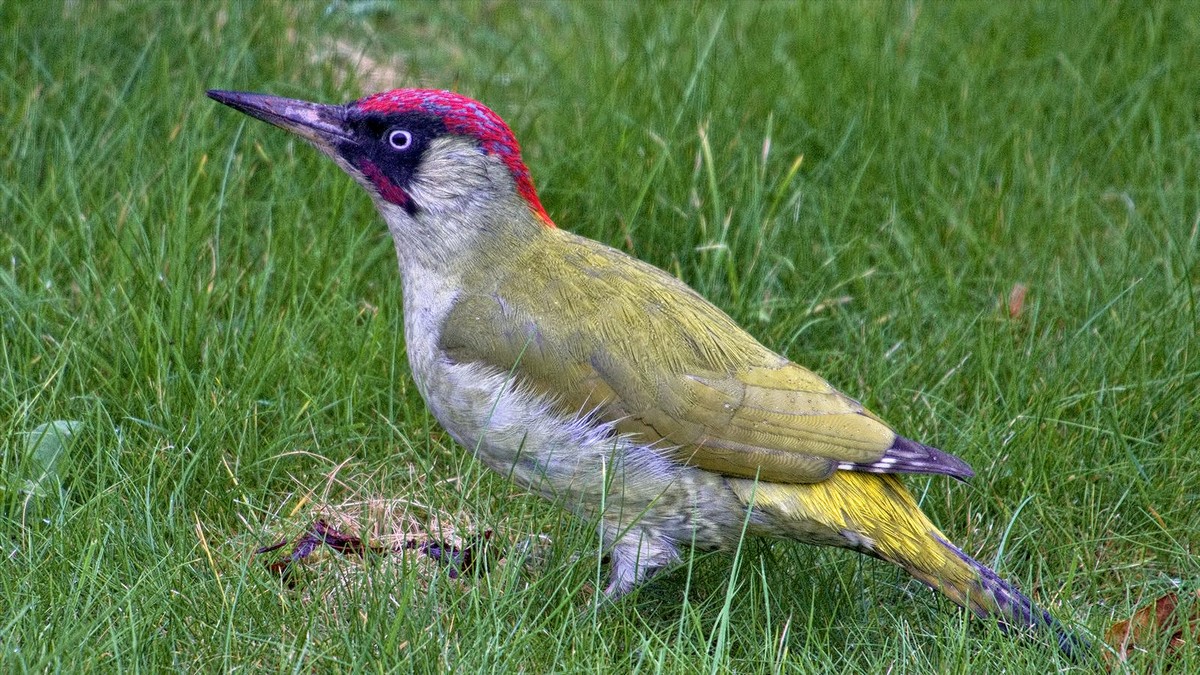
… and with dozens of blue tits, great tits and long tailed; with both Green and Spotted woodpeckers in the garden, it is great to see wild LIFE on a day which involves so much recent additional killing.
Above – Blue Tit
Above – Great Tit
Above – Long Tailed Tit
Above – Green Woodpecker
Above – Great Spotted Woodpecker and Great Tit Feed Nuts
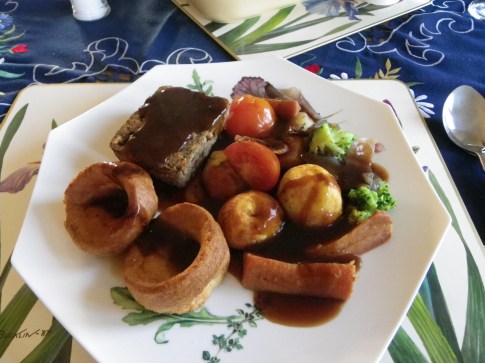
Just had super Vegan dinner – no death or killing to celebrate in this house.
Hoping all your dreams for the future become reality.
Winter is when female polar bears come ashore to give birth to cubs in deep snow drifts.
It’s also when oil and gas companies take advantage of frozen tundra to move heavy vehicles and amp up their prospecting for oil.
Thanks to Trump, the fossil fuel industry could now plunder 18 million more acres of Alaska, devastating the habitat of polar bears, brown bears, caribou and millions of migratory birds.
The extinction emergency is here and we’re losing up to 150 species a day.
This is why Trump’s move to expand drilling in Alaska is so repugnant. It could lead to more than a billion tons of carbon dioxide pollution, worsening the climate crisis and driving more species to the brink.
We need to keep oil in the ground — not decimate critical habitat so we can dirty the air and cook the planet with more fossil fuel pollution.
Endangered species are counting on us. But this administration is pushing ahead on plans to drill the vanishing Arctic habitat that is home to species like polar bears and ice seals.
It’s part of the ruthless attack on the wild that we’ve seen from Trump all year long.
He and his minions have already removed protections from gray wolves and gutted the Endangered Species Act. Now they’re gunning for the Arctic.
This is a defining moment in our fight to save life on Earth. We’re in court right now to keep the Endangered Species Act in place as a crucial lifeline for polar bears and all species threatened with extinction. If we’re going to win, we need you with us.
Kierán Suckling Executive Director Center for Biological Diversity
P.S. Monthly supporters who give steady gifts of $10 or $20 power the Center’s swift and continued action to save wildlife. Do your part by starting a monthly donation.
boasts over 30 locations across the country (USA).
America’s Largest Vegan Chain Expanding to New York City
Veggie Grill—one of the most successful all-vegan fast-food chains—is opening a brand-new restaurant in New York City on Friday, December 13!
Known for its mouthwatering plant-based sandwiches, salads, and more, Veggie Grill boasts over 30 locations across the country, in California, Washington, Oregon, Illinois, and Massachusetts.
The new restaurant will be in New York’s Flatiron District and offer all the delicious options customers have come to love. With yummy favorites like the Buffalo Bomber sandwich, Beyond Burger, and Savory Kale Caesar salad, the menu has something for everyone.
And the chain shows no signs of slowing down. Earlier this year, Veggie Grill opened its first East Coast location in Cambridge, Massachusetts, and partnered with foodservice giant Sodexo to bring its delicious plant-based menu items to select colleges and universities around the United States.
As people become aware of the negative impact factory farming has on animals, the environment, and human health, the demand for plant-based food is growing. Restaurants like Veggie Grill are taking advantage of this changing market by providing delicious vegan options.
This thirsty koala was caught having a drink out of a garden hose in Victoria over the weekend. Right across the country, native animals are constantly on the search for water, among extreme heat and fires. pic.twitter.com/qEcax0hsaJ
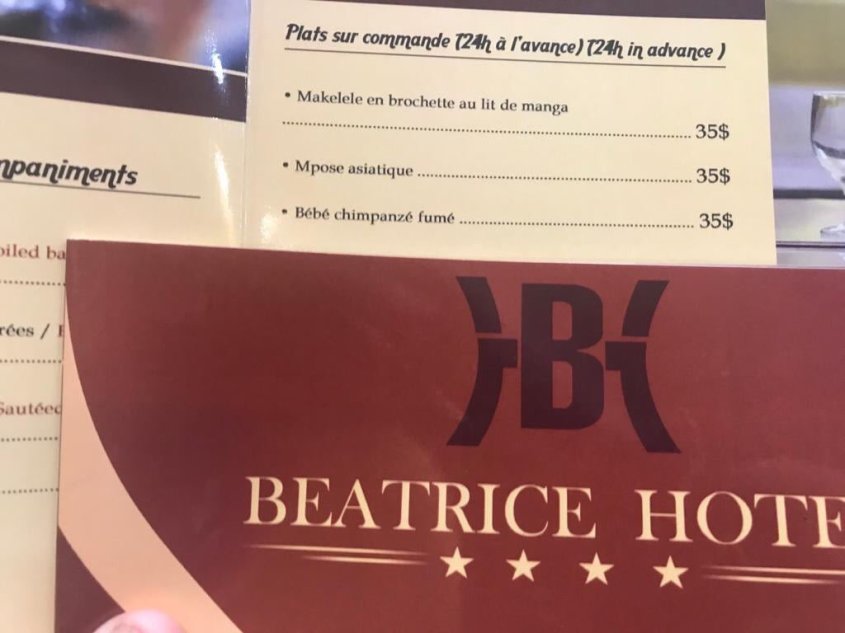
WAV Comment – Nature lover; game reserve owner; hotel owner; Chimp on the Menu ! – strange how it all comes together when you investigate a little more.
This is an official menu of one of the main 5 star hotels in Kinshasa, the DR Congo.
The owner Beatrice, claims to be a nature lover and owns a game reserve. It seems she is also a trafficker of protected species such as chimps as seen on the menu…Beatrice?
The owner’s name is Andre’ Kadima who also worked previously for ICCN, the DRC parastatal in charge of fauna and flora. Clearly, he has done more than what meets the eye and deserves to face justice. A local NGO,
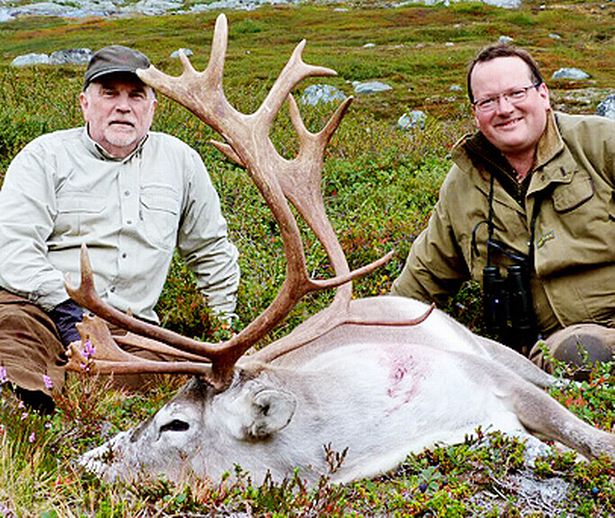
Rich trophy hunters pay to shoot reindeer in wild – say it’s ‘magical’ experience
Rich trophy hunters are paying to shoot reindeer in the wild.
Brits are being offered the chance to join a trip where they can stalk and kill real-life Rudolphs in a national park.
The animals being targeted by trophy hunters belong to the last surviving population of wild reindeer in Europe and roam in two of Norway’s largest national parks.
The shooting trips are being run by Hendry, Ramsay and Waters, which describes itself as “Scotland’s Premier Sporting Agency”.
On its website is a photo of two men pictured next to the carcass of a large reindeer.
The agency boasts: “We have full exclusivity in both the Brehei-men and Jotunhei-men national parks, which hold Europe’s last-surviving population of wild reindeer, which have been hunted here since the Ice Age.
“The Jotunheimen national park reopens this year after being closed to all hunting for the past eight years, so this untouched territory will really be worth a visit.”
But Nick Weston, from the League Against Cruel Sports, said: “It’s hardly in the spirit of Christmas to shoot Rudolph, is it?
“There is no justification for shooting animals for fun at any time of the year, but to celebrate Christmas by killing Santa’s reindeer doesn’t really keep with the season of goodwill.
“When will we learn that animals are not commodities and give them the gift of life instead of needlessly
killing them?”





 Yes, they still exist those who protect elephants.