Category: Environmental

England: Secret filming reveals hidden cruelty of licensed badger culls.

England


https://www.theguardian.com/environment/2018/sep/30/covert-footage-reveals-cruelty-of-badger-culls


Secret filming reveals hidden cruelty of licensed badger culls

‘Brutal slaughter’ will cost £1,000 per animal, claim campaigners, as government defends battle to beat bovine TB

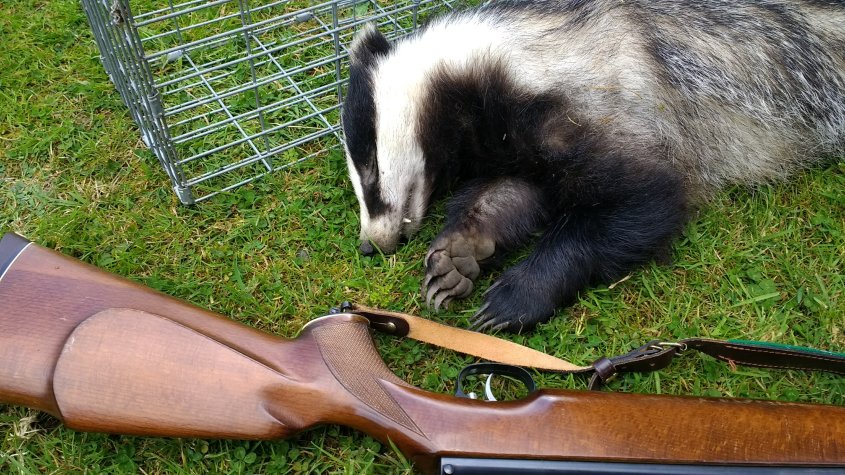
Trapped in a cage and shot at close range, the badger takes almost a minute to die. Covert footage published online by the Observer, the first to be shared publicly, shows the main method of dispatching Britain’s largest indigenous carnivore as part of a controversial cull now being expanded by the environment secretary, Michael Gove, which farmers insist is vital to curb the spread of TB in cattle.

Taken in Cumbria by the Hunt Investigation Team, it has been released by animal rights groups for maximum political effect ahead of the Conservative party conference, as Gove considers a key report on the government’s TB eradication strategy. Animal rights activists said the footage raised questions about how the cull works.
bad cull 1

“The brutal slaughter of tens of thousands of badgers in the biggest destruction of a protected species in living memory is a national disgrace,” said Dominic Dyer, CEO of the Badger Trust. “This war on wildlife has been carried out in secrecy by poorly paid contractors with no independent monitoring or concern for animal welfare or public safety. The film footage that has emerged from Cumbria is the first time we have seen evidence of cull contractors at work. It clearly shows a badger taking over 50 seconds to die after being shot in a cage, and contractors removing it from the site without bagging and sealing the carcass in line with government TB biosecurity guidelines.”


Sign up to the Green Light email to get the planet’s most important stories

Read more

The trust estimates that the government may have licensed the killing of more than 75,000 badgers by the end of the year, at a cost of tens of millions of pounds. It claims that once all the Whitehall administration, equipment, storage, training, monitoring, policing and legal costs are taken into account, the cost of cage trapping and shooting a badger is more than £1,000 per animal. In comparison, the cost of cage trapping, vaccinating and releasing a badger is less than £200 per animal, the trust says.

The Zoological Society of London has also come out against the cull. It says that while badgers can and do transmit TB to cattle, most herds acquire the disease from other cattle. It also argues that culling increases TB transmission within badger populations and spreads the disease to new areas, and backs the trust’s argument that badger vaccination is a much more promising tool for TB eradication.
bad cull 3

But the government claims reductions in new outbreaks of bovine TB have been recorded in Gloucestershire and Somerset following the completion of licensed four-year badger culls. It published data earlier this month – disputed by some animal rights groups – which it says shows that in the Gloucestershire cull area, TB incidence has fallen from 10.4% before culling started to 5.6% in year four of the cull, while in Somerset it has reduced from 24% to 12%.

A spokesman for the National Farmers’ Union said a cull was crucial: “More than 33,000 cattle were slaughtered last year in England because of this devastating disease and more than 3,800 farms that had previously been clear of the disease were affected by it. The NFU has always supported a comprehensive and proportionate eradication strategy, which balances disease-control measures with business sustainability.

“We must have every option available to us to tackle TB – including cattle testing, cattle movement restrictions, biosecurity advice, vaccination and control of the disease in wildlife.”

The government’s chief vet has said that taking action to prevent TB infection of cattle by badger populations is an essential part of the government’s 25-year strategy to eradicate the disease in England, and that badger control is currently the best option available. Of the 30,000-plus badgers killed to date, about 900 have been tested for TB and less than 15% have been found to have the disease.

Gove recently approved 11 new badger cull licences in England in 2018, bringing the total in operation to 32. A review of the government’s 25-year bovine TB strategy carried out by Sir Charles Godfray, a population biologist and fellow of the Royal Society, was delivered to Gove last week and will be published shortly.

A spokesman for the Hunt Investigation Team defended its decision to use covert video surveillance. “Our team have been active protecting badgers in multiple cull zones. In areas we could not actively defend, we placed hidden cameras in order to evidence malpractice and cruelty associated with the cull. Badgers are paying the price for a disease in cattle that is caused by human mismanagement.”


Badger Action Network logo

USA: Turtles Don’t Vote; But You Can -Help Them With Better Protection – In The November Elections.


USA-Flagge

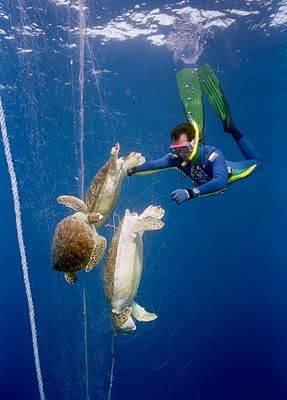
ocean11

This November’s elections will be some of the most consequential in decades. They are important. Are you registered to vote?

Visit our Endangered Species Voter Action Center and find out if you
are registered to vote!

Even if you think you are correctly registered to vote, please check.
If you have moved in the last year, you will likely need to register again.
Checking now will assure that you are not surprised when you go to the polls.

Checking your registration online at our Endangered Species Voter
Action Center is easy and only takes a minute.

Congress has a say in so many issues related to conservation and
wildlife. November is your chance to have a say in who is in Congress. Please visit our Endangered
Species Action Center and verify your registration today.

Thanks,

Cassie Burdyshaw, Advocacy & Policy Director
Turtle Island Restoration Network

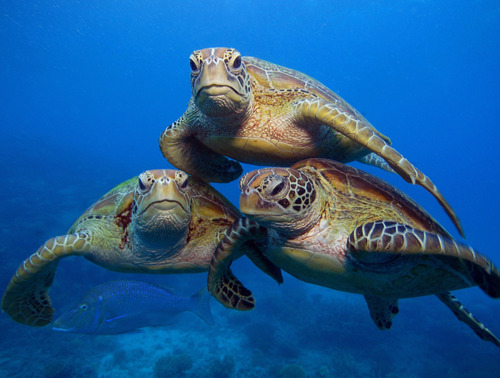
ocean1

turtle 2

Thank You – The Turtles.


USA: Brett Kavanaugh Has Ruled AGAINST Endangered Species 95% Of The Time. Chances Are He Will Not Stop.

USA-Flagge

Please note – this petition can only be signed by US citizens with a US Zip Code.


Brett Kavanaugh has spent his judicial career making endangered species conservation and environmental protection more difficult.

If confirmed by the Senate, there is every reason to conclude that he would continue on that destructive path during his lifetime appointment to the U.S. Supreme Court.

His judicial record is abysmal:

In his 12 years on the U.S. Court of Appeals for the D.C. Circuit, he has ruled against endangered species protections in 17 out of 18 cases before him. That is roughly 95 percent of the time.1

petition keyboard

Please add your name to join our friends at CREDO in telling the Senate to vote NO on Brett Kavanaugh’s confirmation to the Supreme Court.

*If you are in Maine, please call Senator Collins and ask her to vote NO: (202) 224-2523.

*If you are in Alaska, please call Senator Murkowski and ask her to vote NO: (202) 224-6665.

Thank you for your commitment to wildlife and wild places.

Sincerely,

Leda Huta
Executive Director
Endangered Species Coalition
Facebook | Twitter | Pinterest | Tumblr

PS. Links not working? Sign the petition at this URL: https://act.credoaction.com/sign/kavanaugh-environment_esc/

References:

1. Emily Gertz, “Brett Kavanaugh’s Record Sets A Dangerous Precedent On Endangered Species


WAV Comment – Maybe his children also say a prayer for all the endangered animals their father does not protect !

Warmer Waters In Atlantic Produce More Hyper Hurricanes. The Answer ? – Get Me Out of Paris !

storm usa sept

Warm Atlantic waters led to 2017’s hyper hurricane season, study says

Scientists say there could be eight major hurricanes in the Atlantic every year by the end of the century.

Warm waters in the Atlantic Ocean were a driving factor behind last year’s extraordinary hurricane season, scientists have said.

The study also predicts that the Atlantic could see more enormous and powerful hurricanes every year by the end of the century.

There were six major hurricanes in 2017, with winds of at least 111 mph (178 kph), that caused devastation to parts of the US as well as some Caribbean nations.

Historically, the Atlantic averaged only two major storms a year, but since 2000 it has been closer to three.

By the year 2100 there could be eight major hurricanes a year, according to the study – published in the journal Science.

“We will see more active hurricane seasons like 2017 in the future,” said lead author Hiro Murakami, a climate scientist at the National Oceanic and Atmospheric Administration (NOAA).

In 2018, there has only been one major Atlantic hurricane, Florence, which killed at least five people when it battered the southeastern coast of the US.

Storms require waters of at least 26C (79F) to form, and the researchers explained how warm water fuels hurricanes by allowing a storm to form quicker.

Dr Murakami found a combination of natural conditions and human-generated climate change were behind waters being warmed in one particular area, which became a nursery for storms.

The key area is “a large box from south of Florida and north of South America, stretching all the way east to Africa” which was on average 0.4% warmer during 2017.

The most powerful hurricanes often form in the waters off the coast of west Africa and grow more powerful as they move towards the Caribbean and the US.

Dr Murakami said that the Atlantic was projected to warm faster than other oceans due to climate change, and that was why storms there were going to become a bigger issue.

University of Miami hurricane researcher Brian McNoldy, who was not part of the study, agreed that the unusually warm water was to blame for last year’s powerful storms.

He was cautious about the role of climate change, although he did not dispute that human activity was causing global temperatures to rise.

“Hurricane seasons don’t just keep getting more active as the climate warms though. There is enormous variability,” he said.

https://news.sky.com/story/warm-atlantic-waters-led-to-2017s-hyper-hurricane-season-study-says-11510882


trump en4

Pollution threatens the future of killer whales (Orca). Will The Perfect Hunter Survive ?

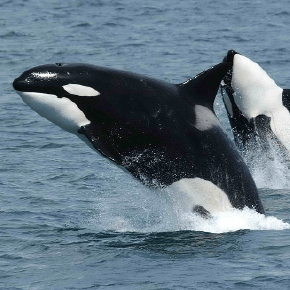
orcas fate


Pollution threatens the future of killer whales

By Jonathan Amos and Victoria Gill Science correspondents, BBC News

Killer whales are in deep trouble because of persistent chemical pollution in the environment, researchers say.

A new study suggests the long-term viability of more than half of the different orca groups around the globe is now in question.

Some populations, such as those around the UK, the Strait of Gibraltar, off Brazil, Japan and California, are almost certainly doomed.

The assessment is in Science magazine.

The issue is polychlorinated biphenyls, or PCBs.

These chemical compounds were once manufactured in vast quantities, and used in everything from plastics and paints to electrical equipment and sealants. But they are highly toxic and although banned decades ago have amassed in the environment, leaching into the ocean.

Killer whales, or orcas, are top predators so they absorb all the PCB pollution taken in by the different prey in their food chain – from fish, right up to seals and sharks.

The PCBs stunt the ovaries of female orcas, limiting their ability to produce calves. The chemicals also suppress the immune system.

What is the outlook for orcas?

The new study models the future of the killer whales’ reproductive success and survivability against the chemical challenge.

For those populations living in clean waters, it is positive. Orcas in places like the Antarctic and the Arctic should increase their numbers.

But for those living in the most polluted seas, the next 30-50 years will be grim.

The killer whales that live on the west coast of Scotland, for example, are now down to just eight individuals and they have not produced a calf in more than 20 years.

Paul Jepson, from the Zoological Society of London, says this group will “disappear in my lifetime”.

“Over 50% of the populations that we’ve got data for will actually collapse in our model,” he told the BBC’s Science In Action programme.

“PCBs are such highly toxic chemicals, and they persist in the environment. And it’s the killer whales that have by a long way the highest exposures now of any species on Earth; certainly any mammalian species.”

The curse of polychlorinated biphenyls, or PCBs

  • Polychlorinated biphenyls were manufactured from the 1920s
  • Banned in the US in 1979, the UK in 1981 and the rest of the EU
  • Europe produced some 300,000 tonnes from 1954 to 1984
  • The majority has yet to be destroyed or safely stored away
  • PCBs were popular in coolant fluids in electrical apparatus
  • They were used in building construction, especially in sealants
  • Also in cutting fluids for machining, and carbonless copy paper
  • Today, only North Korea still manufactures polychlorinated biphenyls

Why are the animals so exposed?

Everything in this story works against the killer whales.

Not only do they accumulate contaminants because of their position as top predators, but the toxic effects hit them where they are particularly vulnerable – in their ability to reproduce.

These are animals that take a long time to reach sexual maturity and even then have perhaps one calf every few years. This puts very precise pressure on a population.

In addition, PCBs are soluble in fat – and killer whales are extremely fat-rich animals. A mother’s milk will be loaded with PCBs which she will pass on to her offspring during lactation.
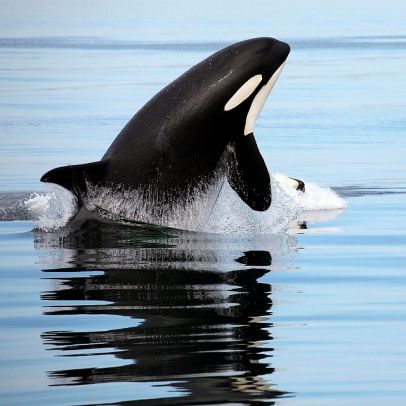
orca wild

How do we tackle the PCB legacy?

Most PCBs have yet to be destroyed or safely stored away.

Some countries have done better than others. In the US, where federal “superfunds” have been used to clean up the most heavily contaminated sites, PCB levels entering the ocean have come down.

But there needs to be much more urgency in places such as Europe.

“Improper disposal of PCB-containing equipment in landfills may lead to leakage and leaching of PCBs into nearby streams, river, estuaries, and ocean,” said lead author on the new report, Jean-Pierre Desforges from Aarhus University, Denmark.

“We know that PCBs were used in paints and sealants in old buildings and for outer coating on ships, so if contaminated building materials are improperly disposed of they could also reach the environment, and demolition of buildings may cause PCBs to enter the air.”

Can we help the orcas themselves?

There is very little that can be done to recover the PCBs once they have reached the ocean. And the robustness of the chemicals means they will hang around in the environment for a very long time.

But there are parallel problems we could conceivably fix, said co-author Ailsa Hall from the Sea Mammal Research Unit at St Andrews University, UK.

“We should recognise that this is just one of many stresses on the animals,” she told BBC News.

“There are things such as noise, changes in habitat, changes in the availability of prey – that we do have influence over. And if we do something about these factors, maybe we can reduce the overall burden of stress, and perhaps then our predictions won’t be so dire.”

Paul Jepson added: “I don’t think there’ll ever be another PCB story.

“I think the chemical industries have learnt the lesson – we know that being fat-soluble is a big risk factor, because that allows things to bioaccumulate.

“So, nowadays, no chemical with those properties would be allowed. But PCBs are so difficult to get rid of that we’ll be dealing with the legacy for a long time.”

 watch the video

https://www.bbc.co.uk/news/science-environment-45652149


PCBs: ‘The killer whale catastrophe’

Killer whales are in deep trouble because of persistent chemical pollution in the environment, researchers say. A new study suggests the long-term viability of more than half of the different orca groups around the globe is now in question. Paul Jepson, from the Zoological Society of London, spoke in depth about the problem to Roland Pease on the BBC’s Science In Action programme.

https://www.bbc.co.uk/news/av/science-environment-45678207/pcbs-the-killer-whale-catastrophe


USA: Breaking – Yellowstone Grizzly Bears Have Protection Restored – Trophy Hunts In Wyoming and Idaho Now Crushed. Great News.

USA

CBD Logo

https://www.biologicaldiversity.org/ 

Hi Mark,

I’m thrilled to deliver this news: Just minutes ago a federal judge ruled in our favor to restore protection to Yellowstone grizzly bears.

That means that the trophy hunts planned for Wyoming and Idaho, set to begin this fall, cannot move ahead.

It’s a massive win for wildlife, and I’m so proud that the Center — and you — helped make it happen. Thank you for supporting this incredible fight.

There’s been so much at stake in this campaign. Wyoming and Idaho wanted to let more than 20 Yellowstone grizzlies be gunned down by trophy hunters if they left the protective confines of the national park. More than half of them could’ve been female bears.

But the future of Yellowstone grizzlies was also hanging in the balance. The Trump administration removed Endangered Species Act protection from these bears in the summer of 2017. We knew it was premature and that the bears have yet to fully recover. So we sued — and we’re glad the judge saw it that way too.

This fight likely isn’t over. We fully expect the Trump administration to appeal this decision, and we’ll be ready. This is exactly why we set up the Predator Defense Fund, and we’re grateful for every ounce of support we get.

I hope you’ll join us in celebrating this victory today. We’ll rest easier knowing Yellowstone’s bears won’t be gunned down anytime soon.

But I hope you’ll also stay with us for the long haul. These are difficult, time-consuming battles that we have to win. We know the enemies of bears and other wildlife won’t slow down. And neither will we.

Thanks again for your continued support.

For the bears,

Kierán Suckling
Executive Director
Center for Biological Diversity

P.S. The best way to help us fight for bears and other wildlife is to become a sustaining member.

you did it 1


England: Police Now Threaten Animal Saviours With Flying Drones To Monitor Their Legal Activities.


England

 badgers north west hunt sabs


bad cull 1

Police consider drones to monitor badger cull protesters

Devon and Cornwall police warn activists as cull zone is massively expanded

Police have warned badger cull protesters that they may use drones to try to keep order in the far south-west of England following heightened tensions between activists and officers.

In an email to protesters seen by the Guardian, a Devon and Cornwall officer said the force would consider using drones “where intelligence dictates”.

The force said it was considering drones because of a spike in crimes in some areas within cull zones but protesters insisted the move would not stop them from trying to prevent badgers being killed.

bad cull 2

The cull in England has been hugely expanded into 10 new areas, with up to 42,000 animals now due to be shot in an attempt to curb tuberculosis in cattle, up from 32,500 last year.

Badger Action Network logo

The cull zones now cover vast swathes of many counties, including 68% of Devon and 54% of Cornwall.

The increase is adding to pressure on police forces in these areas. In the email to the protester, the officer wrote: “I have been asked to let you know – and that you forward as you believe necessary – that a decision has been made that where intelligence dictates police will consider the deployment of drones.”

USA: United Becomes the Latest US Airline to Ban Plastic Straws.

USA

United Becomes the Latest US Airline to Ban Plastic Straws

Starting in November, passengers on each of United’s 4,600 daily flights will be using bamboo stirrers — not plastic ones.

United Airlines’ plan to ditch wasteful plastic straws follows American Airlines and Alaska Airlines, who each made similar moves earlier this year.

In 2015, it was reported that 8 million tons of plastic is dumped into oceans each year. The same report suggested that number would increase by a factor of ten in the next decade without significant change. This plastic is literally killing turtles, fish, and birds.

United’s move adds to the growing list of companies, cities, and states that are taking on the scourge of single-use plastics. Bamboo and wood disposable utensils have far  less environmental impact than plastic versions. Environmental activists have been calling attention to this issue for years, but only recently has the movement against a throwaway culture really taken hold.

United Airlines’ shift to bamboo stirrers is a step in the right direction, but there is still room for much improvement. It is essential that activists and concerned citizens do not rest on their laurels, and continue to fight for a society that eschews the convenience of disposable one-time use products and plastic wrapped foods and instead choose healthier, more environmentally friendly options.

Victory! Japan’s Proposal to Bring Back Commercial Whaling REJECTED.

Japan


Victory! Japan’s Proposal to Bring Back Commercial Whaling REJECTED

Posted by Carly Day | September 16, 2018

The International Whaling Commission (IWC) has rejected a proposal from several countries — led by Japan — calling for the ban on commercial whale hunting to be lifted.

The pro-whaling nations argue that the ban — which has been in place since 1986 — doesn’t take into consideration the species of whales that have healthy populations and complain that the IWC is too focused on conservation. Their proposal, entitled “The Way Forward,” suggested creating a “sustainable whaling” program.

Fortunately, the motion was denied by a vote of 41 to 27. Iceland and Norway were two of the countries who voted in favor — not surprisingly, as they are the only countries that continue to hunt whales commercially in objection to the moratorium — but the vote was also supported by Cambodia, Kenya, Cambodia, Morocco, and several other nations.

“This decision sends a clear message to governments around the world that the exploitation of animals will no longer be tolerated, and animals must be protected at the highest level,” said Kate Nustedt, global director of wildlife at World Animal Protection. “All eyes are now on Japan to respect this decision. Neither commercial nor scientific whaling have any place in the 21st century, and we urge all governments to increase pressure on Japan to end its whaling once and for all.”

Japan’s proposal to the IWC included a request for permission to hunt minke whales — one of the few species of whales not currently in danger of extinction. The nation claims that minke whaling is part of their economy and history. Although Japan technically — and reluctantly — adheres to the moratorium on commercial whaling of minke, they do still catch and kill hundreds of these whales every year, claiming that the whales are killed for research purposes. Japan’s quota of minke is 333 per year, while Iceland and Norway are estimated to slaughter around 600 each year.

However, the IWC has now agreed to stop supporting Japan’s excuse of hunting whales for “scientific research,” putting the pro-whaling nation further at odds with the commission.

Following the rejection of the proposal, Japan has hinted that it may withdraw from the IWC.

“If scientific evidence and diversity is not respected, if commercial whaling is completely denied … Japan will be pressed to undertake a fundamental reassessment of its position as a member of the IWC,” said Japan’s vice-minister for fisheries, Masaaki Taniai.

But for now, animal activists are breathing sighs of relief after the IWC decision to maintain the whaling ban.

“Japan’s proposal to resume commercial whaling would be like jumping from a plane without a parachute,” said Claire Bass, director of Humane Society International. “Whales face so many threats in our increasingly degraded oceans; it’s critical that the IWC focuses its time and resources on tackling the many problems that we create for whales, such as entanglements in fishing gear and pollution.”

USA: Good News – Wildlife (Road) Crossings Are Helping To Save Wildlife Lives.

USA

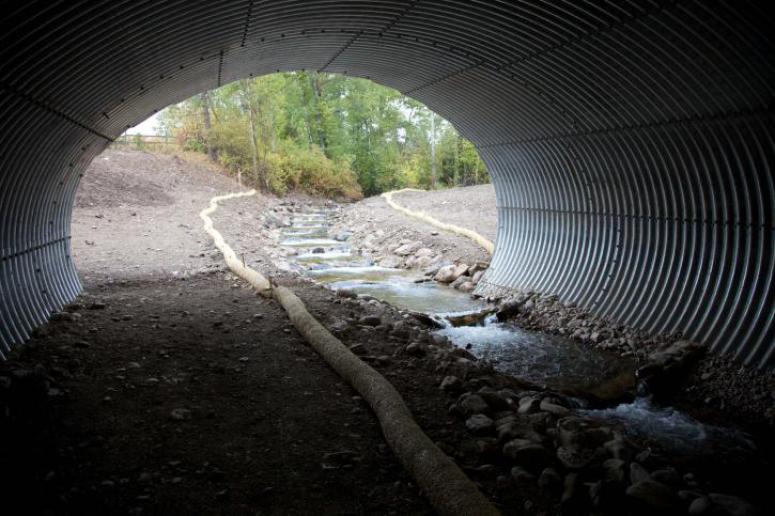
We’ve all experienced the sickening sight of a dead animal on the side of the road. Deer, opossums, raccoons, and even bears are just not evolved to avoid vehicles. Our human need for speed causes countless deaths. But there are some major efforts out there to cut back on these tragic occurrences. Overpasses and underpasses are being built on highways across the U.S. to give safe passage to animals.

Interstate 90 in Washington State passes through the Cascade Mountains, some of the wildest places in the country. Elk, deer, moose, wolves, and grizzly reside in the area and too many come into contact with the interstate and cars that speed by at 70 miles per hour. The four lanes don’t just endanger animals that happen to be in the area; they also cut through major north-south migration routes.

But thanks to a collaboration of conservationists, government, and citizens, the I-90 Snoqualmie Pass East Project has become the biggest wildlife crossing project in North America and a model for other animal crossing projects.

wildlife tunnel

Watch the documentary Cascade Crossroads here!

After a number of bridges and tunnels were built across U.S. Hwy 93 in Arizona, incidents of vehicles hitting bighorn sheep went down to almost zero. Fences along the highway funnel the animals towards the bridges and allow them to safely roam a larger territory. In addressing the issue for sheep, other animals benefited like coyotes, tortoises, foxes, and most likely others that leave no trace of their passing.

https://ladyfreethinker.org/wildlife-bridges-tunnels-saving-animals-lives/