One comment – well said: Human beings are the worst!!!! These beautiful beings are super intelligent, sentient, friendly and must be respected. You do not “FARM” sentient beings. You farm tomatoes!!!!!!!
18 July 2024
Currently, all octopus products available on the market are wild-caught, as octopuses have never been commercially farmed at scale. This is not due to a lack of trying.
In Europe, particularly in Spain, octopus farming has so far been confined to fattening young wild-caught octopuses in ocean cages, in order for them to reach market weight. These cages were typically anchored to the sea floor, or simply suspended from rafts being used to farm mussels. In an attempt to prevent aggression and cannibalism, ocean cages included individual, compartmentalised octopus shelters made of pvc pipes or other plastic cylinders.
After having some success in the early 2000s, most octopus fattening systems have since shut down due to stricter fisheries regulations, unstable yearly catches, variations in octopus mortality rates, and expensive feed requirements. Raising wild-caught octopuses in on-land aquaculture tanks has also been attempted in Mediterranean countries as well as Australia and Latin America. However, efforts have not progressed past the experimental level as there are limited options for scalability.
Research and investments have more heavily focused on breeding octopuses in captivity. These efforts have been ongoing since the 1970s with major hurdles linked to cannibalism, containment issues, inadequate feed options and low survival rates among pregnant and young octopuses.
A new milestone was reached in 2019 when Spanish multinational seafood company Nueva Pescanova announced that they had successfully closed “the octopus reproduction cycle in aquaculture”, meaning they had bred and raised octopuses through every stage of their life cycle in an artificial environment. The company is now applying for permits to open the world’s first industrial octopus farm, aiming to farm and slaughter one million octopuses annually for introduction to the market by 2027.
Although the first, Spain is not the only country interested in the prospect of this new industry. Similar plans to factory farm octopuses are unfolding across the globe, including in Portugal, Greece, Mexico, Chile, Australia, China and Japan.
Octopuses have a complex life cycle and are particularly ill-suited to farming conditions, making it challenging to raise them in captivity. Here are some significant issues associated with octopus farming:
1. Dietary needs
Octopuses are carnivorous animals and require live food during the early stages of development. Providing a natural diet in a farming environment can be resource-intensive, unsanitary and costly. Feeding octopuses at the industrial scale is also environmentally unsustainable due to its reliance on wild-caught fish ingredients.
2. Solitary nature
Naturally solitary, octopuses may become overly stressed and resort to aggression and cannibalism in crowded farming conditions. Their need for space and isolation makes intensive farming impractical and inhumane.
3. Physical vulnerability
Without an internal or external skeleton, octopuses have fragile skin that can easily be damaged in farm tanks. This issue is exacerbated with their tendency to use jet propulsion to move quickly about their environments.
4. Unsuitable slaughter method
No humane slaughter method exists to kill octopuses for human consumption. Nueva Pescanova’s plans propose using ice slurry, which involves plunging the octopuses into freezing water. This method is known to cause a painful, stressful and slow death.
A study by the London School of Economics found that octopuses feel pain and pleasure, leading to their recognition as sentient beings in the UK’s Animal Welfare (Sentience) Act 2022. Professor Jonathan Birch and his co-authors argue that high-welfare octopus farming is impossible and that killing via ice slurry “would not be an acceptable method of killing in a lab“. They also recommended the UK government consider a pre-emptive ban on farmed octopus production and imports.
“Large numbers of octopuses should never be kept together in close proximity. Doing this leads to stress, conflict and high mortality. A figure of 10-15% mortality should not be acceptable for any kind of farming.” – Professor Jonathan Birch, London School of Economics.
Globally, there are also mounting concerns around octopus farming. The world’s first legislative ban on octopus farming was signed into law in Washington state in March 2024. Several other US states are introducing similar legislative proposals, with some such as California extending to ban imports of farmed octopus.
While it may be possible to farm octopuses, Eurogroup for Animals remains steadfast in its conviction that octopuses are unsuited to farming conditions and should not be farmed.
Uncovering the horrific reality of octopus farming
The European Food Safety Authority (EFSA) has released a scientific opinion addressing the use of high expansion foam for the stunning and killing of pigs and poultry in situations other than slaughter, such as emergency depopulation purposes. We call on the European Commission to take this latest opinion into account, and also advocate for the continuous improvement and adoption of the most humane methods available in this sector.
The scientific community recognises that farm animals are still stunned and slaughtered with methods capable of negatively impacting their welfare. This new opinion highlights that high expansion foam is an alternative to existing methods for the stunning and killing of pigs and poultry in situations other than slaughter, but also stresses some important animal welfare hazards along with potential mitigation strategies.
Eurogroup for Animals commends EFSA for this important assessment, which evaluates the welfare implications of using high expansion foam filled with nitrogen to induce anoxia, leading to unconsciousness and death in pigs and poultry. This method involves displacing air in a container with foam and using a nitrogen jet to burst the bubbles, thereby creating an oxygen-deprived environment.
The European Food Safety Authority (EFSA) has released a scientific opinion addressing the use of high expansion foam for the stunning and killing of pigs and poultry in situations other than slaughter, such as emergency depopulation purposes. We call on the European Commission to take this latest opinion into account, and also advocate for the continuous improvement and adoption of the most humane methods available in this sector.
The scientific community recognises that farm animals are still stunned and slaughtered with methods capable of negatively impacting their welfare. This new opinion highlights that high expansion foam is an alternative to existing methods for the stunning and killing of pigs and poultry in situations other than slaughter, but also stresses some important animal welfare hazards along with potential mitigation strategies.
Eurogroup for Animals commends EFSA for this important assessment, which evaluates the welfare implications of using high expansion foam filled with nitrogen to induce anoxia, leading to unconsciousness and death in pigs and poultry. This method involves displacing air in a container with foam and using a nitrogen jet to burst the bubbles, thereby creating an oxygen-deprived environment.
Key findings of the EFSA opinion include:
· Animal welfare equivalence: The EFSA Panel on Animal Health and Welfare (AHAW) concluded that the use of high expansion foam ensures a level of animal welfare at least equivalent to existing methods, such as exposure to high concentrations of carbon dioxide or electrocution via water baths, especially in whole-house gassing scenarios;
· Welfare hazards and mitigation: The opinion identifies potential haza
Key findings of the EFSA opinion include:
· Animal welfare equivalence: The EFSA Panel on Animal Health and Welfare (AHAW) concluded that the use of high expansion foam ensures a level of animal welfare at least equivalent to existing methods, such as exposure to high concentrations of carbon dioxide or electrocution via water baths, especially in whole-house gassing scenarios;
· Welfare hazards and mitigation: The opinion identifies potential hazards associated with the foam, including the need for proper training and certification of handlers, strict adherence to key parameters, and having backup methods ready to prevent animals from regaining consciousness;
· Recommendations for best practices: EFSA recommends that procedures should only commence when all critical parameters are met. Animals should be handled calmly to avoid stress, and a reliable monitoring system should confirm death before carcass disposal. Additionally, further research is necessary to validate results and improve monitoring techniques;
· Extent of application: The current assessment is limited to laying hens, broiler chickens of all ages, and pigs weighing between 15 and 41 kg.
These findings are of particular importance considering that large-scale depopulation operations are increasing in the EU due to constant outbreaks of highly pathogenic avian influenza (HPAI) and African swine fever (ASF). We hope that, in light of the new EFSA study and the recurrent problems encountered by Member States in killing large numbers of animals due to disease outbreaks, ensuring humane depopulation methods will become a priority for the European Commission.
While EFSA’s opinion supports the equivalence of high expansion foam with current methods, Eurogroup for Animals emphasises that ‘tolerable’ methods are not sufficient.
We advocate for the continuous improvement and adoption of the most humane methods available.
In the meantime, updating the applicable regulations to reflect the latest knowledge on animal welfare during slaughter – including this latest opinion by EFSA – will help minimise suffering across this sector. We believe that a comprehensive approach is needed to ensure that the equipment used and procedures followed in slaughterhouses do not cause unnecessary fear, pain and distress to farm animals, and call on the European Commission to take the following actions:
· Replace outdated and less effective stunning methods with more humane alternatives;
· Ensure all animals are adequately stunned before slaughter;
· Ban the use of electric prods and high-concentration CO2 stunning for pigs;
· Ban the use of water bath stunning for chickens.
On June 24 the Danish government, along with several organisations, created an “Agreement on a Green Denmark”: a plan to make the farming sector more climate- and environmentally-friendly. However, several NGOs, including our members Animal Protection Denmark and World Animal Protection Denmark, have pointed out this agreement falls far short in achieving a more sustainable food and farming system, and have signed an open letter calling on the government to rethink its plans.
To make our food and farming systems fit for the future, it’s critical there is a higher uptake in plant-based diets and that less animals are farmed, while only in high welfare conditions. As evidence has repeatedly shown, the issues of animal welfare and sustainability go hand in hand, as poor animal husbandry can lead to the spread of zoonoses, animals being farmed in huge numbers, and more.
Unfortunately, while it does have some ambition, Denmark’s new agreement does not come close to improving the problems of large scale industrial animal production.
Instead of reducing the size of the livestock sector, the agreement wants to “optimise” how animals are farmed
Denmark produces about 200 million farm animals per year – in a country of only five million people.
Rather than reducing the number of animals being farmed, however, the agreement suggests the way they are farmed should be revised, and offers funding to explore such “innovations”: for instance, by offering a 60% base deduction and several subsidies for technologies that can reduce emissions from livestock production.
Not only could this incentive enable farmers to continue farming animals in the same numbers – doing nothing to address the low welfare and unsustainable factory farming model in which billions of sentient beings suffer each year – but it could mean animals suffer even more in these systems:
Animals will be put under even more pressure due to climate technologies and demands for higher productivity. The idea is to make each animal deliver as much as possible, e.g. even more piglets from sows, and even higher milk yields from cows, as is considered good for the climate, and to address specific issues such as methane from cow digestion with feed additives.
Britta Riis – Director, Animal Protection Denmark
Plant-based solutions are being neglected
What is more, an unequal level of support is being offered to farm animal producers in the agreement, while plant producers and innovators are being overlooked.
Whether intended or not, this disparity in incentives sends a clear message: that the animal agriculture sector has a strong role to play in the future of farming, while plant-based products are less important. Really, the opposite is true.
Open letter calls for the agreement to be revised urgently
Several NGOs, including our members Animal Protection Denmark and World Animal Protection, alongside organisations like Greenpeace and the Danish Vegetarian Association, have signed an open letter to the Danish government, arguing that the current agreement does not provide a reliable way forward for a greener farming model.
The letter states that wanting to optimise animal production is like wanting to optimise the use of oil, coal, and gas – it’s not possible. Such incentives will only draw focus further away from the solutions that will have real impact – chief among them, a big reduction in the number of animals being farmed.
The urgent climate crisis calls for an ambitious approach to our food and farming systems, with real structural changes required in the sector. Stay posted for updates.
Hi folks; sorry but there has been a total shutdown of everything for a few days. An attack by Chinese cat abusers was one consideration; maybe they finally got us type thing ! – but today after playing around with things last night, all appears well again this morning. If things go down again soon then you know that at least we are having big problems. Regards Mark
Animal Rebellion: Hundreds of animal rights protesters linked to Extinction Rebellion stop traffic in London
Animal Rebellion has held a march for animal rights which began at Smithfield Market and made its way to the offices of Unilever, Cargill and the Marine Stewardship Council.
Every 6 months a different nation takes on the Presidency of the EU. This is a rotational thing, ensuring each member state plays its part. Now Hungary – Hence:
10 July 2024
As Hungary presides over the council for the next six months, Eurogroup for Animals urges the presidency to prioritise the critical needs in animal welfare.
The Belgian presidency significantly advanced on the proposal for the welfare and traceability of cats and dogs, which was approved by Member States in the council. While this achievement is welcome, the Hungarian presidency must now address the remaining urgent issues.
Read our full memorandum to the Hungarian Presidency here.
Animal welfare legislation must be published
Foremost, the presidency must urge the Commission to publish the remaining animal welfare proposals early in the next political term, to address the severely outdated legislation that does not adequately protect animals throughout their lifetime, from farm to slaughter. In particular, the legislation should have a plan of action to transition to cage-free systems, as per the commitment to the End the Cage Age ECI.
Better protection of animals during transport
Eurogroup for Animals urges the Hungarian presidency to further the work on the revision of the Transport Regulationto support a ban on the transport of live animals outside EU borders, in parallel with a transition towards a trade in meat and carcasses, and stricter requirements to protect animals during intra-EU transport, particularly vulnerable animals.
The impact of EU legislation to protect animals used for scientific purposes has so far been limited. In 2020, over 7.9 million animals were used in research, testing, and education in the EU-27 and Norway, and a further 686,628 animals were used for creating and maintaining genetically altered lines. Eurogroup for Animals urges the Hungarian presidency to support efforts to advance negotiations on legislative initiatives to phase out the use of animals in science.
Read our full memorandum to the Hungarian Presidency here.
Like all politicians after your vote, they promise the world. Once elected, then we see the reality.
Labour’s animal-welfare and environmental policies may be better than the Tories’ – but they contain disappointing gaps, experts say.
** In a YouGov poll last year, a third of voters said animal welfare was one of their top three issues. **
So new environment secretary Steve Reed will come under pressure from lobby groups – and in some cases, from opposing countryside and farming factions.
The party’s manifesto promised to improve animal welfare, with bans on trail hunting and the import of hunting trophies, an end to puppy smuggling and farming, and to “work towards the phasing out of animal testing”.
It pledged a Labour government would “champion British farming whilst protecting the environment”.
Alongside environmental land-management schemes, the manifesto promised steps to eradicate bovine TB to end the “ineffective” badger cull. And there was a pledge to ban snares.
Mr Reed said Labour would introduce “the biggest boost in animal welfare in a generation”.
Many of the policies have been broadly welcomed by commentators – but already others are facing controversy, including:
Badger cull
Before the election, Labour damned the badger cull as “ineffective”, holding up the prospect of ending it.
But Mr Reed confirmed last week the government would allow existing cull licences to continue until 2026, saying an immediate end to the cull would send “sudden shocks into the system”.
Meanwhile, the Badger Trust and Wild Justice, a campaign group jointly run by Chris Packham, have sent a legal warning letter over Natural England’s decision before the election to grant nine new supplementary cull licences and to authorise 17 existing licences – contrary to the advice of Natural England’s own head of science.
Wild Justice said if the response was unsatisfactory it may seek a judicial review.
Dominic Dyer, ex-head of the Badger Trust and a defeated Lib Dem election candidate, said: “Never in the history of wildlife protection has there been such a betrayal of trust. After 13 years of waiting for a Labour government to stop this cruel madness, they are now planning to kill at least 30,000 more badgers.”
Industrial farming
Labour’s manifesto has been criticised for not mentioning factory farm animal welfare.
Alick Simmons, a former government deputy chief vet, writing for Wild Justice, said: “A pledge to address puppy farming while ignoring industrial pig and poultry farming does not strike me as a balanced manifesto.”
Compassion in World Farming (CiWF) has lobbied all parties for a ban on cages, saying around 8 million farmed animals are kept in them each year in the UK. “The previous government said they’d prepared consultations on this issue, and we want to see them published,” it said.
The Liberal Democrats had pledged to ban cages for hens, while Labour did not.
The Lib Dems were praised for a promise to crack down on antibiotic misuse for farm animals, and the new government will face calls to do so.
Wildlife and nature recovery
Green Party former co-leader Caroline Lucas said she was shocked by the lack of manifesto detail on restoring the natural world.
“As the bare minimum, where’s the increased budget for arms-length bodies like Natural England and the Environment Agency?” she asked. “Or the funding to enable landowners to return land to nature? Or the pay rise to help farmers shift to nature-friendly farming and tackle our broken agriculture system which is driving biodiversity loss?”
But environmental campaigners welcomed a pledge in the party’s pre-manifesto nature policies stating: “We will help coordinate nature’s recovery with bodies responsible for public land and major landowners.”
Guy Shrubsole said in a blog: “This may sound anodyne, but in fact could be one of the most significant policies – the first inklings of a Public Nature Estate: an idea that Wildlife and Countryside Link [a coalition of 82 organisations] have been calling for.”
Forest ranger Samuel Lindsay added: “Although the talk of habitat expansion is positive, this is a very vague statement. There are no clear targets or areas identified for this to be carried out.”
The manifesto promised to plant millions of trees, create new woodlands and expand wetlands, peat bogs and forests.
Mr Simmons said: “Sure, let’s get rid of snares but what about the numerous unaccountable and untested methods of killing wildlife such as Larsen traps, mole traps, Fenn traps and poisons that are on free sale for use by anyone?”
Trail hunting
Opponents and monitors say hunts break the law by fox hunting while claiming to be trail hunting – that is, following a scent without chasing wild animals.
The claims were lent weight by a hunt chief advising others to create a “smokescreen” by laying several trails. His words, during a leaked private Zoom meeting, were interpreted as an admission that foxhunting took place.
Mr Reed said in February that a Labour government would ban trail hunting in its first term, and the manifesto included a promise to ban trail hunting – but it did not promise to close loopholes in the Hunting Act 2004, which bans hunting wild animals with dogs.
A former head of the League Against Cruel Sports, Andy Knott, has cast doubt on achieving a ban through the Hunting Act.
“People have seen the images of packs of hounds getting into private back gardens, killing cats, ripping flocks apart. There’s not a majority in any part of the country that wants to see that continue,” Mr Reed told The Times before the election.
But Oliver Hughes, of governing body the British Hound Sports Association, told Horse & Hound that about 12,000 days of trail hunting took place in England and Wales each year, “with the vast majority taking place without any problems”.
Sewage scandal
Ms Lucas said: “Although Labour’s manifesto commits to tackling the sewage scandal, it fails to get to the heart of the matter – the unmitigated disaster that is our privatised water system. Water is a public good, so the Green Party would bring it back into public ownership.”
“Farming’s significant contribution to the state of our rivers seems to be a taboo subject for nearly all parties competing in this election – with the notable exception of the Green Party,” he said.
British farmers complained that deals for cheap food imports under the Conservatives undermined their standards.
A spokesperson for the Department for Environment, Food and Rural Affairs said: “The government set out its plans in the manifesto to introduce the most ambitious boost in animal-welfare rights in a generation.
“This includes banning trail hunting and the importing of hunting trophies, while also ending the badger cull, puppy smuggling and farming, and the use of snare traps.”
WordPress now appears to be stopping us putting the latest post to the top of the site; and it seems that what you now see on the screen is NOT the latest we have published – there are newer posts. But to see then you have to now use the ‘Archive’ on the left and select the current month – ie. Currently July 20204.
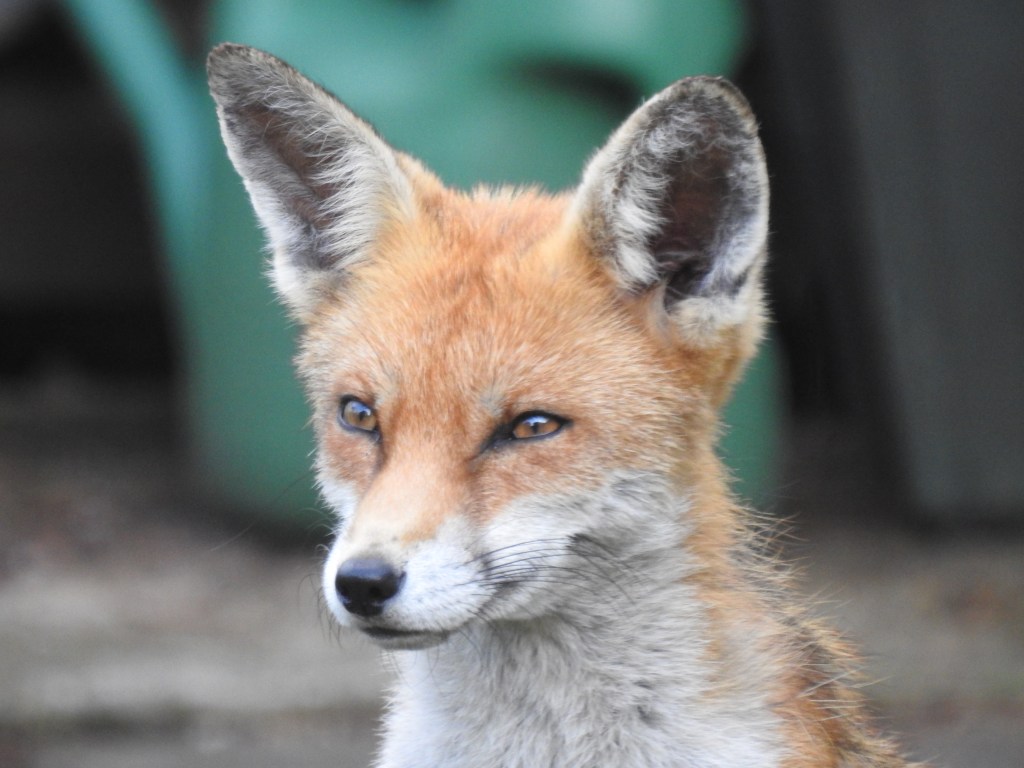
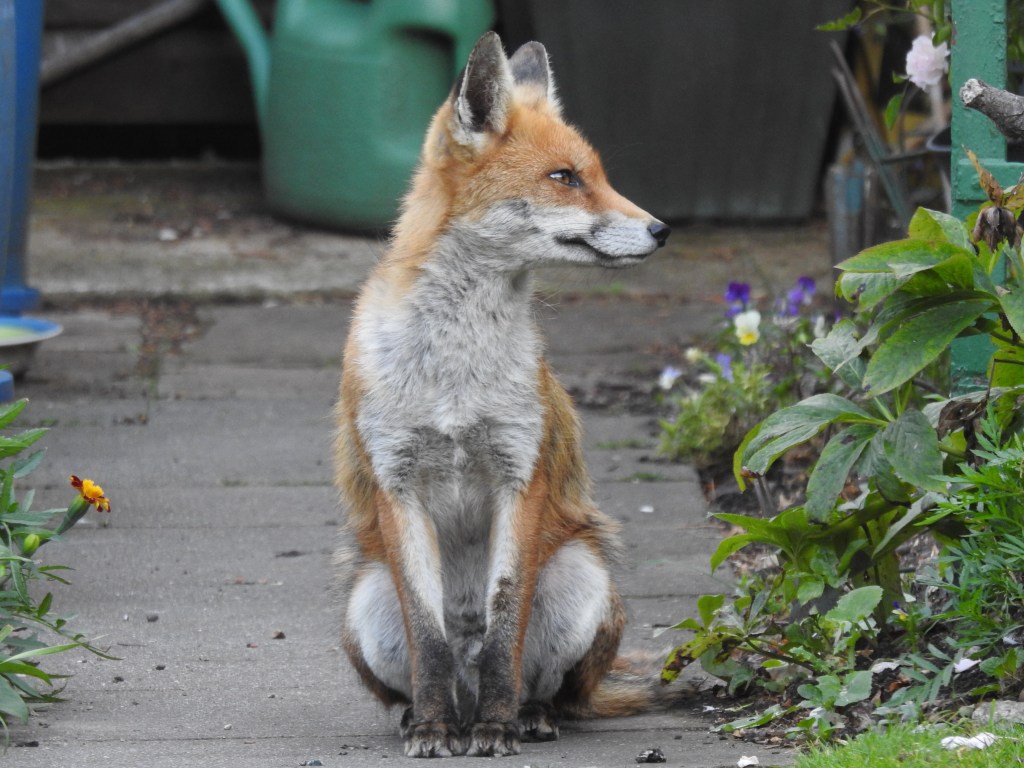
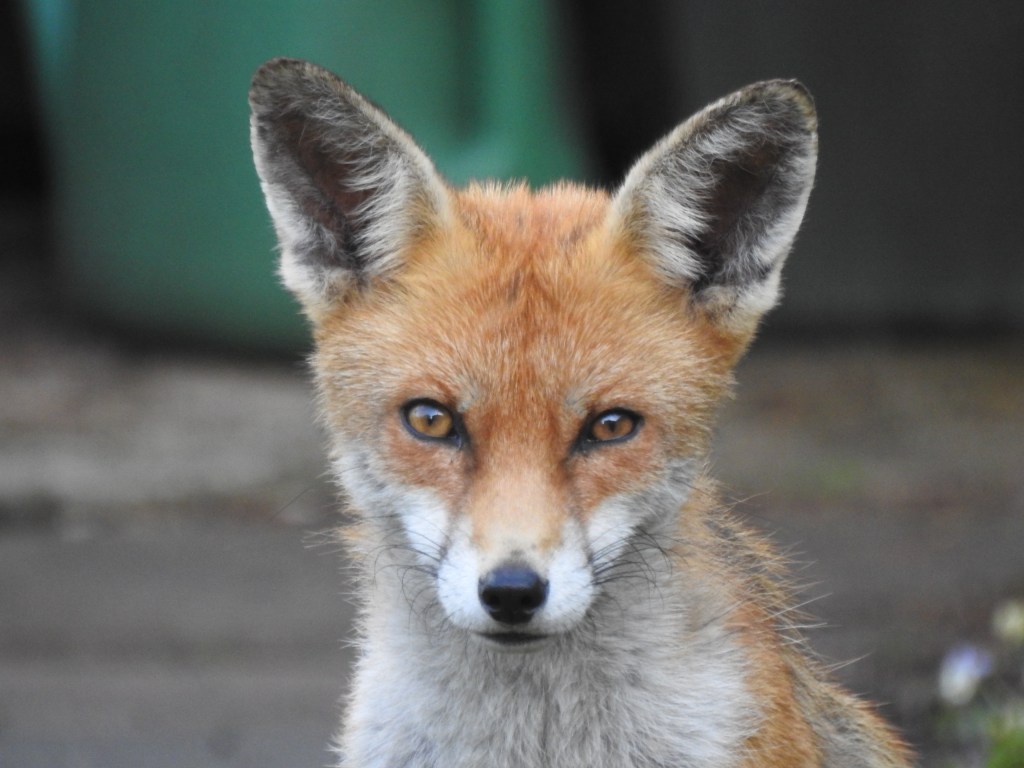
As I write this the latest post is photos of a fox living in London.
So remember now; all the latest to be found under the relevant month in ‘Archive’.
Sorry, but beyond our control !
Images sent to me tonight by Pauline – London fox, or ‘vulpine’.
No mange; for a wild London streetwise, it looks in very good condition; love the ears !
Eurogroup for Animals, alongside other major EU NGOs, is asking the European Court of Justice to join the court case holding the European Commission (EC) to account for failing to deliver on its promise to end cage farming in Europe, as millions of animals continue to spend their lives confined in cages.
The court case, brought forward by the Citizens Committee of the End the Cage Age ECI, spearheaded by Compassion in World Farming, is holding the EC accountable for failing to bring forward the legislative proposals it promised in response to the ECI, in which 1.4 million EU citizens demanded an end to cage farming.
The EC had pledged to present proposals by the end of 2023, but it backtracked on its commitment, disregarding the comprehensive reports, consultations, and preparations that had been completed. This betrayal of trust undermines the legitimate expectations of citizens who demanded better protection of farm animals.
For the past years, Eurogroup for Animals has continuously supported the End the Cage ECI, and if accepted by the Court, it will have the opportunity to present its arguments, alongside the ECI Campaign and Animal Equality Italy, as an official intervener.
Across the EU, around 300 million pigs, hens, rabbits, ducks, quail and geesespend most of their lives in cages every year. Laying hens and rabbits are confined to barren cages about the size of an A4 sheet of paper. Sows are forced to nurse their piglets in crates so small they can’t even turn around. Ducks and geese are caged for force feeding to produce foie gras.
While the court case might take up to 18 months to complete, animal protection and democracy NGOs encourage the EC to quickly come forward with a proposed timeline, and to make the file a priority in the next legislature. This will allow concerned stakeholders to start to invest in future-proof solutions.
EU citizens have made use of the democratic tool at their disposal – they want these millions of animals out of cages. There is no argument against ending animal suffering.
Yet with the Commission’s silence on the issue, we do question the very democratic purpose of the ECI, which was specifically introduced to allow EU citizens to shape EU decision making.
Reineke Hameleers, CEO, Eurogroup for Animals.
The European Commission must deliver on its legally binding commitment to ban caged animal farming. Its failure to do so not only impacts around 300 million farmed animals suffering every year in cages, it damages our environment and makes a mockery of the ECI as a democratic tool for EU citizens, especially for the 1.4 million who signed it. We will not rest until the Commission delivers on its promise and every cage is an empty cage.
Annamaria Pisapia, Head of Compassion in World Farming Italy and spokesperson for the Citizens’ Committee of the EtCA ECI.
Pigeons are unable to remove threads or human hairs from their own feet, and tangles can easily escalate to deadly or debilitating proportions (Credit: Paul Themis)
Paul Themis also rescued an albino crow, Albi, who was being bullied – by other crows (Credit: Paul Themis)
An ongoing fight between residents and animal rights activists over whether to cull pigeons in a small German town has led to an uproar — even though a majority of the residents voted in favor of culling the birds in a referendum earlier this month.
On Thursday, officials in the central German town of Limburg were still considering whether to proceed with the referendum results.
Click on Link above for full story
—————————
Meanwhile; in London;
Shit hot London firefighters rescue pigeon in distress.
There are some brilliant animal people in London.
Firefighters rescue tangled-up pigeon
Why you may have seen crews and a big ladder on the Holly Lodge Estate this week
A CROWD gathered as firefighters climbed an aerial ladder to save a pigeon tangled-up at the top of a tall tree.
There was a round of applause as teams from Kentish Town and Soho freed the squawking bird that had become snared to a branch by string wrapped around a foot.
It had been spotted “dangling and almost lifeless” in the Holly Lodge estate, Highgate, by Sabrina Bordin of the London Pigeon String Foot and Rescue group.
The group’s co-founder Karen Heath praised the “absolutely amazing” firefighters, adding that the pigeon had been named Aerial after the ladder used to rescue it. It is being nursed back to health in a member’s home before being released close to the spot it was found in the hope it can be reunited with its one true love.
The bird has been named ‘Arial’ after the ladder used to rescue it.
Feral pigeons were made by humans.
Now we detest them. How did things go so wrong?
*This article contains details and images that some readers may find distressing.
I’m perched on the edge of a paving slab, watching as Lisa Davies produces a baby-pink manicure set from her rucksack, and opens it up on her lap. Inside is an assortment of tweezers and nail files, as well as a mysterious spoon that I’ve since learned is an ear pick. Like a surgeon arranging her instruments before an operation, she runs her hands over them, and selects a pair of nail scissors.
It’s a hot, sticky Sunday afternoon at St Anne’s churchyard, in London’s Soho district. Groups of teenagers are lounging on the grass, while shirtless men play table tennis in the background. But further into the park, a less typical summer scene is unfolding. A group of volunteers is clustered around a flock of 50 pigeons, watching their feet intently. One is limping.
The young pigeon’s feet are swollen, bound up in a tangle of long, dark human hairs and cotton threads – the detritus of city life, picked up over many months of walking alongside pedestrians. This is a classic case of “string foot”, and without human help, it will gradually cut off the blood supply to her toes and feet, until they fall off altogether. But she is one of the lucky ones. With impressive confidence and precision, Davies – a part-time student studying conservation education at the University of Chester, who has been volunteering with pigeons for the last 18 months – thrusts her arms forward and gently plucks the bird from the crowd. She secures it under her t-shirt which, fittingly, features a pigeon print, and pulls out a dinosaur-like foot. It takes around half an hour of careful tugging and snipping before the hairs have been removed, and the bird can be released in a flurry of feathers.
Many volunteers carry their pigeon de-stringing tools with them at all times, in case they happen upon a pigeon that needs help (Credit: Zaria Gorvett)
Davies is part of the London Pigeon String Foot and Rescue group, an organisation that aims to help the city’s approximately three million feral pigeons. The volunteers meet up every Sunday, all year long, to tend to the mangled feet of pigeons across the city. As I ponder this noble sacrifice, I’m snapped out of my reverie by a commotion – on the street below, a man is chasing a pigeon “for a joke”, sending a tempest of panicked birds into the air.
City pigeons are among the most detested animals on the planet. After a series of misunderstandings going back decades, they’ve become widely regarded as dirty, disease-addled and akin to “flying rats”. Horrific injuries are often accepted as a consequence of their desperate, downtrodden existence, and their penchant for life alongside humans is sometimes resented as annoying or unhygienic. But it hasn’t always been this way. For millennia, pigeons were viewed with respect and even reverence. One Mughal emperor was such a big fan, he carted around 20,000 of the birds wherever he went, while the Victorian scientist Charles Darwin – who at one point had a flock of 90 – was reportedly obsessed with them. How did our relationship with these creatures go so wrong?
A parallel existence
Along the rocky coastline in the Outer Hebrides, perched on top of cliffs and abandoned buildings, are familiar faces: grey heads with large orange eyes, peeking down at passersby. They belong to rock doves, Columba livia. But though these birds look almost identical to the feral pigeons found in cities, they are not the same. This remote Scottish outpost has one of the wildest populations of rock doves on the planet – it’s one of the last places where they have clung onto a substantial proportion of their original, ancestral genetics.
Feral pigeons, on the other hand, are an entirely different case. They belong to the subspecies Columba livia domestica, and are almost exclusively descended from domesticated birds, which have provided a steady trickle of escapees to hang around human settlements over the last 4,000 years. There are subtle variations in the ancestry of populations from one region to another, depending on the specific breeds traditionally kept in that part of the world – but at some point, the family tree of the vast majority of feral pigeons would lead back to birds bred by humans.
As a result of this lineage, feral pigeons are extraordinarily trusting of humans, and drawn to environments with a high density of people.
Paul Themis, known among the wildlife rescue community as Paul Leous Pigeon, is a pigeon rehabilitator from London. He has been helping pigeons in the city for the last 17 years, and co-founded the London Pigeon String Foot and Rescue group five years ago. So far he estimates that he has rescued more than 1,000 pigeons, and he now lives with at least 20 former patients – he won’t tell me exactly how many – who roam free around his house.
Feral pigeons can be extremely affectionate towards humans, and form strong bonds with the people that care for them (Credit: Paul Themis)
Themis has rehabilitated both wild and feral pigeons over the years, and explains that there’s striking difference in their behaviour. Take the common wood pigeon – a large, handsome bird with white and iridescent green splodges on its neck, which inhabits parks, gardens and woodland edges in the UK. The species is distinct from feral pigeons, but they are close cousins – and they show how truly wild pigeons view people.
“When you catch them, they can almost have a heart attack, they’re so scared,” says Themis. “They’re just like every other wild bird.” On the other hand, “feral pigeons are so used to humans, some of them are not even bothered if you pick them up.”
Feral pigeons even have different biology. Just like chickens, these domesticated birds breed more frequently than their wild counterparts and produce more eggs per clutch.
In fact, the lives of feral pigeons are intimately linked to those of people. They walk along human streets – they prefer to travel on foot – take shelter in the cosy nooks created by human architecture and eat scraps of human food. One study found that they tend to be drawn to man-made structures and places with human activity, while habitats more traditionally associated with wildlife, such as patches of dense forest, actively deter them.
As seed-eaters eking out a living in an urban world of concrete and steel, it can be challenging for feral pigeons to find enough food, says Themis. After a series of bans on pigeon feeding in London’s Trafalgar Square, beginning in 2007, government agency scientists confirmed to the Evening Standard newspaper that several birds had starved to death.
The feral pigeons that waddle and head-bob around the streets of London, New York, Singapore, Cape Town, and other major global cities were made by humans. They are utterly dependent on us. And yet, we have rejected them.
As my Sunday afternoon with the London Pigeon String Foot and Rescue group progresses, their activities receive reactions from onlookers that range from bemused curiosity – “err, what are you doing with that pigeon?” – to outright hostility. The volunteers are constantly on alert for the next torrent of verbal abuse, particularly when feeding pigeons, which many people object to.
Meanwhile, examples of indifference or even cruelty abound. Human pedestrians walk into pigeons as though they aren’t there, forcing whole flocks to fly out of the way. Children chase them, creating feathery panics that some adults seem to view as an acceptable sport.
Themis, who also co-founded the animal welfare organisation London Wildlife Protection in 2011, explains that given the widespread prejudice against pigeons, rescuers are extremely careful who they ask for help. Many vets will euthanise poorly or injured pigeons as a matter of course, he says, though the birds are remarkably resilient; it’s common to see healthy pigeons that have lost both feet entirely. And while the fire service often agrees to lend a hand where birds are trapped in netting, Themis explains that getting permission from building owners to extract the victims can be a diplomatic minefield.
A social mistake
Back in 2016, the irrational hatred that many people have for pigeons got Verónica Sevillano thinking. Today Sevillano works as an assistant professor of social and environmental psychology at Autónoma University of Madrid. But at the time she was working with Susan Fiske, a psychology professor at Princeton University, in New Jersey, who studies how people form prejudices against certain social groups. The researchers wondered: just as we have a clear, and usually flawed, image of the typical characteristics of, say, English or American people, could we have similar preconceptions about certain species of animals?
Together Sevillano and Fiske found that this was indeed the case. Like our views on different demographics of people, how animal species are perceived is based on two traits: how competent they seem (i.e. what their abilities are), and how warm they thought to be (i.e. how favourable we deem their intentions towards us). In essence, we apply the same rules of social judgement to pigeons that we do to people.
Unfortunately for pigeons, they tend to be seen as extremely low in both. “We don’t mind killing or persecuting these animals because the dimensions of warmth and competence in this case are pretty, pretty negative,” says Sevillano.
Sevillano explains that it’s important we are aware these underlying beliefs are being applied automatically and contributing to our feelings of contempt. This is especially true because, like the negative stereotypes about other marginalised groups, the common perception of pigeons is not based on reality.
As Themis explains, nearly every unfavourable assumption we hold about pigeons is a myth.
Take the idea that feral pigeons are stupid. This is particularly easy to refute, because they have been used extensively in behavioural studies, which have uncovered some remarkable abilities. For a start, pigeons have good memories: they can identify individual humans by their facial features, and are able to recall the directions for a particular journey for years after they have returned home.
Pigeons have complex inner lives and experiments have revealed that they are even able to get their heads around concepts such as space and time – a surprising feat given that they don’t have a cerebral cortex, the wrinkly outermost layer of the brain that humans use to grasp such abstract ideas. More recently, scientists discovered that domesticated pigeons solve certain problems in a similar way to artificial intelligence algorithms, using trial and error to learn to recognise patterns and predict the best solution to a given problem.
However, if these lofty intellectual pursuits make pigeons seem intimidating or unrelatable, we can rest assured that they do have some flaws. One study found that the birds gamble in a similar way to humans, falling into the familiar psychological trap of investing in winning big, rather than winning more overall.
Themis says pigeons often remind him of dogs – they are intelligent, sociable, and can be highly affectionate to people. In 2020, the animal rights nonprofit Peta launched a campaign to rebrand pigeons as “sky puppies”, since they “poop in public, beg for food, and recognise people who are nice to them“.
Perhaps the most damaging accusation against pigeons is that they are riddled with disease – but even here, the evidence does not stack up. For one thing, they are highly resistant to bird flu. They rarely catch the virus, and when they do, they tend to have low amounts in their bodies.
Pigeons can carry some diseases with the potential to spread to humans, though infections are relatively rare. One study found that, between 1941 and 2004, there were just 207 reports of pathogens transmitted from pigeons to humans – anywhere in the world. In all, there were 13 recorded deaths. The true number may be higher, but it would have to be off by several orders of magnitude to compete with the scale of infections from other domesticated animals – particularly some of those with more favourable reputations.
According to the World Health Organization, there are around 59,000 cases of rabies in humans every year, 99% of which are transmitted via dogs – and 100% of which are fatal. Even in countries without the virus, it’s thought that many other pathogens can be acquired from dogs and cats, including the superbug MRSA. Given these comparisons, Themis believes our squeamishness about pigeons is misplaced.
An unexpected twist
One of the strangest things about the current tendency to villainise pigeons is that it’s relatively new.
Nadira Faber, a professor of psychology at the University of Bremen and researcher in philosophy at the University of Oxford, explains how unfavourable attitudes towards pigeons could be interpreted as speciesism – a form of discrimination based on the idea that some species are morally superior to others. This psychological bias is usually linked to the categories we sort different animals into, such as “pet”, “food”, or “pest”. However, Faber suggests that pigeons are an interesting case.
Pigeons have long been associated with love, fertility, and heavenly beauty, by cultures ranging from the Babylonians to the ancient Greeks. In the 16th Century, the Mughal emperor Akbar the Great took pigeon fancying to the next level, with a vast population that was taught elaborate flying tricks such as somersaults and dramatic arcs. In Victorian Britain, the creatures again gained prominence, and pigeon clubs sprung up across the country – places where proud hobbyists could exhibit strange, “fancy” breeds, such as the English short-faced tumbler, with its squashed face and look of constant surprise.
During World War Two, pigeons garnered yet more public appreciation. In the UK, 32 of the most valiant pigeon-officers were awarded the Dickin Medal, an animal analogue of the Victoria Cross. An American pigeon, GI Joe, became famous across the world for his dramatic rescue of an entire village. Even today, white doves are symbols of peace and love the world over – while their close cousins are viewed as vermin. “It is fascinating that the very same species can, depending on the point in time and the culture we look at, be seen as belonging to different categories,” says Faber.
As my afternoon with the London pigeon rescue group winds down, we turn onto a side street where people experiencing homelessness are queueing for a meal from a charitable van. By now, the pigeon volunteers have helped at least 11 birds, including one whose blackened toe came off as it was being examined – leading to some confusion about what should be done with this macabre artefact. (In the end, someone claimed it for their collection).
We sit down on the kerb while a pigeon who was shuffling around with both feet tied together is painstakingly untangled. The sun is beating down, everyone is tired, and the job looks like it will take at least an hour. But here the pigeons – and the rescue group – receive their best reaction all day, from people who live in close proximity to them, on London’s streets. “You’re angels,” one homeless man beams at us, while another shares his dinner with a gathering crowd of cooing birds.
Pig producers across the EU should deliver higher welfare standards than the EU Pig Directive currently requires, say activists who are now calling for better practices and additional measures to ensure pig welfare.
“The legislation that exists right now, the EU Pig Directive, is seriously out of date, and it really needs to be brought up to date with current understandings of animal welfare science,” says Jo Swabe Senior Director of Public Affairs at Humane Society International Europe (HSI/Europe).
As the ‘End the Cage Age’ row rages, removing cages within pig husbandry is a significant part of the issue. “Pigs can still be isolated in an individual crate for up to 28 days of the gestation period,” said Swabe, adding that preventing the mutilation of piglets, through castration, tail docking and earmarking is also a top priority.








 World Animals Voice