Category: Environmental

EU: European Commission To Visit Fur Farms In Finland.

8 March 2024

As part of the evaluation for a ban on fur farming following the successful European Citizens’ Initiative Fur Free Europe, representatives of the Directorate-General for Health and Food Safety will visit Finnish fur farms between 8 – 15 March.

The visits are part of a wider fact-finding mission on pandemic preparedness and control, with a focus on non-foodborne zoonotic disease agents.

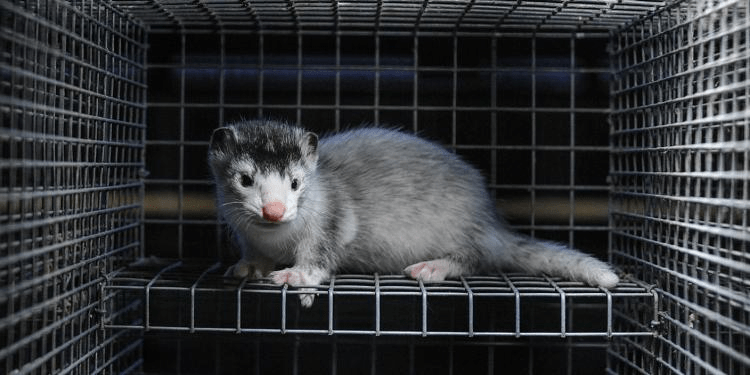
Photo – Jo-Anne McArthur / Djurrattsallianses / We Animals Media

They aim to collect and assess information on the level of surveillance in mink farms for zoonotic infections with zoonotic agents such as SARS-CoV2 and avian influenza. The visits may also include a review of the animal welfare conditions. 

These assessments of public health and animal welfare are part of the follow up on the European Citizens’ Initiative Fur Free Europe, where over 1.5 million European citizens called for a EU wide ban on fur farming and the sale of farmed fur products due to animal cruelty and public safety risks. 

Finland is one of the EU’s biggest fur producing countries, and avian influenza spread widely in the country in 2023, on 71 of 400 farms.

Some organisations have criticised the timing of the visits during breeding season, where the farms will be void of young animals being reared for the next season, as breeding animals will typically give birth from May. 

The visits are also pre-announced, giving farmers the opportunity to present the best possible conditions to inspectors. 

Even when visiting these farms under the best possible conditions, inspectors will be able to see how standard housing on fur farms fails to meet the behavioural needs of wild animals such as mink and foxes.

A typical mink cage on European fur farms has a floor area of only 4 sheets of A4 paper, and denies the animals the opportunity to perform natural behaviours such as swimming, climbing and jumping.

Mink and foxes are also solitary animals who would choose to live alone in their natural habitats, whereas fur farms see them housed in rows of cages in extremely close proximity. 

The Fur Free Europe network awaits news on the outcomes of these visits, which we expect to support the need to move ahead with an outright ban on farming animals for their fur in the European Union.

Regards Mark

Victoria Beckham’s Show At Paris Fashion Week Disrupted By Activists Against Leather.

Thanks to everyone who is supporting our Petitions (to English and German Ambassadors) re cat torture in China.  You can see both of these directly below this post. Please sign if you have not done so yet, and pass on to all your contacts. Thanks M.

Thank you – this issue is really getting a voice now; and as we say the Chinese government needs to step up to the plate and take action.

England: Chinese Cat Torture Petition – Please Support Thank You. – World Animals Voice

German Version of Petition “China: Katzen-Folter-Ring (Cat Torture Ring)” – World Animals Voice

Moving on:

Victoria Beckham’s show at Paris Fashion Week has been disrupted by activists from animal rights group Peta. The 49-year-old designer, who found fame in pop group the Spice Girls, showcased her autumn/winter 2024 collection on Friday. The campaigners got up during the show and walked the runway alongside the models while holding up signs saying “viva vegan leather”. Their T-shirts read: “Animals aren’t fabric. Turn your back on animals skins.”

Animal rights activists crash the catwalk at Victoria Beckham’s Paris Fashion Week show | Independent.ie

Animal rights activists disrupt Victoria Beckham show in Paris (msn.com)

Victoria Beckham’s Paris fashion show disrupted by animal rights protesters (msn.com)

Regards Mark

Time Out Chill I think after lots of bad things recently – Enjoy;

EU: Animal Welfare Standards To Be Considered In EU Investments In Ukraine.

1 March 2024

Eurogroup for Animals welcomes the explicit recognition of animal welfare in the scope of the financial aid and calls on the EU to ensure that the Facility will indeed foster improved animal welfare standards in all grants and loans given to the Ukrainian beneficiaries.

On 27 February the European Parliament approved the revision of the EU’s long term budget, which includes the so-called Ukraine Facility mechanism. The Facility mechanism – powered with 50 billion EUR – will be the EU’s main instrument providing financial support to Ukraine until 2027. Importantly, animal welfare is recognised as an objective of the Facility mechanism.  

Fostering investments in line with EU animal welfare standards is becoming critical in light of the unconditional and full trade liberalisation between the EU and Ukraine in place since 30 May 2022. This full liberalisation is for now further fuelling intensive animal agriculture in Ukraine with a significant increase of poultry meat and egg imports. Conditioning investments to animal welfare standards has the potential to improve the welfare of millions of animals in Ukraine, ensuring EU citizens’ wishes to protect animals are respected. This will also send the right message to EU producers to accelerate the transition to sustainable methods of production.  

Prioritising animal welfare through the Facility will also ease Ukraine’s accession negotiations to the EU by stimulating a sustainable reconstruction of its agricultural system aiming at an alignment with the EU acquis. Ukraine is a big agricultural producer with a large share of it relating to animal products. Using the financial support of the Facility to help Ukraine transition towards more sustainable agricultural methods of production is the only way forward in order to advance Ukraine’s green recovery.  

Regards Mark

EU / Chile: EU-Chile Trade Agreement Falls Short On Animal Welfare.

29 February 2024

Press Release

The modernised EU-Chile Free Trade Agreement, approved by the European Parliament today, includes commitments to animal welfare such as the recognition of animal sentience, the phase-out of antibiotics used as growth promoters, and language on animal welfare cooperation.

While these provisions are welcomed, the negative impacts of unconditional trade liberalisation should not be ignored: The EU and Chile should maximise the language on animal welfare cooperation within the agreement to ensure significant progress for the well-being of animals.

In 2002, when the EU and Chile concluded their first trade agreement, they added, for the first time ever, provisions on animal welfare cooperation. Yet, it was followed by increased intensification in the Chilean livestock and aquaculture sectors due to increased trade opportunities. There is a high risk that this modernised deal will fuel this trend as it grants further market access for Chilean animal products by increasing quotas for poultry, pork, sheep and beef without any animal welfare condition. Such a condition could have contributed to enhancing animal welfare standards in Chile, especially considering that Chilean producers believe that the trade deal would generate greater certainty for investments aimed at exports to the EU.

The FTA does include a chapter on sustainable food systems with provisions on animal welfare cooperation, despite being non-commital. Future EU-Chile cooperation on animal welfare, as like-minded partners, must focus on concrete initiatives such as the phase-out of cages for pigs and poultry, along with lower stocking densities for poultry. Other areas include animal transport, the use of anaesthesia for mutilations and joint action plans to phase out antibiotic use in animal production.

It is disappointing that the new EU approach to Trade and Sustainable Development (TSD) chapters will not yet apply to this trade agreement. The review process of the TSD Chapter should contain detailed language on the link between animal welfare and sustainable development, wildlife conservation and trafficking, and the importance of ensuring aquaculture welfare. In terms of enforcement, the EU and Chile should create clear roadmaps, identify priority issues, and include last-resort sanctions.

In November 2021, Chilean President Gabriel Boric signed an Animalist Commitment with Veg Foundation during his campaign. The document includes 10 points to improve the lives of animals raised for consumption.

Unfortunately after two years of government, very little progress has been made in fulfilling this commitment, since only one of the 10 points has been worked on. We call on President Boric to keep his word and improve the lives of millions of animals in Chile, by implementing these points in both trade agreements and national law. This FTA could have bolstered national efforts similar to the impact of the first EU-Chile trade agreement, which led to the adoption of Chilean animal welfare law in 2009

Ignacia Uribe, Founder and CEO, Veg Foundation.

Until the EU has animal welfare-based import requirements, the EU should negotiate ambitious animal welfare conditions with all trading partners, and replicate the approach it followed in the EU-New Zealand trade agreement. The EU should not let its trade agenda freeze the path toward higher welfare food systems. Embracing animal welfare conditions in some FTAs while omitting them in others would certainly be incoherent,

Reineke Hameleers, CEO, Eurogroup for Animals.

Eurogroup for Animals and the Chilean-based organisation Veg Foundation regret that the modernisation of this trade agreement fails to guarantee that EU-Chile trade does not have a detrimental impact on animals, and encourage the effective transition towards sustainable food systems in which animals’ well-being is promoted and respected.

Regards Mark

EU: Survey Shows EU Consumers Want Better Animal Welfare Laws.

Survey shows EU consumers want better animal welfare laws

28 February 2024

Almost 9/10 consumers responded that they support better animal welfare laws for animals raised for consumption, and believe that the EU should act to update legislation to offer them protection.

In a new survey by BEUC, which aimed to analyse consumer’s attitudes on animal welfare, 6/10 consumers said that they have a low level of knowledge on animal welfare practices and 3/4r want a better labelling system for animal-derived products. Consumers expressed that they have a low trust in animal welfare claims by companies and 84% would react negatively to welfare-washing.

7/10 respondents expressed the need for the cost of transition to be equitably shared, and that the EU must provide funds to farmers to implement higher standards. 

A large majority, 78%, agreed that imports of animal products should be subject to the same welfare rules as those produced in the EU. This has been supported by another report by Vrije Universiteit Brussel and BEUC, which concluded that EU trade policy is not sufficiently coherent with the Green Deal, and consumers must be treated fairly through import requirements, and through better labelling that allows them to make an informed choice.

With 9 in 10 consumers supporting new laws for better animal welfare, our survey confirms that the way we treat animals raised for food matters to people. It is high time the EU Commission delivered on its promises to revise EU laws on farm animal welfare

Monique Goyens, Director General, BEUC.

This survey spans Belgium, Germany, Hungary, Italy, the Netherlands, Portugal, Spain and Sweden. 1,000 respondents per country were surveyed in November 2023.

WAV Comment – EU citizens are not the ignorant ones; it is those in the Commission who fail to take note !

Regards Mark

EU: Political Herds See Animal Welfare Votes In Europe’s Elections.

All pictures – WAV Archives.

This article is part of our special report Animal protection – in Europe and beyond.

Europe’s 340 million pets are unlikely to swing this year’s European elections, though with cats, one can never be sure. Jennifer Baker looks at Europe’s animal-related policy dynamics and how they could influence June’s electoral mix.

2024 is a bumper year for elections around the globe. In Europe, the cost of living, energy, environment, and migration are among the top concerns of voters at a national level. With the European Parliament, voting intentions can be a little different, allowing for broader areas of concern where local party-political questions tend to be less dominant. This means issues such as animal welfare can come to the fore.

According to the European Pet Food Industry Federation (FEDIAF), European households boasted 340 million pets in 2022 – including 127 million cats and 104 million dogs – across more than 90 million homes, so it would seem we are a continent of animal lovers, and yet animal welfare is not an issue that is routinely seen as a vote winner in national politics.

Dr Joanna Swabe, senior director of public affairs for Humane Society International/Europe, explained: “Animal welfare is one of those rare issues that is neither left nor right. Across the political spectrum and irrespective of nationality, you’ll always find politicians who care about the plight of animals. It is certainly not the exclusive domain of the Greens and the Left.”

Swade remarked that over the years she’s even encountered very conservative right-wing MEPs for whom animal welfare is paramount.

In the European Parliament, the Intergroup on the Welfare and Conservation of Animals brings together more than 90 MEPs to work together to advance animal welfare and conservation in EU policy making.

Recent issues under discussion include a proposal for a regulation on the welfare of dogs and cats and their traceability, protection of wolves in the EU, the use of animals in science and a new proposal for a regulation on the protection of animals during transport.

The intergroup also advocates for Cage-Free Farming and a Fur-Free Europe, while highlighting the importance of Animal Welfare Labelling.

Catalysts for change

MEPs can serve as catalysts to push for better animal welfare legislation,explained Danish S&D MEP, Niels Fuglsang.

Fuglsang is one of many European Parliament candidates in the upcoming elections to have signed the Eurogroup for Animals’ “Vote for Animals” pledge: a commitment to push the European Commission to put forward ambitious legislation in areas critical to animal welfare.

Some of the legislative proposals are obvious, such as fur labelling in the revision of EU textiles Regulation. Others are more indirect. For example, the European Green Deal sets out the ambition to reach zero pollution for a toxic-free environment. The so-called REACH revision could be an opportunity to promote non-animal testing.

Landmark opportunity

And it’s not only animals’ rights groups that support better legal protection for our furry friends. Cefic, the voice of the chemical industry in Europe, described the REACH revision as a “landmark opportunity to accelerate development, validation and regulatory acceptance of human-relevant, animal-free approaches to assess safety of chemicals.”

“By making every effort to identify where animal-based testing can reliably be replaced by non-animal methodologies and reflect latest advances in science, we will create a triple win for the industry, regulators, and animal welfare. This requires a paradigm shift in safety assessment towards Next Generation safety assessment, similar to moves seen in the area of cosmetics or pharmaceuticals,” said the organisation.

The EU Pharmaceutical Package currently under co-decision could also encourage new technologies to reduce testing on live animals.

One national outlier where animal – specifically bird – welfare and safety is a hot button issue is Malta. During the last European elections in 2019, Malta’s powerful pro-hunting lobby, FKNK, urged its supporters not to abstain, but to vote for its preferred candidates.

Cannot ignore agriculture

In Malta it is the hunting lobby that pressures political parties. Elsewhere in Europe the influential farming lobby holds sway. The protests of recent weeks have shown candidates that they cannot afford to ignore the rural, agricultural vote.

The Humane Society International/Europe’s manifesto, which aims to encourage policymakers to take a more ethical stance on animal welfare, has farm animals top of its agenda.

Swabe pointed out that many politicians are happy to loudly trumpet their support for legislative action to end the illegal puppy trade but are conspicuously quiet when it comes to pigs and poultry kept on Europe’s farms.

“We are told the Commission is currently assessing whether the transition to cage-free farming is sustainable for the agricultural sector and that further consultations on, amongst other things, the costs and length of transition periods are needed,” said Swabe.

She added that for the millions of laying hens still confined to enriched battery cages, and millions of pigs who continue to languish in individual sow stalls for a significant proportion of their gestation, “ […] what is truly unsustainable is this failure to take decisive action to provide them with housing systems that meet their welfare needs.”

[By Jennifer Baker I Edited by Brian Maguire | Euractiv’s Advocacy Lab ]

Political herds see animal welfare votes in Europe’s elections – Euractiv

Regards Mark

One day soon lets hope !

England: Feeling Foxy ?? – February Photographs From Pauline.

Animal Buddy Pauline has sent me some new photographs which were taken in Greenwich Park, London; home of The Royal Observatory, home of Greenwich Mean Time and the Prime Meridian, all located within Greenwich Park at the top of the steep hill overlooking the Queen’s House and the National Maritime Museum.

https://www.royalparks.org.uk/visit/parks/greenwich-park/royal-observatory

https://www.royalparks.org.uk/visit/parks/greenwich-park

Wildlife – https://www.royalparks.org.uk/nature-wildlife

During Pauline’s visit to the park with her dad; who you can see feeding one of the the local urban Foxes in some great pics, she was able to take several pictures which are reproduced here. So enjoy a visit to the Royal Park of London via the links and photos;

Regards Mark and Pauline.

Pauline’s dad feeds the very tame fox:

I think that the majority of London’s urban foxes probably do well, considering the look of this guy. Some people still hate them, but many people welcome them in the City and often put out some food for them. If people see any fox(es) in trouble then there is the National Fox Welfare Society (NFWS) who can be called out for rescues anytime within the M25 region.

Here is a link to their website which provides further information and pictures. If you see a fox with mange and wish to treat it yourself, then the NFWS will send you out FREE Arsenicum / Sulphur liquid which will treat when put onto jam sandwiches and dough nuts etc. It must never be put on meat as the benefits are nullified.

Make a note of these organisations and phone numbers in case you ever need them to help you.

Photo – NFWS

https://www.national-fox-welfare.com

If like us you are based very near to London in Kent, then we have the ‘Fox Project’ who can also be contacted for advice and an emergency Southern Wildlife rescue ambulance Network.

Here is the Fox project site link:

Photo – The Fox Project

England: Thousands more badgers could be killed under proposal to raise target numbers in cull.

Thousands more badgers could be killed under proposal to raise target numbers in cull (msn.com)

Thousands more badgers than planned could be killed if the government gives the go-ahead next week to raising the target number of animals in certain areas, experts say.

Until now, official policy has been that culls aimed to reduce badger numbers by 70 per cent within in each cull area and across most of southwest England.

But The Independent understands that ministers are preparing to allow that target to be raised to 100 per cent in “exceptional” circumstances, subject to a consultation.

The announcement could be made as early as next week – during the National Farmers’ Union annual conference.

The permission would be similar to that granted to sugar-beet farmers to use bee-killing pesticides – which has been given four years running.

The change to the 100 per cent target would begin after January 2026, if it is approved after a consultation.

More than 260,000 badgers in England – over half the population – are thought to have been killed since culling began in 2013, as the government has sought to eradicate tuberculosis in cattle, which is costly for farmers.

The cull has repeatedly been expanded, including as late as last year.

The spread of the disease is blamed on badgers but wildlife defenders dispute this, saying cattle are 800 times more likely to spread the disease than badgers are.

One expert said “exceptional circumstances” was poorly defined so feared the policy could become standard practice.

Tom Langton, an ecologist who has challenged culling in the courts, said the toll of extra badgers killed would depend on how many areas got the go-ahead, but if it was the entire “edge area” – that is medium-risk – up to 20,000 or more a year could be killed.

He said: “If the exception is just a badger with bovine TB is found or trapped within say 1km of a farm, it could just become the new normal to cull every year over wide areas. So this risks being the cull anywhere, for ever moment.”

Especially with a General Election on the horizon this year.

The government had promised the culls would end next year and be replaced by increasing vaccinations, but last year landowners and farmers were given the go-ahead to kill tens of thousands more badgers.

Mr Langton said 100 per cent culling was tried in 2018 around Penrith in Cumbria in cattle imported from Northern Ireland.

They went in and shot 1,115 badgers – all of them – but could not then attribute change in TB rates to culling as seven farms were quite clearly reinfecting themselves because of the failed testing regime,” he said.

A spokesperson for the Department for Environment, Food and Rural Affairs said: “Our approach to disease control continues to be informed by science (WAV – What !!) and deploys all tools at our disposal.

“We are moving to the next phase of our strategy which will focus on wider scale badger vaccination – but as we clearly set out in the 2020 Godfray Review response and subsequent consultation and response in 2021, culling remains an option where epidemiological assessment indicates that it is needed, alongside other measures in our bovine TB eradication strategy.”

Regards Mark / Diana

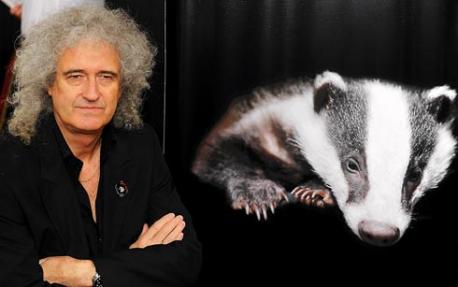
Dr Brian May

https://worldanimalsvoice.com/?s=badgers

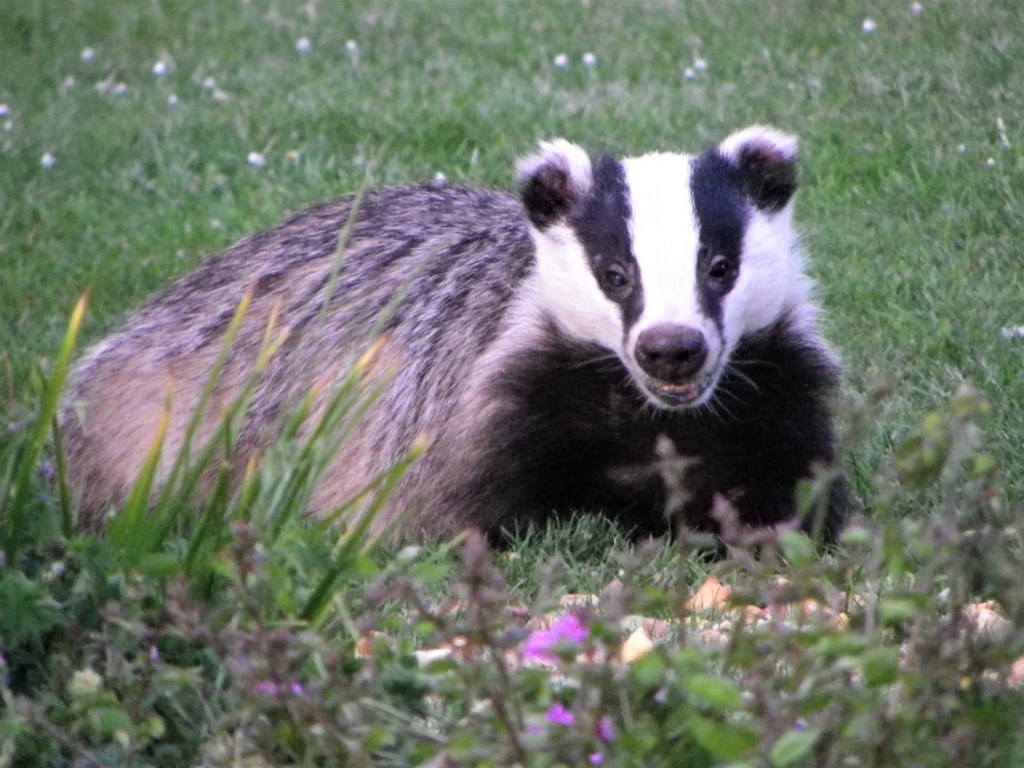
Safe if I have anything to do with it – a Badger in my own garden: