
Sorry about the ‘iffy’ music – out of my control.
But a great result in the end !


Sorry about the ‘iffy’ music – out of my control.
But a great result in the end !

Regards Mark

Crab and lobster welfare takes a step forward with first UK supermarket benchmark
27 January 2023
Crustacean Compassion

Following the inclusion of decapod crustaceans (such as crabs, lobsters and prawns) – in the UK Animal Welfare (Sentience) Act 2022, Crustacean Compassion have launched the first UK industry benchmark ‘The Snapshot’ to assess welfare standards for decapod crustaceans within the UK food supply chain.
30 UK companies – including all major supermarkets – were evaluated in the benchmark, revealing that only 50% of companies have developed formal policies on some aspect of decapod crustacean welfare, and only one is promoting decapod welfare to consumers.
On average, retailers are leading the way in areas of welfare policy, management and reporting.
The Snapshot report is the first assessment of leading seafood producers, processors, retailers and wholesalers in the UK on welfare standards for decapod crustaceans such as crabs, lobsters and prawns.
Commissioned by our member organisation, Crustacean Compassion, and facilitated by Chronos Sustainability, The Snapshot was released this week.
Each year, more than 420 million crabs, lobsters, langoustines and prawn/shrimp are caught in the UK with a further 5 billion prawns and other crustaceans being imported from overseas. The Snapshot looks at their welfare at all stages of the supply chain: capture and handling, holding and storage, transport, mutilations, stunning and slaughter.
The Snapshot assessed 30 UK seafood companies, including household name brands, all major supermarkets and more localised seafood specialists. The report reveals that 70% of companies consider the welfare of crustaceans to be a business issue, in part due to growing consumer concerns. Contrary to this, only 50% have developed formal welfare policies.
While retailers are leading the way across several key areas, including policy commitment, enforcing their policies and reporting of welfare standards, only one company assessed is promoting decapod crustacean welfare to their customers – and this is a producer, not a retailer.
The benchmark will be repeated later in 2023 and will show which companies are taking decapod welfare seriously and making improvements in this vital area. Whilst this initial report does not share company scores, subsequent reports will publish all company scores and a ranking table, allowing consumers to make informed choices for higher-welfare products that avoid inhumane practices such as eyestalk ablation and slaughter through drowning, asphyxiation and boiling alive.
The development of The Snapshot involved consultation with industry, and this continued engagement will ensure that decapods, companies and consumers will all benefit.
You can watch the webinar launch recording here.
Since animals like crabs and lobsters were legally recognised as sentient and able to feel pain, companies have rightly been under increased scrutiny about how their practices impact the welfare of the animals involved. The Snapshot will show how decapod welfare is currently being addressed across the industry right now and will drive welfare improvements across the sector. Customers expect to be able to buy seafood that has been produced to high standards of animal welfare and we have been asked which brands and companies have the most humane practices. The food industry has a responsibility to both meet those expectations and provide the necessary information to enable consumers to make informed choices.
Claire Howard, Director at Crustacean Compassion
Read more at source
Regards Mark

In relation to our recent post:
Here is a link to Garden Birdwatch Live.
Enjoy !!
SUNDAY
Regards Mark
SATURDAY
Scottish farmed salmon dying in droves before slaughter
23 January 2023
Animal Equality

Animal Equality UK are raising the alarm as salmon mortality rates on Scottish salmon farms are rocketing.
Every year in the UK, up to 77 million fish are farmed and slaughtered, but many more don’t even make it to slaughter.
According to a report from industry membership body Salmon Scotland, 2.8 million farmed salmon died on-farm in Scotland in September 2022 alone.
Fish Health Inspectorate (FHI) data shows that nearly 15 million salmon mortalities were reported by farms in Scotland from January to November 2022, compared with 8.58 million in 2021 and 5.81 million in 2020.
Farmed salmon suffer from overcrowding inside cages. Others are bitten by sea lice which eat their skin while they’re alive. Animal Equality reports that instead of fixing the root cause of the issue, fish farmers use chemical treatments and other rough treatments which cause the salmon even more suffering.
Drone footage collected by Animal Equality UK shows workers using a “mort sock” to dredge dead fish from the bottom of pens.
The data doesn’t lie. It’s undeniable that early fish mortality is a rapidly worsening issue. Over recent years deaths in fish pens have reached record levels for a number of reasons, including a sharp rise in infectious diseases among the fish who are packed into unnaturally overcrowded cages, as well as poor gill health and rough treatments to remove lice from the infested waters.
As the industry grows, so do these issues. We must take back the power and boycott farmed fish, it’s the only way that we can begin to curb this ever-worsening problem.
Abigail Penny, Executive Director of Animal Equality UK
Don Staniford, of the Scamon Scotland campaign said the FHI figures on salmon deaths were likely to be an underestimate because not all mortalities need to be recorded.
About 25% of the salmon in sea cages are dying, so that’s about one in four. If ramblers saw one in four cows or sheep dead in a field they’d be horrified, but because it’s underwater it’s out of sight, out of mind.
Don Staniford, Scamon Scotland campaign
Regards Mark

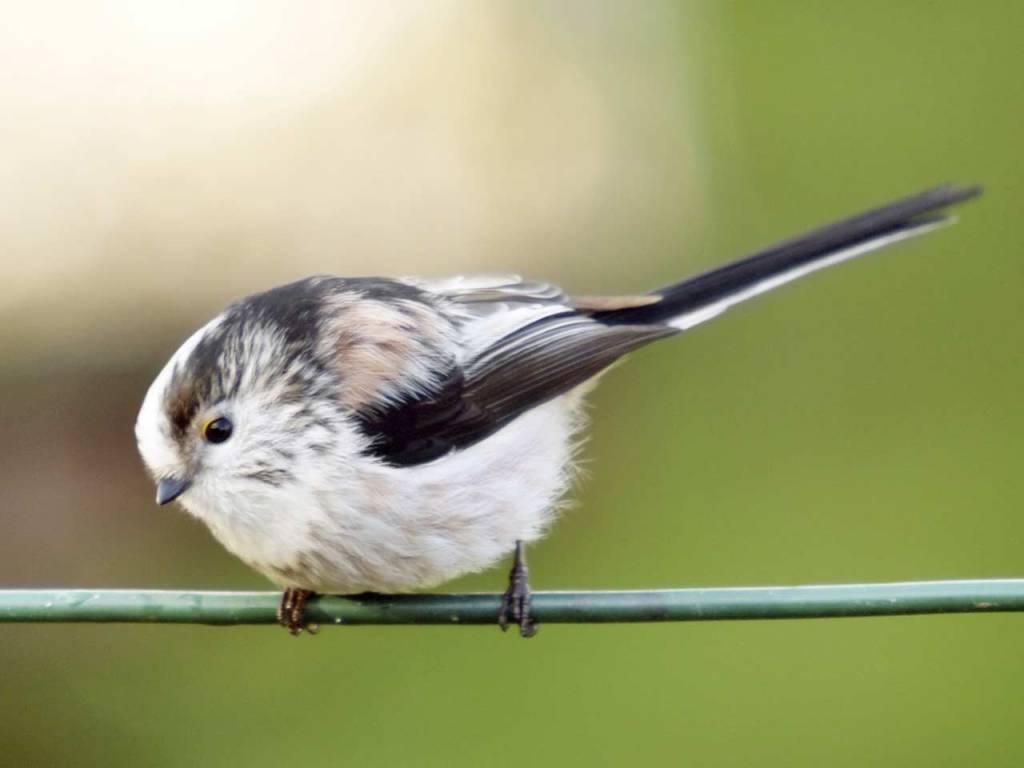

This weekend (27 to 29 /1/23) is the RSPB big garden birdwatch for 2023.
This is only open FOR UK RESIDENTS.
Give just 1 hour of your time this weekend to take part.
The Big Garden Birdwatch is free to anyone and everyone but the information sent in by people all over the UK helps the Royal Society for the Protection of Birds (RSPB) build up a very accurate register of how the national bird population is doing; what species are flourishing, what are in decline, stable etc.
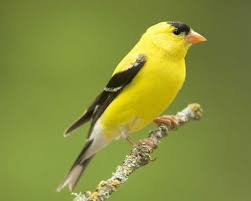
This birdwatch makes it an ideal family activity at the end of January. Best of all taking part is easy. All you need to do is sign up online to take part and get a free guide.

You don’t even need a garden. You can count birds from a balcony or even your local park.
Which common garden birds will you see?

Participants are asked to spend an hour counting the birds they see and then submit their results online. Also, it’s good idea is to add a bird feeder to your garden. Watch how a wide variety of different types of birds will pop in your garden for a snack!
As you know, we have many wild bird visitors to our garden; and thus have just signed up for this years watch. Looking forward to counting the visitors to the garden, submitting the data to the RSPB and helping to get a good overall view of the status of birds in the UK.
I hope you can sign up and take part also.
Regards Mark
Go here for more and to sign up:
Big Garden Birdwatch | The RSPB
https://worldanimalsvoice.com/?s=breakfast+buddy
Below – Breakfast Buddy.

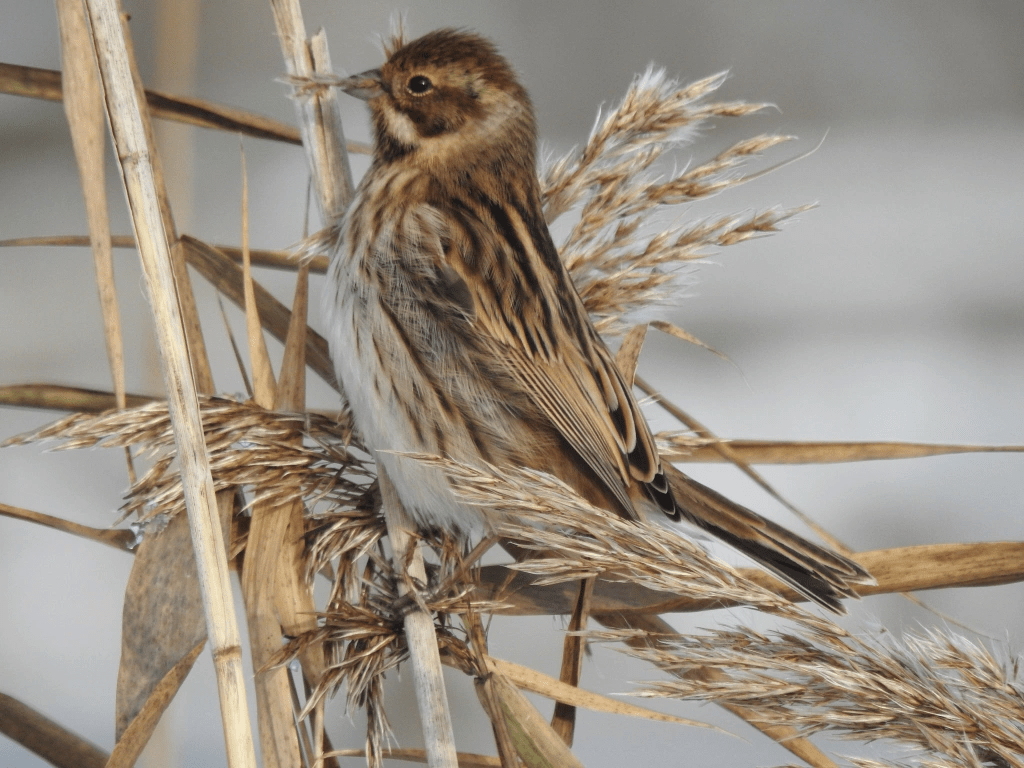
Below – Reed Bunting photo from Pauline.
Below – Starlings enjoy their morning bath in my garden.


EU Parliament shows positive commitment toward systemic change to regulate the (exotic) pet trade
25 November 2022
AAP Press Release
Yesterday, the EP adopted a resolution on improving EU regulation through an EU positive list of (wild and exotic) pets. This was the direct result of a petition and subsequent debate at PETI Committee from Eurogroup for Animals and AAP and Dyrenes Beskyttelse.
Excitingly, it’s the second EP Resolution in as many months with encouraging language on an EU positive list. It’s a strong message to the Commission to expand upon their initial commitment for a feasibility study on the EU positive list in the revised Action Plan against Wildlife Trafficking.
This resolution is the icing on the cake of a very successful year in political calls for the EU positive list, such as the May AGRIFISH position paper supported by 19 Member States, and the October EP resolution on the Convention on the International Trade of Endangered Species (CITES), which provided the EP’s opinion on the position the Commission should take at CoP19. Incidentally, the exotic pet trade has been front and centre of the debates at this important meeting of the Parties to CITES.
Finally, the text cites the EP’s June 2021 resolution on the EU Biodiversity Strategy for 2030: bringing nature back into our lives, which includes reference to a white (positive) list.
An EU-wide positive list is a tool to more effectively and efficiently regulate the pet trade, by producing a list of animal species that are allowed to be traded as companion animals: any species not on the list is de facto illegal to keep.
The resolution stresses that the European trade policy needs to ensure that pet trade practices do not compromise the welfare of wild and exotic animals or contribute to biodiversity loss, and that the keeping of such animals as pets does not jeopardise the welfare of the animal and the owner.
Moreover, it expresses the Parliament’s concern that current regulations in Member States are fragmented and not consistent, often failing to encompass much of the animal kingdom.
Additionally, it notes that the EU legal framework is currently insufficient to tackle animal welfare, public health and safety, and invasiveness risks associated with the trade and keeping of wild and exotic animals as pets.
Of vital importance, the Commission recently released a revised Action Plan against Wildlife Trafficking, which had and action to “Explore the need for, added value of, and feasibility of revising existing measures or creating new tools to reduce unsustainable trade in wildlife (e.g. a ‘positive list’ of species whose specimens taken from the wild can be traded and kept as pets)”.
It’s our view that this action does not go nearly far enough, but that this resolution comes at the perfect moment to urge the Commission to expand on their initial commitment. The resolution calls “on the Commission to carry out an impact assessment of the added-value and feasibility of establishing such a list, using a science-based set of criteria to determine which species are suitable as pets, and to include a careful analysis of various criteria already used in national positive lists, in order to establish the most effective ones to be possibly adopted in an EU-wide positive list”.
It is vital that the European Commission hears the strong message of the Member States through the Council, and the continued calls from the Parliament, to ensure a timely and strict implementation of the Action Plan, especially its feasibility study on the EU Positive List. The Commission is now mandated to be flexible in its impact assessment approach, to seek out feasible ways that an EU Positive List can fit with, and add value to the current legislative framework. It should be conducted with a view to ease the establishment of the Positive List. If not, an important and viable tool to protect animals, humans and the environment could be missed out on. This cannot be allowed to happen.
Reineke Hameleers, CEO, Eurogroup for Animals
Regards Mark

Fur Free Europe reaches 1,000,000 signatures
December 2022
The European Citizens’ Initiative Fur Free Europe has reached 1,000,000 signatures of support in little over 6 months. The initiative, which aims to ban fur farming and the sale of farmed fur products in the European Union, is well on its way to becoming a record breaking ECI for animals. But what happens now, and why will the campaign continue to gather signatures?
On 6 December, Fur Free Europe topped 1,000,000 signatures from citizens across the European Union. The campaign also confirmed successfully reaching the signature threshold in 14 Member States; Finland, Denmark, Sweden, Lithuania, the Netherlands, Germany, Slovakia, Bulgaria, Poland, Latvia, France, Belgium, Greece and Austria.
What happens now?
Every European Citizens’ Initiative requires one million validated signatures in order to succeed.
Once the Fur Free Europe initiative closes, it will undergo a stringent verification procedure: governments from each Member State will check that signatures were gathered from real persons, that each person has added their support only once, and that their personal details such as name and ID number are registered and correct.
Due to this important verification procedure, it is possible that a large number of signatures could be invalidated and discounted, leaving the final figure below the required one million.
For this reason, we will continue to collect signatures from citizens across Europe who share our belief that fur farming and the placement of fur products on the market are cruel, unnecessary and unethical.
How many more signatures do we need?
Fur Free Europe will be pushing on at full force to gain as many signatures as possible, amplifying our call for a Europe without fur farming and ensuring there is no possibility our ECI can be invalidated.
The most successful European Citizens’ Initiative for animals?
Fur Free Europe has collected one million names faster than any other European Citizens’ Initiative. This fantastic success is sure to increase the urgency for the European Commission to take action and finally bring the European fur industry to a close.
Would you like to join over one million citizens to make this happen?
Add your name to Fur Free Europe now, and follow the progress of our incredible movement.
Regards Mark


Successful shark finning Citizens’ Initiative presented to the Commission
11 January 2023
The ‘Stop Finning – Stop the Trade’ initiative has become the eighth successful European Citizens’ Initiative (ECI), reaching over 1.1 million statements of support from EU citizens.
The European Commission now has six months to decide on political actions to end the EU shark fin trade.
The initiative calls on the Commission to propose legal measures to end the trade of fins in the EU, including the import, export and transit of fins other than if naturally attached to the animal’s body.
The Commission will meet the ECI organisers to discuss the initiative in detail in the next weeks. A public hearing will then be organised by the European Parliament.
The Commission has until 11 July 2023 to present its official reply, outlining the actions it intends to take: whether to propose legislation, take other non-legislative actions or not act at all.
This initiative is the eighth ECI to have successfully passed the threshold of one million signatures from at least seven Member States, demonstrating that European citizens can help create European policies.
Today the initiative officially entered the political process, and campaigners publicly delivered the 1.1 million statements of support from EU citizens to the EU institutions in front of the European Parliament in Brussels, Belgium.
The EU has to implement a trade ban immediately. Sharks are important to marine ecosystems and populations recover very slowly from industrial fishing. Hunting such important animals for their fins is the epitome of senselessness. We are counting on the European Commission to implement a strong trade regulation in addition to existing regulations to finally end the shark fin trade in the EU.
Nils Kluger, spokesperson of “Stop Finning – Stop the Trade”
On Thursday 19th January, the Animal Welfare Intergroup will hold a hybrid meeting where Nils Kluger, Spokesperson and Coordinator of the ECI, will discuss the political process of the validated ECI and the demands to the European Parliament.
Read more at source
Regards Mark



Kylie Jenner at Schiaparelli Haute Couture Spring-Summer 2023 collection with a huge lion’s head attached to her dress.Credit: AP
WAV comment – I wonder if any of these ‘oh so’ couture houses have ever donated any money to the preservation of wild animals such as lions and wolves ? – very much doubt it.
And Naomi Campbell; was she not once heard to say that she would rather go naked than wear fur ? – ok, this is not real fur, but in our opinion, it is promoting the use of fur and as a result, either the breeding or killing of animals for their fur.
Click ‘watch on YouTube’
We agree with Carrie, all of this does nothing but adding to “promoting trophy hunting” by using the fake animal heads. Well done Carrie for speaking out.
Regards Mark

Naomi Campbell (I would rather go naked than wear fur !!) does her bit to promote fur ? – – Estrop© Provided by The Telegraph
Kylie Jenner criticised by animal rights groups for wearing lion’s head to Paris couture show
Reality TV star Kylie Jenner has caused an up-roar after appearing in a dress accessorised with an uber-realistic life-sized lion’s head at Schiaparelli’s couture catwalk show in Paris.
The wild accessory was pinned onto the shoulder of a black strapless dress as she took her front row seat at the legendary fashion house’s label’s spring-summer 2023 couture collection.
Ms Jenner’s lion’s head – replete with fangs and bushy mane – was a preview of the collection, and was joined on the runway by other beasts’ heads, including a wolf, modelled by Naomi Campbell, and a snow leopard.
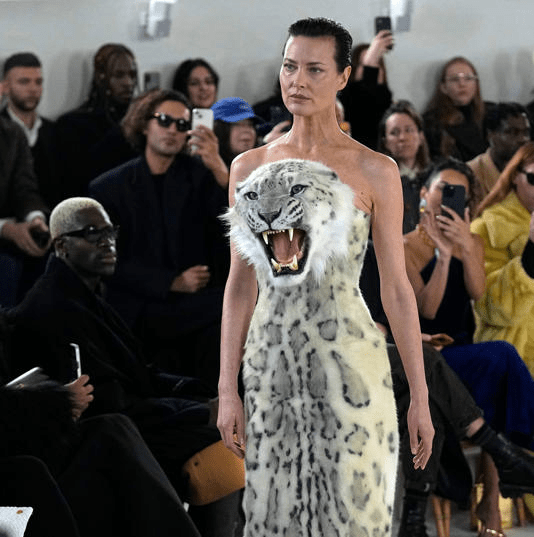
The creations were part of the Schiaparelli Haute Couture Spring-Summer 2023 collection – Michel Euler© Provided by The Telegraph
Also;
Carrie Johnson attacks ‘grim’ fake animal head couture dresses

Carrie Johnson (wife of ex UK Prime Minister Boris Johnson) has accused an Italian fashion house of promoting trophy hunting after supermodels wore life-sized fake animal heads on the catwalk at Paris Fashion Week.
But the show caused environmentalists, including Carrie Johnson, to accuse the fashion brand of “promoting trophy hunting” by using the fake animal heads.
Ms Johnson posted online about the show, with the message: “Grim! Real or fake this just promotes trophy hunting. Yuck”.
Read it all with pictures at:
Carrie Johnson attacks ‘grim’ fake animal head couture dresses (msn.com)
Regards Mark
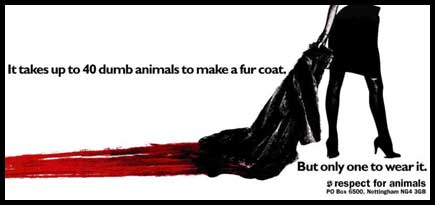
My dog wears real fur, and so it should; I wear only skin, like I should !
Mark


 World Animals Voice