Category: Environmental

The invisible slaughter on our seas

A covert investigation of the SOKO animal welfare (Germany)
(Short note: Please read the text first, it is the literal translation of the video from me)

A small fishing boat and the terrible massacre that causes every day.
Crime scene: our North Sea

https://fb.watch/9X1iHl-X-D/

Countless animals slowly suffocate, there is no anesthetic, only a slow, gruesome death.
Often the animals are torn open when fully conscious and eviscerated alive.
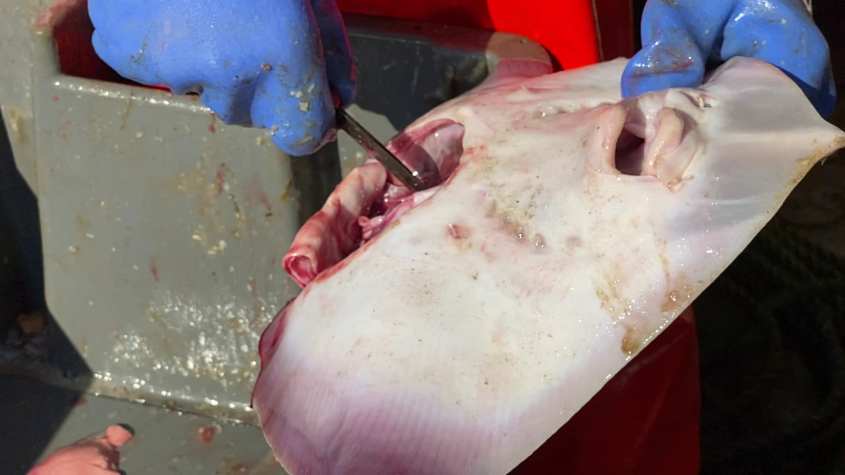
Millions of sharks die this way.

Not anywhere in Asia, but on the European coasts like here on video in France and Great Britain.
The little ones, the young ones, the unwanted, they are all suffocated, crushed, trampled underfoot.
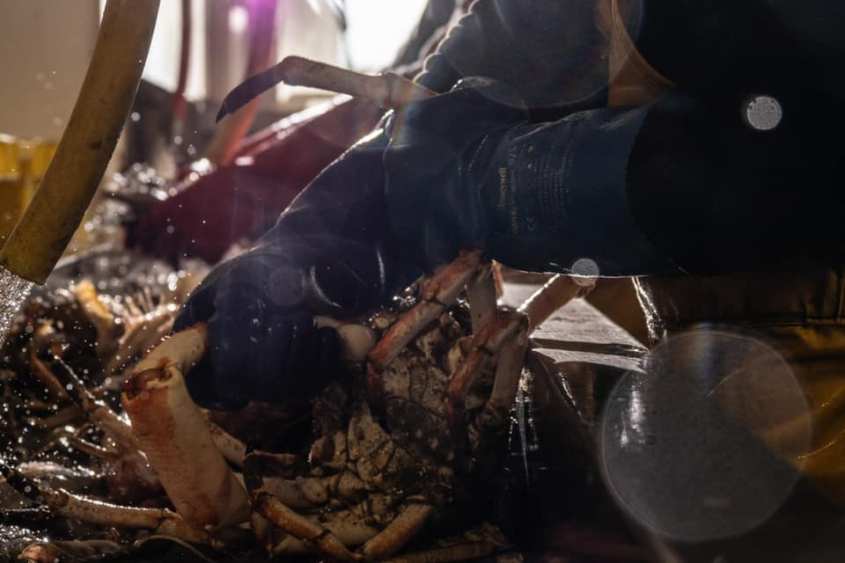
When the fishermen only need the crab claws, they tear them out of the living animal and throw the mutilated creature back into the sea to die in agony.
The eyes of many of the fish, which are sensitive to pain, are pushed out of their heads by the rapid pressure difference when the net is rolled up.
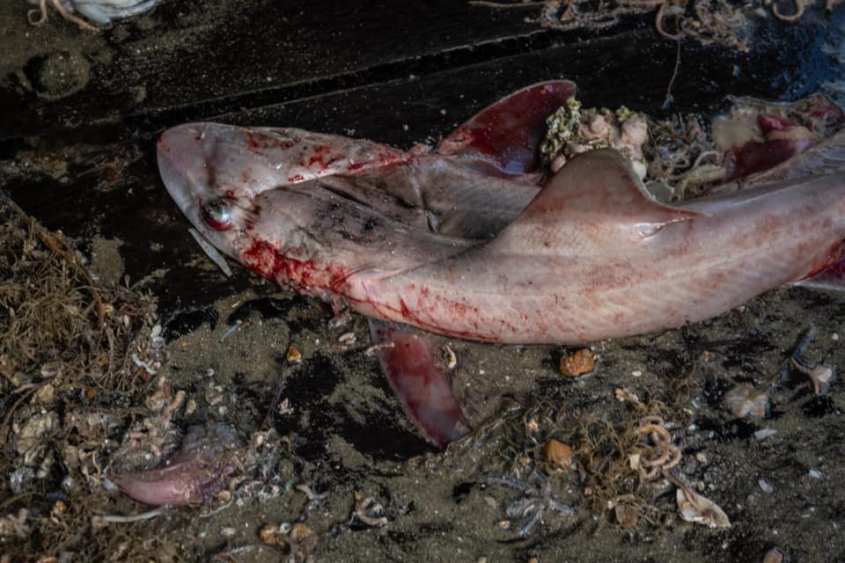
If the catch is not welcome, the animal will be trodden on.

The trawler fishery is the total destruction of our sea.
Politics is silent.
They feel pain
and fear
they suffer
they are individuals
our fellow creatures
Save them
save yourself
it is the blue planet
their planet
if it dies we all will not survive

SOKO Tierschutz

And I mean…Just a small fishing trawler, one of thousands in the EU.
Every animal that is not suffocated is slaughtered. The agony of animals is terrible.
Such a cutter kills more sentient beings per day than Tönnies and Tyson combined.

Control and laws? – Nothing
Politics is failing all along the line, as is the case with any area of ​​animal welfare.
“Bottom trawling, with its total destruction of our seas, is to be equated with slashing and burning the rainforests,” says SOKO Tierschutz.

The fishing industry is by far the most destructive industry in our oceans.
There is no sustainable commercial fishing industry.
More than 2 trillion fish are caught from the sea each year, excluding the 120 billion that are killed on fish farms.

That killing is far greater than the estimated 65 billion animals killed for meat and fur each year.
Corruption, slavery and human trafficking are common in the fishing industry.

Around 300,000 dolphins, whales and porpoises are killed every year by fishing and up to 30,000 sharks every hour.
Fish is supposed to be healthy – we read that every day in the press – but have you ever asked yourself who pays for these studies?
It’s like the meat industry is telling you to eat meat every day.
A lot of money is involved, with $ 5 billion in subsidies going to the fishing industry worldwide.
There are even NGOs that make a profit by awarding eco-labels, even though sustainable fishing is next to impossible.

“When consumers order fish in a restaurant or buy it from the market, they are supporting the global destruction of marine ecosystems.
They support the impoverishment of craft and indigenous communities.
They support slavery and slave labor at sea, ”said Captain Paul Watson.

Most of us will likely no longer live to see the death of the oceans, but our children and grandchildren will endure the horrors of that destruction.

And the survivors will hate us all for it.

My best regards to all, Venus

Europe: Golden Jackal Spreading Across Europe as Climate Warms.

© Getty Images/iStockphotoGolden jackals are native to Asia, north Africa, the Middle East and the Balkans, but are now advancing north and west into Europe

Golden jackals are spreading out across western Europe for the first time in centuries, with the reclusive mammal spotted in places such as Italy, the Netherlands and Norway.

The dog-sized creatures are commonplace in southern Asia, north Africa and the Middle East but in recent years environmentalists have spotted them in regions hundreds of miles from their normal ranges.

Last week, one was snapped by a photo trap in Tuscany, in the heart of Italy close to the city of Florence.

Earlier this year a farmer stumbled across a jackal in the Netherlands, managing to grab a photo of the little-known animal on his phone before it fled.

The reasons for this sudden migration, thought to be one of the largest mammal movements ever seen in modern times, are highly debated.

Many believe golden jackals might be benefitting from climate change. As Europe warms, there are fewer periods of heavy snow in many countries, which suits the jackals.

Others argue they are flourishing as wolves, their larger canid competitor, are persecuted and hunted out of the ecosystem.

Golden jackals are from the same family as the more famous grey wolf but are smaller, closer in size to a large dog, and with a fur coat with varies from a creamy yellow to dark tawny beige depending on the season.

They are an adaptable scavenger and predator species which live in breeding pairs and will eat almost anything, from insects, fruit, birds, small mammals, rodents and human refuse.

Their traditional range has included a large swathe of southern Asia and the Indian subcontinent, much of the Middle East and Gulf, and parts of the Balkans and south-west Europe.

However, in the past five or so years it has increasingly been spotted in western and northern Europe, including as far as Norway where a camera trap snapped one jackal in 2020.

“It is one of the largest range expansions for a mammal that we have ever witnessed, anywhere in the world,” Nathan Ranc, an ecologist and golden jackal expert from the University of California Santa Cruz, told The Daily Telegraph.

“It’s a continent-wide trend. This week, for instance, we had the first report that golden jackals are reproducing in Germany. Jackals are turning up in new places.”

Mr Ranc believes the spread of the animal into new ground is related to the decline of wolves, which were once endemic across Europe but were mostly hunted to extinction by the early 20th century.

“We think there’s a correlation,” he said. “This is what happens when the population of a dominant carnivore goes into decline. We think the persecution of wolves was a trigger.”

However, others disagree, noting wolf populations bottomed out more than a century ago and since the post-war period have actually been rapidly bouncing back as they acquired environmental protections across Europe.

John Linnell, from the Norwegian Institute for Nature Research, said he believed a reduction in the use of poison by Eastern European nations since they joined the EU in the 2000s could have made the continent more jackal-friendly, since the scavengers regularly eat dead livestock they stumble across.

Mr Ranc said another factor could be climate change, which was warming Europe and leading to less snow. Jackals are known to avoid heavy snow drifts which they struggle to traverse.

Although the return of wolves since their near extinction in western Europe has been highly controversial with farmers and others, the emergence of the golden jackal has been broadly welcomed.

They never attack humans and while they might kill some small domestic farm animals such as chickens or lambs, they are not likely to cause major concerns, said Prof Luigi Boitani from Rome University, the chairman of the Large Carnivore Initiative for Europe.

Regards Mark

Shark Fin Trade Still Allowed in EU – 50 Days to Put it to an END. Please Sign Now.

Shark fin trade still allowed in EU – 50 days to put it to an end

13 December 2021

Only 50 days left to collect one million votes from EU citizens needed for a successful EU citizens’ initiative: A group of citizens from across Europe have united and demand the end of the shark fin trade in the EU, so as to increase the protection of sharks. If successful, a political process will be initiated.

Every year, between 63 and 273 million sharks are killed, and many species are increasingly threatened worldwide. Europe is one of the major players in the global fin trade. Globally, sharks are targeted for their meat and liver oil, but the biggest threat remains shark finning. Sharks commonly have their fins removed while alive on fishing boats, and are then left to asphyxiate or returned to die in the water.

In the EU, the cruelest way to get shark fins – so-called finning – is officially banned. Finning means cutting off the fins of sharks on board a fishing boat and throwing the shark itself overboard. This practice was used to save cargo space and bring only the profitable fins ashore. In the EU, a regulation has been in place since 2013, according to which caught sharks had to be brought ashore with their fins.

However, the hoped-for success failed to materialize:

Although the catch numbers initially declined, they quickly recovered. This is shown for example by the numbers of the blue shark, the most caught species in the Atlantic. Initially, the numbers fell, but they reached an unimaginable 53,000 tons again as early as 2016, even higher than in 2013. Added to this are a high number of unreported cases and concealment. In shark fin shipments, it is often not documented where the shark was caught, what species it is, or whether it was caught legally. Once the fins are on the market, no one can account for them. Thus, in the past, protected species have been discovered in shark fin shipments again and again, mostly by accident, even in Europe.

How long are we going to accept a hunt that serves to turn the animals’ fins into a prestigious and expensive soup? The end of the shark fin trade is urgently needed. Many ecosystems in the world’s oceans depend on stable shark populations.

The demand of the EU Citizens’ Initiative has already been joined by more than 400,000 citizens

50 days before the end of the vote, the EU Citizens’ Initiative will raise awareness about the EU’s role in the shark fin trade in many major European cities (Berlin, Paris, Rome, Lisbon, Barcelona, Dublin, Athens and many more).

Sign the European Citizens’ Initiative here.

Regards Mark

New Zealand plans to become a smokefree nation!

New Zealand plans to increase the purchase age for cigarettes in a bid to become a “smokefree nation”.

The Smokefree Action Plan introduced by the government on Thursday plans to slowly increase the purchase age from 18 currently to 21 or 25 by 2025.

But not overnight, but first of all, smoking cigarettes is no longer possible only for under 14-year-olds.
And then every year the age limit increases by exactly one year.
So those who currently smoke can all continue to do so without any problems.
But future generations won’t start with it.
Nicotine addiction should therefore not even arise.
Most people inevitably develop an addiction to nicotine while smoking; few people are genetically immune to it.

The government argued this will make it harder for teenagers under the age of 18 to be exposed to older pupils who smoke and to access cigarettes, citing research that states that 80% of smokers start before the age of 18 while nearly 97% start before they turn 25.

“This is a historic day for the health of our people,” Associate Minister of Health Dr Ayesha Verrall said in a statement.

“We want to make sure young people never start smoking so we will make it an offence to sell or supply smoked tobacco products to new cohorts of youth. People aged 14 when the law comes into effect will never be able to legally purchase tobacco,” she added.

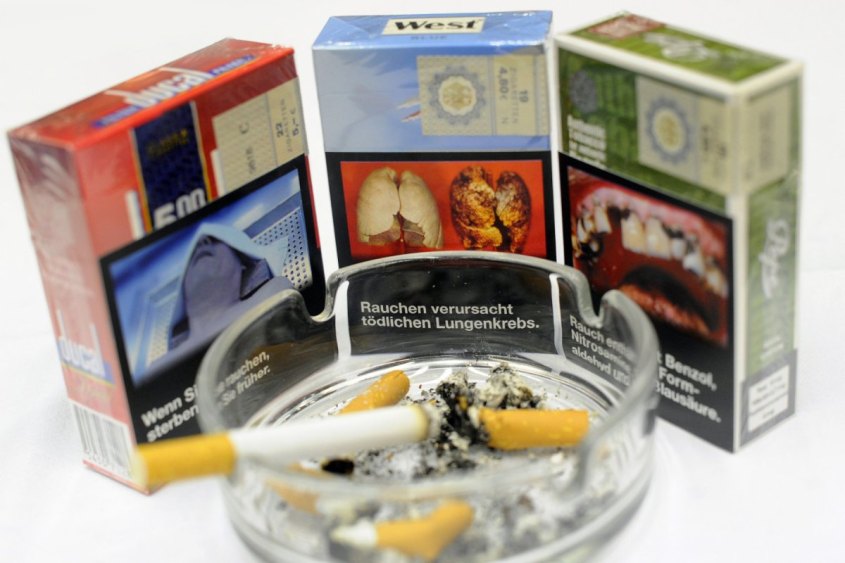
Other measures the government wants to roll out to curb smoking include reducing the number of shops allowed to sell tobacco products; decreasing nicotine levels in smoked tobacco products to make them less addictive and help people quit; and banning the sale of cigarettes with filters as some people who smoke are “under the misconception that filters mitigate the harm of smoking.”

“Smoking rates continue to head in the right direction but there is a lot more mahi (work) ahead of us,” Population Health and Prevention Group Manager Jane Chambers said.

“Smoking kills approximately 4,500 to 5,000 people every year in New Zealand – that is around 12 to 13 deaths every day due to smoking or exposure to second-hand smoke. Smoked tobacco products take too many lives, and the impacts disproportionately affect Māori and Pacific people.”

“We must move swiftly and strategically to address these marked inequities and the disastrous impacts of smoked tobacco products so tamariki (children), rangatahi (young people) and our future generations are protected from harm” she added.

The Action Plan notes that most of the measures being considered have not been tested elsewhere and that New Zealand would be the first country in the world to introduce them.

The bill will be put before Parliament in mid-2022 and if passed, could come into effect on January 1, 2023.

https://www.euronews.com/2021/12/09/new-zealand-to-ban-future-generations-from-buying-cigarettes-in-bid-to-become-smokefree-na

And I mean…There are already a lot of critical to angry comments against such bans, mainly with the argument: Ultimately, people’s freedom is restricted!!
“A state that treats its citizens with prohibitions instead of education meets with skepticism and resistance” is the basic reaction.

From the comments in German forums:
“We do not need (and I want) no government that educates responsible citizens”!
– “… people have a right to self-determination …”
– “I detest it when such prohibitions encroach on a person’s personal sphere”.

What do you think of New Zealand’s law, dear readers, that increases the minimum smoking age year after year?

I mean .. Our freedom has been looking pretty bad since Corona.
Because not everyone and not in time fought for the values ​​that define freedom.
But woe oh woe, if someone wants to pass a meaningful law for the next generations, then every hobby revolutionary stylizes himself as a courageous freedom fighter in the fight against the dictatorship of the smoking ban.

I am for the smoking ban.

My best regards to all, Venus

England: Remember ‘Geronimo’ The Alpaca, and The Government Ministry Who Murdered Him Under Claims He Had BVT. Now Post Mortem Tests Find He Did NOT. And The Public Are Supposed To Believe Justification By Them In Government For A Badger Cull ? ! ? !

Geronimo the alpaca at Shepherds Close Farm in Wooton Under Edge, Gloucestershire
© Imagebridge Geronimo the alpaca at Shepherds Close Farm in Wooton Under Edge, Gloucestershire

Geronimo ‘killed for nothing’ as campaigners claim post-mortem reveals animal did not have TB

Post-mortem tests on Geronimo the alpaca, who was euthanised by vets in August after testing positive for bovine tuberculosis, failed to provide conclusive findings of the animal’s health.

Geronimo was culled by government officials in August after his owner, Helen Macdonald lost a lengthy legal battle to stop the killing.

She insisted that the two previous bovine TB tests returned false positives and Geronimo should have been tested a third time or allowed to live to aid research into the disease.

The alpaca was put down after police officers and staff from the Department for Environment, Food and Rural Affairs (Defra) arrived on Ms Macdonald’s farm in South Gloucestershire on 31 August.

At the time, Defra indicated the initial post-mortem had found a “number of TB-like lesions“, but further tests would be needed.

Middlemiss – CVO

Chief veterinary officer Christine Middlemiss said that after further tests, it was not possible to culture bacteria from tissue samples meaning that whole-genome sequencing could not be carried out.

“Due to the complexity of the disease, further testing has not enabled us to use whole-genome sequencing to try to understand how the animal became infected in the first place,” she said.

“It is important to remember that infected animals can spread the disease to both animals and people before displaying clinical signs, which is why we take action quickly to limit the risk of the disease spreading.”

Defra said the additional bacteria culturing process carried out is not used to validate previous test results, but instead to identify which strain of the disease is present and inform decisions on testing other animals in the herd.

Dominic Dyer, who had campaigned alongside Ms Macdonald to save Geronimo, said the post-mortem examination results showed the animal did not have bovine TB.

“We finally got the full post-mortem results and it’s clear this animal did not have TB,” he said.

“This case shows the level of incompetence, negligence and deceit on TB policy within Defra that goes back decades.

The Badger Cull – Government incompetence, negligence and deceit on TB policy within Defra that goes back decades.

“Helen was a scapegoat. The poor alpaca Geronimo was killed for absolutely nothing in the most brutal disgusting way in front of the world’s media.

“This is a shameful, shameful incident when it comes to the environment policy and TB policy in this country.

George (Useless) Eustice

“It’s about time that George Eustice took responsibility, and the prime minister firstly apologise to Helen, compensated her for all the pain and suffering she’s gone through and make sure that this never happens again.”

Geronimo ‘killed for nothing’ as campaigners claim post-mortem reveals animal did not have TB (msn.com)

Related articles / news:

Geronimo the alpaca did have TB, Defra insists despite inconclusive post-mortem (telegraph.co.uk)

Geronimo the Alpaca’s owner reacts to ‘incredibly sad’ post-mortem results | ITV News West Country

Tests on Geronimo the alpaca fail to find source of bovine TB – BelfastTelegraph.co.uk

Geronimo the alpaca was wrongly put down by Government, post-mortem reveals – Bristol Live (bristolpost.co.uk)

‘Inconclusive’ evidence of TB in Geronimo the Alpaca who was put down | Wilts and Gloucestershire Standard (wiltsglosstandard.co.uk)

Culture results for Geronimo the alpaca – GOV.UK (www.gov.uk)

Our past posts relating to Geronimo:

Search Results for “Geronimo” – World Animals Voice

In lieu of this, we feel both of them should walk – out of their positions.

What a pathetic example of animal murdering when there is no justification – and remember all the thousands of badger deaths this pair are responsible for.

Regards Mark

He Who Has Control Of The Skies, Has Control Of ………..

China ‘modified’ the weather to create clear skies for political celebration – study

Researchers say Beijing used cloud-seeding to create artificial rain and lower pollution in July, in latest example of ‘blueskying’ efforts

Chinese weather authorities successfully controlled the weather ahead of a major political celebration earlier this year, according to a Beijing university study.

On 1 July the Chinese Communist party marked its centenary with major celebrations including tens of thousands of people at a ceremony in Tiananmen Square, and a research paper from Tsinghua University has said an extensive cloud-seeding operation in the hours prior ensured clear skies and low air pollution.

The Chinese government has been an enthusiastic proponent of cloud-seeding technology, spending billions of dollars on efforts to manipulate the weather to protect agricultural regions or improve significant events including the 2008 Olympics.

Make it rain: US states embrace ‘cloud seeding’ to try to conquer drought

Read more

Cloud-seeding is a weather modification technique, which sees the adding of chemicals like small particles of silver iodide, to clouds, causing water droplets to cluster around them and increasing the chance of precipitation.

The Tsinghua study’s reported findings add to a small but growing body of scientific evidence around the success of the technology. Other countries have also invested in cloud seeding technology, but China has invested billions despite questions over the degree of its effectiveness, and debate about whether manipulating the weather in one area could disrupt weather systems elsewhere.

On Monday the South China Morning Post reported a recent research paper which found definitive signs that a cloud-seeding operation on the eve of the centenary had produced a marked drop in air pollution.

The centenary celebration faced what the paper reportedly termed unprecedented challenges, including an unexpected increase in air pollutants and an overcast sky during one of the wettest summers on record. Factories and other polluting activities had been halted in the days ahead of the event but low airflow meant the pollution hadn’t dissipated, it said.

The paper, published in the peer-reviewed Environmental Science journal and led by environmental science professor, Wang Can, said a two-hour cloud-seeding operation was launched on the eve of the ceremony, and residents in nearby mountain regions reported seeing rockets shot into the sky on 30 June. The paper said the rockets were carrying silver iodine into the sky to stimulate rainfall.

The researchers said the resulting artificial rain reduced the level of PM2.5 air pollutants by more than two-thirds, and shifted the air quality index reading, based on World Health Organization standards, from “moderate” to “good”.

The team said the artificial rain “was the only disruptive event in this period”, so it was unlikely the drop in pollution had a natural cause.

Last year Beijing announced plans to expand its experimental weather modification program to an area 1.5 times the size of India – 5.5 million square kilometres – covered by artificial rain or snow. The State Council has said it aims to have a developed weather modification system by 2025, including another half a million square kilometres hosting hail suppression technologies.

In the five years to 2017 state media claimed China had spent more than US$1.3bn on the technology and induced about 233.5bn cubic meters of additional rain. In 2019 officials said weather modification practices, usually the firing of iodine-packed shells to disrupt unfavourable weather fronts, had helped to reduce 70% of hail damage annually in agricultural regions of Xinjiang.

However it has also been used for political and other significant events, including the 2008 Olympics, the 2014 APEC summit, as well as National Day parades and annual Two Sessions meetings.

Cloud spraying and hurricane slaying: how ocean geoengineering became the frontier of the climate crisis

The weather manipulation activities, also known as “blueskying”, are usually implemented in conjunction with social changes in the lead up to events, including the shutdown of factories, construction and other polluting industries, and encouraging people to stay off the streets or leave the region, said Dr Shiuh-Shen Chien, of National Taiwan University’s department of geography, in a 2019 essay for Society+Space.

Dr Chien said China’s weather authorities had “institutionalised” climate controls for decades, with technological attempts dating back to the 1980s, but was unique in using it not just for commercial or agricultural reasons but also for “propaganda purposes”.

China ‘modified’ the weather to create clear skies for political celebration – study | China | The Guardian

Regards Mark

Brazil’s Amazon beef plan will ‘legalise deforestation’ say critics.

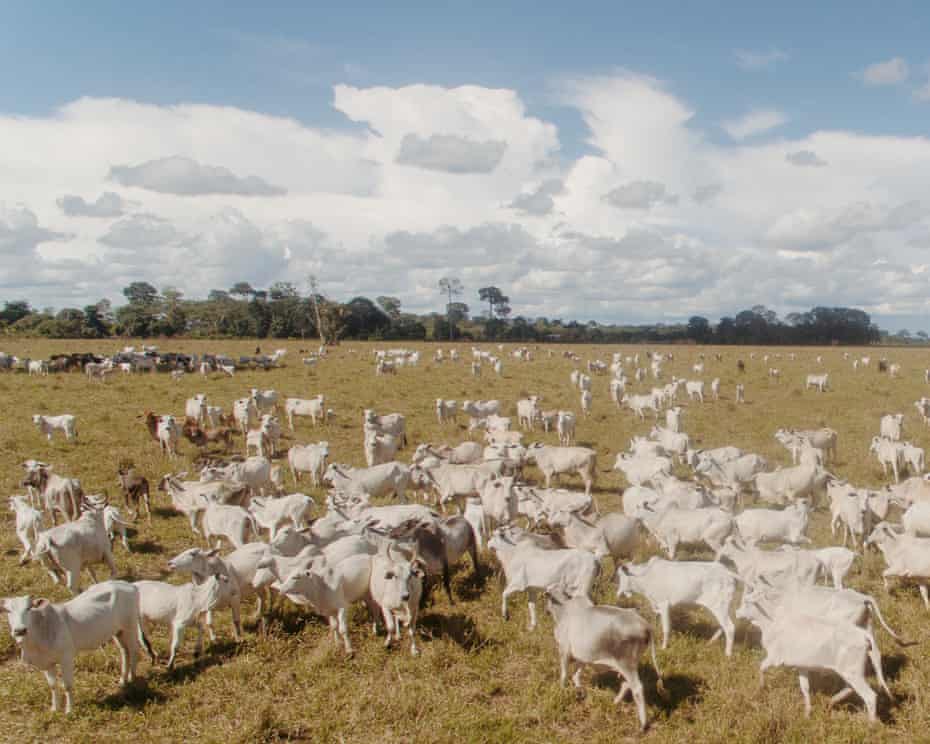
A family-run cattle ranch in Acre, Brazil
A family-run cattle ranch in Acre, within the proposed Amacro sustainable development area. Critics of the plan claim that intensifying agriculture will lead to increased deforestation. Photograph: Luisa Dörr/Fern

Brazil’s Amazon beef plan will ‘legalise deforestation’ say critics

The beef industry hopes a planned deforestation-free farming zone will tempt buyers back but many fear it will drive up illegal tree felling

Brazil’s Amazon beef plan will ‘legalise deforestation’ say critics | Deforestation | The Guardian

For many, the overriding image of agriculture in the Amazon is one of environmental destruction. About 80% of deforestation in the region has been attributed to cattle ranching, tainting beef exports.

Brazil’s beef industry hopes to tempt buyers back to the Amazon region, which covers about 40% of the country’s total area, with a new deforestation-free pledge. But critics are concerned it could effectively legalise deforestation in the region.

In May, government officials began fleshing out the details of the so-called Amacro sustainable development zone, which it is hoped will lead to a massive intensification of agriculture in the Amazon. The Brazilian president, Jair Bolsonaro, is expected to greenlight the project later this year.

The Amacro zone – an acronym taken from the states it covers: Amazonas, Acre and Rondônia – is a vast 465,800 sq km (180,000 sq mile) region in north-west Brazil. It encompasses the Mapinguari national park, Brazil’s fifth largest protected area, and the Kaxarari indigenous territory, where the tribe has struggled to defend its land against loggers. Greenpeace has identified the northern portion of the zone as an emerging deforestation hotspot.

Previous agricultural development projects have led to the loss of vast tracts of native vegetation in other parts of Brazil, but Amacro’s proponents promise it is being designed to prevent illegal deforestation. Edivan Maciel, the former agriculture secretary in the state of Acre, says the aim is to produce more beef on land that has already been cleared. It is about “optimising what we already have without having to advance over the forest”, says Maciel, a Bolsonaro-allied appointee.

But Humberto de Aguiar, a federal prosecutor in Acre who handles environmental crimes, told the Guardian that the effect of the plan is such as “to legalise the deforestation already being done”.

It’s very difficult to stay legal. If I had another means of survival, I would leave

Gabriel Santos*, small-time rancher

Amacro is the brainchild of Assuero Doca Veronez, a powerful figure in Amazonian agribusiness, who told a Brazilian news site last year that “deforestation for us is synonymous with progress”. Veronez, a ranch owner and president of Acre’s Federation of Agriculture and Livestock, was fined for illegal deforestation in 2006. He denied any wrongdoing and said he sold the property in 2002.

Veronez says more intensive cattle ranching will enable more beef to be produced on less land and protect against deforestation. He claims to produce about 2.5 times the state average for beef. “Amacro can contribute to the preservation of these areas,” he says.

The idea that a shift to intensive ranching could cut deforestation in the Amazon is disputed by some researchers. It may be a flawed approach, concluded a University of California report in 2017, which noted, “the opposite could be true”.

Judson Valentim, a researcher at Brazil’s agriculture research agency, says intensification is unlikely to change the system responsible for the breakneck pace of deforestation. Veronez, like most large ranchers, relies on a network of smaller producers, most of whom, according to Valentim, lack the technical and financial resources to invest in more efficient grazing practices.

While ranchers like Veronez may avoid deforestation, their suppliers may not have the luxury to do so, says Valentim.

Growing demand for Amazonian beef has tempted more local people to raise cattle as a viable livelihood for feeding their families, leading to a sharp increase in illegal deforestation.

Gabriel Santos*, a small-time rancher from the Amacro zone, has been fined more than $130,000 (£96,000) for illegally clearing land in the reserve for grazing. But he says converting the forest to pasture is his only viable economic option.

Revealed: UK supermarket and fast-food chicken linked to deforestation in Brazil

Read more

Because Santos’ farm has been blacklisted by regulators, he cannot sell cattle directly to slaughterhouses. So he sells to a middleman, who sells on to the big ranchers.

If big ranchers become more productive, even if they do so without cutting the forest, it pressures the forest-razing cattle producers beneath them to grow their operations as well, says Valentim.

Veronez says he has nothing to do with other people’s environmental issues: “I’m absolutely against this kind of control.”

Although Brazilian law restricts most Amazonian landowners from clearing more than 20% of their property, lack of regulatory oversight helps to explain why 94% of deforestation may be undertaken illegally.

“It is very difficult to stay legal,” says Santos, who has racked up half a dozen eviction orders because of unpaid fines. He says with an annual income of $10,000, he cannot pay. He hides when government agents come to his property and fears he will eventually be hauled to jail. He attributes a recent heart attack to the stress.

“How am I going to support my family?” he pleads. “If I had another means of survival, I would leave. I only stay here because I have nowhere to go.”

Regards Mark

UK: Christmas Shopping? Why ‘The Worst Toy In The World’ Could Be The Most Ethical Gift You Buy.

“From an early age we are presented with an idealised view of what farms are like and how animals live on them.”

World Animal Protection hopes to change that with their Factory Farm Playset. Or ‘the worst toy in the world’, as they have labelled it.

Unlike ordinary farmyard toys, the playset has been designed to show the unnatural living conditions forced upon cows, pigs and chickens on intensive farms. It even has a warning on the packaging highlighting the methane and CO2 emissions from farming that contribute to climate change.

“While 5 or 6-year-olds may not have a grasp on politics, diplomacy and global issues, they have a clear sense of right and wrong and the need to make changes,” says Lindsay Duncan, UK Campaigns Manager for Farming at World Animal Protection.

The charity hopes the 1/32 scale model will allow children “to reimagine the traditional farmyard narrative we are taught while we are young.”

What is factory farming?

It is estimated that at least 50 billion animals are reared on factory farms every year. This means they are deprived of natural light, outdoor space and sustainable feed.

Designed to maximise production and minimise costs, agribusinesses keep livestock like cattle, poultry and fish at high stocking densities on large-scale production plants.

These cramped conditions cause serious health problems for many animals.

Over 80 per cent of factory-farmed pigs in the U.S. have pneumonia upon slaughter, while battery-farmed chickens spend their entire lives in a cage smaller than an iPad.

Weight-gain drugs administered through feed cause chickens to reach slaughter weight after only 35 days. This process would take over 90 days under natural conditions.

How does intensive farming impact the environment?

The Factory Farm Playset not only highlights the ethical dilemmas of intensive farming, it also underlines its correlation with climate change.

“Animal agriculture is responsible for producing the equivalent of 7.1 giga-tonnes of CO2 per year – that’s 14.5 per cent of greenhouse gas emissions,” continues Duncan.

If left unchecked, agriculture is projected to produce 52 per cent of global greenhouse gas emissions in the coming decades – 70 per cent of which will come from meat and dairy alone.

“We have to have a reduction in meat eating and an end to factory farming to help avoid further damage to the climate. Eating less meat and growing crops for human beings instead of animals uses significantly less land and resources, drastically reducing emissions and taking the pressure off wild animals and their habits.”

And while the Factory Farm Playset is designed for children, World Animal Protection hopes adults will come to the same conclusion.

“We can all learn something from it to help protect the planet for future generations. We, the ‘grown-ups’, have to change our ways, and quickly.”

World Animal Protection’s ‘Say Yes to Less’ campaign is encouraging people in the UK to do their bit to put an end to factory farming by taking meat off their plates – for a day, a week, or a whole month.

Watch the video above to find out more.

Regards Mark

EU: Animal Welfare in Trade Policy after the Covid-19 pandemic: Another set of learnings.

In July 2021, in a special issue of the Global Trade and Customs Journal on sustainable trade, Eurogroup for Animals reacted to the publication of the EU Trade Policy Review, and to the omission of animal welfare in the text, arguing that countries need to better address the impact of trade policies on animal welfare in order to promote resilient and sustainable economies.

The COVID-19 crisis has painfully put the spotlight on the detrimental impact of economic and trade policies that prioritise profits above all. Shortly after the publication of its new strategies on food policy and on biodiversity in the midst of the pandemic, the EU also launched a review of its trade policy.

The new trade strategy published in February 2021 has been described by EU authorities as the greenest ever. The text underlines that EU trade policy will have to “unequivocally support the Green Deal in all its dimensions”. Yet, the document does not offer new proposals on making trade policy more sustainable. It also omits to address animal welfare, and how the impact of trade policy on animals has fuelled several of the challenges the planet is facing, such as the surge in antimicrobial resistance, the spread of zoonoses or the biodiversity and climate crises. 

The Opinion Piece describes the state of play for animal welfare in EU trade policy  and considers tools to improve the situation. To better address animal welfare in trade policy, the EU could pursue two strategies. Firstly, it could increasingly rely on market access tools, either applying more standards at the border or using conditional liberalisation in its trade agreements. Secondly, at the World Trade Organisation (WTO) it should promote the need to be allowed to differentiate, and thus discriminate, products based on methods of production that are invisible in final products, such as animal welfare standards. You can read more here

If the EU wants to address the root causes of the costly crises the planet is facing, it will have to consider how to ensure that its trade policy does not stimulate unsustainable production systems. Achieving such a goal will require the adoption of measures bolder than the ones listed in the new EU trade strategy. The review of EU animal welfare standards will be a test case for all who wish to see more standards applied to imports, and, hopefully, these discussions could steer needed debates at the WTO on methods of production. It is high time to transform trade policy into a real enabler of sustainability. 

Regards Mark

London, England: Mc Libel – The Biggest Corporate PR Disaster In History. A David vs Goliath Fight.

Dear all;

In the post I showed yesterday from Stacey called ‘Sweet Earth’, I mentioned that the McDonalds issue has been a very big one with animal activists in the UK for decades.  Here is the sweet earth ink:

Sweet Earth – An Article Provided By Stacey at ‘Our Compass’. – World Animals Voice

Whilst we still have issues with McD; it is at least positive to see that they have finally moved part of their food to plant based; for which the murder of animals is obviously not necessary.

So, as said, I am posting here now a film which shows how McD attempted to silence and get apologies from 2 activists in London; named Helen and Dave; over a range of issues associated with it. They both said ‘NO’; and so it went a long way for many years.

I will leave it until the end of the film for you to see the result.

In passing, the legal ‘helper’, one Keir Starmer, was a young man at the time who gave his support to the two of them.  Now, Keir is the leader of the ‘Labour Party’; the main opposition organisation to the current UK government led by Boris Johnson (we share a surname, nothing else !).

I like this video; as it has positive outcomes and shows that as with Helen and Dave; if you believe in what you are campaigning for; there is never a need to be sorry for your views and statements.

Enjoy the video – simply click on the ‘Watch on YouTube’ link below to see the film

YOU MAY NOT GET IT FROM THE VERY START; JUST GO BACK AND SEE IT ALL..

McLibel

Regards Mark

————————————————————–

From Spanner films who made the video:

Hello. This is the official, full-length (81 min) version of our 2005 documentary, McLibel. This film was made completely independently (no studio/broadcaster backing) over four long years. We’re a tiny independent film company always struggling to make ends meet, so if you watch for free here, please make a donation – http://spannerfilms.net/donate – and also sign up to our email list: http://www.spannerfilms.net/mailing_list . Thanks v much and enjoy the film, Franny & Lizzie from Spanner Films – – – – – – – – – – – – – – – – – – – –

The first documentary from renowned director Franny Armstrong (The Age of Stupid, Drowned Out), McLibel tells the true story of two ordinary people who battle McDonald’s in what became known as “the biggest corporate PR disaster in history” (Channel 4 News). The Seattle Times called the film an “irresistible David and Goliath tale… you can’t help but cheer along” and the Sydney Morning Herald described it as “an often-hilarious exposé of big business arrogance… and an extraordinary example of independent filmmaking”.

McDonald’s often used the English libel laws to suppress criticism. Major media organisations like the BBC, Channel 4 and The Sun had backed down in the face of their legal threats. But then they sue single father Dave Morris (41) and gardener Helen Steel (34). In what became England’s longest-ever trial, the “McLibel Two” represent themselves for three and a half years in court against McDonald’s £10 million legal team.

Every aspect of the corporation’s business is cross-examined, from junk food and McJobs, to animal cruelty, environmental damage and advertising to children. McDonald’s try every trick in the book against the pair, including legal manoeuvres, secret settlement negotiations, a visit from Ronald McDonald and even spies.

Seven years later, in February 2005, the marathon legal battle finally concludes at the European Court of Human Rights – will the result take everyone by surprise?

Filmed over ten years, with courtroom reconstructions directed by Ken Loach, McLibel features the first interview with a McDonald’s spy, as well as in-depth contributions from Eric Schlosser (Fast Food Nation) and Keir Starmer (then Helen and Dave’s pro bono lawyer, now the Leader of the Labour Party).

The McLibel trial became a cause-celebre in the UK, resulting in changes both to UK law and to McDonald’s itself. It is often cited as influencing works which followed, including Fast Food Nation, Jamie’s School Dinners and Super Size Me.

The producers estimate that more than 26 million people have seen McLibel on TV, cinema, DVD and at local screenings worldwide.