Category: Environmental

UK Prime Minister Boris Johnson tells world leaders Coronavirus was triggered by ‘demented’ people who ‘grind up the scales of a pangolin’ in a bid to become more ‘potent’.

It's a mammal. It looks like an artichoke. And China is driving it toward  extinction - Los Angeles Times

UK Prime Minister Boris Johnson blames Chinese for coronavirus pandemic telling world leaders it was triggered by ‘demented’ people who ‘grind up the scales of a pangolin’ in a bid to become more ‘potent’

  • He made the remarks in a virtual speech to the One Planet Summit yesterday
  • Pangolins are heavily-trafficked scaly anteater-like creatures found across Asia
  • Endangered species blamed for transmitting the virus from bats to humans

Read the full article at:

Boris Johnson blames Chinese for Covid saying pandemic triggered by ‘demented’ traditional medicine | Daily Mail Online

Pakistan's pangolin threatened by Chinese demand |The Third Pole

Consider alternatives to pangolin scales, traditional Chinese medicine  professors urge at conservation conference in Hong Kong | South China  Morning Post

Pangolin scale medicines no longer covered by Chinese insurance | National  Geographic

Regards Mark

Japan: They Love Killing Whales – Campaigners condemn killing of minke whale trapped in nets in Japan.

https://www.theguardian.com/world/2021/jan/11/campaigners-condemn-killing-of-minke-whale-trapped-in-nets-in-japan

Campaigners condemn killing of minke whale trapped in nets in Japan

Animal killed with what appeared to be exploding harpoon, after one ‘half-hearted’ attempt to free it

Animal welfare campaigners have condemned the killing of a trapped minke whale off the coast of Taiji, a town in Japan best known for its annual dolphin cull.

The young whale, which had been trapped inside nets since 24 December, was killed early on Monday morning before being taken ashore wrapped in blue tarpaulin, according to the Humane Society International (HSI).

Ren Yabuki, an animal rights activist who filmed the whale throughout its 19-day ordeal, said fishermen tied a rope around its tail fin and forced its head beneath the water, where it took around 20 minutes to die.

Death in such situations usually occurs because the whale clamps its blowhole shut and suffocates.

https://08a329b999cc698168698249c8f9dd9c.safeframe.googlesyndication.com/safeframe/1-0-37/html/container.html “Oh, no! The fishermen have killed the minke whale now,” Yabuki can be heard saying as he continued to film. “I’m so sorry … oh, no.”

HSI said it was “devastated” and “horrified” by the whale’s death, days after it and other animal welfare groups had called for its release.

“We feel saddened by this dreadful outcome. It is soul-destroying to think that by merely lifting the net three weeks ago, this poor animal could have been swimming free instead of being trapped in prolonged distress only to be harpooned and butchered for commercial sale in local markets,” HSI’s animal welfare programme manager, Georgie Dolphin, said in a statement.

The local fishing cooperative said last week it would attempt to free the whale, which measured about four or five metres in length, but added that the animal’s size and strong tidal currents could make that impossible.

Yabuki, the director of the Japanese NGO Life Investigation Agency, said he had witnessed fishers make only one half-hearted attempt to free the animal soon after it became trapped.

Japan abandoned its “scientific” whaling programme in the Antarctic after years of international pressure, but resumed commercial whaling in its own waters in July 2019. This year Japanese whalers will be permitted to catch up to 383 large whales, including 171 minkes, HSI said.

“While we mourn the tragic passing of this animal, we know that a similar brutal end comes to many more whales off the coast of Japan every year. They are the silent victims of Japan’s continued commercial whaling” Dolphin said. “What was rare was for it to be witnessed.”

Taiji, located in a remote part of the Pacific coast, attracted global attention after the 2009 release of the award-winning documentary The Cove, which followed fishers as they pursued dolphins in the town’s annual “drive hunts”.

Some of the animals are spared and sold to aquariums and marine parks for huge sums, while others are slaughtered for their meat.

Taiji’s fishers have defended the dolphin cull, telling the Guardian that hunting cetaceans was part of the town’s heritage and a vital source of income for the local economy.

  • This article was updated on 12 January to correct the description of how the whale was killed.

Regards Mark

Great article by The Guardian as always !

UK: New Viva! Research: 9 in 10 Britons Want Intensive Farming Methods BANNED.

End Factory Farming Logo

New Viva! Research: 9 in 10 Britons want intensive farming methods BANNED
 

Our new poll reveals that an astounding 85 percent of people want to introduce an immediate ban on intensive factory farming.

We also found that some 31 percent of Britons are set to slash their meat consumption or go vegan in 2021 amid Covid-19 concerns. Londoners are set to make the biggest change to their diets – with around 44 percent vowing to avoid animal products.

Additional links:

Viva! poll – 9 in 10 Britons want intensive farming methods banned amid virus fears | Markets Insider (businessinsider.com)v

European Business Cision Daily News – European Business Magazine

Viva! poll – 9 in 10 Britons want intensive farming methods banned amid virus fears (yahoo.com)

ACTION

Open letter to UK government – please sign:

End factory farming – Go Vegan Now! | Viva! – The Vegan Charity

It’s time to go vegan

As you know, 3 in 4 of the world’s new or emerging infectious diseases such as coronavirus come from animals – mainly from factory farming and the trade in wildlife. This means that 57 zoonotic diseases were responsible for an estimated 2.6 billion cases of human illness and 4.4 million deaths in 2020.

But the good news is, experts agree a vegan diet can help people lose weight, reverse diabetes, lower their blood pressure and cholesterol, reducing their risk of severe Covid-19

We must go vegan now to prevent future pandemics!

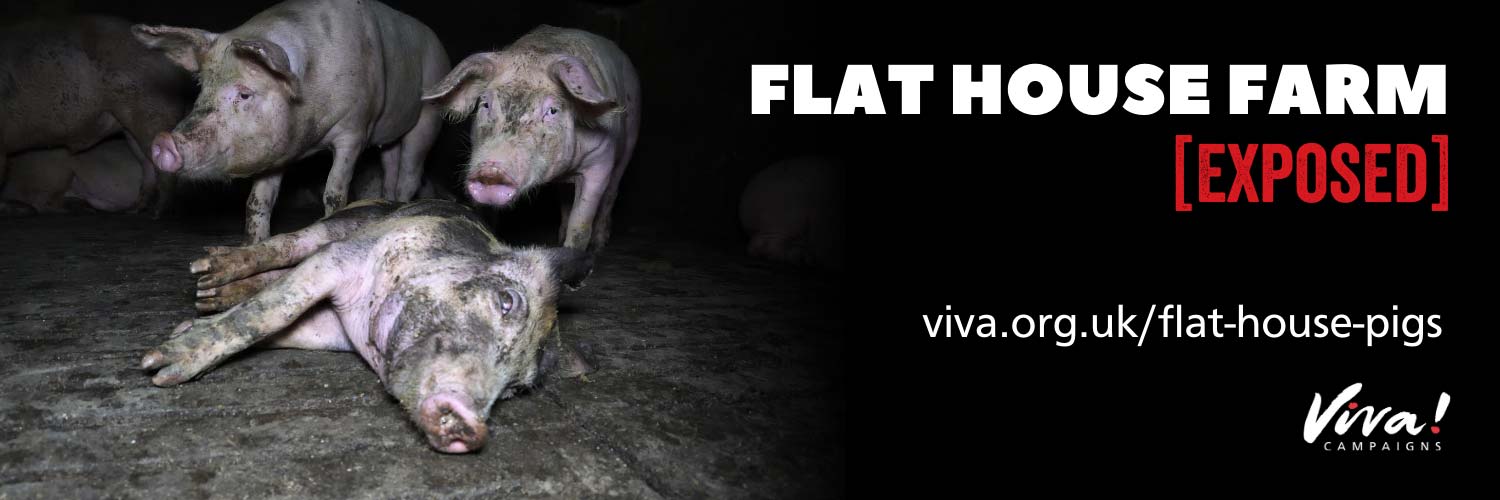
Flat house factory video investigation:

The Flat House Factory | End Factory Farming Before It Ends Us – YouTube

USA: Stop Trump’s Last-Ditch Environmental Attacks. On Line Petition – Please Support.

WAV Comment – The USA has never been more divided than under Trump. A final attempt now by the loser that the world hates – “I am going to take my stumps home and sulk” as we say in UK; ‘stumps’ being cricket stumps; to attempt to ruin everyone’s game when you do not get exactly what you want; and sod everyone else.

This president (very soon not to be) is a loser and has spent millions trying to keep himself as the ‘Caligula’ that dominated ancient Rome.  https://en.wikipedia.org/wiki/Caligula – “There are few surviving sources about the reign of Caligula, though he is described as a noble and moderate emperor during the first six months of his rule. After this, the sources focus upon his cruelty, sadism, extravagance, and sexual perversion, presenting him as an insane tyrant

Now, as he always has done in his endless deranged approach to environmental issues; NRDC inform us that he is making a last ditch attempt with environmental attacks; or taking his stumps home yet again !

Please use the ‘Take Action’ link below to add your name to putting this soon to be ex president where he belongs – far away in the deepest wild on his own; so that he can think back to why he lost the second term.  Maybe animal welfare and the environment just has a little bit to do with this ?


From NRDC:

Stop Trump’s Last-Ditch Environmental Attacks

In the final stretch of his presidency, Donald Trump and his administration are working furiously to sell off our public lands and waters, wreaking havoc on the climate and communities across the country. The Arctic National Wildlife Refuge, Tongass National Forest, and thousands of acres of wildlands have all been put on the auction block for the highest bidder to dig, drill, and mine, which would extensively damage the environment and displace countless Indigenous communities. Demand that Trump and Interior Secretary David Bernhardt immediately halt these desperate, reckless attacks on our planet.

TAKE ACTION

Stop Trump’s Last-Ditch Attacks on the Environment | NRDC

Take Action Wording:

In the final days of his presidency, Donald Trump is still wreaking havoc on our environment and communities — opening the Arctic National Wildlife Refuge to oil and gas drilling for the first time in history, removing protections for Alaska’s Tongass National Forest, allowing more logging and drilling in National Forests, opening hundreds of thousands of acres of land across the west for oil and gas drilling, gutting essential safeguards for millions of birds, and more.

Tell Trump and Interior Secretary Bernhardt that you oppose their final desperate attempts to allow their big polluter allies to pillage public lands and waters and wipe out imperiled wildlife with impunity — and that you support President-elect Biden’s commitments to undo Trump’s reckless actions as soon as he’s sworn in.

Please sign the petition to shut this madmans actions up.

Veganuary 2021: Sign-ups are Breaking All Records – Over 500,000 People Have Already Pledged to go Vegan In Just First Week.

Veganuary 2021 sign-ups are breaking all records as less than a week into January over 500,000 people have already pledged to go vegan.

Record 500,000 people pledge to eat only vegan food in January

Veganuary taken up by rising number of people trying plant-based alternatives to meat.

A record 500,000 people have signed up to the Veganuary challenge to eat only plant-based foods for a month. The milestone is double the number who pledged to go vegan for January in 2019.

A quarter of those taking up the challenge – 125,000 – are in the UK,

Read all about it, and lots more at:

https://www.theguardian.com/environment/2021/jan/05/veganuary-record-number-people-pledge-eat-vegan-food-january

USA: Save Tule Elk From Being Killed / Baby Trump Vetoes Bill that Would Eliminate Use of Large-scale Driftnet Fishing in Federal Waters. Please Support Campaigns.

SAVE TULE ELK FROM BEING KILLED (seaturtles.org)

Next week, the fate of the free-roaming tule elk at Point Reyes National Seashore will be decided.

I need your help right now to protect these magnificent animals from being removed—or worse, killed—from the National Seashore.

Tell California officials to vigorously oppose the Point Reyes-North District Golden Gate NRA General Management Plan and Environmental Impact Statement at next Thursday’s hearing of the California Coastal Commission.

The plan will eliminate the free-ranging tule elk in Point Reyes National Seashore, despite vehement opposition from California residents and wildlife advocates.

Up until a few decades ago, tule elk, endemic to California, were thought to be extinct as a result of unfettered commercial hunting and displacement by cattle. Many California residents and groups, including the National Park Service and U.S. Fish & Wildlife Service, spent decades working to re-establish a free-ranging herd on the National Seashore.

Today, the tule elk are living proof of the success of conservation. 

Please let California officials know that it is unreasonable to support the Point Reyes-North District Golden Gate NRA General Management Plan and Environmental Impact Statement—a plan that will eliminate the free-ranging tule elk that were so recently brought back from the brink of extinction, and that the Park Service and many others fought so hard to re-introduce.

This disastrous plan is up for a vote NEXT THURSDAY, January 14.

Please let California officials know that you oppose this proposal not only for its plans to eliminate tule elk from the Point Reyes National Seashore but for the additional and expanded agricultural uses which are certain to cause further conflicts between ranching operations and native wildlife.

Thank you for your support,  

Our ocean just suffered a huge loss.

On Friday, President Trump vetoed a bill that would gradually eliminate the use of large-scale driftnet fishing in federal waters off the coast of California.

The West Coast driftnet fishery is the only one remaining in the United States for good reason — this antiquated fishing method catches and kills marine animals in horrifying amounts. In addition to potentially saving the Pacific leatherback sea turtle from extinction, the Driftnet Modernization and Bycatch Reduction Act would have provided funds for fishers to transition to more sustainable fishing methods with less bycatch of non-target species.

This attack on protected marine species is an attack on our ocean, our environment, our climate, and YOUR voice, Mark.

And Turtle Island Restoration Network and our partners will respond immediately — and do everything within our power to ensure the legislation is re-introduced under the Biden administration and signed into law. We won’t be able to respond so effectively without the support of activists like you.

Please help us share this disappointing news on Facebook and Twitter.

If Trump’s veto is allowed to stand, innocent marine animals — like whales, dolphins, fish, and sharks — will continue to be captured, injured, and even killed with little-to-no environmental review, public input, or analysis of long-term impacts on the environment, our economy, or the people who live near this habitat. 

Make no mistake: this decision is a clear attempt to put politics above common-sense wins for wildlife and for fishers.

We must — and will — do everything in our power to stop the Trump administration’s veto and save our ocean, including fighting back in federal court if necessary.

Thank you for standing with us at this critical moment.

Sincerely,  

Annalisa Batanides Tuel
     Policy & Advocacy Manager 
     Turtle Island Restoration Network

Trump cartoon posted on Port Washington-Saukville District Facebook

Palm oil destroys life

By now, you may have heard about palm oil: it’s a substance used in many products as a preservative, appearing in everything from foods to bath soaps.
Unfortunately, the way we farm it is rife with environmental and animal abuses. That’s why it’s so disheartening to learn that a brand like “Earth Balance” that produces vegan products and claims to be both environmentally and animal friendly actually uses it in their products.

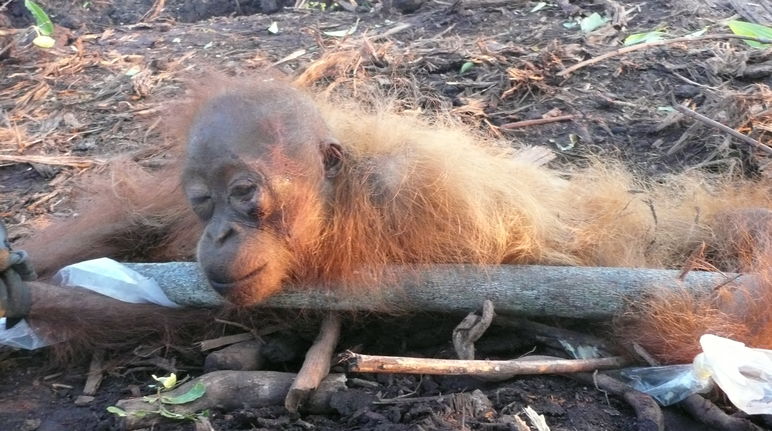
Palm oil is a vegetable oil made from the fruit of an African oil palm tree and it’s the leading cause of orangutan extinction. That’s because these primates’ habitat is being cleared rapidly to make room for palm oil plantations.

And when their habitat disappears, they are forced into spaces where they come into more conflict with humans and are poached.

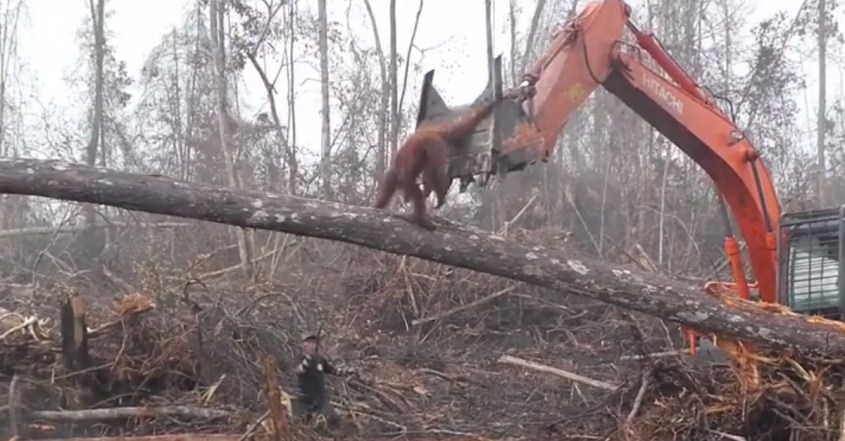
Even worse: farmers often set fire to the orangutans’ forest homes, causing whole animal communities to go up in flames.

Just in the past few years, wildlife sanctuaries have seen huge increases in the number of horrifically burnt orangutans needing immediate life-saving care.

But not only are orangutans threatened by palm oil plantations, so is the broader environment. The palm oil tree can only grow in extremely humid conditions, but that’s where tropical forests are that act as a carbon sink for us.

Carbon sinks are important because they absorb greenhouse gases from the atmosphere, and when they’re upended, all of that stored carbon is released — making things that much worse.

So every time another forest is bulldozed to plant palm oil trees, we are inching closer to both devastating climate change and the loss of the entire orangutan species!

Destroyed forest, destroyed habitat

Palm oil is found in somewhere around 50% of western products. While it’s good for individual consumers to try not to buy products with palm oil, that’s not possible for everyone to practice, nor does everyone know how bad it is to support this industry.

Continue reading “Palm oil destroys life”

The Goodfellow tree Kangaroo

This cute kangaroo is endemic to the Huon Peninsula in northeast New Guinea.
A population on Umboi Island was likely introduced by humans.
The Goodfellow tree kangaroo is a medium-sized, short-tailed tree kangaroo.


Unlike the kangaroo we know, the fluffy tree kangaroo doesn’t live on the ground, but rather in the high treetops of the rainforests of Australia and New Guinea.

Females reach a head-body length of 51 to 63 cm, males are in most cases 61 to 66 cm larger.
The tail of the females is 45.5 to 68.5 cm long and the male is 55.5 to 62 cm long.
The weight of the animals is between 7 and 10.5 kg.

The fur is dense and rich in contrast. The basic color is brown, throat, chest, forearms and lower legs, the insides of arms and legs, hands and feet, the tail, the muzzle, and the ears are light yellowish.

They have bear-like claws so that they can hold on to the trees. The fur colors also vary depending on the species. There are tree kangaroos with black, gray or gray-brown, red or even white fur.
The animals are solitary, not easy to meet, and inhabit relatively extensive territories, usually over 120 hectares in size.
Overlaps with the territories of other animals of the same sex occur.

Goodfellow tree kangaroos feed primarily on leaves of trees, shrubs, ferns, orchids, and herbs.
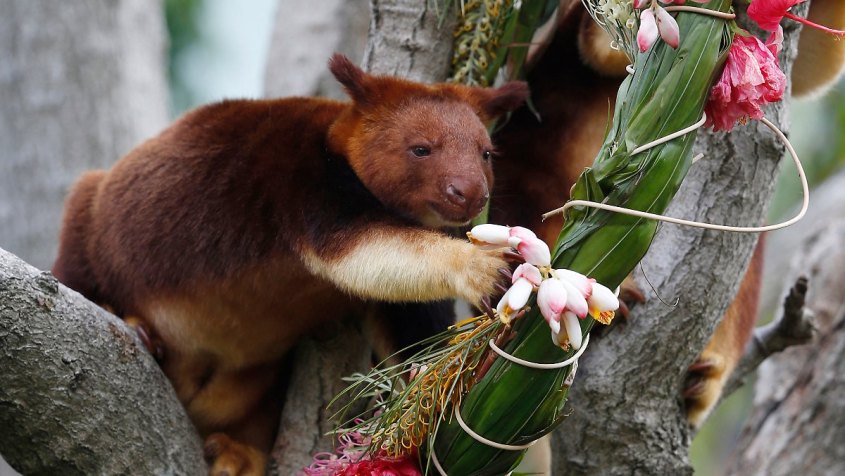
Fruits and flowers are also eaten, but makeup only a small part of the diet.

The sexes lead a solitary way of life and only meet briefly to mate. The females have a well-developed pouch that opens upwards.
Inside the bag, there are four teats for suckling the offspring.
After a gestation period of 30 to 40 days, the female gives birth to one or two young animals that are only two centimeters long and weigh one to two grams.

The birth takes place in a sitting position. The little developed young animals are in the embryonic stage at birth and crawl independently from the birth canal into the pouch and suck on one of the teats. The young remain in the bag for about six months before they lookout for the first time.
The kittens leave the pouch for the first time at eight months, but keep returning to the pouch. By the age of ten to twelve months, they are weaned and independent.

The Goodfellow tree kangaroo is unfortunately threatened because of the heavy hunting of the animals by the local population and the clearing of the forests and is listed as critically endangered in the IUCN Red List.

The total range of the species is less than 14,000 km² and the total number of fully grown individuals is estimated at only 2500 specimens.
The last retreat points are now only in a few reserves in the highland rainforests.

However, it is only a matter of time before these forests will also fall victim to the chainsaws of the wood industry. Goodfellow tree kangaroos are an easy target for poachers, as the animals move slowly and can hardly escape.

http://www.tierdoku.com/index.php

And I mean…We are just a somewhat advanced breed of monkeys who have made themselves the only living being with rights through the right to vote, and who can decide about the (hardly existing) rights of animals.
So this brood of monkeys, human species, is no better in any way, but it just took that right away.

One of the worst injustices on the planet is that the human species is getting more and more and the animal species is getting less and less

My best regards to all, Venus

Adidas is Developing Plant-Based Leather That Will Be Used To Make Shoes.

Adidas plant based sneakers

Adidas is developing plant-based leather that will be used to make shoes, its latest sustainability initiative after producing 15 million pairs of recycled plastic sneakers in 2020

Adidas developing plant-based leather to be used in shoes – Business Insider

Adidas is developing a plant-based leather material that will be used to make shoes. 

The material, which Adidas is working on with partners, will be made from mycelium, which is part of a fungus. 

The new material is one of several sustainability initiatives Adidas has in the works. The company said it produced 15 million pairs of shoes in 2020 that were made from recycled plastic waste collected from beaches and coastal regions.

Adidas will also use recycled polyester in 60% of its products starting in 2021 and has started developing a new recycled cotton material.

Adidas is going plant-based. 

The athletic-wear company announced on Monday that it’s working on a new material, a plant-based leather that will be used to make shoes. The leather alternative is made from mycelium, which is part of a fungus. 

Adidas said it is working on the plant-based leather with partners, but did not announce when shoes made with the material would join its lineup.

The company began offering a vegan version of one of its most popular shoes, the Stan Smith, in 2020, and has committed to banning fur from its products.

The new material is one of several sustainability initiatives for Adidas, which has stated a goal to end plastic waste. Adidas revealed that in 2020, it produced 15 million pairs of shoes made from recycled plastic waste and said its goal is to produce 17 million pairs next year.

The plastic used in the shoes was collected from beaches and coastal regions, Adidas said. 

Adidas added sneakers made of recycled plastic to its lineup in 2017 when it unveiled “Parley” versions of its popular Ultraboost running shoes. The shoes contain thread made from ocean plastic waste, which is incorporated into the laces, heel webbing, heel lining, and sock liner covers.

Beyond upcycled plastic, Adidas has started developing a new recycled cotton material and is already using recycled polyester in its product lineup — the company announced Monday that more than 60% of its product range will contain the material beginning in 2021.

Sustainability has been an emerging trend in the footwear industry for several years, with Adidas and sneaker upstarts like Allbirds leading the charge (the two companies are even collaborating on a low-carbon-footprint shoe together). More recently, companies like Everlane and Nike have also begun manufacturing their own more sustainable footwear. 

The trend is driven by sneakers’ popularity, particularly in the US, where they’re often seen as a status symbol. As Business Insider’s Dennis Green reported in 2019, greener footwear is likely to make a bigger impression with customers than other types of apparel. 

Plus, as Eric Liedtke, Adidas’ executive board member and brand head, told Business Insider last year, making sneakers more sustainable is a logical place to start given the complex nature of the manufacturing process.

“Footwear — it’s the greatest challenge, if you will,” Liedtke said. “You’ve got to take on the greatest challenge first and set the edge, or set the point on, bringing it to the rest of your product offering.”