Category: Farm Animals


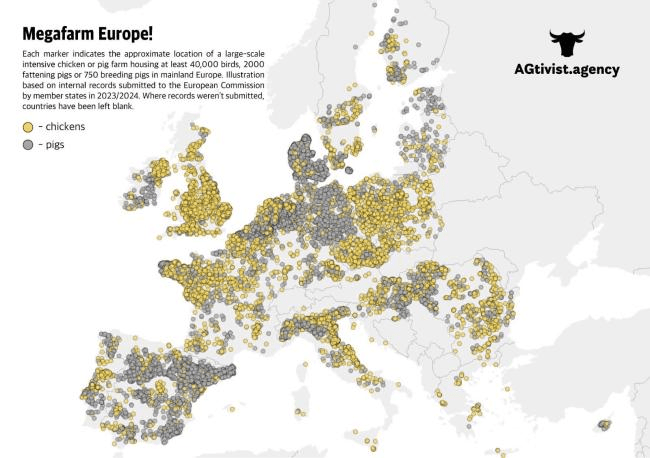
A new investigation has revealed that the EU is home to 22,263 industrial chicken and pig farms – housing more than 516 MILLION Animals in the worst factory farm conditions.
Despite this, the EU Commission, some producers, and even some Members of the European Parliament (MEPs) are advocating for a further increase in the number of farmed animals.
But what would this increase mean for animal welfare; human health, as well as impact on the environment ?

https://stories.agtivistagency.com/the-face-of-european-farming/
The AGtivist data led investigation has, for the fist time, identified, and mapped these industrial farm around Europe; showing that the EU has 10,862 chicken farms; each holding at LEAST 40,000 birds; raised for egg or meat production, and 8,854 pig farms, holding at least 2,000 pigs each; or 2,547 for breeding pigs.
During the past ten years, 2,746 mega farms have started operations with the EU; with the highest rate of development happening in Spain, where 1,385 new industrial farms started up in the past decade. 5,314 permits for such farms were applied for during the last decade.
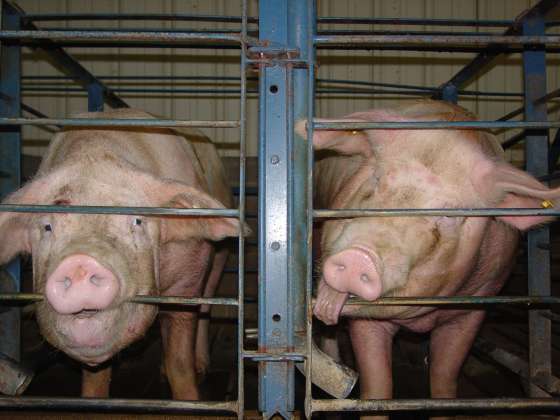
Whilst mega farms are sweeping across the EU, small and medium ones are rapidly declining. Between 2005 and 2020 the EU lost 5.3 million farms; most of which were smallholdings. – whilst the total agricultural land area remained stable, thus indicating the change – consolidation – into larger operations.
This represents a decrease of 44% within 15 years.
Meanwhile, the number of mega farms GREW by 56% within the same period; with the top 8% of the highest producing farms controlling a staggering 63% of all livestock in the EU. Here is the proof if you question what we say.
The income disparities between these farms increased by up to sixty fold. Proof – https://www.theguardian.com/world/2024/nov/02/revealed-the-growing-income-gap-between-europes-biggest-and-smallest-farms?utm_source=chatgpt.com
Key statistics from the report include:
- France has the highest number of industrial chicken farms at 2,342 farms.
- Spain has the highest number of industrial pig farms, with 2,580 for fattening pigs and 821 farms fot breeding pigs. It is also the country that saw the biggest expansion of new farms starting to operate in the last decade.
- Italy is in the top five countries for both industrial pig and chicken farms – 2,146 combined.
MEGA FARMS OPERATE INTENSVE FARMING SYSTEMS where chickens are densely packed into barns with INADEQUATE VENTILATION, INSANITARY CONDITIONS; ALONG WITTH NO ACCESS TO OUTDOOR SPACE OR NATURAL LIGHT.


The AGtivist investigations in Italy with our colleagues Essere Animali; revealed the reality of animal welfare on the ground; with chickens at a farm in Bergamo living in their own excrement and unable to stand no their feet because of their unnatural growth.
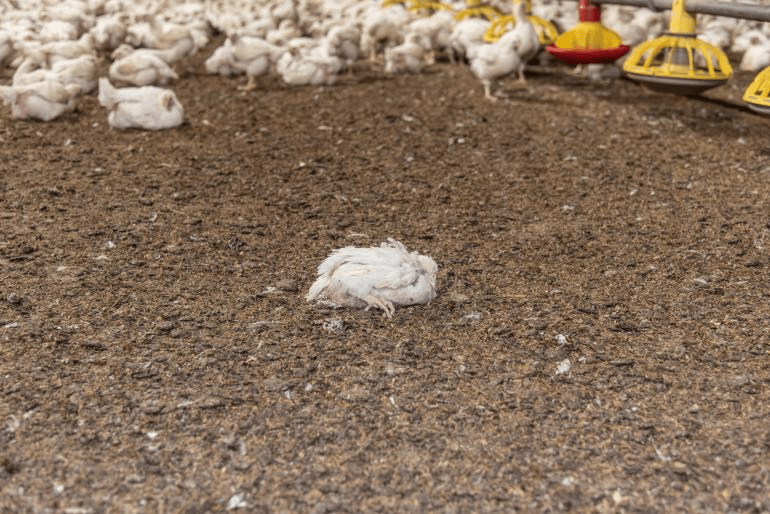
Photo – Stefania – AGtivist / Essere Animali.
In Brescia, investigators witnessed hens cramped together, on top of each other; while carcasses were left to decompose for around 3 weeks.
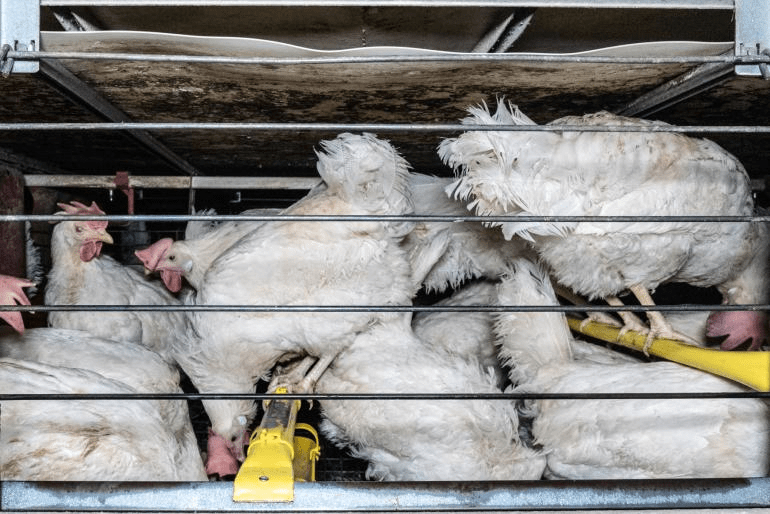
Photo – Stefania – AGtivist / Essere Animali.
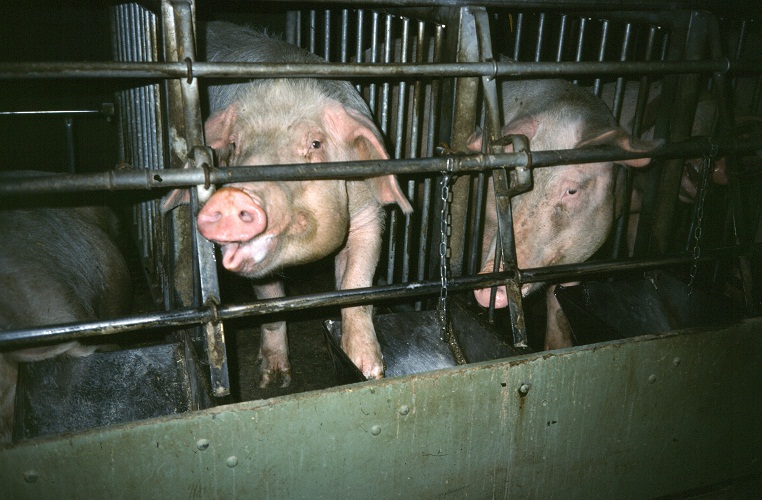
In Spain, local investigators highlight the concentration of pigs in intensive farms, with pigs confined in overcrowded, unsanitary conditions, suffering from both untreated injuries and disease. Sows are enclosed in metal crates of barely two metres squared; preventing natural movement and leading to severe physical repercussions.
Further Link
Animal Welfare Coalition
https://www.dailymirror.lk/breaking-news/Animal-cruelty-still-punishable-by-Rs-100-fine/108-311404
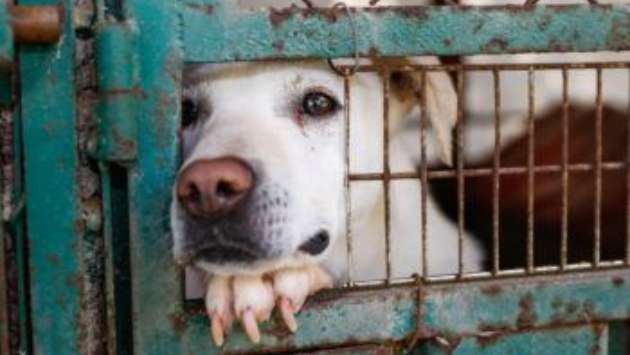
Coalition (AWC) has raised concerns over the outdated legal framework governing animal cruelty offences in Sri Lanka, calling for swift legislative reforms to better protect animals.
According to Charuka Wickremesekera, an executive member of the AWC, the country’s current penalties for animal cruelty offences remain based on the Animal Cruelty Act of 1907, enforced through the Cruelty to Animals Ordinance. Under this ordinance, individuals found guilty of most animal cruelty offences can be fined up to 100 rupees, imprisoned for up to three months, or both. In cases involving the killing of an animal in an unnecessarily cruel manner, the maximum imprisonment term extends to six months.
Wickremesekera said that while the Sri Lanka Police continue to make efforts to tackle animal cruelty cases, the absence of robust, modern laws hinders their ability to impose adequate punishments and raise public awareness through legal action.
“It’s time to improve the legal system and protect animals better,” Wickremesekera said.
He also highlighted the growing role of social media in raising public consciousness about animal welfare issues. The sharing of videos exposing acts of animal abuse has not only discouraged such behaviour but also empowered the public to report incidents more readily.
“People now think several times before harming animals after seeing these videos online,” he said. “In the past, there may have been many cases of animal cruelty, but there were no proper organizations where people could complain. Now, many animal welfare groups receive a large number of complaints from the public.”
The AWC believes that alongside stronger laws, public engagement and awareness will play a critical role in eradicating animal cruelty in the country.
Published: 11 Jun 2025
https://euroweeklynews.com/2025/06/11/whats-up-with-spains-animal-welfare-law/

One of 500 abandoned dogs at AID – SHIN in Mijas, ready for adoption. Credit: EWN
being of pets across the country but has ended up, in the eyes of many, worsening an already bad situation. Since its introduction, animal abandonment has only increased, and animal rights are worse than ever.
Local management challenges, lack of consultation with professionals, and a perceived ideological bent: with more than 30 million pets in Spain, it was inevitable that a one-size-fits-all approach wasn’t going to work for everyone. One in three households owns at least one companion animal, and not everyone can afford the changes. In Spain, an estimated 6 million pets remain unregistered, posing potential public health risks. In 2023, 285,000 dogs and cats were abandoned, highlighting the need for stricter regulations. But at what financial cost?
The new law sets standards for pet ownership and treatment, including a ban on leaving pets alone for more than 72 hours (24 hours for dogs) and prohibiting their habitual confinement in spaces like terraces, balconies, storage rooms, or vehicles. Sales of dogs, cats, and ferrets are now restricted to authorised, licensed breeders, excluding some intermediaries and private individuals.
Breeds classified as potentially dangerous, such as Rottweilers, remain subject to strict handling rules, including licences, short leashes, and muzzles. Notably, exemptions exist for working animals, like the Spanish Legion’s goat, which can still parade on October 12, or mules and oxen in living nativity scenes, unless their owners register them as pets in the new mandatory pet registry.
Despite its intentions, the law faces hurdles that hurt. Councils are tasked with collecting stray and abandoned animals and providing 24-hour veterinary services, but many lack the funds and resources to comply. As well, local governments must manage feral cat colonies, requiring trained volunteers or staff to capture, vaccinate, deworm, sterilise, and return the cats – a costly mandate that many areas struggle to meet.
If a pet owner now wants help, they have to go to a vet. For many who already owned a pet from before the introduction of the law, vet prices are not an option. According to Fabienne Paques of AID – SHIN, an animal rescue in the Malaga Region with 500 abandoned dogs and 150 cats, ‘A dog needs a chip, and it needs a rabies shot. Before you could go to a hardware shop for that. Now, it costs a lot to go to a vet. Before it was €20, and now it’s €80. To get some dogs castrated or sterilised (as per the new law), it can cost up to €500. The new law considered pets things, items, not animals.’ The shelter has recently had an inordinate amount of pets abandoned at their gates. ‘People don’t know what to do with them. The new law brought a lot of negativity. They say it’s not true, but it’s an absolute disaster.’
Dilemma under new animal rights law of what to do with existing pets?
A few kilometres away in the Miralmonte urbanisation, neighbours are up in arms about one of their neighbours who has several macaws and dogs which appear to be breeding amongst themselves. According to the neighbours, the animals make a terrible noise, and their droppings are attracting rats. The owner at the centre of the situation used to have a pet shop in nearby Coín but has been stopped from selling animals from the store she inherited from her parents. So, now, unable to afford to put them down, she keeps the animals at home. She cannot sell the animals by law, and the local police are reluctant to do anything as they can see both sides of the argument.
Critics of the law, including Professor Christian Gortázar, argue the law lacks scientific grounding and was driven by ideological motives, potentially threatening livestock industries by overly humanising pets. They also claim that there in no provision for pet owners with less resources to cope with the new rules.
José Luis López-Schümmer, president of the Artemisan Foundation, notes the law’s inconsistency with European legislation, which excludes wildlife from welfare regulations. The law also exempts animals raised for food, scientific experiments, bullfighting, or hunting, countering claims that it severely impacts the economy.
A year and a half after its enactment, the law’s limited consensus, even among its proposing parties, and incomplete framework have hindered its full application. Its true long-term impact – positive or negative – remains to be seen, as further data and regulatory clarity are needed to assess this polarising legislation. What is certain, in 2025, is that the situation with the welfare of animals is nowhere near being improved.
Now, unable to buy a dog from a pet shop, ACE – SHIN have a broad selection just looking for a home. Check out their website as they can arrange adoptions in may countries around Europe.
https://ace-charity.org/en/over/


12 Jun 2025
Charity Worldwide Veterinary Service launches Global Veterinary Challenge Award with BVA to allow scholars to design bold and impactful international projects.
£100,000 award scheme to encourage students to devise big, bold and impactful international animal welfare projects was launched today (12 June).

WVS-organised sterilisation campaign in the Andes, Ecuador.
UK veterinary charity Worldwide Veterinary Service (WVS) and the BVA joined forces to launch the Global Veterinary Challenge Award.
As part of the scheme, launched as part of BVA Live in Birmingham, students will be encouraged and empowered to design a project that champions an international animal welfare issue, and win the cash to help its launch.
Solutions
Students are being encouraged to develop an innovative, sustainable solution to a pressing global animal welfare issue close to their hearts.
The Global Veterinary Challenge Panel will judge the entries, with the winning project allocated funding up to £100,000 and the successful team or individuals working alongside WVS to bring it to life.
To apply, students must submit a proposal for any species that champions a welfare need in an effective, scalable and sustainable way and any location worldwide.
Work together’
Chief executive and founder of WVS, Luke Gamble, said: “The profession is most powerful when we work together as team. Most of us have causes we care about and sometimes it is incredibly hard to find a way to champion them. This challenge solves that.
“The winning idea will not only have funding, but full support to drive forward a project that will make an impactful difference. I couldn’t be more excited to see what comes in – remember, anyone can do easy – applicants need to think bold and big.”
And BVA president Elizabeth Mullineaux said: “At the BVA, our members care passionately about supporting and enhancing animal welfare and for many, myself included, it’s what propelled us to join this fantastic profession.”
‘Outstanding opportunity’
She added: “The WVS Global Challenge Award represents an outstanding opportunity for vet students to dive straight in and deliver real world welfare change for animals across the globe, all before they’ve even graduated.
“We’re looking forward to seeing the project ideas as they come in and the incredible impact this award will have, for both animals but also the students taking part.”
Winners will be announced at the BVA Awards during BVA Live in June 2026. Students can visit the WVS website or email globalchallenge@wvs.org.uk

And once again, .. what we already knew. An interesting read nonetheless.
https://www.theguardian.com/environment/2025/jun/12/research-reveals-24000-megafarms-across-europe
Intensive livestock farms such as those found across the US are spreading across the continent, according to new data

There has been a rise in large intensive poultry units across Europe, which are a key driver of river pollution. Photograph: John Eveson FLPA/FLPA/Shutterstock
American-style intensive livestock farms are spreading across Europe, with new data revealing more than 24,000 megafarms across the continent.
In the UK alone, there are now 1,824 industrial-scale pig and poultry farms, according to the data obtained by AGtivist that relates to 2023.
The countries with the largest number of intensive poultry farm units are France, UK, Germany, Italy and Poland in that order. For poultry farming alone, the UK ranks as having the second-highest number of intensive farms at 1,553, behind France with 2,342.
Continue reading …
European consumers quite rightly, are a fairy switched on bunch when it comes to knowing what goes into the food that they eat. Yes or no ?
But, as animal campaigners; we question what we consider to be ‘adequate’ information relating to certain issues re animals and the food chain.
Lets take the humble egg as an example. There are more than 350 million laying hens in the EU. All these hens combined produce close to 6.7 MILLION TONNES of eggs each and every year.
The EU is rather good when it comes to standards and labelling for eggs purchased withing the EU (and still including the UK even after Brexit); of course; the UK was once an EU member state; so labelling was a regulatory requirement.
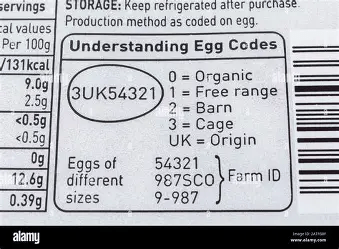
With EU / UK egg labelling; there is a Regulation – https://eur-lex.europa.eu/legal-content/EN/TXT/?uri=celex%3A32008R0589 which defines the regulations for standards in egg production. Organic production methods; Free Range; Barn or Cage – the labelling system clearly provides the consumer at the supermarket with full details of their eggs – what system was used in their production – so that THE CONSUMER IS FULLY INFORMED AND CAN MAKE A CLEAR CHOICE of whet they are purchasing.
There is no confusion; to the point that every single egg is stamp marked as shown below to include the production method used; the country of origin; and a unique ‘farm ID’ in case of any specific issues relating to the production farm.
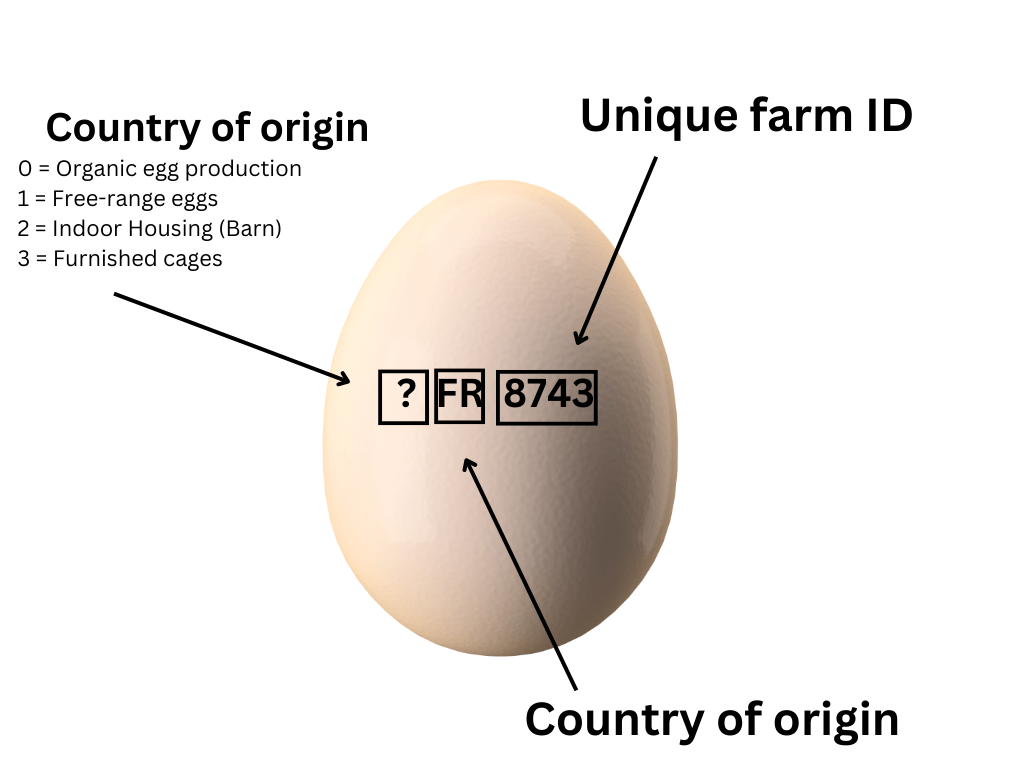
Pretty good well monitored and consumer informed system throughout the EU; which we as animal welfare campaigners fully support. The consumer is informed and they make their individual purchases accordingly.
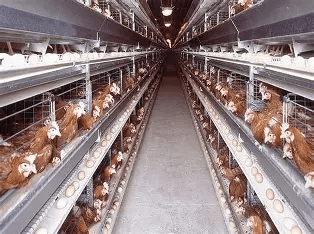
Above – Caged Hens – NO
Below – Free Range – YES.
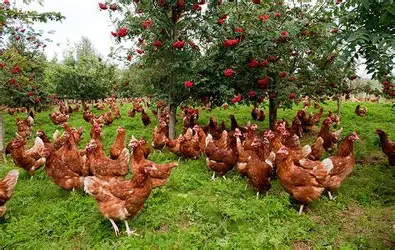
As welfare campaigners we say there is only one way for consumers to purchase their eggs – if they want to eat eggs – GO FREE RANGE. Compare the free range hens plumage above to that of battery hens below – is that image simply not enough alone to make egg eaters buy NON CAGED eggs.
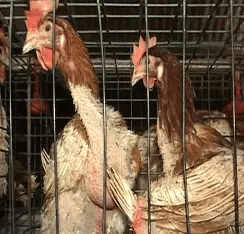
So ok; there you basically have it – Consumer clear labelling relating to egg production, which allows them to make their independent clear choices.
So for this post; the heading basically says ‘when it comes to meat products, is the EU really telling the consumer what they would like to know?’. We don’t think so; if the labelling system is good for eggs; why the shortfalls for meat products in labelling ?
Cards on the table; I [Mark] have been a non-meat eater for 35+ years. Anything ‘that ever had a face’ is not part of my diet; but I accept there are still lots of carnivores out there. One question though I would ask them is simply; if EU legislation attempts to provide you with accurate labelling on your eggs, and how they were produced; then why not clear and precise labelling on how your meat was reared; AND ESPECIALLY HOW IT WAS KILLED !
Many EU and British citizens; when asked, simply abhor the thought of live animals being ritually slaughtered. But, unlike the ‘egg labelling system’; are EU consumers being led up the garden path when it comes to specific meat labelling?. There are two main methods of ritual slaughter which does not involve pre-stunning an animal before its death; – Shechita (Kosher) – the Jewish method; and Halal which is the Muslim method. Here is more reading from the UK Government about this:

Above – Kosher method Beef Slaughter
Below – Halal method Chicken Slaughter
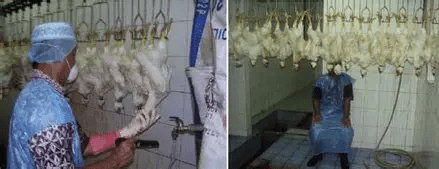
EU law requires that all animals being slaughters for the food chain are stunned and made unconscious prior to killing so that death should be ‘painless’; – hmm; ‘painless’ ? – we say ask the animals going through the process !
But within the EU there are exceptions for religious slaughter as detailed above. Jews and Muslims represent around 6% of the EU population.
Data from Ireland; an EU Member State (MS) showed that around 2010, showed that with just a 1% Muslim population; 6% of cattle, and 34% of sheep were slaughter without stunning. In a 2006/7 survey, it was seen that in France, another MS; 40% of Calves; 25% of Bovine cattle; and no less than 54% of Sheep were slaughtered without stunning.
The EU market for Kosher meat was worth around 5 Billion Euros in 2008.
THE REAL EU MEAT LABELLING ISSUE.
The following is very informative reading for reasons why there is NO standard legislation throughout the entire EU member states when it comes to meat produced by pre-stunning or religious specific methods. We especially suggest looking at the the data on ANNEX 7 – The Practice of Religious Slaughter In Every EU Member State.
Then we can unfortunately understand the EU reluctance, or refusal, to publish concise EU consumer – wide labelling about meat and meat products. When you enter an EU supermarket and are opposed to ritual animal slaughter; does the ‘EU labelling system’ express YOUR animal welfare concerns as a consumer ? – WE WOULD SUGGEST A BIG ‘NO’ !!
But then after all; religion never caused any wars; did it ?
And who in their right mind would want the EU to end up with Egg on its face ?

 World Animals Voice