Category: Farm Animals

Legal systems increasingly utilised to protect animals

https://www.ibanet.org/Legal-systems-increasingly-utilised-to-protect-animals

Joanne Harris – Monday 2 June 2025

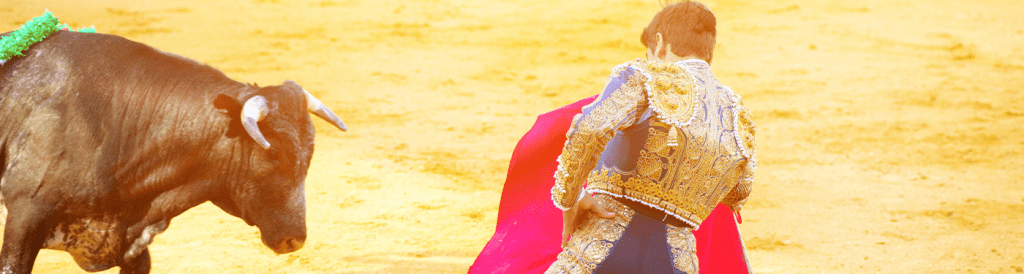
In April, Michoacán became the sixth Mexican state to ban bullfighting, while the previous month, legislators in Mexico City approved legislation to reform the sport. These reforms will ban ‘traditional’ bullfighting, limiting the length of contests and preventing matadors from killing their animal opponents – making the sport ‘bloodless’. Meanwhile in 2024, the Colombian President signed a bill that calls on the country’s government to completely ban bullfights by 2027.

These developments are part of a number of recent legislative and legal efforts around the world aimed at enhancing animal welfare. In New Zealand, the government plans to outlaw greyhound racing – a result, it says, of the significant number of injuries and deaths suffered by the dogs. It intends to introduce legislation later this year. Meanwhile, a growing number of non-profit organisations are seeking to protect animal rights through the courts. 

‘It’s unmistakeable that there’s a growing trend in favour of protecting animals through the legal system,’ says Christopher Berry, Executive Director of US-based organisation the Nonhuman Rights Project (NhRP). His organisation is now 30 years old, but Berry believes the use of the law to enhance animal welfare has taken strides forward in recent years.

‘We’re currently in the midst of a global change in society’s relationship with animals,’ Berry says, highlighting how science is delving deeper into their intelligence, emotions and communication. There’s reportedly a boom in such research, with an ever-increasing range of species observed using tools or playing for fun.

Helen Mitcheson, a director at non-profit legal organisation Cet Law – which focuses on advocating for the protection of whales, porpoises and dolphins – agrees science has been one of the factors in the growing regulation of facilities that house captive cetaceans in recent years. However, ‘there’s not one driver or one-size-fits-all movement to stop captivity or change practices in captivity and in a lot of cases it’s not even a legal driver. It’s driven by legislative, political and social actions,’ Mitcheson says. 

Looking back at the history of the anti-bullfighting movement in Mexico, Cecilia Stahlhut, Secretary of the IBA Healthcare and Life Sciences Committee, explains that the sport was suspended in Mexico City in 2022, but the ban was later overturned by the country’s Supreme Court in 2023. Since then, groups advocating both for and against bullfighting have been vocal on the subject.

The details of Mexico City’s reforms are still awaited. The city’s government has seven months to publish secondary regulations, detailing exactly how the changes will be brought about. ‘Most of the groups that support bullfights will wait until that moment to submit any claim against this amendment. That’s when the real legal fight will begin,’ says Stahlhut, who’s also a partner at Hogan Lovells in Mexico City.

While other states have already introduced regulations to prohibit bullfights – and also contests involving dogs – some are waiting to see how the situation in Mexico City develops, says Stahlhut. However, she adds that Mexico has strong regulations around animal protection. At the end of 2024, the Mexican Constitution was amended to explicitly protect animals from cruelty and to allow Congress to legislate in matters of their protection and welfare. 

At a federal level, these amendments to the Constitution enhanced the protection of animals in the country, and Stahlhut says the Mexico City proposals on bullfighting would bring its state legislation in line with federal laws. ‘It’s just to be consistent with what the government at a state and federal level has been working on. You can’t criminalise certain acts against animals and not other ones,’ she says. 

However, legislation protecting animals can lead to complex knock-on effects. In 2021, France banned whale and dolphin displays at aquariums – a move that has, according to park managers, directly led to the closure of facilities such as Marineland in Antibes, which shut its doors in January. Mitcheson says the park is still responsible for the care of the dolphins it had in captivity, and questions remain about where they should be sent. 

Similar questions arise in the case of Happy the elephant, who has been in captivity in the Bronx Zoo since 1977. NhRP brought a case to the New York courts arguing that Happy was entitled to the right of habeas corpus – which would allow a challenge to the elephant’s detention. The New York Court of Appeals rejected the case in 2022, but two judges wrote dissenting opinions saying Happy did have a right to freedom – even if that involved merely moving to a more spacious sanctuary. Bronx Zoo operator the Wildlife Conservation Society maintains its elephants are well cared for. 

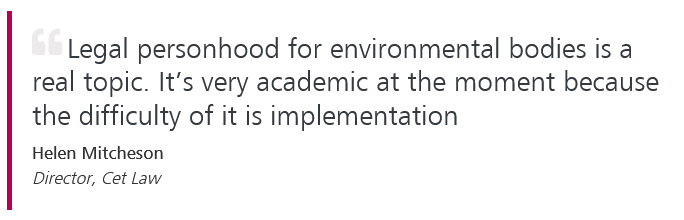
Efforts to give animals legal rights are growing worldwide. In 2024, Polynesian Indigenous leaders signed the He Whakaputanga Moana – or Declaration for the Ocean – granting whales legal personhood. That move was followed by a pro bono initiative involving the UK’s Simmons & Simmons, marine law firm Ocean Vision Legal and the Pacific Whale Fund, to draft proposed legislation called ‘Te Mana o Te Tohorā’ (‘the enduring power of whales’), which would offer nations a pathway to adopt similar laws. ‘Legal personhood for environmental bodies is a real topic,’ says Mitcheson. ‘It’s very academic at the moment because the difficulty of it is implementation.’

Cultural barriers will probably also remain a challenge when it comes to implementing legislation protecting animals, and there are significant differences in the ways jurisdictions look at these issues – what may be permitted in one country could be banned in another. 

But recent trends certainly show a move towards enhanced animal welfare protection through legislation, regulation and the courts. ‘There’s a lot of energy and there is a lot of progress being made,’ says Berry. ‘It’s incremental and it’s frustrating and there’s a lot of obstacles in our way, but I’m very positive about the way this is headed in the long term. How fast it spreads and how quickly remains to be seen, but the trend line is for more protection and higher legal status for animals.’

EU – Council Regulation 1/2005 On The Protection Of Animals During Transport and Related Operations.

https://eur-lex.europa.eu/legal-content/EN/TXT/?uri=celex%3A32005R0001

Believe me; as a welfare campaigner for all animals suffering live transport over several decades; Council Regulation 1/2005 of 22nd December 2004, has become like a bad rash throughout its entire existence.

From the start, it never worked. Over the years this document has been read, reviewed and checked over time and time again to see if we in welfare can gather anything with which to take prosecutions forward.

Now, as covered in my very recent post https://worldanimalsvoice.com/2025/06/01/eu-what-the-hell-is-wrong-with-some-meps-policy-makers-propose-making-the-transport-sector-a-damn-site-worse/ there is movement in some sectors of the EU Parliament to turn what has always been a complete farce as 1/2005 into an even bigger car crash now. Please click on the link above to find out more.

Here is the link to the English version of the legislation – https://eur-lex.europa.eu/legal-content/EN/TXT/PDF/?uri=CELEX:32005R0001

Other EU nationality versions can be found using the eur lex europa link given at the start.

This post is simply written to give everyone an insight into the ‘legal’ issues legislation wise if you want to take things further. Take it from me; there is a lot to absorb as you can see.

The new proposals being put forward now by some MEP’s fill me with dread – a new updated / revised version of 1/2005 should be being presented now to further help and further support ALL animals suffering the indignity of live transportation. 1/2005 has always been, and will continue to be a joke until it finally goes to that big trash basket in the sky. We as campaigners will all rejoice; but what will follow on afterwards with political point scoring now appearing to take priority over what should be animal welfare, science based fact ?

Please enjoy browsing the English version of 1/2005 from the above link.

WHO KNOWS WHAT IS LYING IN WAIT FOR TH FUTURE.

Regards Mark

Sweden – Swedish Cows May Lose Their Right To Graze. And Yes, It’s A Money Thing As Always Nowdays.

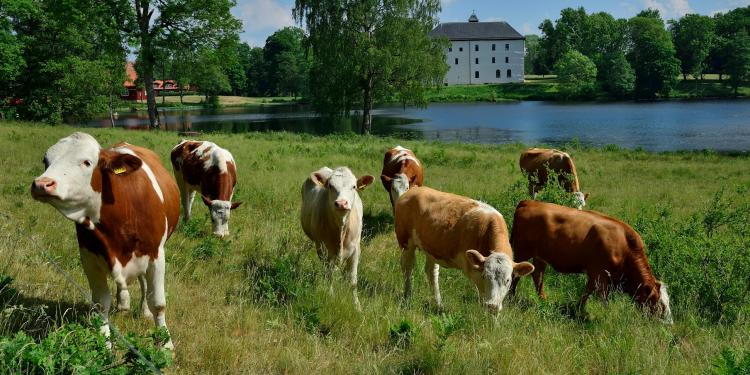
Picture this, a cow doing what it is intended to do – grazing outdoors and feeding, yes, on grass.

Difficult to believe; but Sweden is the only country in the world where cows over 6 months old must be given the opportunity to graze outdoors in Summer. Is that not a sensible and logical thing ? – cows outdoors in the sun eating grass ?

Now this right is under threat as farming unions move TO LOWER COSTS.

As anyone with any sense will tell you; grazing is an important natural behaviour for cows as it contributes to their physical and mental wellbeing. In 2019 the Swedish Board of Agriculture assessed that the grazing issue is too big an animal health and animal welfare issue for it to be removed or replaced. https://www.regeringen.se/contentassets/f5bfaefffbef406ab945f25e687087ef/sjv-rapport-2019-17-krav-pa-att-halla-djur-losgaende.pdf

The European Food Safety Authority also recommends that access to pasture should be mandatory in its latest scientific opinion of dairy cows – https://www.efsa.europa.eu/en/efsajournal/pub/7993

The country’s unique grazing experience is being questioned by the Swedish Farmers Association and other bodies, who argue that this policy makes the rearing of animals in Sweden more expensive than in other parts of the European Union – the EU, thus reducing competitiveness; hence they want the legal settlement to be removed; thus allowing farmers to decide for themselves.

These demands have been picked up by politicians; Minister of Rural Affairs, one Peter Kullgen, has appointed an enquiry into ‘Strengthen competitiveness for food producers’. Kullgrens Party has for many years asked and petitioned the Riksdag to have the grazing requirement removed by law.

The requirement TO ALLOW GRAZING is very well supported by the Swedish public; 84% of Swedes believing that it is important for animals to move freely outdoors. In another study https://www.nature.com/articles/srep44953 it was fount that an overwhelming 95% believe that it is important, or very important, that cows are allowed to graze.

Several animal welfare groups are pushing hard to ensure the legislation is not repealed and that Sweden’s high standards for cows are maintained.

At the end of March, the groups shown with their logos above, held demonstrations outside the Swedish Parliament; in addition to handing over a petition signed by no less than 165,000 persons. The press and media have been very supportive, giving the campaign lots of air time.

Like the current live export issue at the EU Parliament, one has to ask if we are witnessing here again trivial political point scoring overriding proven scientific animal welfare science – we would suggest probably a big ‘yes’ !

We at WAV wish all of our Swedish animal welfare campaigner friends the very best with their campaign to defend the rights of Swedish cows – they have huge public support on their side, so lets hope things continue unchanged for the cows !

EU: What The Hell Is Wrong With Some MEP’s ? – Policy Makers Propose Making The Transport Sector A Damn Site Worse !

I say ‘some’ in the heading; but will acknowledge there have also been some brilliant MEP’s fighting very hard in the defence of animals who are suffering during transport; one immediately springs to mind: Anja Hazenkamp – A Dutch MEP and true hero for all animals:

Those of us who have many decades of experience in investigating the immense wrongs of long distance live animal transport across Europe have always had a saying – ‘Crowd all the negative thinking MEPs together in a transporter truck; with temperatures exceeding 35 degrees; with them crapping and peeing all over each other – THEN SEE HOW QUICKLY THEY WOULD CHANGE THE LEGISLATION WITHIN EUROPE FOR IMPROVEMENTS !!’

Sadly; but realistically; you have to ask what planet some of these people are from; as over 3,000 amendments to the draft update of the Transport Regulation proposed by Members of the European Parliament (MEP) ARE CERTAINLY NOT looking at improving the welfare of animals suffering live transportation across the EU. MEPs represent you – EU Citizens; so are they not supposed to have a certain level of intelligence ?

Several negative thinking MEPs have put forward ideas and suggestions which would weaken or even remove laws that are grossly outdated anyway; and certainly NOT welfare supplements for the billions of sentients being hauled all over Europe each day. Some of the suggested amendments are so bizzare they should be up with the fairies; but they are not; these are proposals presented by some realistic members of the European Parliament.

The Transport Regulation was created over 20 years ago to ‘protect the welfare of animals during transport’ – it never did, and has never worked in the defence of animals – full stop. This chance to now rework the existing joke of legislation should be an ideal opportunity to make thing so much better; but we have some very serious concerns about some proposed changes being put on the table by some MEPs.

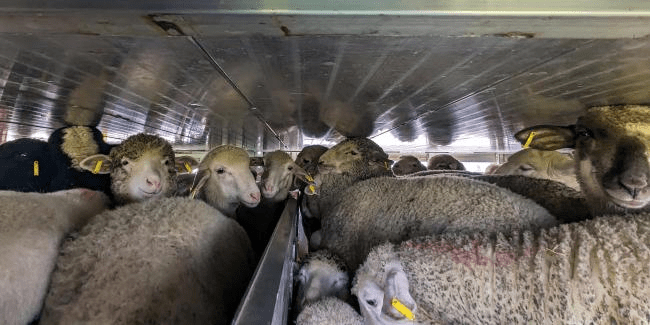
Here is just as one example – one of thousands of recent undercover investigations, here is where current legislation fails the animals. Please take note of stoppage time failures = meaning extensive additional suffering for the animals.

Photo above – Essere Animali

By bringing the policy in line with the latest welfare led science; as well as the recommendations by the European Food Safety Authority, and outlawing some useless, harmful and unnecessary practices, policy makers, the MEPs, could significantly improve the legislation for animals in transport; as well as eradicating the worst aspects of live exports. Unfortunately at this present time, this is not the way things appear to be currently going.

Of the most concern are that if voted on and implemented, in the final policy; some of the legislation would, rather then could, harm rather than help the animals.

Thin I am joking when I say this ? it’s no joke when animal suffering is involved;

The worst amendment put forward on journey times

  • Each transport journey should consist of multiple parts, EACH lasting up to 29 hours
  • Journey times for unweaned calves; lambs, kids, piglets and foals could last for up to 66 sixty six hours.

Transport is inherently stressful for any animal at the best of times, especially those in the early times of their lives. Numerous studies have shown that young animals being transported suffer more than than their elderly peers; as they suffer more due to higher stress and the inability to regulate their own body temperatures. Unweaned animals suffers more as they cannot reach; or are not familiar with drinkers carried of transporters. the only source they know is from their mothers.

Welfare organisations have always stated that journey times should last for a ONE OFF maximum of 8 hours for adult ovines, bovines and swine; and a ONE OFF MAXIMUM OF 4 hours for very young farm animals, which should also include all birds and rabbits.

The worst amendments put forward on extreme temperatures include;

  • Provisions to protect terrestrial animals in extreme road and rail temperatures SHOULD BE REMOVED !
  • Thermal provisions to protect the welfare of animals in containers; including birds and rabbits SHOULD BE REMOVED

Extreme temperatures, especially in Summer, is one of the biggest problems of the live export industry. Past investigations by NGOs have shown that temperatures inside trucks can reach 50 degrees C; leading to severe welfare problems; sometimes fatalities.

The EFSA authority recommends the implementation of lower maximum standards during transport; and that welfare organisations demand that specific species maximums must be defined by official legislation.

The worst amendments on space allowance include:

  • New space allowance provisions, written in line with recommendations by the European Food Safety Authority SHOULD BE REMOVED.

Animals usually suffer from a lack of adequate space during transport. This makes it impossible for them to lie down, move naturally or even move at all to reach essential drinkers. This incapacity exacerbates several of the problems animals already feel, including stress, exhaustion and dehydration.

Welfare science strongly suggests that species and category-specific space allowances must be set by law. Removing or weakening space allowances is clearly a step in the wrong direction.

Getting back on the right path.

The policy of updating the Transport Regulation should be to ensure better protection for all animals undergoing transportation, and not to make a bad situation even worse. MEPs need to unite; accept the latest welfare solutions to them; which is BASED ON SCIENCE. They need to accept the solutions to improve welfare rather then try to score cheap political points as the priority. Only then will the new legislation deliver what it was intended to do.

Further Information

EU based animal welfare anti live export campaign organisations:

https://www.ciwf.org.uk/our-campaigns/ban-live-exports-internationally/

https://www.eyesonanimals.com/

https://www.animals-angels.de/en/

(CH) SENTIENCE – Politics For Animals / Campaign “Invisible Animals”

https://sentience.ch/en/

************

Campaign, “Invisible Animals”

https://sentience.ch/en/invisible-animals/

Invisible Animals

In Switzerland, animal welfare issues are mainly discussed with regard to wildlife, companion animals and so-called “farmed animals”. In doing so, we forget about the individual whose interests we neglect the most and who are hardly – if at all – protected by the law. We are talking about the “invisible” animals – pigeons, rats, bees and fish.

These animals are subjected to immense daily suffering. Pesticides strip bees of their navigational abilities; rats face an agonising death from rodenticides; sick pigeons lie lifeless on the streets of our cities; and fish are confined in aquaculture basins under conditions that would be deemed unacceptable even in factory farming.

Considering the capacity for suffering as a crucial moral criterion is the core concern of Sentience. Therefore, we believe that all these animals deserve more attention, consideration, and protection. To eradicate today’s injustices, we must, together with you, sharpen public awareness and advocate for animals’ interests in politics.

Even small changes – such as banning certain rodenticides or pesticides, maintaining pigeon lofts, and improving water quality in aquaculture – can improve the well-being of billions of animals. By signing our petitions today, you help bring political attention to the “invisible” animals.

Against human exceptionalism

https://aeon.co/essays/human-exceptionalism-is-a-danger-to-all-human-and-nonhuman

This January, a 57-year-old man in Baltimore received a heart transplant from a pig. Xenotransplantation involves using nonhuman animals as sources of organs for humans. While the idea of using nonhuman animals for this purpose might seem troubling, many humans think that the sacrifice is worth it, provided that we can improve the technology (the man died two months later). As the bioethicists Arthur Caplan and Brendan Parent put it last year: ‘Animal welfare certainly counts, but human lives carry more ethical weight.’

Of course, xenotransplantation is not the only practice through which humans impose burdens on other animals to derive benefits for ourselves. We kill more than 100 billion captive animals per year for food, clothing, research and other purposes, and we likely kill more than 1 trillion wild animals per year for similar purposes. We might not bother to defend these practices frequently. But when we do, we offer the same defence: Human lives carry more ethical weight.

But is this true?

Most humans take this idea of human exceptionalism for granted. …..

EU’s Long Term Budget Must Support Farmers In The Transition Towards Better Animal Welfare.

I sadly accept that there will always be some folk who enjoy eating dead animals as part of their diet. Saying that, a reduction in meat consumption and the associated reduction in animal murders (slaughter houses) can only be seen as a positive from my corner.

But I am a realist also, accepting that everyone on the planet will never move to plant based. Thus as welfare campaigners, we have a responsibility to ensure that we get the best for animals that we can. The global tide is rather rapidly moving towards plant based diets – and that can only be positive; very positive. In other ways, a negative global tide is surrounding us in the form of global warming and the ‘master human’ who knows best – no, ask the whales !

The more posts I can write about on this site re the ‘killing factories’ (they are SLAUGHTER HOUSES, not abattoirs – a place where animals are killed for their meat) BEING CLOSED DOWN; then the better.

We all saw that the recent closure of Arley ritual slaughterhouse; a closure really attributed to their own non conformances with national UK laws which are supposed to give animals the maximum protection ?? at the times of their deaths. Does frightening the shit out of a sheep about to be slaughtered by playing a recording of a howling Wolf in the background constitute UK laws regarding slaughter legislation? – no, they do it for kicks which really shows the types they are.

They failed in many areas, they were closed down – end of. WONDERFUL.

So, as the EU Parliament now commences votes on its priorities for the next long term EU budget, all of us in the welfare camp are calling for higher funding in the transition to better animal welfare practices in accordance with the vast majority of EU citizens demands.

The ‘Multiannual Financial Framework’; or MFF, is a seven year framework regulating the EU’s annual budget. The current long term budget runs until the end of 2027; so now we have to start work !

Ahead of the proposals in the next long term budget; expected in July; the Budget Committee of the European Parliament; has set out its priorities in an own-initiative report. It emphasises the need to meet more ambition to meet citizens expectations in the context of the US retreating from its global role; Russia’s war on the Ukraine; economic and social challenges, EU competitiveness and the worsening climate and biodiversity crisis.

The report implies that the budget should finance public goods, support the resilience and competitiveness of EU small scale farms and better help protect the environment. It highlights that the ‘Common Agriculture Policy’, or CAP, is crucial for food security, and that spending must persue EU objectives.

The Eurogroup for Animals call for the long term spending on the CAP to consider the expectations that EU citizens have on improved animal welfare. These expectations are not yet fully met, and the importance of animal welfare as a public good has been repeatedly demonstrated by the European Citizens’ Initiative ‘End The Cage Age, as well as the latest barometer on animal welfare. More than 9 out of 10 Europeans state that it is important to protect the welfare of farmed animals; with an absolute majority deem it as very important. More than 8 out of 10 believe that farmed animals in their countries should be given more protection than they are at present.

There is a crucial need for adequate funding from the long term budget for the transition to new animal welfare rules and regulations. The proposal for a review of the EU farm animal directive is envisaged in 2026.reduce production costs;

Financing better animal welfare in the EU is not just an ethical priority, it is a financial security for the EU’s future. Improved animal welfare can and would reduce production costs, enhance the product quality, drive innovation and strengthen the EU’s global market postioning.

Adequate funding from the MFF for the CAP is crucial to support farmers in transitioning to the new animal welfare rules. There needs to be higher funding for farmers to transition to higher animal welfare standards; and the need to support early transitioners is a vital element.

As someone with a special interest in campaigning for, and stopping long distance live animal transports; enough evidence has been supplied over decades by investigators to show the abuses with the ‘EU system’.

It is now time for them to step up to the plate; ACCEPT THE MASSIVE ABUSES UNCOVERED, and DO SOMETHING ABOUT IT !!

Introducing ‘Our Compass’ – Exposing The Suffering Of All Animals Due To Human Exploitation. A Site Dedicated To Going Vegan / Veganism.

We would like to introduce you to an excellent site; named ‘Our Compass’ https://our-compass.org/about/ which is run by friend Stacey in the United States.

OC, as will now refer to it, is a ‘vegan abolitionist community focused on nonhuman animals, the harm inflicted on them due to human exploitation and speciesism, and the necessity of veganism as the only meaningful and humane response to support animals and their liberation from humans’.

As you will see by clicking on the above link, OC provides an insight into many major animal abuse / suffering issues, as well as photos, videos, and sample letters which you can use as a baseline for taking your own campaigning further.

For example:

OC has many different resources and subjects. I (Mark) know that Stacey (OC) will agree with myself and Diana when I say that like this WAV site, it is often harder; no, impossible; to give every subject animal around the world the coverage that they deserve for their individual cases – by trying to cover everything, you simply touch on a host of activities – Fur; Live transport; Intensive farming; Donkeys in the brick brick industry; Vivisection and big pharma; Hunting; The environment; Saving the Whales; Veganism; Cruelty free; AND Human Rights when coverage is necessary; human traffiking; or in our case, being a voice for the wonderful Tibetan people and their suffering under Chinese rule; – we become an information / reference source on so many issues rather than the ‘specialist’ covering just one.

Whatever; both OC and ourselves are more than happy to push for the day when ALL the cages are opened and the occupants liberated; when you do not cover your body with the skin of an animal that has lived and died under the barbaric fur production industry; when the hunts no loger hunt or animals are spared from the suffering of live transport / live exports.

If you have not visited OC yet; we know that you will find an endless resource the of information and links:

Enjoy this amazing site – we do !

https://our-compass.org/

Regards Mark, Diana and Stacey (OC).

(UK) Chris Packham is no saint. He’s an environmental extremist to us country folk

https://www.telegraph.co.uk/news/2025/05/16/chris-packham-is-an-environmental-extremist/

The Springwatch host saw no issue being likened to St Francis of Assisi, making his holier-than-thou attitude worse than ever this week

Vanity is a bewitching drug for some of the BBC’s biggest stars. Jostling for most luminous position in the media firmament this week, next to Gary Lineker (who completely by mistake, and in the knowledge that the media watches his every social media move, managed to post to Instagram the suggestion that Jews were rats) was Chris Packham. …..

Please ref. to previous post: