Category: Farm Animals

EU: Public consultation on animal transport: citizens overwhelmingly want better policies.

10 September 2024

Feedback from a public consultation on amendments to the live animal transport regulation has just been published. The results reveal that citizens are very concerned about how animals are treated in this sector.

Read the summary results of the public consultation here.

In 2023, the European Commission announced it would update the Transport Regulation as part of its full revision to the animal welfare legislation. Soon after, it published its initial proposal for the update, which it invited European citizens to feed back on through a public consultation. 

The response level was very high. The public consultation, which was open for a period of over four months (between 8 December 2023 and 12 April 2024) gathered over 5,000 contributions for analysis. 

Within this number, a lot of the key input came from Spain, Germany, France and Italy, highlighting significant public interest for this topic in these Member States.

The results showed citizens overwhelmingly support stricter regulations to protect animal welfare in this industry, including by:

  • Banning certain types of transport and exports. Including banning long-distance and sea transport, and the export of live animals to third countries;
  • Improving transport conditions. Calling for adequate space, ventilation, food and water, as well as for reduced transport times;
  • Protecting vulnerable animals. Calling to ban the transport of unweaned and vulnerable animals, along with enforcing strict temperature controls;
  • Supporting stricter weather protection. Incorporating recommendations for stricter measures to safeguard animals from extreme weather;
  • Condemning harmful methods. Opposing the use of electric prods;
  • Addressing transition periods. Issues were raised about the length of transition periods to implement new welfare rules;
  • Helping poultry and rabbits. With suggestions to further limit transport times for these animals, based on their specific needs and natures;
  • Possibly transitioning to a different type of trade entirely. There is widespread support for shifting to the transport of meat and carcasses instead of live animals, which is viewed as a more humane alternative that could significantly reduce suffering.

Stakeholders from various fields, including agriculture, public authorities, and NGOs, also provided feedback on different areas of the proposal, such as its current scope and what it says about journey times and temperature controls. These results were mixed, with some differences of opinion arising between the groups. For instance, industry voices and farmers raised concerns about limiting journey times during transport, whereas NGOs posited that journey times should be reduced significantly, for the wellbeing of the animals subjected to them.

The transport proposal needs some changes to truly work for animal welfare

As the responses to the public consultation show, the current transport proposal should be further revised. Our white paper details several measures that can be used by policy-makers to draft the strongest policies possible in this area: addressing both the needs of the animals in this sector, as well as the concerns of European citizens who have voiced support for protecting their welfare.

It’s great to see that, yet again, the public is so engaged in the topic of live animal transport, and that European citizens in particular want to see more being done for animal welfare. This sector is very complex and causes suffering for millions of animals each year, both in the EU and beyond. The current transport proposal needs to be much stronger if it is really going to have an impact on the wellbeing of animals, and a lot of the conflicts of opinion expressed within the consultation could be addressed to a wider transition to a ‘meat and carcasses’ trade, in which no live animals would have to be subjected to these long and difficult journeys anymore.

Inês Grenho Ajuda, Farm Animals Programme Leader, Eurogroup for Animals

https://www.eurogroupforanimals.org/library/live-animal-transport-due-time-change-rules

Regards Mark

USA: Alarming development as bird flu may be spreading among people in US

Aperson in Missouri has become the first American to be diagnosed with H5N1 bird flu without coming into contact with animals, in a potentially worrying development.

They are the 14th person to become infected in the US since the strain hit livestock earlier this year – but the first not to have been directly exposed to an infected bird or cow.

It is still unclear how the Missourian was infected, but experts have been warning for months against drinking raw milk because of fears the virus can spread to people via this route.

More – https://www.msn.com/en-gb/health/health-news/alarming-development-as-bird-flu-may-be-spreading-among-people-in-us/ar-AA1q8umO?ocid=msedgdhp&pc=DCTS&cvid=afee0104e2c54efb95404ec9dd2f891b&ei=24

Mark

China: Research Shows This Utterly Cruel / Barbaric Nations Massive Fur Farms Are Responsible For 125 Virus Species, Including 36 That Are New and 39 That Could Cross The Species Barrier And Spill Over To Infect Humans.

Here we go again – World, get prepared for another lockdown.  The Utterly Cruel Chinese Are At It Yet Again. 

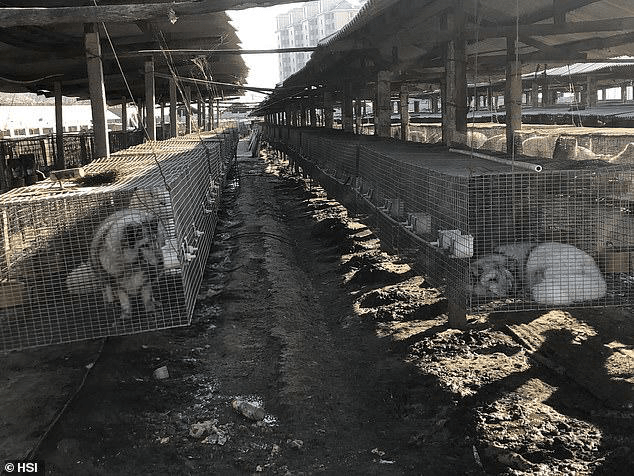
Researchers scoured for viruses in the lungs, intestines and other tissues of 461 individual fur animals that were found dead due to disease across China. They identified 125 virus species, including 36 that were novel and 39 at potentially-high risk of crossing the species barrier, including spilling over to infect humans. 

Raccoon dogs and mink, valued for their soft pelts, carried the highest number of potentially dangerous viruses, according to the research, published Wednesday in the journal Nature.

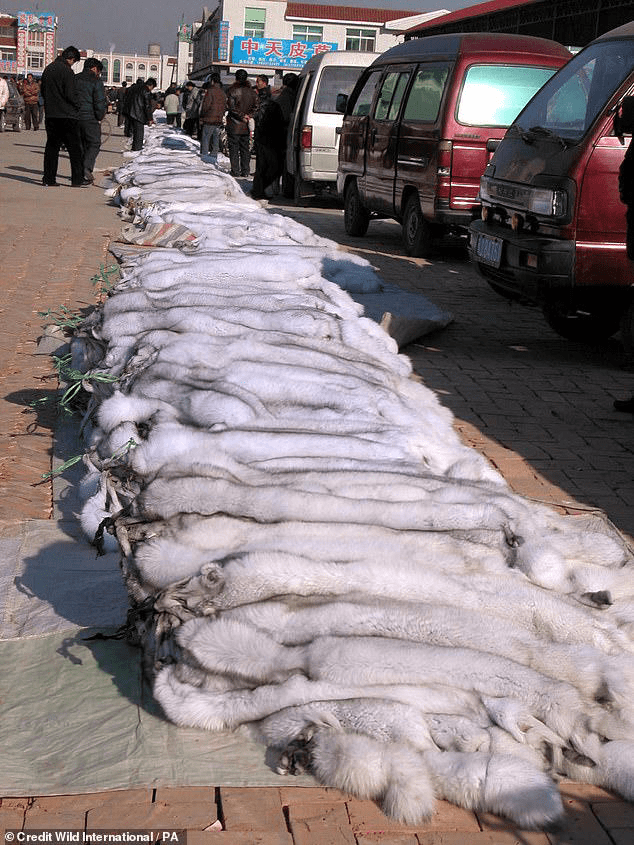
China dominates the trade, accounting for over 80% of global fur production, with pelts from around 27 million animals turned into high-end garments in 2021.

Notably, 19 potentially high-risk viruses were detected in the northeastern province of Shandong, which contains many fur animal farms. The findings revealed potential virus transmission between farmed animals and wild animals, and from humans to farmed animals, indicating that fur farming represents an important transmission hub for viruses that risk causing disease in people.

Lots More Reading About This:

Dozens of new viruses are emerging from Chinese fur farms (msn.com)

China Fur Farms Harbor Deadly Viruses: Study Uncovers MERS-Related Virus and High-Risk Influenza Strains, Sparking Pandemic Fears (ibtimes.sg)

 Pandemic Fears as Dozens of ‘High Risk’ Viruses Found in China’s Fur Farms (msn.com)

Virus Risk: 125 Found in China’s Fur Farms, 39 Pose High Threat to Humans | NewsTrack English 1 (newstracklive.com)

Fears fresh pandemic outbreak could spark in China’s fur farms (msn.com)

Potential Outbreak-Causing Viruses Found in China’s Fur Animals – BNN Bloomberg

Viruses detected in China’s fur farm animals, including seven types of coronaviruses (alarabiya.net)

Regards Mark

Fears fresh pandemic outbreak could spark in China’s fur farms.

Dozens of viruses – some of which have the potential to spill over into humans – have been detected mixing in animals at fur farms in China, sparking news fears of a fresh pandemic outbreak, researchers have said.

Since the Covid-19 pandemic, scientists have been warning that farming mammals such as minks for their fur could make it easier for new viruses to cross over from the wild and spark fresh outbreaks.

Virologist Edward Holmes, who has led research into Covid-19, told AFP he felt that the global fur farming industry ‘is one most likely ways by which a new pandemic will start’.

Continue – https://www.msn.com/en-gb/health/medical/fears-fresh-pandemic-outbreak-could-spark-in-china-s-fur-farms/ar-AA1pZJPe?ocid=msedgdhp&pc=DCTS&cvid=b9c8b1438cef4a7194645ec212a31261&ei=94

Regards Mark

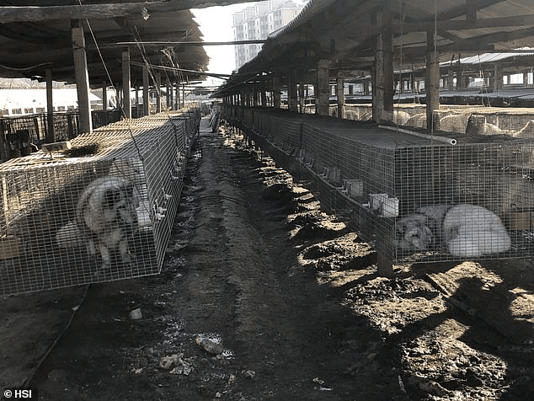
Dozens of viruses – some of which have the potential to spill over into humans – have been detected mixing at fur farms in China. Pictured: foxes and mink on a fur farm in China

Finland: Brilliant News – Fox farming declines by almost 70% in Finland.

2 September 2024

Animalia

Oikeutta eläimille / We Animals Media

In Finland, one of Europe’s major fur producing countries, farms are downsizing and closing at a rapid rate. Over the last 5 years, mink production has declined by 50%, whilst fox farming has collapsed even more sharply at 68%.

New statistics on 2023 from the Finnish Fur Breeders’ Association, analysed by Animalia, have confirmed that the industry is in a steep decline.

In 2023, there was only one mink farm producing more than 10,000 pelts, compared to 11 such farms the previous year. There were six fox farms producing more than 10,000 pelts, compared to 8 in 2022, and 20 in 2019. Most mink are raised on farms producing fewer than 500 pelts annually, indicating that mink farming is a side business. Foxes, on the other hand, are mostly raised on farms with 3,000–10,000 animals.

22% fewer foxes and 4% fewer mink were born on fur farms. Over the last 5 years, mink production has declined by 50%, whilst fox farming has dropped by 68%.

The actual number of furs produced last year is significantly lower than expected from the rate of births, as nearly half a million fur animals were culled and destroyed in the autumn of 2023 due to avian influenza.

The few remaining farms are not financially viable. The average sale price of blue fox pelts was down 13% from the previous year. The production cost of a fox pelt currently exceeds the sales profit, and results in a loss of up to 50 euros per animal for the farmer. The average price of a mink pelt also declined by 2% from the previous year. 

Following the mass culling of mink on Finnish fur farms due a bird flu outbreak in 2023, farmers received over 50 million euros of public funds in compensation, increasing scrutiny over the industry’s economic value.

Employment provided by the industry has halved in five years, undermining the social argument for propping up production. 

In an opinion poll conducted by Animalia and Oikeutta Eläimille in 2023, 83% of Finns believed that fur farming should either be banned or that animals should be given significantly more space and opportunities to engage in species-specific behaviour. 

The new statistics support the argument for a Fur Free Europe, as proposed by the successful European Citizens’ Initiative.

Regards Mark

Romania: Animal Rights March 2024 to be held this month in Bucharest.

Great News.

https://www.romania-insider.com/animal-rights-march-2024-bucharest

Some of our past posts relating to Romanian issues – not current – note dates of articles:

Biggest sheep exporter in Europe !

Regards Mark

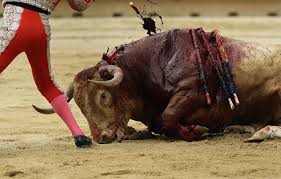
Animal Rights Activists Voice Church Support Of Bullfighting At Popes Weekly Audience.

https://www.msn.com/en-za/news/other/animal-rights-activists-storm-pope-s-weekly-audience-in-vatican/ar-AA1oobeU?ocid=BingNewsVerp

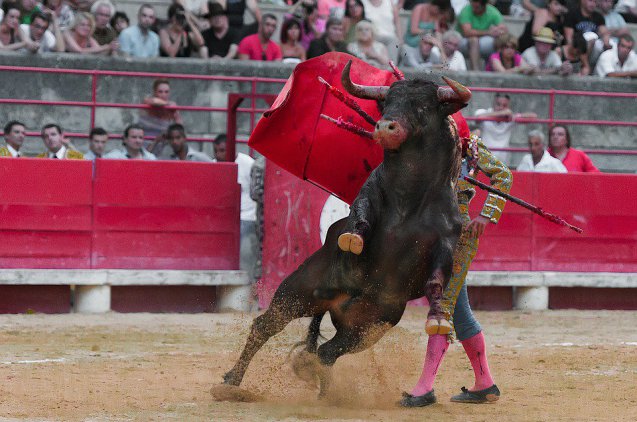
Animal rights protesters from Peta interrupted Pope Francis’s weekly general audience on Wednesday, 7 August, calling for an end to bullfighting.

The activists ran into the room in the Vatican wearing t-shirts reading “Stop blessing corridas” and raised banners reading “Bullfighting is a sin” before they were escorted out by Swiss Guards.

Spanish-style bullfighting is also known as “corrida de toros”. The organisation has been urging the pontiff to condemn bullfighting.

In a written statement, Peta said: “These gruesome spectacles are often held ‘in honour’ of Catholic saints and on holy days, the Catholic Church can and must help end this abuse by condemning bull torture in the name of religion.”

Mark

International Action: STOP and Bring Lidl to its Senses.

Supplied via Diana:

https://www.lidlchickenscandal.com/

It is YOUR actions that mhttps://www.lidlchickenscandal.com/ake a real difference: Say STOP and bring Lidl to its senses.

Potentially deadly germs are thriving in the sheds of Lidl suppliers.

In tests performed on 142 chicken samples taken from Lidl’s store brands in five countries, a laboratory found antibiotic-resistant pathogens in every second sample.

You can change this: Sign the petition now and stop Lidl’s irresponsibility.

This is the bitter reality of what chickens have to go through for Lidl:

Chickens breaking down. Workers mistreating chickens. Sick and injured chickens suffering visibly… crammed together by the thousands in bleak sheds.

Miserable husbandry conditions mean that dangerous germs thrive in the sheds. So say NO to animal cruelty committed for Lidl. Become active now. Sign the petition.

Background:

Click here to continue reading about all international investigationshttps://www.lidlchickenscandal.com/

  • Dates, locations and photographic data included.

Regards Mark and Di.

EU: Summer suffering: animals transported in extreme heat and washed up on beaches.

31 July 2024

Essere Animali

As heat waves surge throughout Europe, animals are vulnerable to extreme temperatures, especially when they are being transported by road and sea. A new investigation found animals forced to travel at temperatures above 45° without water and left under scorching sun in Italy, whilst another explored the issue of dead animals being tossed off of export vessels into the Mediterranean sea.

recent investigation by Essere Animali, in which they monitored transport shipments of animals on highways in Italy, revealed some animals are being transported in trucks of internal temperatures reaching up to 48 degrees. Their photos and footage show pigs gasping for air and left without access to water. In one case, animals were left for long periods under the scorching sun with fans turned off in the truck, while drivers took their break.

Unfortunately, this is not an isolated case. The welfare of animals during transport continues to be poorly protected by European laws. According to regulations animals should be safeguarded against “extreme temperatures”, but there are no clear definitions, as well as no enforcement. Furthermore, national travel is exempt from this rule.

Essere Animali, together with Eurogroup for Animals, calls for the long distance transport of live animals to be banned, and that clear references are introduced for temperatures, taking into account humidity and the condition of animals.

Animals washed up on beaches

The demand for exports to third countries has risen sharply. The EU’s Member States export around three million animals by sea to distant countries, posing significant risks to animals with increased mortality rates. 

Treated like unwanted waste, deceased animals are disposed of in the Mediterranean. Not only is this completely insensitive, but it increases pollution and also risk of shark attacks at numerous tourist hotspots on Mediterranean beaches.

In over 50 media-documented cases, dead and discarded animals from livestock vessels were washed ashore in France, Spain, Greece, Israel and Portugal among others.

A new film by Animal Welfare Foundation shows the extent of this issue, with a clear call to action: live animal transports to third countries are wrong in every respect and must be stopped.

egards Mark