Category: Farm Animals

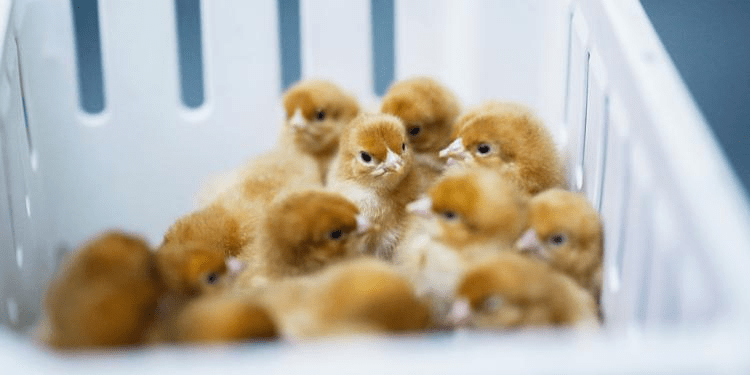
Belgium: 65,000 chicks gassed or crushed alive every day in Belgium Alone !

Male Chicks – A ‘Waste’ By Product Of The Egg Industry to the tune of 65,000 lives EVERY DAY.

26 July 2024

GAIA

Male chicks who cannot lay eggs are considered a waste product of the egg industry, condemned to a cruel death as soon as they hatch. In Belgium alone, 65,000 chicks are killed every day, adding up to 24 million per year.

The chicks are killed in shocking ways, such as being tossed into a macerating machine that crushes them, or being gassed to death en masse

Only one in three Belgian consumers are aware of this practice, according to a research by GAIA, which is asking citizens to participate in an audio petition to call for an end to this practice.

The petition asks citizens to record themselves crowing like a rooster, in order to express their outcry at this cruel practice and call for more respectful treatment of chickens. 

The recordings will be collated to create a powerful message for legislators. 

Alternatives exist

In-ovo sexing allows producers to determine the sex of the chick in the egg before birth, allowing for sorting before the embryo becomes susceptible. This technique is already used in some Belgian hatcheries. Countries like Germany and France have already taken steps to abolish chick culling, moving to this technology instead.

The survey by GAIA shows that 82% of Belgians believe that supermarkets should only obtain their supplies from producers who do not cull chicks. It also indicates that 82% of Belgians are ready to pay 2 euro cents more for each egg from such a producer. In addition, more than half of Belgians are ready to change brands and turn to a more respectful supermarket, which would offer eggs without grinding or gassing.

Leave a call to save the chicks

The audio petition will pass through twelve major cities in Belgium, asking citizens to share their cry on social networks in order to raise awareness among those around them. 

Supermarkets continue to sell eggs from chickens whose chicks are cruelly gassed or crushed alive after birth. However, there are effective technologies to prevent this massacre. It is therefore high time that they take their responsibilities, while responding to the wishes of the vast majority of Belgian consumers.

Sébastien De Jonge, Director of Operations, GAIA

Regards Mark

USA: Trump’s Threat To Animals.

JULY 23, 2024

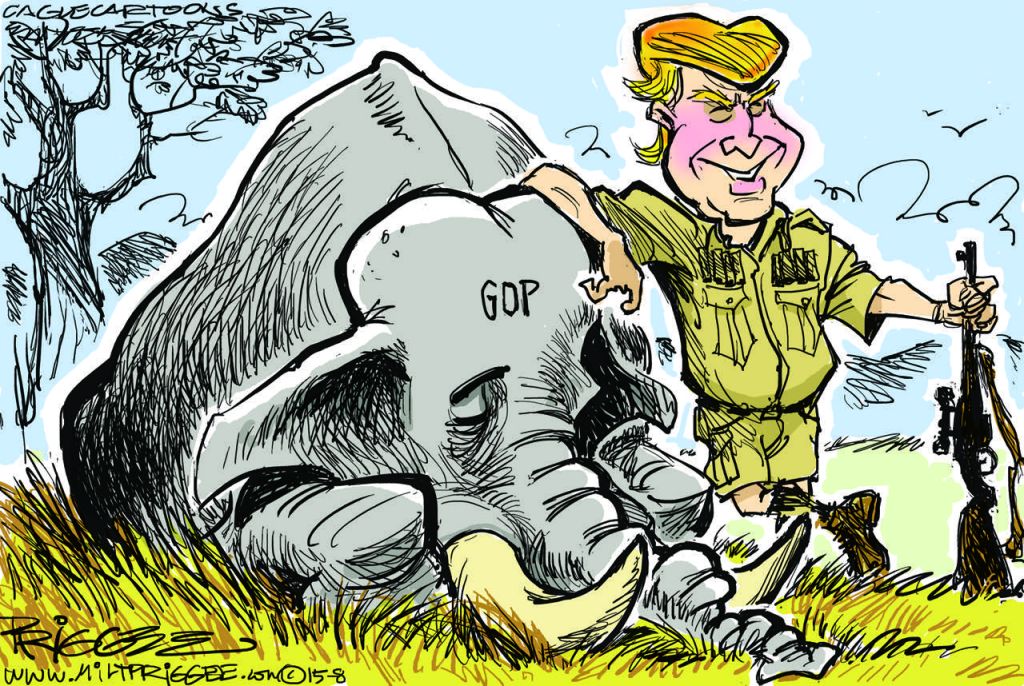
Trump’s Threat to Animals

BY JON HOCHSCHARTNER

I’ve been unsure how animal activists should orient themselves in the coming American presidential election. Obviously, in the United States’ two-party system we should vote for the Democratic nominee. But should we do more than simply cast a ballot for the candidate, whoever that ends up being?

I typically argue we should prioritize nonhuman interests to the greatest extent possible, as there are so few people who do. For me, that means picketing legislators and writing letters to newspapers in the hope of using the political process to accelerate the development of cultivated meat.

But, as the election approaches, I wonder if the threat Donald Trump poses to animals and our movement is so extreme we should pause our usual work and temporarily focus on helping to defeat him. I put this question and others to a group of animal advocates who were kind enough to share their time with me.

Merritt Clifton is editor of the Animals 24-7 website. Previously, he was news editor for Animals’ Agenda magazine, as well as the editor of the Animal People newspaper. When asked what a second Trump presidency might look like, Clifton referred to his coverage of the Republican’s first term.

Continue reading this article – see link at top.

Regards Mark

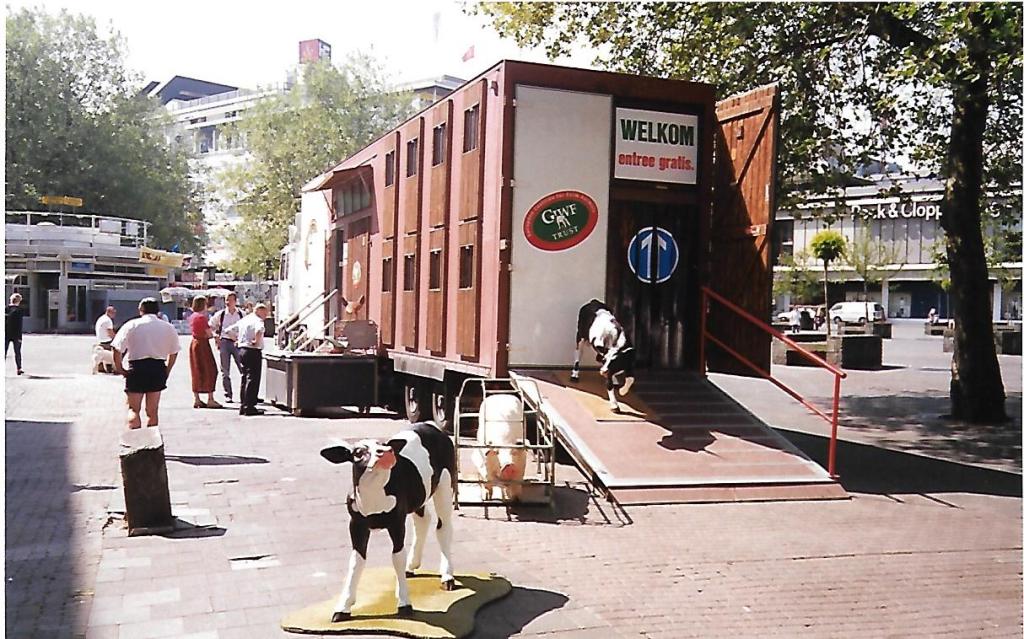
Belgium: Brussels (Home of the EU Parliament) only city to not authorise mobile exhibition on animal welfare !! – Suprised ? We Are Not !

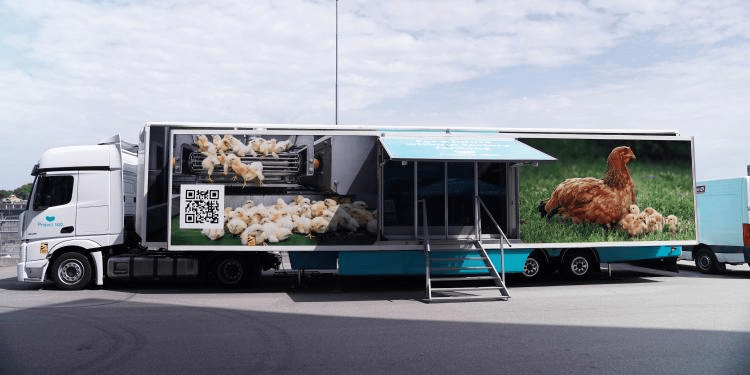
The new animal welfare exhibition truck

Brussels only city to not authorise mobile exhibition on animal welfare

25 July 2024

GAIA

Press Release

Among 20 European cities, Brussels is the only city that has failed to issue a permit for a mobile exhibition that will travel around Europe showcasing issues related to animal welfare, causing concern to animal protection NGOs.

The mobile exhibition For the Animals, by Project 1882, a leading animal advocacy organisation in Sweden, started its Euro Tour in June, going through Helsinki, Tallinn, Riga, Vilnius, Warsaw, Berlin, Bratislava, Prague and Ljubljana. Its journey, through to November, will continue to Budapest, Madrid, Lisbon, Porto, Bologna, Torino, Aarhus, Copenhagen, Malmö, Gutenberg and Stockholm.

Yet, despite efforts by Eurogroup for Animals and GAIA, the city of Brussels has failed to provide a permit for the exhibition. In the long correspondence with several different authorities, the permit was rejected, on claims that the dimensions of the truck are too large, the roads in Brussels are “too fragile”, or because of metro and underground parking lots. This however, is questionable, considering that many other participating cities have similar landscapes and did not raise such concerns.

It is concerning that in Brussels, right in the heart of policy-making in Europe, citizens are unable to participate in this exhibition. With the reasons provided for the lack of permit, we wonder if there is a hidden motive, one that is based on the content of the exhibition, rather than the format? The reality of suffering of animals in Europe should remain visible.

Reineke Hameleers, CEO, Eurogroup for Animals

Today, we had to announce to dozens of major NGOs that Brussels, the Capital of Europe, was not able to host an exhibition that will nonetheless be present in all the major cities on the continent. Brussels, which recently hosted hundreds of tractors, apparently does not have the capacity to accommodate a truck for a one-day event? It’s grotesque and deplorable.

Ann De Greef, CEO, GAIA


Above – London.

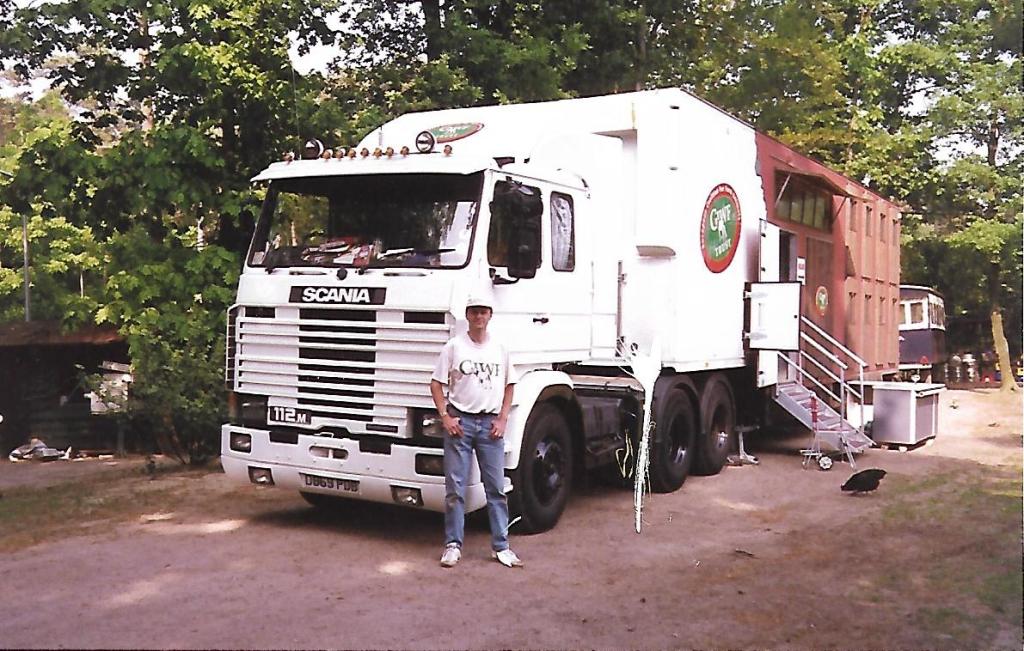
Yours truly somewhere in the Netherlands – note free range chickens – how they should be !

Brussels, oh yeah yup I get it – home of the EU, where decisions like live animal regulations are rules, and where intensive farming regulations for the entire EU member states are made, Then they have never had the bollocks to do what EU man demands; just a few ? flimsy animal abusers from start to finish; their own little powerhouse doing what they want rather than to go with animal welfare friendly common man. 

Ever asked yourself why it was only upon leaving the EU that the United Kingdom was able introduce legislation which ended up with an export ban for British animals going into Europe ? – best thig the UK has done for a long time !

I know, its called getting out of the EU !

I travelled with the Ban live export tour truck in Europe decades ago – now out, the UK is free from the EU shackles of that abuse; whilst those still in Europe sadly still see live animal shipments day in day out – why ? cos the gutless Commission lets and animals suffer continually for a few pennies more,

SHAME ON THEM – Let the animals free !

Mark


Can octopuses be farmed?

One comment – well said: Human beings are the worst!!!! These beautiful beings are super intelligent, sentient, friendly and must be respected. You do not “FARM” sentient beings. You farm tomatoes!!!!!!!

18 July 2024

Currently, all octopus products available on the market are wild-caught, as octopuses have never been commercially farmed at scale. This is not due to a lack of trying.

In Europe, particularly in Spain, octopus farming has so far been confined to fattening young wild-caught octopuses in ocean cages, in order for them to reach market weight. These cages were typically anchored to the sea floor, or simply suspended from rafts being used to farm mussels. In an attempt to prevent aggression and cannibalism, ocean cages included individual, compartmentalised octopus shelters made of pvc pipes or other plastic cylinders. 

After having some success in the early 2000s, most octopus fattening systems have since shut down due to stricter fisheries regulations, unstable yearly catches, variations in octopus mortality rates, and expensive feed requirements. Raising wild-caught octopuses in on-land aquaculture tanks has also been attempted in Mediterranean countries as well as  Australia and Latin America. However, efforts have not progressed past the experimental level as there are limited options for scalability.

Research and investments have more heavily focused on breeding octopuses in captivity. These efforts have been ongoing since the 1970s with major hurdles linked to cannibalism, containment issues, inadequate feed options and low survival rates among pregnant and young octopuses. 

A new milestone was reached in 2019 when Spanish multinational seafood company Nueva Pescanova announced that they had successfully closed “the octopus reproduction cycle in aquaculture”, meaning they had bred and raised octopuses through every stage of their life cycle in an artificial environment. The company is now applying for permits to open the world’s first industrial octopus farm, aiming to farm and slaughter one million octopuses annually for introduction to the market by 2027. 

Although the first, Spain is not the only country interested in the prospect of this new industry.  Similar plans to factory farm octopuses are unfolding across the globe, including in Portugal, Greece, Mexico, Chile, Australia, China and Japan.

Octopuses have a complex life cycle and are particularly ill-suited to farming conditions, making it challenging to raise them in captivity. Here are some significant issues associated with octopus farming:

1.     Dietary needs 

Octopuses are carnivorous animals and require live food during the early stages of development. Providing a natural diet in a farming environment can be resource-intensive, unsanitary and costly. Feeding octopuses at the industrial scale is also environmentally unsustainable due to its reliance on wild-caught fish ingredients.

2.     Solitary nature

Naturally solitary, octopuses may become overly stressed and resort to aggression and cannibalism in crowded farming conditions. Their need for space and isolation makes intensive farming impractical and inhumane.

3.     Physical vulnerability 

Without an internal or external skeleton, octopuses have fragile skin that can easily be damaged in farm tanks. This issue is exacerbated with their tendency to use jet propulsion to move quickly about their environments.

4.     Unsuitable slaughter method 

No humane slaughter method exists to kill octopuses for human consumption. Nueva Pescanova’s plans propose using ice slurry, which involves plunging the octopuses into freezing water. This method is known to cause a painful, stressful and slow death.

A study by the London School of Economics found that octopuses feel pain and pleasure, leading to their recognition as sentient beings in the UK’s Animal Welfare (Sentience) Act 2022. Professor Jonathan Birch and his co-authors argue that high-welfare octopus farming is impossible and that killing via ice slurry “would not be an acceptable method of killing in a lab“. They also recommended the UK government consider a pre-emptive ban on farmed octopus production and imports.

“Large numbers of octopuses should never be kept together in close proximity. Doing this leads to stress, conflict and high mortality. A figure of 10-15% mortality should not be acceptable for any kind of farming.” – Professor Jonathan Birch, London School of Economics.

Globally, there are also mounting concerns around octopus farming. The world’s first legislative ban on octopus farming was signed into law in Washington state in March 2024. Several other US states are introducing similar legislative proposals, with some such as California extending to ban imports of farmed octopus.

While it may be possible to farm octopuses, Eurogroup for Animals remains steadfast in its conviction that octopuses are unsuited to farming conditions and should not be farmed.

Uncovering the horrific reality of octopus farming

 DOWNLOAD PDF 2.09 MB

 DOWNLOAD PDF 2.11 MB


Exposing the environmental risks of octopus farming

 DOWNLOAD PDF 3.05 MB

 DOWNLOAD PDF 1.77 MB

Regards Mark

 

EU: EFSA releases new scientific opinion on the use of high expansion foam for stunning and killing pigs and poultry

16 July 2024

The European Food Safety Authority (EFSA) has released a scientific opinion addressing the use of high expansion foam for the stunning and killing of pigs and poultry in situations other than slaughter, such as emergency depopulation purposes. We call on the European Commission to take this latest opinion into account, and also advocate for the continuous improvement and adoption of the most humane methods available in this sector.

Read the scientific opinion here.

The scientific community recognises that farm animals are still stunned and slaughtered with methods capable of negatively impacting their welfare. This new opinion highlights that high expansion foam is an alternative to existing methods for the stunning and killing of pigs and poultry in situations other than slaughter, but also stresses some important animal welfare hazards along with potential mitigation strategies. 

Eurogroup for Animals commends EFSA for this important assessment, which evaluates the welfare implications of using high expansion foam filled with nitrogen to induce anoxia, leading to unconsciousness and death in pigs and poultry. This method involves displacing air in a container with foam and using a nitrogen jet to burst the bubbles, thereby creating an oxygen-deprived environment.

The European Food Safety Authority (EFSA) has released a scientific opinion addressing the use of high expansion foam for the stunning and killing of pigs and poultry in situations other than slaughter, such as emergency depopulation purposes. We call on the European Commission to take this latest opinion into account, and also advocate for the continuous improvement and adoption of the most humane methods available in this sector.

Read the scientific opinion here.

The scientific community recognises that farm animals are still stunned and slaughtered with methods capable of negatively impacting their welfare. This new opinion highlights that high expansion foam is an alternative to existing methods for the stunning and killing of pigs and poultry in situations other than slaughter, but also stresses some important animal welfare hazards along with potential mitigation strategies. 

Eurogroup for Animals commends EFSA for this important assessment, which evaluates the welfare implications of using high expansion foam filled with nitrogen to induce anoxia, leading to unconsciousness and death in pigs and poultry. This method involves displacing air in a container with foam and using a nitrogen jet to burst the bubbles, thereby creating an oxygen-deprived environment.

Key findings of the EFSA opinion include:

·       Animal welfare equivalence: The EFSA Panel on Animal Health and Welfare (AHAW) concluded that the use of high expansion foam ensures a level of animal welfare at least equivalent to existing methods, such as exposure to high concentrations of carbon dioxide or electrocution via water baths, especially in whole-house gassing scenarios;

·       Welfare hazards and mitigation: The opinion identifies potential haza

Key findings of the EFSA opinion include:

·       Animal welfare equivalence: The EFSA Panel on Animal Health and Welfare (AHAW) concluded that the use of high expansion foam ensures a level of animal welfare at least equivalent to existing methods, such as exposure to high concentrations of carbon dioxide or electrocution via water baths, especially in whole-house gassing scenarios;

·       Welfare hazards and mitigation: The opinion identifies potential hazards associated with the foam, including the need for proper training and certification of handlers, strict adherence to key parameters, and having backup methods ready to prevent animals from regaining consciousness;

·       Recommendations for best practices: EFSA recommends that procedures should only commence when all critical parameters are met. Animals should be handled calmly to avoid stress, and a reliable monitoring system should confirm death before carcass disposal. Additionally, further research is necessary to validate results and improve monitoring techniques;

·       Extent of application: The current assessment is limited to laying hens, broiler chickens of all ages, and pigs weighing between 15 and 41 kg. 

These findings are of particular importance considering that large-scale depopulation operations are increasing in the EU due to constant outbreaks of highly pathogenic avian influenza (HPAI) and African swine fever (ASF). We hope that, in light of the new EFSA study and the recurrent problems encountered by Member States in killing large numbers of animals due to disease outbreaks, ensuring humane depopulation methods will become a priority for the European Commission. 

While EFSA’s opinion supports the equivalence of high expansion foam with current methods, Eurogroup for Animals emphasises that ‘tolerable’ methods are not sufficient. 

We advocate for the continuous improvement and adoption of the most humane methods available.

In the meantime, updating the applicable regulations to reflect the latest knowledge on animal welfare during slaughter – including this latest opinion by EFSA – will help minimise suffering across this sector. We believe that a comprehensive approach is needed to ensure that the equipment used and procedures followed in slaughterhouses do not cause unnecessary fear, pain and distress to farm animals, and call on the European Commission to take the following actions:

·       Replace outdated and less effective stunning methods with more humane alternatives;

·       Ensure all animals are adequately stunned before slaughter;

·       Ban the use of electric prods and high-concentration CO2 stunning for pigs;

·       Ban the use of water bath stunning for chickens.

Learn more about what we are asking for in this industry in our recent white paper

 Regards Mark

Agreement on a Green Denmark maintains enormous meat and dairy production and overlooks farm animal welfare.

15 July 2024

Animal Protection Denmark

On June 24 the Danish government, along with several organisations, created an “Agreement on a Green Denmark”: a plan to make the farming sector more climate- and environmentally-friendly. However, several NGOs, including our members Animal Protection Denmark and World Animal Protection Denmark, have pointed out this agreement falls far short in achieving a more sustainable food and farming system, and have signed an open letter calling on the government to rethink its plans.

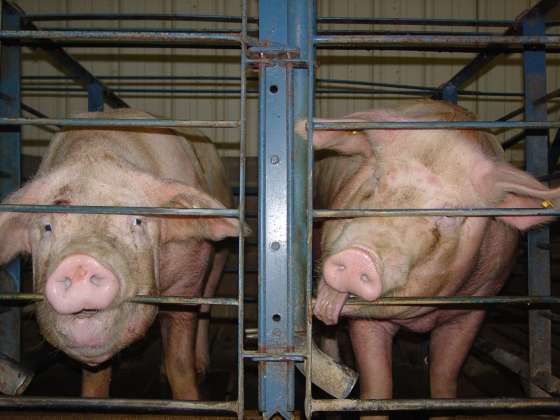
To make our food and farming systems fit for the future, it’s critical there is a higher uptake in plant-based diets and that less animals are farmed, while only in high welfare conditions. As evidence has repeatedly shown, the issues of animal welfare and sustainability go hand in hand, as poor animal husbandry can lead to the spread of zoonoses, animals being farmed in huge numbers, and more.

Unfortunately, while it does have some ambition, Denmark’s new agreement does not come close to improving the problems of large scale industrial animal production. 

Instead of reducing the size of the livestock sector, the agreement wants to “optimise” how animals are farmed

Denmark produces about 200 million farm animals per year – in a country of only five million people. 

Rather than reducing the number of animals being farmed, however, the agreement suggests the way they are farmed should be revised, and offers funding to explore such “innovations”: for instance, by offering a 60% base deduction and several subsidies for technologies that can reduce emissions from livestock production. 

Not only could this incentive enable farmers to continue farming animals in the same numbers – doing nothing to address the low welfare and unsustainable factory farming model in which billions of sentient beings suffer each year – but it could mean animals suffer even more in these systems:

Animals will be put under even more pressure due to climate technologies and demands for higher productivity. The idea is to make each animal deliver as much as possible, e.g. even more piglets from sows, and even higher milk yields from cows, as is considered good for the climate, and to address specific issues such as methane from cow digestion with feed additives.

Britta Riis – Director, Animal Protection Denmark

Plant-based solutions are being neglected

What is more, an unequal level of support is being offered to farm animal producers in the agreement, while plant producers and innovators are being overlooked.

Whether intended or not, this disparity in incentives sends a clear message: that the animal agriculture sector has a strong role to play in the future of farming, while plant-based products are less important. Really, the opposite is true.

Open letter calls for the agreement to be revised urgently

Several NGOs, including our members Animal Protection Denmark and World Animal Protection, alongside organisations like Greenpeace and the Danish Vegetarian Association, have signed an open letter to the Danish government, arguing that the current agreement does not provide a reliable way forward for a greener farming model. 

The letter states that wanting to optimise animal production is like wanting to optimise the use of oil, coal, and gas – it’s not possible. Such incentives will only draw focus further away from the solutions that will have real impact – chief among them, a big reduction in the number of animals being farmed.  

The urgent climate crisis calls for an ambitious approach to our food and farming systems, with real structural changes required in the sector. Stay posted for updates.


Regards Mark

Hungary presidency: time to step up work in animal welfare.

Every 6 months a different nation takes on the Presidency of the EU. This is a rotational thing, ensuring each member state plays its part. Now Hungary – Hence:

10 July 2024

As Hungary presides over the council for the next six months, Eurogroup for Animals urges the presidency to prioritise the critical needs in animal welfare.

The Belgian presidency significantly advanced on the proposal for the welfare and traceability of cats and dogs, which was approved by Member States in the council. While this achievement is welcome, the Hungarian presidency must now address the remaining urgent issues.

Read our full memorandum to the Hungarian Presidency here.

Animal welfare legislation must be published

Foremost, the presidency must urge the Commission to publish the remaining animal welfare proposals early in the next political term, to address the severely outdated legislation that does not adequately protect animals throughout their lifetime, from farm to slaughter. In particular, the legislation should have a plan of action to transition to cage-free systems, as per the commitment to the End the Cage Age ECI.

Better protection of animals during transport

Eurogroup for Animals urges the Hungarian presidency to further the work on the revision of the Transport Regulation to support a ban on the transport of live animals outside EU borders, in parallel with a transition towards a trade in meat and carcassesand stricter requirements to protect animals during intra-EU transport, particularly vulnerable animals.

Support coexistence with wildlife

With significant support for coexistence with wolves in rural communities across the EU and sufficient EU guidelines, practices and support initiatives to prevent loss of livestock, the Hungarian presidency is encouraged to to close the discussions on the proposal to downgrade the protection status of wolves and rather promote the uptake of coexistence measures currently underutilised.

Move towards non-animal science

The impact of EU legislation to protect animals used for scientific purposes has so far been limited. In 2020, over 7.9 million animals were used in research, testing, and education in the EU-27 and Norway, and a further 686,628 animals were used for creating and maintaining genetically altered lines. Eurogroup for Animals urges the Hungarian presidency to support efforts to advance negotiations on legislative initiatives to phase out the use of animals in science.

Read our full memorandum to the Hungarian Presidency here.

 Hungary presidency: time to step up work in animal welfare | Eurogroup for Animals

 Regards Mark


UK: From badger culls to sewage: Labour under pressure over animal-welfare and farming policies

We have a new Labour government in the UK.

Like all politicians after your vote, they promise the world. Once elected, then we see the reality.


Labour’s animal-welfare and environmental policies may be better than the Tories’ – but they contain disappointing gaps, experts say.

** In a YouGov poll last year, a third of voters said animal welfare was one of their top three issues. **

So new environment secretary Steve Reed will come under pressure from lobby groups – and in some cases, from opposing countryside and farming factions.

The party’s manifesto promised to improve animal welfare, with bans on trail hunting and the import of hunting trophies, an end to puppy smuggling and farming, and to “work towards the phasing out of animal testing”.

It pledged a Labour government would “champion British farming whilst protecting the environment”.

Alongside environmental land-management schemes, the manifesto promised steps to eradicate bovine TB to end the “ineffective” badger cull. And there was a pledge to ban snares.

Mr Reed said Labour would introduce “the biggest boost in animal welfare in a generation”.

Many of the policies have been broadly welcomed by commentators – but already others are facing controversy, including:

Badger cull

Before the election, Labour damned the badger cull as “ineffective”, holding up the prospect of ending it.

But Mr Reed confirmed last week the government would allow existing cull licences to continue until 2026, saying an immediate end to the cull would send “sudden shocks into the system”.

Meanwhile, the Badger Trust and Wild Justice, a campaign group jointly run by Chris Packham, have sent a legal warning letter over Natural England’s decision before the election to grant nine new supplementary cull licences and to authorise 17 existing licences – contrary to the advice of Natural England’s own head of science.

Wild Justice said if the response was unsatisfactory it may seek a judicial review.

Dominic Dyer, ex-head of the Badger Trust and a defeated Lib Dem election candidate, said: “Never in the history of wildlife protection has there been such a betrayal of trust. After 13 years of waiting for a Labour government to stop this cruel madness, they are now planning to kill at least 30,000 more badgers.”

Industrial farming

Labour’s manifesto has been criticised for not mentioning factory farm animal welfare.

Alick Simmons, a former government deputy chief vet, writing for Wild Justice, said: “A pledge to address puppy farming while ignoring industrial pig and poultry farming does not strike me as a balanced manifesto.”

Compassion in World Farming (CiWF) has lobbied all parties for a ban on cages, saying around 8 million farmed animals are kept in them each year in the UK. “The previous government said they’d prepared consultations on this issue, and we want to see them published,” it said.

 The Liberal Democrats had pledged to ban cages for hens, while Labour did not.

CiWF also called for method-of-production food labelling, following a consultation earlier this year.

The Lib Dems were praised for a promise to crack down on antibiotic misuse for farm animals, and the new government will face calls to do so.

Wildlife and nature recovery

Green Party former co-leader Caroline Lucas said she was shocked by the lack of manifesto detail on restoring the natural world.

“As the bare minimum, where’s the increased budget for arms-length bodies like Natural England and the Environment Agency?” she asked. “Or the funding to enable landowners to return land to nature? Or the pay rise to help farmers shift to nature-friendly farming and tackle our broken agriculture system which is driving biodiversity loss?”

But environmental campaigners welcomed a pledge in the party’s pre-manifesto nature policies stating: “We will help coordinate nature’s recovery with bodies responsible for public land and major landowners.”

Guy Shrubsole said in a blog: “This may sound anodyne, but in fact could be one of the most significant policies – the first inklings of a Public Nature Estate: an idea that Wildlife and Countryside Link [a coalition of 82 organisations] have been calling for.”

Forest ranger Samuel Lindsay added: “Although the talk of habitat expansion is positive, this is a very vague statement. There are no clear targets or areas identified for this to be carried out.”

The manifesto promised to plant millions of trees, create new woodlands and expand wetlands, peat bogs and forests.

Mr Simmons said: “Sure, let’s get rid of snares but what about the numerous unaccountable and untested methods of killing wildlife such as Larsen traps, mole traps, Fenn traps and poisons that are on free sale for use by anyone?”

Trail hunting

Opponents and monitors say hunts break the law by fox hunting while claiming to be trail hunting – that is, following a scent without chasing wild animals.

The claims were lent weight by a hunt chief advising others to create a “smokescreen” by laying several trails. His words, during a leaked private Zoom meeting, were interpreted as an admission that foxhunting took place.

Mr Reed said in February that a Labour government would ban trail hunting in its first term, and the manifesto included a promise to ban trail hunting – but it did not promise to close loopholes in the Hunting Act 2004, which bans hunting wild animals with dogs.

A former head of the League Against Cruel Sports, Andy Knott, has cast doubt on achieving a ban through the Hunting Act.

“People have seen the images of packs of hounds getting into private back gardenskilling cats, ripping flocks apart. There’s not a majority in any part of the country that wants to see that continue,” Mr Reed told The Times before the election.

But Oliver Hughes, of governing body the British Hound Sports Association, told Horse & Hound that about 12,000 days of trail hunting took place in England and Wales each year, “with the vast majority taking place without any problems”.

Sewage scandal

Ms Lucas said: “Although Labour’s manifesto commits to tackling the sewage scandal, it fails to get to the heart of the matter – the unmitigated disaster that is our privatised water system. Water is a public good, so the Green Party would bring it back into public ownership.”

Mr Shrubsole criticised the plans for not mentioning agricultural river pollution.

“Farming’s significant contribution to the state of our rivers seems to be a taboo subject for nearly all parties competing in this election – with the notable exception of the Green Party,” he said.

Trade deals

Mr Dyer said a government priority should be suspending the UK’s £970m trade deal with the Faroe Islands to force the authorities to end the mass slaughter of whales and dolphins.

Ciwf said animal welfare should be protected in trade deals by refusing imports of food produced in ways that are illegal in the UK. Labour has said it will do this.

British farmers complained that deals for cheap food imports under the Conservatives undermined their standards.

A spokesperson for the Department for Environment, Food and Rural Affairs said: “The government set out its plans in the manifesto to introduce the most ambitious boost in animal-welfare rights in a generation.

“This includes banning trail hunting and the importing of hunting trophies, while also ending the badger cull, puppy smuggling and farming, and the use of snare traps.”

Regards Mark

https://www.msn.com/en-gb/news/uknews/from-badger-culls-to-sewage-labour-under-pressure-over-animal-welfare-and-farming-policies/ar-BB1pZCaQ?ocid=BingNewsSerp

Great News ! – Fur industry in Bulgaria loses court case against mink ban.

Fur industry in Bulgaria loses court case against mink ban

12 July 2024

CAAI

The Administrative Court of Sofia City has supported the ban on the import and breeding of American mink in Bulgaria, following an appeal by the only operating mink farm in the country.

Read more about the decision here (in Bulgarian).

The legal process was started in 2022, a few months after the Minister of Environment and Waters issued an order banning the import and breeding of American mink, the species of mink farmed for its fur. This non-native species can negatively impact biodiversity, and even drive some native animal species to extinction: a view supported by more than 100 scientists and experts, who submitted opinions in support of the mink ban over the course of the case.

The mink fur farm which appealed this order has a breeding capacity of about 130,000 American mink. During its years of operation, over 100 mink have escaped – and that’s just on official record. The disruption this has caused has been wide-ranging, with complaints of mink attacks on domestic animals, the impacts of this invasive species on native habitats, and records showing mink having travelled as far as 30km away from where they first escaped.

Mink farming is terrible for animal welfare

Fur farms have also drawn public wrath for the cruel conditions in which the animals are raised and killed. 

Minks are kept in narrow and dirty wire cages and, in order to preserve the integrity of their fur, are killed in gas chambers. That these conditions are unacceptable is a view shared by a huge number of European citizens, with over 1.5 million signatures collected for the “Fur Free Europe” ECI, now pending a response from the European Commission. 

In 2021, during an inspection of the abovementioned mink farm, the Bulgarian Ministry of Agriculture and Food reported a number of biosecurity violations, unsatisfactory hygienic conditions, decomposing animal carcasses, and mink escaping from their cages.

Learn more on our member CAAI’s website here

We welcome the completely fair decision of the court to reject the appeal of the mink breeders. In recent years, scientists have proven that the invasive nature of the American mink is a serious threat to local biodiversity. In addition, the American mink is the species in which significant susceptibility to infection with various zoonoses is noted.

Petya Altimirska, Chair of CAAI (Campaigns and Activism for Animals in the Industry)

Regards Mark

 See also https://worldanimalsvoice.com/2024/07/09/bulgaria-fur-industry-in-bulgaria-loses-court-case-against-mink-ban/

Bulgaria: Fur industry in Bulgaria loses court case against mink ban

News from Mark and the crew at Respect for Animals, Nottingham England.

Fur industry in Bulgaria loses court case against mink ban | Respect for Animals

Latest news:  NEWS | Respect for Animals

Fur industry in Bulgaria loses court case against mink ban

The Sofia City Administrative Court rejected the mink farm’s

The Sofia City Administrative Court rejected the mink farm’s appeal against the order issued by the Ministry of Environment and Water to ban the import and breeding of the “American mink” species in Bulgaria. The court’s decision can be appealed to the Supreme Administrative Court.

The Administrative Court of Sofia City has issued a decision on the case regarding the ban on the import and breeding of American mink in Bulgaria. The court accepted as groundless the appeal of the only operating mink fur farm in Bulgaria. The legal process was started in 2022, a few months after the Minister of Environment and Waters issued an order banning the import and breeding of the “American Mink” species. The reason for the order is the danger this invasive, non-native species poses to biodiversity.

American mink (the species farmed for its fur) can negatively impact native animal species and even drive some to extinction. Behind this opinion stand more than 100 scientists and experts who submitted opinions in support of the ban on the import and breeding of American mink. Their support for the ban was strongly expressed during the course of the case.

The mink fur farm near the village of Mazherito, Stara Zagora, has a breeding capacity of about 130,000 American mink. Over the years of operation of the farm, official recordings have been filed about over 100 escaped animals. The number of unrecorded mink escapes is unknown. Complaints of mink attacks on domestic animals are a common problem that torments the local residents living near the farm. There are images and video shots of mink being run over by cars on the road, as well as of animals walking around the center of the city of Stara Zagora. The invasive mammal was also spotted in the river near the town of Galabovo, 30 km from the farm.

As well as endangering biodiversity, fur farms have drawn public wrath for the cruel conditions in which the animals are raised and killed. Minks are kept in narrow and dirty wire cages and, in order to preserve the integrity of their fur, they are killed in gas chambers. In 2021, during an inspection of the mink farm near the village of Mazherito, the Bulgarian Ministry of Agriculture and Food reported a number of biosecurity violations, unsatisfactory hygienic conditions, decomposing carcasses of dead animals, as well as mink escaped from their cages.

“We welcome the completely fair decision of the court to reject the appeal of the mink breeders. In recent years, scientists have proven that the invasive nature of the “American mink” is a serious threat to local biodiversity. In addition, the American mink is the species in which significant susceptibility to infection with various zoonoses is noted. Last year, an outbreak of COVID-19 occurred among the minks on the farm near Stara Zagora. Recently, bird flu has become increasingly common in mink farms too. Similar outbreaks in other countries have caused fur farms to be closed. This is how cruel and completely unnecessary activity is being stopped,” said Petya Altimirska, chair of CAAI (Campaigns and Activism for Animals in the Industry), which since 2017 has been campaigning for the ban of fur farms in Bulgaria.

The mink breeders have the right to appeal the decision within 14 days of its announcement before the Supreme Administrative Court.

A possible loss in the second instance would practically end the existence of mink farms in Bulgaria.

Attached links

Link to the Sofia City Administrative Court’s decision (in Bulgarian)