Category: Farm Animals

EU: NGOs demand action for sustainable food systems.

6 December 2023

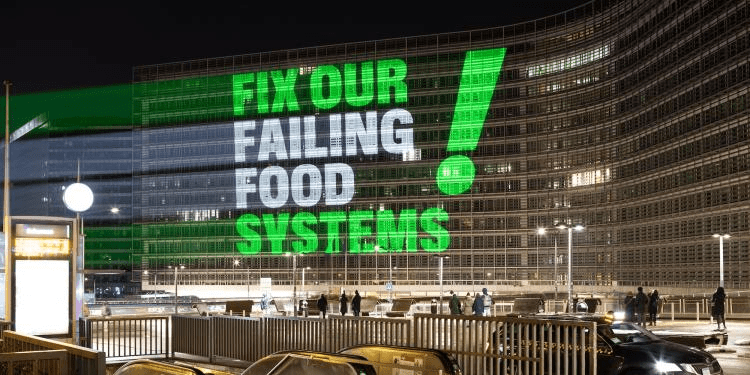
On Sunday night, the European Commission headquarters in Brussels were lit up with bright lights beaming a clear message to EU policymakers: fulfil your promises on the Farm to Fork Strategy and the urgent transition toward sustainable food systems.

Against the backdrop of the EU Agricultural Outlook conference, a major European Commission event on food and farming, some of Europe’s largest green NGOs and consumer associations joined forces to call out the European Commission on its failure to deliver both its promised proposal on the framework law for sustainable food systems (SFS) and its revision of the outdated animal welfare legislation. 

As a cornerstone of the EU Green Deal, the Farm to Fork Strategy included a series of vital policies and initiatives to address the growing overlapping crises surrounding the state of our environment, people’s health, and the welfare of animals.

The action’s name “Broken Promises” hints at the State of the Union speech Commission President Ursula von der Leyen delivered last September. The speech’s motto was “Promises kept”, which is only partly true. While the Commission has shown partial commitment to delivering on some policies, two major promises remain glaringly absent: the framework law for sustainable food systems (SFS Law) and the revision of the animal welfare legislation.
 

Intensive unsustainable farming systems are the cause of immense animal suffering. Chickens, fish, pigs, and many more species are being treated as commodities and products in order to produce cheap and unhealthy meat and dairy as quickly as possible. Evidence shows that this industrial system harms everyone: animals, the planet and humans. As showcased by many ECIs and polls, citizens want change. And the good news is that change is perfectly possible if policymakers dare to take the right decisions and challenge the harmful status quo. Frontrunners in animal farming are leading the way. The time is now for the European Commission to make a firm commitment and make progress on the legislation.

Reineke Hameleers, CEO, Eurogroup for Animals

A food system which is making unhealthy diets the norm is not only causing ill health for consumers across Europe, it is also harming our planet. This same system has allowed food waste in Europe to pile up to record levels, at a time when more and more Europeans are going to bed hungry. The EU must do everything it can to make the sustainable food choice the easy, attractive, and affordable one. And the SFS law is the first step to do so.

Monique Goyens, Director General, European Consumer Organisation (BEUC)

Instead of promoting the health of people and planet, our food systems contribute to a huge burden of ill health and early death, it massively increases the risk of anti-microbial resistance, and contributes to climate change and environmental degradation. The EU must urgently recraft its food systems so that human and planetary health are protected. Making healthy sustainable food choices the easy, default option IS an option.

Dr Milka Sokolovic, Director General, European Public Health Alliance

A key pillar of the European Commission’s Farm to Fork Strategy, the SFS Law is a unique opportunity for this European Commission to pave the way for a future where everyone has access to healthy and sustainable food, farmers are supported, ecosystems are protected, and animal rearing is not defined by suffering. The Commission must fulfil its duty to people and planet and deliver this vital proposal – as well as its promised revision of EU animal welfare legislation – before the end of its mandate.

Faustine Bas-Defossez, Director for Nature, Health and Environment at the European Environmental Bureau

Regards Mark

EU: Opinion – Leaked transport regulation draft fails the animals for “business as usual” – By Reineke Hameleers – Eurogroup for Animals.

From Mark – there is a lot to absorb here from Reineke – I started to underline and bold main points; but almost ended by doing everything !! – thus I stopped. Bad news all round whatever, but what else would you expect from the EU ? – Regards Mark

Photo – PMAF (France)

1 December 2023

Opinion

Written by Reineke Hameleers

A revised Regulation on live animal transport, possibly together with rules on cat and dog breeding, is the only piece of updated legislation that will be put forward in this political term. This is at a time when we, and millions of European Citizens, fully expected the European Commission to deliver on its firm commitment to revise all animal welfare rules.

It is, therefore, all the more striking that the leaked Commission’s legislative proposal on the transport of animals is even less ambitious than we could have imagined.

The general tone is that ‘animal welfare is a common good, but business is business and as few obstacles as possible must be put in its way. Perhaps the most evident proof is that the extremely controversial live exports to non-EU countries are here to stay, albeit with more restrictions, most notably on the vessels that can be authorised for sea consignments. There is even an explicit recognition that this is a lucrative sector and that someone else would profit from it if the EU decided to withdraw. 

The draft Regulation appears to ignore the European Court of Justice Ruling (C-424/13) establishing that animals must be protected according to EU legislation until their final destination, within or outside the EU territory. According to the new draft rules, the operators who should be reporting any animal welfare problems are the same people in charge of the animals during the journey. The same people who are profiting from the business. We can only imagine how eager these operators will be to report their own violations to the competent authorities.

For the rest, the alignment with the recommendations of the latest scientific opinions commissioned to the European Food Safety Authority (EFSA) is inconsistent, and some of the requests of the Animal Transport Committee of the European Parliament (ANIT) have been disregarded. True, the leaked draft includes some positive elements, among which the most important are the proposed lower maximum journey times for most species, updated space allowances, compulsory real-time traceability of all road journeys, and the minimum age of five weeks for transporting unweaned calves. But, as is often the case, the devil is in the details, and those details are concerning. 

To start with a striking example, unweaned animals (calves, lambs, foals, etc.) are recognised as vulnerable but, thanks to a derogation, can still be transported for two consecutive 9h periods with a 1h period of rest in between (so 19h in total) if the trucks are equipped with specific feeding devices – whose effectiveness the Commission intends to “verify”. As if this weren’t enough, when the journey of unweaned calves is roll-on, roll-off (RORO, meaning that the trucks are partially transported by sea), the time spent at sea is not included in the total journey calculations – as if hunger, dehydration, and exhaustion in unweaned animals (and indeed, in all animals) were not time-dependent. This provision, which is so damaging it beggars belief, to all effects legitimises the Irish dairy calf export trade, which in 2022 involved 153.000 calves (for 2023, the numbers have already increased by 30,000 animals). Dairy calves are sent on 18h RORO crossings to be further transported to fattening or slaughter to international destinations. The current requirement to rest the animals for 12 hours after a long RORO crossing apparently disappeared from the new draft Regulation. Another favour to the industry in plain sight. There is also no real consideration for end-of-production (ie, cull) or pregnant animals, two additional vulnerable categories. 

Only animals that are fit for transport should start a journey. However, although fitness for transport is a prerequisite before an animal can be loaded (and it should be guaranteed for the entire journey), the proposal does not provide any concrete and species-specific ways to assess this fitness. EFSA had proposed a series of animal-based indicators in its last scientific opinions: for instance, severely lame poultry or poultry with open wounds/prolapses, broken legs or wings should not be transported. Similarly, severely lame cattle or cattle with pneumonia should be considered unfit for transport. The operators cannot make informed decisions without clear and species-specific indicators of reasons for excluding a vulnerable animal from starting a journey. The draft Regulation only mandates the use of (yet-to-be-defined) indicators at the destination, but this is insufficient to protect animal welfare for the whole journey. 

Other shortcomings concern the allowed minimum and maximum temperatures for transporting animals. Again, looking at the most recent EFSA recommendations, the proposed ranges of temperatures, particularly the maximum allowed ambient temperatures (30 degrees) for transports during the daytime, are inadequate to guarantee animal welfare. For farmed animals there is no mention of minimum and maximum allowed temperatures inside the trucks or containers, nor does the draft mention compulsory monitoring systems for microclimate inside the vehicles (again, ignoring EFSA’s recommendations). 

All the while, contingency plans, while mandatory, are not described in any detail, posing another hazard to animal welfare in case of traffic disruptions, extreme weather conditions, accidents, disease outbreaks, etc. Throughout the text of the new draft, there is a strong emphasis on the responsibility of organisers, drivers/transporters and staff at the final destination for the welfare of the animals in their care. This is also present in the current Regulation, and it begs the question of why commercial operators should denounce themselves to the competent authorities if their failure to enforce the Regulation leads to animal welfare problems.

Is it all doom and gloom, then? This proposal does have some progressive elements, particularly concerning the real-time traceability of each live animal consignment (which would become compulsory) and the recording of relevant data for enforcement purposes. Additionally, we welcome the proposal that ships flying “black flags” (severely sub-standard), which at the moment constitute 55% of the EU-approved livestock transport fleet, would no longer be allowed to operate. Only ships flying a white or grey flag (good or average performance) would be able to obtain the relevant authorisation certificates. The Commission intends to exercise more control over live animal transport data, but how the data will be used is still unknown, also because they will not be publicly available. The scope is extended to aquatic animals and recognises the most important aspects for their welfare, however, a delegated act will be required to introduce measurable and species-specific requirements, or there will be no impact on aquatic animals from the text in this draft. 

When it comes to companion animals (cats and dogs) the draft presents new species-specific criteria but some provisions are generic and vague. While it’s good to see that the minimum age has been set at 15 weeks, it’s astonishing that there is still no maximum journey time. This means that cats and dogs, even pregnant ones, can be transported for days and days, and the only requirement is to feed them “at least every 24 hours”. 

For animals transported for “scientific purposes”, the details remain again vague. There are limitations: only a proportion of these animals would benefit from such protection. The animals used in projects authorised under Directive 2010/63/EU would remain unprotected. Animals that are transported by air, as non-human primates that are imported to EU laboratories, and vulnerable animals, as for example certain genetically altered animals, and animals that have undergone surgery also seem to miss protection under this proposal.

Will animal welfare be substantially improved should this draft become legislation? From our analysis, the answer is no. 

Regards Mark

India: 1/12/23 – Latest From ‘Animal Aid Unlimited’.

Dear Mark,   

We try to avoid using the word “miracle” in our newsletter and social media posts, even though there are plenty of times when we’re tempted to use it–when we thought a cut was too deep, the cancer too advanced, the damage from maggots too pervasive for the animal to heal. But we usually choose not to say “her healing was a miracle” because we feel it discounts all the effort and hundreds of combined hours of human help that make the healing possible. But yet, there is something more than the sum of its parts, taking place in the relationships that make everyone coming together to help animals a family, a team, a group of friends, whose affection is sealed by our shared love of animals.

And now we want to use that very word: the miracle of friendship. There is an unspoken understanding between all who care for animals, many who have sometimes been deeply misunderstood. Your love, our love of animals, is not casual. It hovers within us at all times. An animal’s smile turns our hearts to mush; the abuse of an animal astonishes and ignites us. These are what forge this miracle of friendship we experience together.

May all the blessings of peace rain down upon us all as we continue rescuing these vulnerable animals from injuries, illnesses, and abuse, and may our hearts, too, find deep happiness in their recoveries. Thank you for your gifts of help, and for your gifts of friendship to Animal Aid and to the thousands of others weaving this beautiful blanket of compassion.

A mere rubber band almost ended Chicky’s life.

We were stunned to see that a rubber band could so horribly injure this puppy’s neck. The rubber band penetrated deep into the tissue and caused a horribly painful and deep wound.

As soon as we had Chicky on the treatment table of course we cut the rubber band off, and although the removal stung a bit, we suspect that relief was almost immediate. We then treated the wound like any other serious laceration, and supported her with antibiotics, a hydration drip, food and–yup, cuddles! It took her a couple of weeks to no longer need the bandage, but we were thrilled at how quickly her little body healed.

Turned out, to no one’s surprise, that Chicky is a huge love bug, eager to forget her weeks of pain, ready to leap into a long happy life ahead.

Help us say “We can fix this!” – make a donation today for street animal rescue.

Pihu’s sparkling eyes say “I survived cancer!”

If you’d just looked at Pihu’s eyes, you wouldn’t know she was dying. But the advanced cancerous tumor on her backside was slowly taking this beautiful street dog’s life. The cancer type is called a Transmissible Venereal Tumor, (TVT) and it usually affects the reproductive areas.

A several months’ course of weekly chemotherapy was necessary to shrink the tumor. But such therapy is not always successful, and the more advanced the tumor is, the more difficult the recovery. If a dog’s overall condition has been greatly weakened by the cancer, he or she cannot always be saved. But Pihu is as strong as she is sweet, and she inspires love to last a lifetime–and hers, we hope, will be a long one.

For the ones who need so much more than just medicine to recover – Make a donation today.

Haldi’s tail thumped in hope, just when her life was in gravest danger…

Beyond Haldi’s huge neck wound, her tail wagged, as if pleading for help. When our rescue team arrived, we found her unbelievably gentle despite her terrible pain. She would need surgery as soon as possible, so once back in our hospital we cleaned and put on a temporary bandage at the site of the worst of her wounds (she also had a less serious wound on her hind leg).

Once the operation was complete, Haldi’s rapid healing simply galloped along. And Haldi made her wound dressings a breeze, she was just so full of trust and love. All healed, meet the strong, radiant Haldi now!

When surgery is their only hope, let’s be there.  Please donate.

…These are a few of your fav-o-rite things….

Your purchase is a gift to your friends, yourself, and best of all, to animals.

100% of the proceeds go to our street animal rescues.

Go shopping here –  https://shop.animalaidunlimited.org/

We thank you deeply for all you do, are, and inspire for animals.

Founding family Erika, Claire and Jim, and the Animal Aid Unlimited team.

Regards Mark

UK: Live Animal Exports Ban Latest News – The Final Stages Now Hopefully.

UK Live Export Update

Ther 14th June this year (2023) was the Ban Live Exports International Awareness Day.You can see some of our past awareness day posts by clicking here – Search Results for “ban live export awareness day” – World Animals Voice

This year, 120 NGO’s from 31 nations took part in the day of action; encouraging their supporters to raise awareness, gather support and push for legislative changes that improve the welfare of animals in transport and to also ban live exports.

Across Europe, citizens sent 464,586 digital postcards to EU Ministers urging them to support change.

In the UK – In May this year the UK government reneged on its manifesto promise to deliver a live exports ban; when it dropped the ‘Kept Animals Bill’.  In July, there was a funeral themed photo stunt outside of Parliament, urging the UK Government not to allow its promise to ban the trade to go to the grave !

In September, Dame Joanna Lumley submitted over 95,000 signatures regarding the same to No. 10 Downing Street, calling for the Prime Minister to show true leadership for animals by banning live exports.  In October, CIWF helped organise an ‘MP Walk In’ session in Parliament, briefing MP’s on the issue.

Then suddenly, few weeks ago, campaigners warmly welcomed during the State Opening of Parliament by HRH King Charles, which outlines all the work to be undertaken by government in the next Parliamentary session, a new Animal Welfare (Livestock Exports) Bill which will ban the live export of cattle, sheep, goats, pigs and horses for both slaughter and further fattening from Britain.

This is a huge step forward towards ending this disgusting trade from the UK; especially as it has now been detailed in the State Opening for passing into legislation in this next parliamentary session.  Now the Government must listen to its people (as they work for us !) and deliver the ban on the archaic practice of transporting live animals on long and arduous journeys overseas for both slaughter and fattening once and for all.  In the past and more recently, we have all seen a series of broken promises by the Government on this issue; so the latest session news is most welcome.  The Bill must now be passed as a matter of urgency; and with a General Election at most 1 year away, the government knows it will get a big no vote at the ballot box if it fails its citizens again.

Regards Mark

Personally, I have campaigned and investigated live animal exports from the UK for the last 35+ years.  You can read and see a lot more about it by visiting  About Us. | Serbian Animals Voice (SAV)

NO less than 57 animal rights organisations have for the first time made an official complaint to the European Ombudsman.

Animal rights organisations register European complaint (euroweeklynews.com) 

NO less than 57 animal rights organisations have for the first time made an official complaint to the European Ombudsman.

Basis of complaint

This complaint concerns the European Commission’s failure to fulfil its commitment to a European Citizens’ Initiative in which 1.4 million people demanded a ban on the cages used to house a number of different domestic animals.

In its response to the European Citizens’ Initiative published in June 2021, the European Commission confirmed that, by the end of 2023, it would present a legislative proposal to phase out and eventually ban the use of cages for chickens, calves, rabbits, ducks, breeding sows and other species.

The reason for this complaint is that the most recent agenda for the rest of the political legislature was missing the Regulation on Captive Animals, which the plan should have included.

According to one of the complainants, Spain’s AnimaNaturalis, before backtracking on its promise, the EC repeatedly confirmed that it was working towards the 2023 timeline, and Health and Food Safety Commissioner Stella Kyriakides made multiple public mentions of this date in EC responses to questions.

“ The EC has not acted in accordance with the rules governing European Citizens’ Initiatives after raising legitimate expectations among European citizens. These deficiencies present a case of maladministration, both in light of the EU Regulation and the very reason for being of the European Citizens’ Initiatives as an instrument of transnational democracy,” observed Cristina Ibáñez, lawyer and spokesperson for AnimaNaturalis .

Should fur be banned?

In addition to the cages, 1.5 million people also requested a ban on the fur industry and the marketing of fur products on the European market which legislation was expected to have been included in the Regulation on captive animals.

While regulation to phase out cages remains pending, an estimated 700 million farm animals continue to suffer in cages in Europe according to the complainants.

Regards Mark

England: True horror of EU live animal transport masked in official records - CIWF Report.

True horror of EU live animal transport masked in official records 

28 November 2023

CIWF

My bold, underline etc – Mark.

Press Release

Shocking new report reveals suffering endured by around 44 million farmed animals a year – including unweaned calves and lambs – on horrific journeys lasting up to three weeks. Inadequate and misleading official records are masking the true horror and scale of the EU’s long-distance trade in farmed animals, a shocking new report released today by international NGOs Eurogroup for Animals and Compassion in World Farming reveals. 

Photo – Mark

The new report  A data dump of suffering: the EU’s long-distance trade in farm animals exposed  analyses a cache of previously unpublished EU records relating to the long-distance transportation of 180,000 consignments of farmed animals within and from the EU during a 19-month period from October 2021 to April this year. It reveals disturbing details of the extent and nature of suffering endured by around 44 million farmed cattle, sheep, pigs and other animals transported annually.

Key insights from the report include:   

Over 370,000 unweaned calves were taken from their mothers shortly after birth and deprived of nutrition during long journeys – many as young as just two weeks old. 300,000 unweaned lambs are also imported by Italy alone each year, enduring long journeys without adequate feed.   

Thousands of sheep and cattle are exported from the EU by road to Kazakhstan, Uzbekistan, Kyrgyzstan, Azerbaijan, Armenia and Georgia in journeys lasting up to three weeks.   

Anti Live Export March – Dover, England. Photo – Mark

France, the Netherlands and Denmark have exported thousands of pigs to extremely distant countries including Brazil, Vietnam, Thailand, and Nigeria. By exporting breeding sows that have been genetically selected for very large litters, the EU is seeding its inhumane factory farming model in other parts of the world.  

Millions of cattle and sheep a year endure long, stressful sea journeys to the Middle East and Africa for slaughter or fattening. Vessels are often in very poor condition and animals suffer greatly during these journeys from heat stress, noxious gases, motion stress and starvation and there are no effective legal protections.   

In 2022, the EU exported around 30,000 pregnant heifers, mainly to central and western Asia, such as Uzbekistan and Kazakhstan, where journeys are up to 6,000 km and can take up to three weeks.  

Above – CIWF Tour for farmed animals in the Netherlands – photo Mark

An estimated 54,000 tonnes of live fish, equal to tens of millions of individual animals, were transported between EU Member States in 2019. Fish often endure routine starvation, overcrowding, and physical injury to scales and fins resulting from handling when loading and unloading during transport.    

The report shows that the EU’s journey records were incomplete, often inaccurate and vastly underestimate the sheer extent of the length and duration of many journeys. Around 60% of journeys are shown as starting at assembly centres but animals may have been transported from the farm of origin for many hours prior to this without any requirement for this to be logged. Many transporters practise ‘assembly centre hopping’, avoiding the requirement for animals to be given 24 hours mid-journey rest before resuming their journey.  

This release comes just days before the expected publication of the European Commission’s proposal on animal transport on 6 December. However, the Commission has failed to publish the other proposals it committed to present as part of a more comprehensive revision of the animal welfare legislation, including the ban on caged animal farming, which was expected by September 2023.   

The two animal protection NGOs are calling on the EU to ban the export of live animals from the EU to non-EU countries, to switch to a trade in meat and carcasses only, and to introduce tougher rules to protect the welfare of animals on journeys within the EU. 

This call for greater protection for farmed animals’ welfare during transportation is supported by the majority of European citizens. The 2023 Special Eurobarometer found that eight out of ten Europeans think the travel time for the commercial transport of live animals within or from the EU should be limited1 and an overwhelming nine out of ten people believe it’s important to protect the welfare of farmed animals.  

The transnational nature of live exports makes it especially challenging to protect the welfare of animals, and this is why we ask for a ban on live exports to non-EU countries. A replacement with meat and carcass exports does not only benefit the animals but has huge economic and environmental benefits. Better measures to protect unweaned and pregnant animals must be put forward, while the misuse of assembly centres needs to be urgently addressed. The immense scale of suffering highlighted by this investigation cannot be ignored – the European Commission must come forward with a more ambitious Regulation.

Reineke Hameleers, CEO, Eurogroup for Animals

Our new report reveals some deeply troubling issues, not least that the official data is incomplete, inaccurate and vastly underestimates the scale of – and the animal suffering caused by – the EU’s long-distance trade in live farmed animals. Although we knew that millions of animals were enduring cruel and unnecessary journeys in the name of profit, this report shows that the situation is far worse than we had feared. The EU must address this as a matter of urgency by banning the live export of farmed animals to non-EU countries and introducing tough new rules to protect their welfare during transportation between and within EU Member States.

Peter Stevenson, Chief Policy Advisor, Compassion in World Farming

Regards Mark

I have had the pleasure of knowing and working with Phil, Peter and all the CIWF crew for decades.

Below – On Tour with CIWF in the Netherlands.

CIWF Campaigner of the year 2003.

EU: The Pecking Order: fast-food chains falling behind on chicken welfare.

27 November 2023

WAP

Some of the biggest fast-food brands in Europe are performing very poorly on their management of and reporting on broiler chicken welfare, a new report from World Animal Protection shows.

The European Chicken Commitment (ECC) is a set of minimum requirements that will improve the welfare of chickens considerably and cost-efficiently.

The Pecking Order report analysed 69 companies across France, Germany, Italy, Poland, Romania, and Spain on their commitment to address chicken welfare throughout their supply chains, and how much progress they are making on implementing the requirements of the ECC.

Photo – act 4 farm animals

Each year, over 7 billion broiler chickens are killed for consumption in the EU. 95% of the broiler chickens currently reared on factory farms are fast-growing, selectively bred to reach slaughter weight in just five to six weeks. Their growth rate has a huge impact on their health and welfare.

The results show that only 49% of the companies analysed have published a broiler chicken welfare policy that demonstrates alignment with some or all of the ECC criteria, with 51% having no commitments on the topic at all.

A staggering 90% of companies analysed are ranked in the lowest scoring tier (very poor) on progress reporting, having published very little or nothing on broiler chicken welfare issues.

While the overall score for the fast-food companies assessed in France has improved, Germany, Spain and Italy have shown slight reductions in their overall company scores. Poland and Romania have overall scores that are significantly lower than the other markets assessed.

Too many companies are still in denial, and close their eyes to the plight of the animals that they are responsible for. If they think they can get away with greenwashing or hide behind misguided excuses about climate footprints and affordability, I have a simple message: They can’t. Companies that use chickens in their supply chains are responsible and must be held accountable for ensuring their wellbeing.

Dirk Verdonk, World Animal Protection

Report link – The Pecking Order 2023 | World Animal Protection

The report is a united project by World Animal Protection, Albert Schweitzer Foundation, Essere Animali, L214, and Humane Society International.

Broiler chickens

Broiler welfare

European Chicken Commitment

European Union

Regards Mark

EU / NZ: EU ratifies its first trade agreement with an animal welfare condition.

22 November 2023

Press Release

Today, the European Parliament overwhelmingly approved the EU-New Zealand Free Trade Agreement. The deal sets a precedent in trade policy as it’s the first time the EU ratifies a trade agreement which conditions market access on the respect of animal welfare-related standards.

Under negotiation for five years, the deal liberalises trade in most animal based products, and should hence further stimulate animal agriculture in the EU and New Zealand. It does, however, include an unprecedented condition: the beef quota is reserved for grass-fed animals, explicitly excluding feedlots. And this condition is  motivated by both animal welfare and sustainability reasons.

This is only the second time the EU has negotiated an animal welfare condition in a Free Trade Agreement (FTA) since the controversial EU-Mercosur FTA introduced the first one in relation to shelled eggs. Yet, while the volume of shelled eggs imported by the EU from Mercosur countries is quite low, in the case of New Zealand the EU managed to obtain an animal welfare condition for one of the most traded animal products between the partners. 

Eurogroup for Animals welcomes this animal welfare condition as feedlots, in addition to being a major source of soil, air and water pollution, are highly detrimental to animals: they can provoke respiratory and digestive diseases, the main causes of cattle death under such rearing conditions.

This animal welfare condition shows that with the right political willingness, the EU can take into account animal welfare concerns in its trade policy. As the latest Eurobarometer showed, this is well supported by EU citizens. This FTA should give the right impetus to repeat animal welfare conditions in other trade agreements, especially where a beef quota is negotiated. Why would a feedlot in Mercosur countries be sustainable, but not in New Zealand? Omitting such a condition when renegotiating the EU-Mercosur FTA would certainly be incoherent.

Reineke Hameleers, CEO, Eurogroup for Animals

The EU-New Zealand FTA is also the first EU trade deal integrating sanctions in its Trade and Sustainable Development (TSD) chapter. While this is welcome, the language is non-committal, specifically for provisions related to wild and aquatic animals, with words that focus on “acknowledgement” or “support”. This means that even in case of failure to comply with these provisions, no violation can be found.  

Apart from the animal welfare condition, the FTA also includes a chapter on animal welfare cooperation. Regrettably, the language in this chapter remains weak and also non-committal. This is unfortunate as the EU and New Zealand, two like-minded partners, could work together on issues such as banning live transport which is under discussion as highlighted by the European Parliament’s resolution. For these reasons, Eurogroup for Animals supports the European Parliament’s stand to “quickly establish the domestic advisory groups”, and remains ready to work in this fora to foster effective cooperation as soon as possible. 

Regards Mark

Czech Republic: Live Transport News and Links.

WAV Comment – have had this through today (22/11) from our campaigner friends at the Society for Animals in the Czech Republic, EU.  stoptransport.cz – For a Better World for Animals and Stopping Cruel Transports

I have made no changes to the text, or added any further additions; the translation is via the system, so this is directly as supplied.   With the above web link, there is an ability to translate if you wish.

Regards Mark

——————————————————

Dear friends,

the institutions of the European Union are also busy because of the animal inhabitants of the member states.

At the beginning of October, we informed you that the European Commission is forgetting about the promises of changes to the regulations to improve the conditions of kept and transported animals.

Following our joint European action, the Commission said it would submit amendments to the Regulation on the Protection of Animals during Transport later this year – petitions

Later this week, we expect an important breakthrough regarding other missed regulations. Whether it will be good or bad for the animals, we will write to you.

Specifically, these are proposals for regulations on the labelling of animal foodstuffs according to the methods of animal husbandry, changes on the slaughter of animals and on the methods of animal husbandry (so-called farm animals). The last one reflects on the successful European citizens’ initiatives End the Cage Age and Fur Free Europe.

On behalf of the Society for Animals

Judit Laura, Adéla, Michala

EU: Horrifying Truth of EU Fur Farming Revealed By Undercover Teams Visiting and Recording On Dozens of Farms.

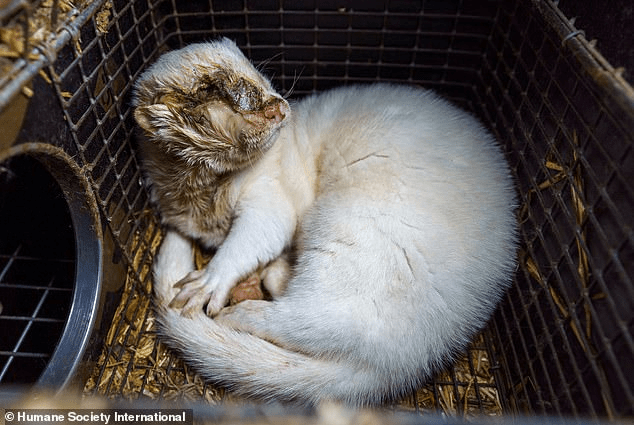
An injured white mink. The chilling exposé titled ‘This is Fur Farming in the EU’ lays bare the grim reality of fur factory farming across six EU nations

A white mink with part of its face missing
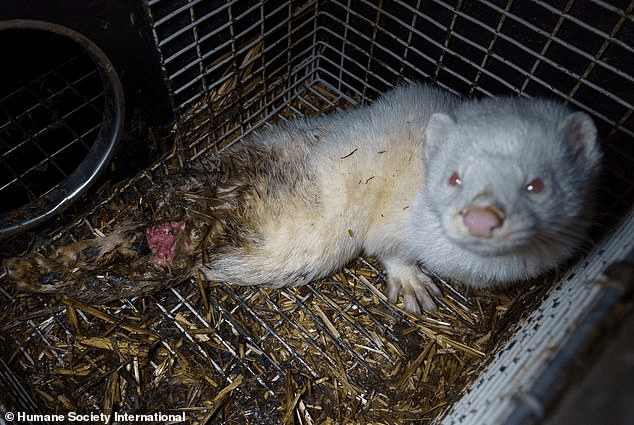
All pictures – HSI.

Link:

Horrifying truth of fur industry revealed in footage from largest ever undercover investigation involving dozens of farms where animals engaged in cannibalism, had limbs gnawed off and were left with maggot-infested wounds | Daily Mail Online

Horrifying truth of fur industry revealed in footage from largest ever undercover investigation involving dozens of farms where animals engaged in cannibalism, had limbs gnawed off and were left with maggot-infested wounds

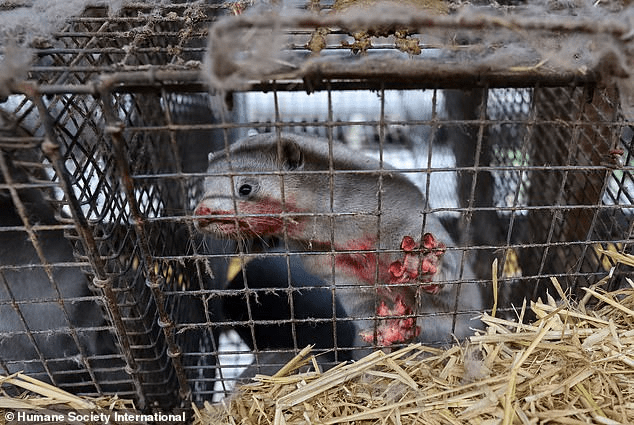
Wounded animals can be seen battling to survive in cages. The harrowing material was captured by independent animal rights investigators in more than 100 farm visits

The horrifying truth of the fur industry has been revealed in footage from the largest ever undercover investigation on European fur farms.

The chilling exposé titled ‘This is Fur Farming in the EU’ lays bare the grim reality of fur factory farming across six EU nations.

The harrowing material, captured by independent animal rights investigators in more than 100 farm visits, shows animals including mink, foxes and raccoon dogs in disturbing conditions.

Read the full article and see video footage by clicking on the link above.

Regards Mark