Viva! is demanding that the Government includes a shift to plant-based diets in their climate commitments. Take action with us ahead of COP28 by joining our London demonstration on the 25 November 2023.
COP is a key point in the environment calendar, marking the annual United Nations Climate Change Conference where world leaders come together to discuss the supposed ‘solutions’ to tackling the climate crisis and its impacts. Demand for meat, dairy, fish and eggs is the number one driver of wildlife loss, is fuelling the climate crisis, and threatening humanity’s own existence. Yet given the devastating impact it has on the planet, there is no mention of dietary change in the UK Government’s environment and climate strategy.
Our leaders are governing the death of humanity. Without a healthy planet, we have no future. We need to take a stand against climate inaction, and we need you to join us this 25 November.
Join Viva!’s demonstration at Parliament Square
Where: Parliament Square, London When: 25 November 2023, 11am to 2pm
We’ll be bringing lots of placards to explain why we need to include the impacts of meat and dairy in environmental commitments. There will be plenty to hand around if you need one or bring your own! This is a collaborative event where we will be joined by other groups to amplify this unified message. We will have speeches throughout the day.
Our action on Parliament Square is just the beginning – we want to support you in taking action in your local area.
COP28 will be a key event in the environment calendar, with rallies and demos across the country; allowing people to have their voices heard about the need for climate action now.
COP28 is being held 30 November to 12 December 2023. Take action in your local area as part of a local COP28 rally or hold your own event or stall.
At Viva! we will be updating our website regularly with details of national events. However, if there isn’t one already set up near you, why not hold your own outreach event or demo instead? Keep us updated on your climate action plans.
Luna, featured in this video, was born with a condition called cerebullar hypolasia, caused by problems in the part of the brain that control motor function.
Other cases of incoordination are caused by the Canine Distemper Virus, and some are from accidents that involved head trauma.
These survivors need extra help with eating, staying clean, and living in a protected area where they won’t get hurt if they suddenly fall down.
These movers and shakers have an abundance of love to give and are feisty to boot, overcoming all obstacles to get the cuddles they want or their favourite spot on their doggie bed.
Thank you for giving us the means to give permanent homes to these bright sparkling dogs who have flopped and bobbed their ways into many hearts here–and we hope yours will be among them soon. Plan your visit to meet Luna and the other sweethearts!
Gentle Floppy, saved from a horrible wound made worse by thousands of flies.
An inner ear infection had drawn thousands of flies. Seeing him on the side of the road, shaking his head in so much agitation, was heart-breaking. Blood soaked his jaw and upper shoulder and the flies seemed to worsen his trauma. We hurried him to our hospital and began his treatment.
Floppy has been an amazing patient, quietly bearing the treatments which must have both hurt and frightened him. But he held completely still and made dressing his wound as easy for his care-givers as he possibly could. The wound took two months of daily dressings to heal, but Floppy felt much better almost immediately. Watch til the end, because now, Floppy sometimes seems to smile.
Burned boy, Shiva, has his own temple! (Well, he thinks so!)
We don’t know how this young street dog, Shiva, became burned–possibly someone accidentally spilled hot water. He seems too accustomed to being loved to have been a victim of a deliberate cruelty. He has a special friend in his neighborhood who insisted on carrying him to the ambulance. Without intensive treatment, this large burned area could have easily become infected and taken his life. He needed daily wound cleanings, dressings, antibiotics and careful monitoring to ensure his rapid healing, so being hospitalized was essential.
Each day he became more and more adored by our staff and volunteers. His healing was beautiful, we neutered him, and because he’s such a popular guy at the temple area where he lives, we knew that Shiva would be in good hands there. When we released him, Shiva expressed a tremendous tail-wagging joy to be home. He still needed twice daily application of fly repellent cream which his caring friend faithfully applied, and our Street Treatment Team made regular visits to ensure the wound closed completely. This is what a great partnership for street animals can look like: community carer takers, a hospital for when they need more, and loving support from donors.
Lovely Susie felt so much relief as soon as her eye surgery was complete!
Golden beauty Susie was spotted by a passer-by with her eye protruding from its socket and her horn broken off. At first we suspected she had suffered a blow to the head by a passing vehicle, but once we examined her, we discovered that she actually had a tumor growing behind her eye. We waited a few days to stabilize her, treat her horn wounds (both horns were affected by the tumor) and get ready her for eye removal surgery.
When her surgery was complete, we couldn’t believe how rapidly she stood and walked. Relief may have been almost instantaneous. She started eating again as soon as the anesthesia wore off, and her road to complete recovery was straight ahead. Like you, we find it unfathomable that her owner simply abandoned her in such dire condition. When this girl desperately needed help, it was provided by strangers. Thank you for being among the kind strangers who saved Susie’s life.
We typically have a majority of women volunteers, but it hasn’t been true for us during the past month, and we’re so delighted by this infusion of the gentlest of gentlemen.
Wouter, (Netherlands) has joined us for more than a month of loving care to the animals–and this is his third time here! He’s vivacious, hard-working, wonderful with the animals and has a great sense of humour to match it all.
Dan (USA) hadn’t taken a vacation from his screen printing company in years. But when he got his chance for a prolonged break, he headed straight to Animal Aid where he lavished love on hundreds of grateful new friends.
Alex (Australia) is a multi-lingual history and world politics teacher who is accustomed to helping kids, immigrants, and marginalized communities. This year he took a sabbatical and decided to share his kindness even further, by sharing his love with animals. And he’s made some new human friends while he’s at it!
Help an animal glow like you!
100% of the proceeds go to our street animal rescues.
As negotiations for a free trade agreement (FTA) between the EU and Australia enter the final stage, Eurogroup for Animals, Australian Alliance for Animals and Animals Australia urge the two sides to include ambitious provisions on animal welfare in the agreement.
Improving animal welfare is strongly linked with the pursuit of sustainable food systems. However, current trade policies appear to be exacerbating rather than mitigating the adverse consequences of intensive livestock farming. This is the case with Australian beef exports, where 96% of exports to the EU originate from animals held in grain-fed feedlots; yarded areas that adversely impact animal health and welfare by causing respiratory and digestive issues, and contribute to increased water, soil and air pollution in Australia.
According to the EU’s own impact assessment, a trade agreement with Australia that grants expanded market access for Australian beef without attaching any animal welfare conditions would further incentivise beef production predominantly in feedlots. This would undermine the EU’s ongoing sustainable food systems transition. It is crucial for both parties to establish conditions for preferential tariffs on beef that originates from grass-fed systems, explicitly excluding beef produced within commercial feedlots, as the EU did with New Zealand.
Above – Conditions For Exported Australian Sheep.
Australia’s current rules on transporting live animals over long distances are minimal and virtually unenforceable, allowing animals to travel for up to 48 hours without food or water. Introducing a condition related to the protection of animals during transport in trade preferences related to ruminant meat would thus also have a positive impact.
This trade agreement is also an opportunity to set up strong cooperation mechanisms to tackle other topics such as the lack of use of pain relief during procedures like sheep mulesing in Australia.
Above — Mulesing.
It will be important to also use such a platform to share best practices and combine efforts to phase out live animal exports, especially since Australia has committed to phasing out its live sheep export trade and the EU is currently revising its legislation on the protection of animals during transport.
The EU and Australia together represent 473 million citizens, many of whom believe more should be done to improve the life of farm and wild animals. According to a 2018 report, 9 out 10 Australians are concerned about the welfare of farmed animals, and nearly as much want a reform to address this.
In Europe, animal welfare is a great ethical concern. Seven out of the ten successful European Citizens Initiatives (ECI) have been dedicated to animal welfare issues. The recent support for the ECI End the Cage Agepaves the way for both sides to cooperate as Australia has pledged to phase out the production of battery eggs by 2036.
We also urge the EU and Australia to address the large-scale, inhumane killing of kangaroos for commercial use. The EU is the main market for Australian kangaroo meat and leather, an industry which raises concerns about animal welfare, conservation and public health. Both parties must consider prohibiting the trade of kangaroo-based products primarily on ethical grounds. The EU and Australia both have a responsibility to solve this; in a recent survey, 67% of Australians stated that other countries should have a responsibility not to drive the commercial killing of kangaroos.
It is possible to strike a balance between economic interests and our shared commitment to ensuring the welfare of animals. We call upon political leaders of the EU and Australia to stand firm on their commitment to develop and safeguard high animal welfare standards.
WAV Comment – In addition to making things a lot better, lets have EU wide legislation that gives stray (homeless) dogs and cats much more rights – they are homeless; not wild !
I could show you dozens more photos I have on file re EU strays, but I dont want photos, I want legislation.
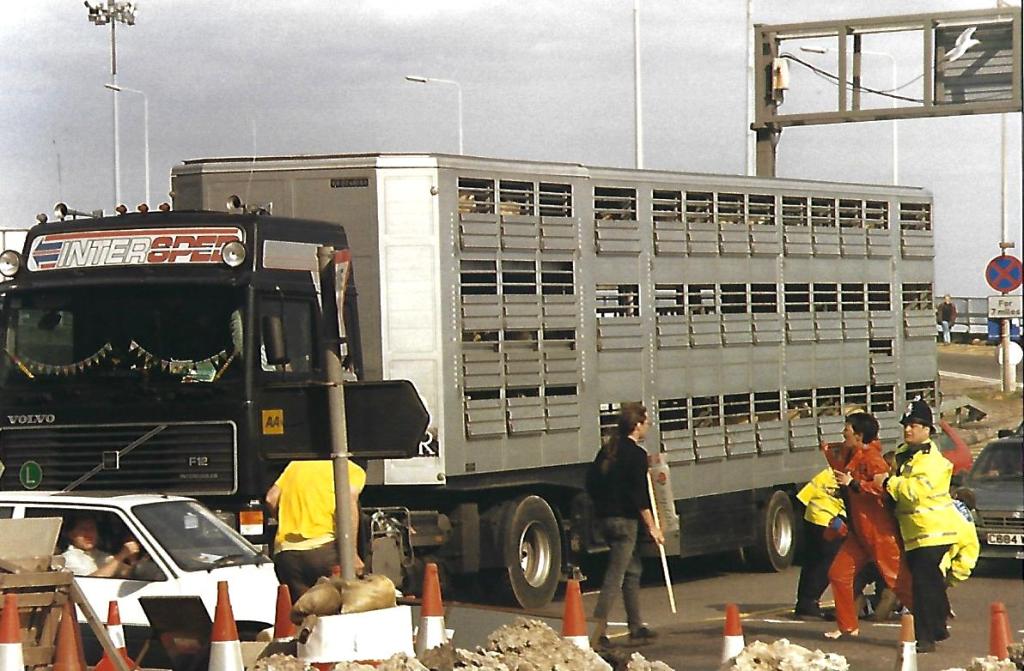
Pack EU Commissioners in a livestock transporter for 2 days, urinating over each other – then see how quickly EU animal transport rules will change !
Opinion
Written by Reineke Hameleers
The past few weeks have been among the hardest in my position as the CEO of Eurogroup for Animals but also, in some respects, the most surreal. In the ten years I have proudly spent leading this organisation, I experienced many political hurdles. Together with my team and our member organisations, we went through long years of lobbying and campaigning that were met with political inaction on the part of the European Commission.
After hitting the rubber wall so many times, we were thrilled by the prospect of new and updated animal welfare legislation, which the European Commission promised to deliver in line with the aims of the EU Green Deal and in the wake of our incredibly successful citizens’ mobilisations. It was refreshing for us to finally collect all the science, prepare our concrete asks, and talk about change for billions of kept animals.
This week it became clear that, at least for this political term, the European Commission does not intend to deliver all of the promised and much-needed reforms of animal welfare legislation. There are reasons why this is happening and I won’t analyse them in detail here. All I can say is that none of them holds water in a healthy democracy because this backtracking represents a betrayal of the trust millions of European citizens had put in the European Commission to take action for farmed animals.
Today, the disconnect between civil society and European politics has become even more evident. For one, the plenary debate at the European Parliament in Strasbourg on the European Citizens’ Initiative “Fur Free Europe” demonstrated that there is incredible cross-party parliamentary support for a ban on fur farming. Secondly, the results of the latest special Eurobarometer on animal welfare, only just published, show once again and without a shadow of a doubt that European citizens deeply care for farmed (and domestic) animals and want their policymakers to act. We know, however, that the pressure from the industrial agriculture lobby is immense and that the stakes are high due to the impending European elections in 2024.
We had anticipated that any attempt at passing legislation to reform animal farming would encounter fierce opposition from our opponents. I do not think we were wearing rosy glasses. After engaging for years with all stakeholders in countless meetings and occasions, and with all the scientific and field evidence on our side, we thought there were solid bases on which to build a revised farmed animal welfare legislation.
But then the pandemic hit, then war, causing international instability and an ongoing economic crisis. The promises of a greener, more sustainable food and farming system and good lives for animals became controversial in light of the events. As elections approach, one must be “realistic”. What was promised to millions does not count anymore when there’s a re-election on the line. These are the rules of the game.
Now that European citizens have spoken again, loud and clear, directly and through their elected representatives, what will the European Commission do? I believe the European Commission still can (and should) do the decent thing and put forward all the planned legislative proposals on animal welfare. When it does, we will be there to ensure that the new laws really make a difference in the lives of billions of non-human animals.
Regards Mark
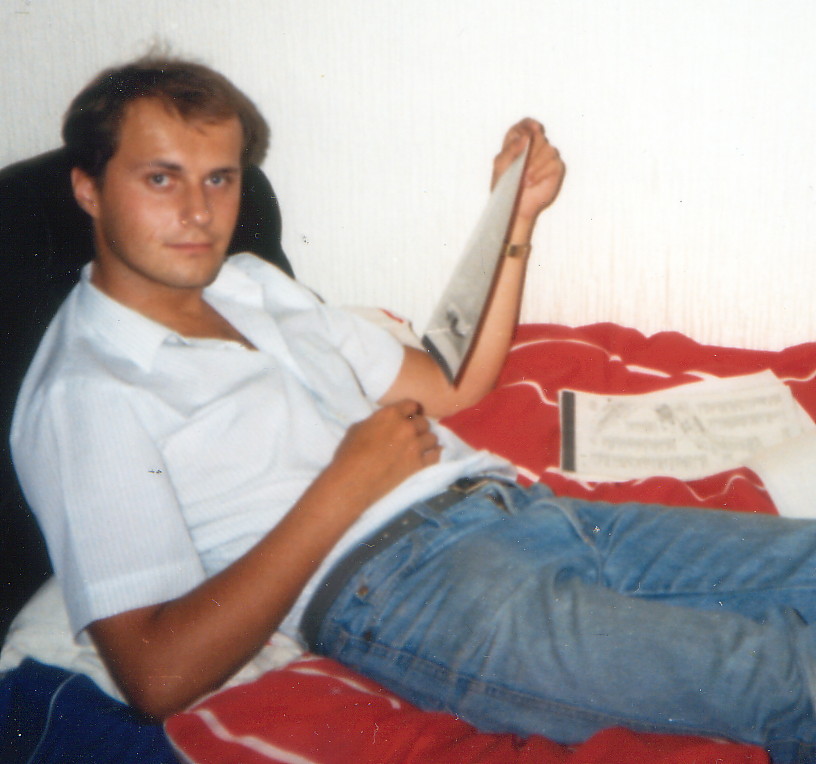
Younger days planning something ! – probably involving live animal exports.
WAV Comment – When you are behind rose tinted spectacles, and think that you are faultless in every way, it must be very easy to miss seeing the need to reduce animal numbers in food production !! – how very ‘Euro politics’; missing the ‘bleeding obvious’ ! – Mark
20 October 2023
In the vote on its own-initiative report on the European Protein Strategy, MEPs recognised the need to increase plant-based production for human consumption, but failed to address the crucial need to reduce animal numbers, particularly in intensive farming.
Eurogroup for Animals regrets that the Parliament rejected the amendment tabled by a large number of MEPs from different political groups, calling on the Parliament to recognise the need to reduce the production and consumption of animal-sourced protein from intensive farming in the report on the European Protein Strategy.
Around two-thirds of EU agricultural land is used for animal production, and a large proportion goes to producing feed for animals in intensive farming. Moreover, European animal farms have intensified in the last decade.
Russia’s invasion of Ukraine sparked a discussion about EU food security, with the European Commission reviewing its report on the development of plant proteins to improve EU food security, reducing dependence on feed imports and reducing environmental and climate impacts. The biggest threat to long-term food security in Europe is the overconsumption of animal protein, which exceeds national dietary guidelines, planetary boundaries and negatively impacts animal welfare. The science is clear that in order to ensure long-term food security, we need to grow more food for people and less feed for animals on arable land.
We welcome the Parliament’s consideration of animal welfare when it comes to insect farming for food and feed, but are concerned that insect farming is mainly a feed industry with questionable sustainability credentials and that risks sustaining intensive animal farming. We are also concerned about the positive view on methane reducing feed-additives, which are understudied and risk leading to poor animal welfare.
Eurogroup for Animals encourages the European Commission to focus on plant-based protein production for food, not feed, when reviewing its report on the development of plant proteins and to recognise the need to reduce animal numbers in intensive farming. This would support real long-term food security and strengthen Europe’s ability to produce enough food for everyone.
A new barometer on animal welfare shows an overwhelming majority of European citizens who demand better EU legislation that truly protects animals, with over nine in ten Europeans stating that it is important to protect the welfare of farmed animals, and an absolute majority deeming it very important. More than eight in ten Europeans believe that farmed animals in their countries should be better protected than they are now. These results should prompt the European Commission to follow through on its commitment to deliver all the proposals to revise the EU animal welfare legislation as promised.
The much awaited special Eurobarometer on Attitudes of Europeans towards Animal Welfare has finally been published today. The poll surveyed 26,376 citizens across all member states between 2 and 26 March 2023, and acts as an official tool that is used to advise the EU institutions when drafting reports and legislations.
The results confirmed the strong support from EU citizens towards animal welfare, confirming the previous survey from 2016, which had also sent a very strong message for the EU to better protect animals.
Highlights from the survey:
Over 90% of Europeans consider that farming and breeding practices should meet basic ethical requirements, while two-thirds of respondents said that they would like to have more information on the conditions in which farmed animals are raised.
Nearly six in ten Europeans (57%) said that fur farms should be banned in Europe, in line with the 1.5 million citizens who made this call in the successful Fur Free Europe ECI
Over nine in ten Europeans believe that farmed animals should have enough space to be able to move around, lie down and stand up, with 89% saying that animals should not be kept in individual cages, supporting the call by 1.4 million citizens who asked for a ban on cages. Currently in the EU, over 300 million farmed animals spend their lives confined in cages, which cause them immense suffering.
Nearly nine in ten Europeans (88%) said that it is important to improve the welfare of animals in slaughterhouses.
89% of Europeans favoured a ban on mutilations, a practice that is still very common in the EU, despite the pain it causes.
Three quarters of respondents found the practice of killing male chicks after birth to be unacceptable. In addition, eight in ten Europeans believe that ensuring sufficient skills and training in people handling animals is important.
On the issue of live animal transport, which the EC is expected to propose a revision on, 83% of respondents think that the travel time for the transport (for ‘commercial purposes’) of live animals within or from the EU should be limited.
When it comes to food imports from non-EU countries, over eight in ten Europeans (84%) believe that the current animal welfare situation should change, either by imposing import requirements or a very strict labelling system.
60% of the respondents indicated that they would be willing to pay more for products sourced from animal welfare-friendly farming systems, despite the survey being carried out during high inflation periods.
74% believe that the welfare of companion animals should be better protected, and over eight in ten respondents said that good welfare conditions for horses, cats and dogs bred for commercial purposes is important.
The support of EU citizens for better animal welfare is enormous, with this Eurobarometer once again they made a clear call for better protection for animals on all fronts. We urge the European Commission to listen to this loud and clear message and come forward with a solid commitment and timeline for the Kept Animals and Slaughter Regulations
Clear call from MEPs in plenary: Fur Free Europe now
19 October 2023
Photo – Jo Anne McArthur – We Animals.
MEPs from all political groups called for a full ban on fur farms and on the placement of farmed fur products on the European market at today’s European Parliament Plenary in Strasbourg.
A large number of MEPs from across the political spectrum called on the European Commission (EC) to respect European citizens’ demands from the Fur Free Europe European Citizens’ Initiative (ECI) and end this unnecessary, unethical and obsolete practice.
An official reply to the ECI is expected from the EC by the end of the year.
More than 1.5 million EU Citizens have asked for a ban on fur farms and on the placement of farmed fur products on the EU market, in one of the most successful ECIs on animal welfare. 20 Member States have already totally or partially banned fur farming on grounds of animal welfare and public health.
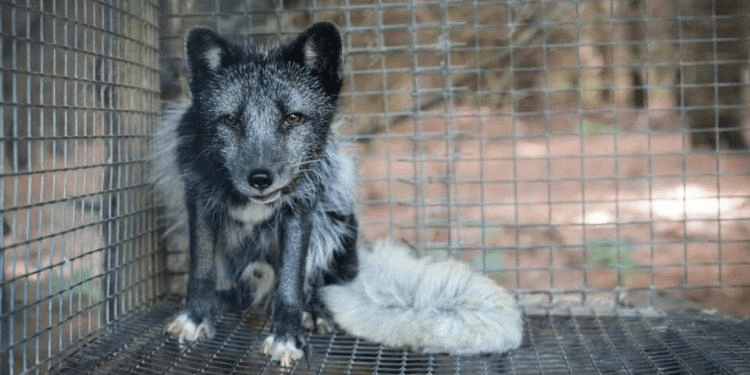
23 MEPs directly called for the ban on fur farms, stressing the immense suffering to animals: 37 million animals are killed in Europe each year for the sole purpose of fur production, which they called ‘unnecessary’.
An overwhelming majority of MEPs stressed that the EC simply cannot ignore the democratic call of the citizens, arguing that the time to end this practice is now and that the EU cannot remain silent and continue to ignore the cruelty of fur farms.
Numerous MEPs also brought up the severe threat that fur farms pose to public health, making reference to recent Covid-19 and avian influenza outbreaks, while they highlighted the serious consequences that fur farming has on biodiversity.
Fur farming is unethical, a useless impractical practice that causes lifelong suffering in small cages. We hope the EC brings up a ban on production and imports. Tomorrow should be better than today.
Sirpa Pietikainen, MEP (EPP)
If it matters to Europeans, it matters to Europe. But what does this mean if the EC does not honour its own pledge, and act on the call of millions of Europeans. We need to ban the import of fur to prevent suffering elsewhere. How can we in Europe remain silent? Animals don’t deserve this. Citizens don’t want this. Will the Commission finally take the lead and show that it takes citizens’ initiatives seriously?
Anja Hazekamp, MEP (The Left)
We can no longer ignore the cruelty of the fur farming sector and the risks for public health. The pollution is immense, while it poses a risk to ecosystems. We say yes to a future with a fur free world.
Leszek Miller, MEP (S&D)
60 minks to be slaughtered for a single coat… 200 chinchillas… This is perverse and despicable that so many animals have to be killed for the sake of fashion.
Maria Noichl, MEP (S&D)
The time has come to end the infliction of suffering on these animals. This type of rearing of animals is in direct contradiction to animal welfare. It is unethical, unsafe and unsustainable.
Laura Ferrara, MEP (non-attached)
We cannot allow this to continue anymore. Breeding animals for their fur is unacceptable. What is the added value? How does this contribute to the wellbeing of society? This practice belongs in the past. We have to end this madness in which animals are being treated as objects.
Some were recorded kicking, striking, and stamping on chickens too (Animal Justice Project / SWNS)
Catcher gangs are used at chicken farms across the UK as part of a depopulation process when chickens come to the end of their natural egg-laying life at around 76 to 80 weeks old. Release date October 16, 2023. See SWNS story SWMRchickens. Shocking footage shows RSPCA-approved workers kicking and stamping on hens. The secret footage of workers known as ‘catcher gangs’ was taken at Kettleby Farm in Leicestershire which supplies some supermarket chains. RSPCA Assured have since suspended the company, Norfolk-based abattoir AD Harvey, whilst they investigate the alleged abuse. AD Harvey say that staff in the footage are no longer employed and their remaining staff are undergoing retraining. Catcher gangs are used at chicken farms across the UK as part of a depopulation process when chickens come to the end of their natural egg-laying life at around 76 to 80 weeks old. The birds are then usually used for cheap meat, soups, stock, or stews as a ‘by-product’ of the egg industry. The video was released by animal rights group The Animal Justice Project, who claim that in one ‘shocking’ incident, around 30,000 hens at the end of their egg-laying life were caught in one night at the farm.
Undercover footage appearing to show workers from an RSPCA-approved company kicking and stamping on hens has seen it suspended from the charity’s farm animal welfare scheme – and reported to government investigators.
The footage has been released by animal rights group The Animal Justice Project, and shows workers known as “catcher gangs” from Norfolk-based abattoir AD Harvey working at four farms, including Kettleby Farm in Leicestershire. Catcher gangs round up hens who have come to the end of their natural egg-laying life for transport to abattoirs, with the birds typically used for cheap meat, soups, and stock.
The video shows workers kicking and throwing hens from their perches by their tailfeathers, even striking them with objects as they made their way through the facility, leaving birds lying injured or dead in their wake.
Workers were caught breaching RSPCA guidelines by carrying large amounts of hens to crates by just one legs, before shoving them in and slamming the crates closed – sometimes on their wings and heads. Catchers filmed by the group also appeared to be aware of their inappropriate methods, with one catcher saying: “It only takes one idiot to just come in here and film what we do… and all the animal rights lot will be down here. They all think chickens walk around in fields, think 20 chickens in a field will feed the nation.”
The Animal Justice Project were now calling on the RSPCA to cut all ties with AD Harvey. Spokesperson Claire Palmer said the “appalling” footage showed “indisputable violence” against hens. “The RSPCA must take decisive action – beginning with the permanent severing of ties with AD Harvey and the launch of criminal proceedings against potential law violators.”
RSPCA Assured has since suspended AD Harvey while they investigated the alleged abuse. An AD Harvey spokesperson told SWNS that the staff in the footage were no longer employed and their remaining staff were being retrained.
“It is totally unacceptable for any animal to be treated in this way and we have reported this incident to the Animal and Plant Health Agency – an official government body that is fully equipped and resourced to investigate and take action,” an RSPCA Assured spokesperson said. “The behaviour in this footage goes against everything RSPCA Assured stands for and falls significantly below the high standards we demand of our members.
“We have suspended the membership of the catching company involved, pending investigation,” they added. “This means that the workers in the footage, as well as all other employees of the catching company, cannot work with any animals being raised under the RSPCA Assured scheme.”
Of the four farming sites featured in this footage, only one, Kettleby Farm, was RSPCA Assured certified. “We are urgently investigating this farm, as well as the associated transport company and abattoir, and are unable to comment further whilst our enquiries are ongoing,” the spokesperson added.
“We take complaints of poor animal welfare about any of our RSPCA Assured members very seriously and would always urge anyone with any concerns to contact us straight away, without delay. This is so that we can immediately investigate, visit the premises and address any welfare issues as a priority.”
In a statement issued by AD Harvey, the company told SWNS that the behaviour of their staff had fallen below standards. “AD Harvey have been made aware of a film which was produced, covertly, by an activist working on behalf of an animal rights organisation.
“The edited footage seeks to compare RSPCA Assured standards with what the activist actually witnessed whilst ‘working’ as part of our team at a poultry farm,” a spokesperson wrote. “As a result, RSPCA Assured have suspended AD Harvey Catching teams from their scheme.”
They said they had viewed the footage, and it “clearly shows some members of the AD Harvey bird catching team acting in a manner which was completely at odds with the standards of animal welfare to which we require our staff to work to… Those staff members are no longer employed by AD Harvey, and all other members of our bird catching staff are being retrained in the correct procedures.”
AD Harvey said its partners “totally condemn any breaches of animal welfare legislation” and their teams were trained to deliver a service which ensured that birds are treated with respect and care. “We will work closely with both RSPCA Assured and all of our customers to ensure that our teams act in a professional and caring manner at all times.”
Investigation reveals intense suffering on rabbit farms in Spain
17 October 2023
AnimaNaturalis
Despite a marked decrease in rabbit meat consumption, Spain continues to be the leader in production and consumption in Europe, followed by Italy and France. Rabbits are currently the second most raised and slaughtered animal for human consumption in the EU, with 180 million rabbits killed every year.
In a new undercover investigation, AnimaNaturalis accessed 10 farms in Castilla y León, Catalonia, Aragón, and Castilla-La Mancha; some of the regions with the highest concentration of rabbit farms in the country. They discovered deplorable conditions and failure to adhere to animal welfare regulations. The images and footage obtained show animal suffering throughout the whole production cycle, from mothering and breeding to fattening.
Click ‘Watch on YouTube’ to view.
Our research offers undeniable evidence that the rabbit sector is based on a cruel system, far removed from any minimally acceptable standard of welfare. The use of cages in itself prevents rabbits from developing any of their natural behaviours, which causes them a high level of physical and psychological suffering throughout their lives.
In 2020, The European Food Safety Authority reported that Spanish farms use the worst possible production system in terms of animal welfare and that 20% of rabbits die before reaching the slaughterhouses.
The European Citizens’ Initiative End the Cage Age, which received over 1.2 million signatures of support, made it clear citizens want to see the end of cruel farming practices that keep animals caged for the majority of their lives.
Rabbits are particularly vulnerable since they do not have specific regulations that protect them. But their situation could soon change if the European Commission keeps its promise to review animal welfare laws in the coming months as planned.
Following the investigation, AnimaNaturalis is denouncing the mistreatment suffered by millions of rabbits in Spain and urges the authorities to immediately develop regulations that protect them and guarantee minimum conditions of well-being.















 World Animals Voice