Category: Farm Animals

Italy: Essere Animali shines a light on the experiences of lambs during live transport in Italy.

6 April 2023

Essere Animali

Press Release

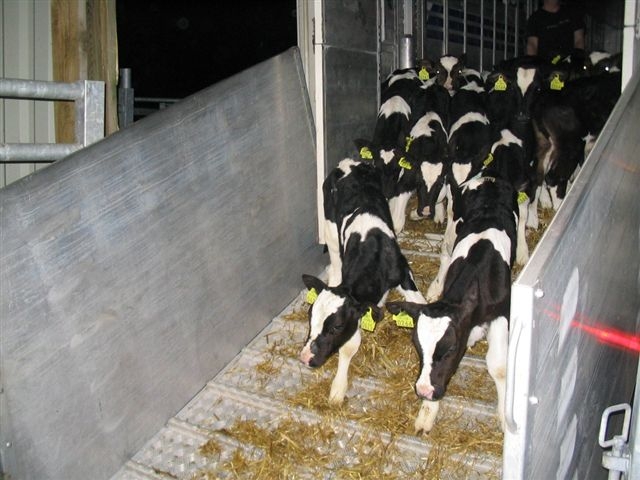
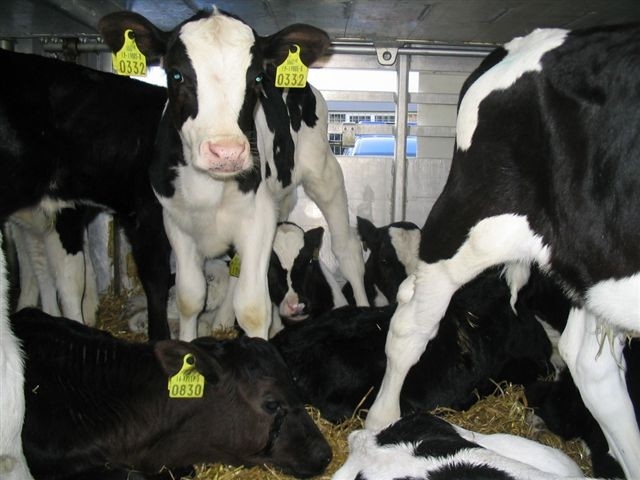
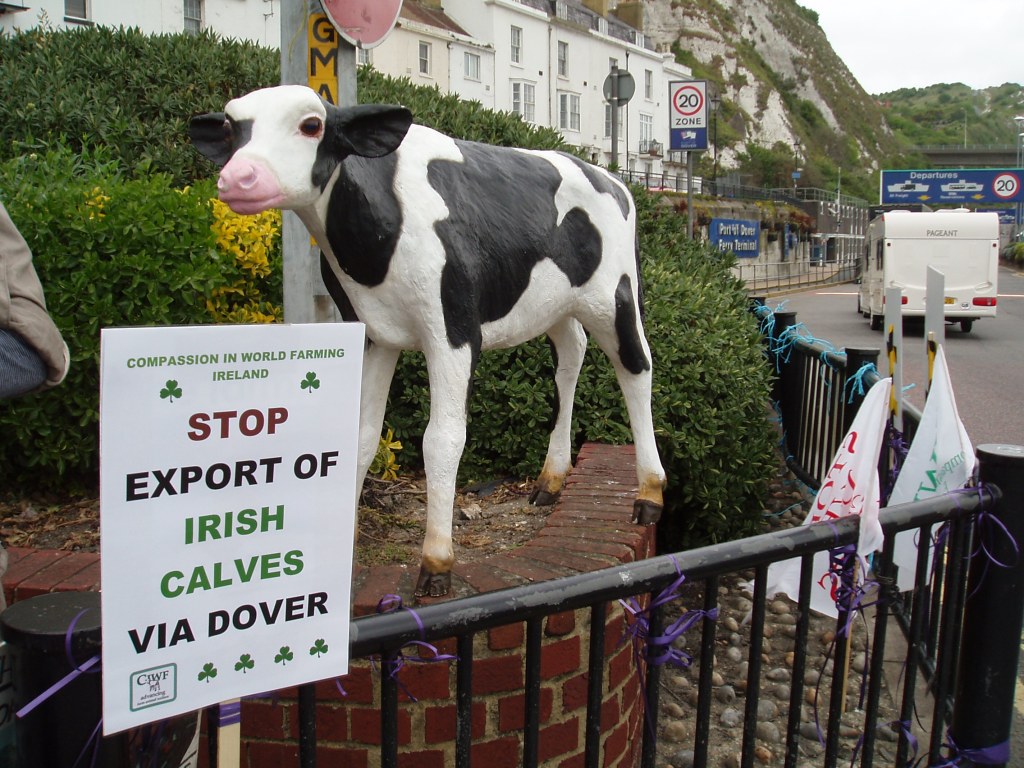
Essere Animali, recently collected footage that exposed the conditions lambs face while being transported during Easter. Their investigation was raised to the Chamber of Deputies at the Italian Parliament during yesterday’s ‘question time’ by Agriculture Minister Francesco Lollobrigida.

Poor and ineffective controls. The rules on animal transport in Italy are not respected

This was said by Eleonora Evi, deputy of Alleanza Verdi e Sinistra, who tabled a direct question to the Minister precisely to highlight the dramatic problems that still affect live animal transport, particularly long-distance transport.

‘Italy is a country much affected by the long-distance transport of lambs and young sheep, especially during the Christmas and Easter holidays.

In 2022 – out of a total of 2,199,832 lambs slaughtered in Italy (source: Istat) – 653,303 came from Eastern Europe (mainly from Hungary and Romania). These transports often involve animals that are only a few weeks old, which have to endure traveling up to 30 hours inside trucks. 

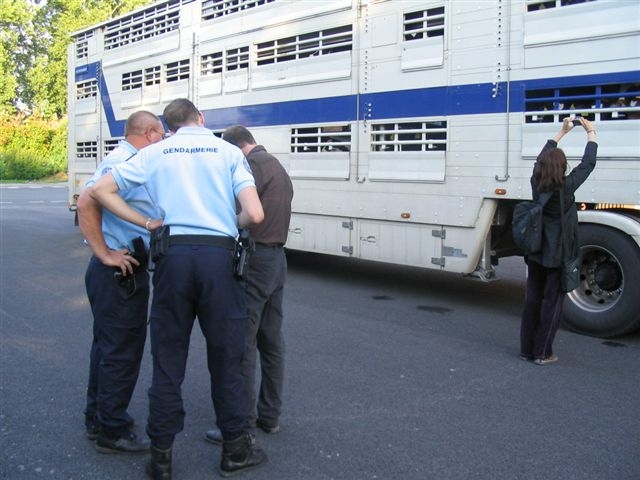
Last March, Essere Animali, along with members from the police, carried out road checks from Gonars to the province of Bologna and Florence to monitor the transport of lambs arriving from Romania, Hungary and Slovakia. Six out of seven lorries were traveling in violation of the rules, with serious cases of overcrowding, lambs stuck in the partitions of the lorries, unusable watering systems and being generally unsuitable for the transport of this species.

In one case in particular, the lorry stopped near Altedo (Bologna) had 200 animals more than the permitted load, and three lambs were slaughtered by the Italian authorities because they were no longer able to continue the journey. Ultimately, current regulations are inadequate to guarantee the protection of animals during transport, one of the most stressful phases and cause of suffering for animals raised for food’.

It’s time to change the trend – and call for this cruelty to end 

The images and complaints collected by Essere Animali and the police once more show how the transport of live animals is a practice that must be overcome, and how important it is to robustly revise the rules that should protect animals during journeys.

When questioned on the revision of the European Regulation on the transport of live animals during the Question Time in the plenary session, Minister Lollobrigida confirmed that he did not support Portugal’s proposal, contrary to what was previously stated. Portugal’s briefing note, strongly contested by many other Member States, in fact re-proposes the status quo and calls for ‘continuing to facilitate intra-EU trade and the export of live animals, without focusing on measures to ban or restrict certain types of transport’. 

Evi adds: ‘This position is frankly unacceptable, considering that the current European Regulation is not only incomplete – a condition unexpectedly noted by the Minister himself – but also outdated and very weak as well as constantly violated by the Member States… [it] is disavowed day after day by the incredible amount of analyses and scientific opinions that confirm what we have been advocating for some time: the need for rules that protect animal welfare starting from species-specific needs’. 

‘We therefore take note of a possible change of position on the part of Italy, which has until now been ambiguous in its positions at European level, and certainly not vocal against maintaining the status quo unlike many other EU states. We therefore expect to see, in line with what the Minister has said, our country lined up with those countries that play a proactive role at European level in support of ambitious and courageous positions to provide the EU with a transport regulation that seriously focuses on animal welfare, starting with listening to scientific recommendations, greatly reducing traveling hours, banning long journeys and exporting outside the EU, banning the transport of unweaned animals and creating the conditions for a transition to transporting meat, carcasses and genetic material instead of live animals,’ she concludes.

Regards Mark

The time is always right to do what is right: why the cage-free transition cannot happen soon enough.

All photos from WAV archive.

30 March 2023

Written by Reineke Hameleers

Featherless, panicking laying hens shoved into crates and sent to slaughter; lame mother sows, a spray mark on their backs to indicate that their time is up; and then millions of rabbits, ducks, geese, quails confined for part or all of their short lives in wire cages, in dimly lit warehouse-like barns, inhaling dust and ammonia from their own waste.

I think that by now we are all familiar with the images, the investigations, the scandals, and the misery they inexorably document. What was once considered normal, and even necessary to produce cheap animal products, has become so controversial that European citizens have asked the European Commission to stop it.

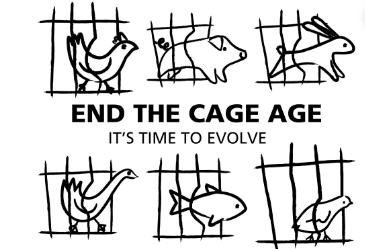
End the Cage Age, led by our member Compassion in World Farming, collected the third highest number of signatures in the history of European Citizens’ Initiatives. The request to stop caged farming was not whispered, it was shouted loud and clear.

The message did not fall on deaf ears: with a historical decision, the European Commission, in its official response to the ECI, committed to put forward a legislative proposal by the end of 2023 to phase out cages from animal farming. The proposal was included within the scope of the ongoing revision of the animal welfare legislation, a necessary step to create a level-playing field for farmers throughout and beyond Europe. The transition will require substantial public financial support to enable farmers to invest in cage-free, higher welfare systems: let us not forget that almost half of the EU egg production still derives from caged hens. As for other animals, such as sows, quails and rabbits, over 90% of the production relies on the use of cages. 

Change is scary, especially for an industry that is used to getting its own way, holding political institutions hostage with the rhetoric of ensuring food security and bringing home hefty profits from exports. But we know all too well that this is only one side of the story, specifically the one that omits the externalised costs of cheap animal products, including the looming public health threats posed by global pandemics and antimicrobial resistance. The animal farming industry’s lobbying machine is currently focused on dismantling many of the most ambitious objectives of the EU Farm to Fork strategy under the assumption that not only improving animal welfare, but also investing in sustainable food systems, will spell disaster for consumers, farmers, and the EU economic outlook at large. 

This is also one of the reasons why, according to some, the cage-free transition should be postponed as much as possible. However, while the time will probably never be right for the industry, for European citizens the time is now. I am saying this as a rebuttal to some parties who are throwing spanners in the wheels of a speedy transition: true, the current economic outlook is not rosy, but farmers can and should be vocal in demanding that, starting from now, Member States allocate as many resources as possible under CAP and national payment schemes to anticipate the legislative change ahead. Stockmanship, human-animal relationships, breeding objectives, feeding strategies, animal health programs, will all need to adapt to the new species-specific cage-free environments; many of these aspects are already eligible for financial support under various EU and/or national payment schemes. 

If sufficient financial support is provided, there is agreement among industry stakeholders that most sectors can switch to cage-free farming within 3-5 years. As shown by our recent report investigating industry stakeholders’ views on the practical and economic aspects of the cage-free transition, a staggered approach with different deadlines per sector is possibly the best way forward as it would allow for a gradual adaptation to cage-free farming.

The industry recognises that the impetus is there, and the answers to the most pressing questions – as well as technical solutions – can be found by studying the business models of many European producers who voluntarily and successfully switched to higher welfare, cage-free systems. We do not need to reinvent the wheel: our report illustrates in detail many examples of good and best practices that can be adopted to make the cage-free transition as smooth as possible, while also leaving room for continuous improvement.

For me, these are all reasons to accelerate, rather than delay, the cage-free revolution. Granting a reasonably swift transition period in the legislation can actually even mitigate the risk of creating disparity amongst Member States.

For instance, according to the latest report on the fitness check of the current animal welfare legislation, the long transition period to enriched cages led some producers to wait until the last possible moment before changing their infrastructure, which unnecessarily increased prices and created a situation of unfair competition amongst Member States.

For all these reasons, I hope that the phase-out period to shift to cage-free farming will be as short as reasonably possible and that it will be used wisely, making the most of all the forms of financial support currently available. The animal protection movement will play its part, of course, communicating to citizens and policymakers about the importance of supporting this transition in any way possible.

In my view, however, it will be equally important to promote a shift in mentality, from treating animals as commodities to seeing them for what they are, sentient beings worthy of good lives, however short we decide that these lives should be. 

Phasing out cages in the EU: the road to a smooth transition

 DOWNLOAD PDF 22.13 MB

Regards Mark

EU: No Animal Left Behind: why do farmed rabbits need specific laws to protect their welfare?

3 April 2023

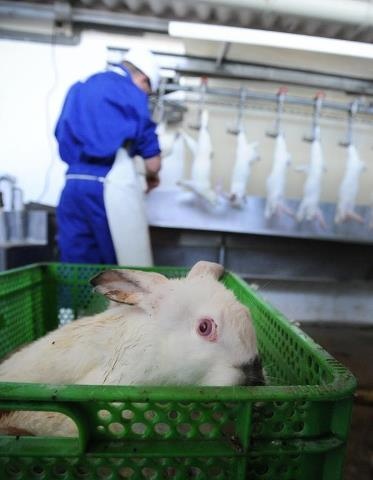
Across Europe, millions of caged rabbits are living in a real-life horror story. Crammed into tiny prisons with their peers – with no access to things to interact with and nowhere to exercise, play, and rest – their daily lives are filled with boredom, frustration and physical and mental suffering. The European Commission has the power to change that when revising the animal welfare legislation this year, by including specific laws for rabbits that address their needs.

Rabbits are fascinating, complex animals. Curious and social by nature, they love living in groups and socialising with others – but like any sentient being, it’s also important to them to be able to rest and spend time alone. What’s more, their teeth are always growing, so it’s important for rabbits to always have something to chew on.

Unfortunately, these essential needs are far from met in Europe’s current farming systems. Rather than having the space and opportunities to truly be themselves, rabbits are forced into tiny cages – many of which are no bigger than an A4 piece of paper – and, as our recent exposé revealed, forced to spend their days in the most miserable conditions.

Rabbits in cages experience a wealth of problems – some of which are deadly

These poor beings:

Are frequently stressed and frustrated, which can lead to injuries and health issues. In turn, a higher number of antibiotics are often used on factory farmed rabbits, driving the antimicrobial crisis

Are unable to move their bodies properly – many can’t even stand up or stretch out. This is mentally and physically distressing, and can cause painful problems such as frail bones

Struggle psychologically – high cortisol and low dopamine/serotonin levels are commonly seen in factory farmed rabbits, which are major indicators of poor mental health

Often suffer from digestive disorders due to poor hygiene – which can cause high mortality rates with kittens (baby rabbits) in particular

Can’t look after themselves or follow their instincts – with no materials to chew on, rabbits in cages can’t do anything about their ever-growing teeth, resulting in even more pain and difficulty eating.

Learn more about these issues on pages 17 – 19 of our new exposé report.

Europe’s farmed rabbits don’t have to live this way

Many of the problems farmed rabbits face are enabled by existing loopholes and oversights in the European Commission’s animal welfare legislation. What’s more, there are no existing laws that address the welfare of farmed rabbits specifically – which they desperately need. 

The European Commission has the power to change all of this when they revise the animal welfare legislation later this year, by including strong, precise, and  targeted rules for rabbit welfare that take into account their unique natures. 

Farmed rabbits have not been domesticated for as long as other farmed species, and still exhibit the same behaviours and instincts as seen in their wild counterparts. Life in a cage is an unimaginable struggle for them, and having already promised to End The Cage Age following a successful ECI, the European Commission must now consider how to phase out cages for these dynamic beings in a swift and effective manner. We’ve already done a lot of the groundwork by compiling case studies, scientific evidence, and data from across the EU that explores this transition in our new report.

Rabbits deserve better. They need their freedom and space, along with access to good nutrition, clean water, and enrichment materials with which they can play and look after themselves properly. There is no substitute for these basic needs.

We’re trying to change history for farm animals this year through phase two of the No Animal Left Behind campaign. Find out more.

Regards Mark

EU: Press Release – Time For EU Fossils To Update Animal Welfare Rules.

New evidence reveals systematic cruelty of industrial animal farming

23 March 2023

Press Release

Evidence of widespread animal suffering was delivered to the European Commission (EC) today to strengthen its resolve as it prepares the revision of the animal welfare legislation due later this year. We’re calling on the EC to seize the incredible opportunity ahead of us to enact the system change we need for animals.

Thanks to the investigations of our over eighty member organisations in 25 Member States, we at Eurogroup for Animals delivered a video and report today to the EU Health and Food Safety Commissioner, Stella Kyriakides

EU welfare rules remain limited, poorly enforced, and plagued by loopholes, leading to widespread suffering in the farming sector. From the cruel handling of broiler chickens to chaining the back legs of dairy cows, the new exposé reveals how the EU’s farmed animals are being callously treated by those who are meant to care for them.

The EC has an opportunity to deliver – in line with its ambitions contained in the Farm to Fork strategy – a future-proofed legal foundation for evidence-based standards, that provide the ability for all farmed animals to experience a positively affected mental state and lead lives that are truly worth living. Any farming practices that cannot meet such requirements should, in effect, be eliminated. In doing so, the EU would remain a world leader in animal welfare standards, citizens’ expectations would be met, and no animal would be left behind.

A formal impact assessment on the coming proposals is expected to be finalised by the beginning of April, and all the reasons why the legislation needs to be ambitious are there: in 2021 the EC pledged to end the cage of farm animals by 2027, and EU scientific advisors also say that unweaned calves should not be transported. 

Despite the strength of public support shown for the End The Cage Age ECI and the No Animal Left Behind campaign, we at Eurogroup for Animals are concerned that pressure from an array of well-established animal farming interests could weaken the EC’s resolve. Eurogroup CEO, Reineke Hameleers, commented:

The new hard hitting evidence shows once again that the EU is responsible for the biggest animal welfare crisis ever: industrial animal farming. Animals have been decimated into objects as cogs in a big machine whereas the EU legislation is expected to meet their natural needs. This year the European Commission has the once in a lifetime opportunity to turn the page. It is crucial to avoid technocratic changes but to be bold and ambitious. 

Regards Mark

England: CIWF – Uncovering the horrific reality of octopus farming.

Uncovering the horrific reality of octopus farming

16 March 2023

CIWF

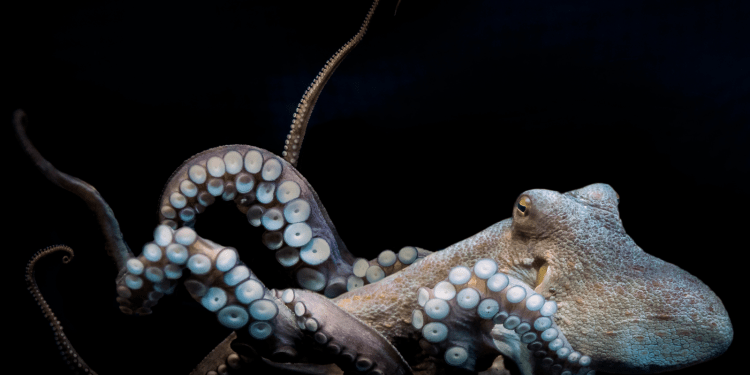
Eurogroup for Animals and Compassion in World Farming are calling for the world’s first commercial octopus farm to be scrapped, after plans obtained for its development revealed the animal cruelty and environmental consequences it would cause. Furthermore, they are calling on the EU not to use public funds to support octopus farming developments, or any other new industrial animal-based farming in the light of significant and growing scientific evidence that it is killing our planet.

The plans, submitted to the General Directorate of Fishing of the Government of the Canary Islands by the company Nueva Pescanova, and uncovered by Eurogroup for Animals, have raised serious concerns. These include the use of a cruel slaughter method, the confinement of octopuses in small barren tanks, and practices that contribute to the overexploitation of wild fish populations. The campaigners’ concerns over the plans are outlined in the new report Uncovering the horrific reality of octopus farming and confirmed by scientists in the field. 

They reveal that around one million octopuses will be reared at the proposed farm in the Port of Las Palmas in Gran Canaria, Spain, producing some 3,000 tonnes of octopus each year. 

They also confirm the campaigners’ fears that a number of extremely concerning practices would be implemented, including that octopuses would be:

Slaughtered using cruel ice slurry: a highly aversive and inhumane method scientifically proven to cause considerable pain, fear and suffering as well as a prolonged death. 

Confined in crowded, barren underwater tanks that will result in poor welfare and risk aggression, territorialism and even cannibalism due to the octopuses’ naturally solitary nature. 

Exposed to round-the-clock unnatural light to increase reproduction, which will cause undue stress given the aversion these animals have to light.

Fed with commercial feeds containing fishmeal and fish oil as main ingredients, which is unsustainable and contributes to the overfishing of wild populations. 

Raised within a land-based aquaculture system relating to higher risk of mass mortality due to the overcrowded conditions required for their profitability as well as negative environmental impacts stemming from the excessive use of energy.

In 2021, Compassion in World Farming released the report Octopus Factory Farming: A Recipe for Disaster, arguing that octopus farming is cruel and would cause environmental damage to our oceans. According to the report, experimental trials to farm octopuses suggest that the mortality rate in these systems would be around 20%, meaning that 1 in 5 individuals would not survive the entire production cycle.

Although, if approved, the Canary Islands farm would be the world’s first industrial octopus farm, there are attempts to establish similar octopus farms in other parts of the world such as Mexico and Japan. In February, Washington State in the US signalled a move toward banning octopus farming, which would be the first of its kind. This followed the recent closure of the only active octopus farm in the US, the “Kanaloa Octopus Farm” based in Hawaii, in response to Compassion in World Farming’s campaign. 

Octopus has become an increasingly popular food in recent decades, particularly in Spain. As a result, wild octopus numbers are dwindling. In 2015, the number of octopuses caught around the world reached a high of 400,000 tonnes – 10 times more than in 1950.

Blindly establishing a new farming system without consideration of the ethical and environmental implications is a step in all the wrong directions and flies in the face of the EU’s plans for a sustainable food transformation. With the current revision of the animal welfare legislation, the European Commission now has the real opportunity to avoid the terrible suffering of millions of animals. We cannot afford to leave aquatic animals behind. We’re calling on the EU to include a ban on octopus farming before it ever sees the light of day, in order to avoid plunging more sentient beings into a living hell.

Reineke Hameleers, CEO, Eurogroup for Animals

We implore the Canary Islands authorities to reject Nueva Pescanova’s plans and we urge the EU to ban octopus farming as part of its current legislative review. It will inflict unnecessary suffering on these intelligent, sentient and fascinating creatures, which need to explore and engage with the environment as part of their natural behaviour. Their carnivorous diets require huge quantities of animal protein to sustain, contributing to overfishing at a time when fish stocks are already under immense pressure. Factory farming is the biggest single cause of animal cruelty on the planet, and it’s literally destroying our planet. We should be ending factory farming, not finding new species to confine in underwater factory farms. We must end octopus farming now.

Elena Lara, Research Manager at Compassion in World Farming

Uncovering the horrific reality of octopus farming

BROWSE TO THIS PUBLICATION

Regards Mark

Spain: Press Release – Animal welfare NGOs expose bull’s mistreatment: transport company fined.

Animal welfare NGOs expose bull’s mistreatment: transport company fined

15 March 2023

AWF

Press Release

In 2020, the young bull Ferdinand was supposed to be loaded onto a substandard livestock vessel at the port of Cartagena, Spain. However, he was unfit for travel, unable to move and heavily mistreated. Workers subjected him to prolonged electric shocks and kicking. Animal Welfare Foundation (AWF) filed a complaint against the transport company and veterinarian authorities, based on evidence collected together with Animals International and Welfarm. The investigation that followed the complaint revealed further violations. The export company in charge is one of the largest in Spain and has now been fined 4,500 Euros.

AWF filed an administrative complaint in 2020, and the case was classified as two serious administrative offences with major infringements of the transport regulation. The infringements were secondary and rather formal findings and are not directly related to animal abuse. They include lacking coordination between the different stages of the transport and a lack of communication which made it impossible to properly inspect all the animals.

In July 2020, Animal Welfare Foundation, Animals International and Welfarm witnessed and filmed how young bulls from different European countries were loaded from trucks onto a livestock vessel that exported them from Cartagena to Benghazi, Libya. One of them, a French bull who was named Ferdinand by the investigators, was injured and too weak to walk. At this point, he should have been euthanised on the spot. However, although clearly unfit for travel, workers forced him out of the truck by dragging him with a rope. Later, he was forced inside again because he was unable to walk through the vessel ramp. 

After the stressful procedure, the driver left the port and parked the truck at a petrol station nearby, with Ferdinand inside in the blazing sun, to take a prolonged lunch break. At this point, the NGOs called the police, who were not able to identify violations immediately and had to let the driver proceed.

Animal welfare NGOs call for ban of live exports and stronger penalties for violators

Ferdinand’s case is only one out of many, and highlights the systematic failure of animal welfare during transport. The organiser did not coordinate the arrival of the trucks properly and veterinarians had no chance to control the process correctly. A few months after the incident, the vessel (ABEER K, formerly ETAB) was detained in Raša, Croatia, due to severe deficiencies. Some of those can affect animal welfare onboard, such as the water conditions, structural conditions and fire safety.

The importance of animal welfare in livestock transport was once again underscored recently in an audit report on Spain’s livestock transport industry. The audit found that many sea transporters follow generic contingency plans that are unlikely to protect the welfare of animals during emergencies. Additionally, there is an insufficient number of official staff during loading, and delays in loading can create risks for the welfare of the animals, as they lack proper facilities to rest, feed, and water animals. New legislation will not be able to solve the defective nature of live transports.

“The suffering of the bull was obvious, but not even mentioned in the administrative verdict file. The procedure was carried out with clear opacity and lack of coordination by the competent body. We do not know whether the investigative measures we requested were carried out”, says Maria BoadaSaña, Project Manager at Animal Welfare Foundation. “I hope that the ruling in the Ferdinand case will encourage stronger penalties for those who violate the regulations. We have been making this point for years. There is a notable lack of controls by veterinarian authorities, and examining one violation will often lead to other findings.”

Gabriel Paun, EU Director at Animals International, adds that “Ferdinand’s injuries were so severe that he was unable to walk, and yet he was still subjected to prolonged electric shocks and kicking. He was then pulled by a tractor on a rope to get him back into the truck. After that, he melted in pain and heat at a petrol station in bright sun while the driver enjoyed his lunch. This is not just a violation of regulations; it is a moral and ethical issue that needs to be addressed.”

Adrienne Bonnet, Head of Campaign, Advocacy and Legal Department at Welfarm, states: “It is sad to see a French animal end up in such a situation. The member states of the European Union need to address animal welfare issues in a joint effort. From the approval of transport vehicles to slaughter methods in third countries, such situations can only be prevented if live transports of long duration within and from the EU are stopped.”

Without the intervention of the three NGOs, the case would not have been exposed at all. This leaves transport companies with the impression of an acceptable risk: The sanctions for bad practices are not strong enough to act better in the future, even if they are considered major infringements.

NGOs call for a ban of live exports altogether. Many member states of the European Union use Spain as a loophole to send their animals from industries that would otherwise not be as profitable to third countries.

Regards Mark

Italy: Live Footage From Cages Shows the Reality of Italian Factory Farms.

24h LIVE footage from factory cages: dive into the heartbreaking reality of confined animals on Italian factory farms

11 March 2023

Essere Animali

Essere Animali has launched a 24h live broadcast from four different intensive breeding farms in Italy, to illustrate the sad fate of caged animals first-hand.

Conducted for End the Cage Age, the coalition that aims to end the use of cages for animals bred for food, the project consists of a real live broadcast from rabbit, calf, sow and chicken farms.

From 10 p.m. on Friday 10 March until 10 p.m. on Saturday 11 March, the everyday life of these animals – who are forced to live in cages in extreme confinement, and with no possibilities to express their natural behaviours – will be shown.

You can access the livestream below, or via this link.

The End the Cage Age initiative has collected more than 1.4 million signatures validated throughout Europe, and has achieved success so far with the European Commission’s commitment to work for a ban in the EU on cage farming. Cage farming is also considered by the scientific community as being in stark contrast to the animal welfare standards the farming sector should meet, and has further been criticised by the European Food Safety Authority.

But there is still a lot of work to be done. In Italy, more than 40 million animals are still bred in these conditions, and it is essential that the government and relevant companies work together to phase out this practice.

It’s what the animals desperately need, and what EU citizens clearly want. In fact, according to a poll by YouGov Plc (2020), 84% of Italian citizens believe that the use of cages is cruel to animals, and 83% call for agricultural funds to be used to incentivise the transition to cage-free farming. It’s time to answer the public’s calls for change and put an end to animals living behind bars.

footage from factory cages: dive into the heartbreaking reality of confined animals on Italian factory farms.

Regards Mark

Belgium: GAIA calls on Flemish Animal Welfare Minister to do his damned duty for caged hens.

10 March 2023

GAIA (Belgium)

In his own words, Flemish Animal Welfare Minister Ben Weyts said, “It is our damned duty to avoid animal suffering”. With new investigative footage, GAIA is calling on the Minister to turn his words into actions and ban enriched cages in Flanders for more than 3,000,000 laying hens currently confined to the space of an A4 piece of paper.

There are currently more than 3 million laying hens in cages in Flanders. The hens are locked up there for the duration of their lives – 13 months – in which time they have to produce as many eggs as possible. 

Footage released by GAIA from a laying hen farm in Sint-Gillis-Waas clearly demonstrates the problem of caged hens. Countless chickens are housed in unhygienic metal grid cages stacked on top of each other, too restricted to spread their wings properly.

The sanitary condition of the farm is deplorable and the metal grids cause a lot of injuries and suffering. The footage shows that the plumage of many chickens is damaged, and many chickens do not survive – carcasses are seen everywhere. 

Wallonia, the French-speaking region of southern Belgium, already banned cages for laying hens in 2018. 

Almost three-quarters of Flemish people (72%) agree that keeping chickens in cages should be banned, according to a 2022 study by Ipsos. 

At the end of February, the European Food Safety Authority (EFSA) published their opinions on the welfare of laying hens and broilers. They clearly indicated that poultry should not be kept in cages and advise better living conditions, such as aviaries with covered outdoor areas or “winter gardens”, which are already used in some farms in Flanders.

Chickens are welfare-sensitive animals and deserve a better life, Mr. Minister. You know that yourself and it is your damned duty to avoid avoidable animal suffering, as you so aptly put it. We count on you to really get to work on this now, to take your role as Animal Minister to heart and to abolish the cages, starting with all cages for laying hens.

Ann De Greef, Director of GAIA

Read more at source

GAIA

End The Cage Age

Regards Mark

EU: Civil society denounces opacity and lack of democratic debate on EU-Mercosur agreement.

9 March 2023

As Europe’s trade ministers gather on 9 March for an informal trade Council, environmental, animal protection and trade groups denounce the Commission’s closed-door negotiations with Mercosur countries that aim to push through a controversial Free Trade Agreement (FTA), that has been the subject of public outrage and been rejected by national parliaments across the EU.

The lack of democratic debate and transparency around the protocol further damages the legitimacy of the EU and risks weakening European and national parliaments’ ability to comprehensively debate the consequences of the trade agreement.

The EU-Mercosur FTA has been dormant since the European Parliament and some Member States have refused to ratify it “as it stands” following massive civil society mobilisations from across the EU and South America denouncing the FTA as a bad deal for people, animals and the planet, that prioritises corporate profits at the expense of planetary boundaries.

Yet again the Commission is showing its anti-democratic face by pushing the toxic EU-Mercosur deal across the finishing line. Despite public opposition from both sides of the Atlantic, the EU’s negotiators are still discussing the annex in complete secrecy. Parliaments and civil society play a crucial role in scrutinising trade agreements as they are being negotiated, not once when they are ratified and it’s too late to reverse the impacts it will have.

Audrey Changoe, trade campaigner at Friends of the Earth Europe

Now, the European Commission is seeking to revive stalled discussions with an “additional instrument” – or annex – that is being presented this week to Mercosur countries, despite proof of the rampant devastation of the Amazon.

The European Union’s push for ratification of the EU-Mercosur deal is not supported by public opinion. Three-quarters of Europeans want the deal to be scrapped if it leads to deforestation and environmental damage. Despite public concerns, the Commission refuses to share the content of the additional document and is discussing it behind closed doors.

European and South American civil society groups reiterate their calls to stop the deal and reject these additional annexes and protocols and call for a different kind of relationship between the continents. 

No greenwashed protocols or annexes can fix an inherently bad deal whose aim is to promote trade in products driving deforestation, land grabbing, massive pesticide use, carbon emissions and human rights violations. The good news is that an alternative model exists, which could both strengthen ties with the countries and populations of the Mercosur while basing our relations on sustainability and cooperation.

Leah Sullivan, Seattle to Brussels Network

The recent EU legislation on imported deforestation does not make the FTA acceptable, first and foremost because it cannot offset all the deforestation: it ignores many ecosystems that, just like the Amazon rainforest, are also destroyed by intensive animal agriculture. The scope of products it covers is very limited, as it does not include animal products derived from animals fed by soy on intensive farms. In addition, the EU still does not have any new import requirements related to animal welfare standards.

Stéphanie Ghislain, Political Affairs Manager at Eurogroup for Animals

Regards Mark